
Complex Trauma Resources Caregiver Training Program Introduction to
- Slides: 19
Complex Trauma Resources Caregiver Training Program Introduction to the CTR Therapeutic Model Chuck Geddes, Ph. D Clinical Director, Complex Trauma Resources www. complextrauma. ca
Objectives 1. Brief overview of the CTR Therapeutic Model 2. Teaser trailer for the modules 3. Opportunity for Self-reflection
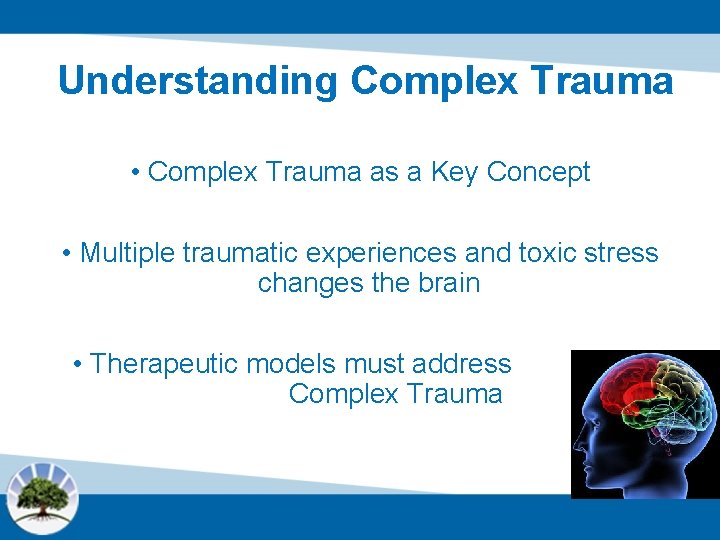
Understanding Complex Trauma • Complex Trauma as a Key Concept • Multiple traumatic experiences and toxic stress changes the brain • Therapeutic models must address Complex Trauma
Complex Trauma as the Key Concept • more detail than slide 2 • What’s All the Fuss about Complex Trauma?
Effective Caregiving offers both Love and Limits • Love: Warmth, caring, empathy, attunement • Scary for kids if adults don’t set the limits. Kids w trauma fight for control • Tendency to get into power struggles, move to limits when under stress. • Side by side idea Pause for Discussion
Therapeutic Program Goals 1. 2. 3. 4. 5. 6. Calm the Stress Response Improve Emotional Language Develop Self-Regulation Skills Provide Healthy Attachment Experiences Increase Personal Responsibility Celebrate Successes!
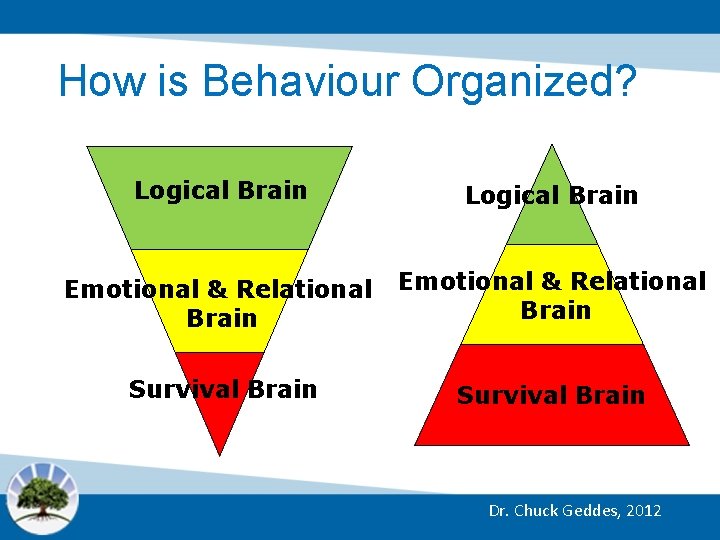
How is Behaviour Organized? Logical Brain Emotional & Relational Brain Survival Brain Dr. Chuck Geddes, 2012
1. Calm the Stress Response § Lower part of the brain is activated constantly § The smoke alarm is set on high alert § Energy is directed to “fight, flight, freeze” responses
1. Calm the Stress Response con’t § The brain’s ability to think and plan has been hijacked – logical and language responses give way to emotional and survival brain systems § This part of the brain is highly sensitive to fear, stress and arousal – poised to react
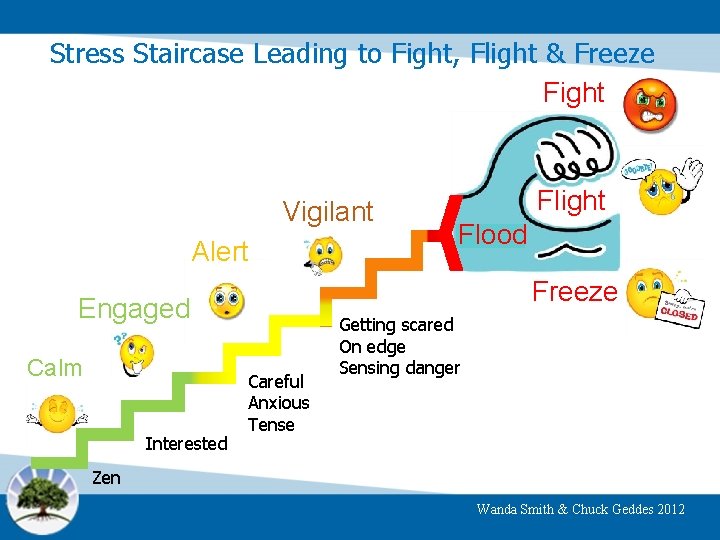
Stress Staircase Leading to Fight, Flight & Freeze Fight Vigilant Alert Interested Flood Freeze Engaged Calm Flight Careful Anxious Tense Getting scared On edge Sensing danger Zen Wanda Smith & Chuck Geddes 2012
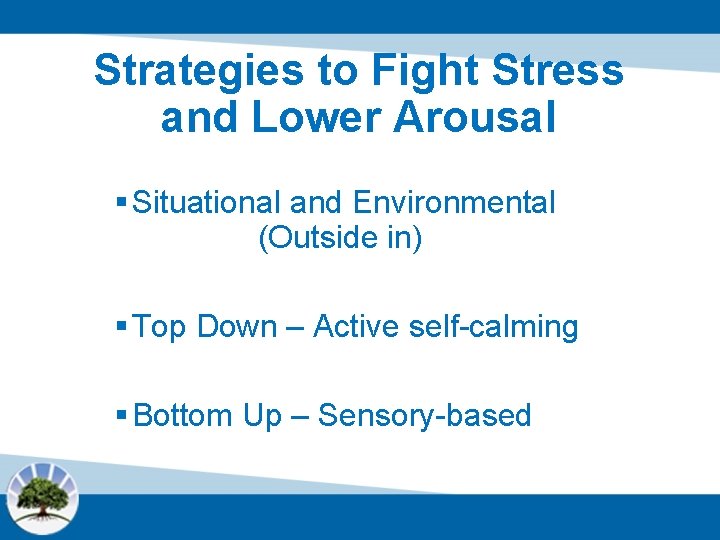
Strategies to Fight Stress and Lower Arousal § Situational and Environmental (Outside in) § Top Down – Active self-calming § Bottom Up – Sensory-based
2. Improve Emotional Literacy • Start simple • Start with the body and recognition • Simple language, • Modeling
3. Develop Self-Regulation Skills • Top-down, learning skills to self-calm • Practice them when calm • Wow, how did you do that? • What helped you? Pause for Discussion
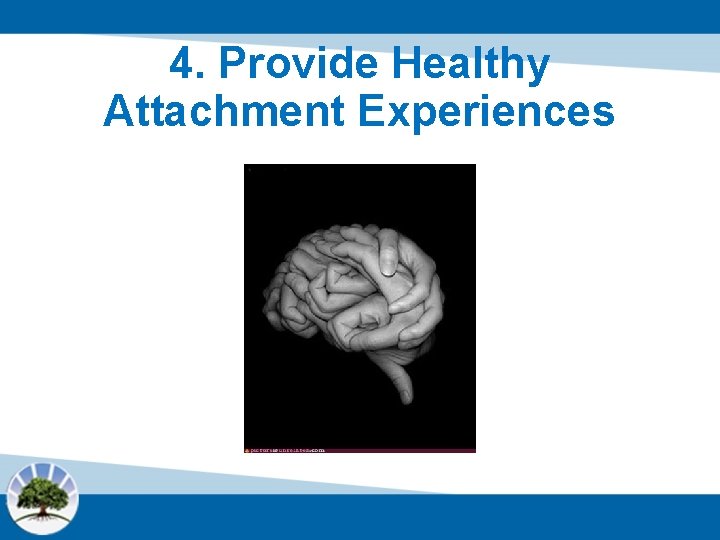
4. Provide Healthy Attachment Experiences
4. Provide Healthy Attachment Experiences • Safe and secure; Predictable • Offer missed developmental experiences • Know your attachment style: Ø Moving Toward Ø Moving Away • After Rupture, offer Repair
5. Increase Personal Responsibility • Not head-on • “Unacceptable behaviour” • Choices within structure and at developmental level, e. g. fixed choice • Collaborative Problem Solving
6. Celebrate Successes! • Need to heal negative self-identity • Strength-based – positive focus • Start with what they like and are good at
6. Celebrate Successes! (con’t) • Positive behavioural emphasis – catch them being good! • Focus on skill-building • Consequences short and sharp End of Introductory Module - Discussion
Dr. Chuck Geddes Complex Trauma Resources Chilliwack, BC, Canada Additional resources available at: www. complextrauma. ca