
Complex Trauma and Child Development Viewing Behaviour Through
Complex Trauma and Child Development: Viewing Behaviour Through 7 Developmental Domains Dr. Kirk Austin, RCC Training Director Complex Trauma Resources
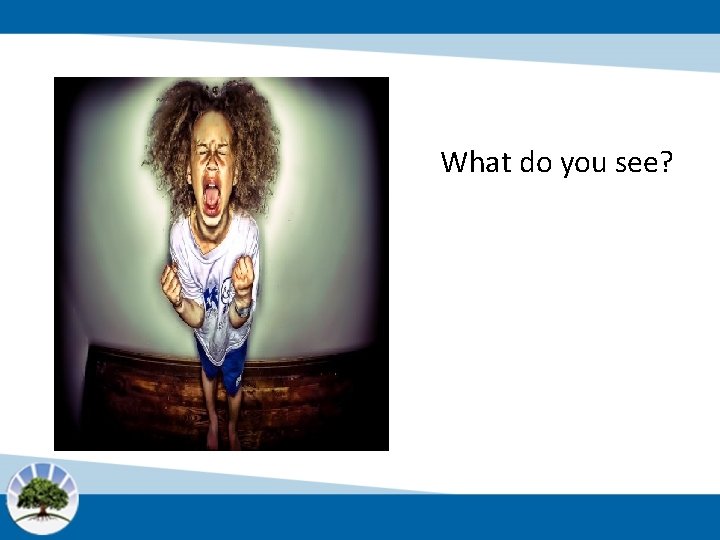
What do you see?
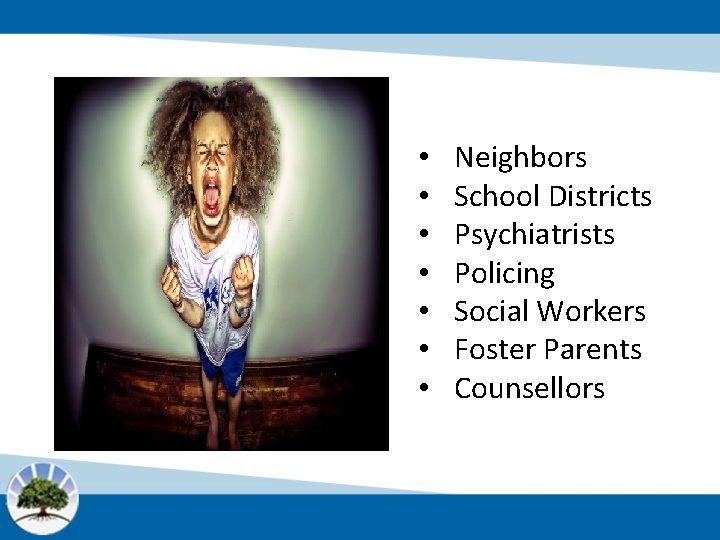
• • Neighbors School Districts Psychiatrists Policing Social Workers Foster Parents Counsellors
CCI 7 Developmental Domains
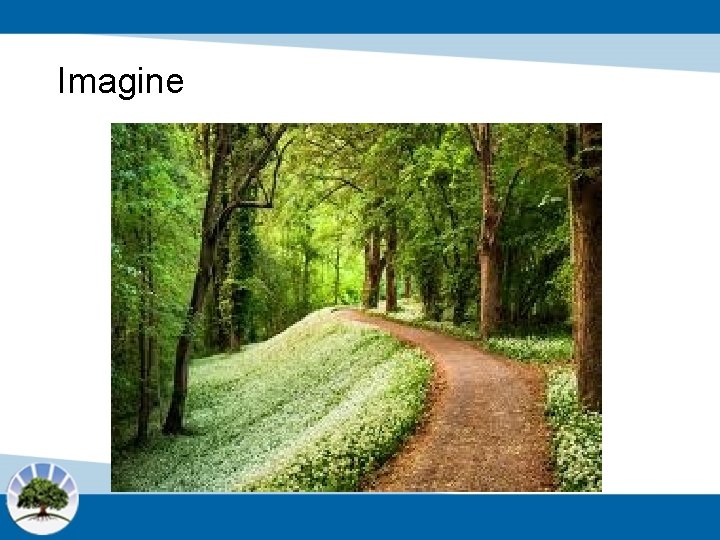
Imagine
What is your Experience? • Your emotions? • Your thoughts? • Your behavioural response? • Your awareness over time?
Complex Trauma …exposure to multiple traumatic events, often of an invasive, interpersonal nature, and the wideranging, long-term impact of this exposure. The National Child Traumatic Stress Network
7 Developmental Domains • • Neurological & Biological Maturity Over-reactive Stress Response Emotional Regulation Attachment and Relationships Identity Development Behavioral Regulation Cognitive & Language Development No One Eats Apples In BC
Neurological & Biological Maturity Generally refers to how trauma effects the brain development and physiological development of the child. • Doesn’t recognize sleepiness, tiredness, hunger, temperature? • If awake at night, difficulty going back to sleep? • Sensitive to tastes, textures, smells?
Neurological & Biological Development Generally refers to how trauma effects the brain development and physiological development of the child. • Overwhelmed by stimulation? • Difficulty with using small objects? • Clumsy & uncoordinated
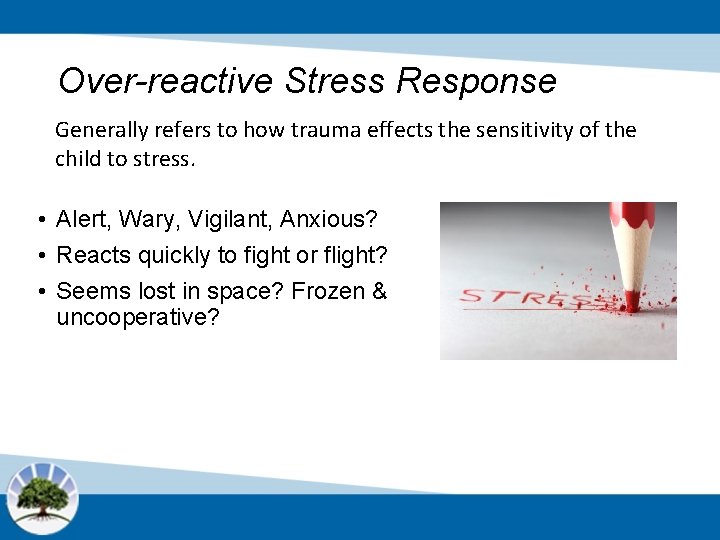
Over-reactive Stress Response Generally refers to how trauma effects the sensitivity of the child to stress. • Alert, Wary, Vigilant, Anxious? • Reacts quickly to fight or flight? • Seems lost in space? Frozen & uncooperative?
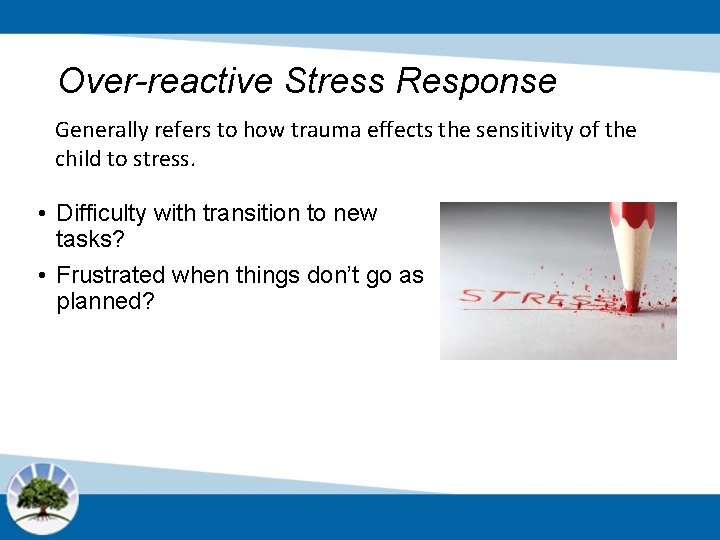
Over-reactive Stress Response Generally refers to how trauma effects the sensitivity of the child to stress. • Difficulty with transition to new tasks? • Frustrated when things don’t go as planned?
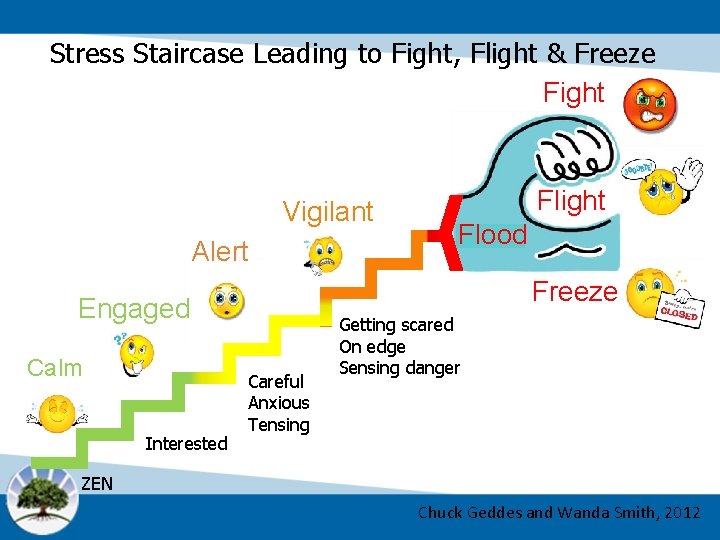
Stress Staircase Leading to Fight, Flight & Freeze Fight Vigilant Alert Interested Flood Freeze Engaged Calm Flight Careful Anxious Tensing Getting scared On edge Sensing danger ZEN Chuck Geddes and Wanda Smith, 2012
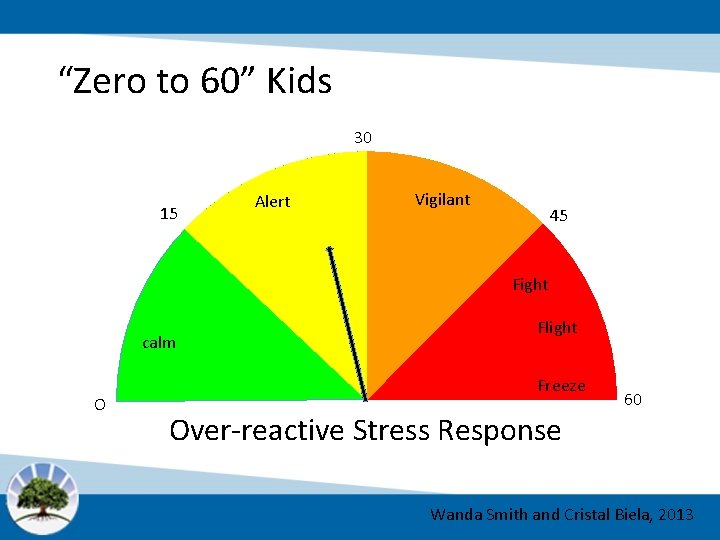
“Zero to 60” Kids 30 15 Alert Vigilant 45 Fight calm O Flight Freeze Over-reactive Stress Response 60 Wanda Smith and Cristal Biela, 2013
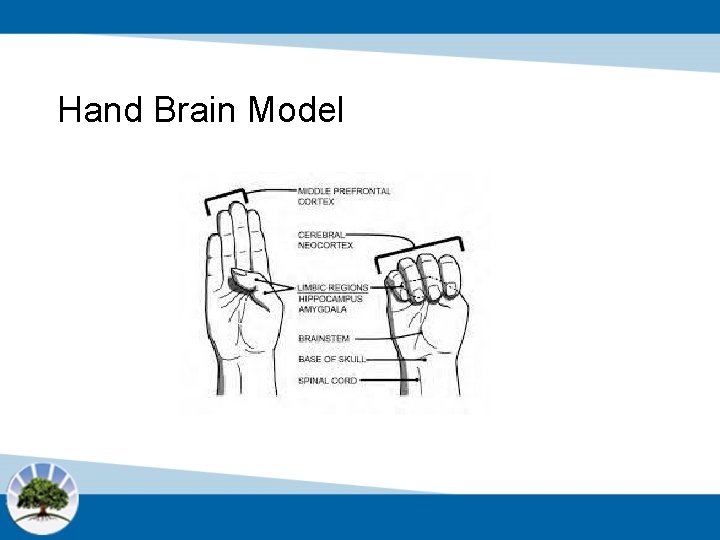
Hand Brain Model
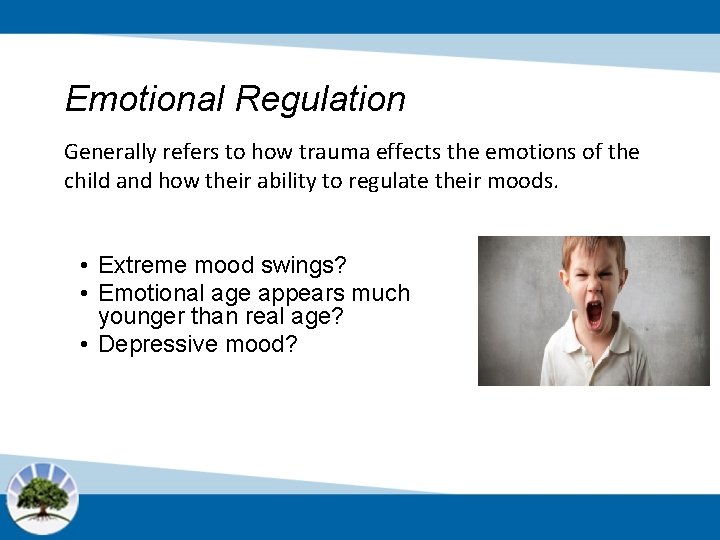
Emotional Regulation Generally refers to how trauma effects the emotions of the child and how their ability to regulate their moods. • Extreme mood swings? • Emotional age appears much younger than real age? • Depressive mood?
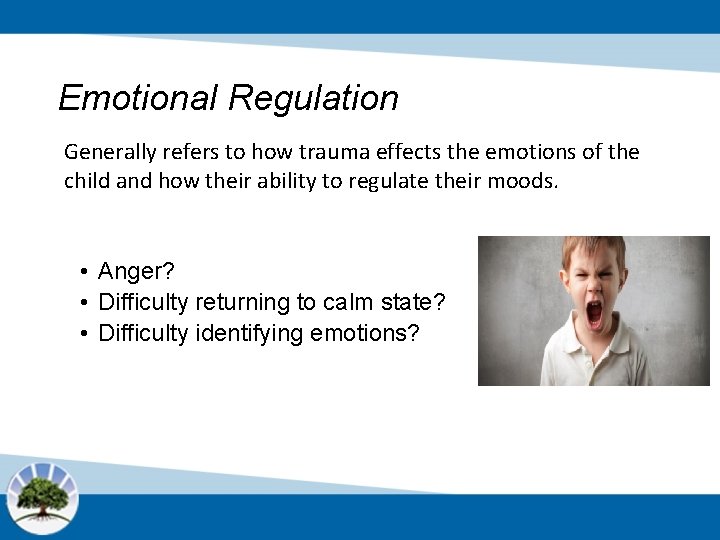
Emotional Regulation Generally refers to how trauma effects the emotions of the child and how their ability to regulate their moods. • Anger? • Difficulty returning to calm state? • Difficulty identifying emotions?
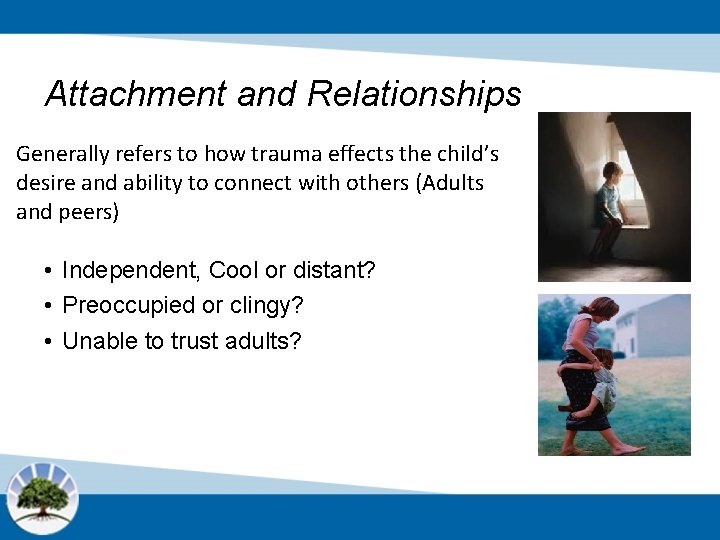
Attachment and Relationships Generally refers to how trauma effects the child’s desire and ability to connect with others (Adults and peers) • Independent, Cool or distant? • Preoccupied or clingy? • Unable to trust adults?
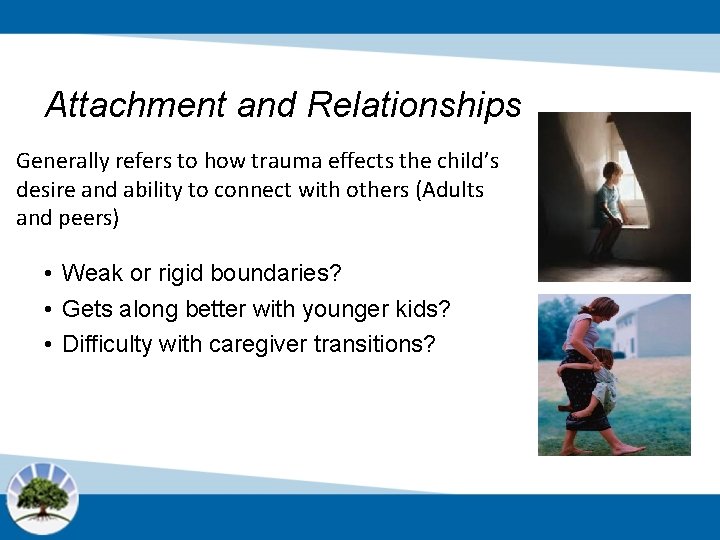
Attachment and Relationships Generally refers to how trauma effects the child’s desire and ability to connect with others (Adults and peers) • Weak or rigid boundaries? • Gets along better with younger kids? • Difficulty with caregiver transitions?
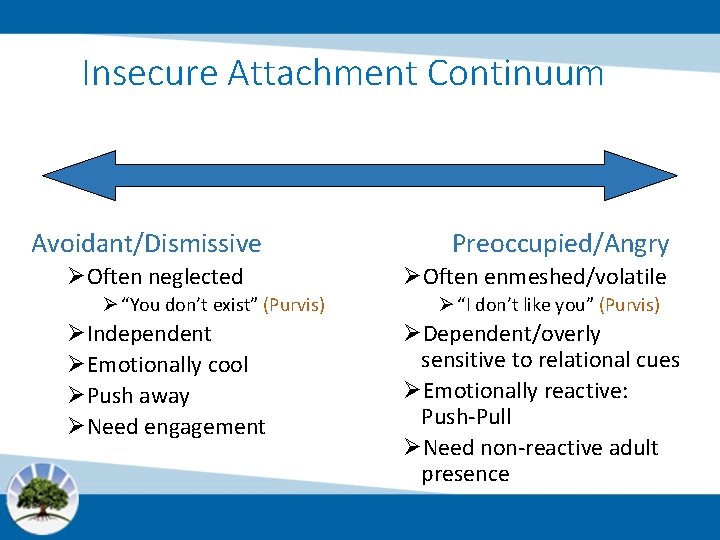
Insecure Attachment Continuum Avoidant/Dismissive ØOften neglected Ø “You don’t exist” (Purvis) ØIndependent ØEmotionally cool ØPush away ØNeed engagement Preoccupied/Angry ØOften enmeshed/volatile Ø “I don’t like you” (Purvis) ØDependent/overly sensitive to relational cues ØEmotionally reactive: Push-Pull ØNeed non-reactive adult presence
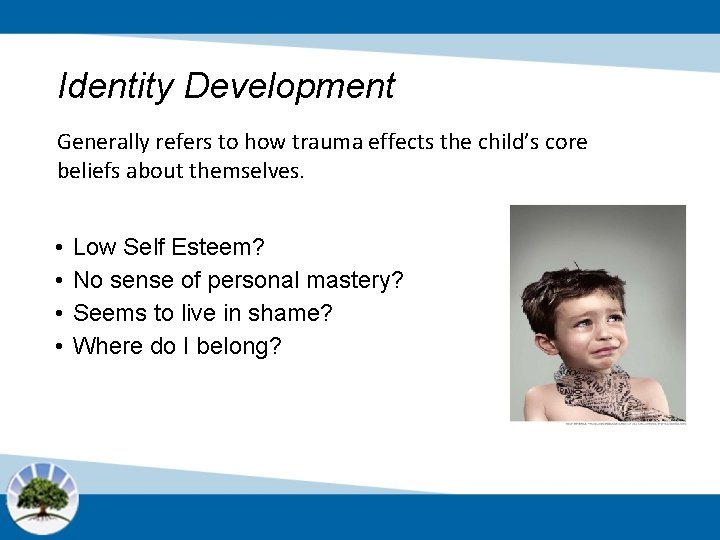
Identity Development Generally refers to how trauma effects the child’s core beliefs about themselves. • • Low Self Esteem? No sense of personal mastery? Seems to live in shame? Where do I belong?
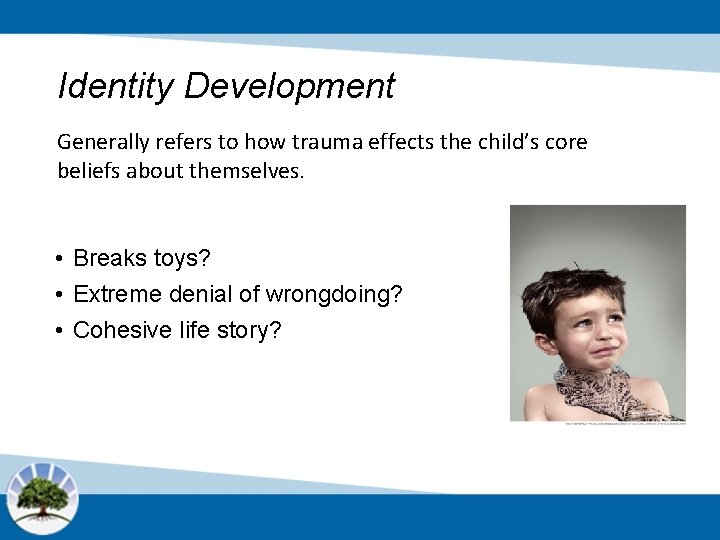
Identity Development Generally refers to how trauma effects the child’s core beliefs about themselves. • Breaks toys? • Extreme denial of wrongdoing? • Cohesive life story?
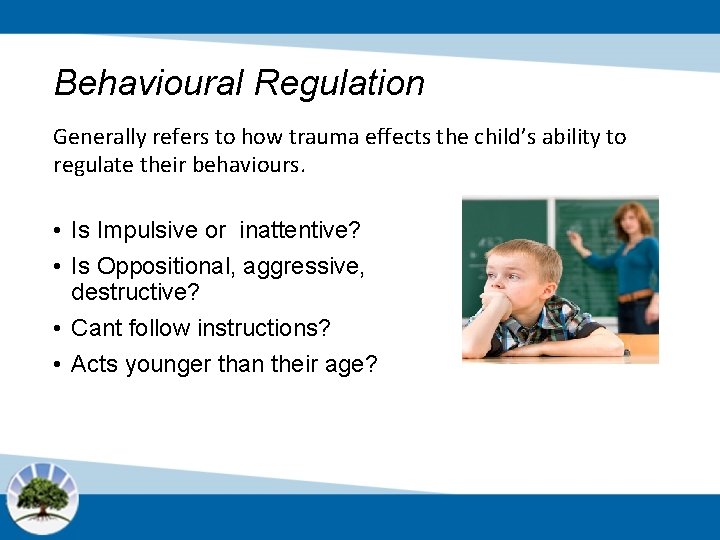
Behavioural Regulation Generally refers to how trauma effects the child’s ability to regulate their behaviours. • Is Impulsive or inattentive? • Is Oppositional, aggressive, destructive? • Cant follow instructions? • Acts younger than their age?
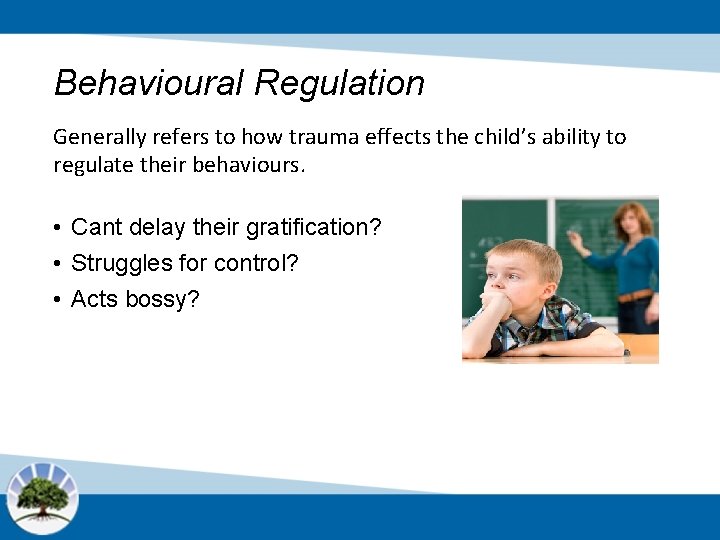
Behavioural Regulation Generally refers to how trauma effects the child’s ability to regulate their behaviours. • Cant delay their gratification? • Struggles for control? • Acts bossy?
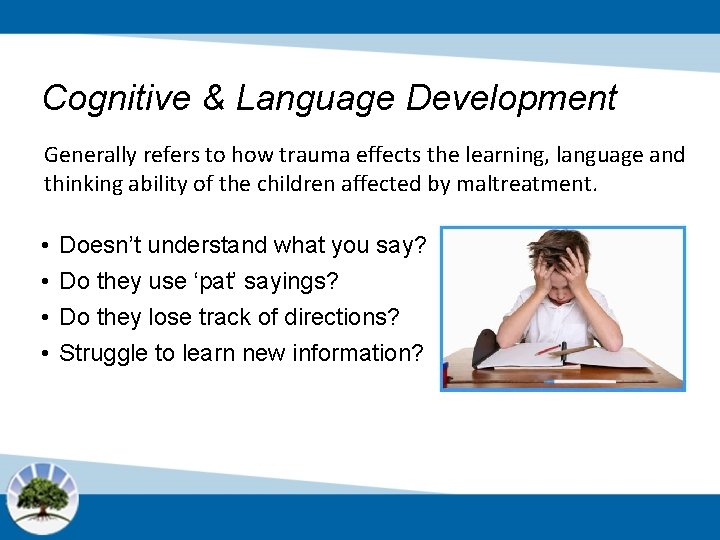
Cognitive & Language Development Generally refers to how trauma effects the learning, language and thinking ability of the children affected by maltreatment. • • Doesn’t understand what you say? Do they use ‘pat’ sayings? Do they lose track of directions? Struggle to learn new information?
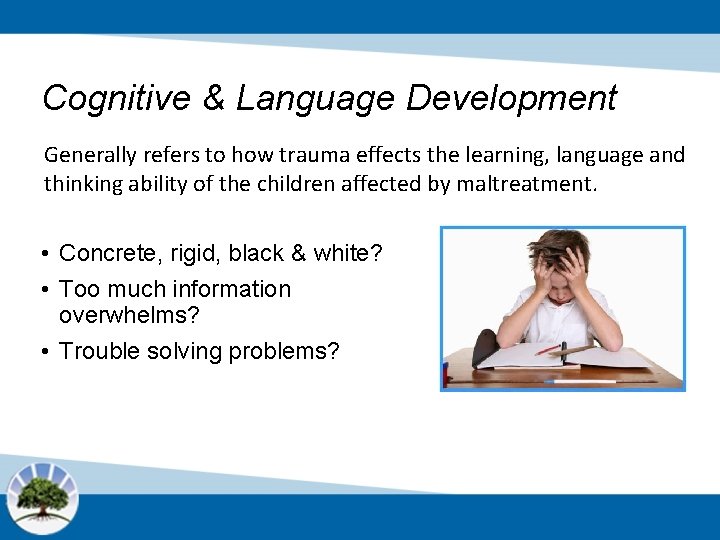
Cognitive & Language Development Generally refers to how trauma effects the learning, language and thinking ability of the children affected by maltreatment. • Concrete, rigid, black & white? • Too much information overwhelms? • Trouble solving problems?
Case Studies Pause the Powerpoint at this time. Using the Case examples provided, read each case example. For each, try to identify which behaviors fall into which of the 7 trauma domains. When you have completed this step, continue with the Power. Point to compare your answers. • Jimmy • Savanah • Mark
Jimmy: Jimmy is a 6 -year-old boy who has experienced complex trauma. His foster parents have noticed that he does not eat much at dinner times, but complain that food feels funny. He also has difficulty falling and staying asleep. His foster parents have found him wandering the house in the early morning. Teachers have commented that Jimmy has difficulty focusing on his work. He is jumpy and constantly scanning his environment. He is distracted by any noise. Both home and school have noticed that Jimmy wets his pants. This causes other children to make fun of him. He often withdraws and keeps to himself. Teachers in his gym class have noticed that he appears clumsy and cannot perform coordinated tasks. They have also noticed that his hand writing, printing and coloring are poor for his age.
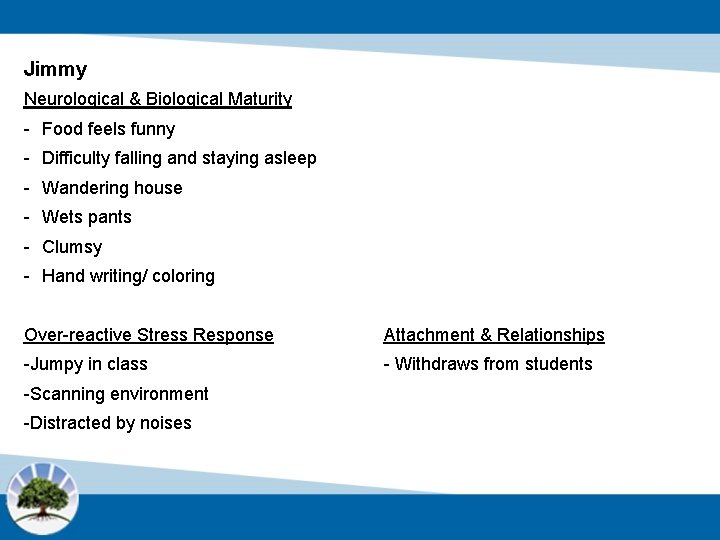
Jimmy Neurological & Biological Maturity - Food feels funny - Difficulty falling and staying asleep - Wandering house - Wets pants - Clumsy - Hand writing/ coloring Over-reactive Stress Response Attachment & Relationships -Jumpy in class - Withdraws from students -Scanning environment -Distracted by noises
Savanah: Savanah is an 8 -year-old girl who has suffered extreme neglect. She has frequent temper tantrums and screams at others when she does not get her way. She has been violent to other children when they have don’t play by her rules. She has hit and bit other children for no apparent reason. She has made fun of other kids and laughed at them when they get hurt or discuss the death of a family pet. She will often appear sad and discuss that no one likes her. She has mentioned that she is ‘bad’ and that this is the reason that she is no longer with her biological parents. She has difficulty remembering her family or other foster homes that she has been in, and is waiting for her current foster home to kick her out when they get tired of her.
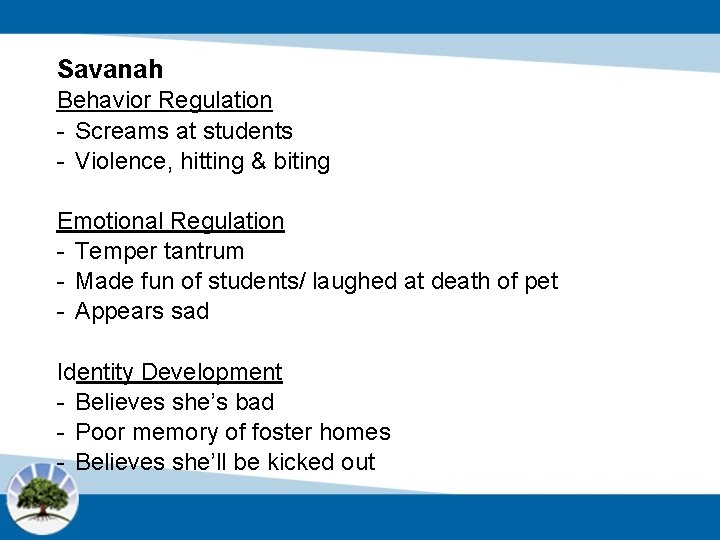
Savanah Behavior Regulation - Screams at students - Violence, hitting & biting Emotional Regulation - Temper tantrum - Made fun of students/ laughed at death of pet - Appears sad Identity Development - Believes she’s bad - Poor memory of foster homes - Believes she’ll be kicked out
Mark: Mark is a 10 -year-old boy who has suffered complex trauma. He is very clingy with his foster parents. They have noted that they have little time by themselves due to his inability to be alone. He will follow them to the bathroom, and continuously knock on the door to make sure that they are still there. He appears extremely anxious and uncertain and appears jumpy at the slightest noise. Mark does not appear to understand teachers at school and needs repeated requests to perform certain tasks. He does not perform tasks that require more than one or two steps. Teachers have also commented that he seems to use pat sayings rather that truly understanding what people say.
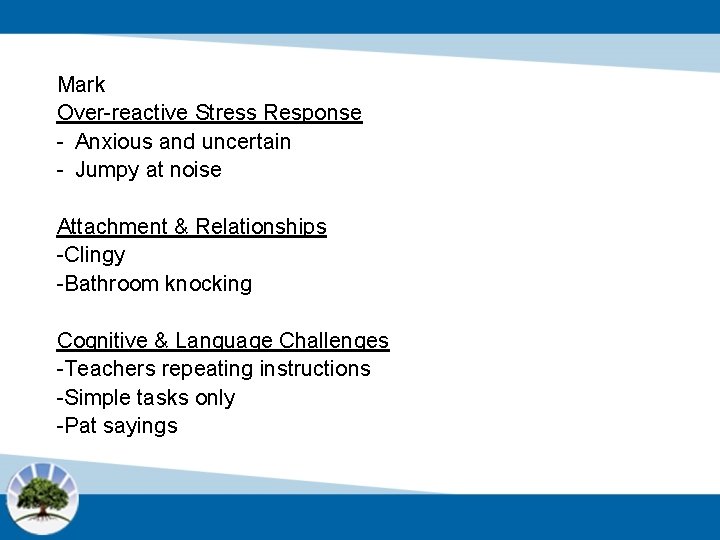
Mark Over-reactive Stress Response - Anxious and uncertain - Jumpy at noise Attachment & Relationships -Clingy -Bathroom knocking Cognitive & Language Challenges -Teachers repeating instructions -Simple tasks only -Pat sayings
- Slides: 35