
complex organic compounds made up of amino acids
- Slides: 28
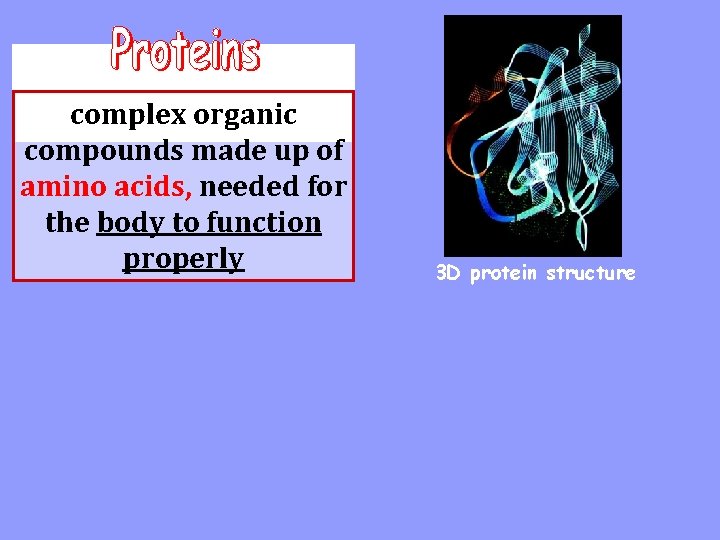
complex organic compounds made up of amino acids, needed for the body to function properly 3 D protein structure
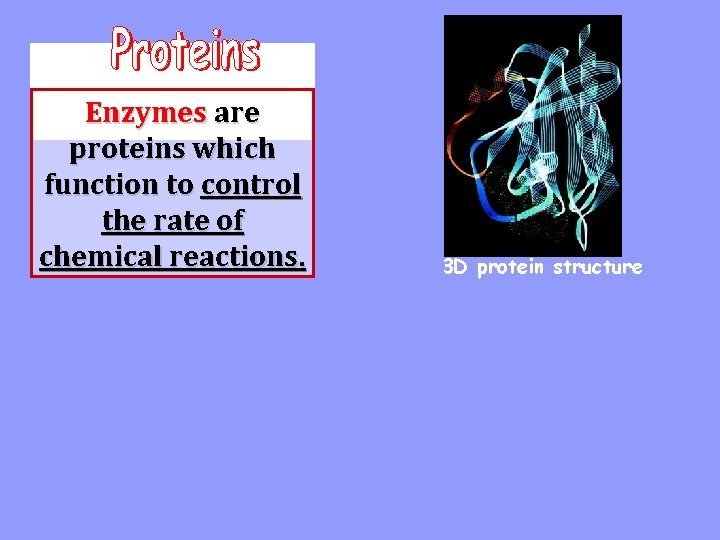
Enzymes are proteins which function to control the rate of chemical reactions. 3 D protein structure
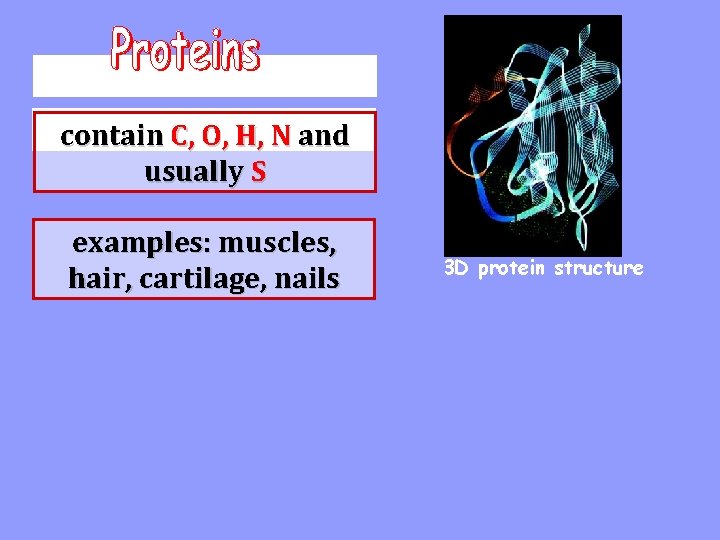
contain C, O, H, N and usually S examples: muscles, hair, cartilage, nails 3 D protein structure
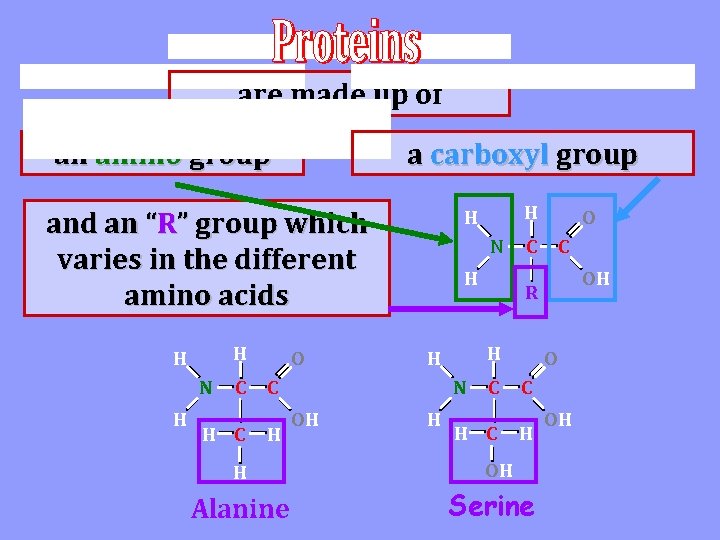
are made up of an amino group a carboxyl group and an “R” group which varies in the different amino acids H H N H C O N H H H Alanine N H O C C OH R H H C OH H H O C C H OH Serine OH
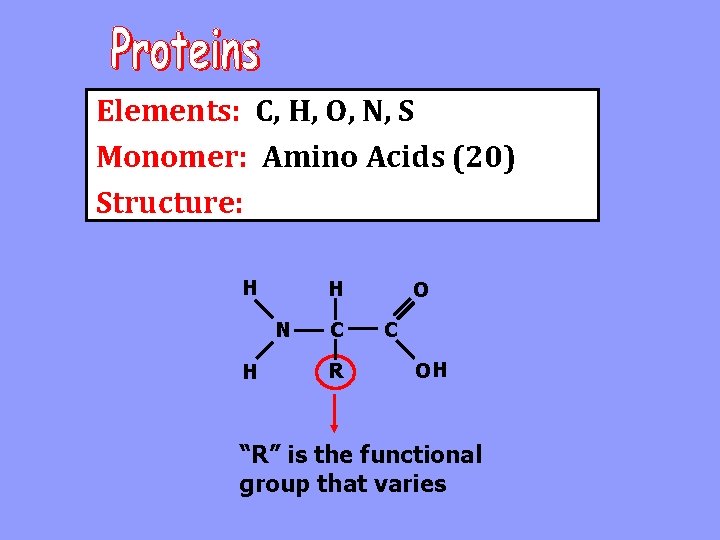
Elements: C, H, O, N, S Monomer: Amino Acids (20) Structure: H H N H C R O C OH “R” is the functional group that varies
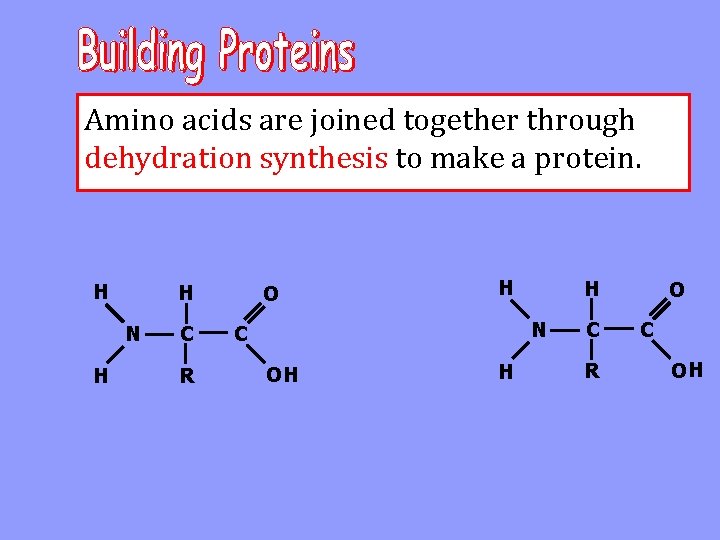
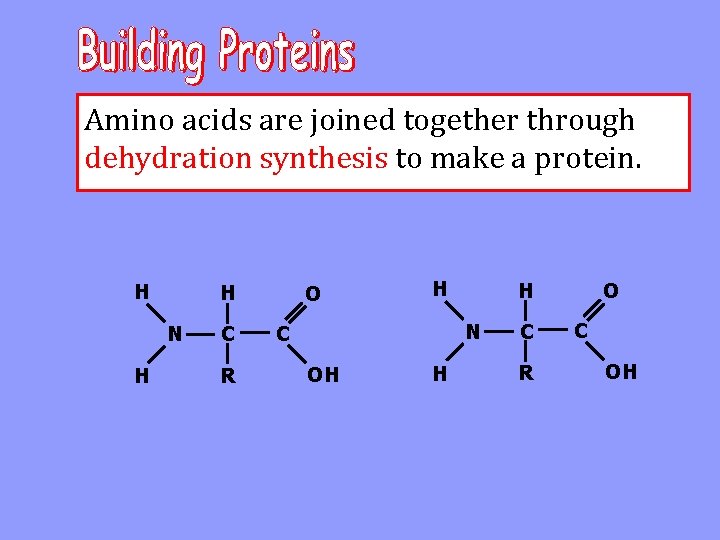
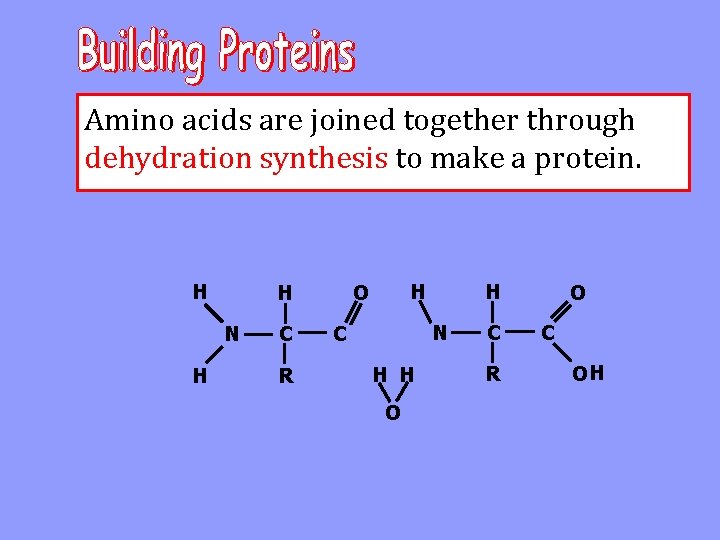
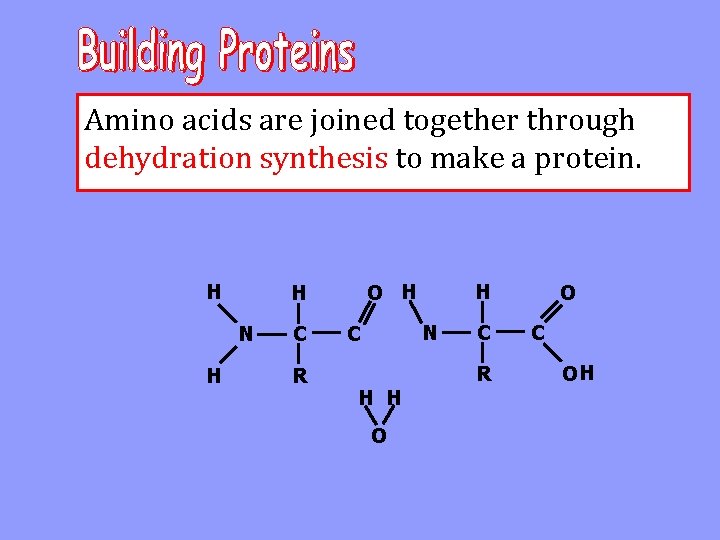
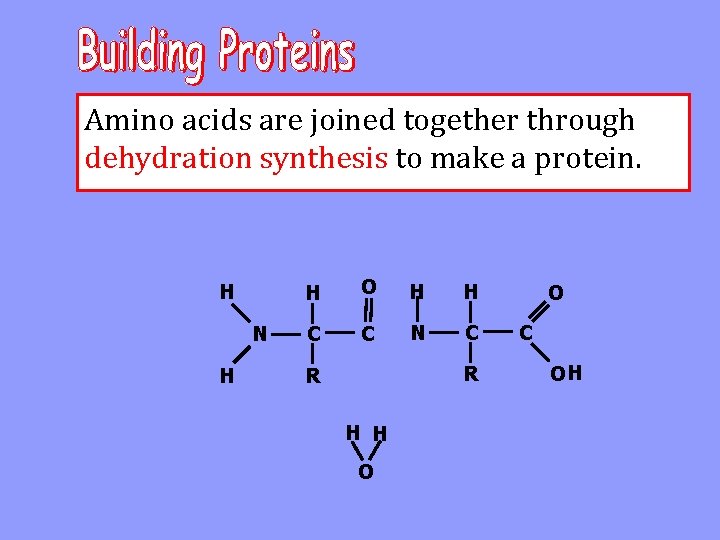
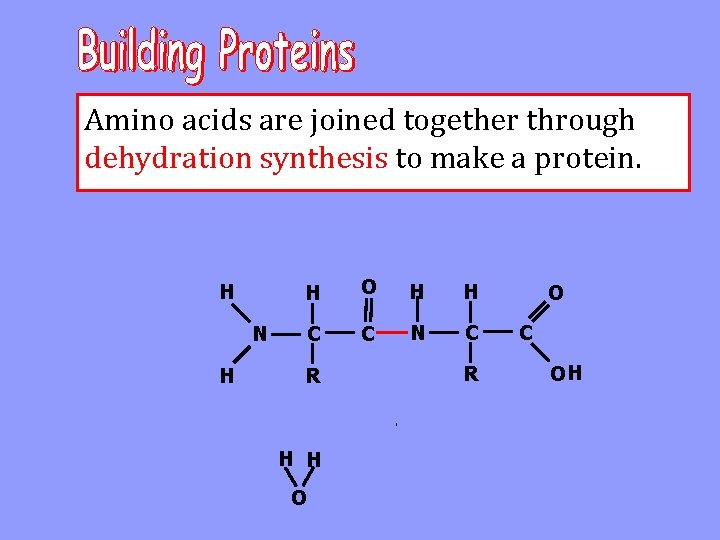
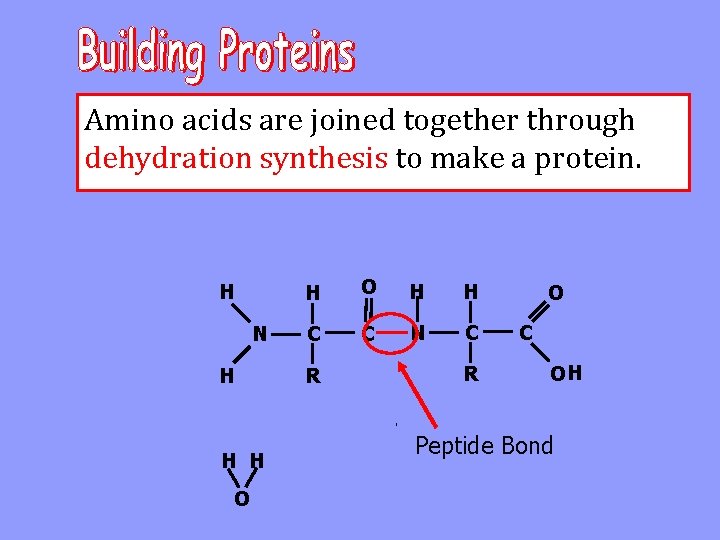
Amino acids are joined together through dehydration synthesis to make a protein. H H N H C R O H H N C OH H C R O C OH
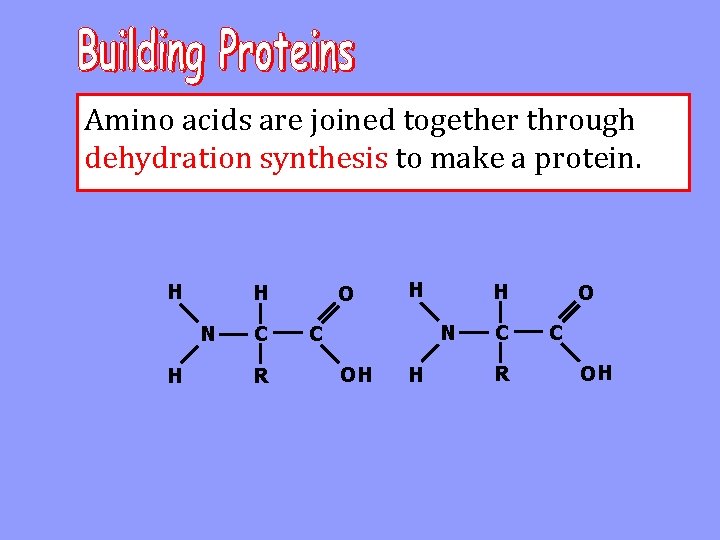
Amino acids are joined together through dehydration synthesis to make a protein. H H N H C R O H H N C OH H C R O C OH
Amino acids are joined together through dehydration synthesis to make a protein. H H N H C R O H H N C OH H C R O C OH
Amino acids are joined together through dehydration synthesis to make a protein. H H N H C R O H H N C OH H C R O C OH
Amino acids are joined together through dehydration synthesis to make a protein. H H N H C R O H H N C OH H C R O C OH
Amino acids are joined together through dehydration synthesis to make a protein. H H N H C R O H H N C OH H C R O C OH
Amino acids are joined together through dehydration synthesis to make a protein. H N H C R H O H H N C H H O C R O C OH
Amino acids are joined together through dehydration synthesis to make a protein. H N H O H H C R H N C H H O C R O C OH
Amino acids are joined together through dehydration synthesis to make a protein. H N H H O H H C C N C R R H H O O C OH
Amino acids are joined together through dehydration synthesis to make a protein. H N H H O H H C C N C R H H O R O C OH
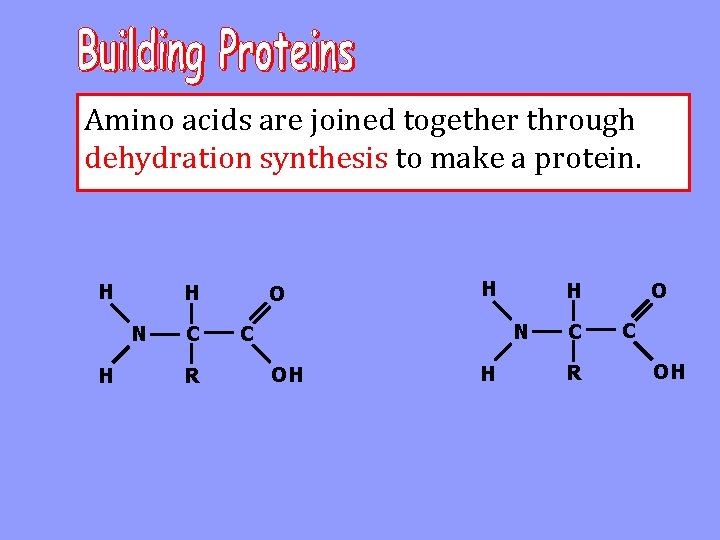
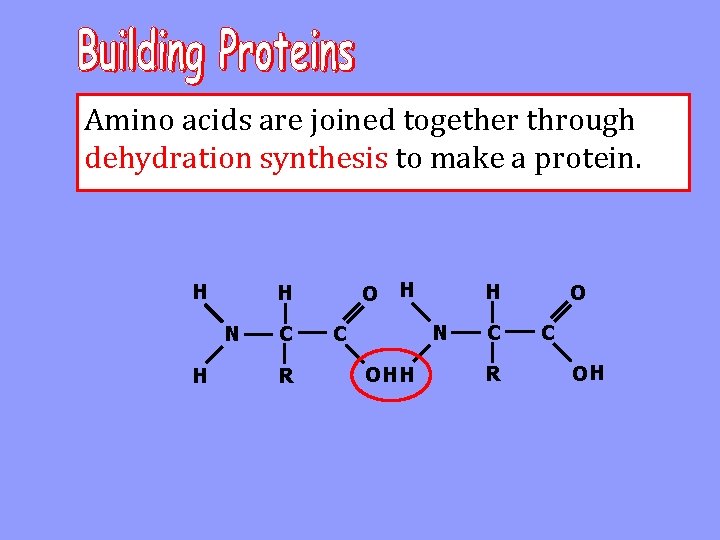
Amino acids are joined together through dehydration synthesis to make a protein. H N H H H O H H C C N C R R O C OH Peptide Bond
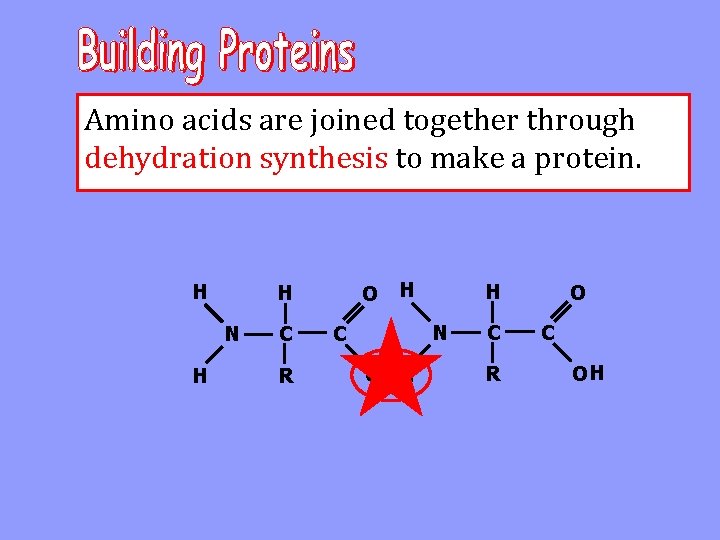
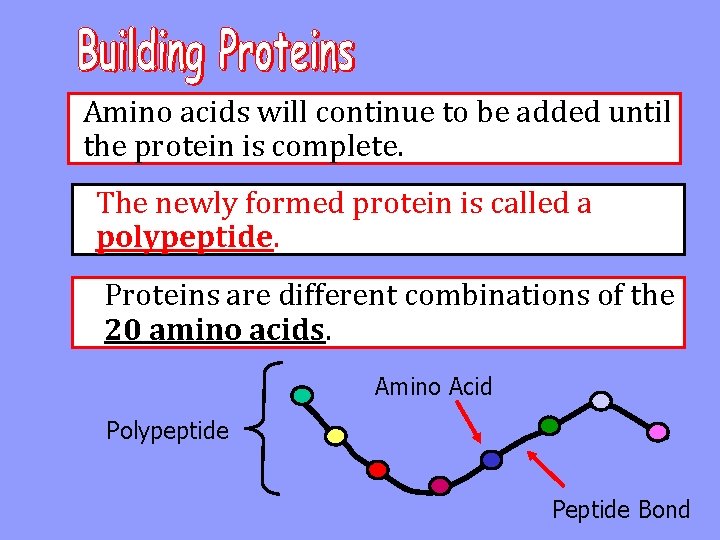
Amino acids will continue to be added until the protein is complete. The newly formed protein is called a polypeptide. Proteins are different combinations of the 20 amino acids. Amino Acid Polypeptide Peptide Bond
Proteins are a major structural component for living organisms (ex. muscle) Proteins function as enzymes to carry out chemical reactions in the body.
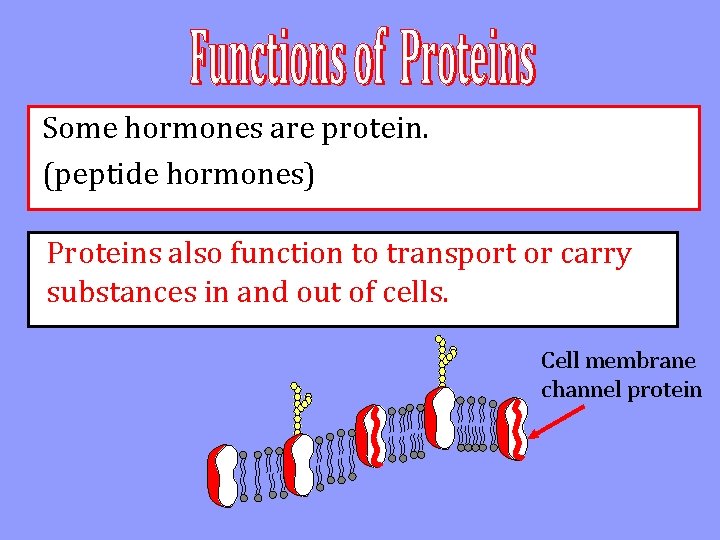
Some hormones are protein. (peptide hormones) Proteins also function to transport or carry substances in and out of cells. Cell membrane channel protein
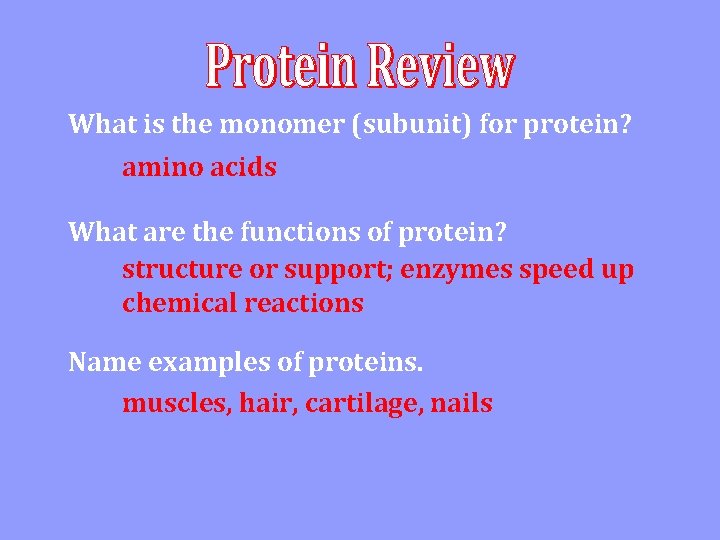
What is the monomer (subunit) for protein? amino acids What are the functions of protein? structure or support; enzymes speed up chemical reactions Name examples of proteins. muscles, hair, cartilage, nails
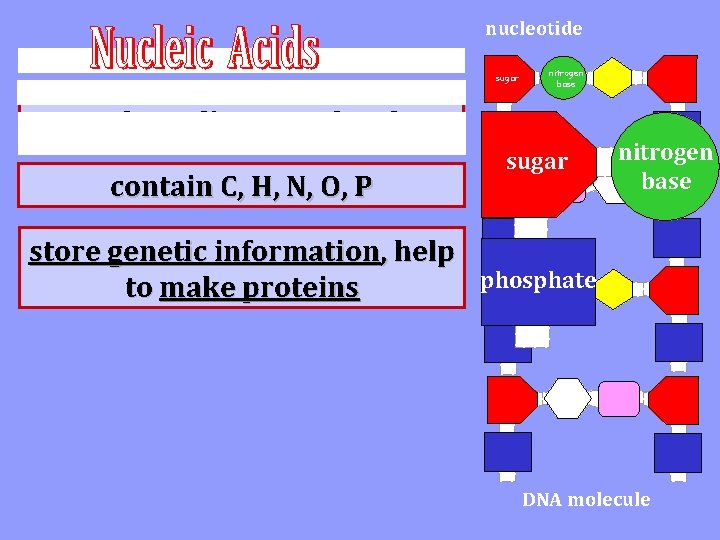
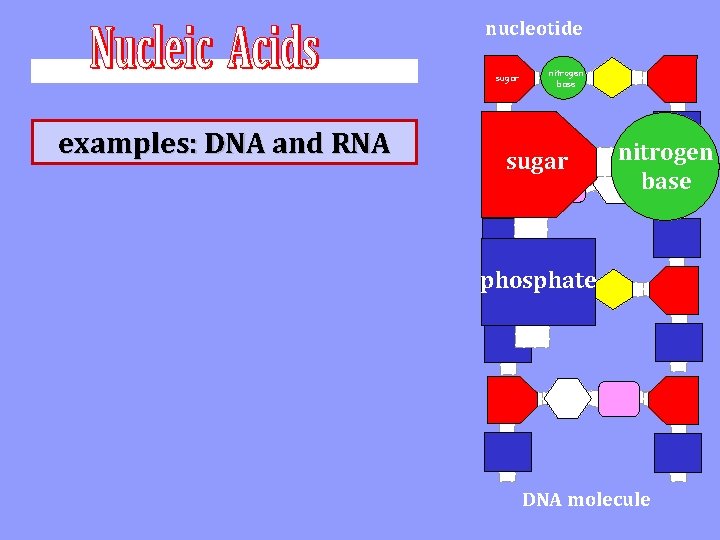
nucleotide nitrogen base sugar very large linear molecules contain C, H, N, O, P store genetic information, help to make proteins phosphate sugar nitrogen base phosphate DNA molecule
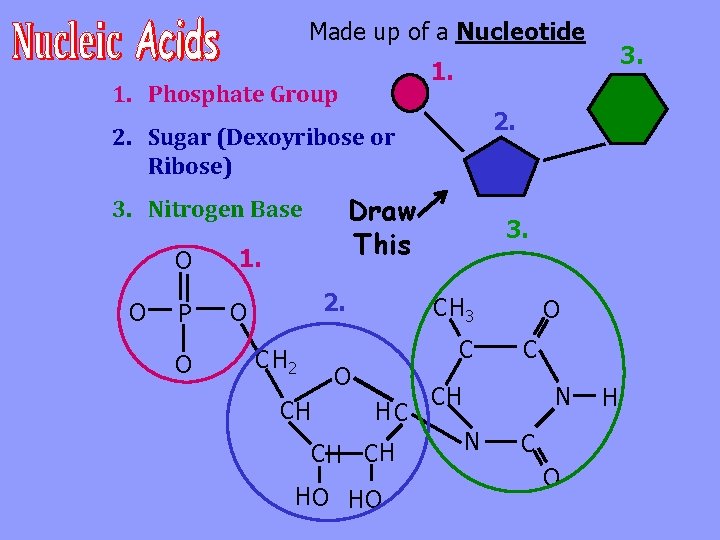
Made up of a Nucleotide 1. Phosphate Group 2. Sugar (Dexoyribose or Ribose) Draw This 3. Nitrogen Base O O P O 1. 2. O C H 2 3. C H 3 C O CH 3. HC C H CH HO H O O C CH N N C O H
nucleotide nitrogen base sugar examples: DNA and RNA phosphate sugar nitrogen base phosphate DNA molecule
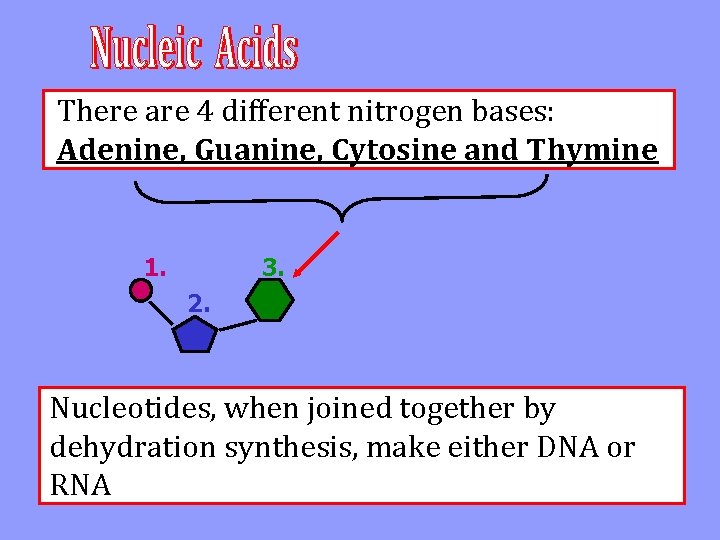
There are 4 different nitrogen bases: Adenine, Guanine, Cytosine and Thymine 1. 3. 2. Nucleotides, when joined together by dehydration synthesis, make either DNA or RNA
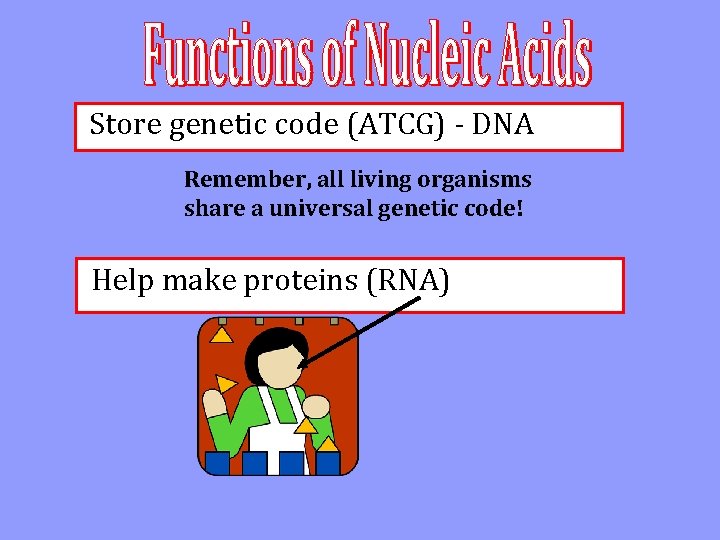
Store genetic code (ATCG) - DNA Remember, all living organisms share a universal genetic code! Help make proteins (RNA)
What is the monomer (subunit) for nucleic acids? nucleotides What are the compounds in a nucleotide? sugar, phosphate, nitrogen base What are the functions of nucleic acids? store genetic information, help to make proteins Name examples of nucleic acid. DNA, RNA