
Complex Numbers Math is about to get imaginary
Complex Numbers Math is about to get imaginary!
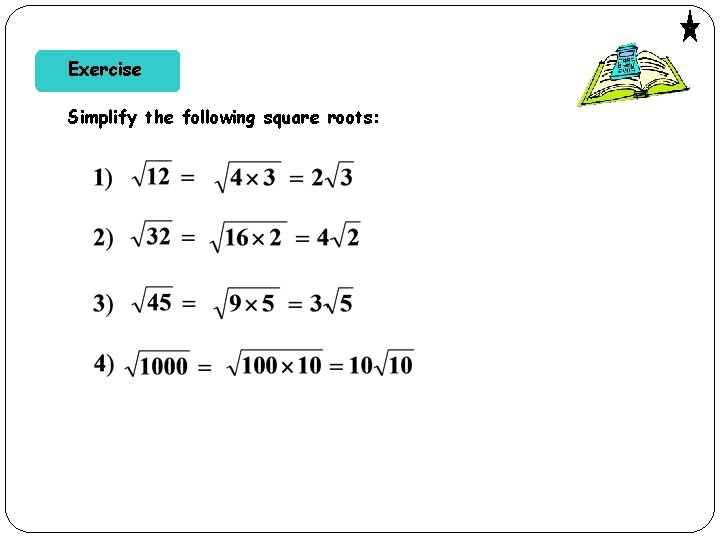
Exercise Simplify the following square roots:
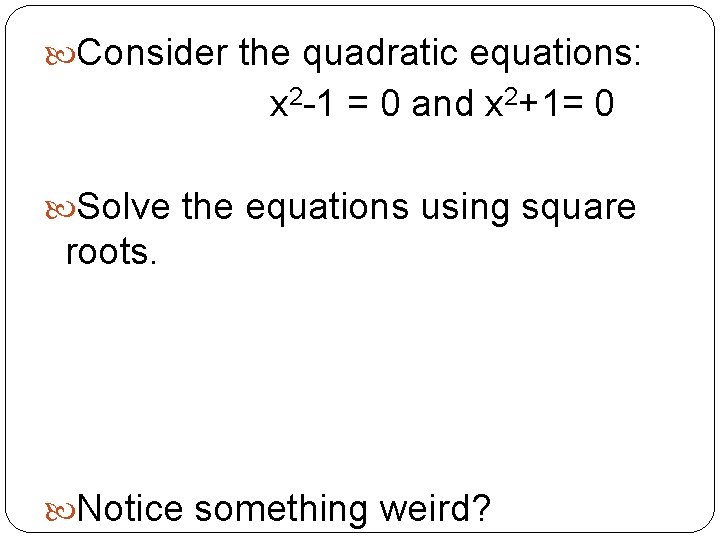
Consider the quadratic equations: x 2 -1 = 0 and x 2+1= 0 Solve the equations using square roots. Notice something weird?
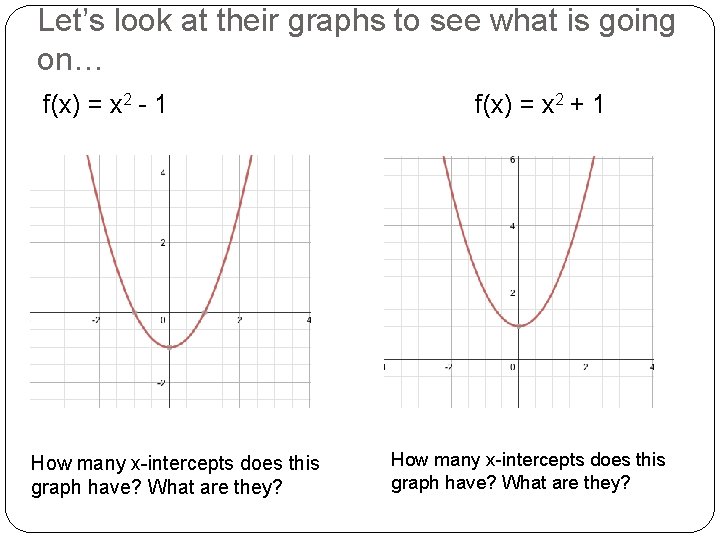
Let’s look at their graphs to see what is going on… f(x) = x 2 - 1 How many x-intercepts does this graph have? What are they? f(x) = x 2 + 1 How many x-intercepts does this graph have? What are they?
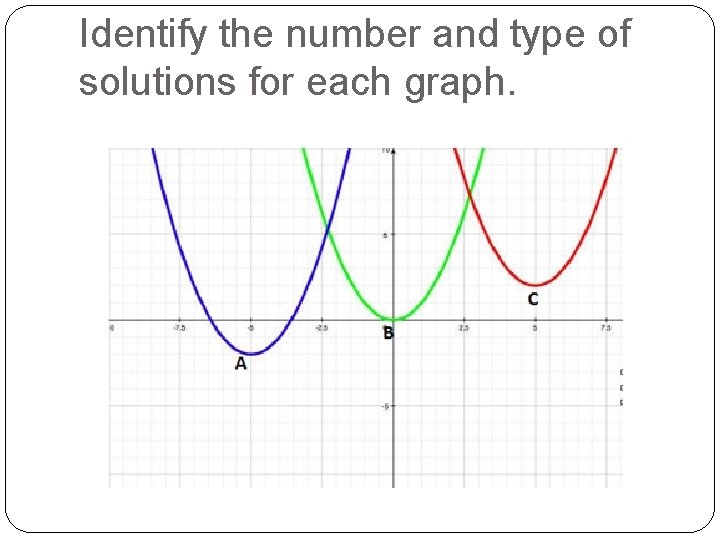
Identify the number and type of solutions for each graph.
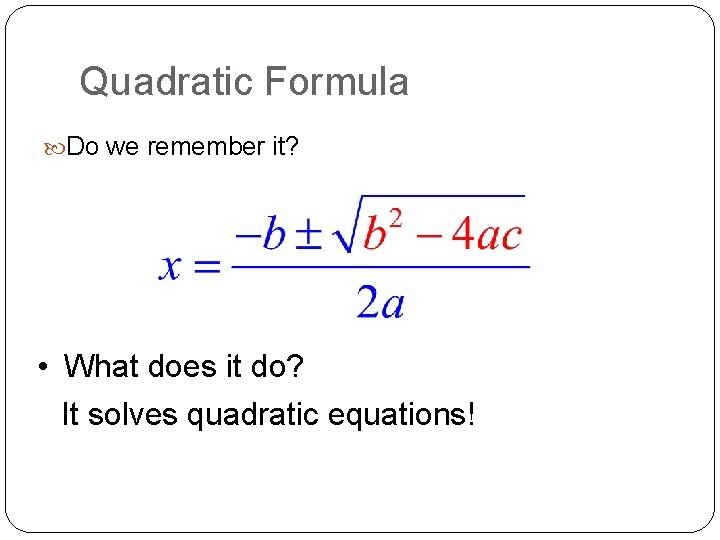
Quadratic Formula Do we remember it? • What does it do? It solves quadratic equations!
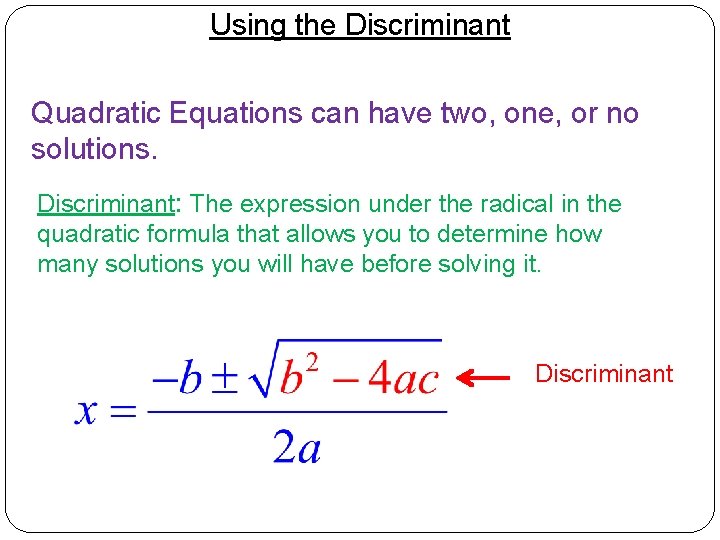
Using the Discriminant Quadratic Equations can have two, one, or no solutions. Discriminant: The expression under the radical in the quadratic formula that allows you to determine how many solutions you will have before solving it. Discriminant
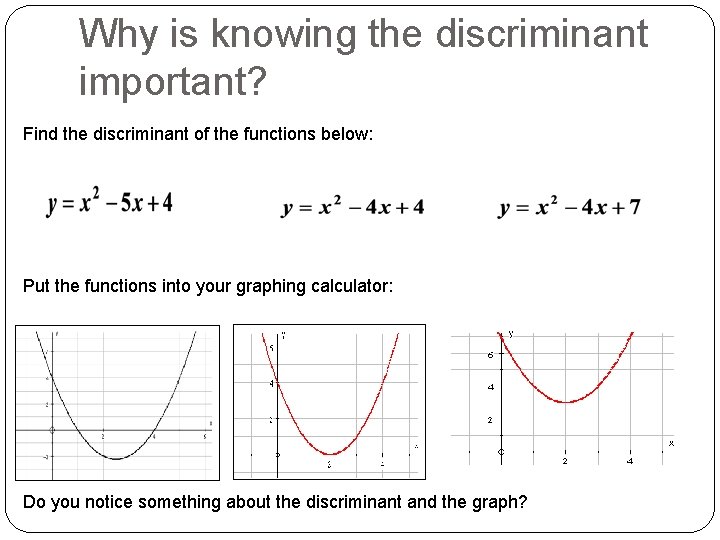
Why is knowing the discriminant important? Find the discriminant of the functions below: Put the functions into your graphing calculator: Do you notice something about the discriminant and the graph?
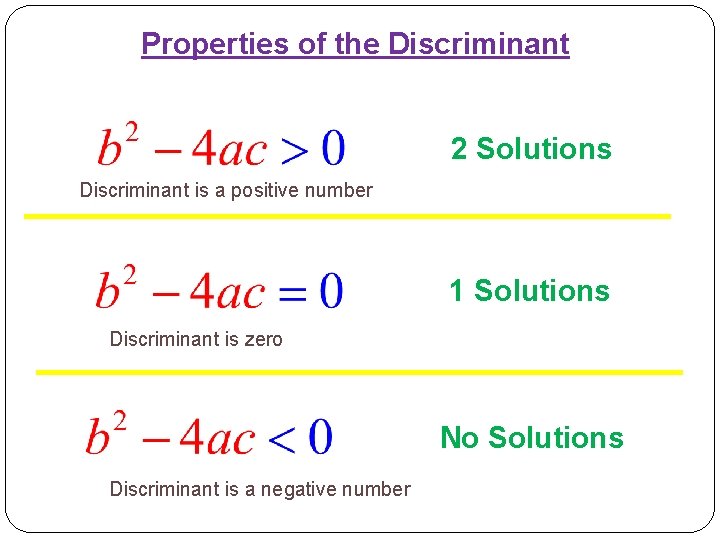
Properties of the Discriminant 2 Solutions Discriminant is a positive number 1 Solutions Discriminant is zero No Solutions Discriminant is a negative number
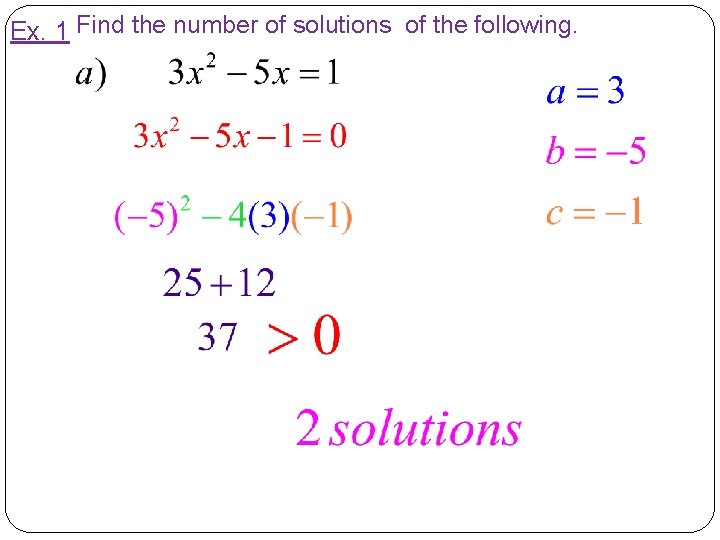
Ex. 1 Find the number of solutions of the following.
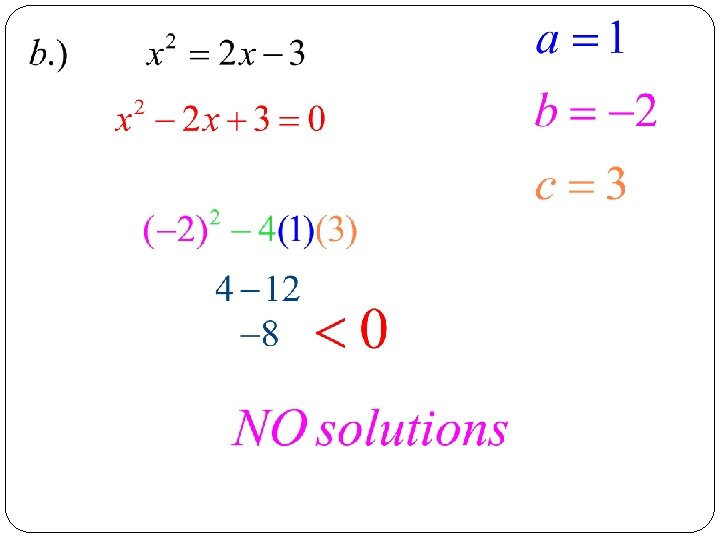
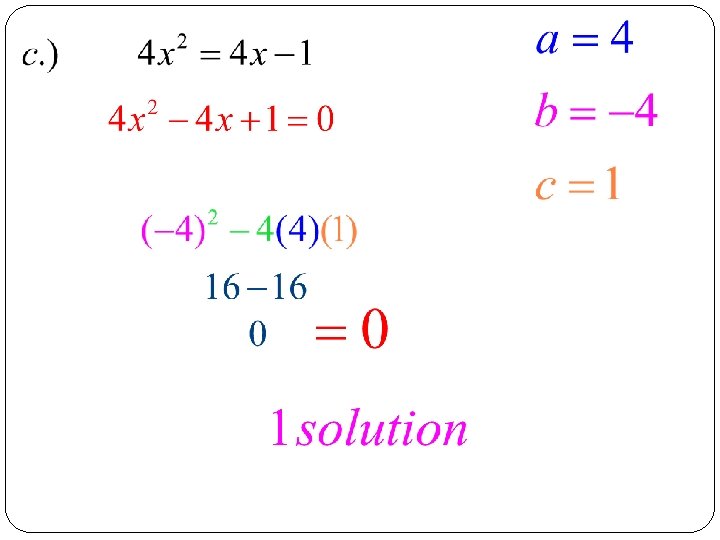
Now it’s your turn!

Imaginary Numbers
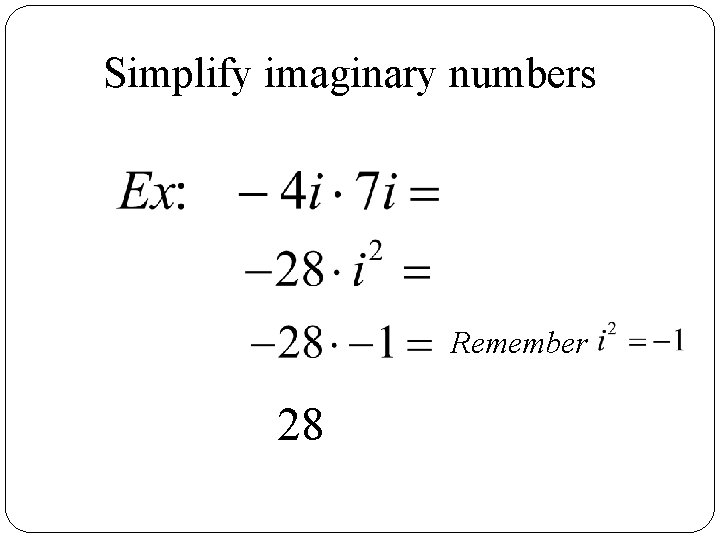
Simplify imaginary numbers Remember 28
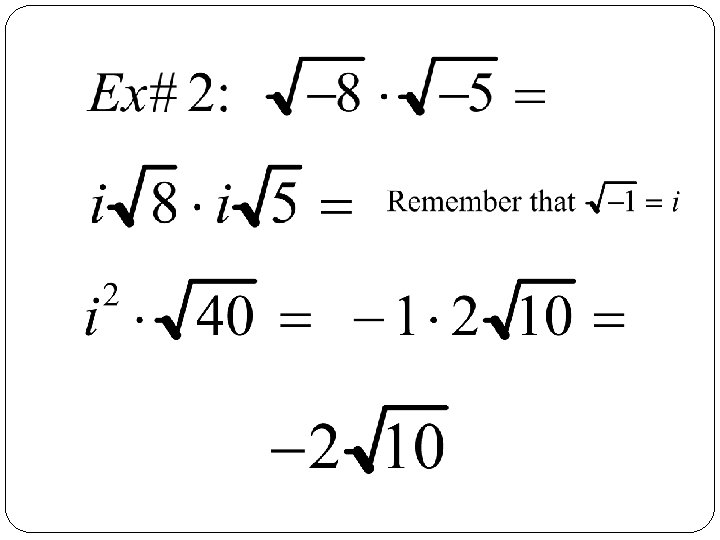
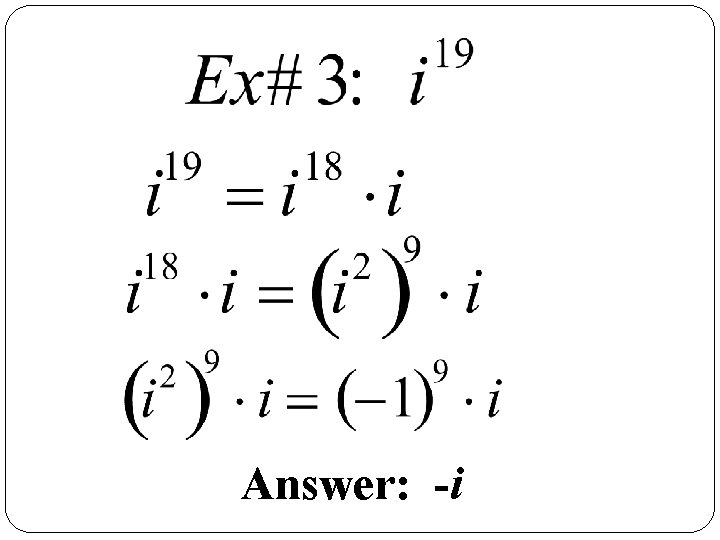
Answer: -i
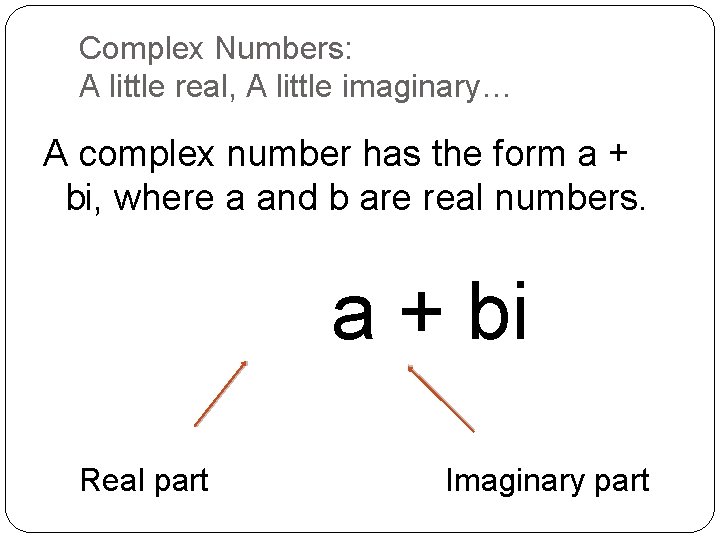
Complex Numbers: A little real, A little imaginary… A complex number has the form a + bi, where a and b are real numbers. a + bi Real part Imaginary part
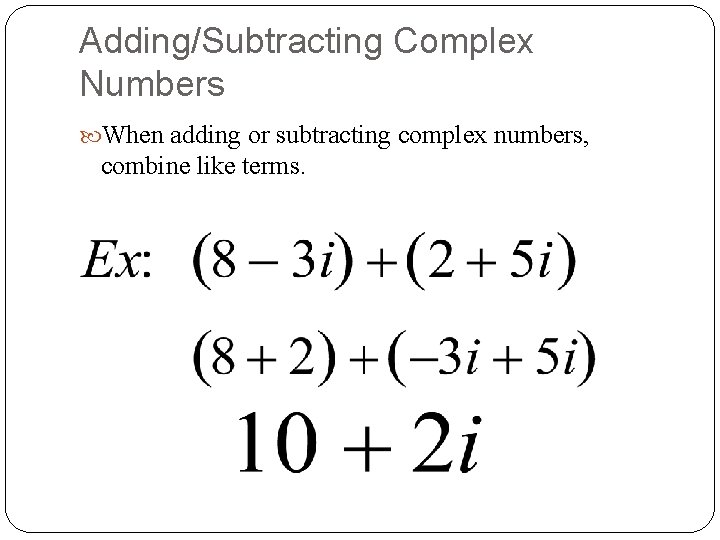
Adding/Subtracting Complex Numbers When adding or subtracting complex numbers, combine like terms.
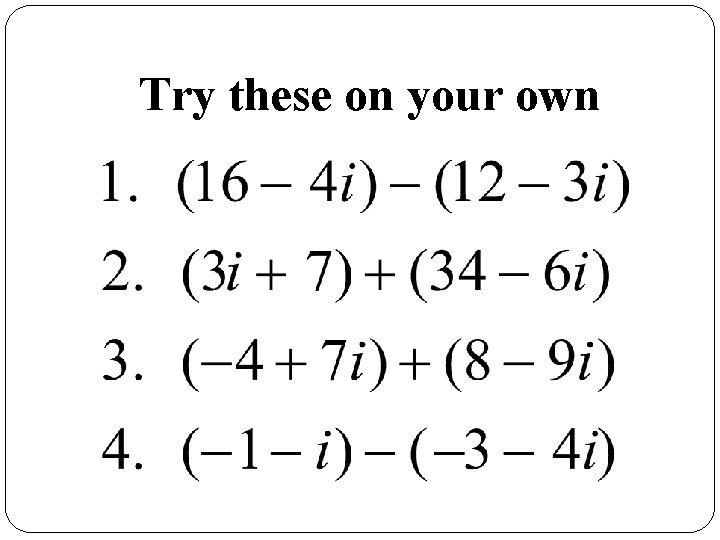
Try these on your own
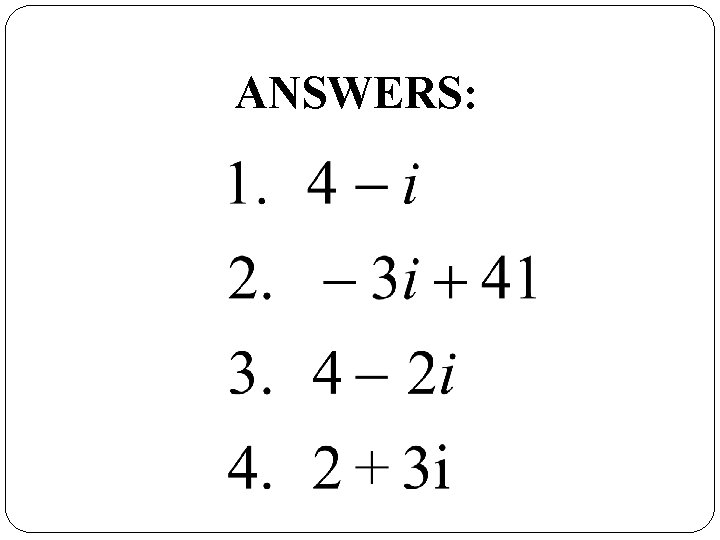
ANSWERS:
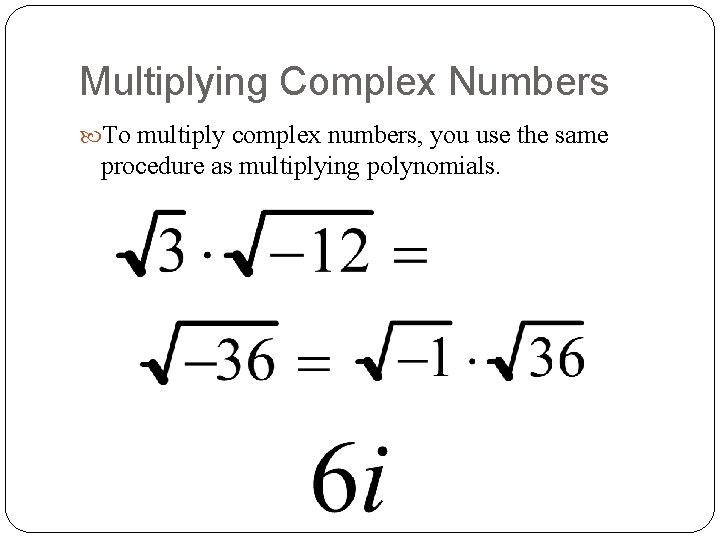
Multiplying Complex Numbers To multiply complex numbers, you use the same procedure as multiplying polynomials.
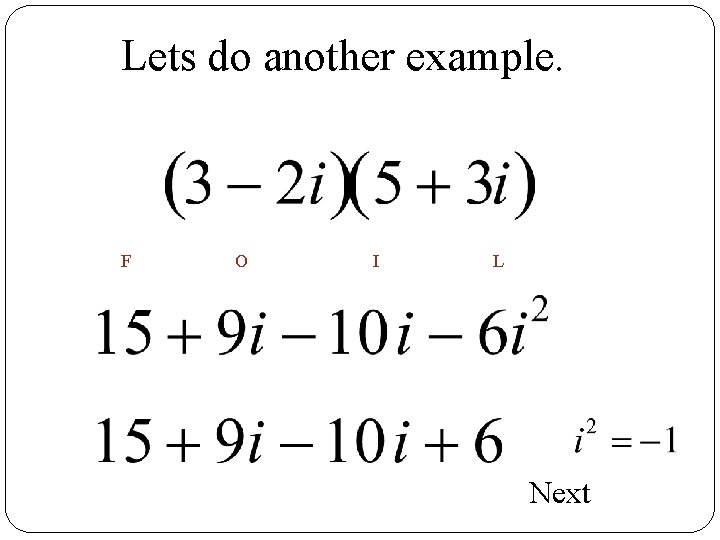
Lets do another example. F O I L Next
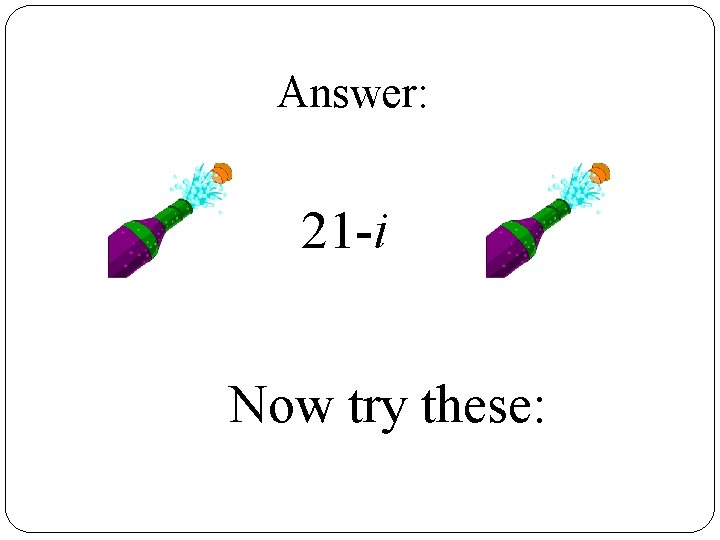
Answer: 21 -i Now try these:
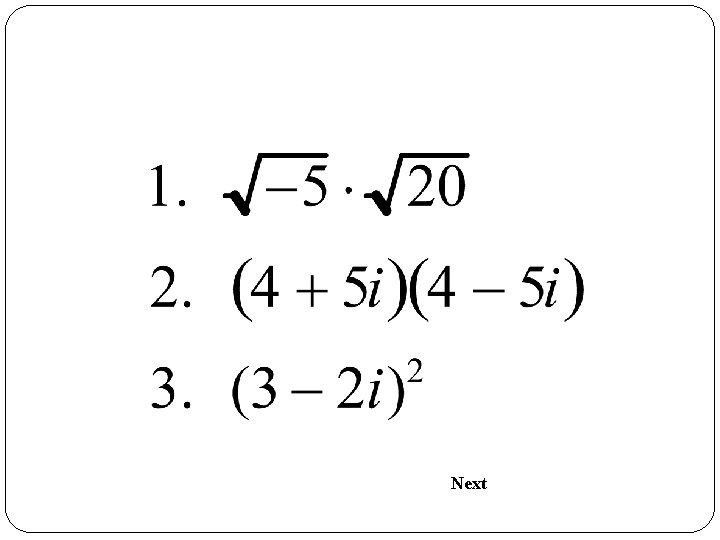
Next
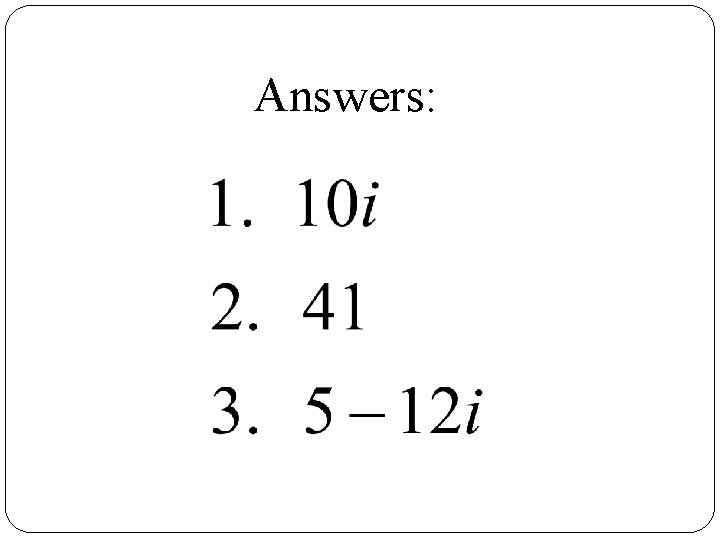
Answers:
Now it’s your turn!
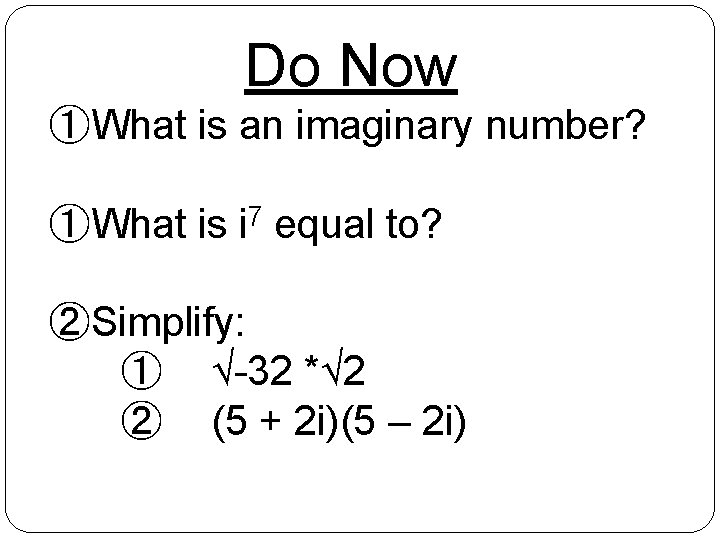
Do Now ①What is an imaginary number? ①What is i 7 equal to? ②Simplify: ① √-32 *√ 2 ② (5 + 2 i)(5 – 2 i)
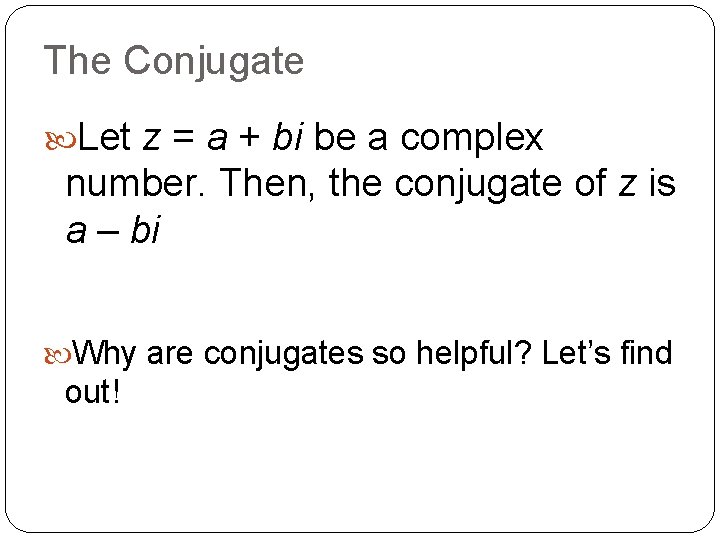
The Conjugate Let z = a + bi be a complex number. Then, the conjugate of z is a – bi Why are conjugates so helpful? Let’s find out!
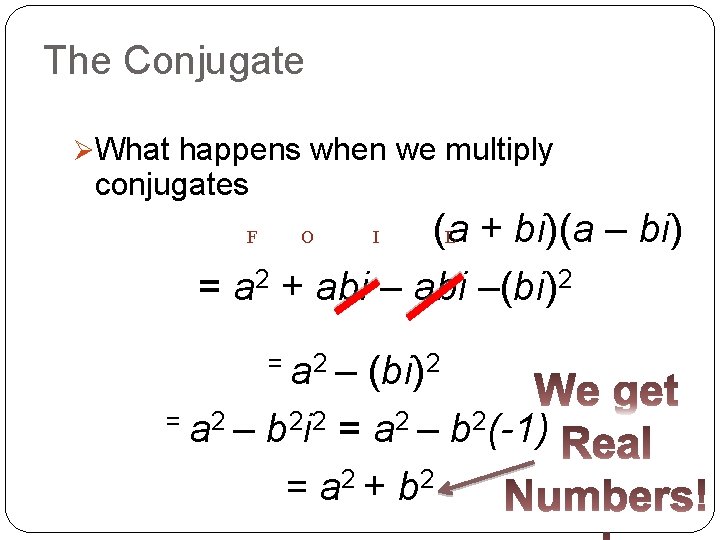
The Conjugate ØWhat happens when we multiply conjugates (a L + bi)(a – bi) = a 2 + abi –(bi)2 F O = a 2 – I (bi)2 = a 2 – b 2 i 2 = a 2 – b 2(-1) = a 2 + b 2
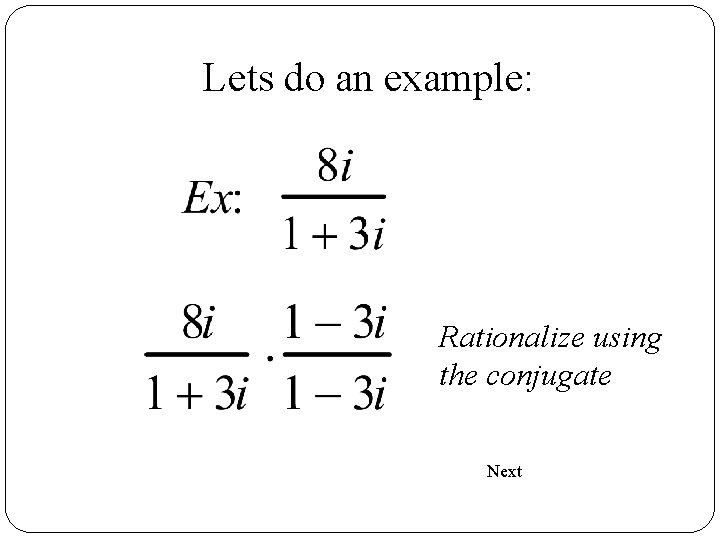
Lets do an example: Rationalize using the conjugate Next
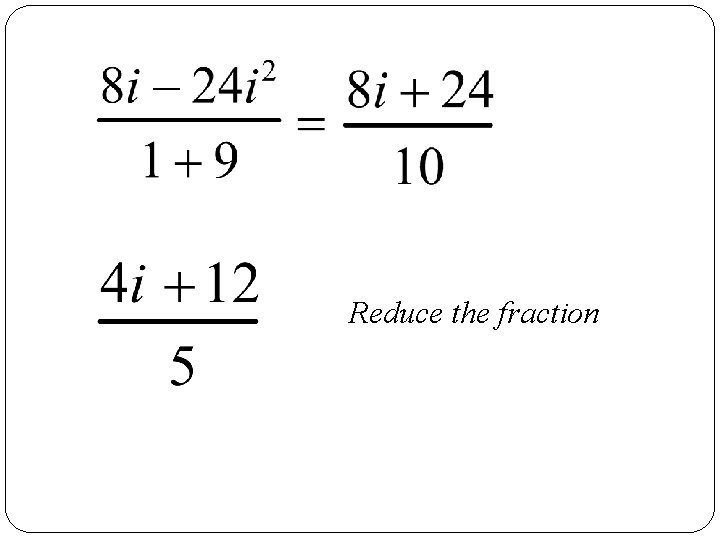
Reduce the fraction
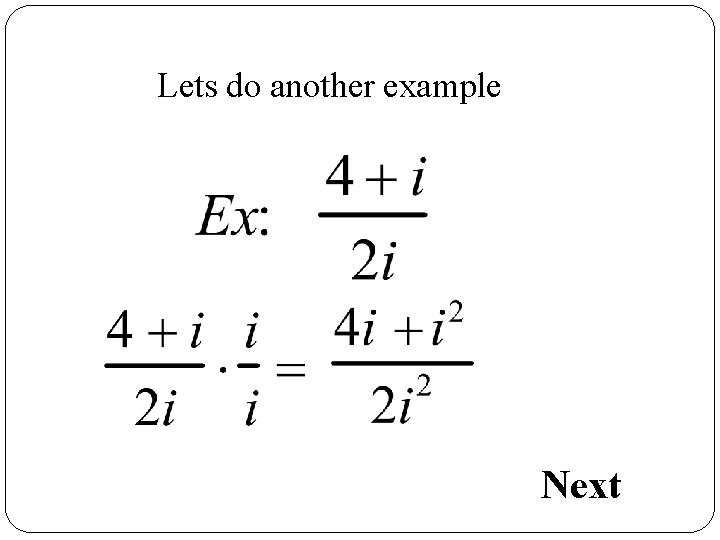
Lets do another example Next
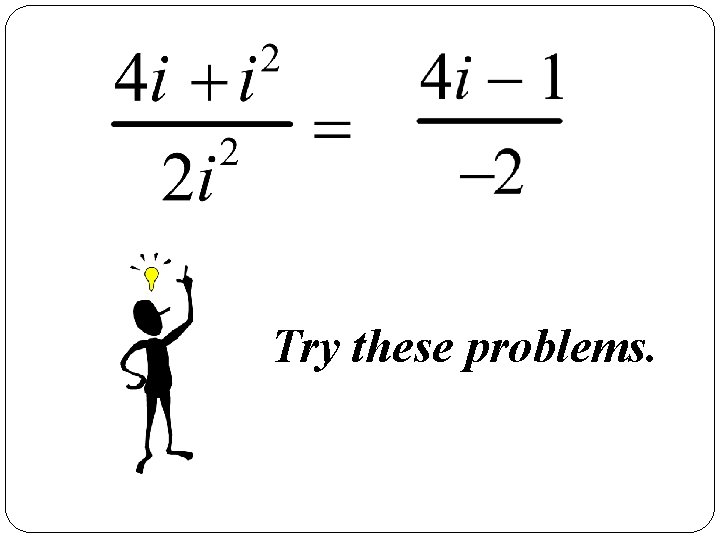
Try these problems.
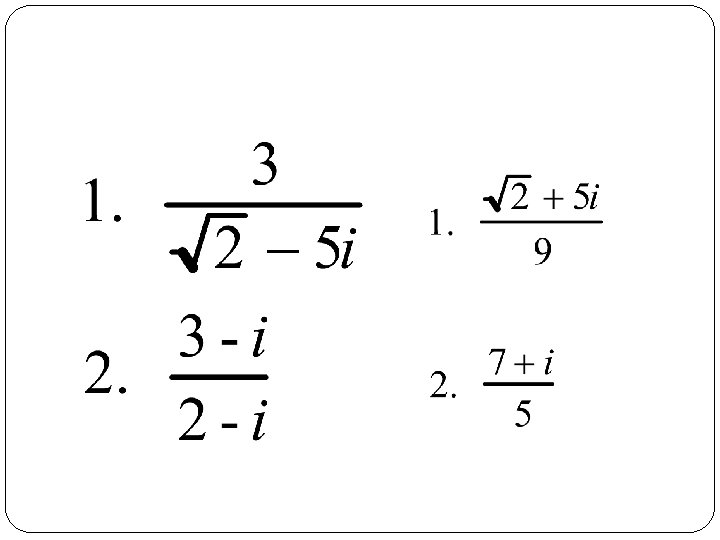
So why are we learning all this complex numbers stuff anyway?
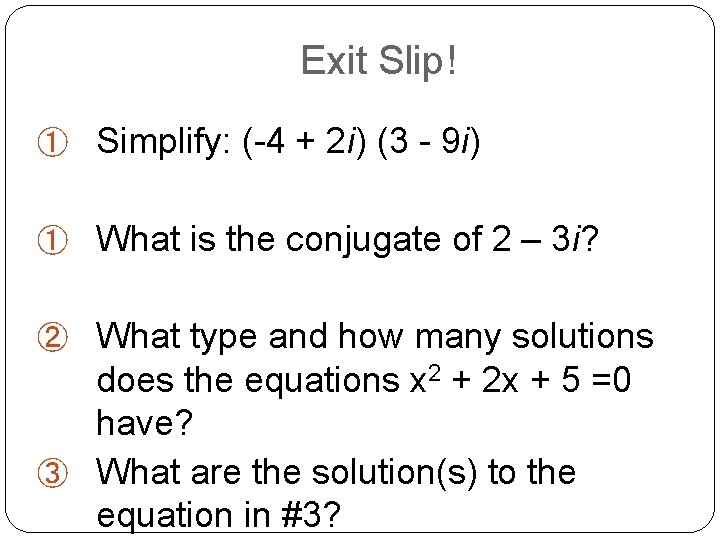
Exit Slip! ① Simplify: (-4 + 2 i) (3 - 9 i) ① What is the conjugate of 2 – 3 i? ② What type and how many solutions does the equations x 2 + 2 x + 5 =0 have? ③ What are the solution(s) to the equation in #3?
- Slides: 37