
Complex Network Architecture Reactions Flow Protein level Reactions
![Robust Yet Fragile (RYF) [a system] can have [a property] robust for [a set](https://slidetodoc.com/presentation_image_h2/1780d1eca34744e60621092b6b6e9314/image-17.jpg "Robust Yet Fragile (RYF) [a system] can have [a property] robust for [a set")
![[a system] can have [a property] robust for [a set of perturbations] Fragile Yet](https://slidetodoc.com/presentation_image_h2/1780d1eca34744e60621092b6b6e9314/image-145.jpg "[a system] can have [a property] robust for [a set of perturbations] Fragile Yet")
![[a system] can have [a property] robust for [a set of perturbations] Apply recursively](https://slidetodoc.com/presentation_image_h2/1780d1eca34744e60621092b6b6e9314/image-146.jpg "[a system] can have [a property] robust for [a set of perturbations] Apply recursively")
![[a system] can have [a property] robust for [a set of perturbations] • Some](https://slidetodoc.com/presentation_image_h2/1780d1eca34744e60621092b6b6e9314/image-147.jpg "[a system] can have [a property] robust for [a set of perturbations] • Some")
![[ATP] 1. 05 Ideal 1 h >>1 0. 95 Time response 0. 9 0.](https://slidetodoc.com/presentation_image_h2/1780d1eca34744e60621092b6b6e9314/image-156.jpg "[ATP] 1. 05 Ideal 1 h >>1 0. 95 Time response 0. 9 0.")
![[ATP] 1. 05 1 h >> 1 0. 95 Time response 0. 9 Yet](https://slidetodoc.com/presentation_image_h2/1780d1eca34744e60621092b6b6e9314/image-157.jpg "[ATP] 1. 05 1 h >> 1 0. 95 Time response 0. 9 Yet")
![[a system] can have [a property] robust for [a set of perturbations] Fragile Yet](https://slidetodoc.com/presentation_image_h2/1780d1eca34744e60621092b6b6e9314/image-159.jpg "[a system] can have [a property] robust for [a set of perturbations] Fragile Yet")
![[ATP] 1. 05 1 h >> 1 0. 95 Time response 0. 9 Yet](https://slidetodoc.com/presentation_image_h2/1780d1eca34744e60621092b6b6e9314/image-161.jpg "[ATP] 1. 05 1 h >> 1 0. 95 Time response 0. 9 Yet")
- Slides: 187
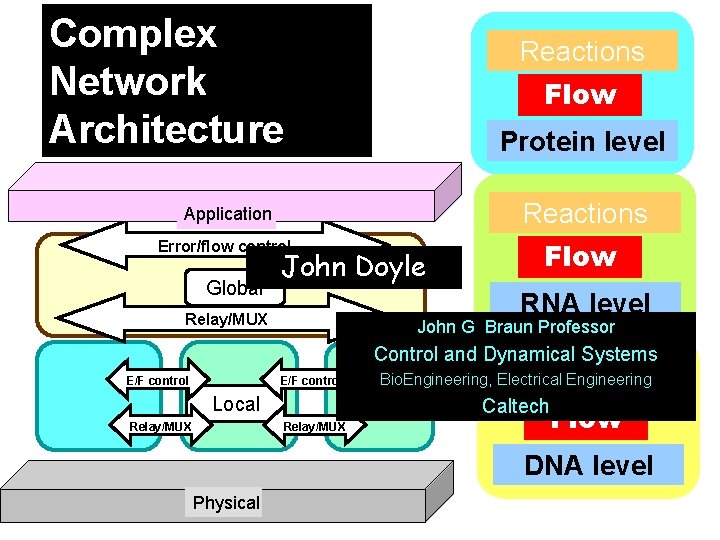
Complex Network Architecture Reactions Flow Protein level Reactions Application Error/flow control Global John Doyle Flow RNA level Relay/MUX John G Braun Professor Control and Dynamical Systems E/F control Local Relay/MUX Reactions Bio. Engineering, Electrical Engineering Caltech Relay/MUX Flow DNA level Physical
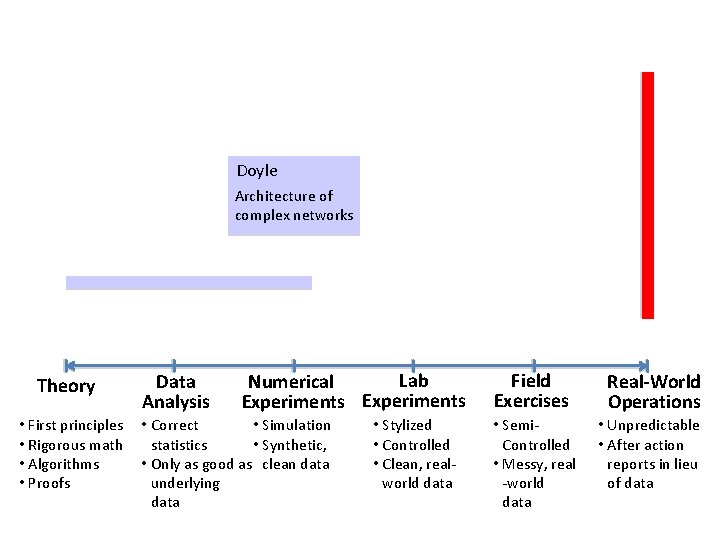
Doyle Architecture of complex networks Theory • First principles • Rigorous math • Algorithms • Proofs Data Analysis Lab Numerical Experiments • Correct • Simulation statistics • Synthetic, • Only as good as clean data underlying data • Stylized • Controlled • Clean, realworld data Field Exercises • Semi. Controlled • Messy, real -world data Real-World Operations • Unpredictable • After action reports in lieu of data
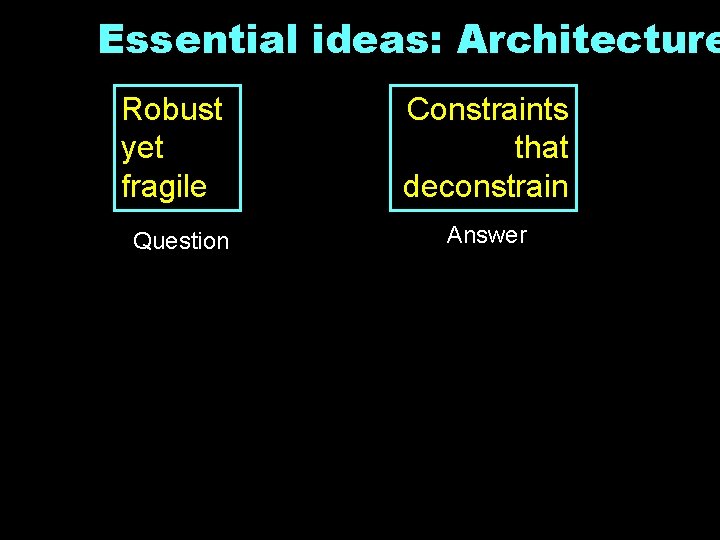
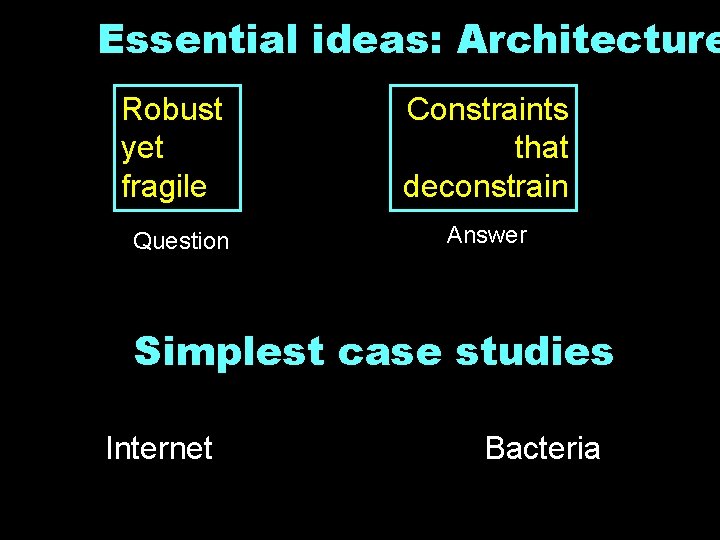
Essential ideas: Architecture Robust yet fragile Question Constraints that deconstrain Answer
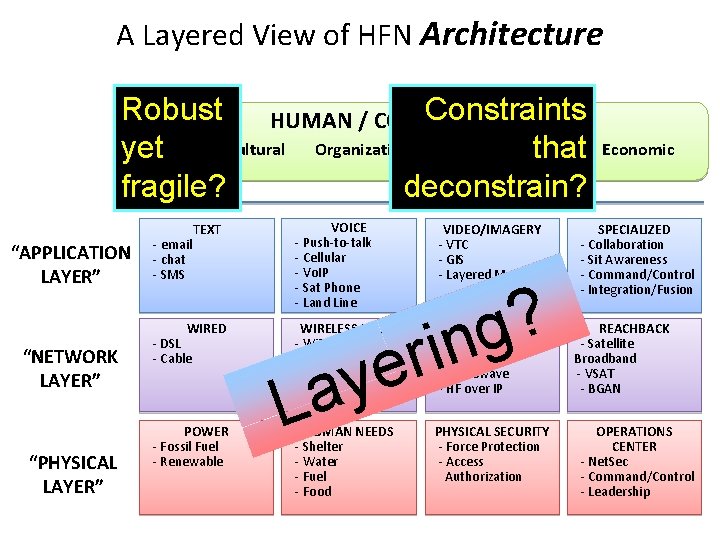
A Layered View of HFN Architecture Robust HUMAN / COGNITIVE Constraints LAYER Conversation Organizational Politicalthat yet Social/Cultural The fragile? deconstrain? “APPLICATION LAYER” - email - chat - SMS TEXT WIRED “NETWORK LAYER” “PHYSICAL LAYER” - DSL - Cable POWER - Fossil Fuel - Renewable VOICE - Push-to-talk - Cellular - Vo. IP - Sat Phone - Land Line ? g in r e ay WIRELESS LOCAL - Wi. Fi - PAN - MAN L HUMAN NEEDS - Shelter - Water - Fuel - Food VIDEO/IMAGERY - VTC - GIS - Layered Maps WIRELESS LONG HAUL - Wi. MAX - Microwave - HF over IP PHYSICAL SECURITY - Force Protection - Access Authorization Economic SPECIALIZED - Collaboration - Sit Awareness - Command/Control - Integration/Fusion REACHBACK - Satellite Broadband - VSAT - BGAN OPERATIONS CENTER - Net. Sec - Command/Control - Leadership
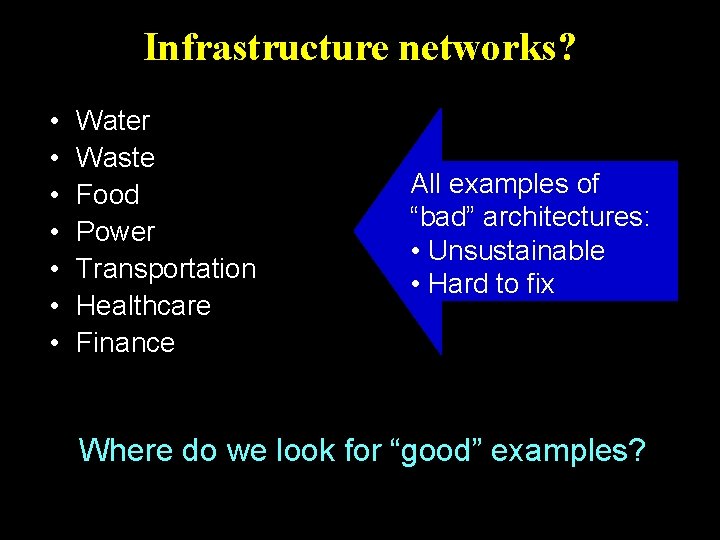
Infrastructure networks? • • Water Waste Food Power Transportation Healthcare Finance All examples of “bad” architectures: • Unsustainable • Hard to fix Where do we look for “good” examples?
Essential ideas: Architecture Robust yet fragile Question Constraints that deconstrain Answer Simplest case studies Internet Bacteria
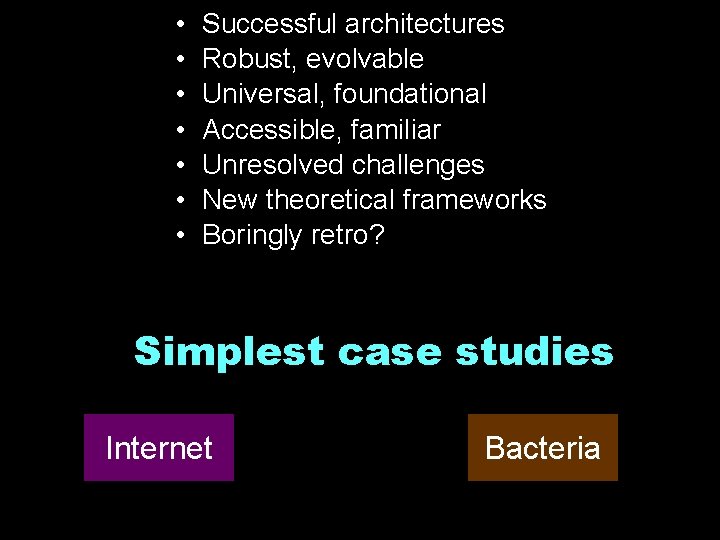
• • Successful architectures Robust, evolvable Universal, foundational Accessible, familiar Unresolved challenges New theoretical frameworks Boringly retro? Simplest case studies Internet Bacteria
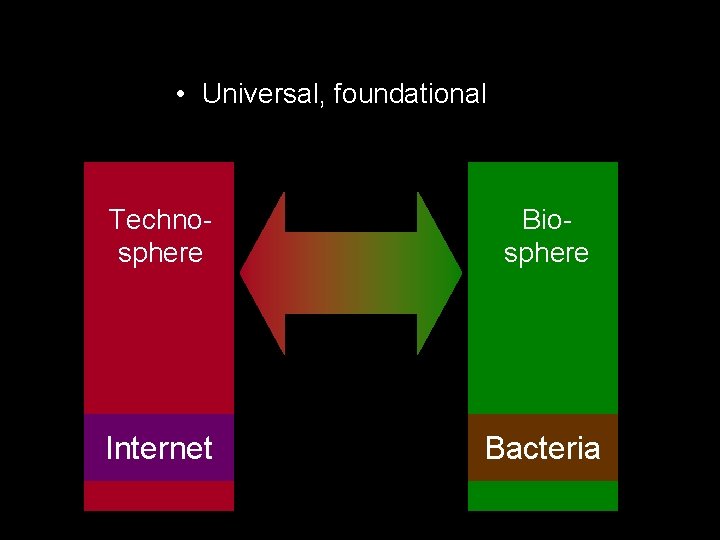
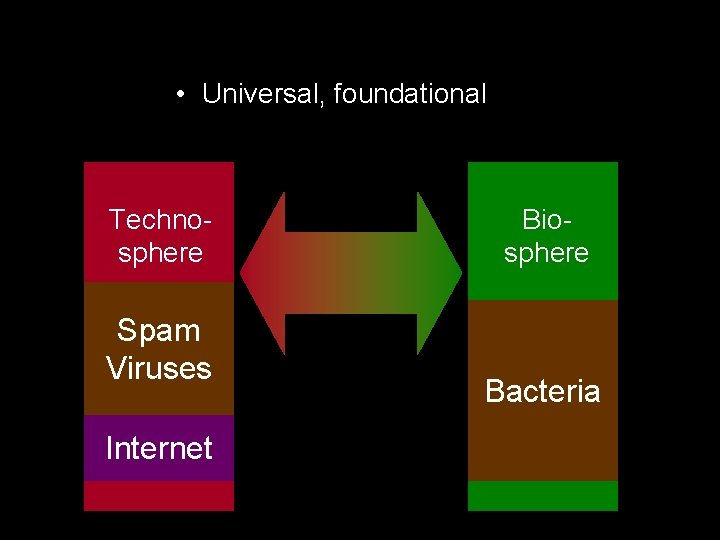
• Universal, foundational Technosphere Biosphere Internet Bacteria
• Universal, foundational Technosphere Spam Viruses Internet Biosphere Bacteria
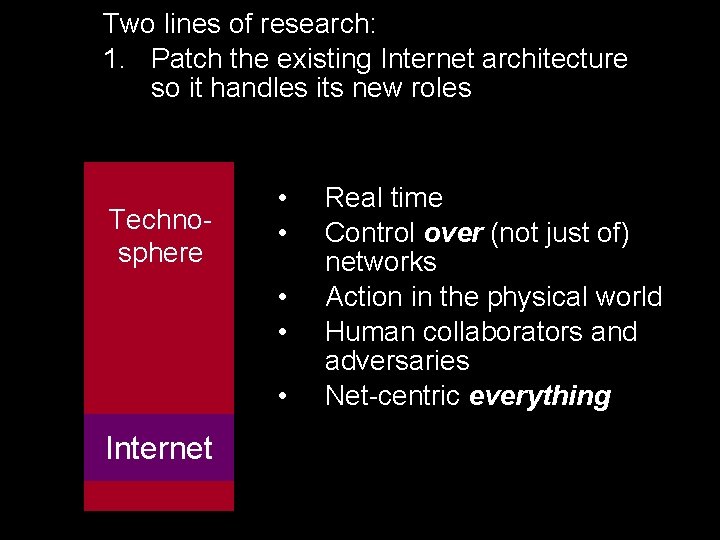
Two lines of research: 1. Patch the existing Internet architecture so it handles its new roles Technosphere • • • Internet Real time Control over (not just of) networks Action in the physical world Human collaborators and adversaries Net-centric everything
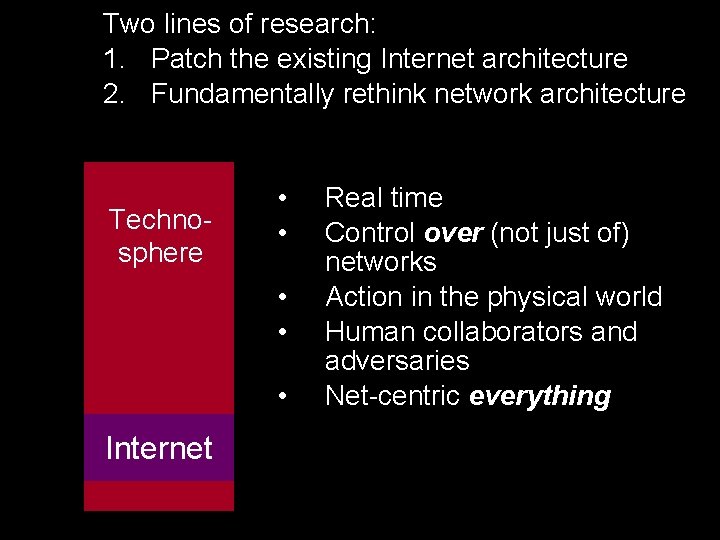
Two lines of research: 1. Patch the existing Internet architecture 2. Fundamentally rethink network architecture Technosphere • • • Internet Real time Control over (not just of) networks Action in the physical world Human collaborators and adversaries Net-centric everything
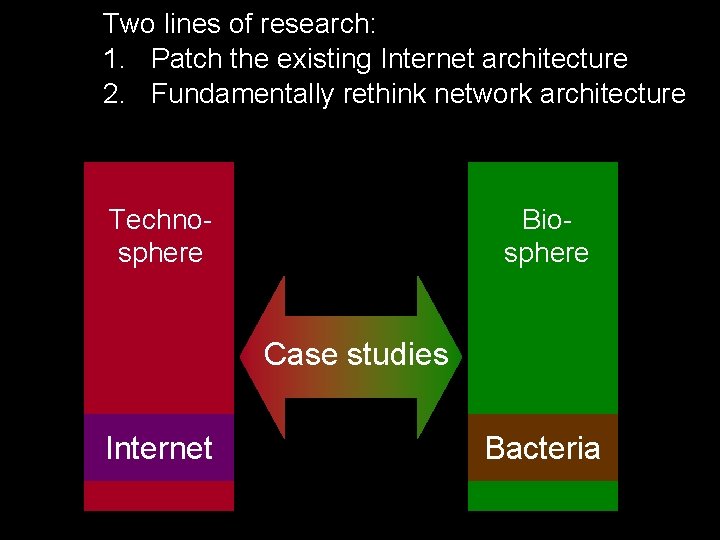
Two lines of research: 1. Patch the existing Internet architecture 2. Fundamentally rethink network architecture Technosphere Biosphere Case studies Internet Bacteria
Essential ideas: Architecture Robust yet fragile* Question * Carlson
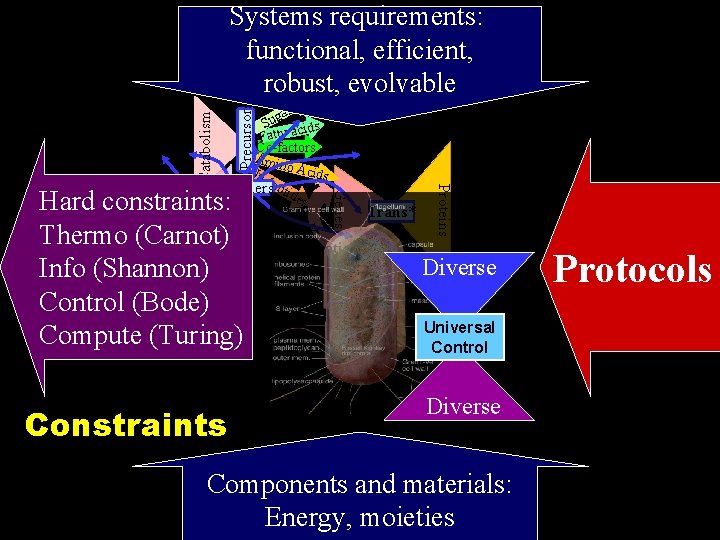
s gar u S cids Fatty a Co-factors Amin o Aci Nu ds cle o Carriers tid es Precursors Catabolism Systems requirements: functional, efficient, robust, evolvable DNA replication Trans* Proteins Constraints Genes Hard constraints: Thermo (Carnot) Info (Shannon) Control (Bode) Compute (Turing) Diverse Universal Control Diverse Components and materials: Energy, moieties Protocols
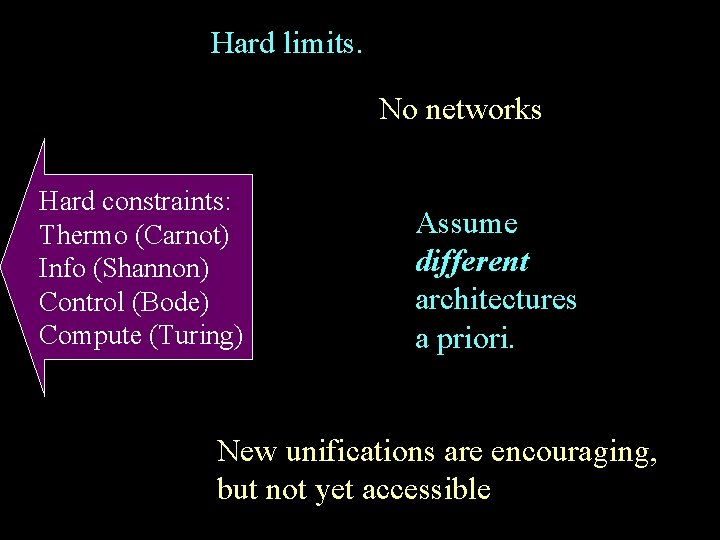
Hard limits. No networks Hard constraints: Thermo (Carnot) Info (Shannon) Control (Bode) Compute (Turing) Assume different architectures a priori. New unifications are encouraging, but not yet accessible
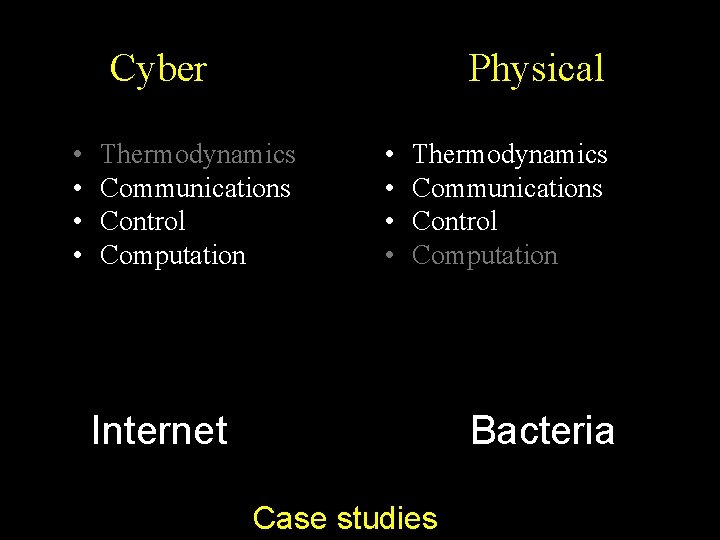
Cyber • • Physical Thermodynamics Communications Control Computation • • Thermodynamics Communications Control Computation Internet Bacteria Case studies
Robust Yet Fragile (RYF) [a system] can have [a property] robust for [a set of perturbations] Yet be fragile for [a different property] Or [a different perturbation] Fragile Robust Proposition : The RYF tradeoff is a hard limit that cannot be overcome.
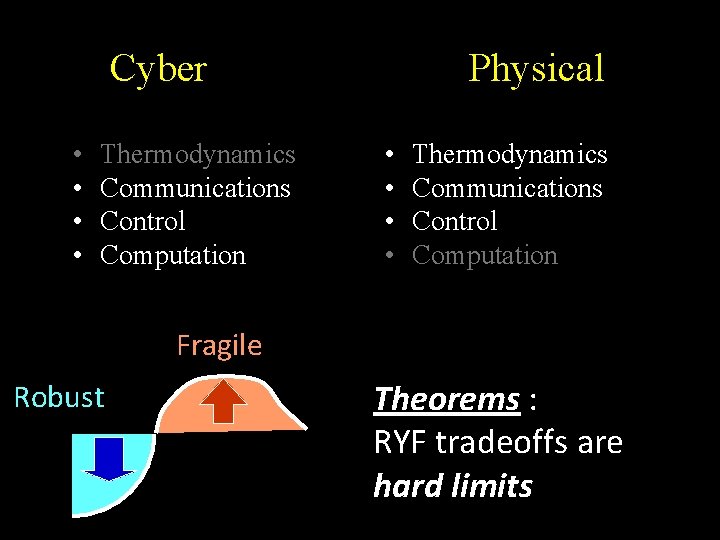
Cyber • • Thermodynamics Communications Control Computation Physical • • Thermodynamics Communications Control Computation Fragile Robust Theorems : RYF tradeoffs are hard limits
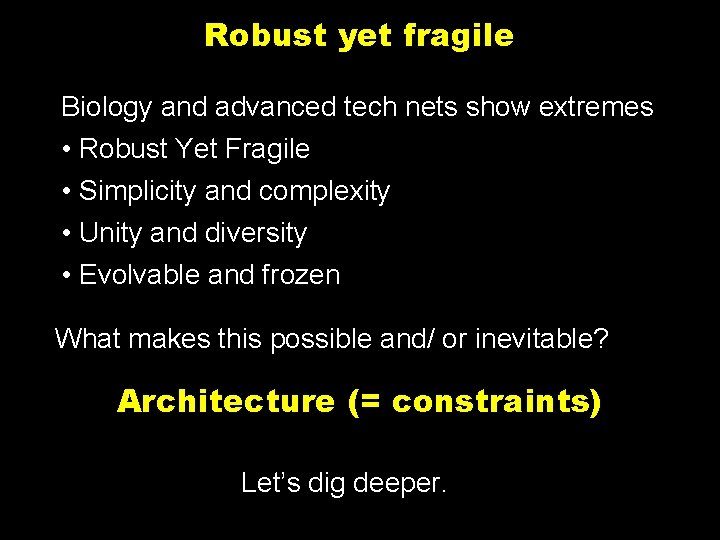
Robust yet fragile Biology and advanced tech nets show extremes • Robust Yet Fragile • Simplicity and complexity • Unity and diversity • Evolvable and frozen What makes this possible and/ or inevitable? Architecture (= constraints) Let’s dig deeper.
Essential ideas: Architecture Constraints that deconstrain* Answer * Gerhart and Kirschner
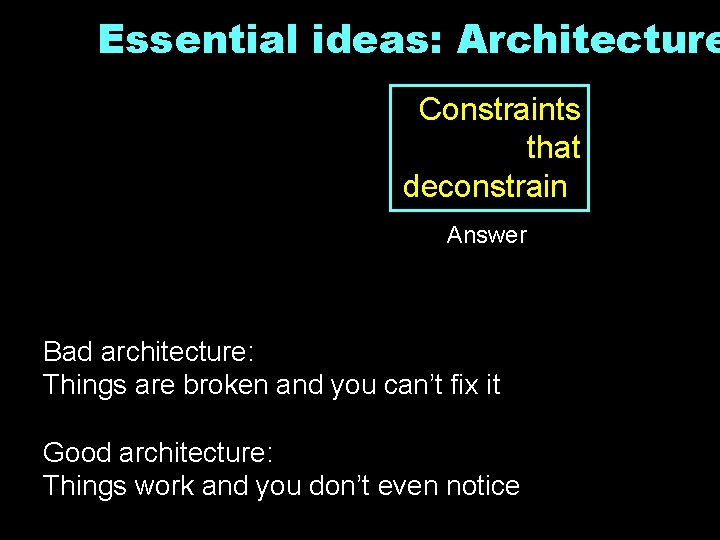
Essential ideas: Architecture Constraints that deconstrain* Answer Bad architecture: Things are broken and you can’t fix it Good architecture: Things work and you don’t even notice
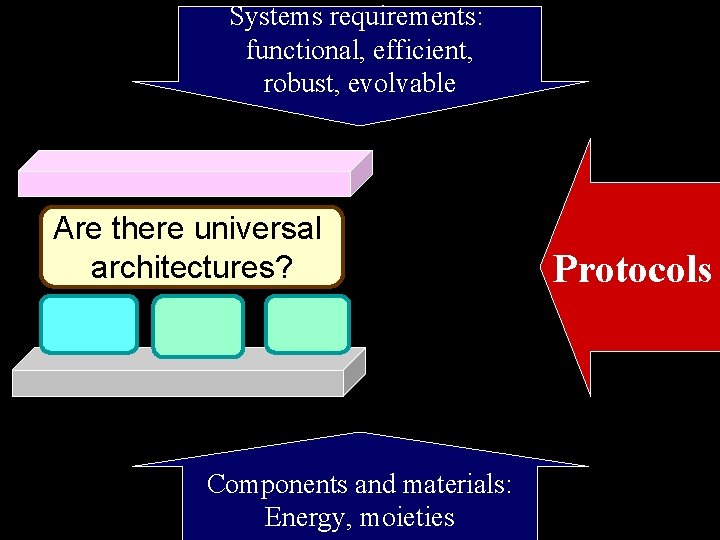
Systems requirements: functional, efficient, robust, evolvable Are there universal architectures? Components and materials: Energy, moieties Protocols
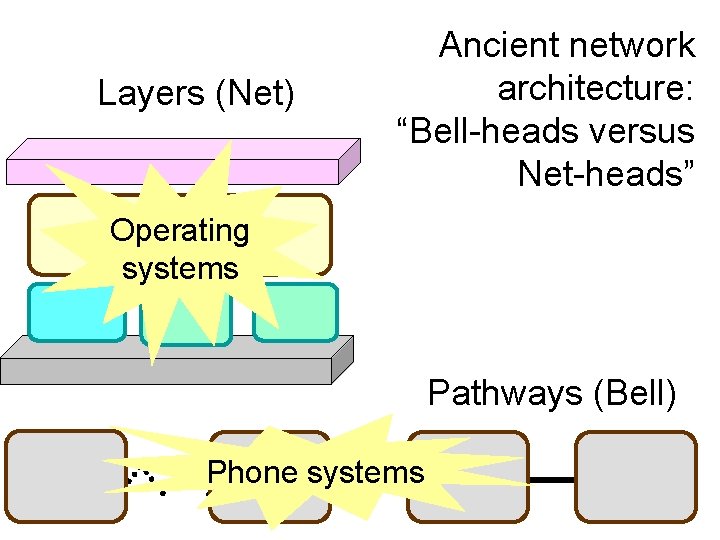
Layers (Net) Ancient network architecture: “Bell-heads versus Net-heads” Operating systems Pathways (Bell) Phone systems
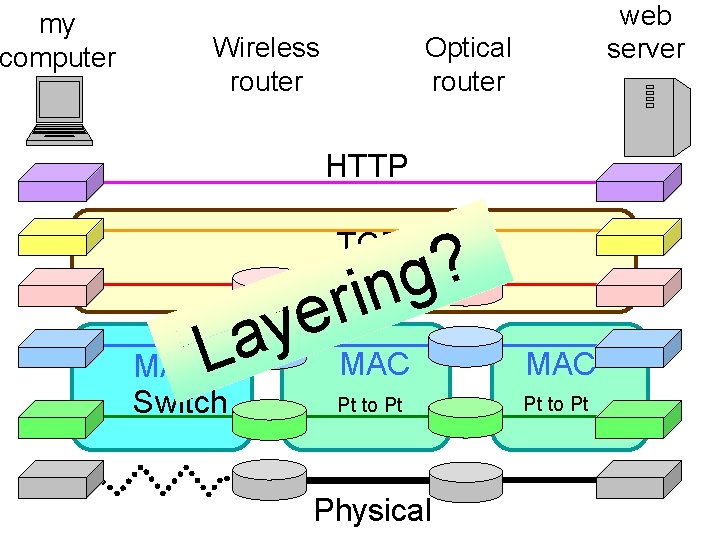
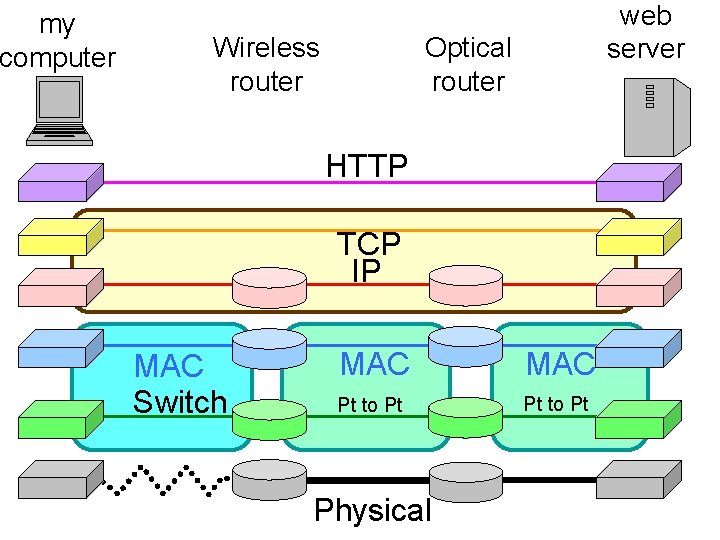
my computer Wireless router web server Optical router HTTP TCP IP ? g n i r e y a MACL Switch MAC Pt to Pt Physical
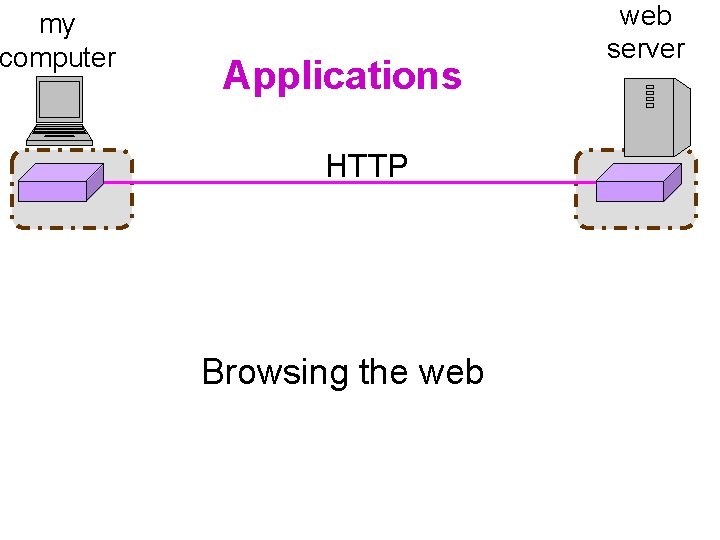
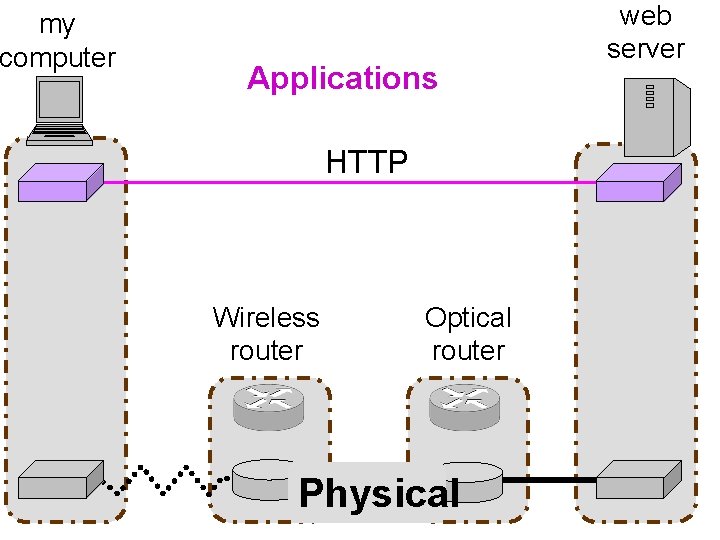
my computer Applications HTTP Browsing the web server
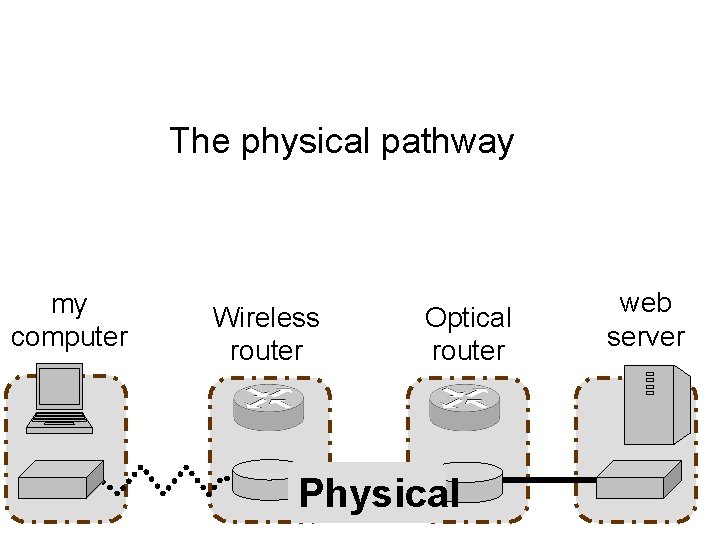
The physical pathway my computer Wireless router Optical router Physical web server
my computer Applications HTTP Wireless router Optical router Physical web server
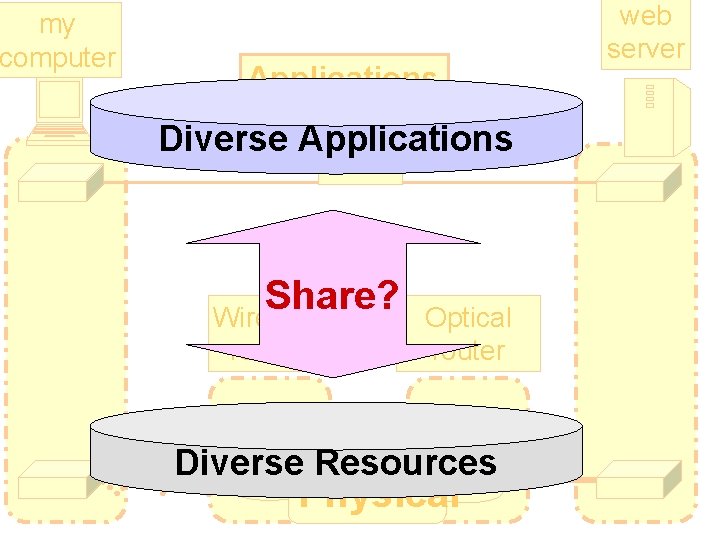
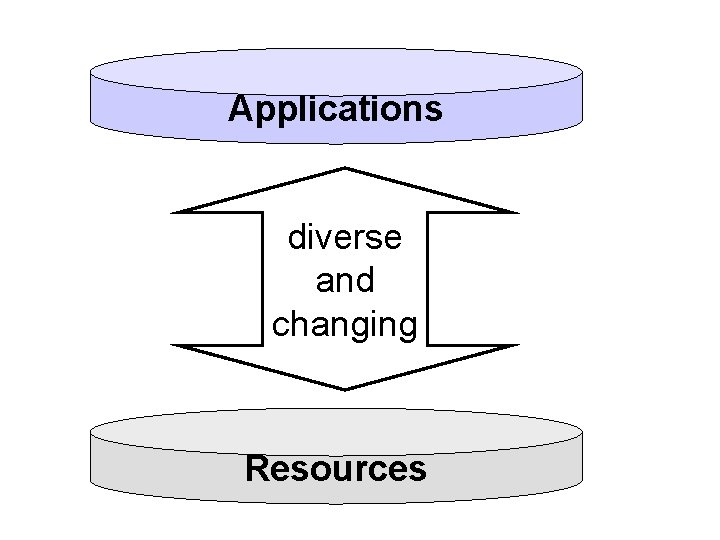
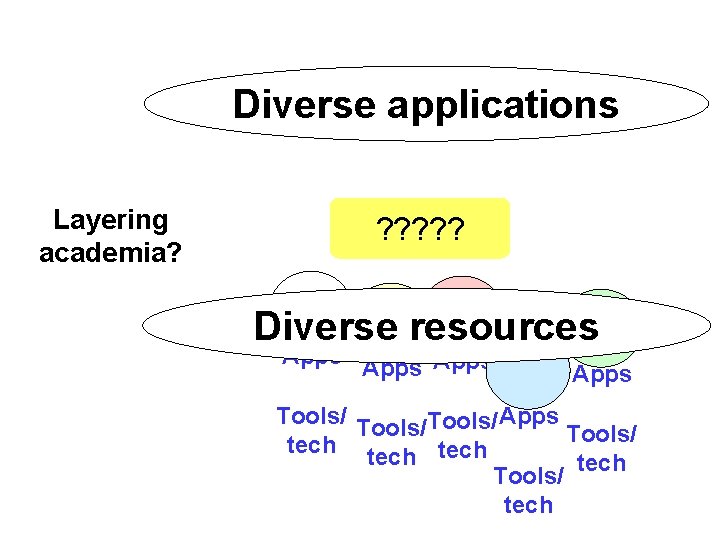
my computer Applications Diverse Applications HTTP Share? Wireless router Optical router Diverse Resources Physical web server
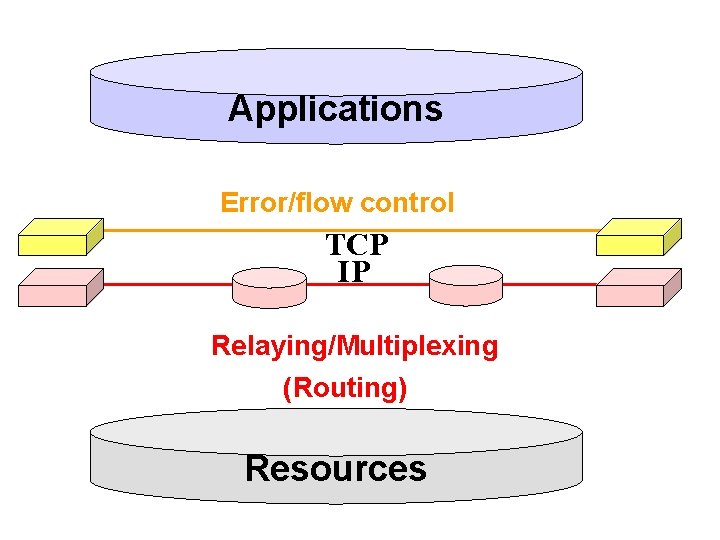
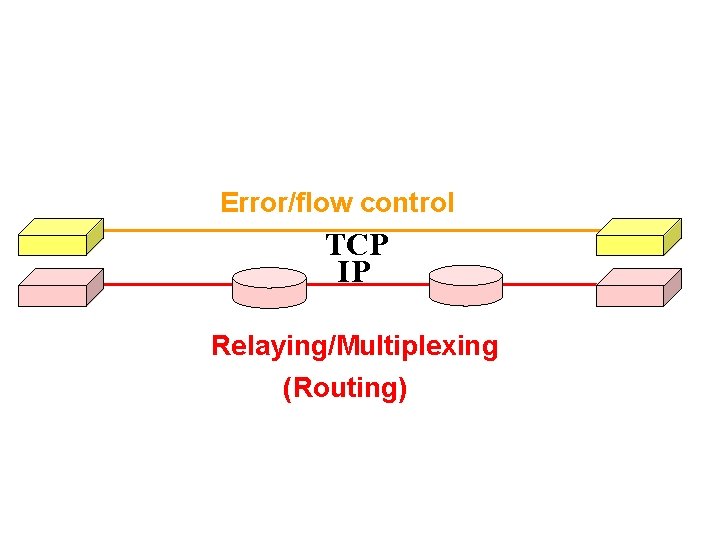
Applications Error/flow control TCP IP Relaying/Multiplexing (Routing) Resources
Error/flow control TCP IP Relaying/Multiplexing (Routing)
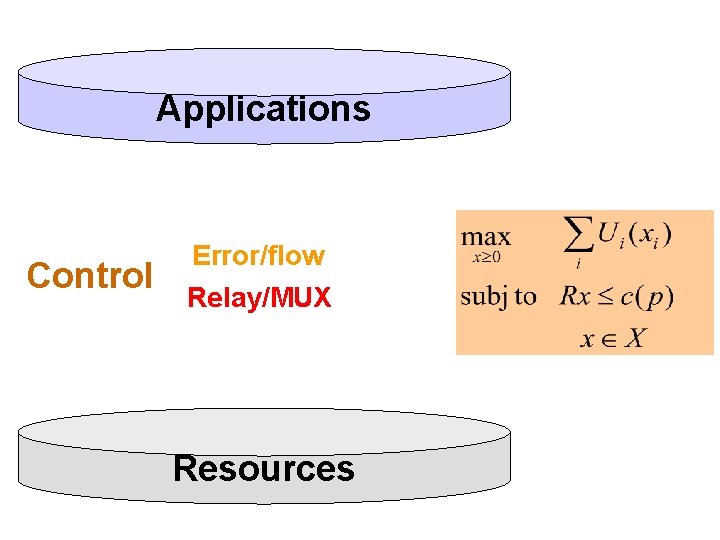
Applications Control Error/flow Relay/MUX Resources
Applications diverse and changing Resources
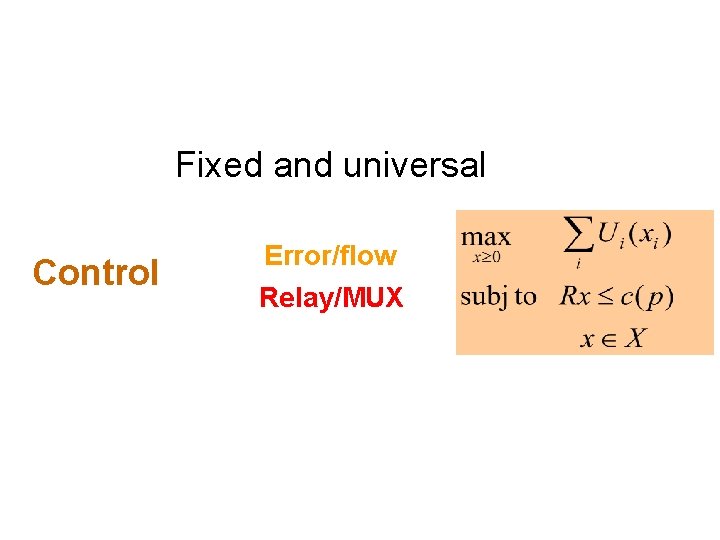
Fixed and universal Control Error/flow Relay/MUX
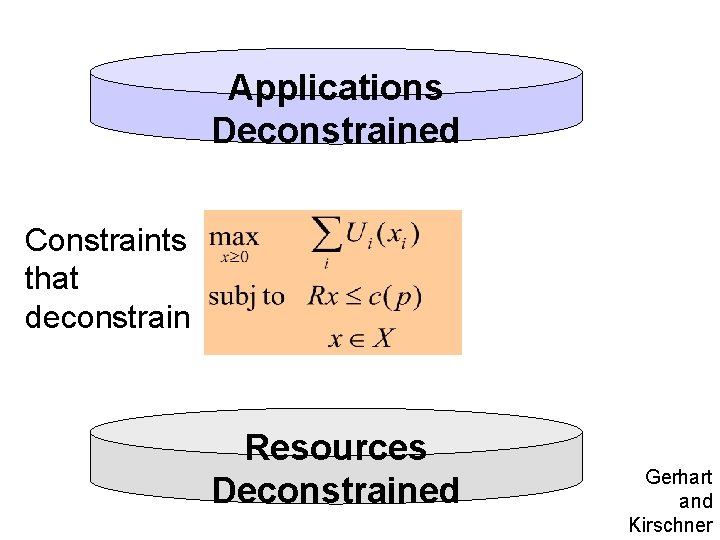
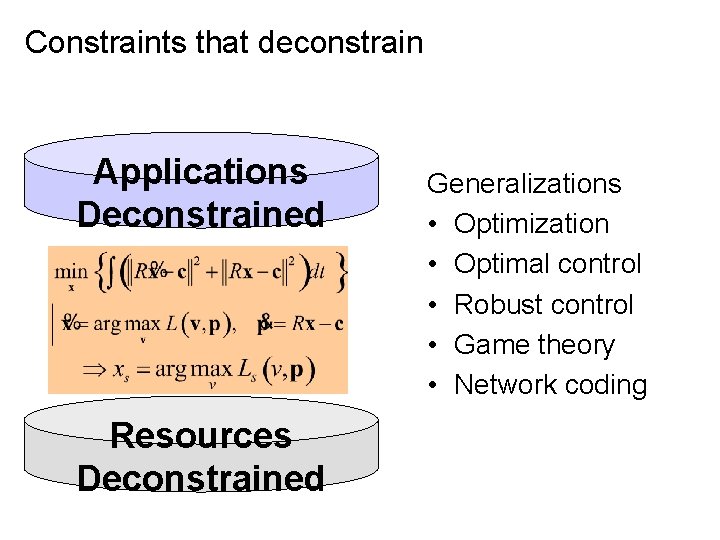
Applications Deconstrained Constraints that deconstrain Resources Deconstrained Gerhart and Kirschner
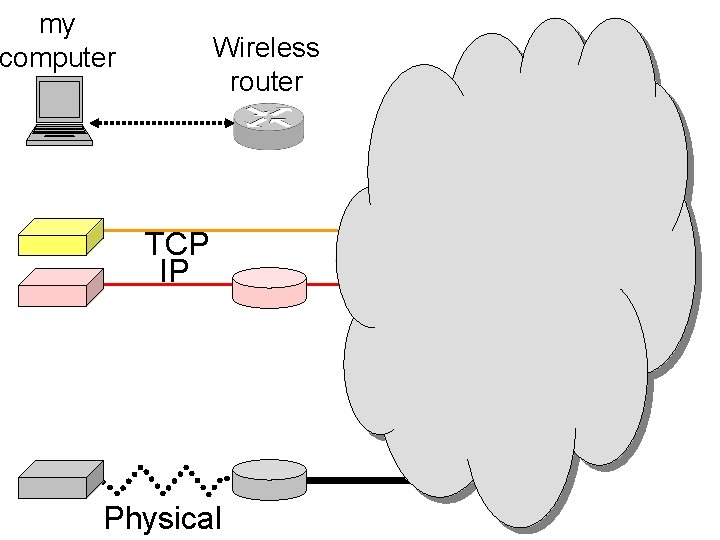
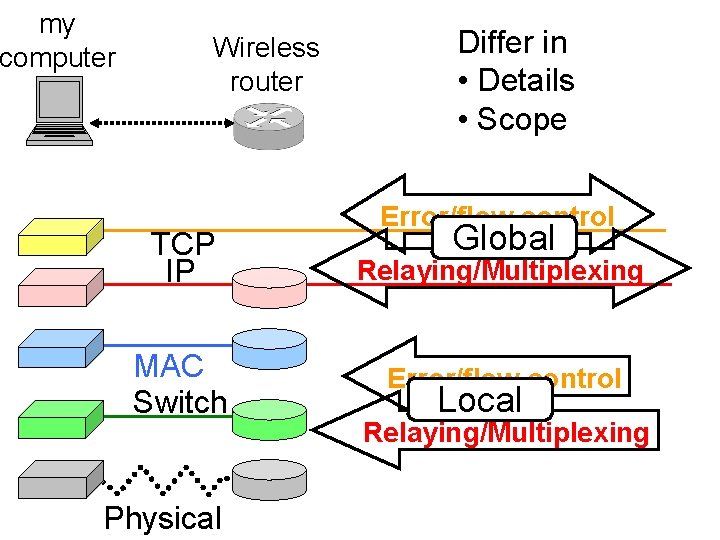
my computer Wireless router TCP IP Physical
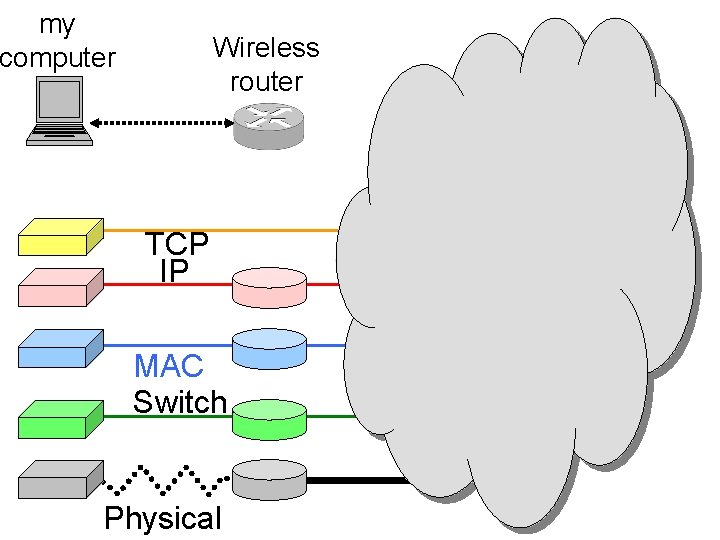
my computer Wireless router TCP IP MAC Switch Physical
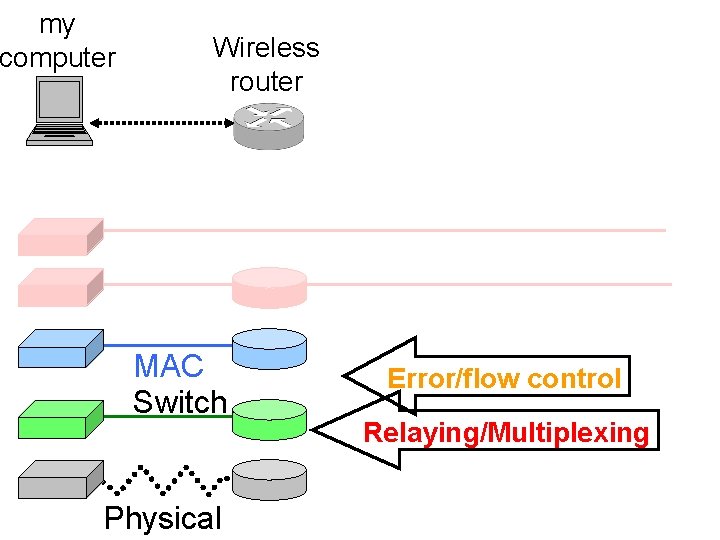
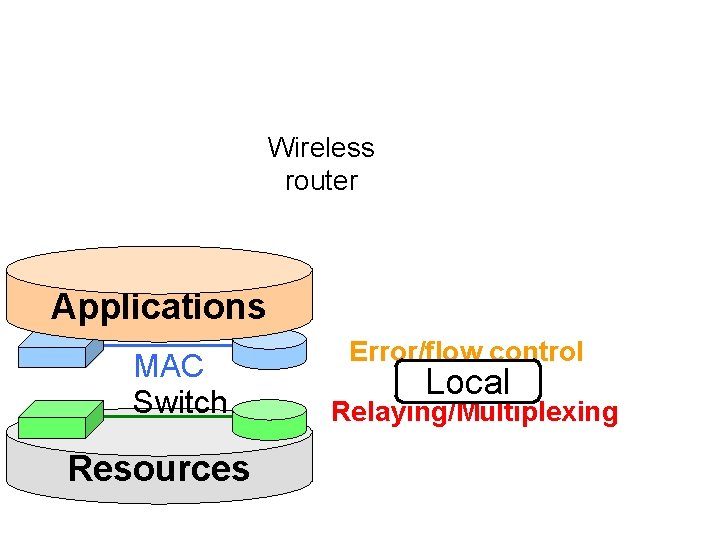
my computer Wireless router MAC Switch Physical Error/flow control Relaying/Multiplexing
Wireless router Applications MAC Switch Resources Error/flow control Local Relaying/Multiplexing
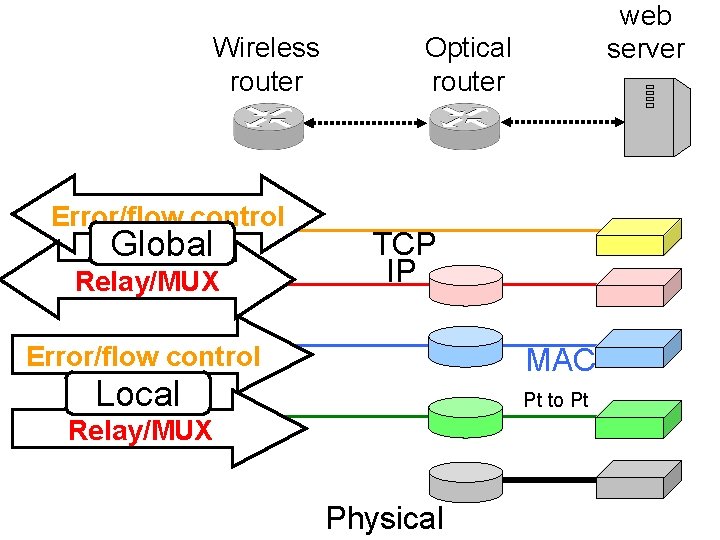
my computer Wireless router Differ in • Details • Scope Error/flow control Global TCP IP Relaying/Multiplexing MAC Switch Error/flow control Physical Local Relaying/Multiplexing
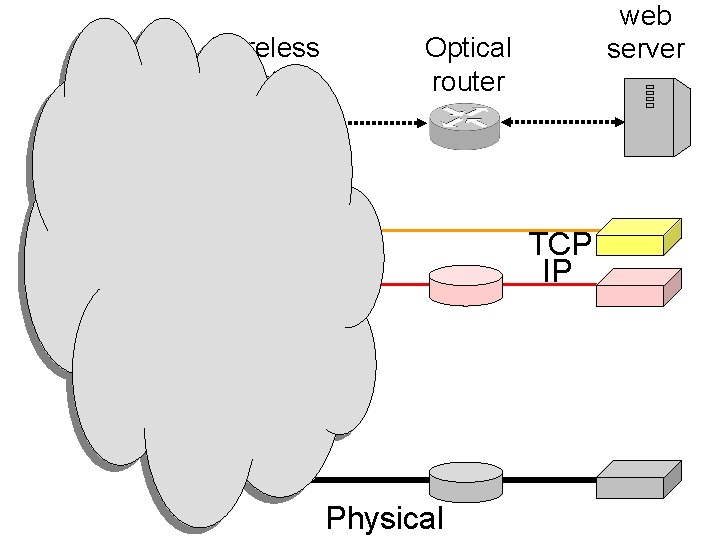
Wireless router web server Optical router TCP IP Physical
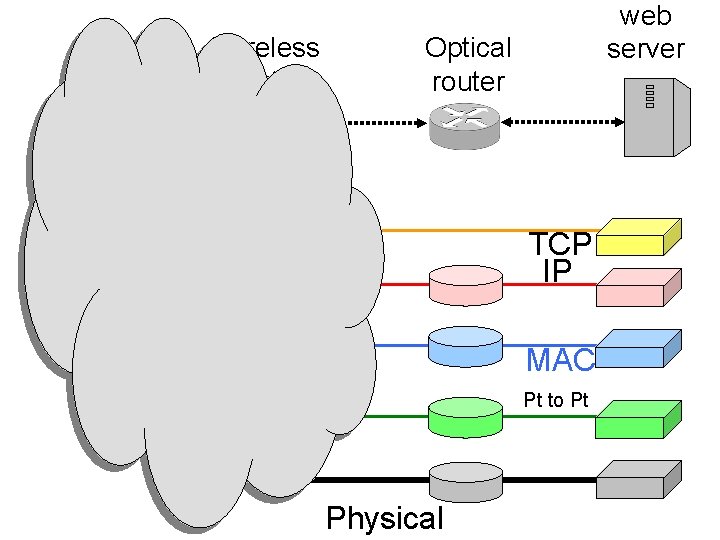
Wireless router web server Optical router TCP IP MAC Pt to Pt Physical
Wireless router Error/flow control Global Relay/MUX web server Optical router TCP IP Error/flow control MAC Local Pt to Pt Relay/MUX Physical
my computer Wireless router web server Optical router HTTP TCP IP MAC Switch MAC Pt to Pt Physical
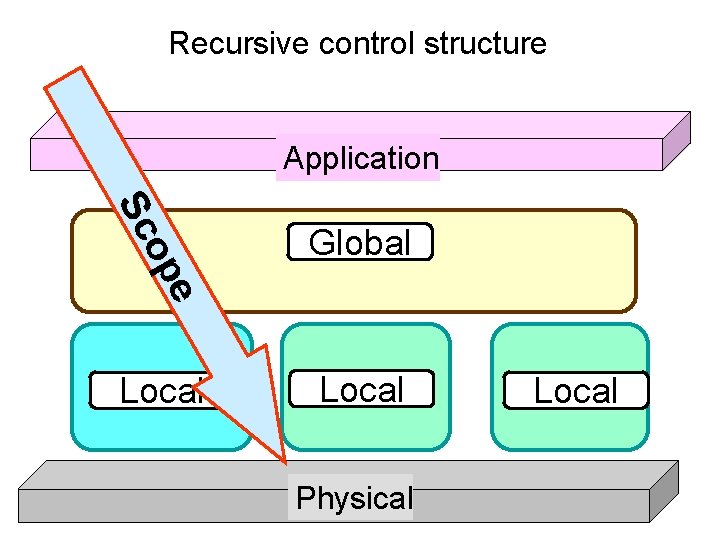
Recursive control structure Application op Sc Global e Local Physical Local
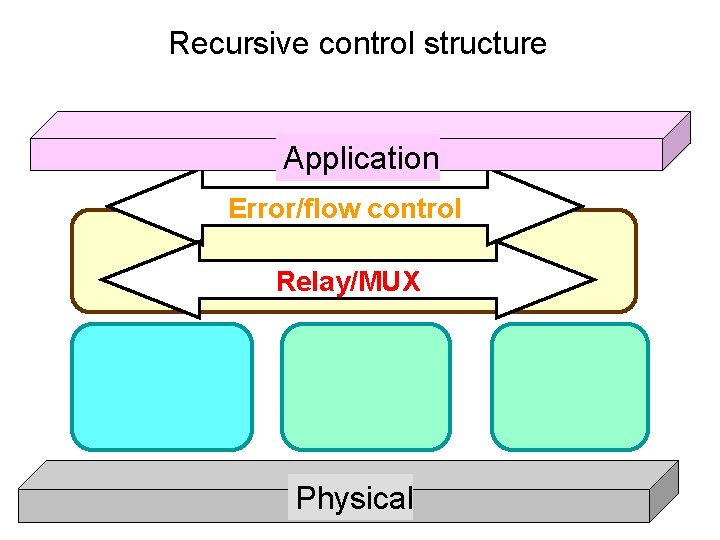
Recursive control structure Application Error/flow control Relay/MUX Physical
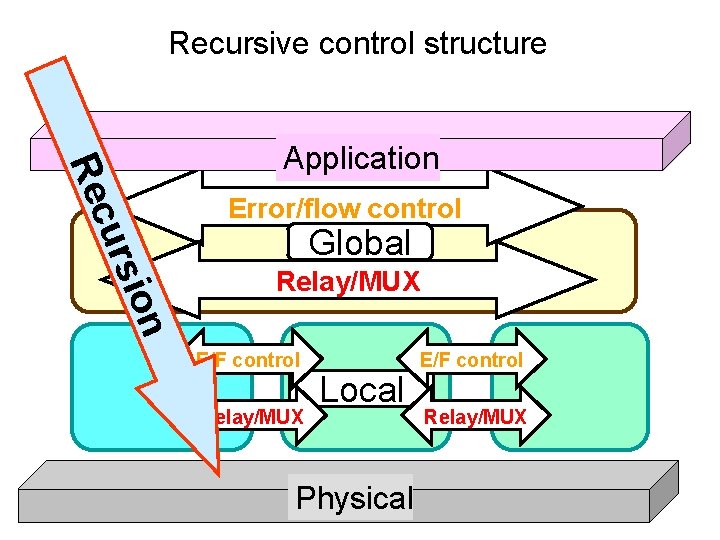
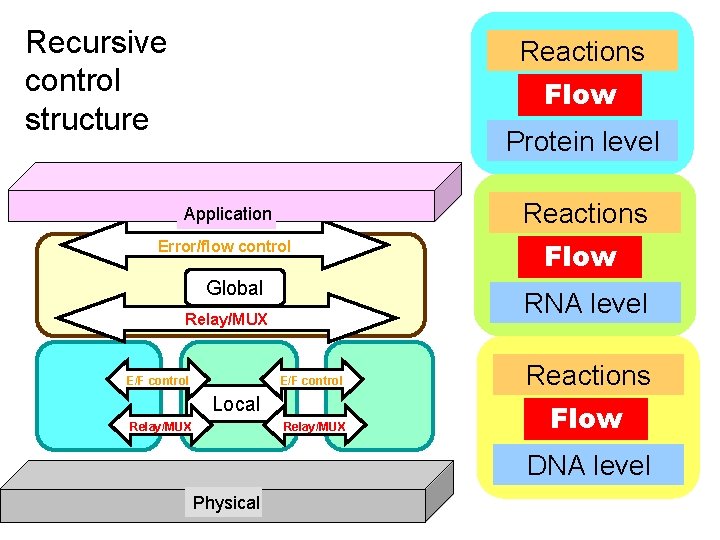
Recursive control structure Rec Application Error/flow control ion urs Global Relay/MUX E/F control Relay/MUX Local Physical E/F control Relay/MUX
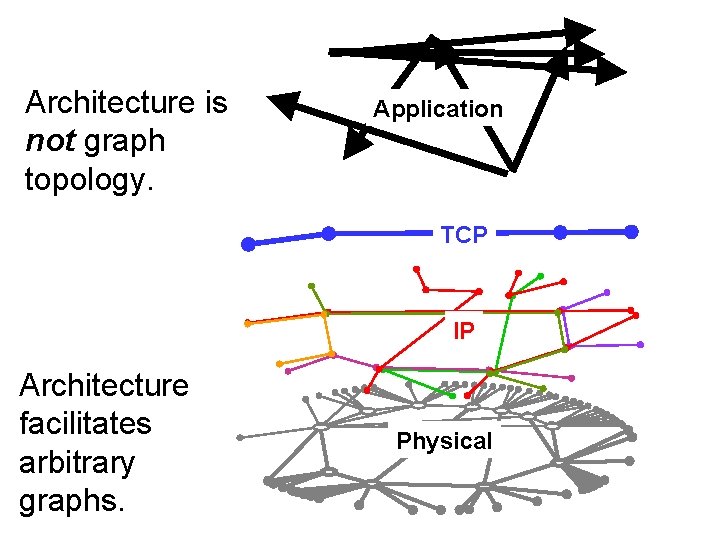
Architecture is not graph topology. Application TCP IP Architecture facilitates arbitrary graphs. Physical
Constraints that deconstrain Applications Deconstrained Resources Deconstrained Generalizations • Optimization • Optimal control • Robust control • Game theory • Network coding
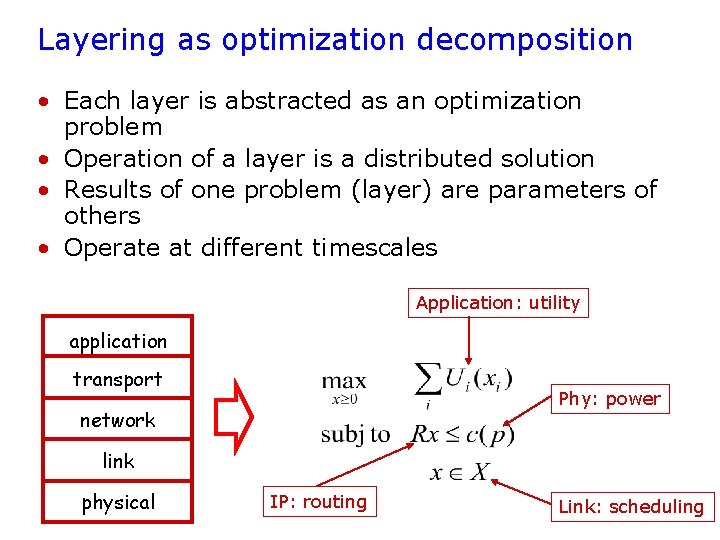
Layering as optimization decomposition • Each layer is abstracted as an optimization problem • Operation of a layer is a distributed solution • Results of one problem (layer) are parameters of others • Operate at different timescales Application: utility application transport Phy: power network link physical IP: routing Link: scheduling
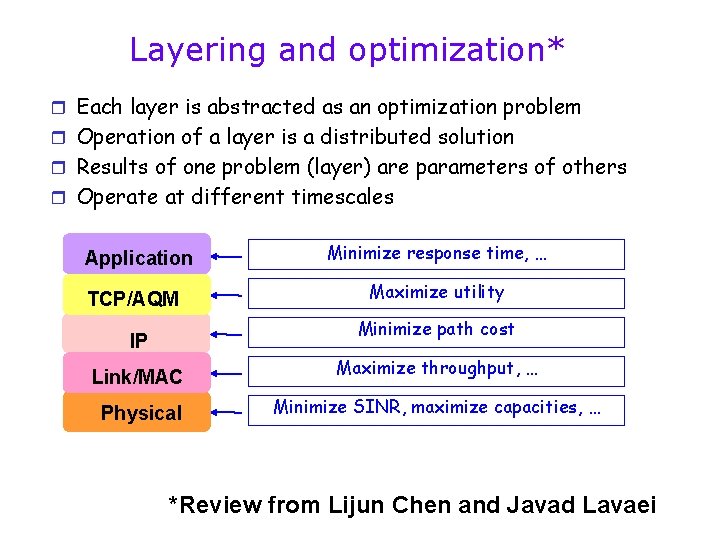
Layering and optimization* r Each layer is abstracted as an optimization problem r Operation of a layer is a distributed solution r Results of one problem (layer) are parameters of others r Operate at different timescales Application TCP/AQM Minimize response time, … Maximize utility Minimize path cost IP Link/MAC Maximize throughput, … Physical Minimize SINR, maximize capacities, … *Review from Lijun Chen and Javad Lavaei
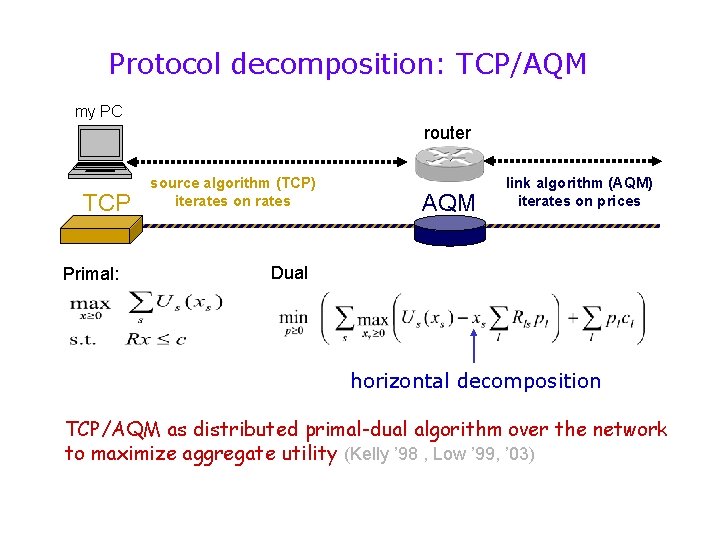
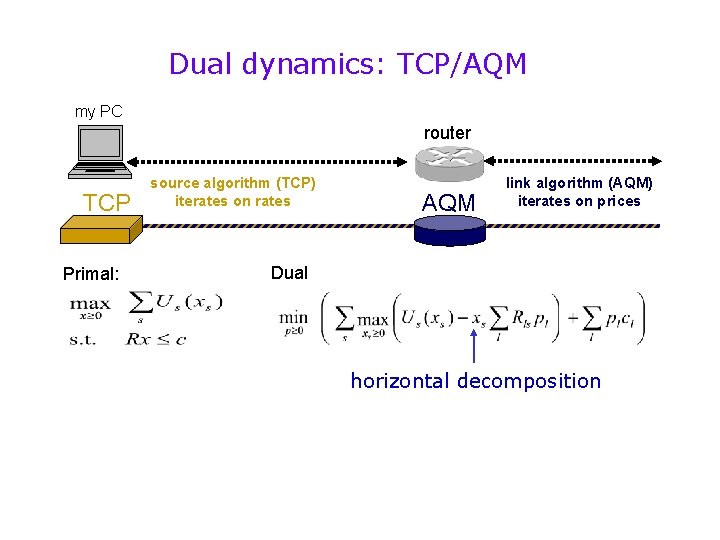
Protocol decomposition: TCP/AQM my PC router TCP Primal: source algorithm (TCP) iterates on rates AQM link algorithm (AQM) iterates on prices Dual horizontal decomposition TCP/AQM as distributed primal-dual algorithm over the network to maximize aggregate utility (Kelly ’ 98 , Low ’ 99, ’ 03)
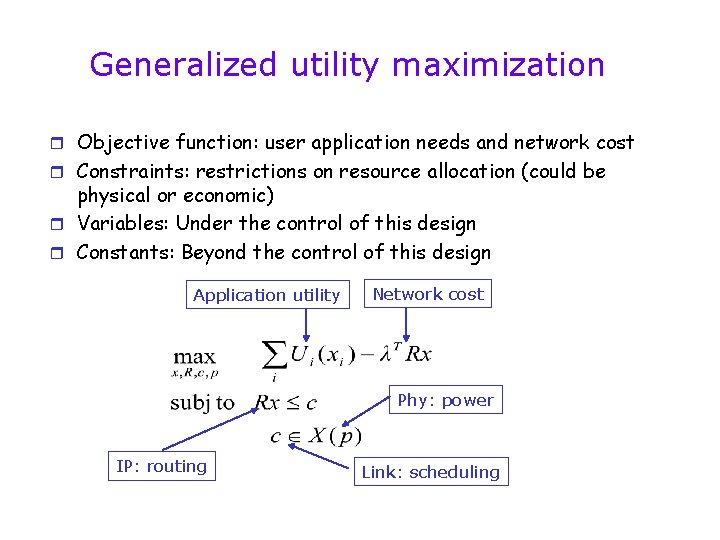
Generalized utility maximization r Objective function: user application needs and network cost r Constraints: restrictions on resource allocation (could be physical or economic) r Variables: Under the control of this design r Constants: Beyond the control of this design Application utility Network cost Phy: power IP: routing Link: scheduling
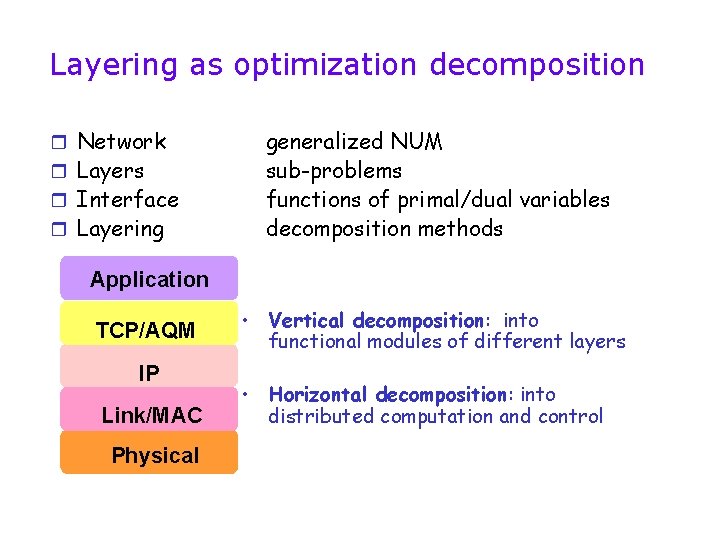
Layering as optimization decomposition r Network generalized NUM sub-problems functions of primal/dual variables decomposition methods r Layers r Interface r Layering Application TCP/AQM IP Link/MAC Physical • Vertical decomposition: into functional modules of different layers • Horizontal decomposition: into distributed computation and control
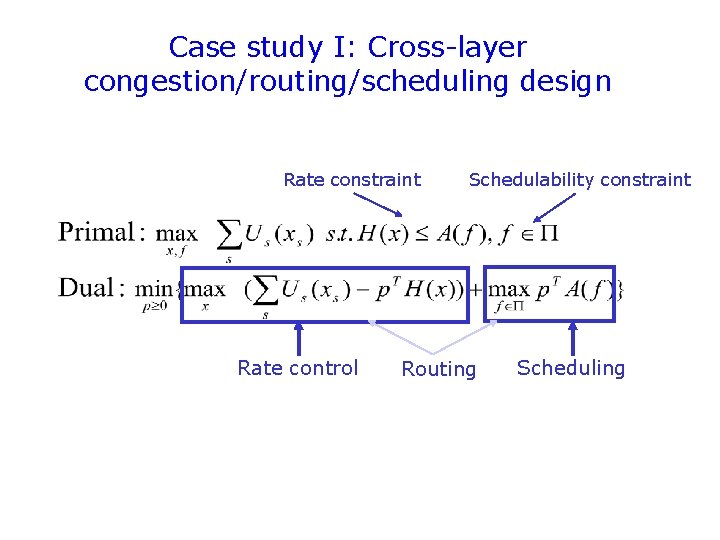
Case study I: Cross-layer congestion/routing/scheduling design Rate constraint Rate control Schedulability constraint Routing Scheduling
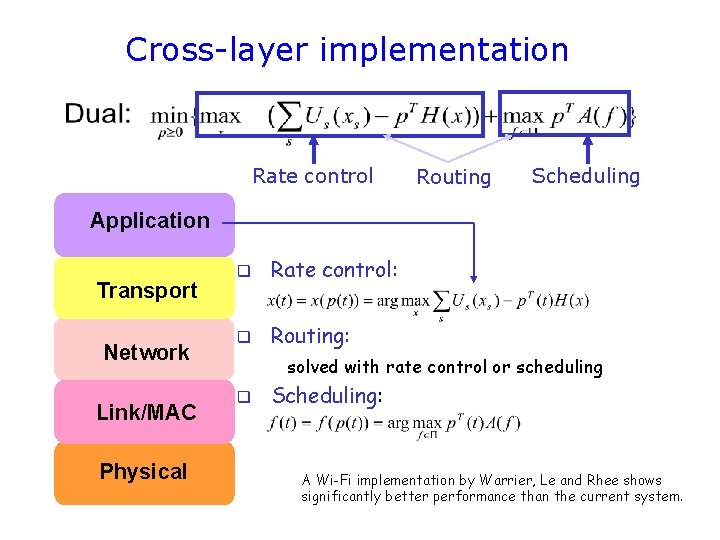
Cross-layer implementation Rate control Routing Scheduling Application Transport Network Link/MAC Physical q Rate control: q Routing: solved with rate control or scheduling q Scheduling: A Wi-Fi implementation by Warrier, Le and Rhee shows significantly better performance than the current system.
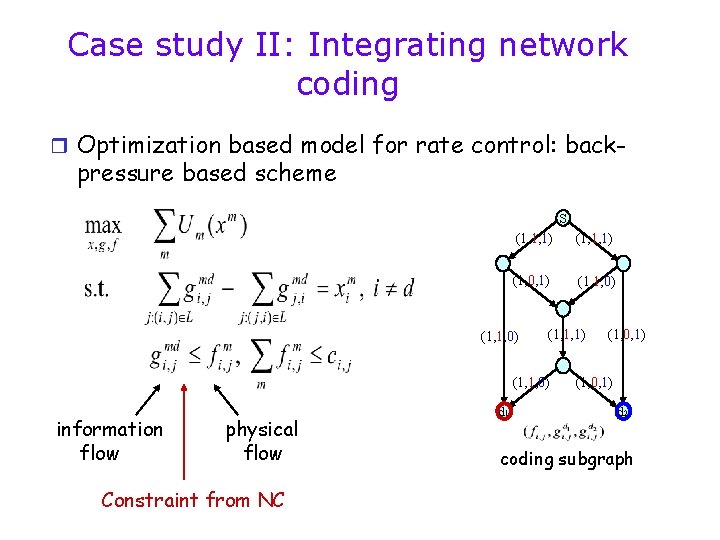
Case study II: Integrating network coding r Optimization based model for rate control: back- pressure based scheme S (1, 1, 1) (1, 0, 1) (1, 1, 0) (1, 1, 1) (1, 1, 0) information flow physical flow Constraint from NC d 1 (1, 0, 1) d 2 coding subgraph
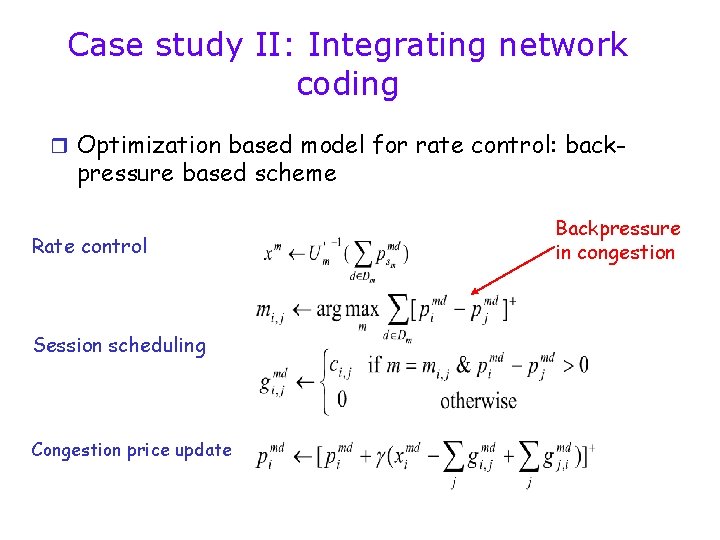
Case study II: Integrating network coding r Optimization based model for rate control: back- pressure based scheme Rate control Session scheduling Congestion price update Backpressure in congestion
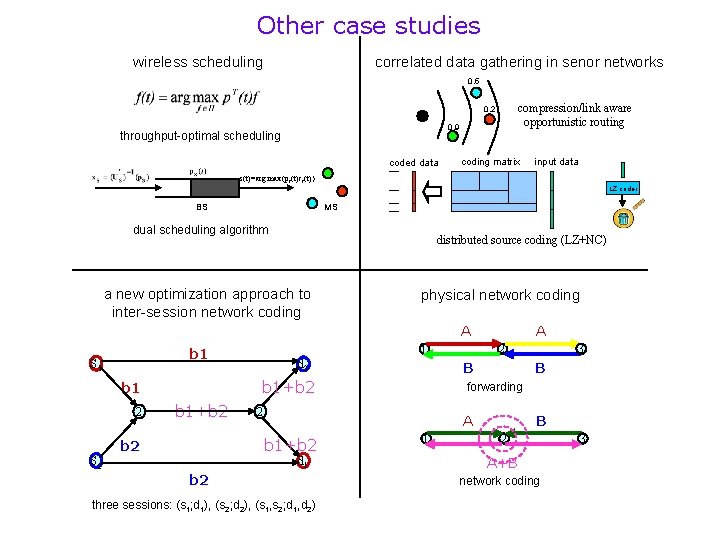
Other case studies wireless scheduling correlated data gathering in senor networks 0. 5 compression/link aware opportunistic routing 0. 2 0. 9 throughput-optimal scheduling coded data coding matrix input data s(t)=arg max{ps(t)cs(t)} LZ coder BS MS dual scheduling algorithm distributed source coding (LZ+NC) a new optimization approach to inter-session network coding physical network coding A 2 d 2 b 1+b 2 B A d 1 b 2 three sessions: (s 1; d 1), (s 2; d 2), (s 1, s 2; d 1, d 2) 3 forwarding 2 b 1+b 2 2 B b 1+b 2 b 1 S 2 1 b 1 S 1 A 1 B 2 A+B network coding 3
Dual dynamics: TCP/AQM my PC router TCP Primal: source algorithm (TCP) iterates on rates AQM link algorithm (AQM) iterates on prices Dual horizontal decomposition
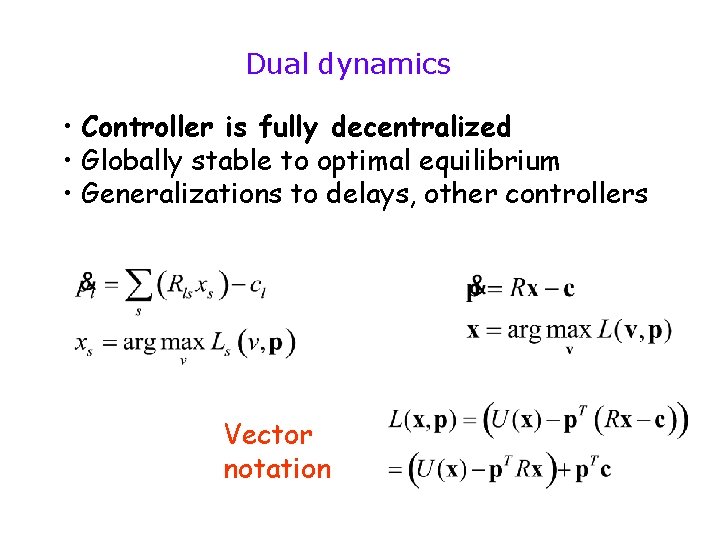
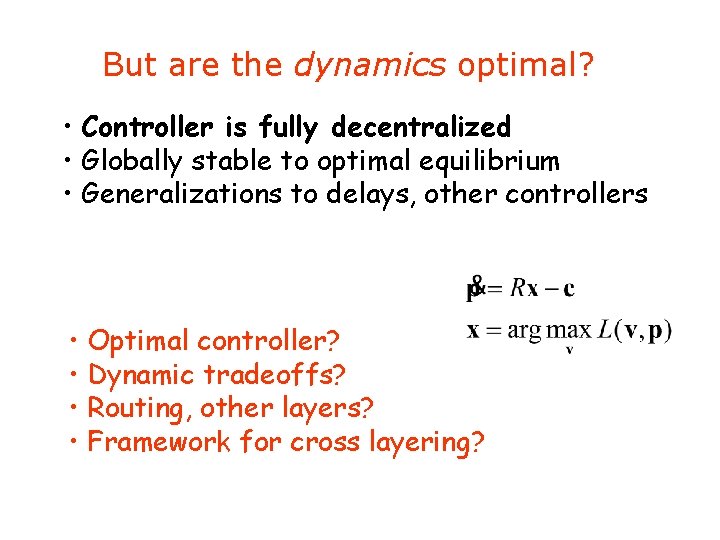
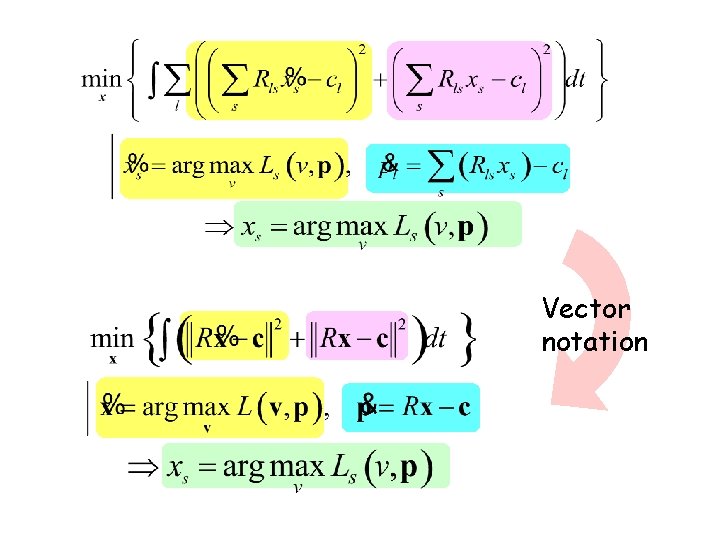
Dual dynamics • Controller is fully decentralized • Globally stable to optimal equilibrium • Generalizations to delays, other controllers Vector notation
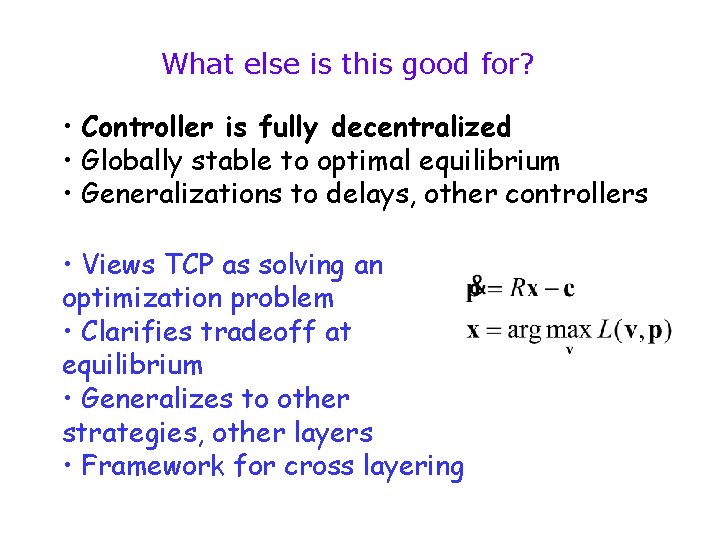
What else is this good for? • Controller is fully decentralized • Globally stable to optimal equilibrium • Generalizations to delays, other controllers • Views TCP as solving an optimization problem • Clarifies tradeoff at equilibrium • Generalizes to other strategies, other layers • Framework for cross layering
But are the dynamics optimal? • Controller is fully decentralized • Globally stable to optimal equilibrium • Generalizations to delays, other controllers • Optimal controller? • Dynamic tradeoffs? • Routing, other layers? • Framework for cross layering?
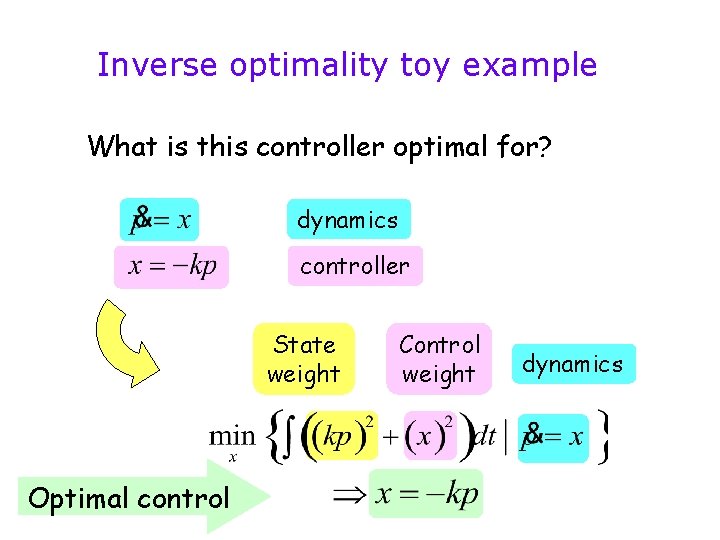
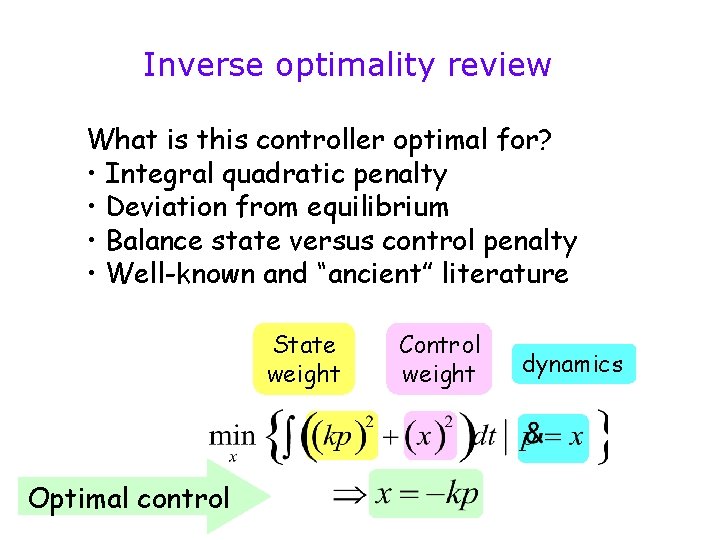
Inverse optimality toy example What is this controller optimal for? dynamics controller State weight Optimal control Control weight dynamics
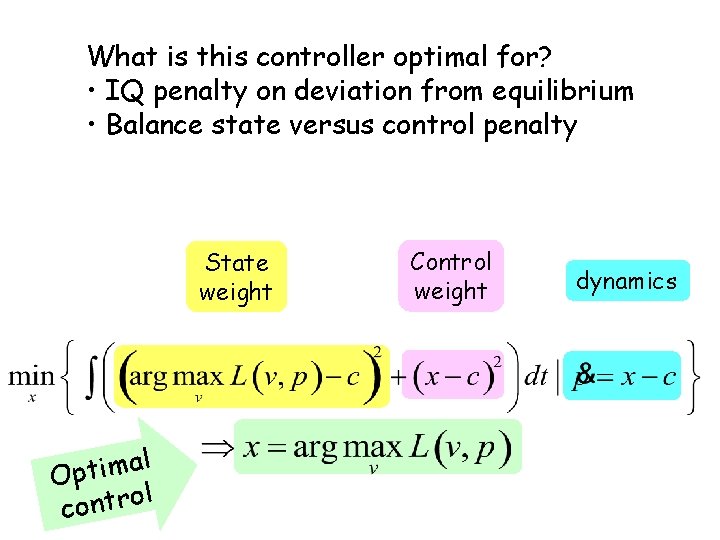
Inverse optimality review What is this controller optimal for? • Integral quadratic penalty • Deviation from equilibrium • Balance state versus control penalty • Well-known and “ancient” literature State weight Optimal control Control weight dynamics
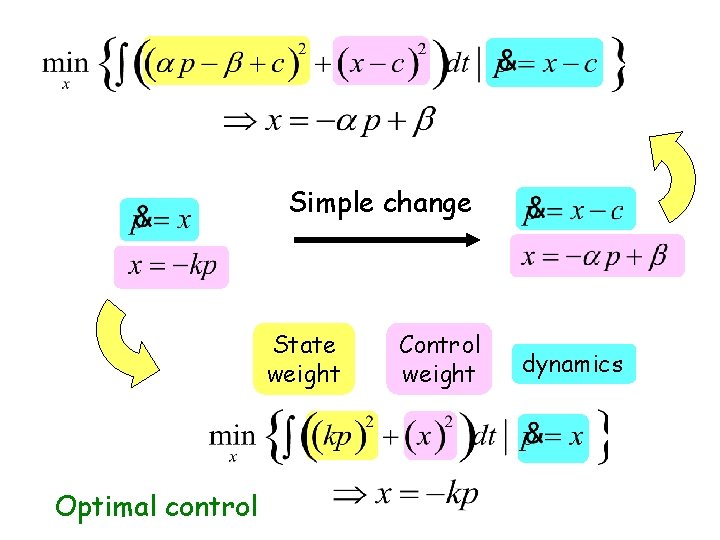
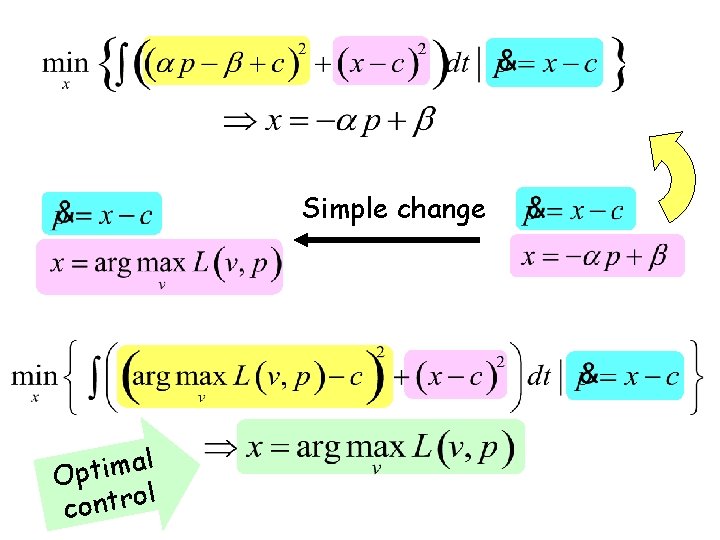
Simple change State weight Optimal control Control weight dynamics
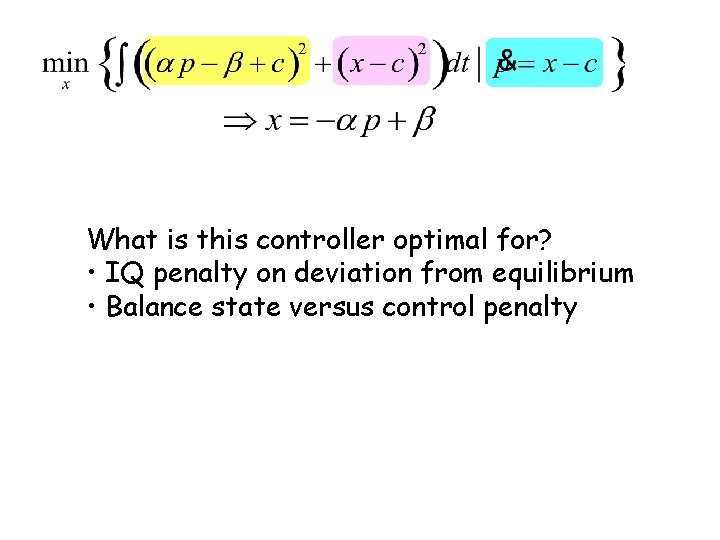
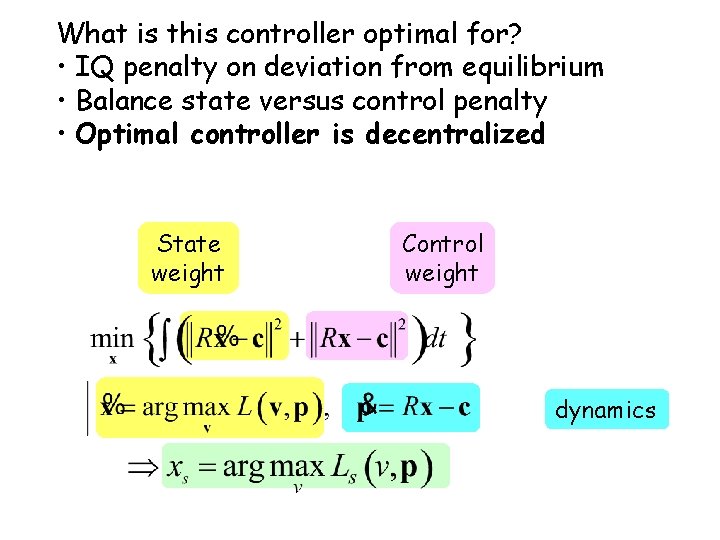
What is this controller optimal for? • IQ penalty on deviation from equilibrium • Balance state versus control penalty
Simple change al m i t p O l o r t n co
What is this controller optimal for? • IQ penalty on deviation from equilibrium • Balance state versus control penalty State weight al m i t p O l o r t n co Control weight dynamics
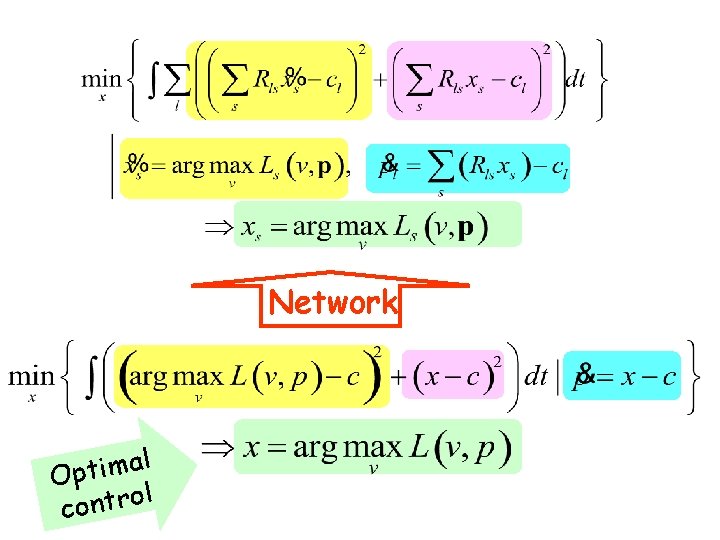
Network al m i t p O l o r t n co
Vector notation
What is this controller optimal for? • IQ penalty on deviation from equilibrium • Balance state versus control penalty • Optimal controller is decentralized State weight Control weight dynamics
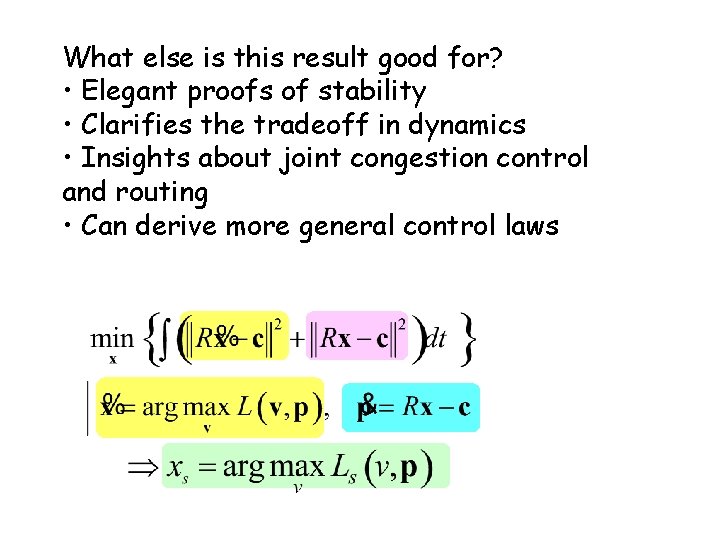
What else is this result good for? • Elegant proofs of stability • Clarifies the tradeoff in dynamics • Insights about joint congestion control and routing • Can derive more general control laws
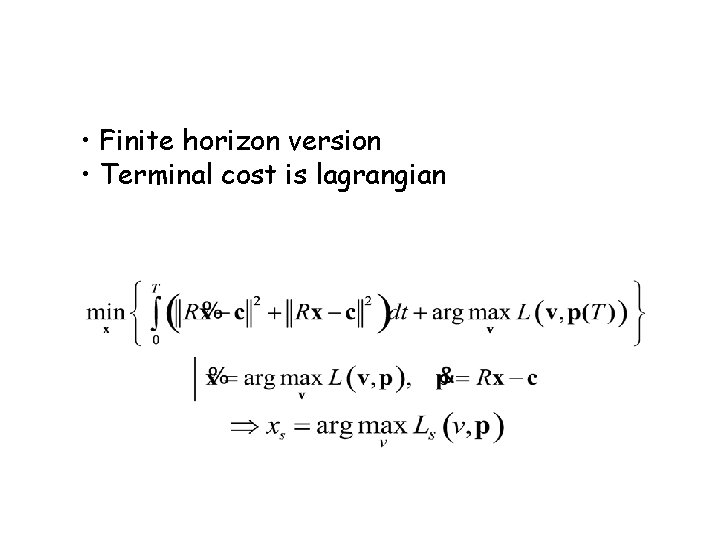
• Finite horizon version • Terminal cost is lagrangian
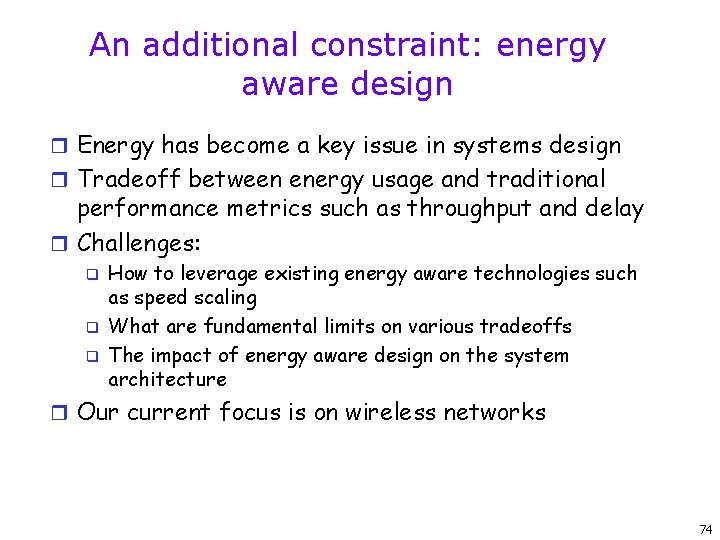
An additional constraint: energy aware design r Energy has become a key issue in systems design r Tradeoff between energy usage and traditional performance metrics such as throughput and delay r Challenges: q q q How to leverage existing energy aware technologies such as speed scaling What are fundamental limits on various tradeoffs The impact of energy aware design on the system architecture r Our current focus is on wireless networks 74
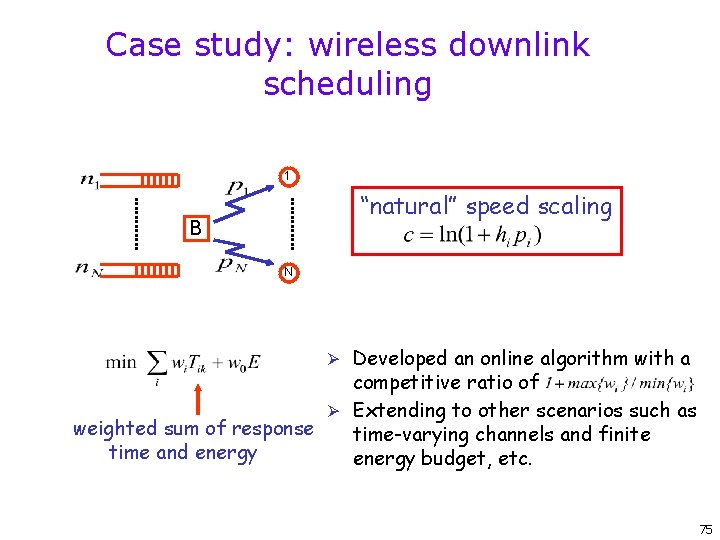
Case study: wireless downlink scheduling 1 “natural” speed scaling B N Ø Developed an online algorithm with a competitive ratio of Ø Extending to other scenarios such as weighted sum of response time-varying channels and finite time and energy budget, etc. 75
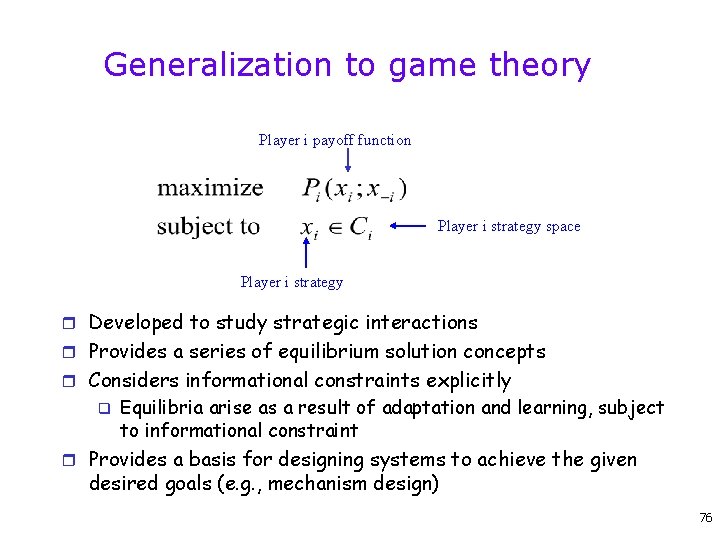
Generalization to game theory Player i payoff function Player i strategy space Player i strategy r Developed to study strategic interactions r Provides a series of equilibrium solution concepts r Considers informational constraints explicitly q Equilibria arise as a result of adaptation and learning, subject to informational constraint r Provides a basis for designing systems to achieve the given desired goals (e. g. , mechanism design) 76
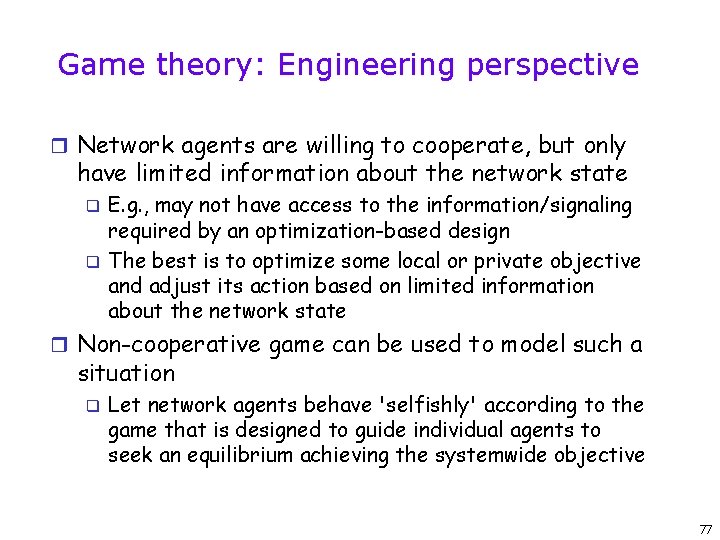
Game theory: Engineering perspective r Network agents are willing to cooperate, but only have limited information about the network state q q E. g. , may not have access to the information/signaling required by an optimization-based design The best is to optimize some local or private objective and adjust its action based on limited information about the network state r Non-cooperative game can be used to model such a situation q Let network agents behave 'selfishly' according to the game that is designed to guide individual agents to seek an equilibrium achieving the systemwide objective 77
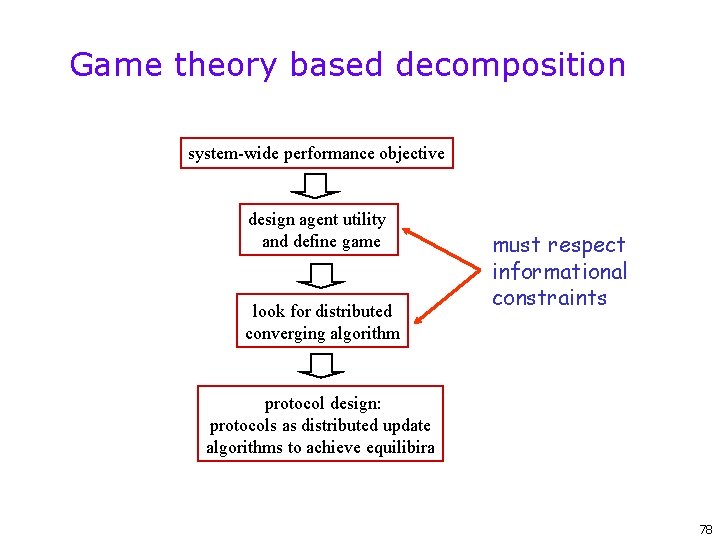
Game theory based decomposition system-wide performance objective design agent utility and define game look for distributed converging algorithm must respect informational constraints protocol design: protocols as distributed update algorithms to achieve equilibira 78
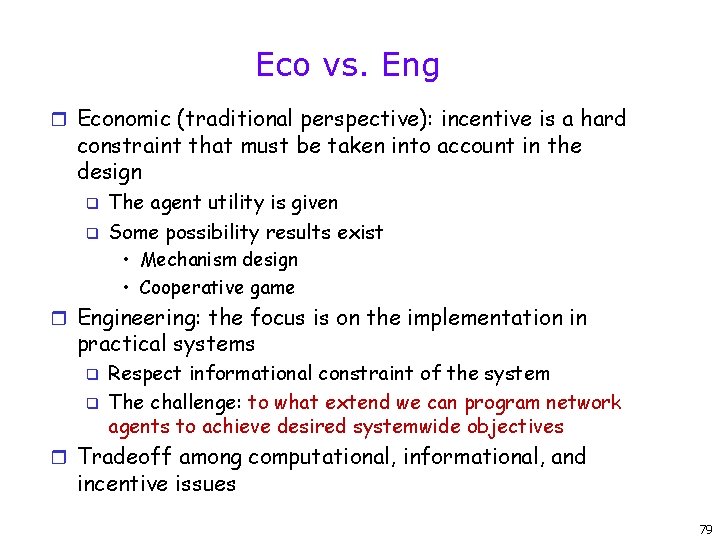
Eco vs. Eng r Economic (traditional perspective): incentive is a hard constraint that must be taken into account in the design q q The agent utility is given Some possibility results exist • Mechanism design • Cooperative game r Engineering: the focus is on the implementation in practical systems q q Respect informational constraint of the system The challenge: to what extend we can program network agents to achieve desired systemwide objectives r Tradeoff among computational, informational, and incentive issues 79
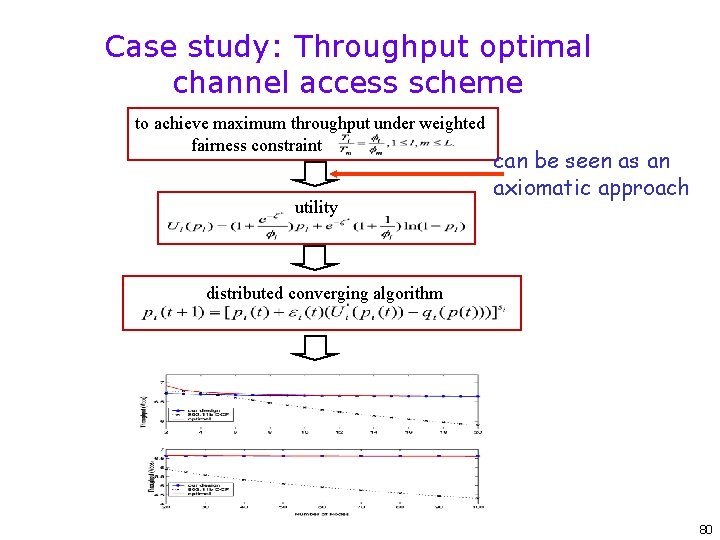
Case study: Throughput optimal channel access scheme to achieve maximum throughput under weighted fairness constraint utility can be seen as an axiomatic approach distributed converging algorithm 80
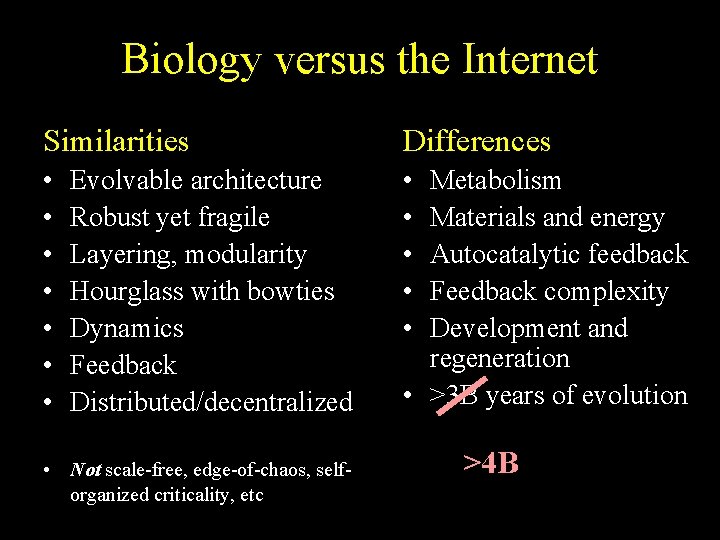
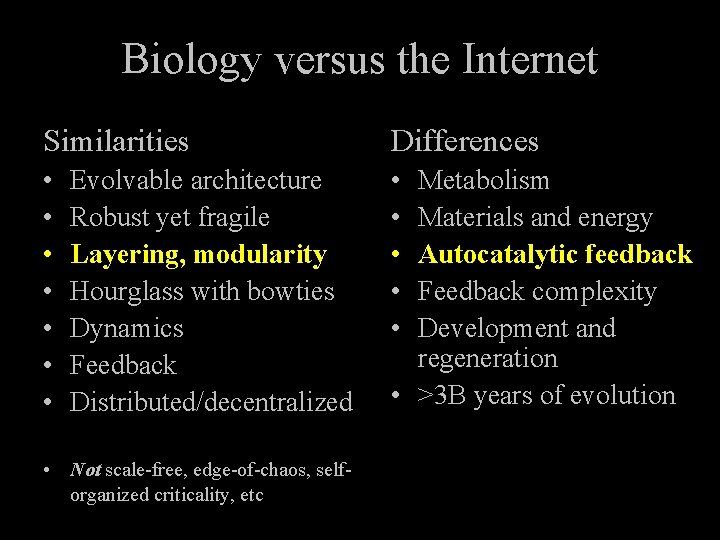
Biology versus the Internet Similarities Differences • • • Evolvable architecture Robust yet fragile Layering, modularity Hourglass with bowties Dynamics Feedback Distributed/decentralized • Not scale-free, edge-of-chaos, selforganized criticality, etc Metabolism Materials and energy Autocatalytic feedback Feedback complexity Development and regeneration • >3 B years of evolution >4 B
Biology versus the Internet Similarities Differences • • • Evolvable architecture Robust yet fragile Layering, modularity Hourglass with bowties Dynamics Feedback Distributed/decentralized • Not scale-free, edge-of-chaos, selforganized criticality, etc Metabolism Materials and energy Autocatalytic feedback Feedback complexity Development and regeneration • >3 B years of evolution
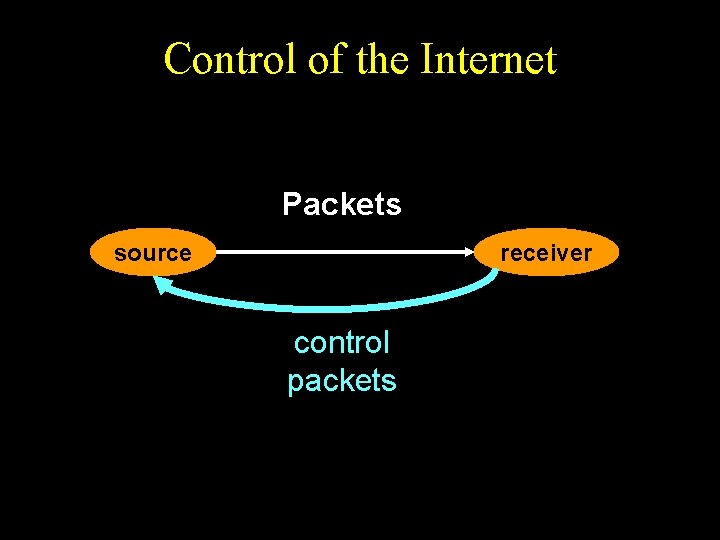
Control of the Internet Packets source receiver control packets
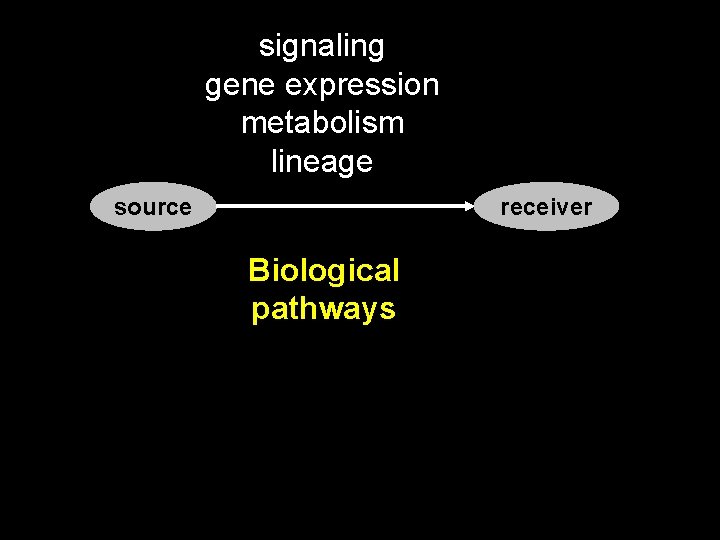
signaling gene expression metabolism lineage source receiver Biological pathways
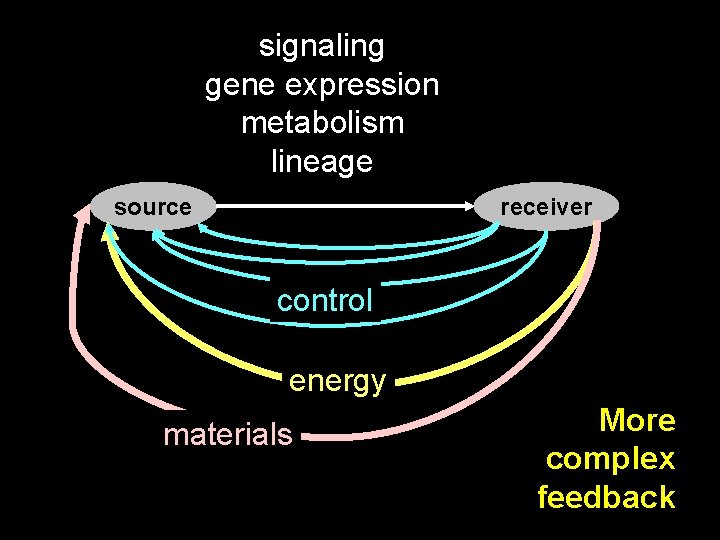
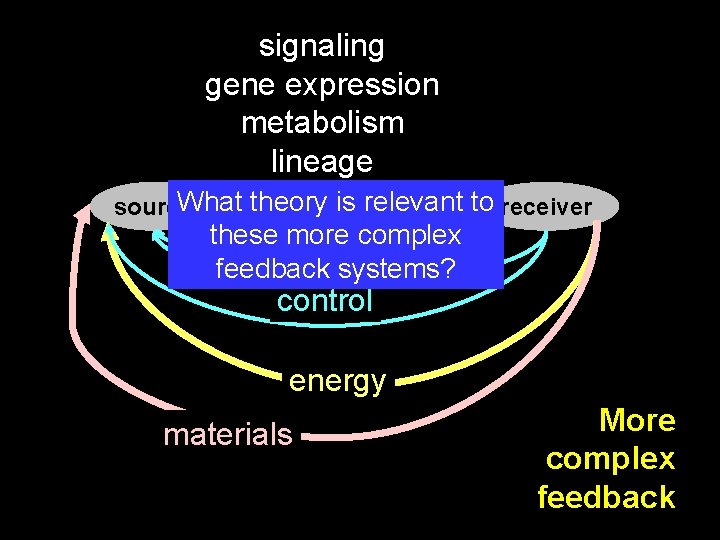
signaling gene expression metabolism lineage source receiver control energy materials More complex feedback
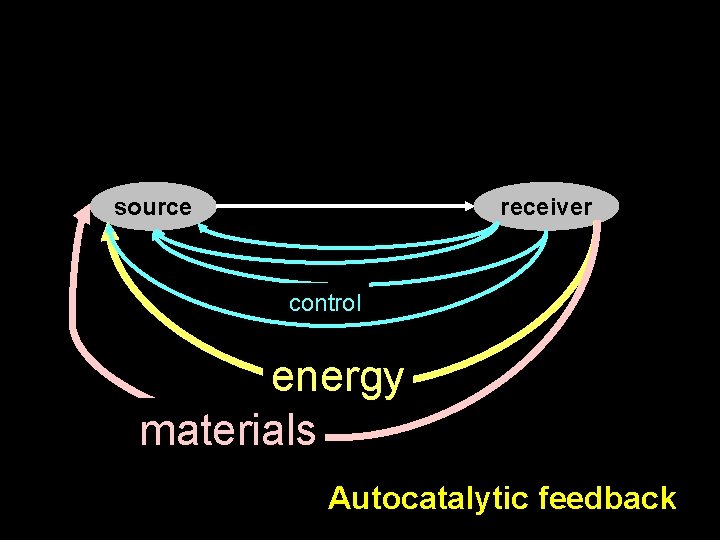
source receiver control energy materials Autocatalytic feedback
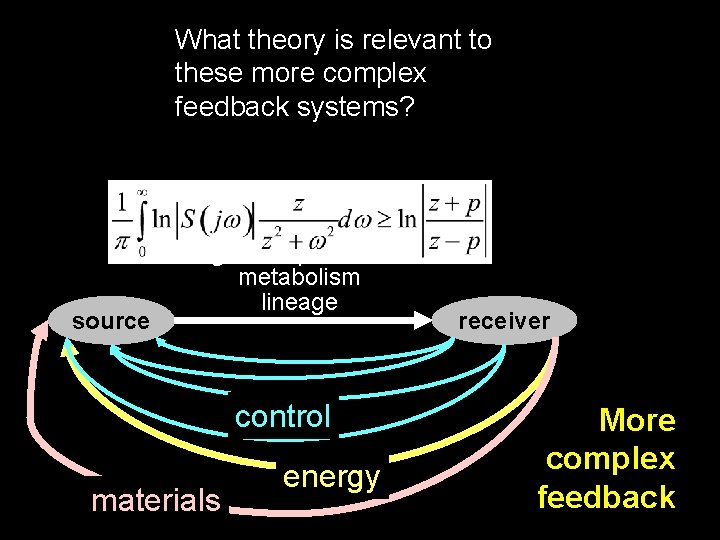
signaling gene expression metabolism lineage What theory is relevant to receiver source these more complex feedback systems? control energy materials More complex feedback
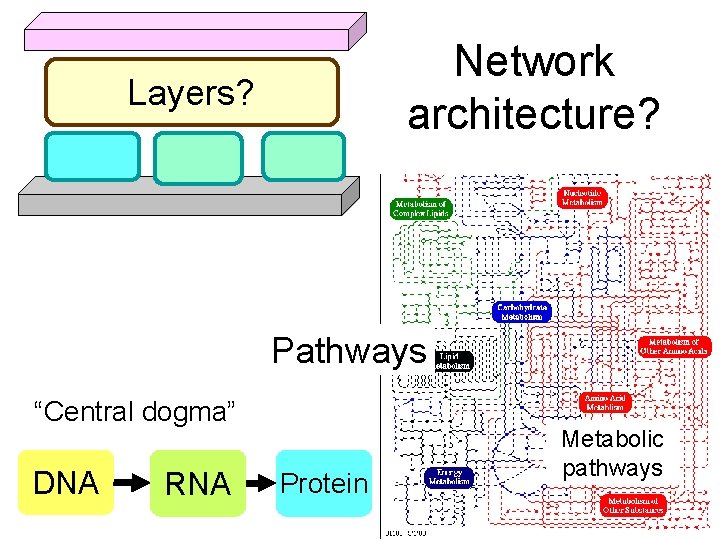
Network architecture? Layers? Pathways “Central dogma” DNA RNA Protein Metabolic pathways
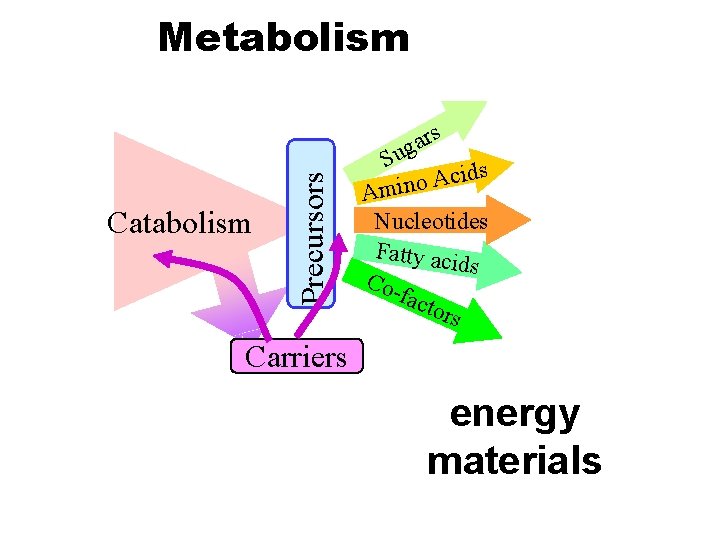
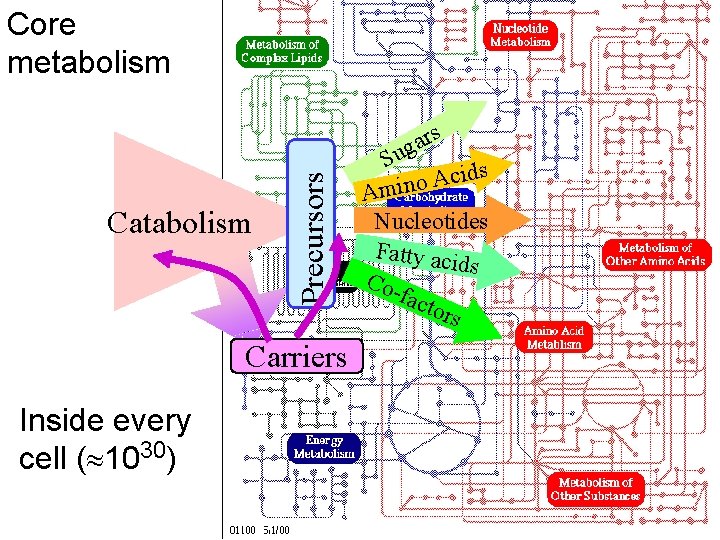
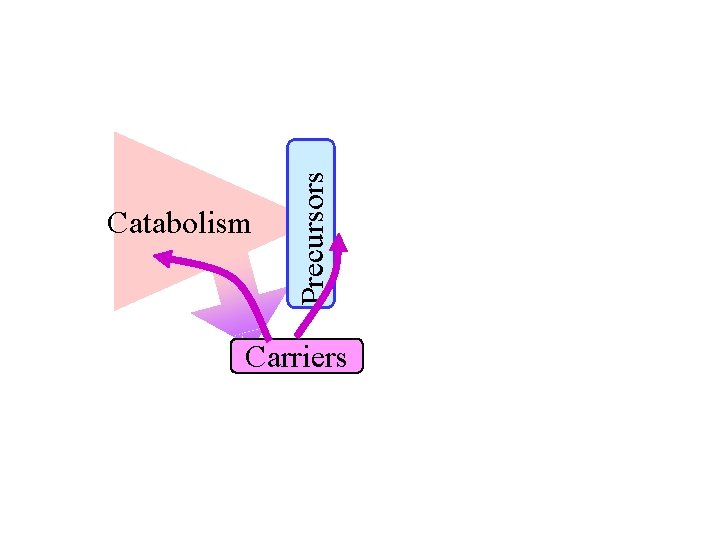
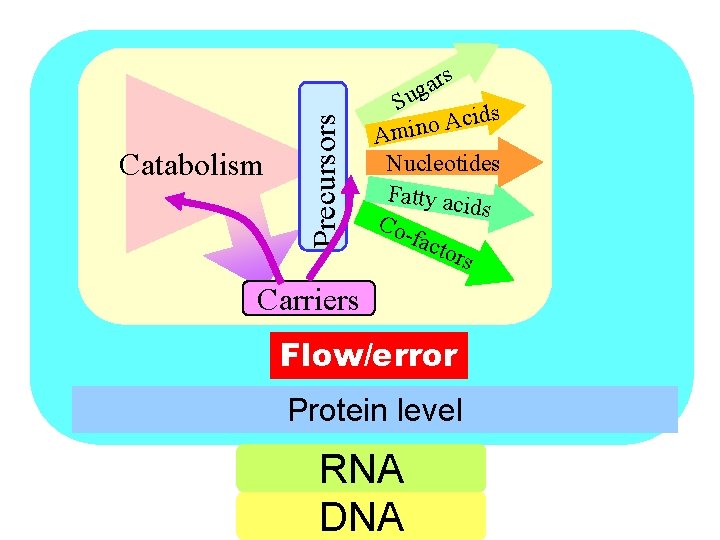
Catabolism Precursors Metabolism rs a g Su ds i c A o Amin Nucleotides Fatty aci ds Cofact ors Carriers energy materials
Catabolism Precursors Core metabolism Carriers Inside every cell ( 1030) rs a g Su ds i c A o Amin Nucleotides Fatty aci ds Cofact ors
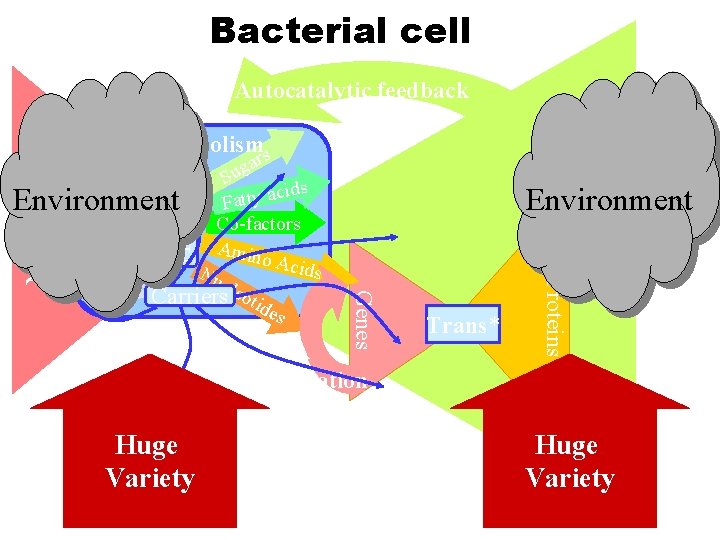
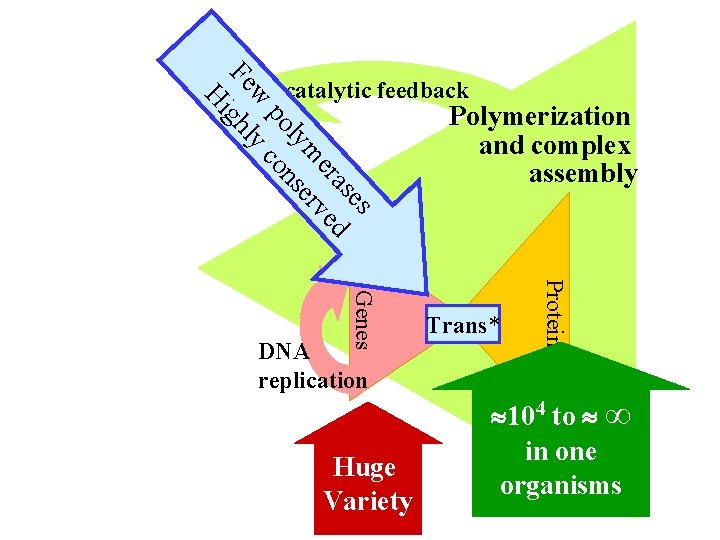
Bacterial cell Autocatalytic feedback Core metabolisms Precursors Catabolism Nutrients Environment Genes DNA replication Huge Variety Trans* Proteins gar u S cids a y t t a Environment F Co-factors Amin o Aci ds Nu cle Carriers otid es Huge Variety
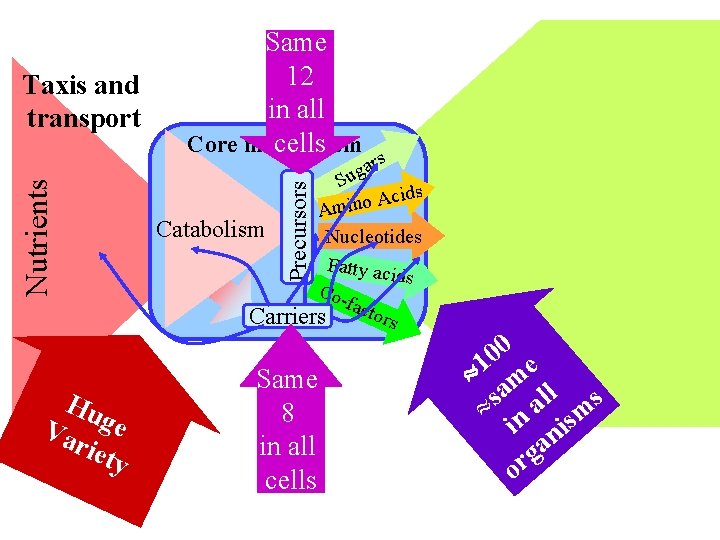
Hu Va ge riet y Precursors Nutrients Taxis and transport Same 12 in all Core metabolism cells rs a g Su cids A o n i m A Catabolism Nucleotides Fatty aci ds Cofact ors Carriers Same 8 in all cells 0 0 1 me a ll s s n a sm i ni a g or
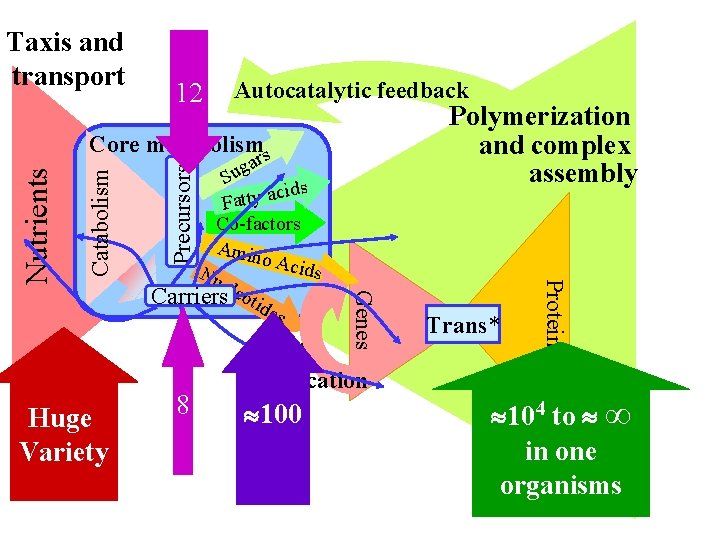
12 Autocatalytic feedback Polymerization and complex assembly 8 Genes Huge Variety gar u S cids a y t t a F Co-factors Amin o Aci ds Nu cle Carriers otid es Precursors Catabolism Core metabolisms DNA replication 100 Trans* Proteins Nutrients Taxis and transport 104 to ∞ in one organisms
es as er ed m rv ly se po on w yc Fe ghl Hi Autocatalytic feedback Huge Variety Trans* Proteins Genes DNA replication Polymerization and complex assembly 104 to ∞ in one organisms
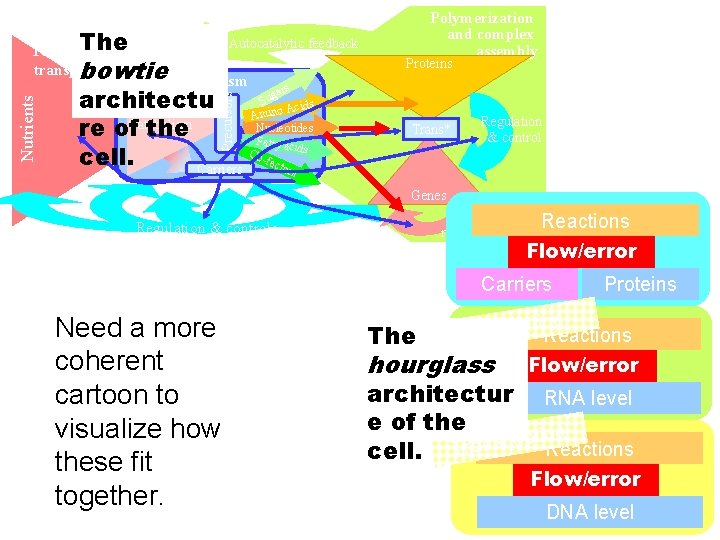
The Taxis and transport bowtie Polymerization and complex assembly Autocatalytic feedback Proteins s gar u S Acids Amino Catabolism Nucleotides Fatty aci ds Cofact ors Carriers architectu re of the cell. Precursors Nutrients Core metabolism Trans* Regulation & control Genes DNA replication Regulation & control Reactions Flow/error Carriers Need a more coherent cartoon to visualize how these fit together. The Proteins tion a l s n a r T Reactions hourglass Flow/error architectur RNA level e of the tion p i r c s n Reactions cell. Tra Flow/error DNA level
Precursors Catabolism Carriers
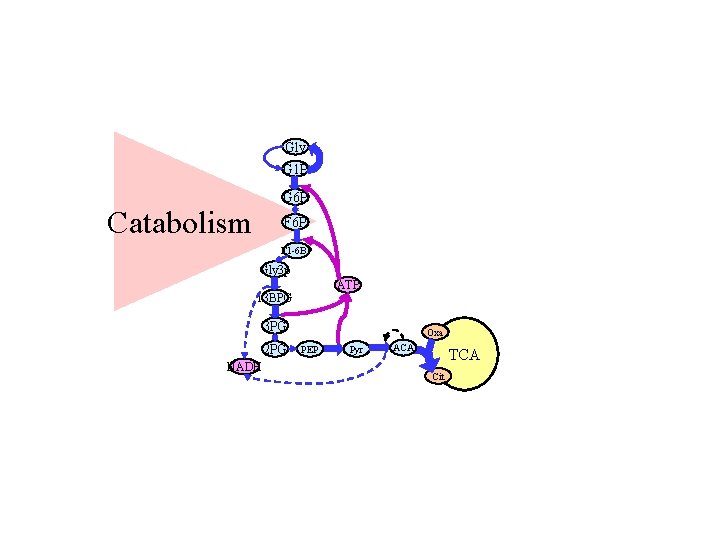
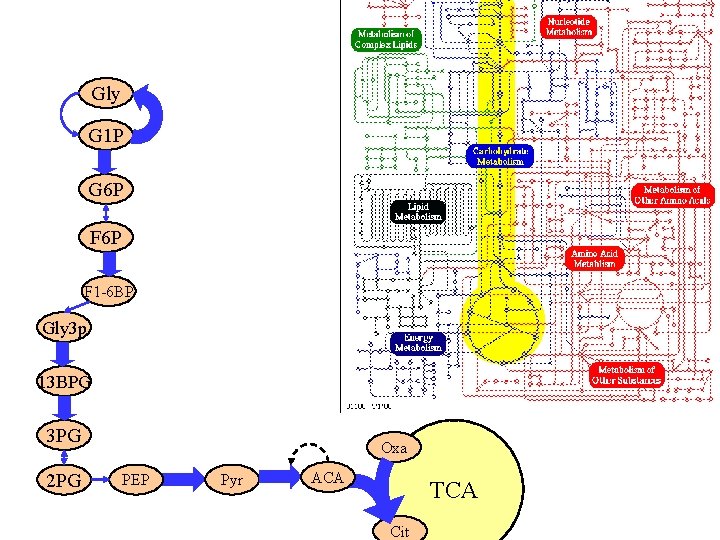
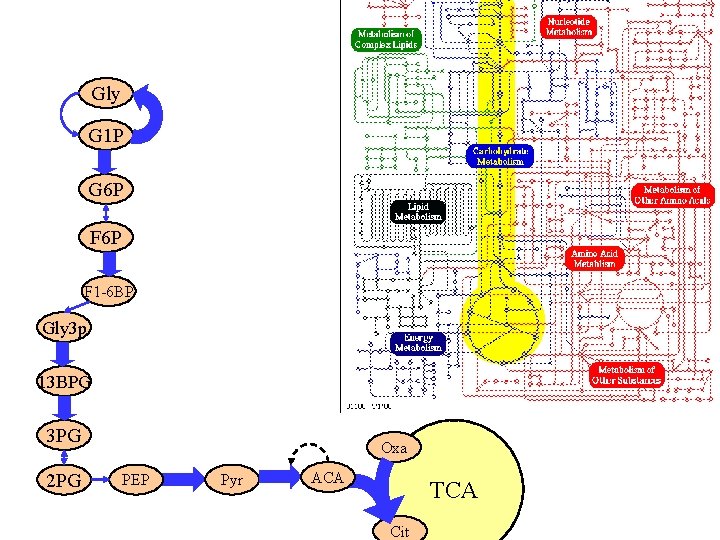
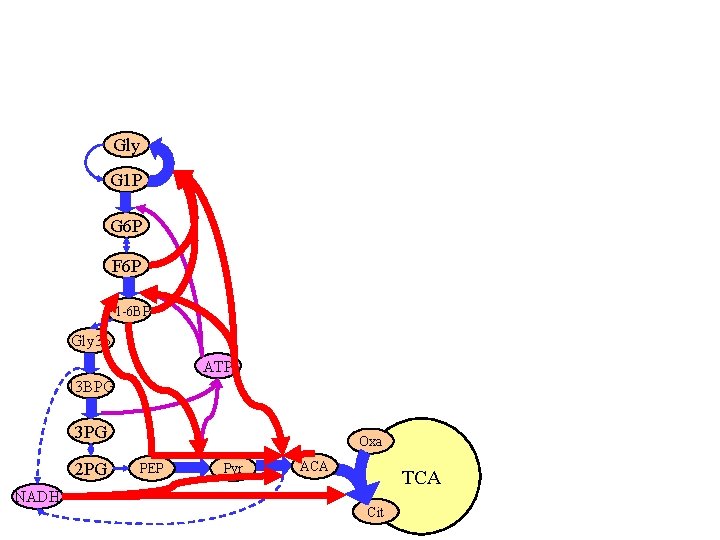
Gly G 1 P G 6 P Catabolism F 6 P F 1 -6 BP Gly 3 p ATP 13 BPG 3 PG 2 PG NADH Oxa PEP Pyr ACA TCA Cit
Gly G 1 P G 6 P F 1 -6 BP Gly 3 p 13 BPG 3 PG 2 PG Oxa PEP Pyr ACA TCA Cit
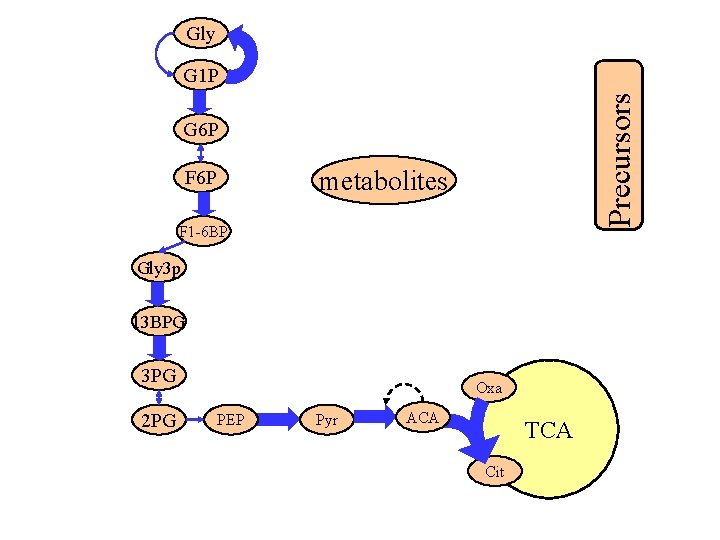
Gly Precursors G 1 P G 6 P metabolites F 6 P F 1 -6 BP Gly 3 p 13 BPG 3 PG 2 PG Oxa PEP Pyr ACA TCA Cit
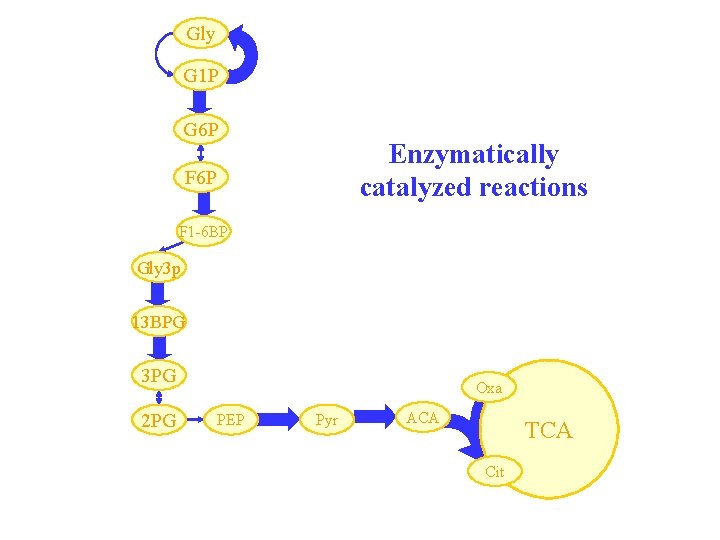
Gly G 1 P G 6 P Enzymatically catalyzed reactions F 6 P F 1 -6 BP Gly 3 p 13 BPG 3 PG 2 PG Oxa PEP Pyr ACA TCA Cit
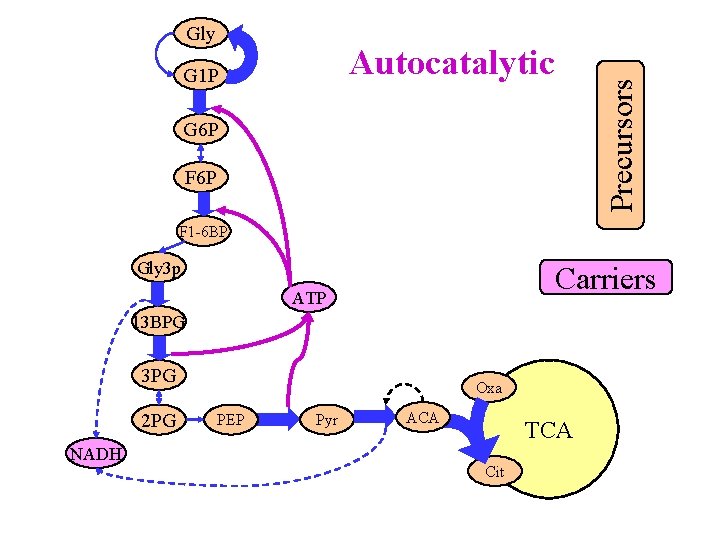
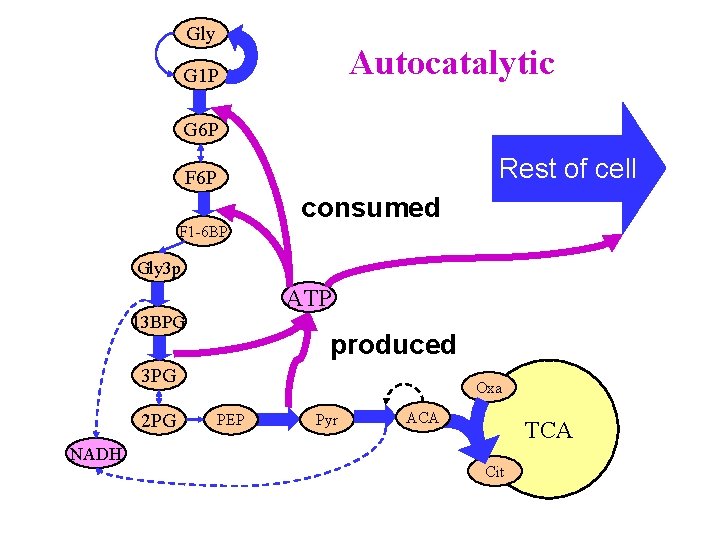
Autocatalytic G 1 P G 6 P F 6 P Precursors Gly F 1 -6 BP Gly 3 p Carriers ATP 13 BPG 3 PG 2 PG NADH Oxa PEP Pyr ACA TCA Cit
Gly Autocatalytic G 1 P G 6 P Rest of cell F 6 P F 1 -6 BP consumed Gly 3 p ATP 13 BPG produced 3 PG 2 PG NADH Oxa PEP Pyr ACA TCA Cit
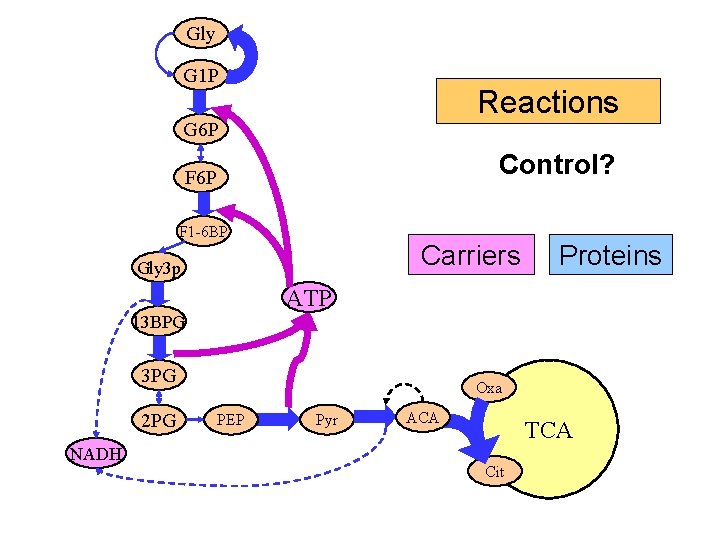
Gly G 1 P Reactions G 6 P Control? F 6 P F 1 -6 BP Carriers Gly 3 p Proteins ATP 13 BPG 3 PG 2 PG NADH Oxa PEP Pyr ACA TCA Cit
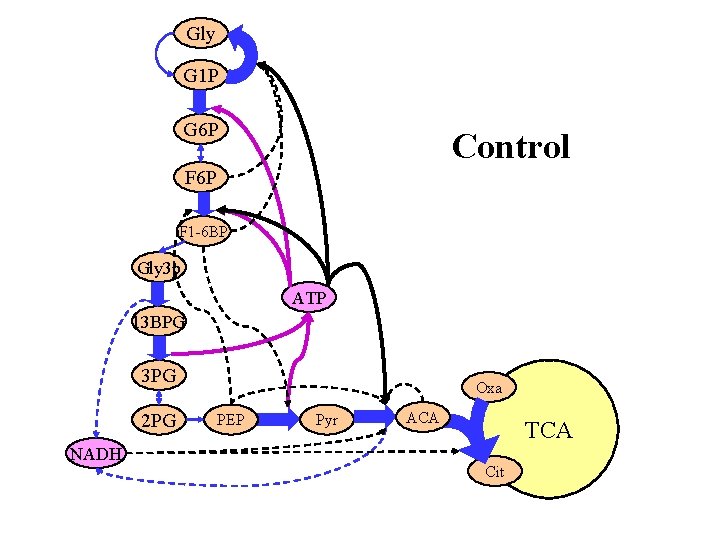
Gly G 1 P G 6 P Control F 6 P F 1 -6 BP Gly 3 p ATP 13 BPG 3 PG 2 PG NADH Oxa PEP Pyr ACA TCA Cit
Gly G 1 P G 6 P F 1 -6 BP Gly 3 p 13 BPG 3 PG 2 PG Oxa PEP Pyr ACA TCA Cit
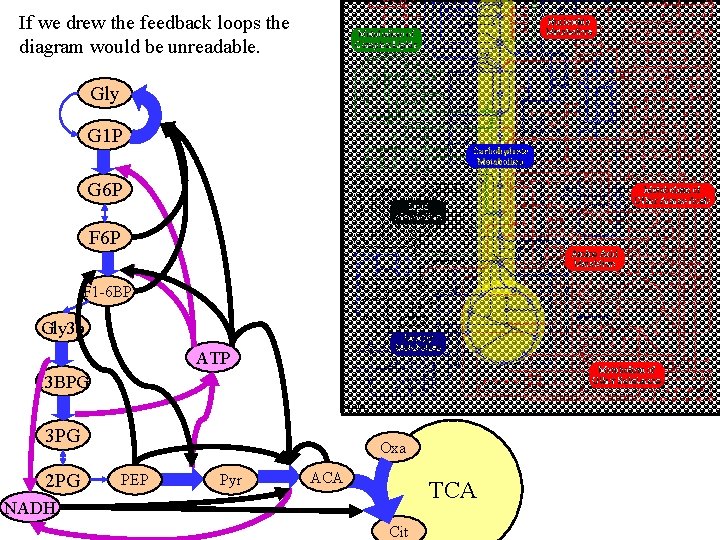
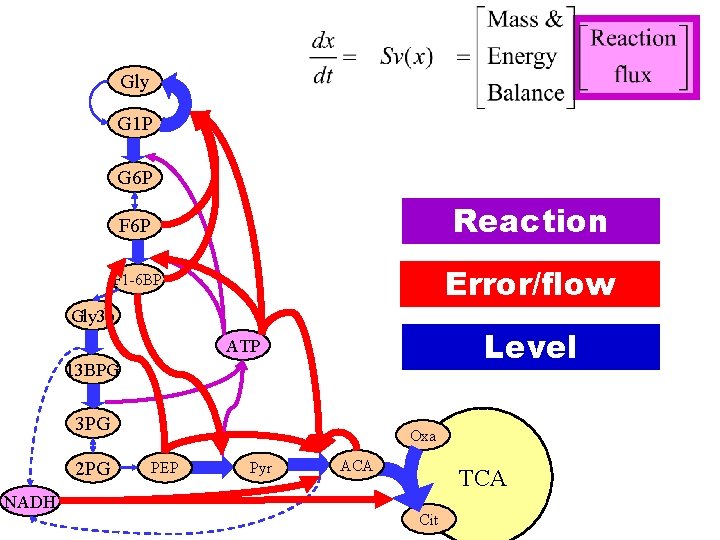
If we drew the feedback loops the diagram would be unreadable. Gly G 1 P G 6 P F 1 -6 BP Gly 3 p ATP 13 BPG 3 PG 2 PG Oxa PEP Pyr ACA TCA NADH Cit
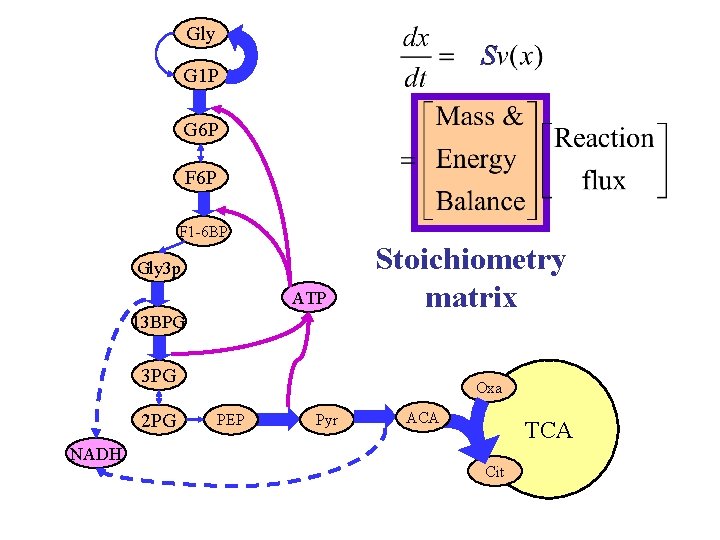
Gly S G 1 P G 6 P F 1 -6 BP Gly 3 p ATP 13 BPG Stoichiometry matrix 3 PG 2 PG NADH Oxa PEP Pyr ACA TCA Cit
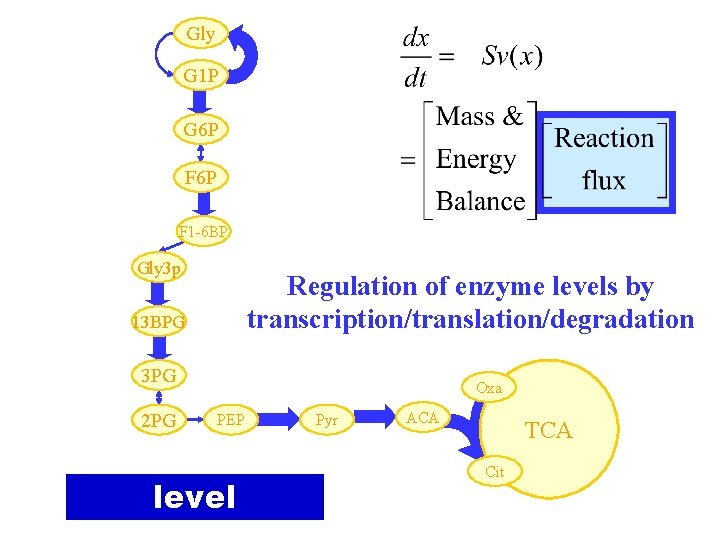
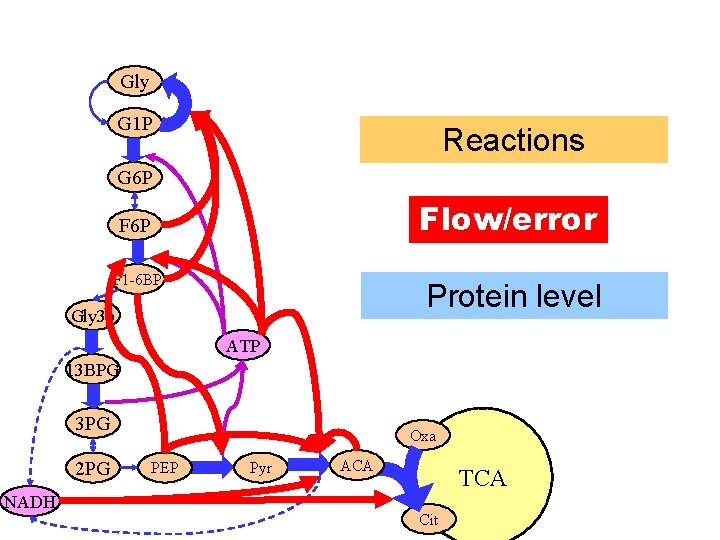
Gly G 1 P G 6 P F 1 -6 BP Gly 3 p Regulation of enzyme levels by transcription/translation/degradation 13 BPG 3 PG 2 PG Oxa PEP level Pyr ACA TCA Cit
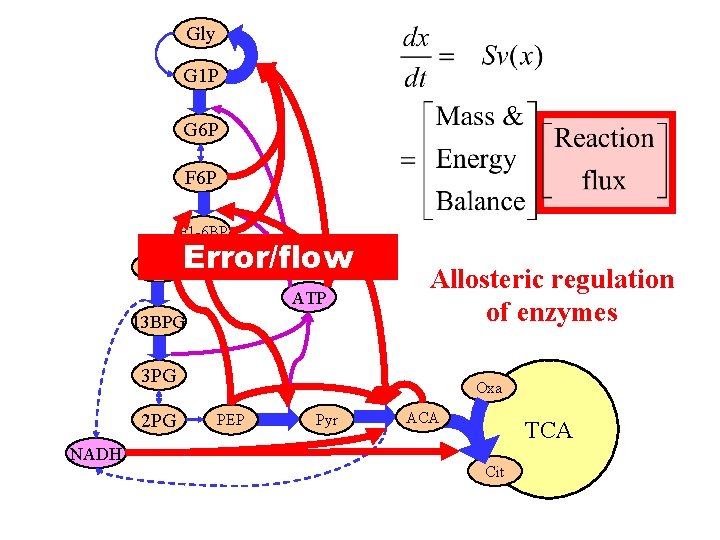
Gly G 1 P G 6 P F 1 -6 BP Gly 3 p Error/flow ATP 13 BPG Allosteric regulation of enzymes 3 PG 2 PG NADH Oxa PEP Pyr ACA TCA Cit
Gly G 1 P G 6 P F 6 P Reaction F 1 -6 BP Error/flow Gly 3 p Level ATP 13 BPG 3 PG 2 PG NADH Oxa PEP Pyr ACA TCA Cit
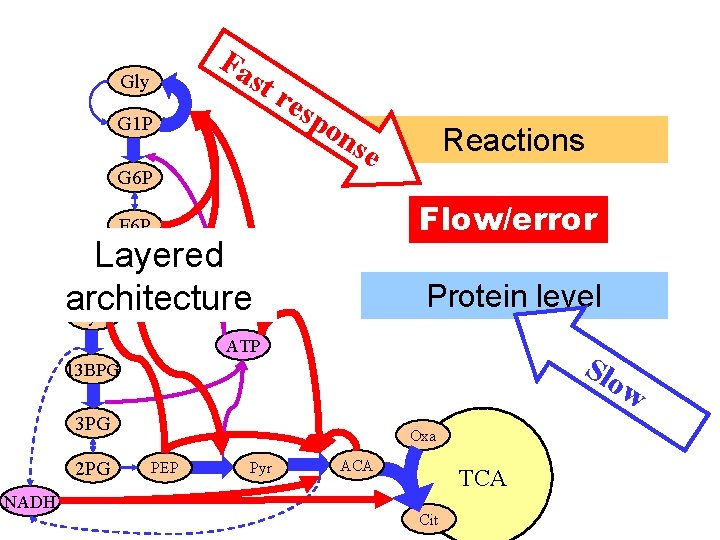
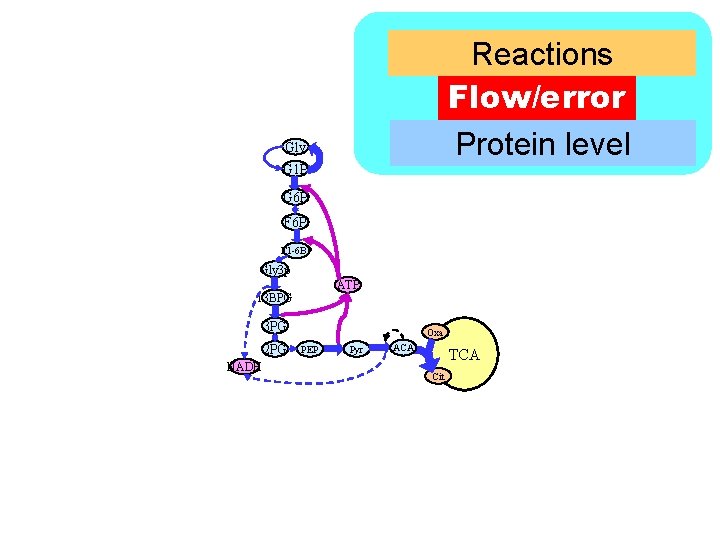
Gly G 1 P Reactions G 6 P Flow/error F 6 P F 1 -6 BP Protein level Gly 3 p ATP 13 BPG 3 PG 2 PG NADH Oxa PEP Pyr ACA TCA Cit
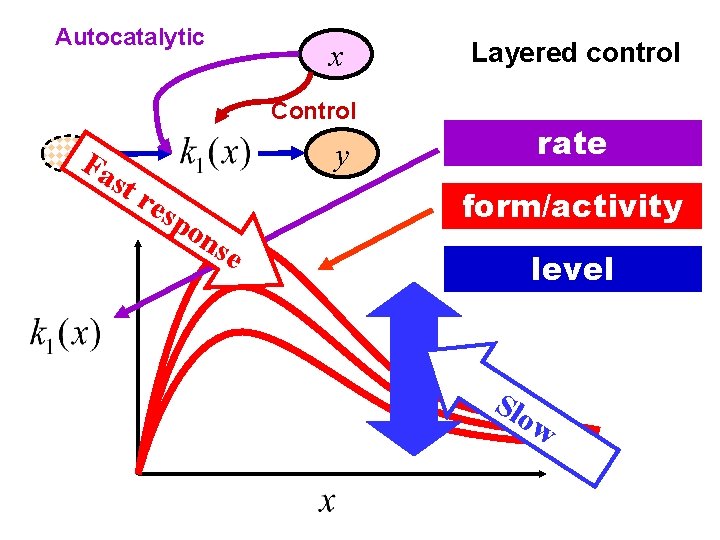
Fa st Gly G 1 P G 6 P res po ns Reactions e Flow/error F 6 P Layered F 1 -6 BP architecture Gly 3 p Protein level ATP Slo 13 BPG w 3 PG 2 PG NADH Oxa PEP Pyr ACA TCA Cit
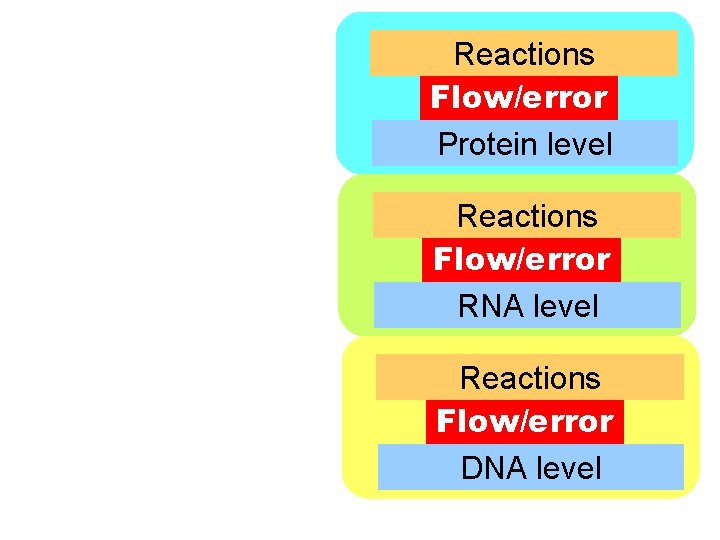
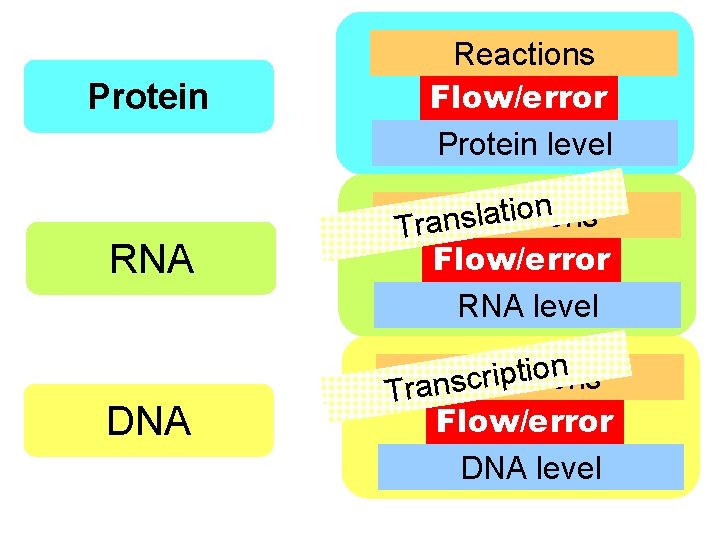
Reactions Flow/error Protein level Reactions Flow/error RNA level Reactions Flow/error DNA level
Protein Reactions Flow/error Protein level RNA n o i t a l Reactions s n Tra Flow/error RNA level DNA n o i t p i r Reactions c Trans Flow/error DNA level
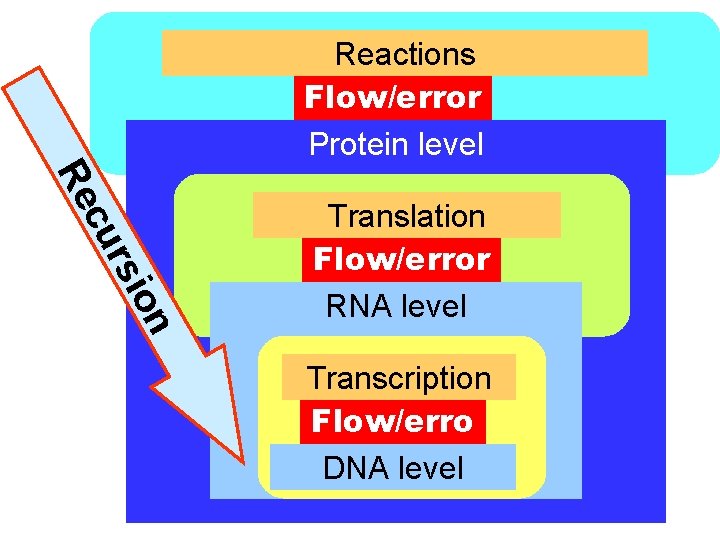
Reactions Flow/error Protein level on rsi cu Re Translation Flow/error RNA level Transcription Flow/erro DNArlevel
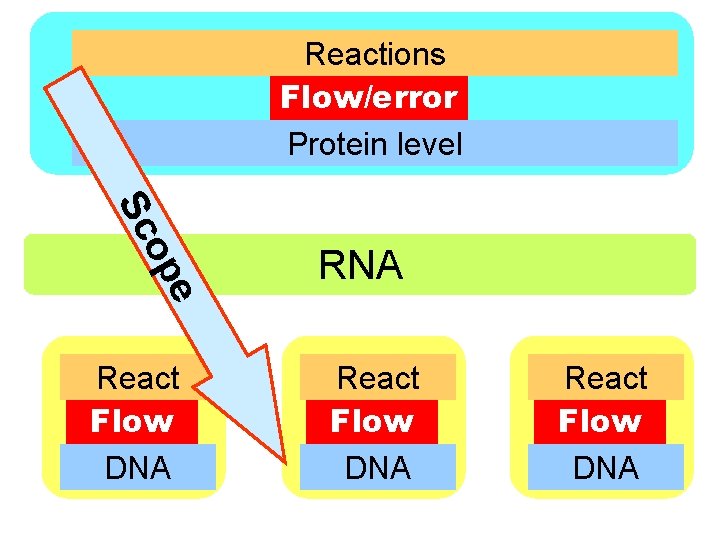
Reactions Flow/error Protein level op Sc e React Flow DNA React Flow DNA
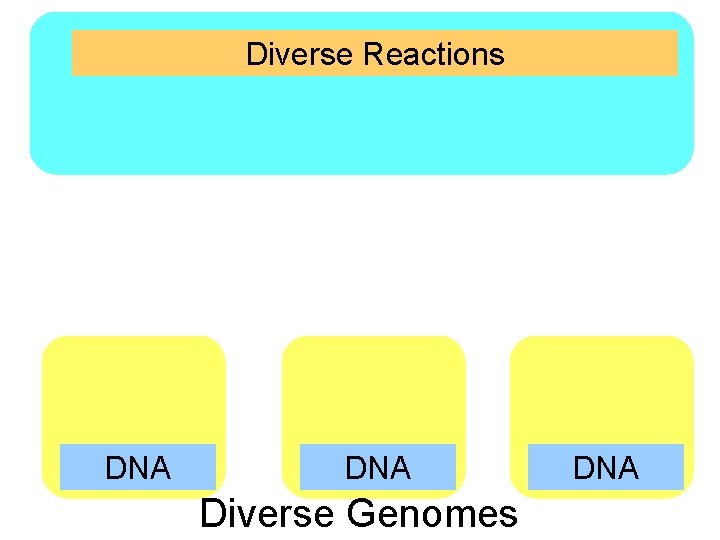
Diverse Reactions DNA Diverse Genomes DNA
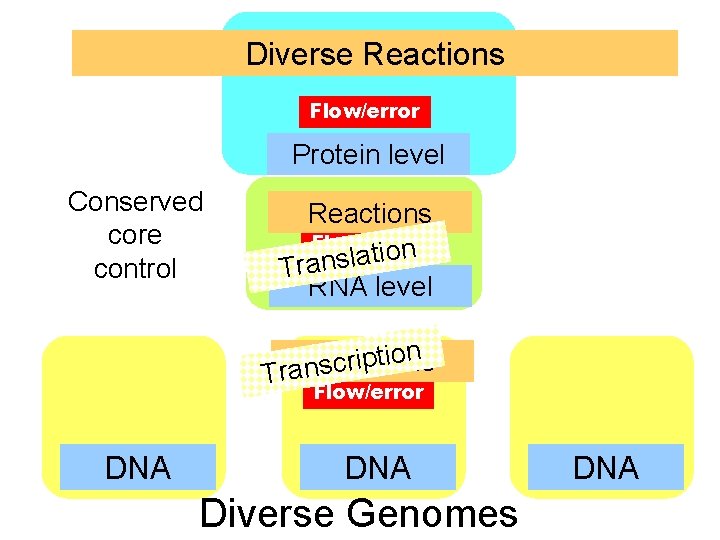
Diverse Reactions Flow/error Protein level Conserved core control Reactions Flow/error n o i t a l s n Tra RNA level n o i t p i r Reactions c s Tran Flow/error DNA Diverse Genomes DNA
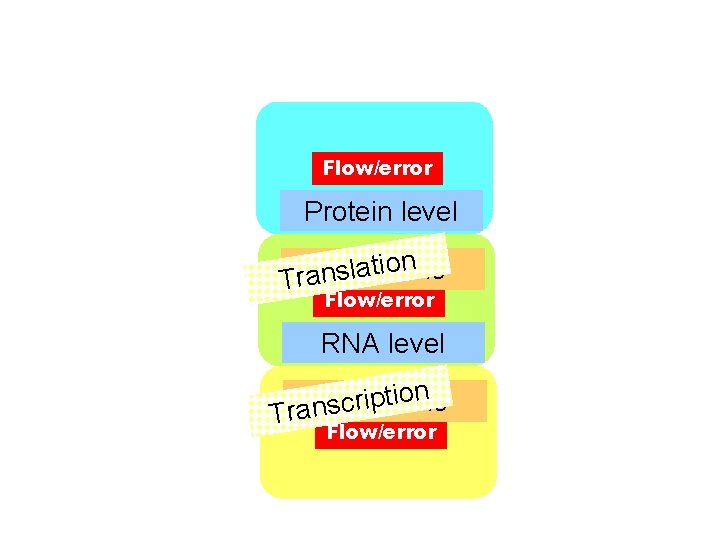
Flow/error Protein level n o i t a l Reactions s n Tra Flow/error RNA level n o i t p i r Reactions c s Tran Flow/error
Reactions Flow/error Protein level Gly G 1 P G 6 P F 1 -6 BP Gly 3 p ATP 13 BPG 3 PG 2 PG NADH Oxa PEP Pyr ACA TCA Cit
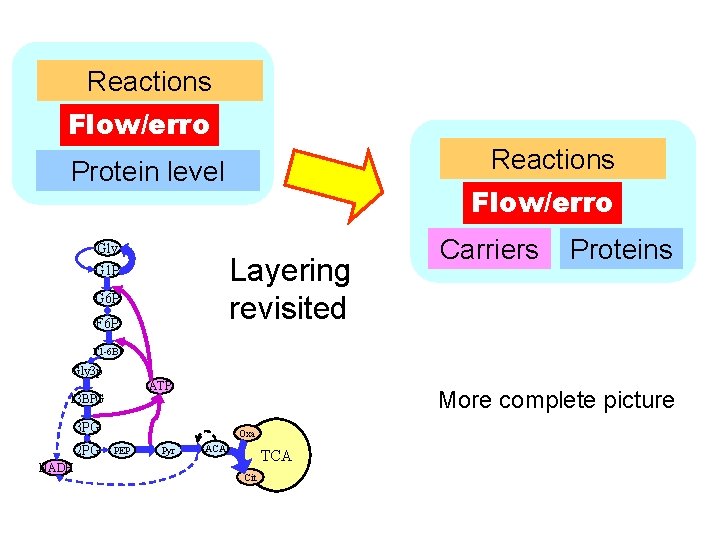
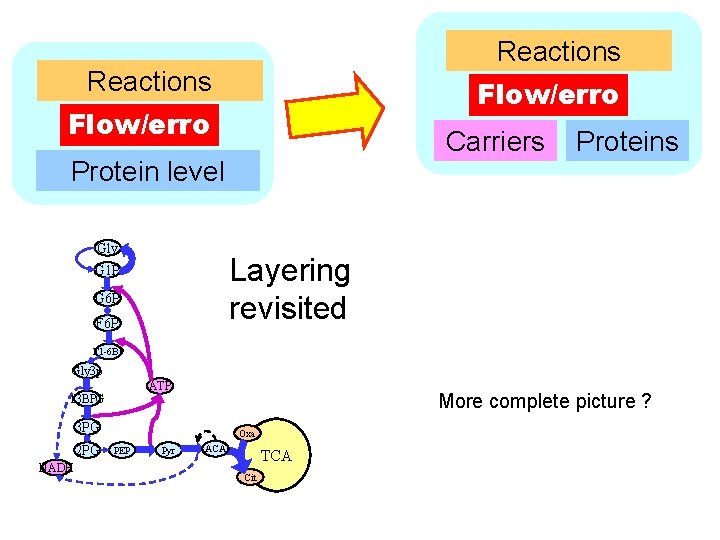
Reactions Flow/erro r Protein level Gly Reactions Layering revisited G 1 P G 6 P Flow/erro Carriersr Proteins F 1 -6 BP Gly 3 p ATP 13 BPG More complete picture 3 PG 2 PG NADH Oxa PEP Pyr ACA TCA Cit
Precursors Catabolism s r a g Su ids c A o n Ami Nucleotides Fatty aci ds Cofact ors Carriers Flow/error Protein level RNA DNA
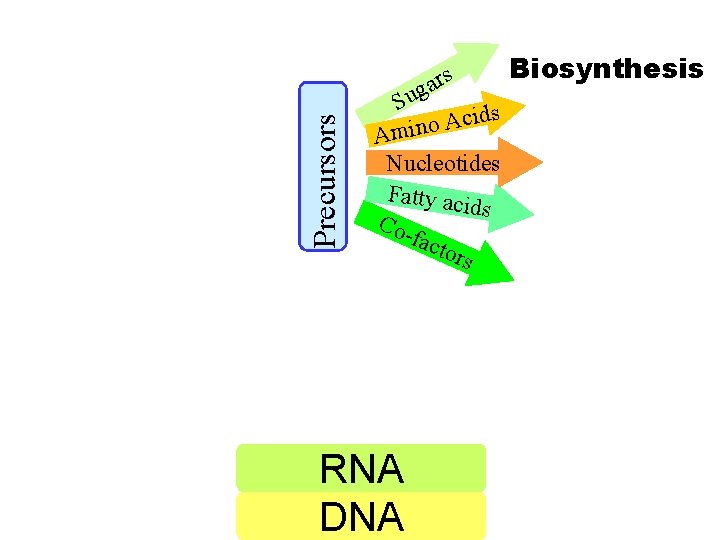
Precursors s r a g Su ids c A o n Ami Nucleotides Fatty aci ds Cofact ors RNA DNA Biosynthesis
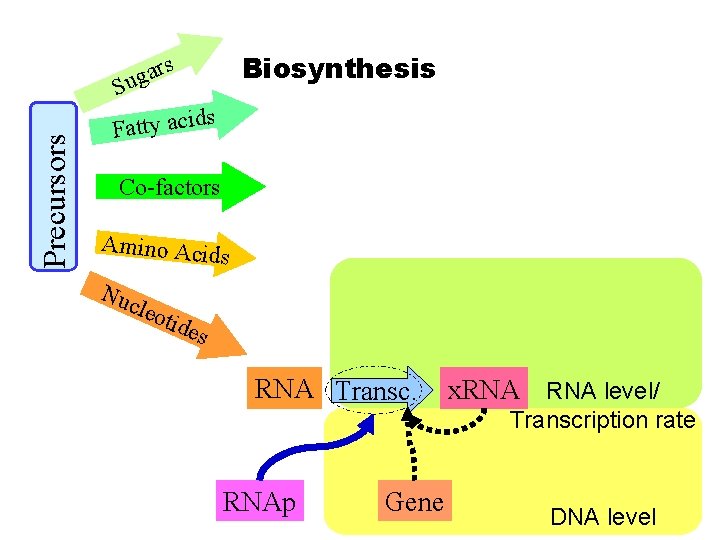
Biosynthesis s Precursors ar g u S Fatty acid s Co-factors Amino Acid s Nuc leot ides RNA Transc. RNAp Gene x. RNA level/ Transcription rate DNA level
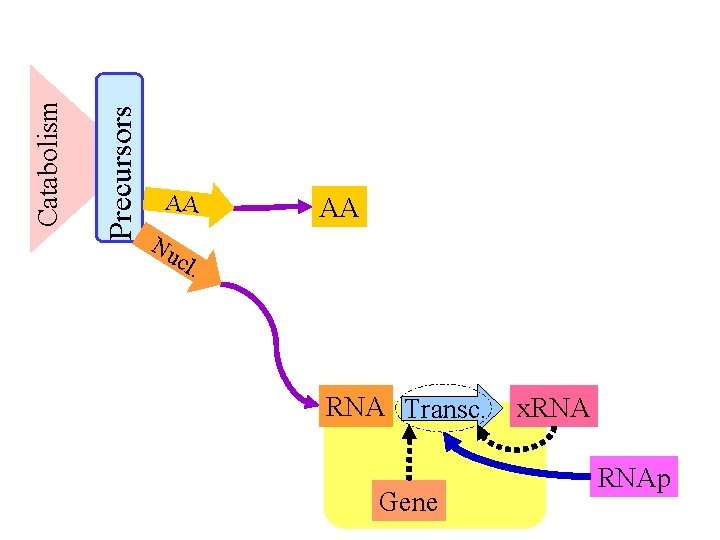
Precursors Catabolism AA AA Nu cl . RNA Transc. Gene x. RNAp
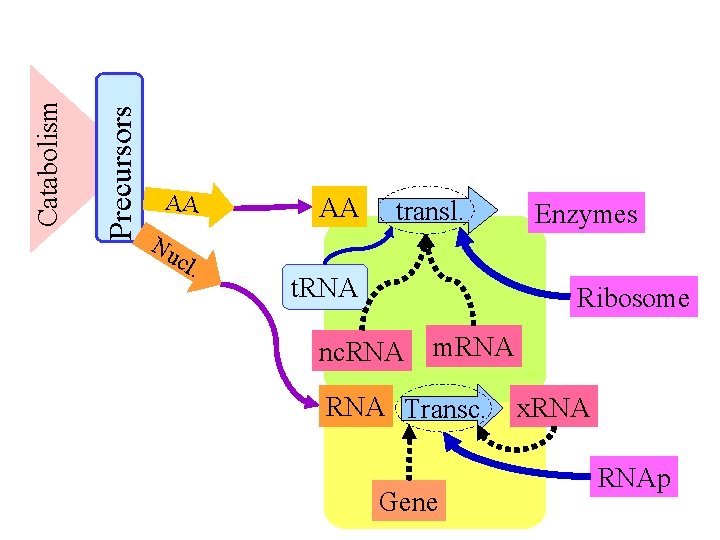
Precursors Catabolism AA Nu cl . AA transl. t. RNA Enzymes Ribosome nc. RNA m. RNA Transc. Gene x. RNAp
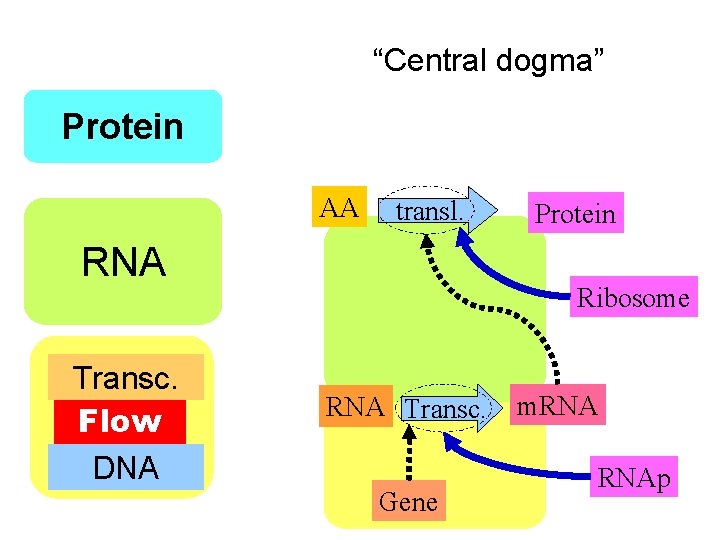
“Central dogma” Protein AA transl. RNA Transc. Flow DNA Protein Ribosome RNA Transc. Gene m. RNAp
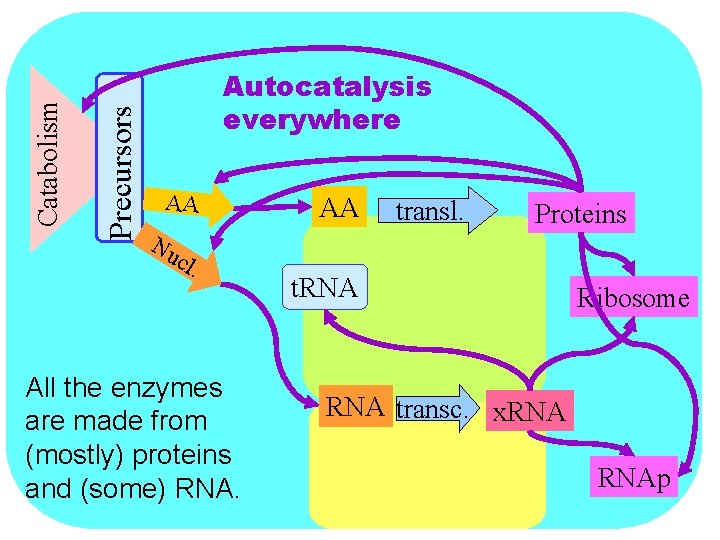
Precursors Catabolism Autocatalysis everywhere AA Nu cl . All the enzymes are made from (mostly) proteins and (some) RNA. AA transl. Proteins t. RNA Ribosome RNA transc. x. RNAp
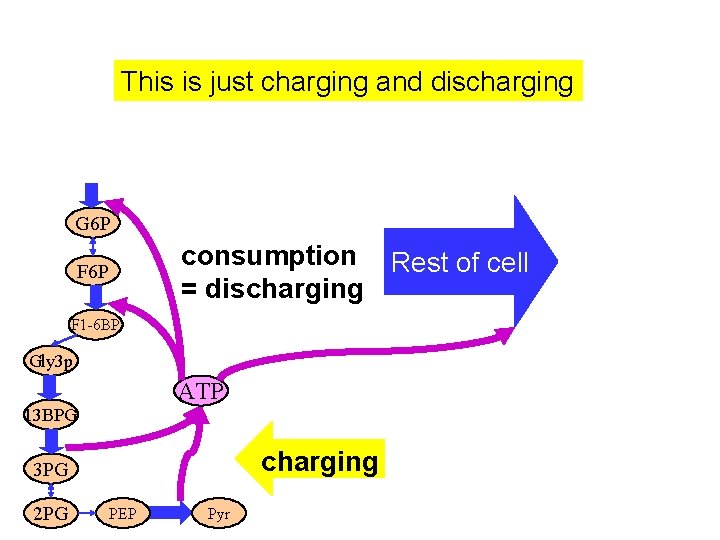
This is just charging and discharging G 6 P consumption Rest of cell = discharging F 6 P F 1 -6 BP Gly 3 p ATP 13 BPG charging 3 PG 2 PG PEP Pyr
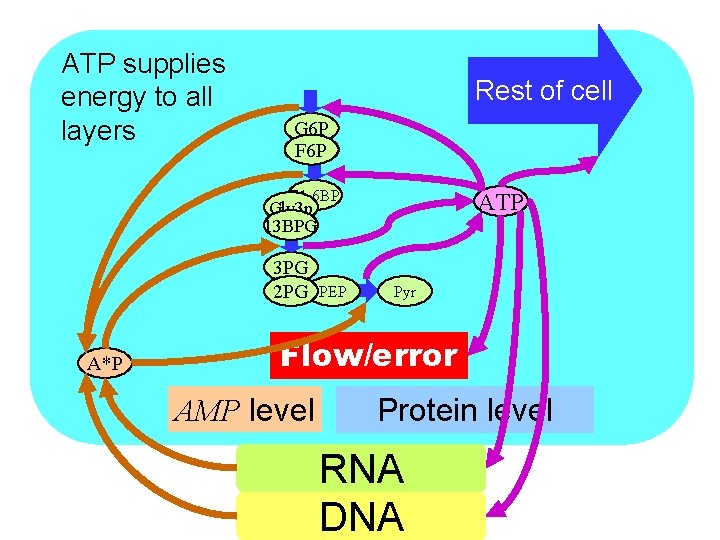
ATP supplies energy to all layers Rest of cell G 6 P F 1 -6 BP ATP Gly 3 p 13 BPG 3 PG 2 PG A*P PEP Pyr Flow/error AMP level Protein level RNA DNA
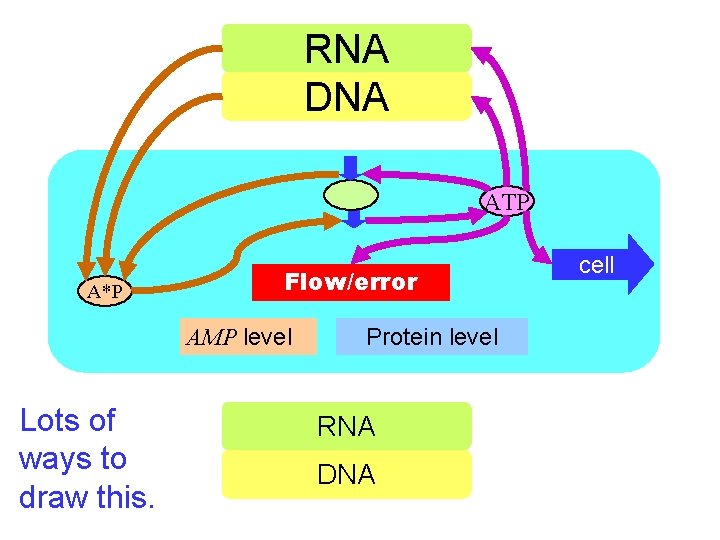
RNA DNA ATP A*P Flow/error AMP level Lots of ways to draw this. Protein level RNA DNA cell
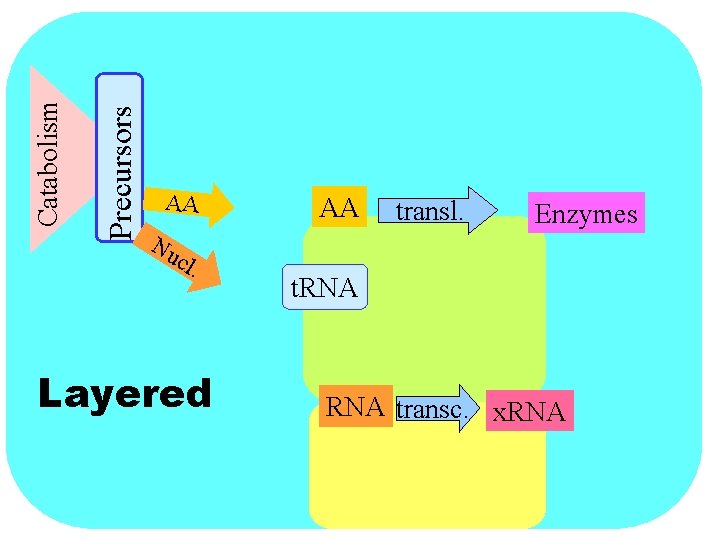
Precursors Catabolism AA Nu cl . Layered AA transl. Enzymes t. RNA transc. x. RNA
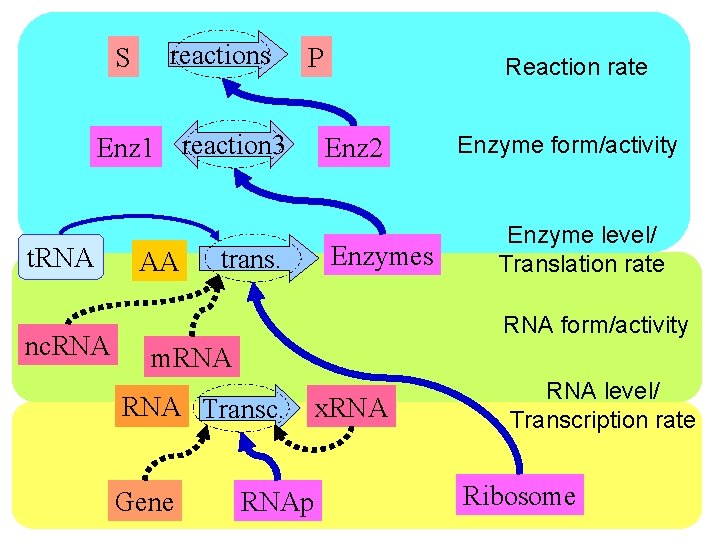
S reactions P Enz 1 reaction 3 t. RNA nc. RNA AA trans. Reaction rate Enz 2 Enzymes Enzyme form/activity Enzyme level/ Translation rate RNA form/activity m. RNA Transc. Gene RNAp x. RNA level/ Transcription rate Ribosome
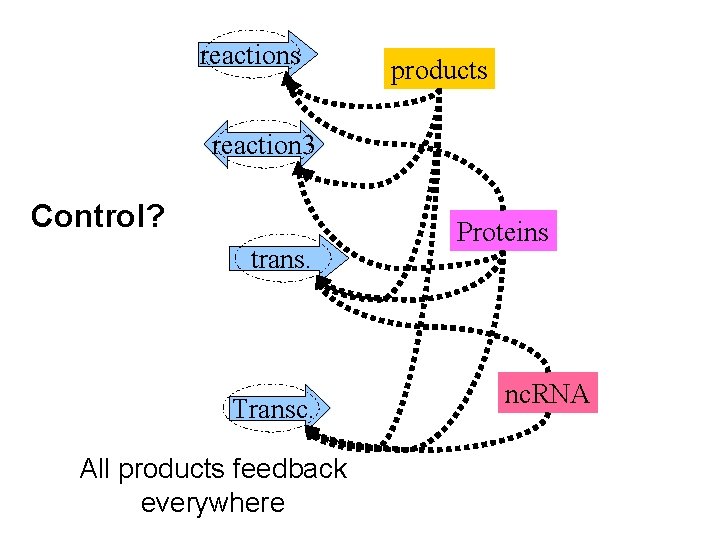
reactions products reaction 3 Control? trans. Transc. All products feedback everywhere Proteins nc. RNA
Recursive control structure Reactions Flow Protein level Reactions Application Error/flow control Global RNA level Relay/MUX E/F control Reactions Relay/MUX Flow Local Relay/MUX Flow DNA level Physical
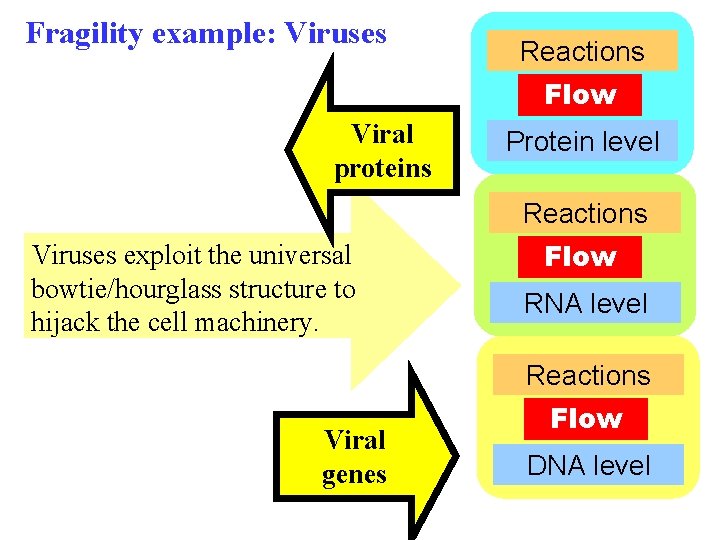
Fragility example: Viruses Reactions Flow Viral proteins Protein level Reactions Viruses exploit the universal bowtie/hourglass structure to hijack the cell machinery. Flow RNA level Reactions Viral genes Flow DNA level
Reactions Flow/erro Carriersr Proteins Flow/erro r Protein level Gly Layering revisited G 1 P G 6 P F 1 -6 BP Gly 3 p ATP 13 BPG More complete picture ? 3 PG 2 PG NADH Oxa PEP Pyr ACA TCA Cit
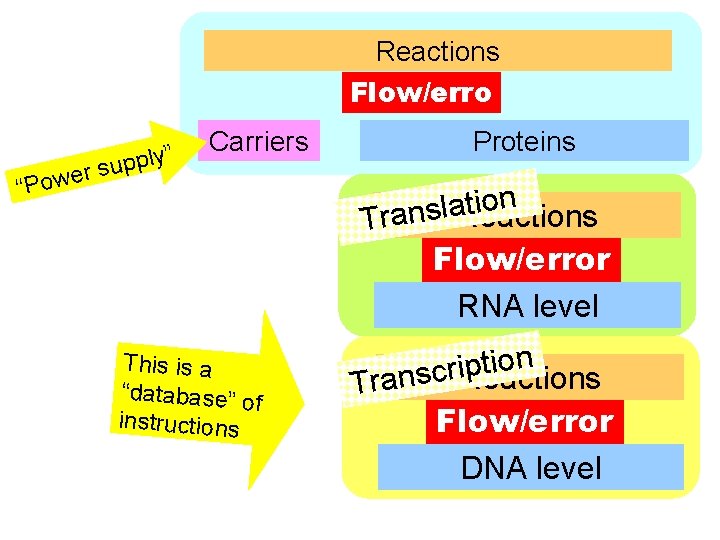
y” l p p u er s Carriers “Pow This is a “database” of instructions Reactions Flow/erro r Proteins n o i t a l s n Tra Reactions Flow/error RNA level n o i t p i r c Trans Reactions Flow/error DNA level
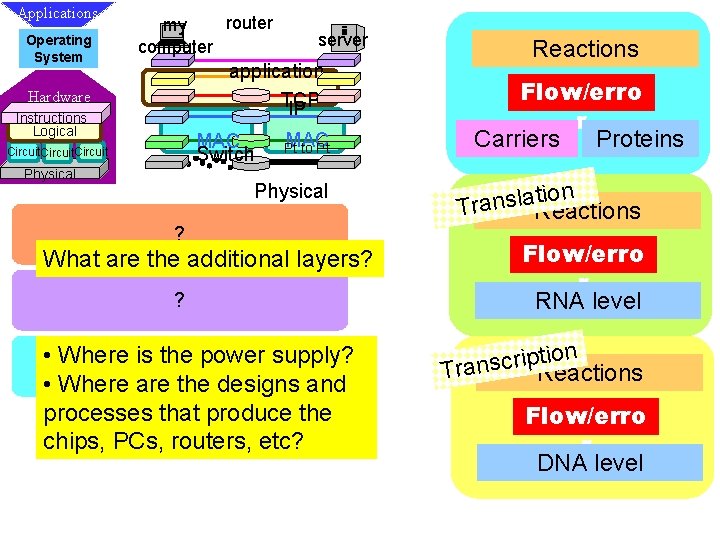
Applications Operating System router my computer server application TCP IP Hardware Instructions Logical MAC Switch Circuit Physical MAC Pt to Pt Physical ? What are the additional layers? ? • Where is the power supply? ? • Where are the designs and processes that produce the chips, PCs, routers, etc? Reactions Flow/erro r Carriers Proteins n o i t a l s n Tra Reactions Flow/erro r RNA level n o i t p i r c s Tran Reactions Flow/erro r DNA level
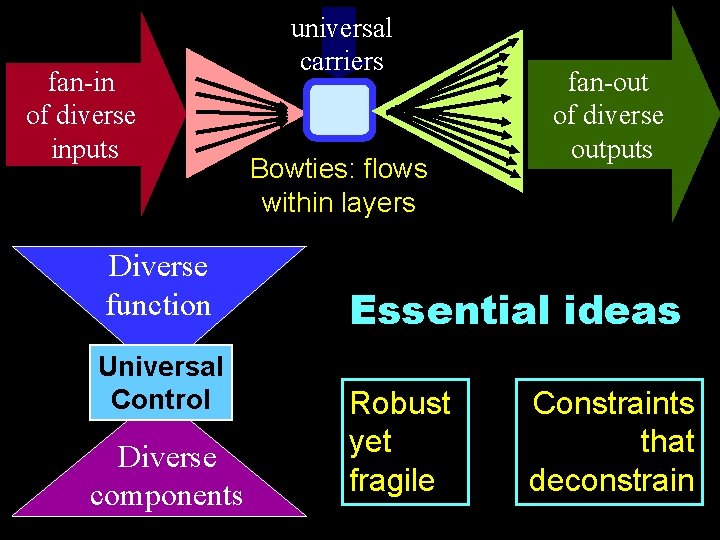
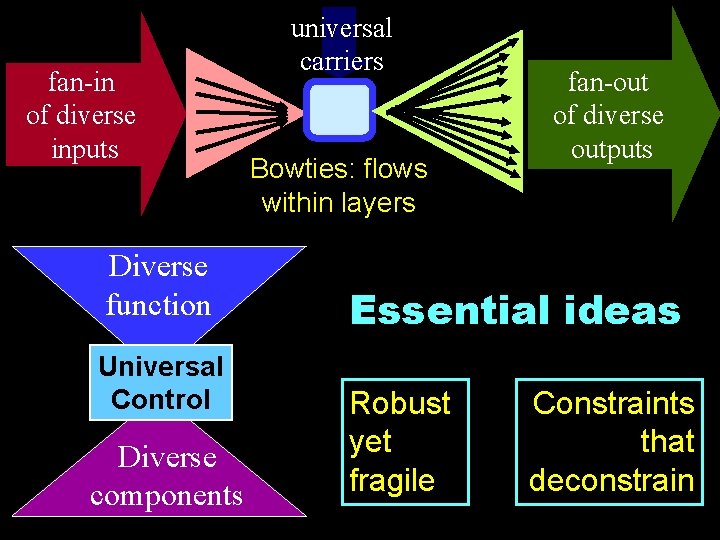
fan-in of diverse inputs Diverse function Universal Control Diverse components universal carriers Bowties: flows within layers fan-out of diverse outputs Essential ideas Robust yet fragile Constraints that deconstrain
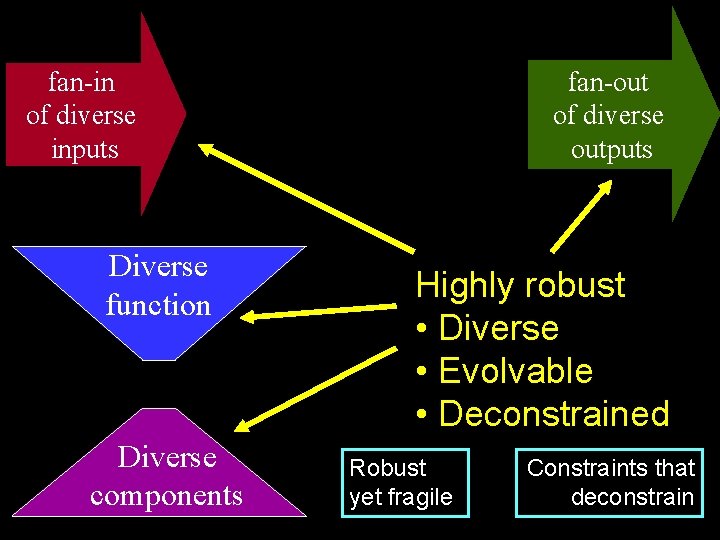
fan-out of diverse outputs fan-in of diverse inputs Diverse function Diverse components Highly robust • Diverse • Evolvable • Deconstrained Robust yet fragile Constraints that deconstrain
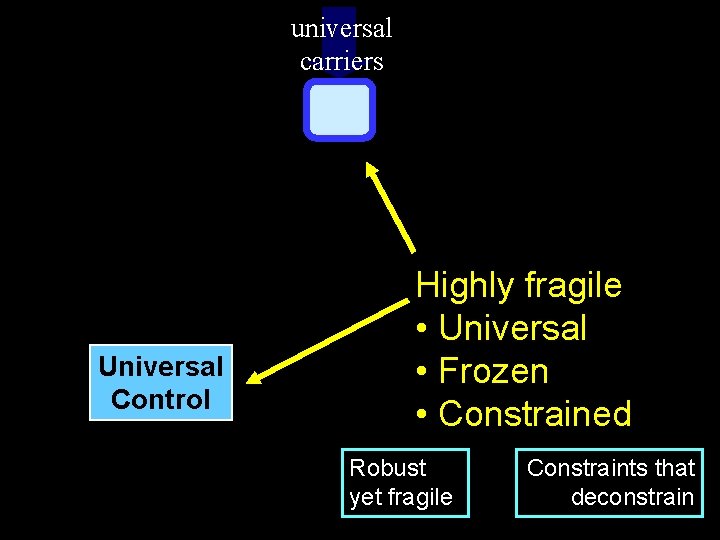
universal carriers Universal Control Highly fragile • Universal • Frozen • Constrained Robust yet fragile Constraints that deconstrain
fan-in of diverse inputs Diverse function Universal Control Diverse components universal carriers Bowties: flows within layers fan-out of diverse outputs Essential ideas Robust yet fragile Constraints that deconstrain
What theory is relevant to these more complex feedback systems? source signaling gene expression metabolism lineage control materials energy receiver More complex feedback
[a system] can have [a property] robust for [a set of perturbations] Fragile Yet be fragile for [a different property] Robust Or [a different perturbation] Robust yet fragile = fragile robustness
[a system] can have [a property] robust for [a set of perturbations] Apply recursively o r p [a [ property] = robust for [one set of perturbations] ] y t r pe fragile for [another property] or [another set of perturbations] [a perturb ation] Robust yet fragile = fragile robustness
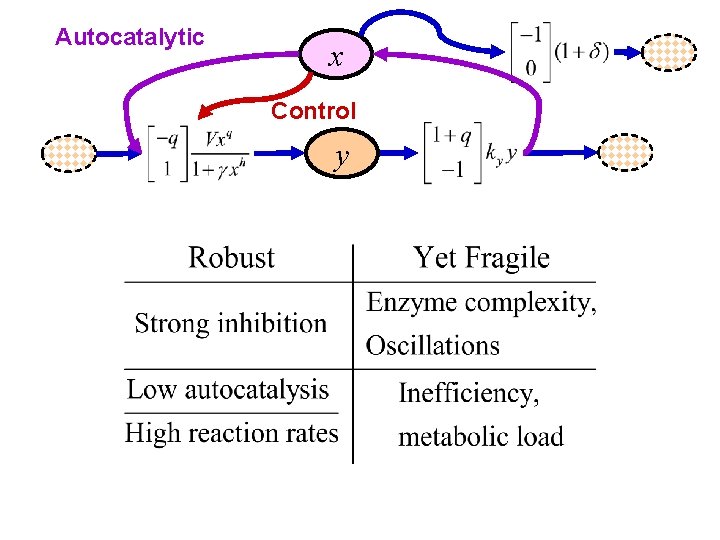
[a system] can have [a property] robust for [a set of perturbations] • Some fragilities are inevitable in robust complex systems. Fragile Robust • But if robustness/fragility are conserved, what does it mean for a system to be robust or fragile?
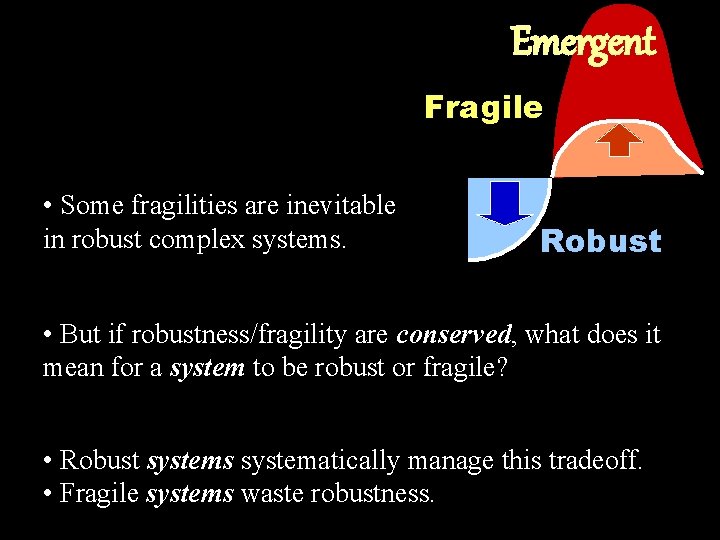
Emergent Fragile • Some fragilities are inevitable in robust complex systems. Robust • But if robustness/fragility are conserved, what does it mean for a system to be robust or fragile? • Robust systems systematically manage this tradeoff. • Fragile systems waste robustness.
Gly G 1 P G 6 P F 1 -6 BP Gly 3 p ATP 13 BPG 3 PG 2 PG NADH Oxa PEP Pyr ACA TCA Cit
Gly G 1 P G 6 P F 1 -6 BP Gly 3 p ATP 13 BPG 3 PG 2 PG NADH Oxa PEP Pyr ACA TCA Cit
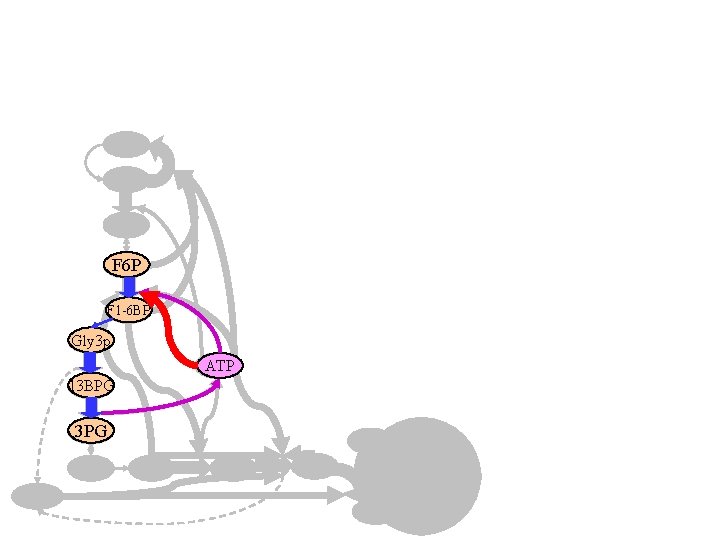
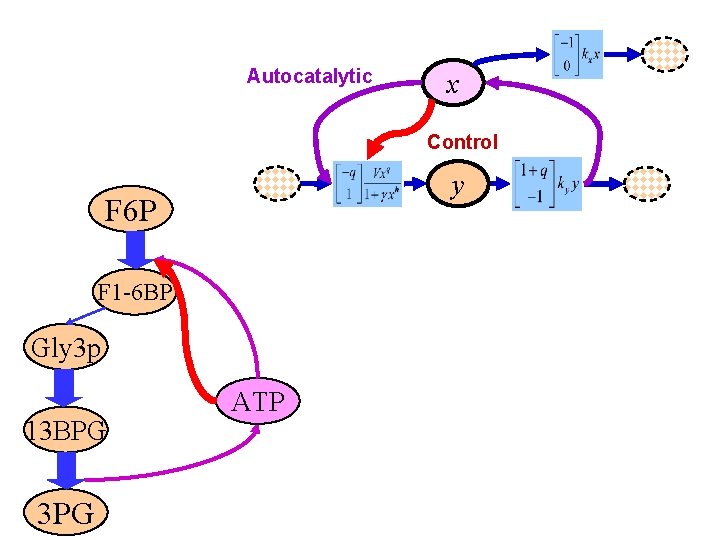
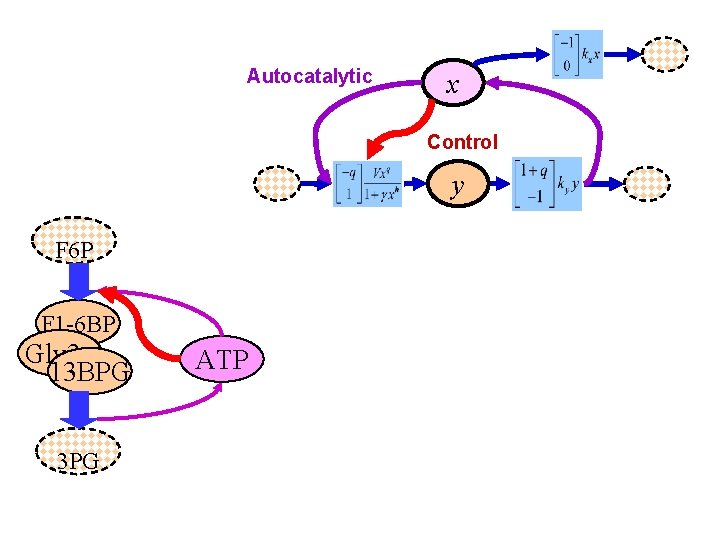
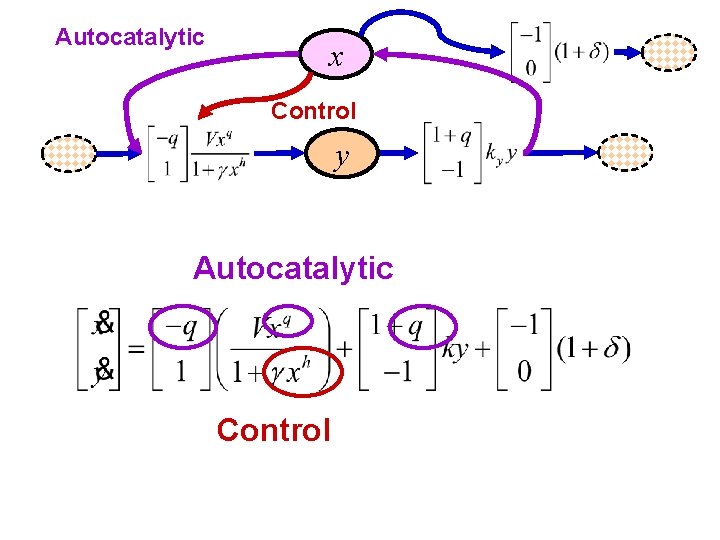
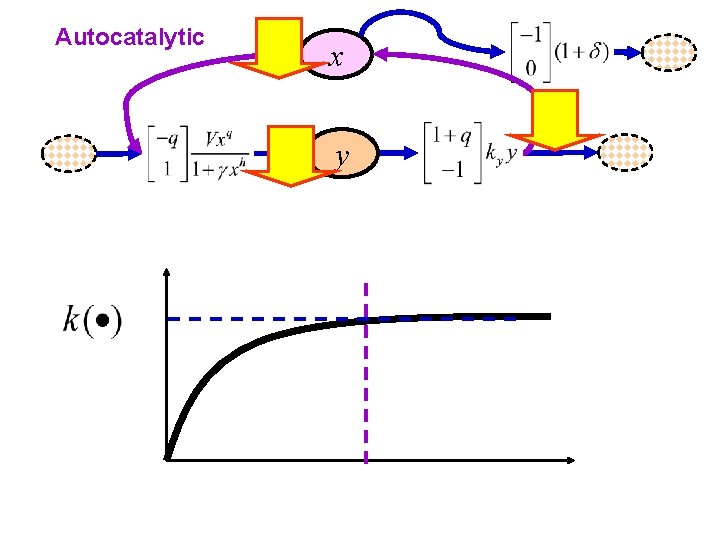
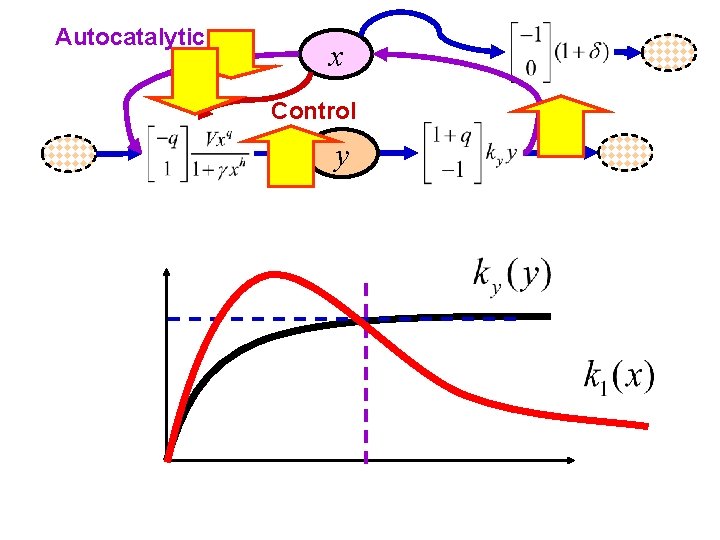
Autocatalytic x Control y F 6 P F 1 -6 BP Gly 3 p 13 BPG 3 PG ATP
Autocatalytic x Control y F 6 P F 1 -6 BP Gly 3 p 13 BPG 3 PG ATP
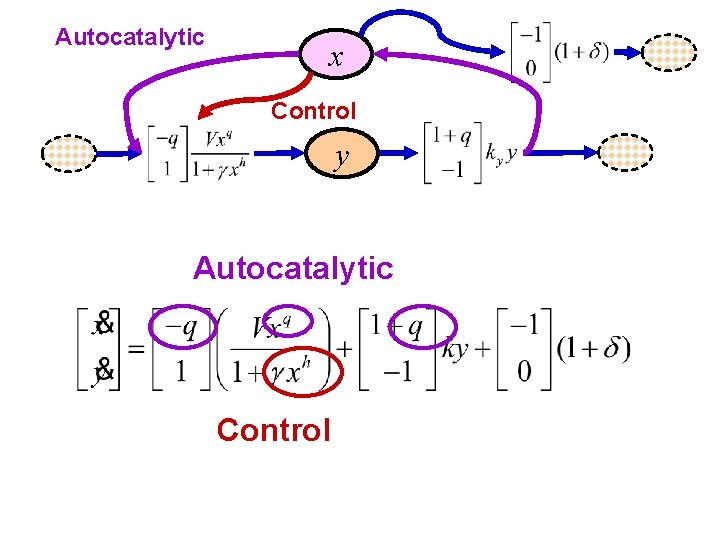
Autocatalytic x Control y Autocatalytic Control
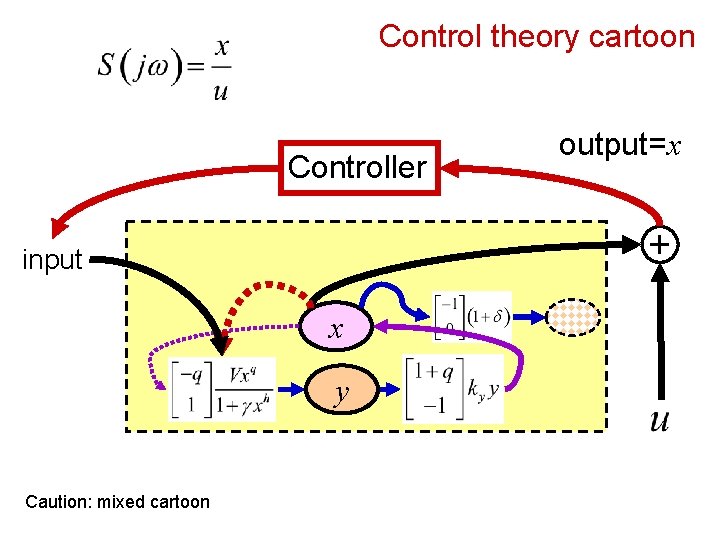
Control theory cartoon Controller + input x y Caution: mixed cartoon output=x
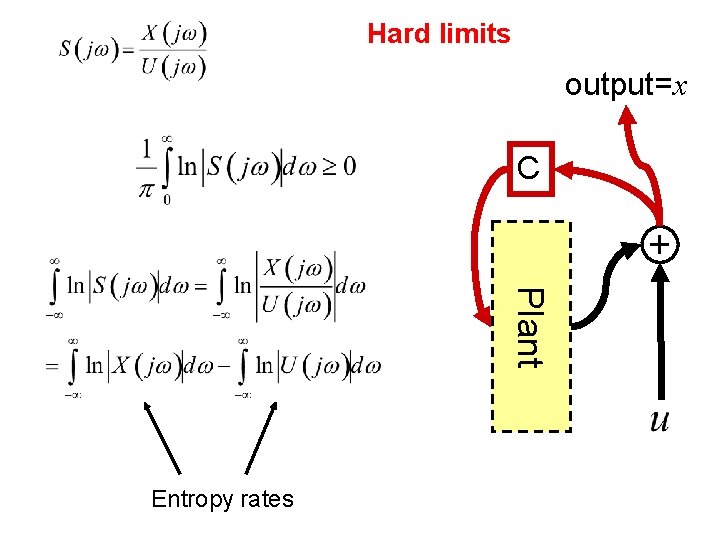
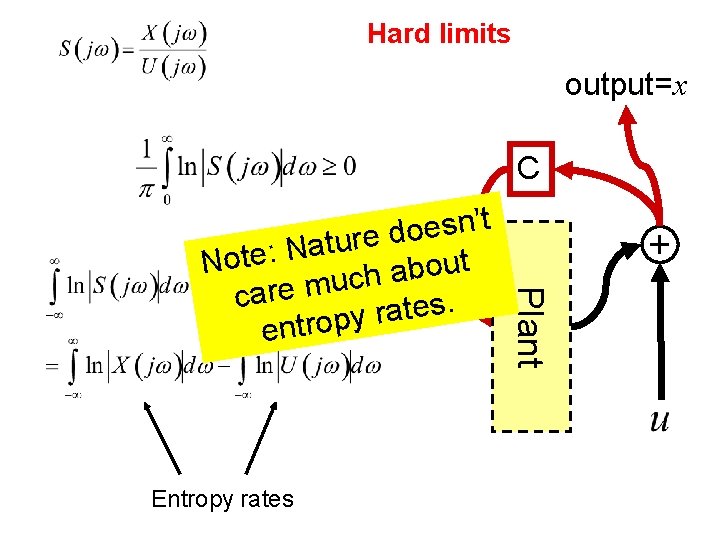
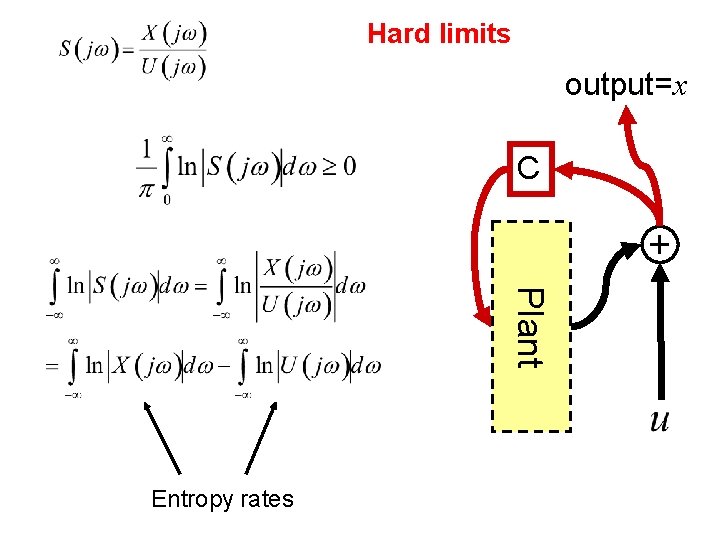
Hard limits output=x C + Plant Entropy rates
[ATP] 1. 05 Ideal 1 h >>1 0. 95 Time response 0. 9 0. 85 0. 8 h=1 0 5 10 Time (minutes) 15 20 0. 8 h >>1 Log(|Sn/S 0|) 0. 6 0. 4 0. 2 Spectrum h=1 0 -0. 2 -0. 4 -0. 6 -0. 8 0 2 4 Frequency 6 8 10
[ATP] 1. 05 1 h >> 1 0. 95 Time response 0. 9 Yet fragile 0. 85 0. 8 h=1 0 5 10 Time (minutes) 15 20 0. 8 h >>1 Robust Log(Sn/S 0) 0. 6 0. 4 0. 2 Spectrum h=1 0 -0. 2 -0. 4 -0. 6 -0. 8 0 2 4 Frequency 6 8 10
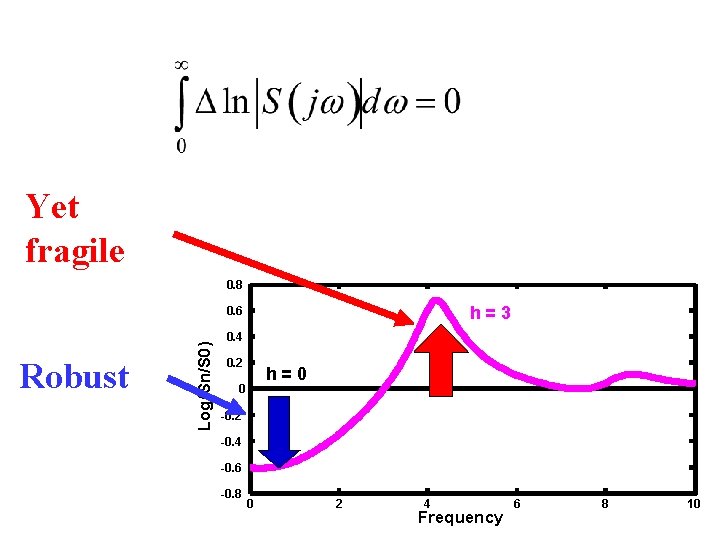
Yet fragile 0. 8 h=3 Robust Log(Sn/S 0) 0. 6 0. 4 0. 2 h=0 0 -0. 2 -0. 4 -0. 6 -0. 8 0 2 4 Frequency 6 8 10
[a system] can have [a property] robust for [a set of perturbations] Fragile Yet be fragile for [a different property] Robust Or [a different perturbation] Robust yet fragile = fragile robustness
Hard limits output=x C Entropy rates + Plant t ’ n s e o d e r u t a Note: N ch about care mu ates. r y p o r t n e
[ATP] 1. 05 1 h >> 1 0. 95 Time response 0. 9 Yet fragile 0. 85 0. 8 h=1 15 20 e r o Time (minutes) m s e r a c e r u t a N. f f o e Note: d h >>1 a r t s i h t Spectrum about 0 5 10 0. 8 Robust Log(Sn/S 0) 0. 6 0. 4 0. 2 h=1 0 -0. 2 -0. 4 -0. 6 -0. 8 0 2 4 Frequency 6 8 10
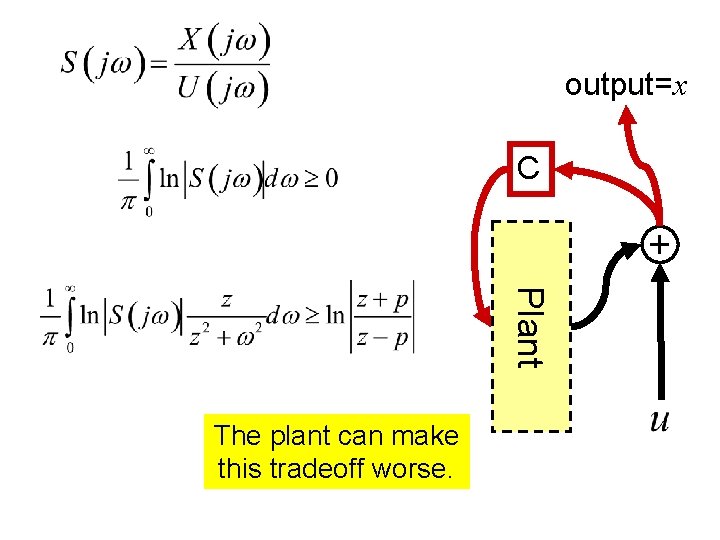
output=x C + Plant The plant can make this tradeoff worse.
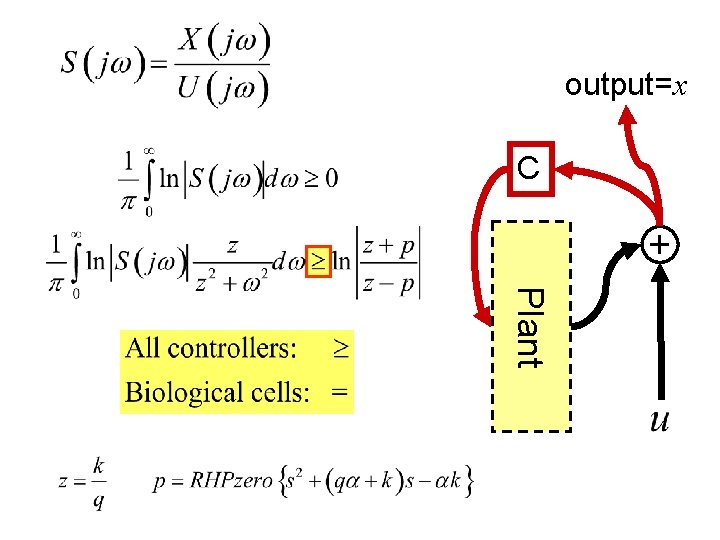
output=x C + Plant
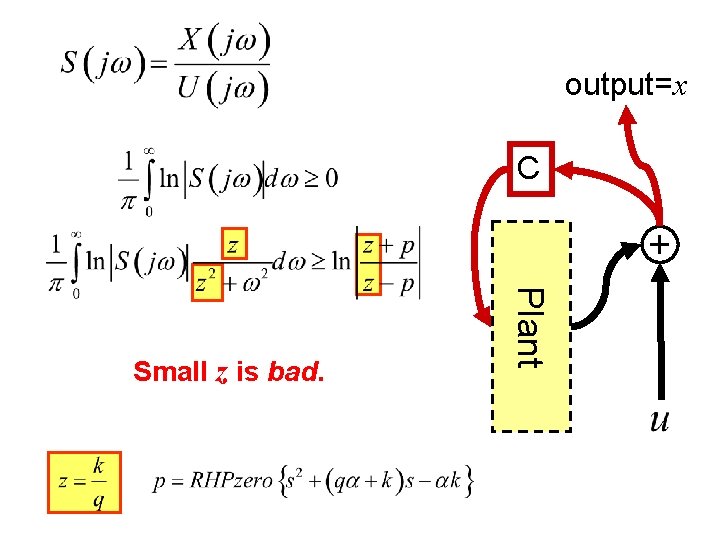
output=x C + Plant Small z is bad.
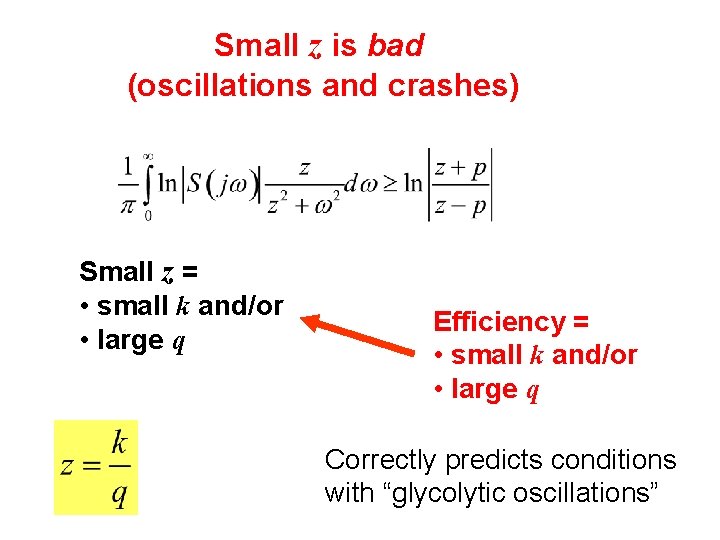
Small z is bad (oscillations and crashes) Small z = • small k and/or • large q Efficiency = • small k and/or • large q Correctly predicts conditions with “glycolytic oscillations”
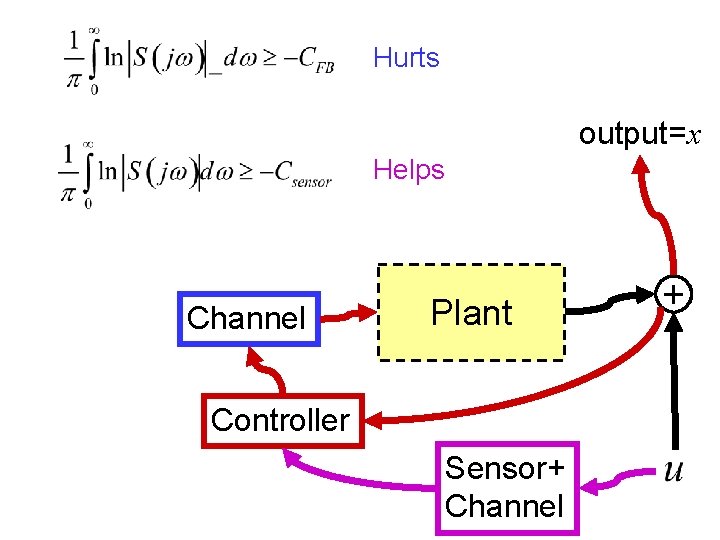
Hard limits output=x C + Plant Entropy rates
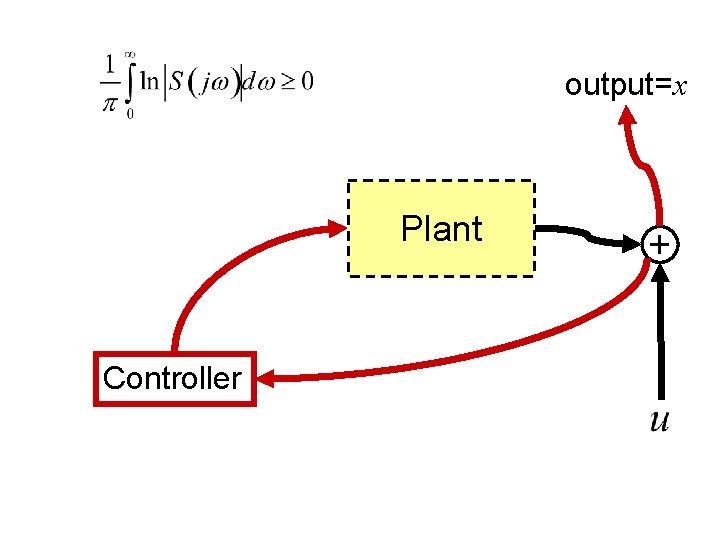
output=x Plant Controller +
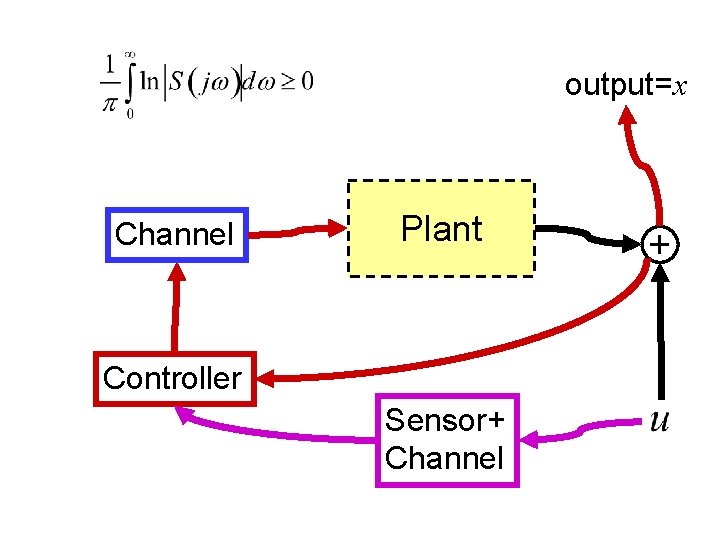
output=x Channel Plant Controller Sensor+ Channel +
Hurts output=x Helps Channel Plant Controller Sensor+ Channel +
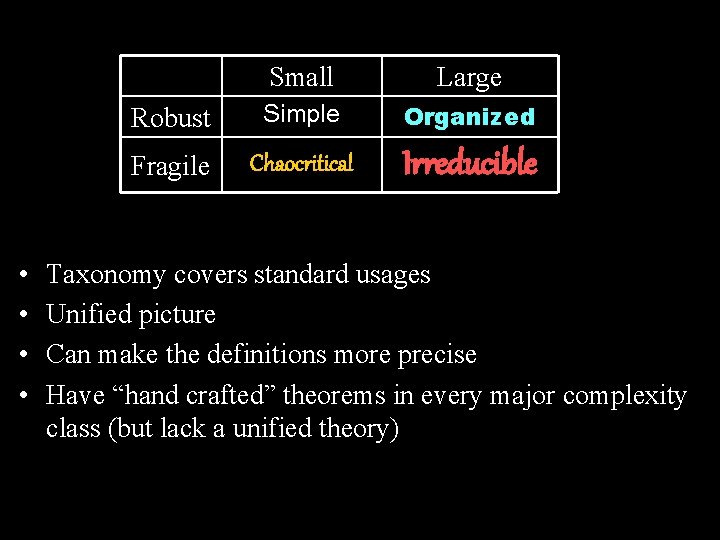
• • Robust Small Simple Large Organized Fragile Chaocritical Irreducible Taxonomy covers standard usages Unified picture Can make the definitions more precise Have “hand crafted” theorems in every major complexity class (but lack a unified theory)
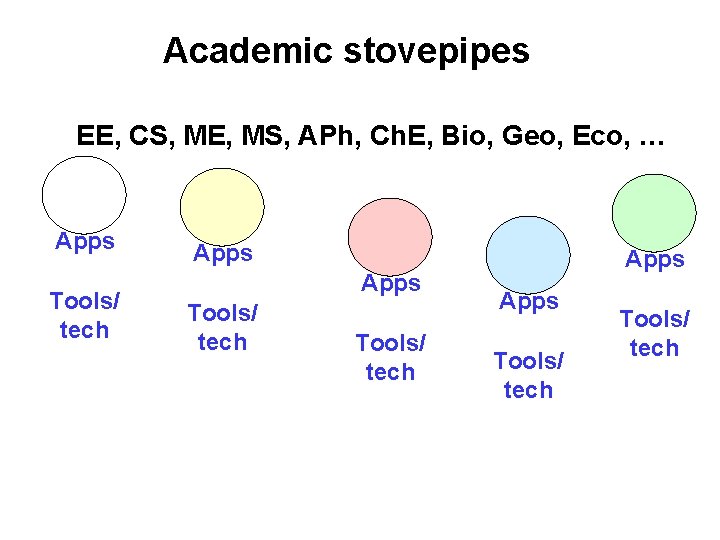
Academic stovepipes EE, CS, ME, MS, APh, Ch. E, Bio, Geo, Eco, … Apps Tools/ tech Apps Tools/ tech
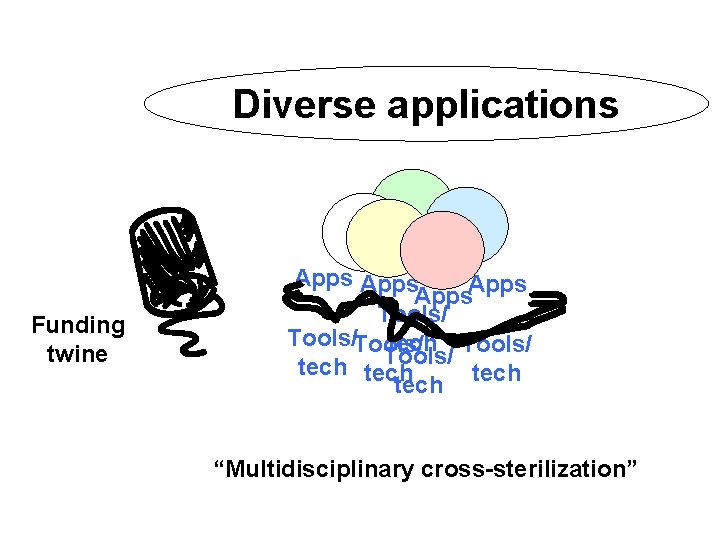
Diverse applications Funding twine Apps Tools/Tools/ tech tech “Multidisciplinary cross-sterilization”
Diverse applications Layering academia? ? ? ? Diverse resources Apps Tools/Tools/ Apps Tools/ tech Tools/ tech
End What follows are additional details on the glycolysis fragility example.
Autocatalytic x Control y Autocatalytic Control
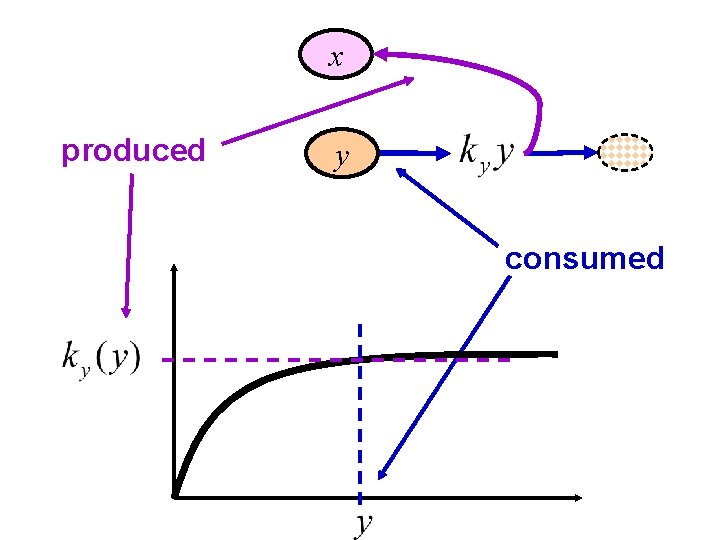
x produced y consumed
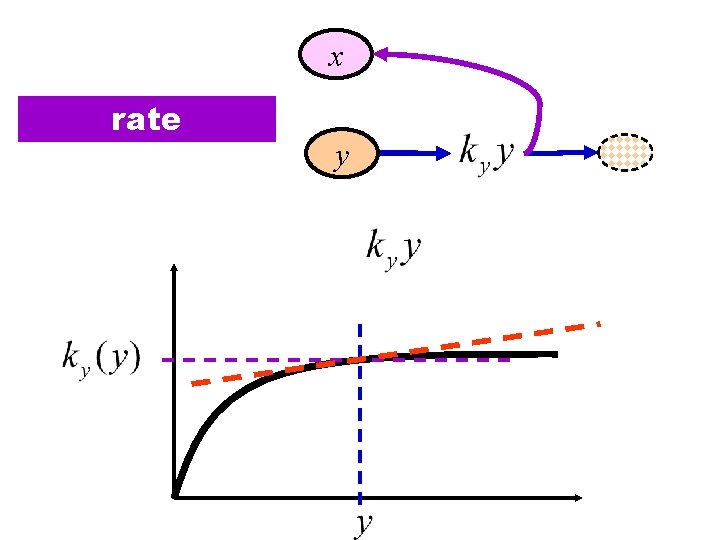
x rate y
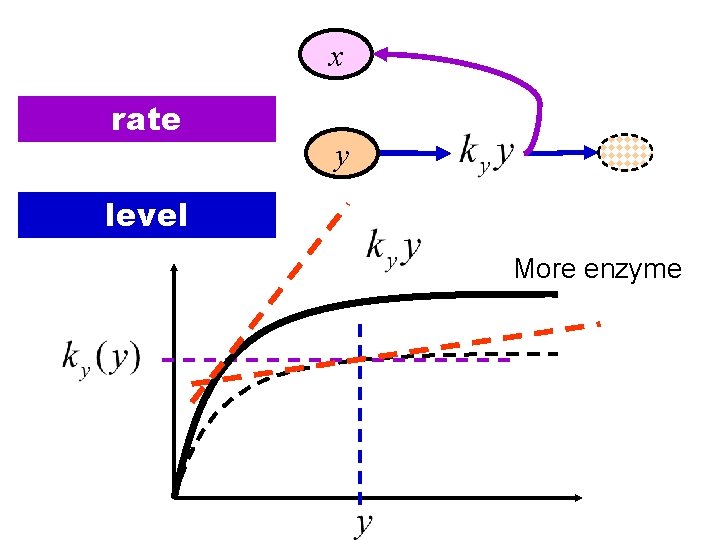
x rate y level More enzyme
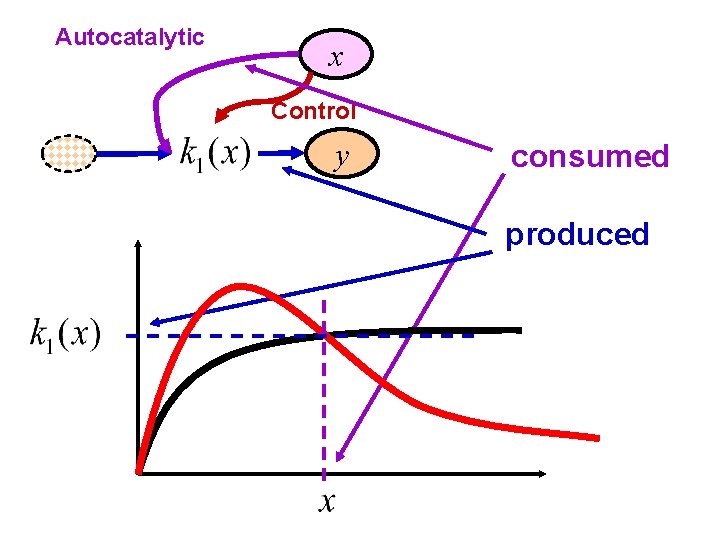
Autocatalytic x Control y consumed produced
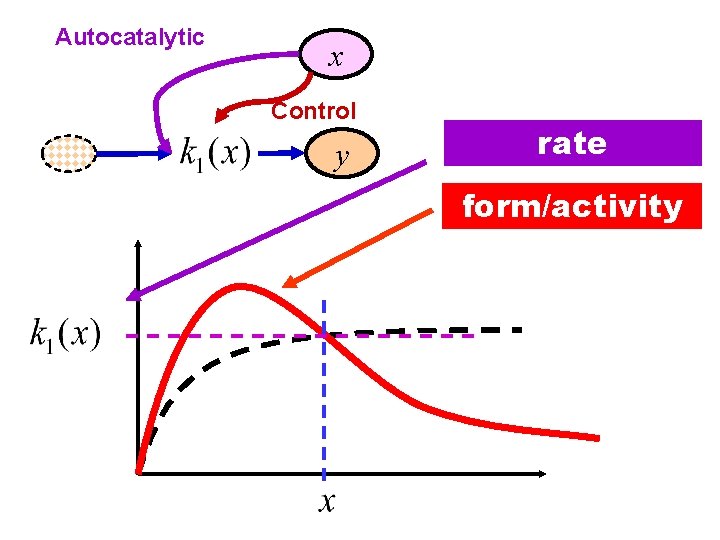
Autocatalytic x Control y rate form/activity
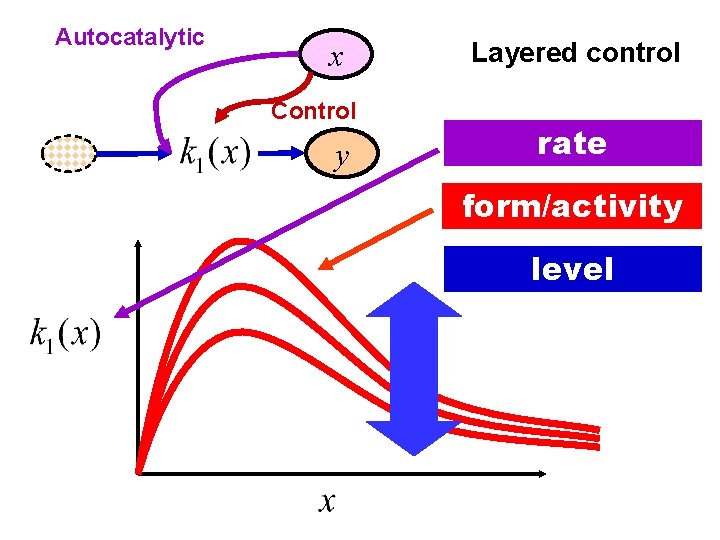
Autocatalytic x Control y Layered control rate form/activity level
Autocatalytic x Layered control Control Fa st r rate y esp on se form/activity level Slo w
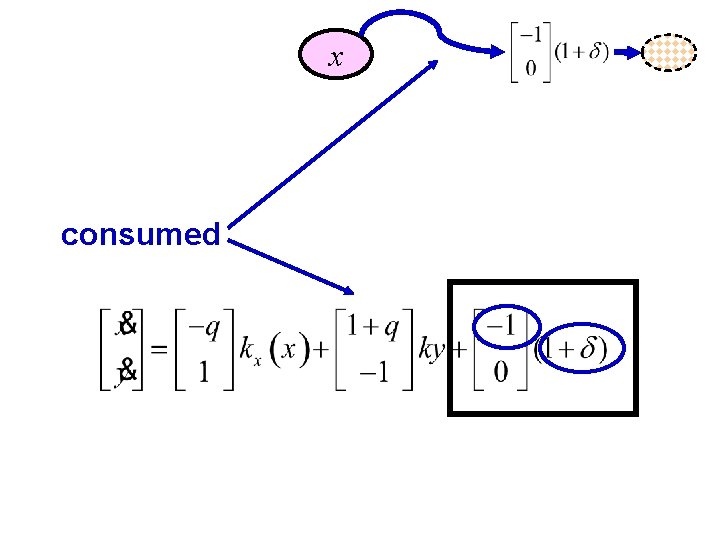
x consumed
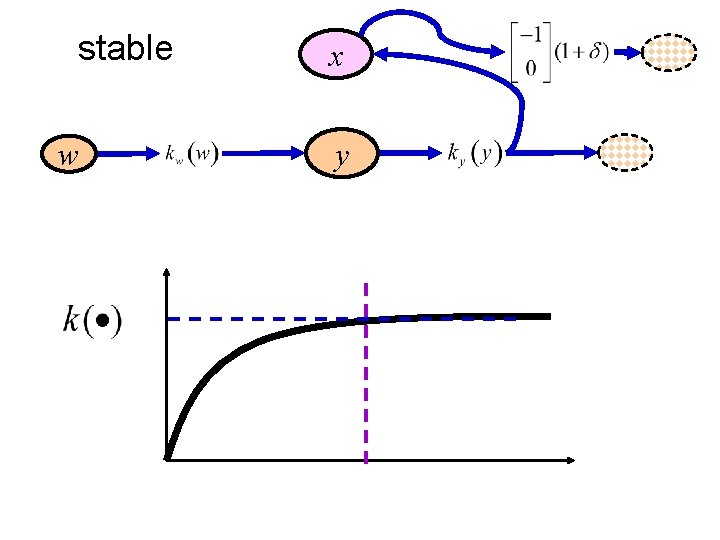
stable w x y
Autocatalytic x y
Autocatalytic x Control y
Autocatalytic x Control y