
Complex is Beautiful Professor George Rzevski Information Systems

Complex is Beautiful Professor George Rzevski Information Systems and Computing, Brunel University www. brunel. ac. uk/research/madira/ Magenta Corporation Ltd, London www. magenta-tecnology. com
Motivation for Research n n Global markets are becoming so volatile and competitive that There is a need for adaptable artefacts such as cars, aircraft, satellites, machine tools, robots, houses etc
Research Hypotheses n n Complexity is a prerequisite for adaptation Complexity can be designed into artefacts with a view to making them adaptive
Research Method n n n Experimenting with large swarms of software agents Discovering design principles from results achieved during experimentation Knowledge transfer from social, cultural, organisational, biological and physical complex systems
Examples of Complex Systems n Global economy n Street traffic in London n n (Soviet economy is an example of a disaster caused by attempts to impose centralised control on a complex system) constraints imposed on drivers) (suffers from excessive Aids epidemics in Africa (successfully resists attacks) Global terrorist networks (successfully resists attacks) The Internet (successfully resists attacks) A human being (a beautiful example of distributed decision making and adaptation)
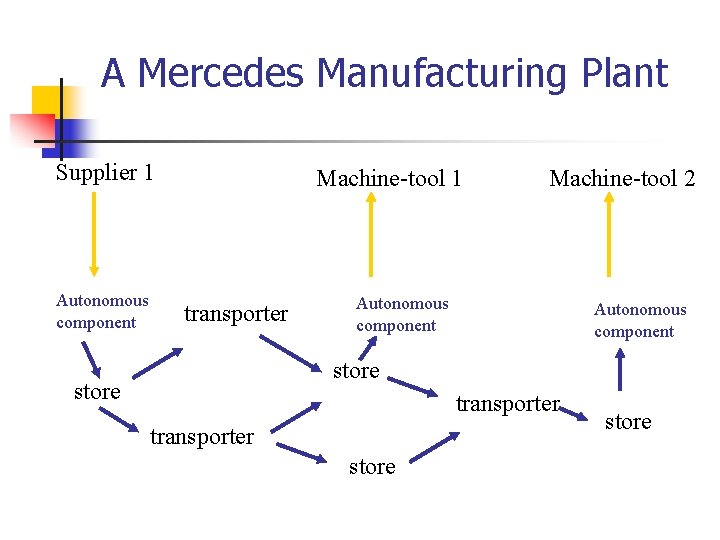
A Mercedes Manufacturing Plant Supplier 1 Autonomous component Machine-tool 1 transporter Machine-tool 2 Autonomous component store transporter store
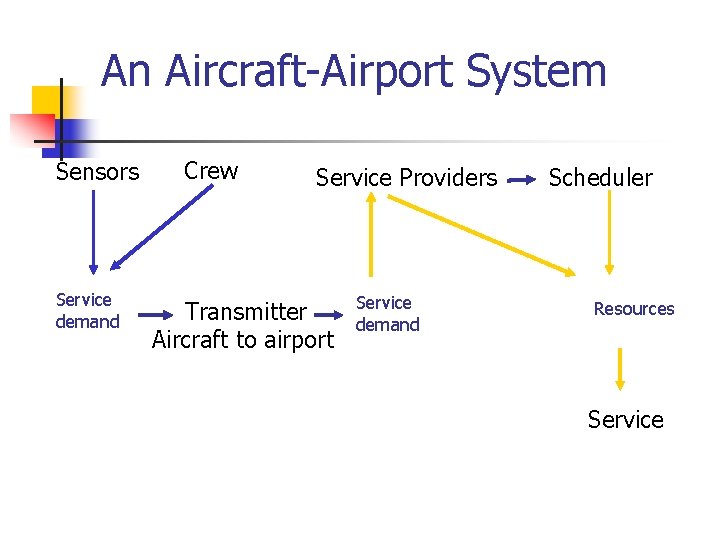
An Aircraft-Airport System Sensors Service demand Crew Service Providers Transmitter Aircraft to airport Service demand Scheduler Resources Service
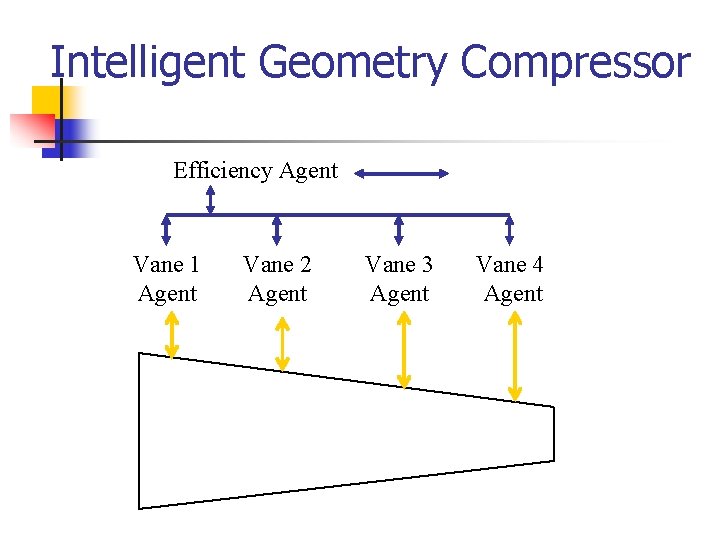
Intelligent Geometry Compressor Efficiency Agent Vane 1 Agent Vane 2 Agent Vane 3 Agent Vane 4 Agent
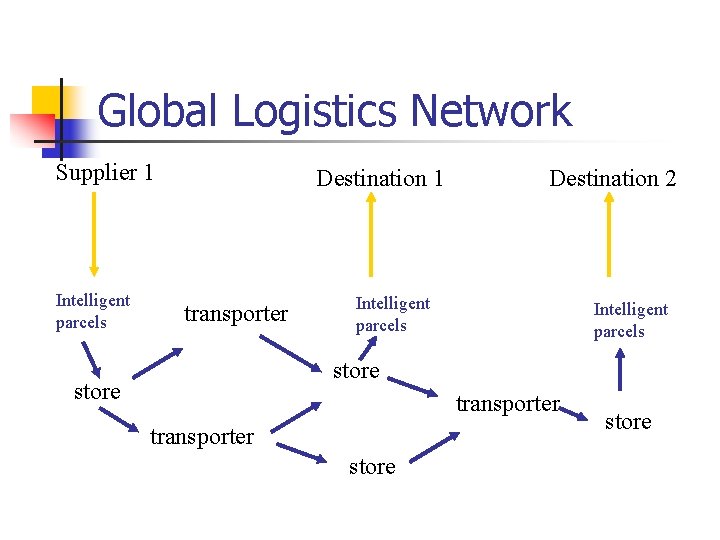
Global Logistics Network Supplier 1 Intelligent parcels Destination 1 transporter Destination 2 Intelligent parcels store transporter store
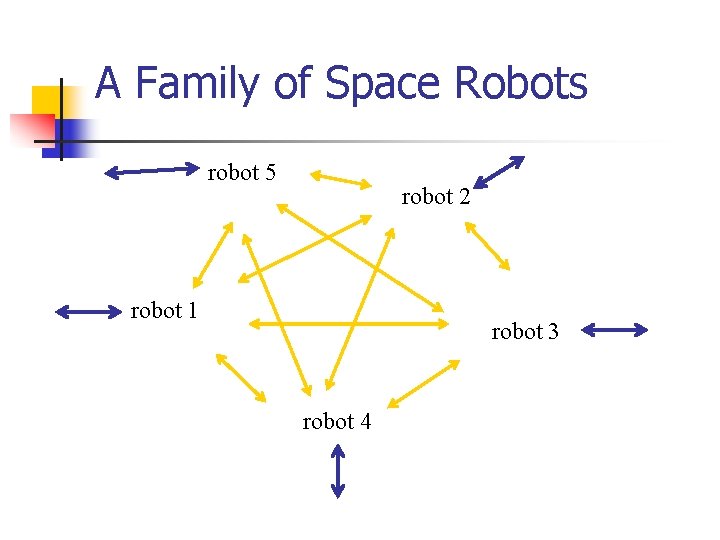
A Family of Space Robots robot 5 robot 2 robot 1 robot 3 robot 4
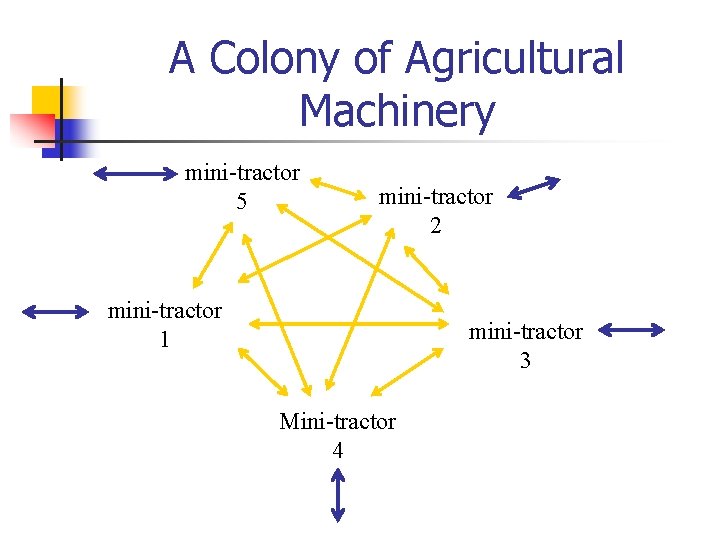
A Colony of Agricultural Machinery mini-tractor 5 mini-tractor 2 mini-tractor 1 mini-tractor 3 Mini-tractor 4
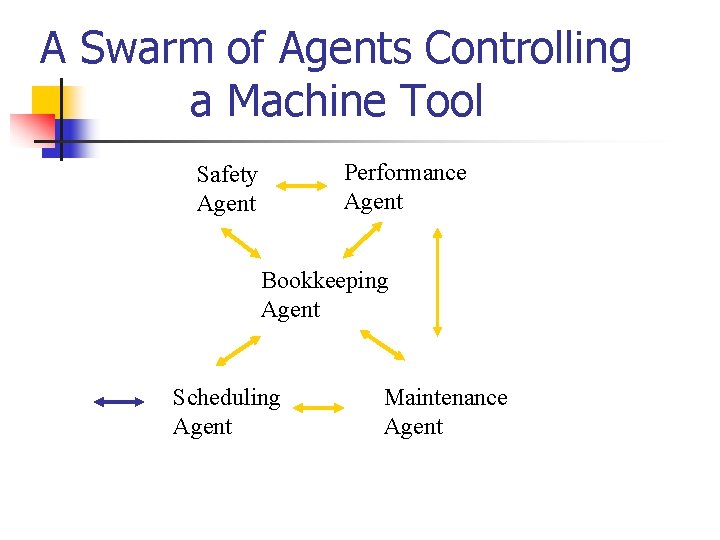
A Swarm of Agents Controlling a Machine Tool Performance Agent Safety Agent Bookkeeping Agent Scheduling Agent Maintenance Agent
Other Intelligent Networks n n Fleets of communication satellites Armadas of very small spacecraft Networked road traffic system Smart matter ( sensors, actuators and agent running processors/memories embedded in physical materials)
Common Features n n n No central control system Distributed decision making Network configuration Rich information processing activity Adaptation
A Tentative Definition A system is complex if n It has a wide variety of behaviours and there is an uncertainty which behaviour will be pursued n It consists of autonomous components, Agents, capable of competing or co-operating with each other NOTE: Uncertainty in complex systems is due to the occurrence of unpredictable events rather than because of our lack of understanding of the system
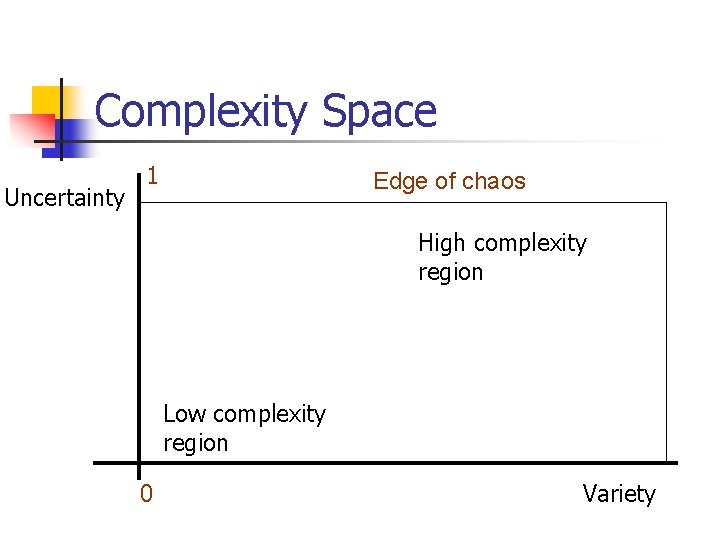
Complexity Space Uncertainty 1 Edge of chaos High complexity region Low complexity region 0 Variety
Why is Complexity Beautiful? The features which make Complex Systems beautiful are: n n Emergent properties – properties that do not exist in constituent Agents – these properties emerge from Agent interaction Adaptation to unpredictable changes in their environment
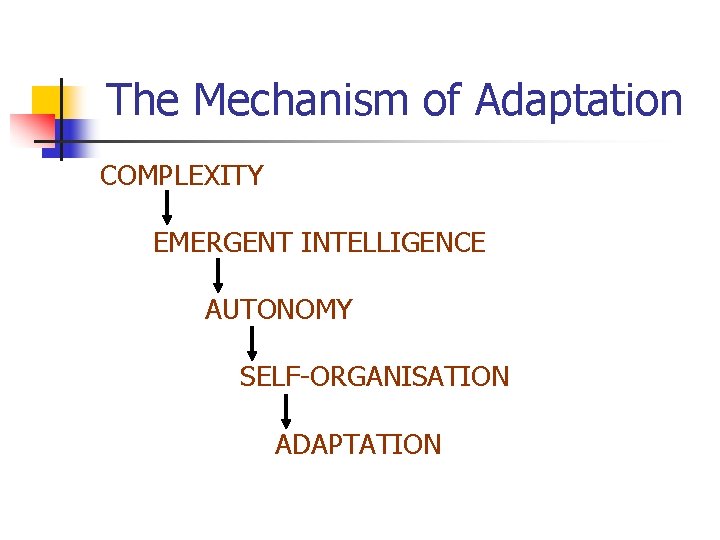
The Mechanism of Adaptation COMPLEXITY EMERGENT INTELLIGENCE AUTONOMY SELF-ORGANISATION ADAPTATION
Intelligence is the ability to solve problems under conditions of uncertainty Intelligence is a prerequisite for autonomy (the ability to select a behaviour without being instructed/controlled) Automation, in contrast, is a predictable and repeatable process performed under instruction/control
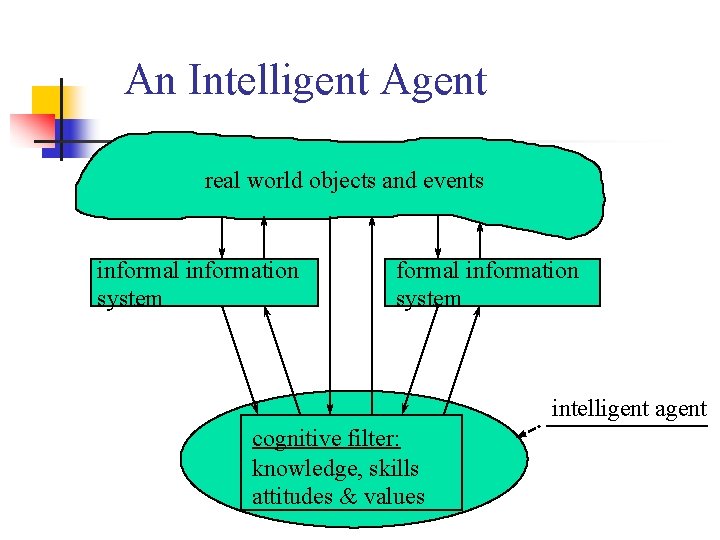
An Intelligent Agent real world objects and events informal information system intelligent agent cognitive filter: knowledge, skills attitudes & values
Emergent Intelligence n n Intelligence emerges from the interaction of Agents An Agent makes a tentative proposal to affected Agents and they in turn suggest improvements The quality of decisions improves in a stepwise manner The final decision is agreed by consensus after a period of negotiations
Self-Organisation The ability to change own configuration autonomously n n To disconnect certain nodes and connect new ones To connect previously disconnected nodes to the same or to other nodes To acquire new nodes To discard existing nodes Example: An aircraft broadcasts requirements to selected service nodes at the airport which respond by scheduling required services to be available at the touchdown
Adaptation The ability to change behaviour in order to achieve own goals under conditions of the occurrence of unpredictable events n n To react to a change in demand by autonomously rescheduling resources required to satisfy the change To re-allocate resources to other projects To discard surplus recourses To acquire new resources Example: a compressor autonomously reacts to a sudden change of load by self-adjusting positions of vanes and thus moving away from a surge/stall conditions
Performance affecting Features of Complexity n n n n The number of decision making nodes Connectedness among the nodes Access to domain knowledge Skills in applying knowledge Motivation to achieve goals (pro-activity) Acceptance of/resistance to change Risk acceptance/aversion
Designing Complexity into an Artefact means deciding: n n How many decision-making Agents are required How extensive should be connectivity between Agents How to obtain and organise domain knowledge How to build into the Agents n n n Skills Motivation Attitudes to risk Attitudes to change How to guide Agent negotiation
Constructing a Virtual Market n n A Virtual Market is a market in which autonomous demands and resources compete for each other without being subjected to any central control (only to certain constraints) A large number of problems can be transformed into a resource allocation problem
Examples of Virtual Markets n n n e. Commerce – the allocation of goods/services to demands Logistics – the allocation of resources in time and to a location Control – the allocation of behaviours to requirements Project management – the allocation of resources to time slots Data mining – the allocation of records to clusters Text understanding – the allocation of meanings to words
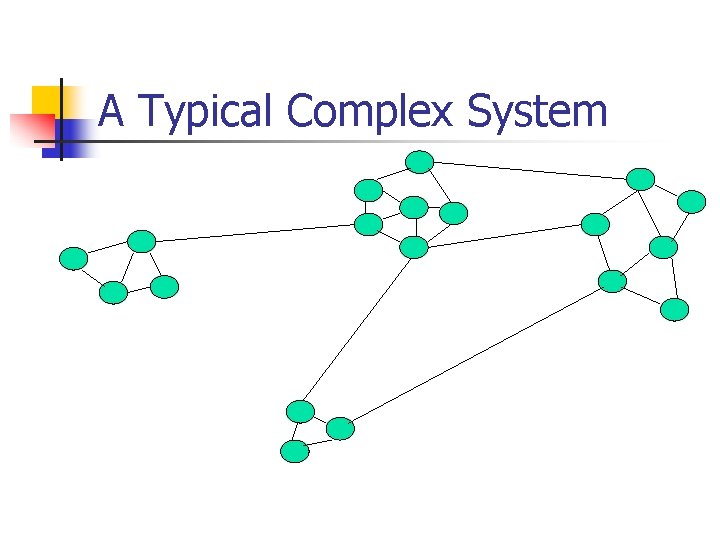
A Typical Complex System
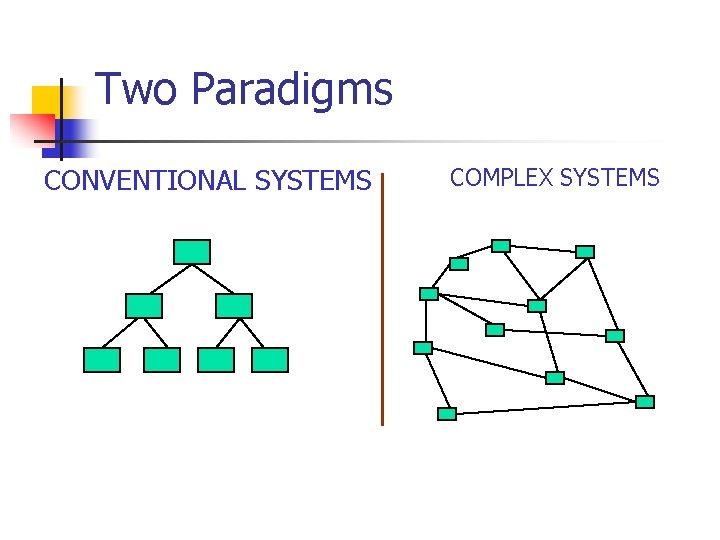
Two Paradigms CONVENTIONAL SYSTEMS COMPLEX SYSTEMS
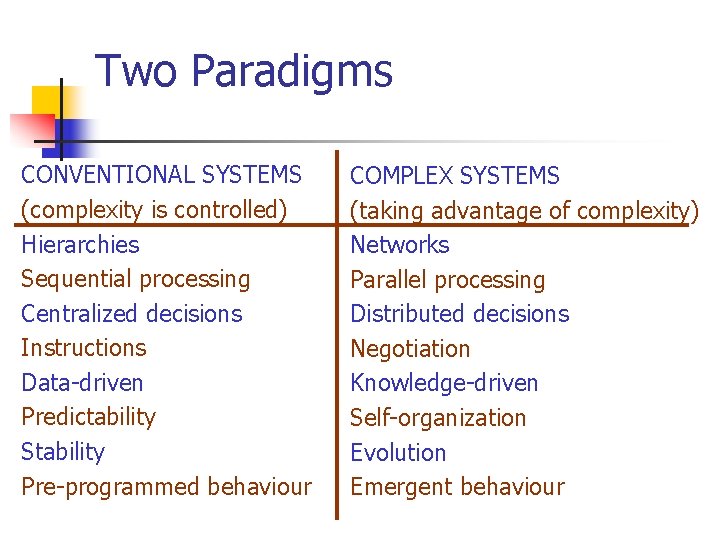
Two Paradigms CONVENTIONAL SYSTEMS (complexity is controlled) Hierarchies Sequential processing Centralized decisions Instructions Data-driven Predictability Stability Pre-programmed behaviour COMPLEX SYSTEMS (taking advantage of complexity) Networks Parallel processing Distributed decisions Negotiation Knowledge-driven Self-organization Evolution Emergent behaviour
- Slides: 30