
Complex Care Curriculum Central Lines in Children Rishi
- Slides: 39
Complex Care Curriculum Central Lines in Children Rishi Agrawal, MD, MPH Neha Shah, MD, MPH
Complex Care Curriculum Central Lines Indications for placement of central lines in children Central Lines Compare and contrast different types of central lines Troubleshoot common problems
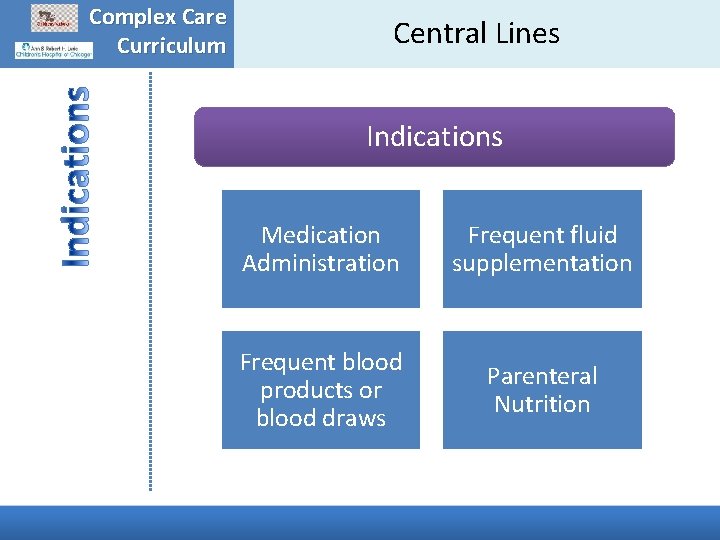
Complex Care Curriculum Central Lines Indications Medication Administration Frequent fluid supplementation Frequent blood products or blood draws Parenteral Nutrition
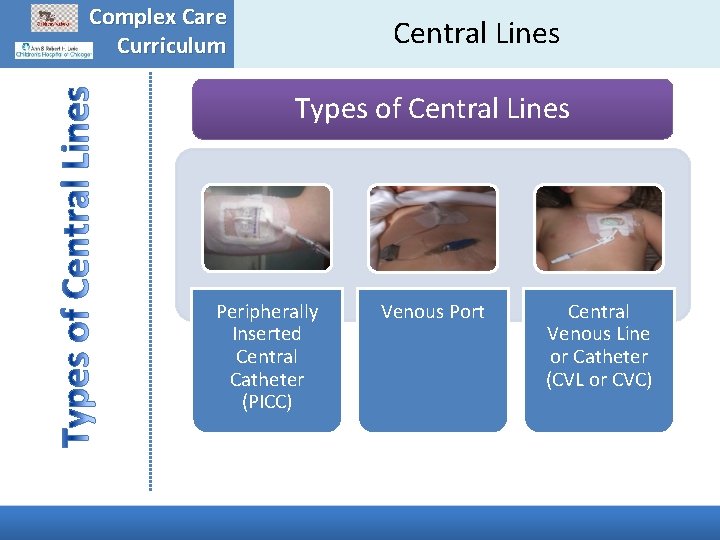
Complex Care Curriculum Central Lines Types of Central Lines Peripherally Inserted Central Catheter (PICC) Venous Port Central Venous Line or Catheter (CVL or CVC)
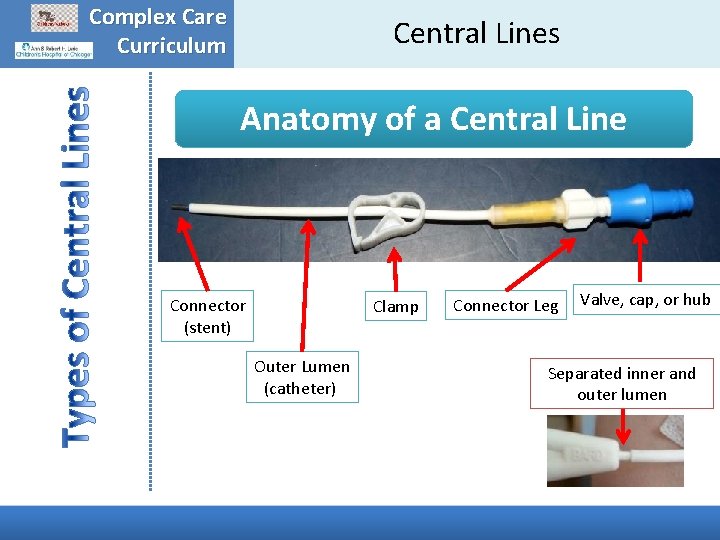
Complex Care Curriculum Central Lines Anatomy of a Central Line Connector (stent) Clamp Outer Lumen (catheter) Connector Leg Valve, cap, or hub Separated inner and outer lumen
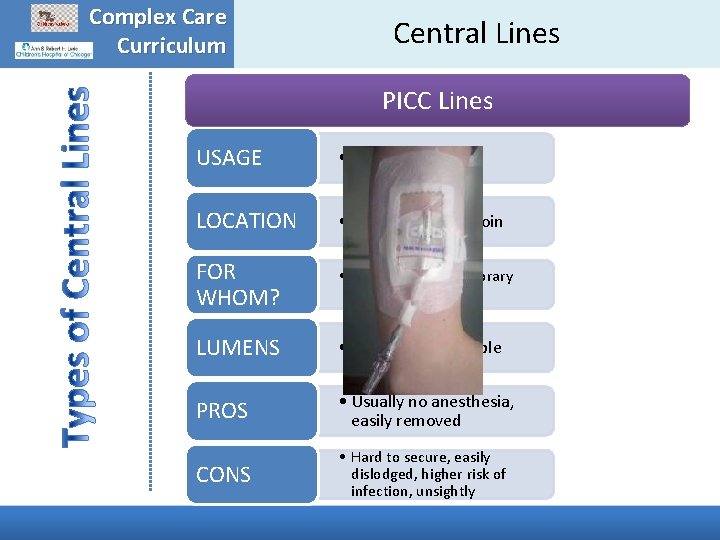
Complex Care Curriculum Central Lines PICC Lines USAGE • Temporary LOCATION • Arm (typically), groin FOR WHOM? • Short-term or temporary needs LUMENS • Single, double, triple PROS • Usually no anesthesia, easily removed CONS • Hard to secure, easily dislodged, higher risk of infection, unsightly
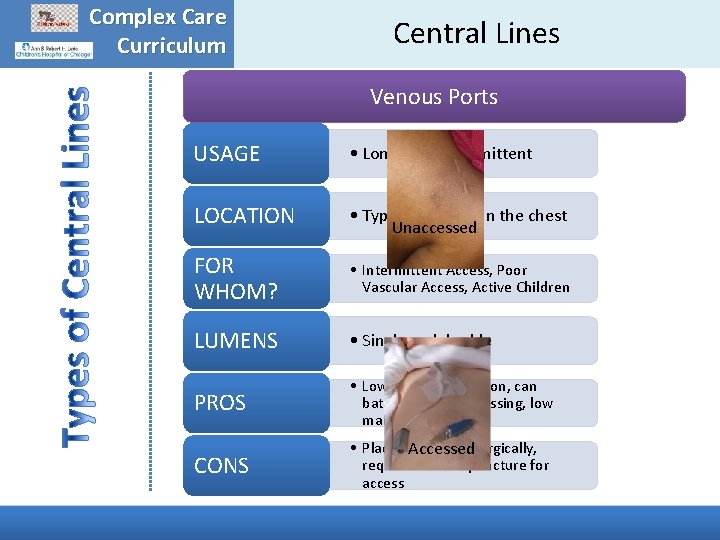
Complex Care Curriculum Central Lines Venous Ports USAGE • Long-term intermittent LOCATION • Typically placed in the chest Unaccessed FOR WHOM? • Intermittent Access, Poor Vascular Access, Active Children LUMENS • Single and double PROS • Lower risk of infection, can bathe/swim, no dressing, low maintenance CONS • Placed/removed Accessedsurgically, requires needle puncture for access
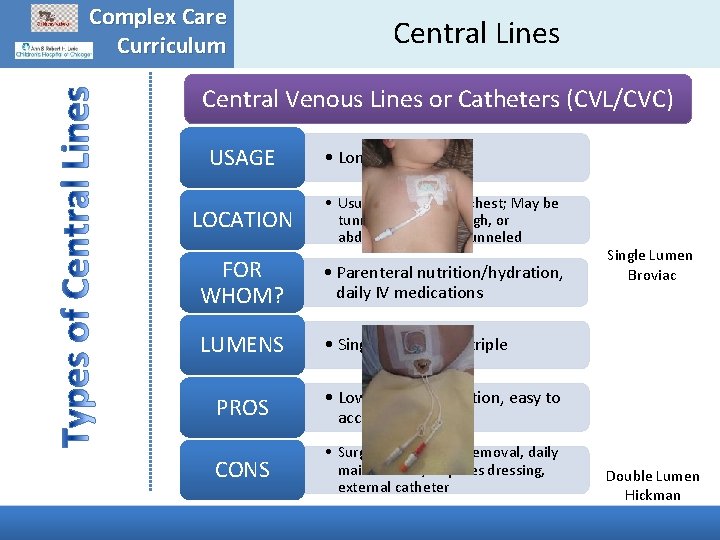
Complex Care Curriculum Central Lines Central Venous Lines or Catheters (CVL/CVC) USAGE LOCATION • Long-term, daily • Usually tunneled to chest; May be tunneled to back, thigh, or abdomen; some untunneled FOR WHOM? • Parenteral nutrition/hydration, daily IV medications LUMENS • Single, double, or triple PROS • Lower risk of infection, easy to access CONS • Surgical placement/removal, daily maintenance, requires dressing, external catheter Single Lumen Broviac Double Lumen Hickman
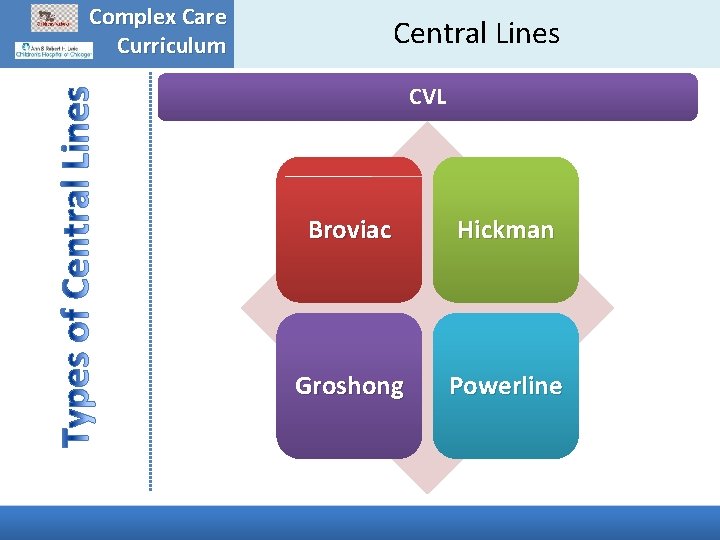
Complex Care Curriculum Central Lines CVL Broviac Hickman Groshong Powerline
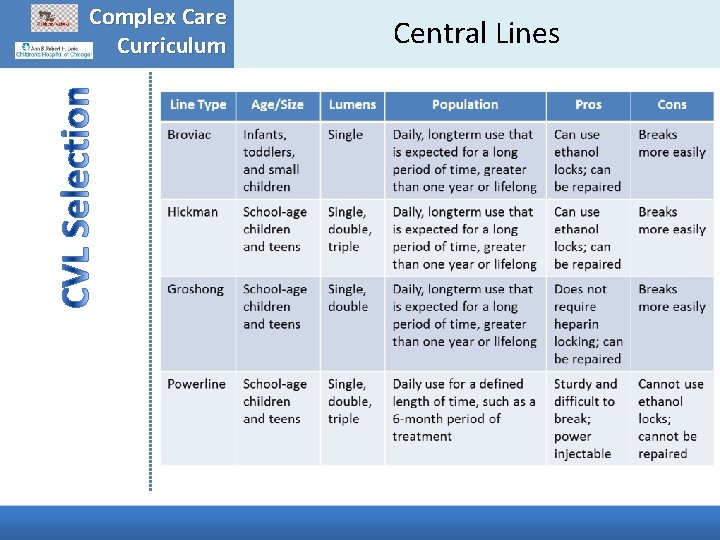
Complex Care Curriculum Central Lines
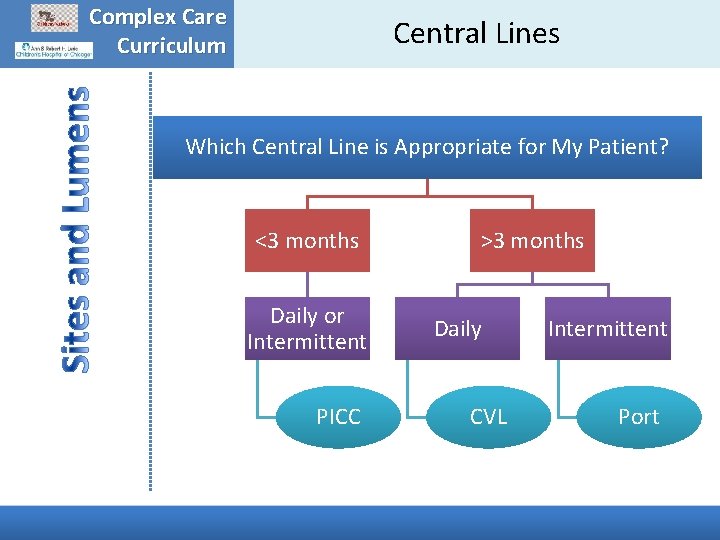
Complex Care Curriculum Central Lines Which Central Line is Appropriate for My Patient? <3 months Daily or Intermittent PICC >3 months Daily CVL Intermittent Port
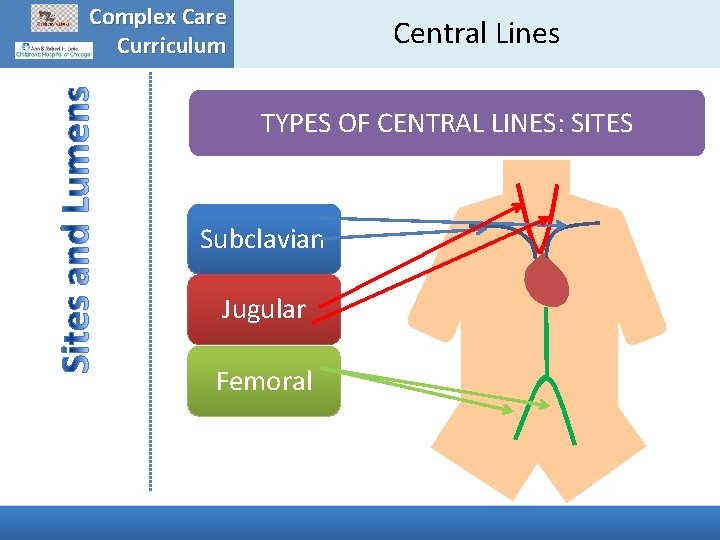
Complex Care Curriculum Central Lines TYPES OF CENTRAL LINES: SITES Subclavian Jugular Femoral
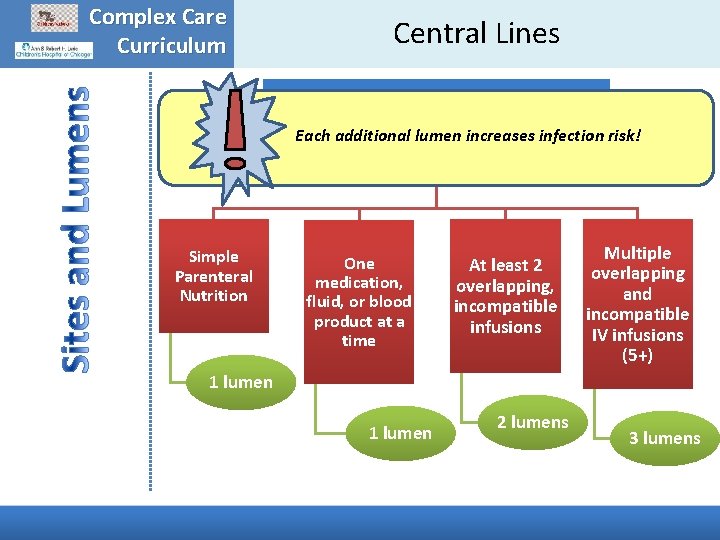
Complex Care Curriculum Central Lines How Many Lumens? Each additional lumen increases infection risk! Simple Parenteral Nutrition One medication, fluid, or blood product at a time At least 2 overlapping, incompatible infusions Multiple overlapping and incompatible IV infusions (5+) 1 lumen 2 lumens 3 lumens
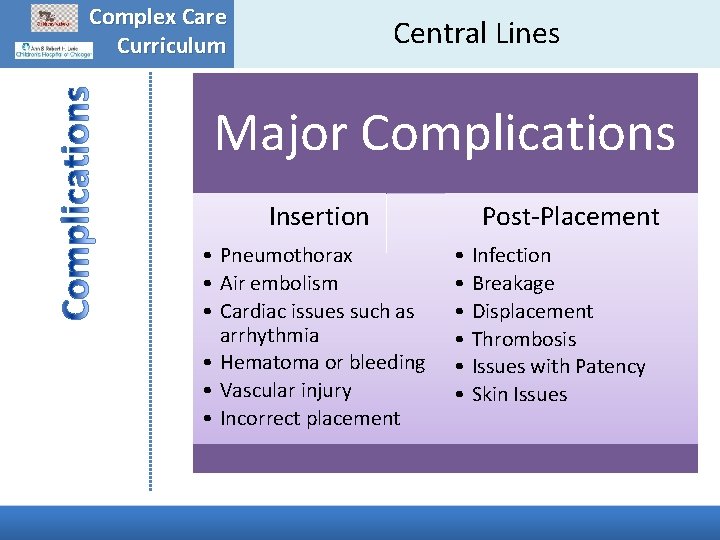
Complex Care Curriculum Central Lines Major Complications Insertion • Pneumothorax • Air embolism • Cardiac issues such as arrhythmia • Hematoma or bleeding • Vascular injury • Incorrect placement Post-Placement • • • Infection Breakage Displacement Thrombosis Issues with Patency Skin Issues
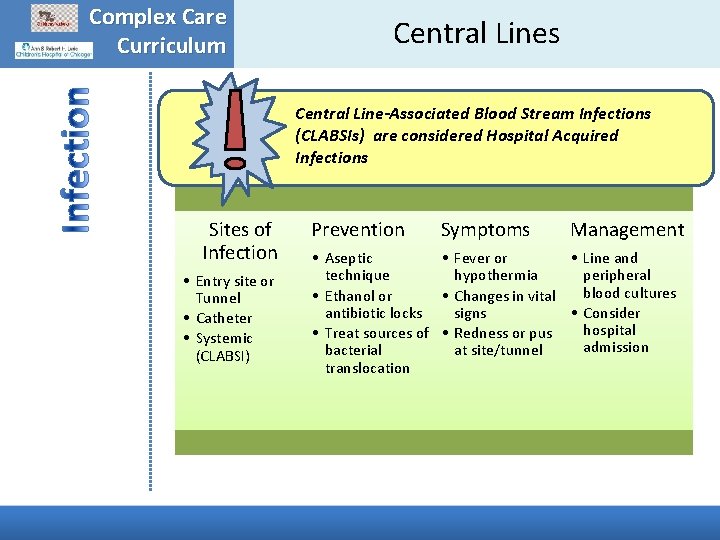
Complex Care Curriculum Central Lines Central Line-Associated Blood Stream Infections (CLABSIs) are considered Hospital Acquired Infections Central Line Infections Sites of Infection • Entry site or Tunnel • Catheter • Systemic (CLABSI) Prevention Symptoms Management • Aseptic • Fever or • Line and technique hypothermia peripheral blood cultures • Ethanol or • Changes in vital antibiotic locks signs • Consider hospital • Treat sources of • Redness or pus admission bacterial at site/tunnel translocation
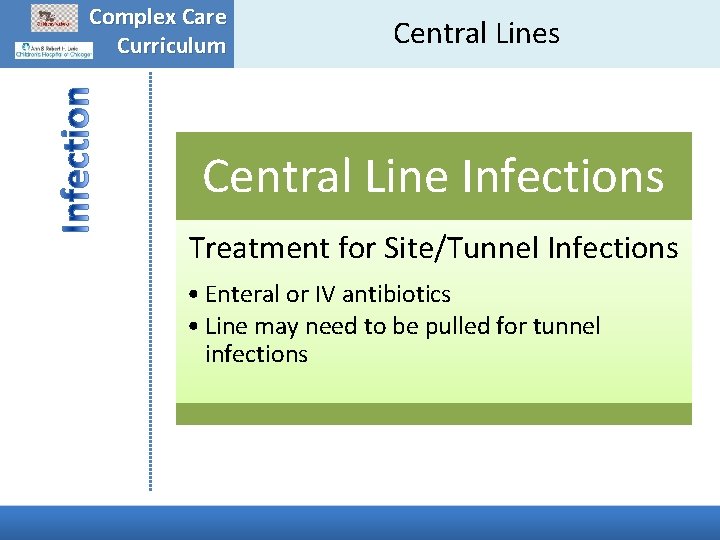
Complex Care Curriculum Central Lines Central Line Infections Treatment for Site/Tunnel Infections • Enteral or IV antibiotics • Line may need to be pulled for tunnel infections
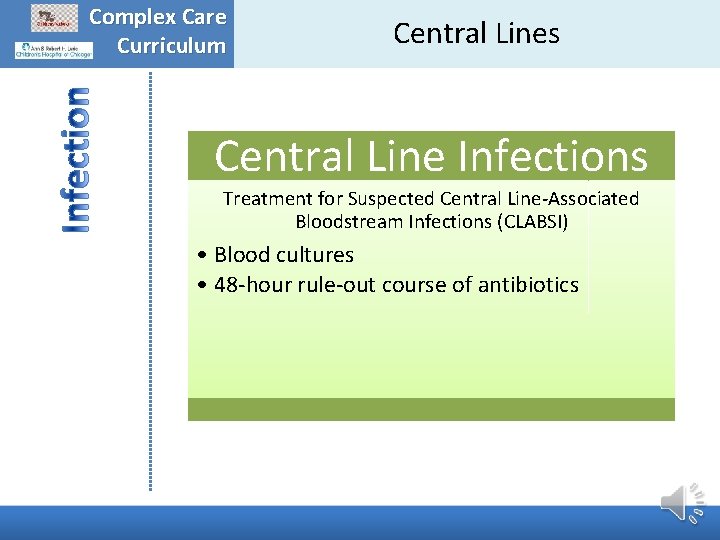
Complex Care Curriculum Central Lines Central Line Infections Treatment for Suspected Central Line-Associated Bloodstream Infections (CLABSI) • Blood cultures • 48 -hour rule-out course of antibiotics
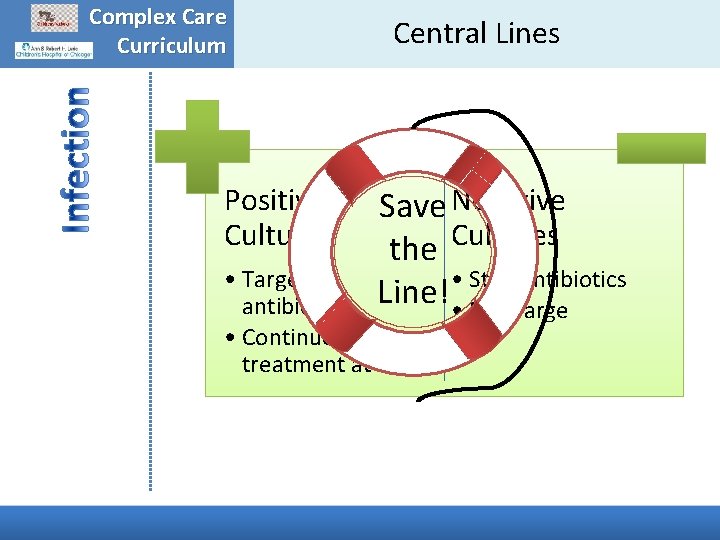
Complex Care Curriculum Positive Cultures Central Lines Save Negative the Cultures • Stop antibiotics Line! • Discharge • Targeted antibiotics • Continue treatment at home
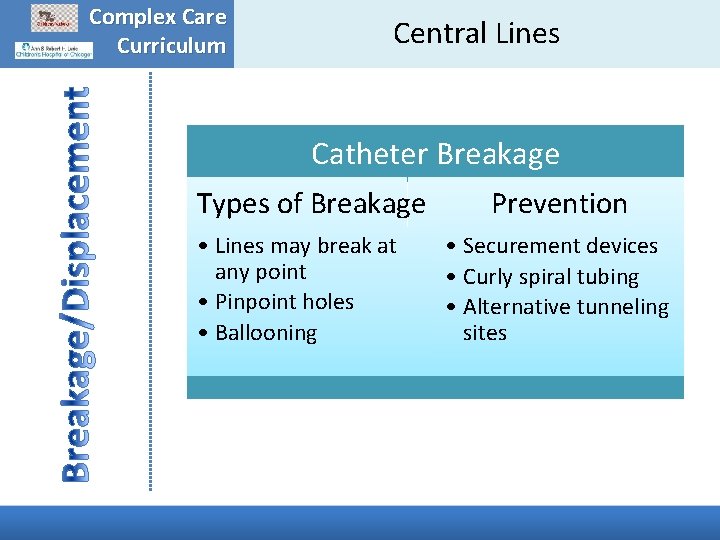
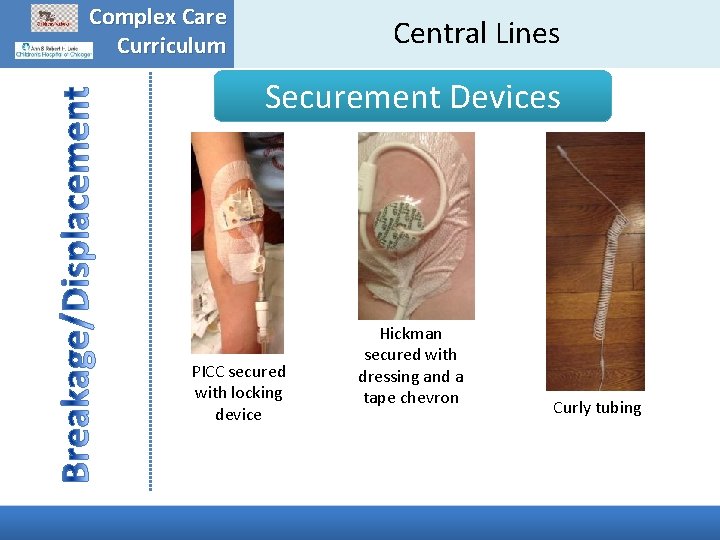
Complex Care Curriculum Central Lines Catheter Breakage Types of Breakage • Lines may break at any point • Pinpoint holes • Ballooning Prevention • Securement devices • Curly spiral tubing • Alternative tunneling sites
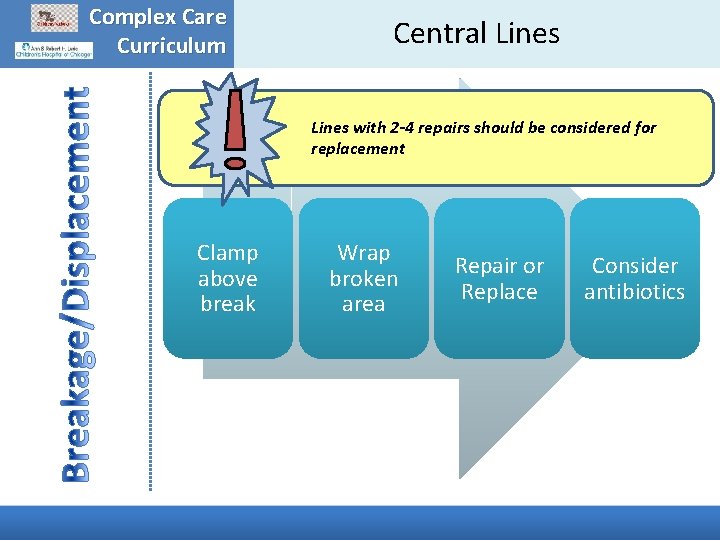
Complex Care Curriculum Central Lines If the line is broken… Lines with 2 -4 repairs should be considered for replacement Clamp above break Wrap broken area Repair or Replace Consider antibiotics
Complex Care Curriculum Central Lines Securement Devices PICC secured with locking device Hickman secured with dressing and a tape chevron Curly tubing
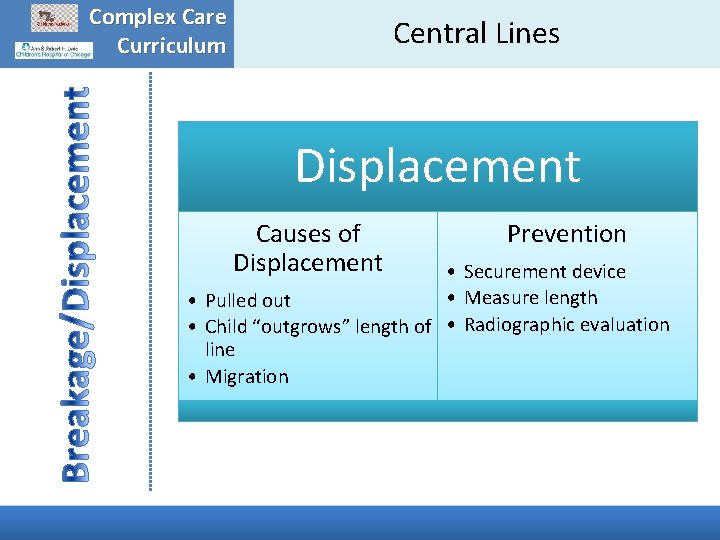
Complex Care Curriculum Central Lines Displacement Causes of Displacement Prevention • Securement device • Measure length • Pulled out • Child “outgrows” length of • Radiographic evaluation line • Migration
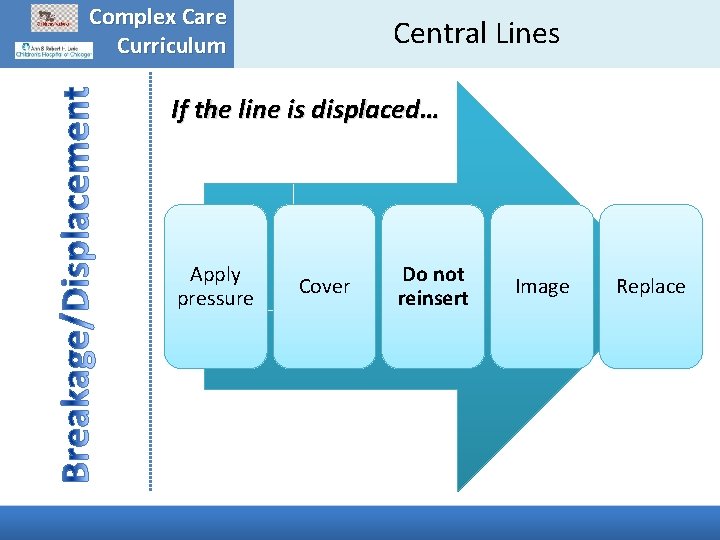
Complex Care Curriculum Central Lines If the line is displaced… Apply pressure Cover Do not reinsert Image Replace
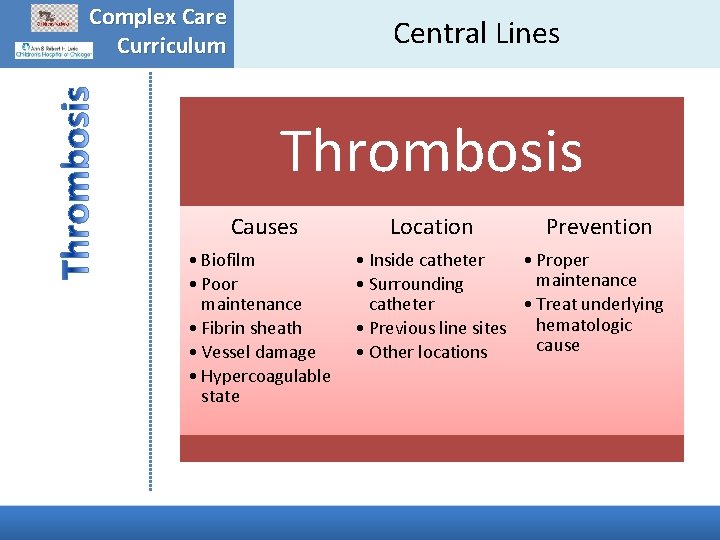
Complex Care Curriculum Central Lines Thrombosis Causes • Biofilm • Poor maintenance • Fibrin sheath • Vessel damage • Hypercoagulable state Location Prevention • Inside catheter • Proper maintenance • Surrounding catheter • Treat underlying hematologic • Previous line sites cause • Other locations
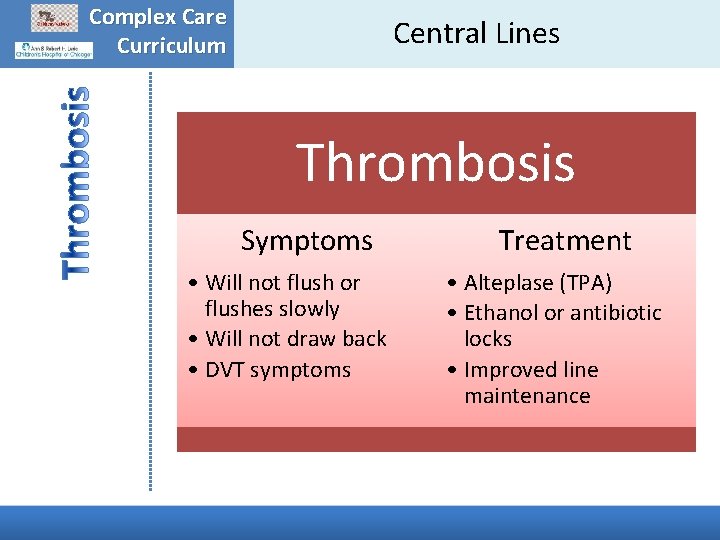
Complex Care Curriculum Central Lines Thrombosis Symptoms • Will not flush or flushes slowly • Will not draw back • DVT symptoms Treatment • Alteplase (TPA) • Ethanol or antibiotic locks • Improved line maintenance
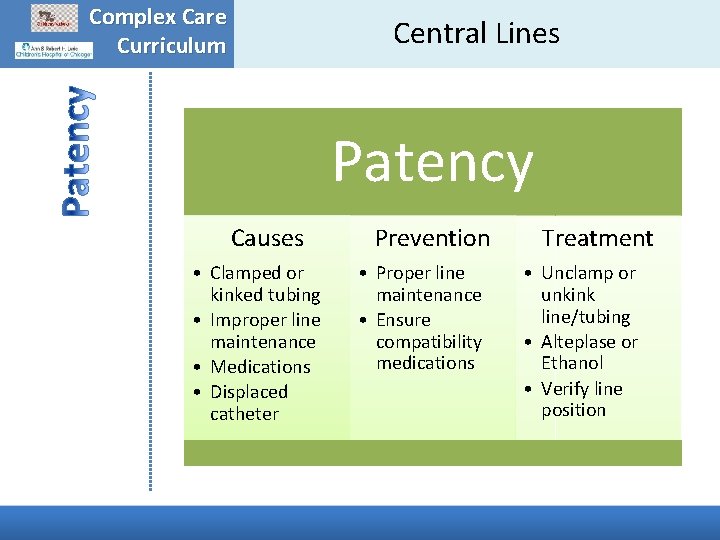
Complex Care Curriculum Central Lines Patency Causes • Clamped or kinked tubing • Improper line maintenance • Medications • Displaced catheter Prevention • Proper line maintenance • Ensure compatibility medications Treatment • Unclamp or unkink line/tubing • Alteplase or Ethanol • Verify line position
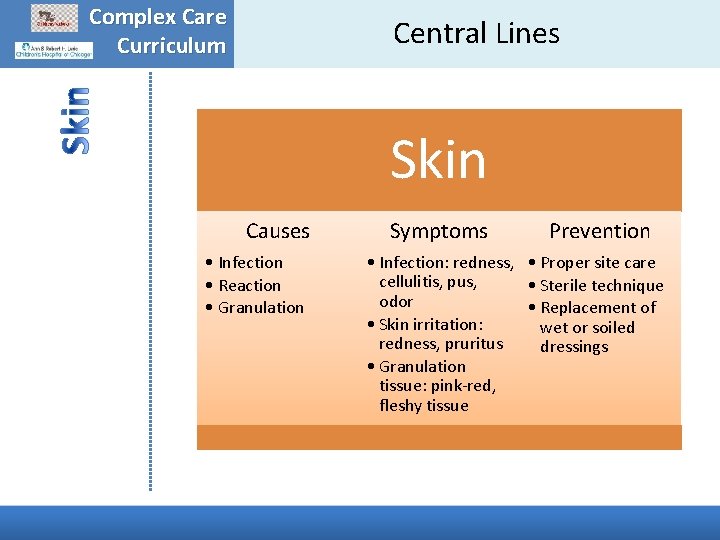
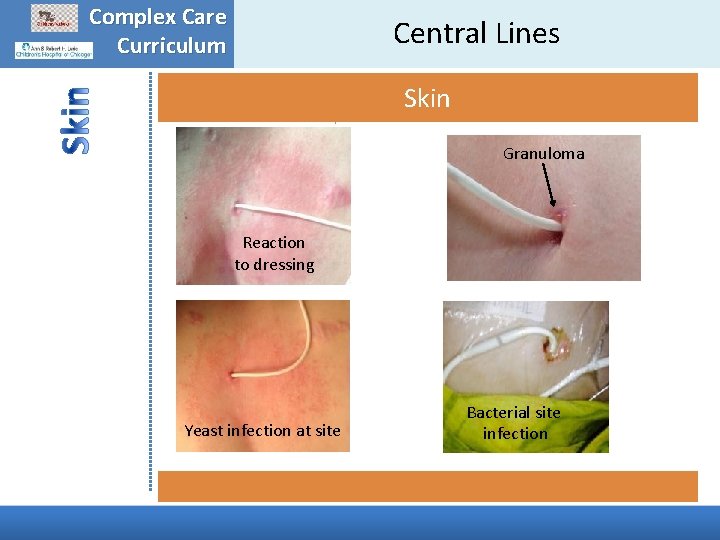
Complex Care Curriculum Central Lines Skin Causes • Infection • Reaction • Granulation Symptoms Prevention • Infection: redness, • Proper site care cellulitis, pus, • Sterile technique odor • Replacement of • Skin irritation: wet or soiled redness, pruritus dressings • Granulation tissue: pink-red, fleshy tissue
Complex Care Curriculum Central Lines Skin Granuloma Reaction to dressing Yeast infection at site Bacterial site infection
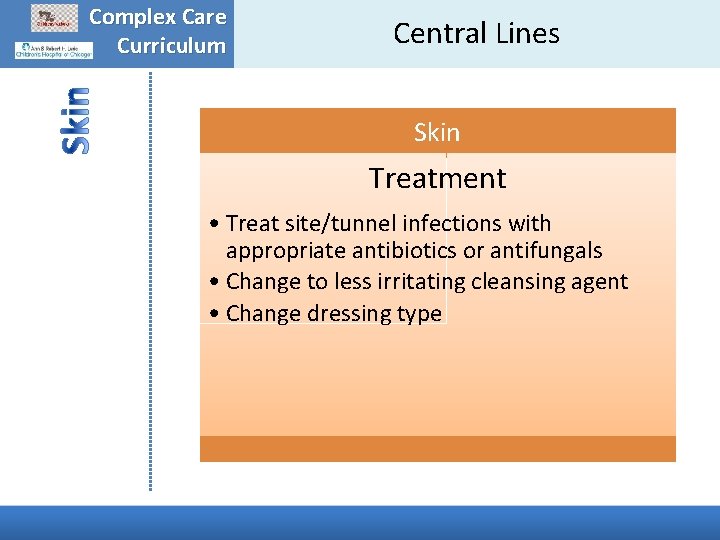
Complex Care Curriculum Central Lines Skin Treatment • Treat site/tunnel infections with appropriate antibiotics or antifungals • Change to less irritating cleansing agent • Change dressing type
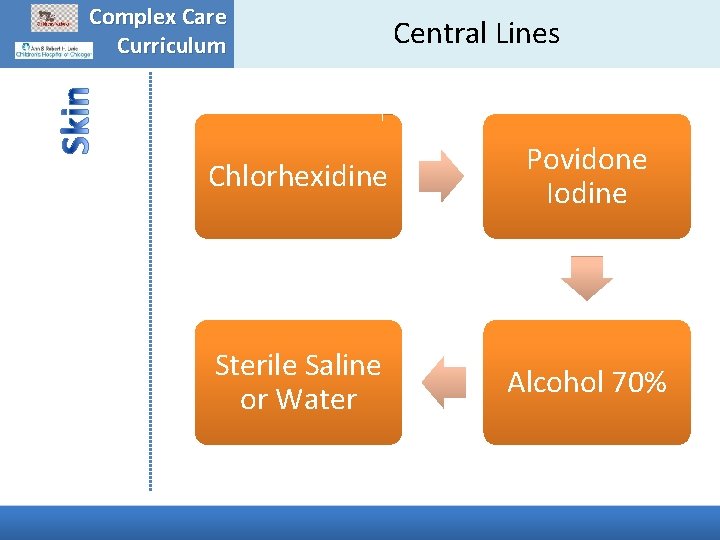
Complex Care Curriculum Central Lines Chlorhexidine Povidone Iodine Sterile Saline or Water Alcohol 70%
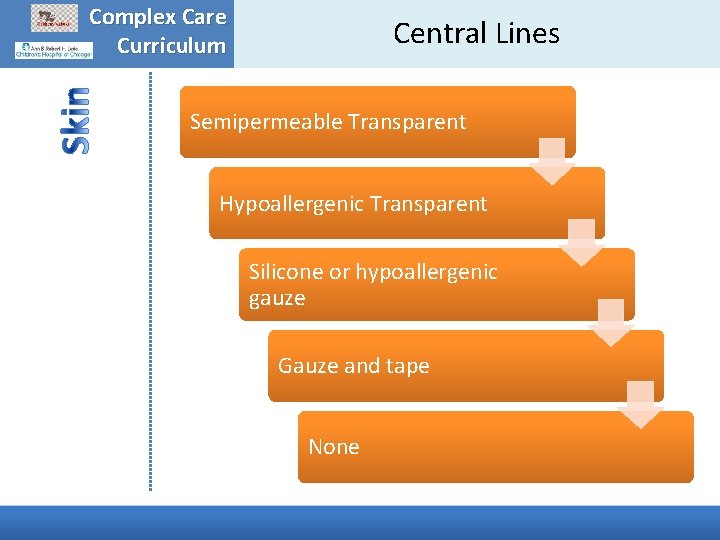
Complex Care Curriculum Central Lines Semipermeable Transparent Hypoallergenic Transparent Silicone or hypoallergenic gauze Gauze and tape None
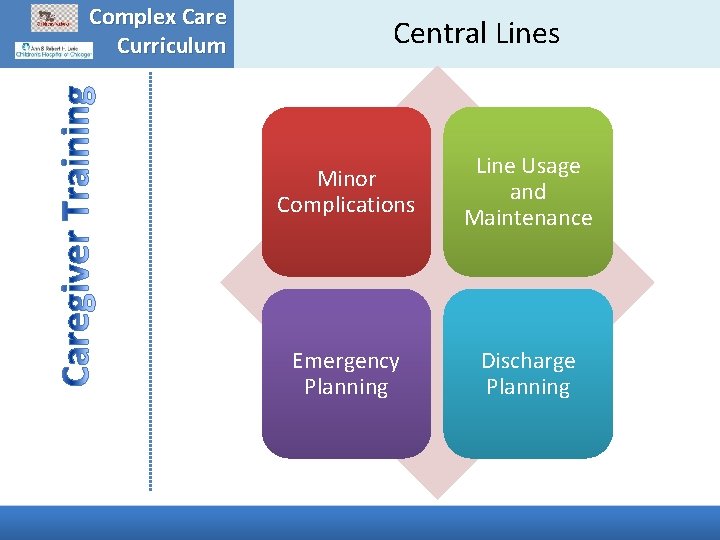
Complex Care Curriculum Central Lines Minor Complications Line Usage and Maintenance Emergency Planning Discharge Planning
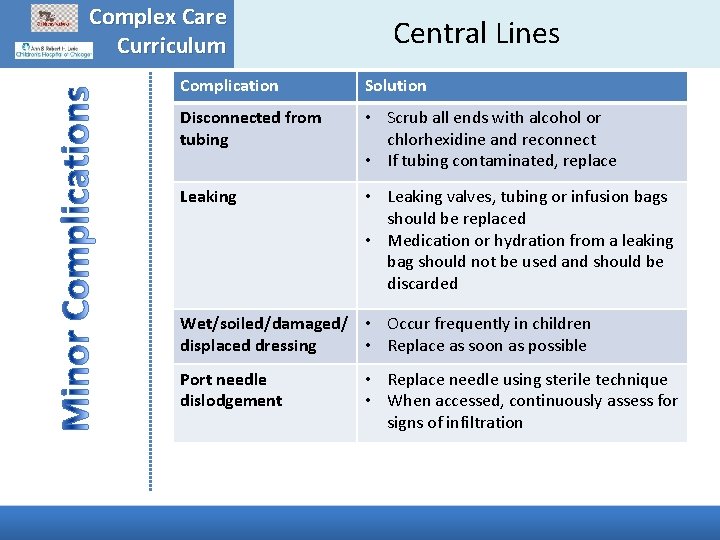
Complex Care Curriculum Central Lines Complication Solution Disconnected from tubing • Scrub all ends with alcohol or chlorhexidine and reconnect • If tubing contaminated, replace Leaking • Leaking valves, tubing or infusion bags should be replaced • Medication or hydration from a leaking bag should not be used and should be discarded Wet/soiled/damaged/ • Occur frequently in children displaced dressing • Replace as soon as possible Port needle dislodgement • Replace needle using sterile technique • When accessed, continuously assess for signs of infiltration
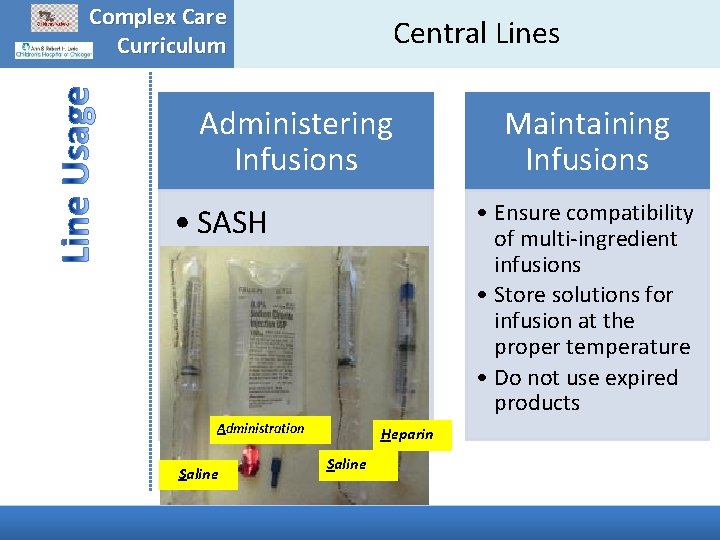
Complex Care Curriculum Central Lines Administering Infusions • Ensure compatibility of multi-ingredient infusions • Store solutions for infusion at the proper temperature • Do not use expired products • SASH Administration Saline Maintaining Infusions Heparin Saline Return to Presentation
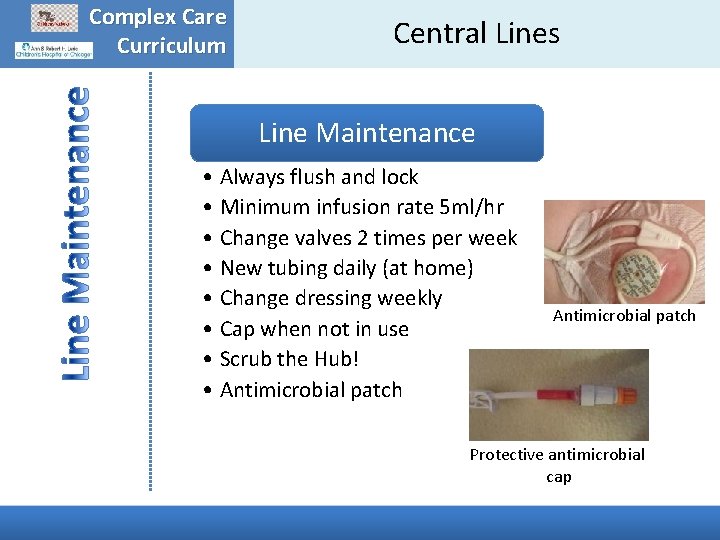
Complex Care Curriculum Central Lines Line Maintenance • Always flush and lock • Minimum infusion rate 5 ml/hr • Change valves 2 times per week • New tubing daily (at home) • Change dressing weekly • Cap when not in use • Scrub the Hub! • Antimicrobial patch Protective antimicrobial cap
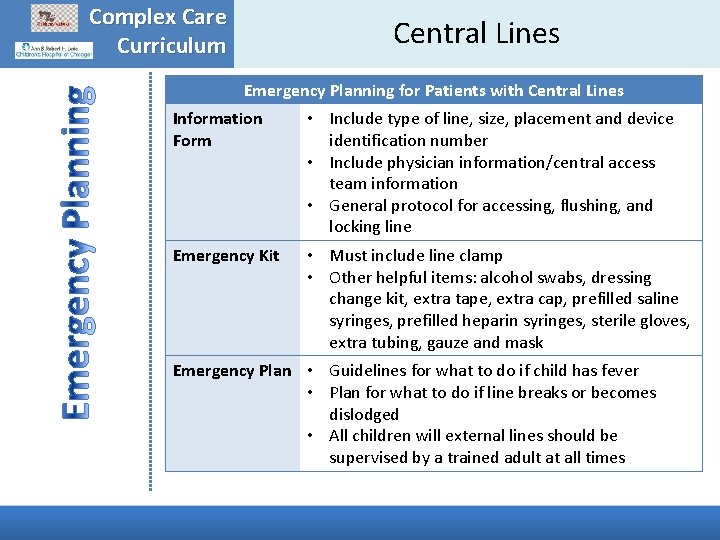
Complex Care Curriculum Central Lines Emergency Planning for Patients with Central Lines Information Form • Include type of line, size, placement and device identification number • Include physician information/central access team information • General protocol for accessing, flushing, and locking line Emergency Kit • Must include line clamp • Other helpful items: alcohol swabs, dressing change kit, extra tape, extra cap, prefilled saline syringes, prefilled heparin syringes, sterile gloves, extra tubing, gauze and mask Emergency Plan • Guidelines for what to do if child has fever • Plan for what to do if line breaks or becomes dislodged • All children will external lines should be supervised by a trained adult at all times
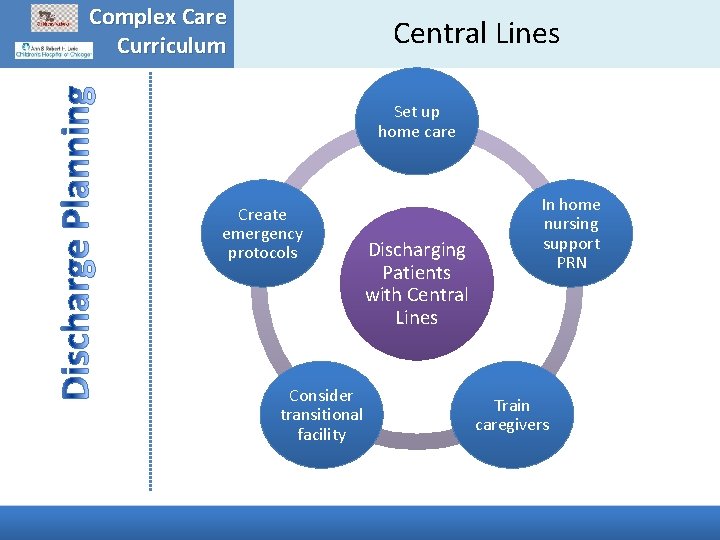
Complex Care Curriculum Central Lines Set up home care Create emergency protocols Consider transitional facility Discharging Patients with Central Lines In home nursing support PRN Train caregivers
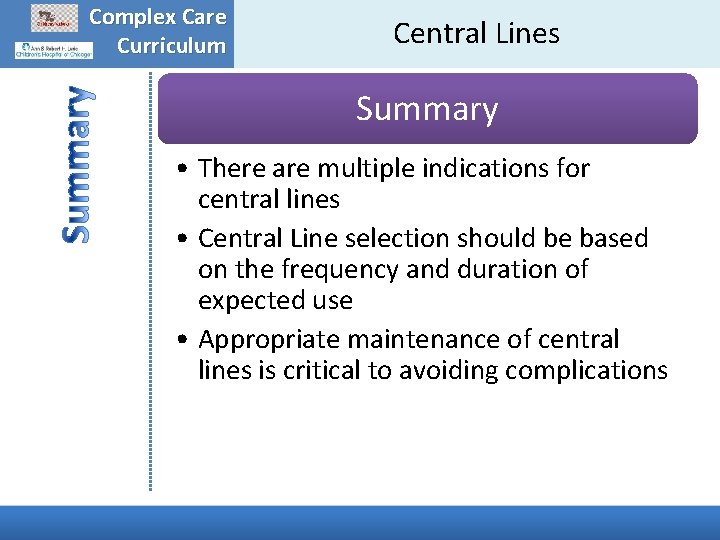
Complex Care Curriculum Central Lines Summary • There are multiple indications for central lines • Central Line selection should be based on the frequency and duration of expected use • Appropriate maintenance of central lines is critical to avoiding complications
Complex Care Curriculum Central Lines References AHRQ Best Practices Tool for Central Lines available at http: //www. ahrq. gov/professionals/systems/hospital/qitoolkit/d 4 acrbsi-bestpractices. pdf CLABSI Toolkit and Monograph from the Joint Commission available at http: //www. jointcommission. org/Topics/Clabsi_toolkit. aspx Guidelines for the Prevention of Intravascular Catheter-Related Infections from the CDC available at http: //www. cdc. gov/hicpac/pdf/guidelines/bsi-guidelines-2011. pdf ASPEN: American Society for Parenteral and Enteral Nutrition available at http: //www. nutritioncare. org/home/ Oley Foundation: Support and education organization for families and clinicians available at http: //www. oley. org/