
Complete this task for positive Classcharts points Independent
- Slides: 12
Complete this task for positive Classcharts points. Independent Study Skills ASPIRE Home Learning Tasks January-February Half-Term Learning for Life Aspirational for ourselves and others…
Task One Big Question: How can I learn a topic well and make it stick?
Making it stick! • We ultimately want you to KNOW MORE and be able to DO MORE with it. • To do this, we have to make your learning stick! • Choose a subject that you are currently enjoying.
STAGE 1: LEARN Before you start revising a topic, you have to make sure that you understand it. ACTIONS: • Look back over your notes or in weekly folders in Teams; • Do some research (use books, online sources, speaking to people) about the topics you have covered • Ask your teacher any questions about the topic
STAGE 2: REVISE Revising is the process of going back over a topic and making sure you can answer questions on it. Here are some examples: • Condense your notes; • Create mind-maps • Create flow-charts • Create flashcards Choose one of these techniques now.
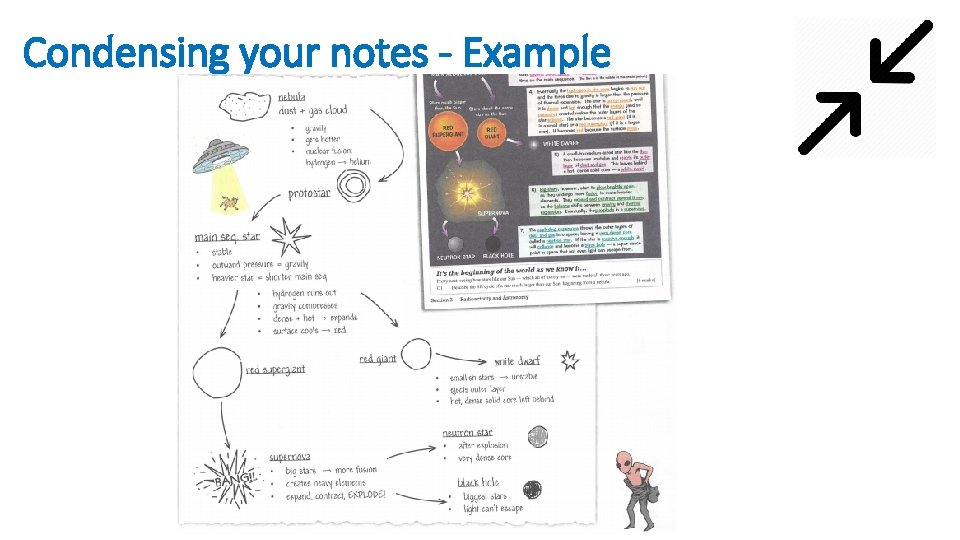
Condensing your notes 1. Start with your notes (from lessons, text books, tests etc) 2. Read to check that you understand them Condense them into your own words • Simplify and summarise into key points • Aim to put each topic on a single page. Cut out the waffle! • Reorganise it in some way – colour-code, group, add symbols etc Test Yourself! (cover up, write down, compare, fill in gaps in a different colour)
Condensing your notes - Example
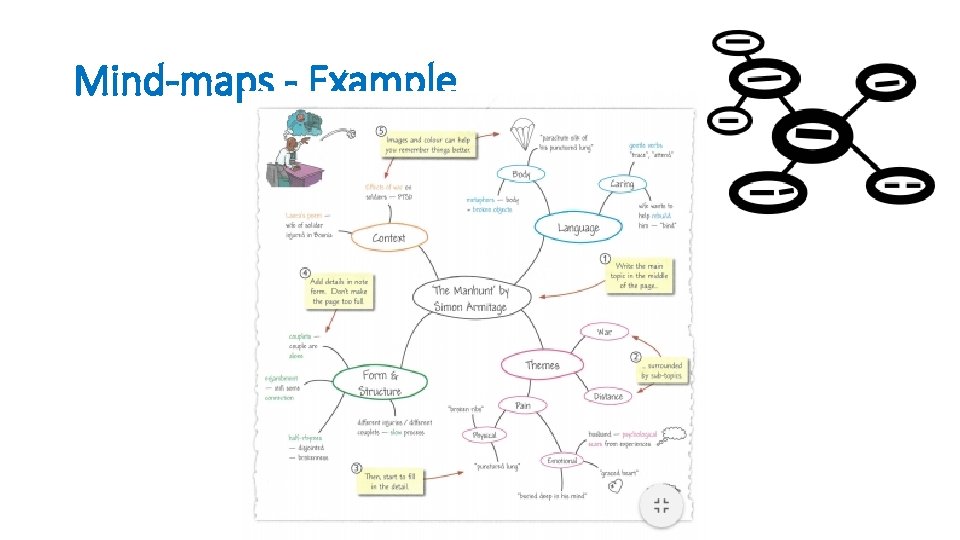
Drawing Mind-maps A mind-map is a type of diagram. They are: • A visual way of organising information • One mind-map per topic • The name of the topic is in the centre with sub-topics and details around it • Details are short and concise • Boxes or bubbles around some information can help it stand out • Colour and images helps
Mind-maps - Example
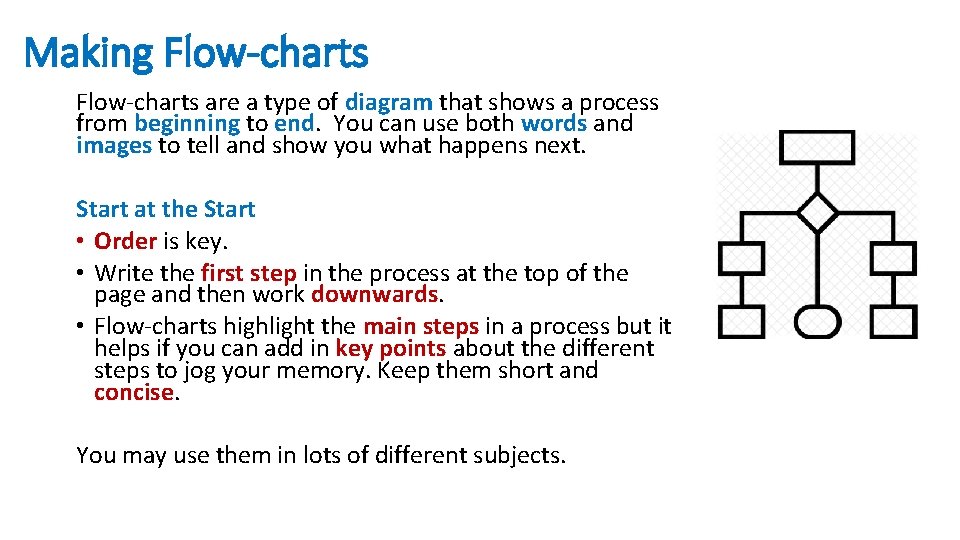
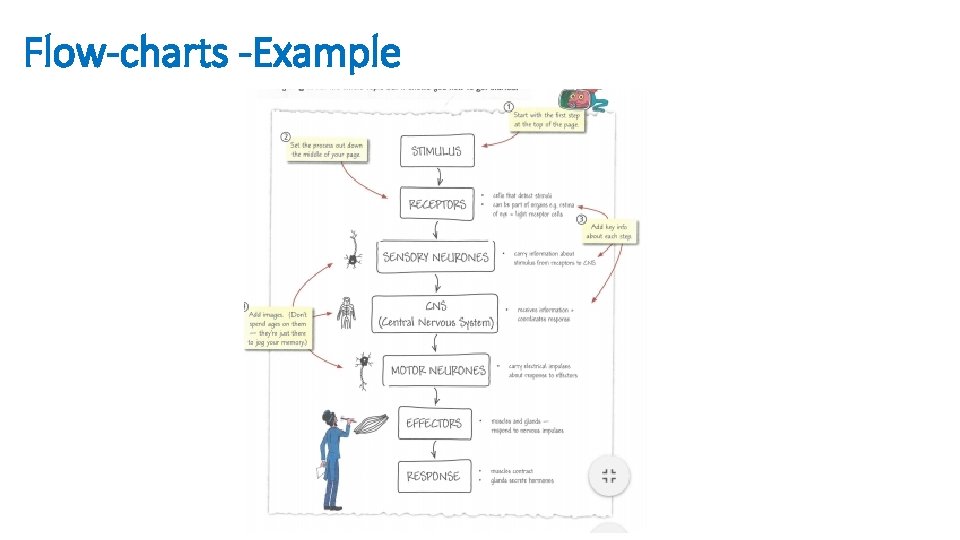
Making Flow-charts are a type of diagram that shows a process from beginning to end. You can use both words and images to tell and show you what happens next. Start at the Start • Order is key. • Write the first step in the process at the top of the page and then work downwards. • Flow-charts highlight the main steps in a process but it helps if you can add in key points about the different steps to jog your memory. Keep them short and concise. You may use them in lots of different subjects.
Flow-charts -Example
It’s Your Turn! Step to Success 1. 2. 3. 4. 5. Choose one subject Now choose one topic from within this subject Choose one of the ‘making it stick’ strategies Create a revision resource to help you to remember it Upload it to Classcharts to show Mrs Long when you have finished.