
Complete clinical response following neoadjuvant chemoradiotherapy for rectal


- Slides: 14
Complete clinical response following neoadjuvant chemoradiotherapy for rectal cancer: surgical resection versus organ preservation Dr Jessica Jenkins Consultant Oncologist
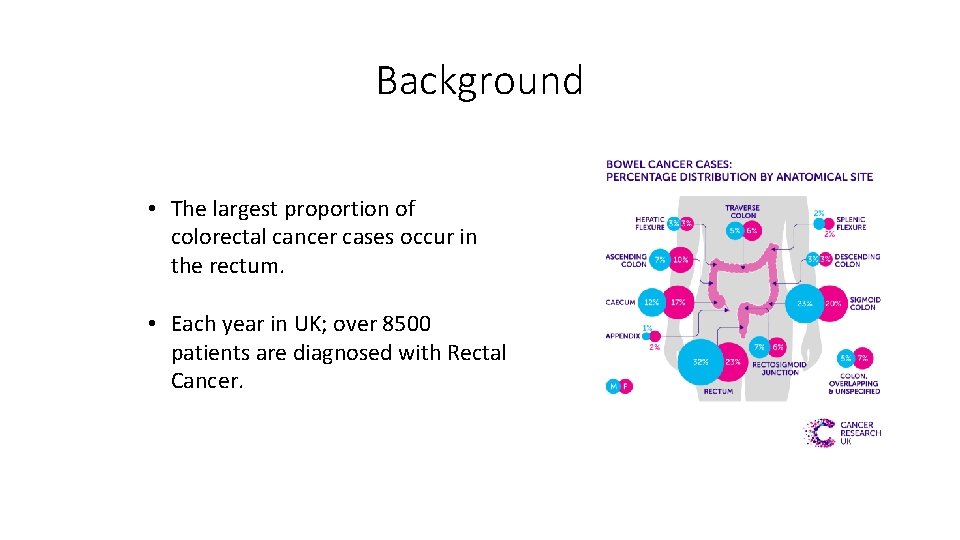
Background • The largest proportion of colorectal cancer cases occur in the rectum. • Each year in UK; over 8500 patients are diagnosed with Rectal Cancer.
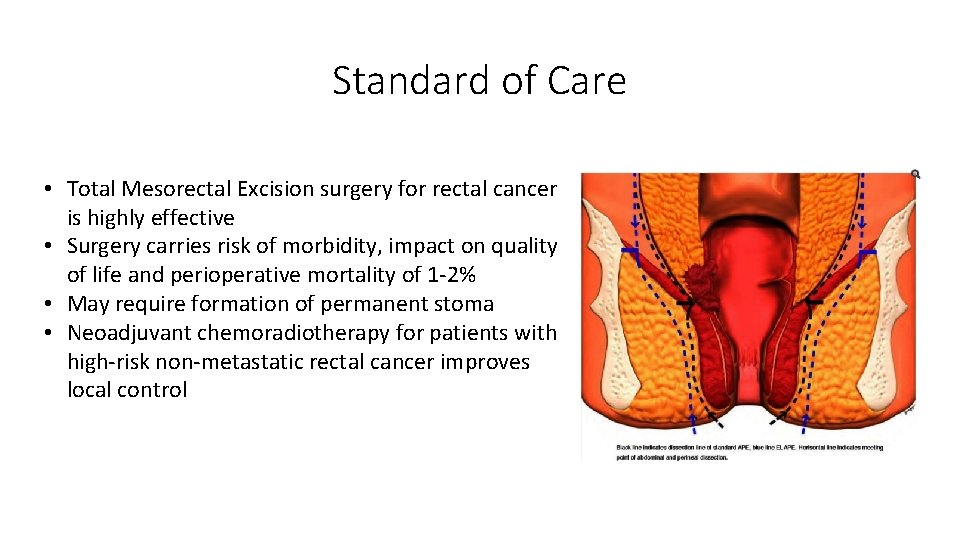
Standard of Care • Total Mesorectal Excision surgery for rectal cancer is highly effective • Surgery carries risk of morbidity, impact on quality of life and perioperative mortality of 1 -2% • May require formation of permanent stoma • Neoadjuvant chemoradiotherapy for patients with high-risk non-metastatic rectal cancer improves local control
Outcomes of Neoadjuvant Chemoradiotherapy for Rectal Cancer • Over last decade increasing reports of excellent responses to neoadjuvant chemoradiotherapy • Complete disappearance of tumour and involve local nodes • Pathological complete response (p. CR) rate up to 25% • Associated with favourable long term outcomes
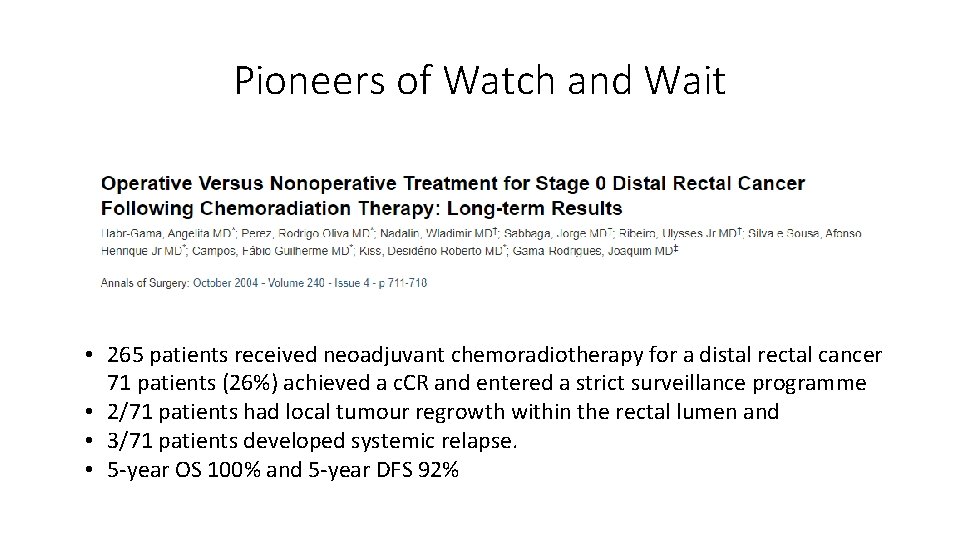
Pioneers of Watch and Wait • 265 patients received neoadjuvant chemoradiotherapy for a distal rectal cancer 71 patients (26%) achieved a c. CR and entered a strict surveillance programme • 2/71 patients had local tumour regrowth within the rectal lumen and • 3/71 patients developed systemic relapse. • 5 -year OS 100% and 5 -year DFS 92%
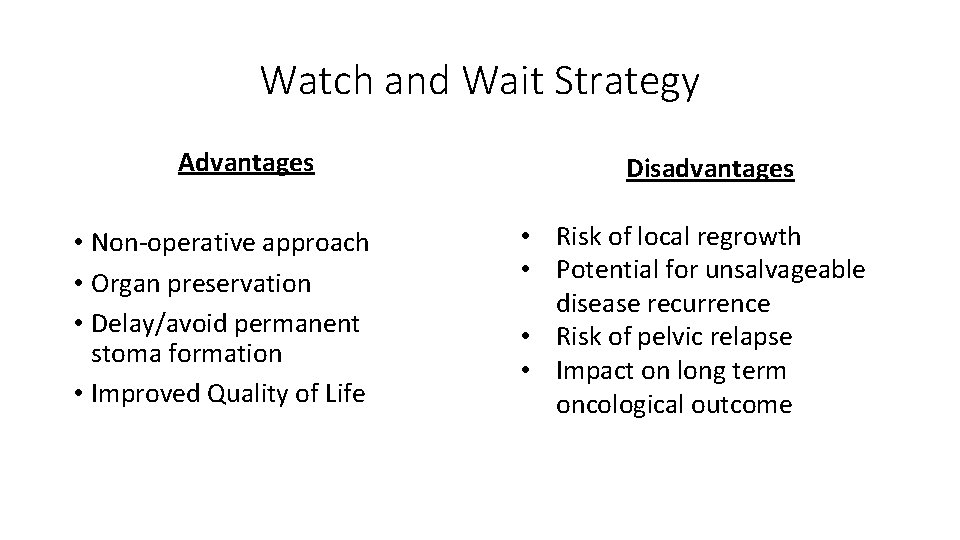
Watch and Wait Strategy Advantages • Non-operative approach • Organ preservation • Delay/avoid permanent stoma formation • Improved Quality of Life Disadvantages • Risk of local regrowth • Potential for unsalvageable disease recurrence • Risk of pelvic relapse • Impact on long term oncological outcome
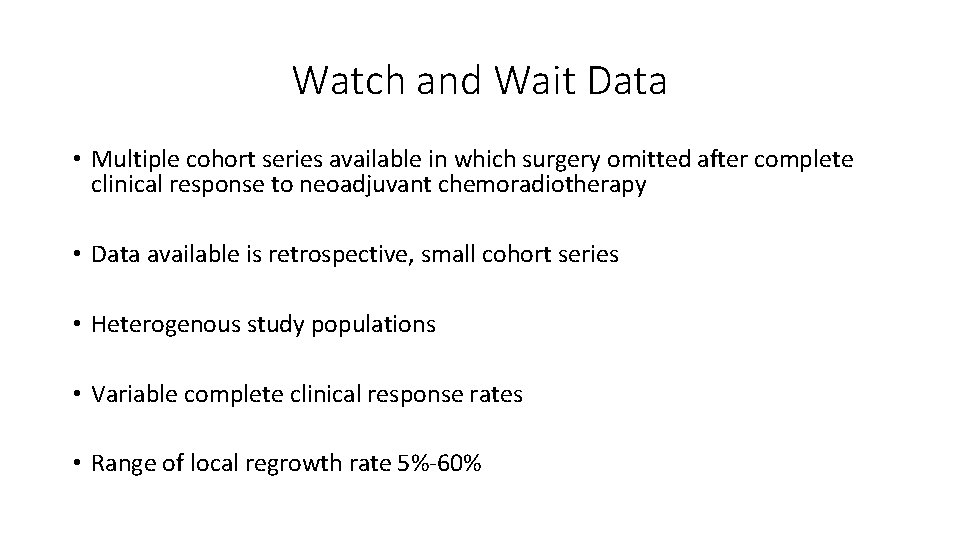
Watch and Wait Data • Multiple cohort series available in which surgery omitted after complete clinical response to neoadjuvant chemoradiotherapy • Data available is retrospective, small cohort series • Heterogenous study populations • Variable complete clinical response rates • Range of local regrowth rate 5%-60%
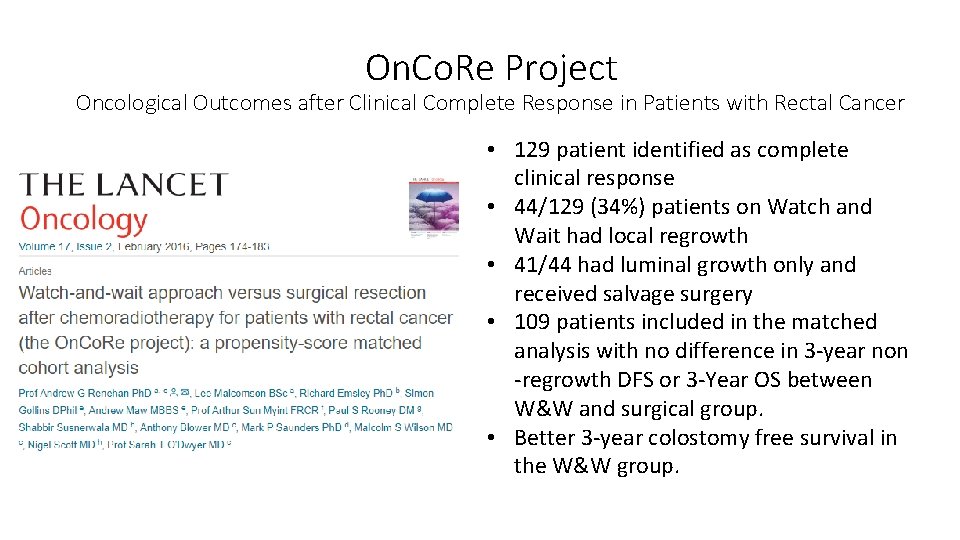
On. Co. Re Project Oncological Outcomes after Clinical Complete Response in Patients with Rectal Cancer • 129 patient identified as complete clinical response • 44/129 (34%) patients on Watch and Wait had local regrowth • 41/44 had luminal growth only and received salvage surgery • 109 patients included in the matched analysis with no difference in 3 -year non -regrowth DFS or 3 -Year OS between W&W and surgical group. • Better 3 -year colostomy free survival in the W&W group.
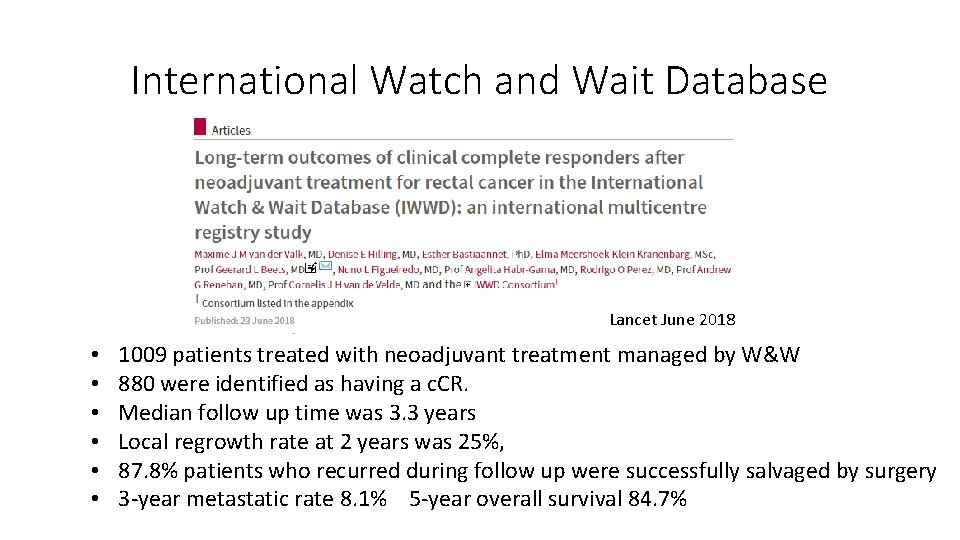
International Watch and Wait Database Lancet June 2018 • • • 1009 patients treated with neoadjuvant treatment managed by W&W 880 were identified as having a c. CR. Median follow up time was 3. 3 years Local regrowth rate at 2 years was 25%, 87. 8% patients who recurred during follow up were successfully salvaged by surgery 3 -year metastatic rate 8. 1% 5 -year overall survival 84. 7%
Patient Selection for Pre-Operative Therapy • Patients unfit for radical surgery • Patients who wish to avoid APE • Patients with High-Risk Low Rectal Tumours • Patient with locally advanced disease
Patients with Early Stage Low Tumours • Suitable for local excision or Transanal Endoscopic Micro Surgery in absence of adverse features • Should proceed without neoadjuvant therapy • Presence of high risk feature associated with local recurrence rate 20% and these patients should be offered radical surgery • Current data does not address whether neoadjuvant chemoradiotherapy aimed at organ preservation is justified or safe in patients with small distal rectal tumours.
Clinical Trials • Currently insufficient robust data to support Watch and Wait as standard of care approach for patients with complete clinical response after neoadjuvant therapy • Available data may aid shared decision making between clinicians and patients • Patients should be considered for appropriate Clinical Trials • STAR TREC Phase II three arm randomised feasibility trial, comparing the Standard TME surgery (control) vs Organ saving with either long course concurrent chemoradiation or short course radiotherapy • TRIGGER Magnetic Resonance mr. TRG as Novel Biomarker to stratify management of good and poor responders to chemoradiotherapy.
Conclusion • Focus is shifting towards a more individualised approach to the management of rectal cancer • There is growing interest in organ preserving strategies in selected patients • Aim is to improve long term QOL and functional outcome without impacting on Oncological Safety • Essential to pursue further research to develop further evidencebased treatment strategies in this developing area of interest.
Thank You