
Complement proteins become activated when they encounter antigen
Complement proteins become activated when they encounter antigen – Cascading enzyme reactions concentrate activated complement at infection site – Complement attracts phagocytes to infection site and tags pathogens for destruction – Forms attack complexes that puncture bacteria – Helps mediate active immunity
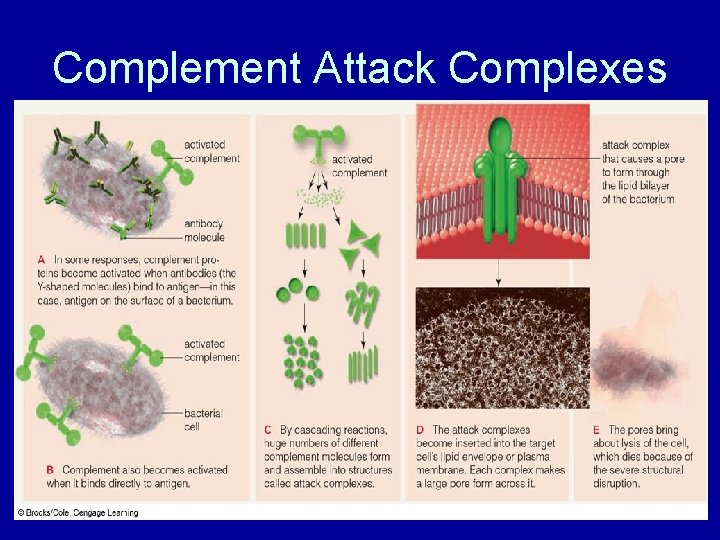
Complement Attack Complexes
The complement system is one of the major mechanisms by which pathogen recognition is converted into an effective host defense against initial infection. Complement is a system of plasma proteins that can be activated directly by pathogens or indirectly by pathogen-bound antibody, leading to a cascade of reactions that occurs on the surface of pathogens and generates active components with various effector functions.
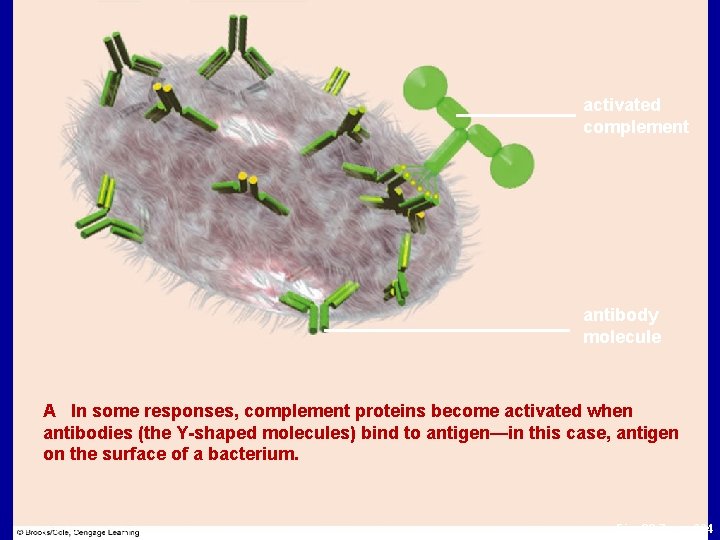
activated complement antibody molecule A In some responses, complement proteins become activated when antibodies (the Y-shaped molecules) bind to antigen—in this case, antigen on the surface of a bacterium. Fig. 38 -7 a, p. 664
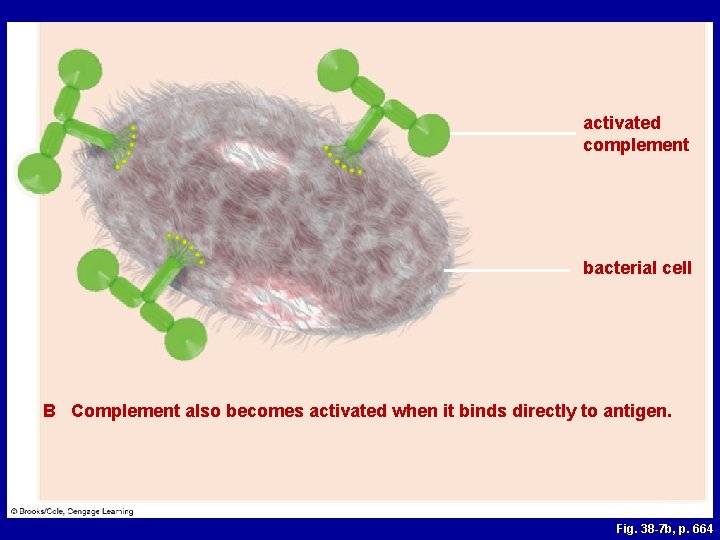
activated complement bacterial cell B Complement also becomes activated when it binds directly to antigen. Fig. 38 -7 b, p. 664
There are three pathways of complement activation: Classical pathway, which is triggered directly by pathogen or indirectly by antibody binding to the pathogen surface; MB-lectin pathway; and the alternative pathway, which also provides an amplification loop for the other two pathways. All three pathways can be initiated independently of antibody as part of innate immunity. The early events in all pathways consist of a sequence of cleavage reactions in which the larger cleavage product binds covalently to the pathogen surface and contributes to the activation of the next component. The pathways converge with the formation of a C 3 convertase enzyme, which cleaves C 3 to produce the active complement component C 3 b.
The binding of large numbers of C 3 b molecules to the pathogen is the central event in complement activation. Bound complement components, especially bound C 3 b and its inactive fragments, are recognized by specific complement receptors on phagocytic cells, which engulf pathogens opsonized by C 3 b and its inactive fragments. The small cleavage fragments of C 3, C 4, and especially C 5, recruit phagocytes to sites of infection and activate them by binding to specific trimeric G protein-coupled receptors. Together, these activities promote the uptake and destruction of pathogens by phagocytes.
The molecules of C 3 b that bind the C 3 convertase itself initiate the late events, binding C 5 to make it susceptible to cleavage by C 2 b or Bb. The larger C 5 b fragment triggers the assembly of a membrane-attack complex, which can result in the lysis of certain pathogens. The activity of complement components is modulated by a system of regulatory proteins that prevent tissue damage as a result of inadvertent binding of activated complement components to host cells or spontaneous activation of complement components in plasma.
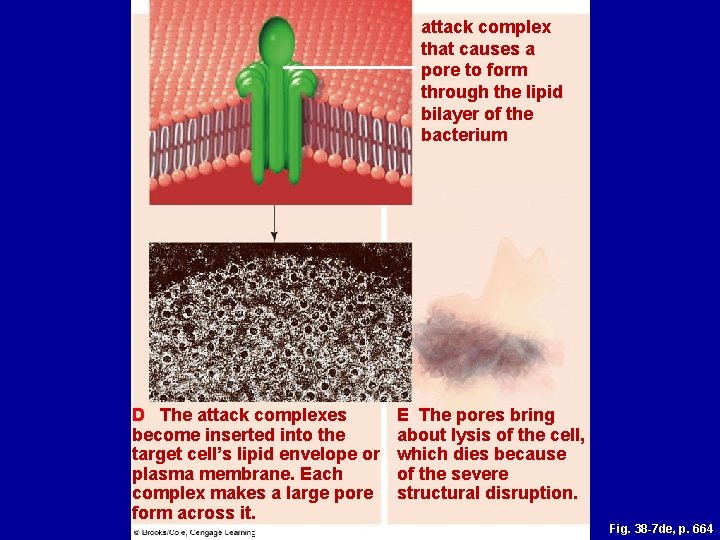
attack complex that causes a pore to form through the lipid bilayer of the bacterium D The attack complexes become inserted into the target cell’s lipid envelope or plasma membrane. Each complex makes a large pore form across it. E The pores bring about lysis of the cell, which dies because of the severe structural disruption. Fig. 38 -7 de, p. 664
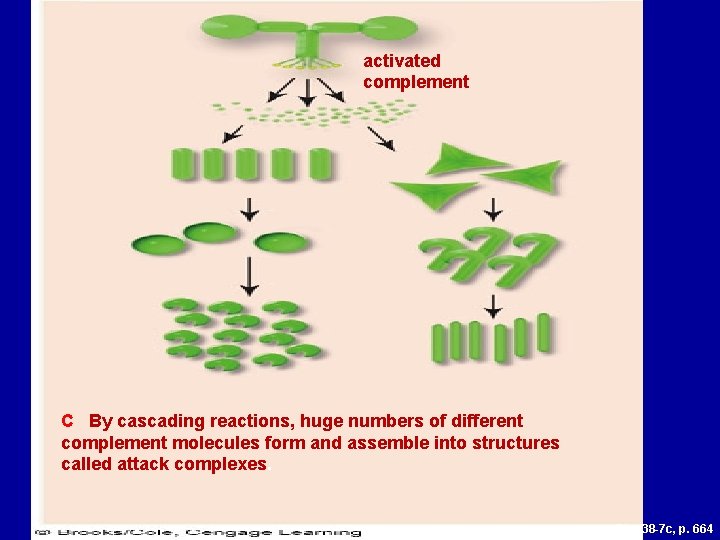
activated complement C By cascading reactions, huge numbers of different complement molecules form and assemble into structures called attack complexes. Fig. 38 -7 c, p. 664
Inflammation • Inflammation – A local response to tissue damage characterized by redness, warmth, swelling and pain, triggered by activated complement and cytokines – Mast cells release histamine, increasing capillary permeability – Phagocytes and plasma proteins leak out, attack invaders, form clots, and clean up debris
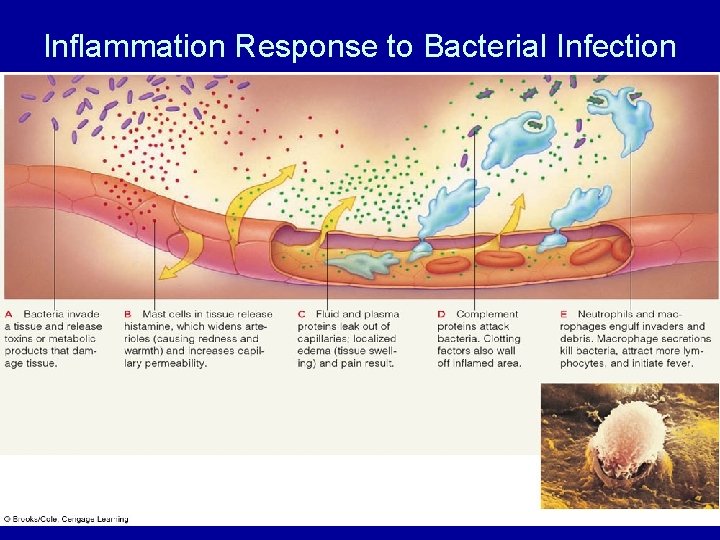
Inflammation Response to Bacterial Infection
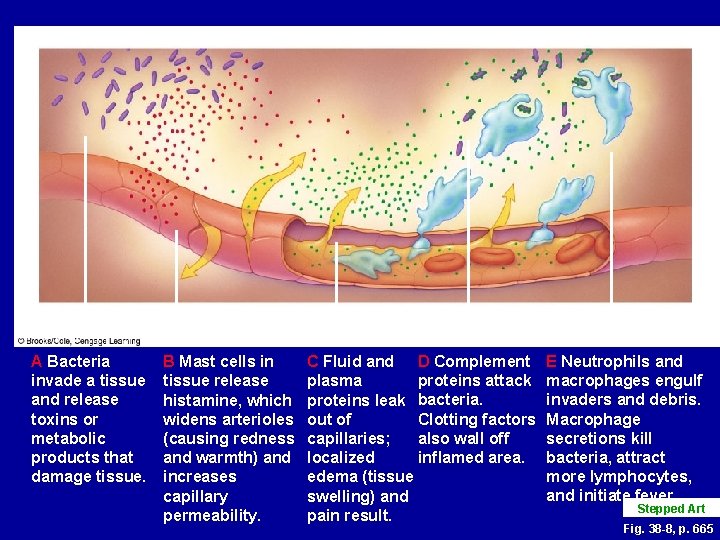
A Bacteria invade a tissue and release toxins or metabolic products that damage tissue. B Mast cells in tissue release histamine, which widens arterioles (causing redness and warmth) and increases capillary permeability. C Fluid and D Complement proteins attack plasma proteins leak bacteria. Clotting factors out of also wall off capillaries; inflamed area. localized edema (tissue swelling) and pain result. E Neutrophils and macrophages engulf invaders and debris. Macrophage secretions kill bacteria, attract more lymphocytes, and initiate fever. Stepped Art Fig. 38 -8, p. 665
Fever A temporary rise in body temperature – above the normal 37°C (98. 6°F) – that often occurs in response to infection – Cytokines stimulate brain cells to release prostaglandins, which act on the hypothalamus – Fever enhances the immune response by speeding up metabolism and phagocyte activity – Fever over 40. 6°C (105°F) can be dangerous
- Slides: 14