
Competition Slides Features Competitors Direct Competition Comparison Table

Competition Slides
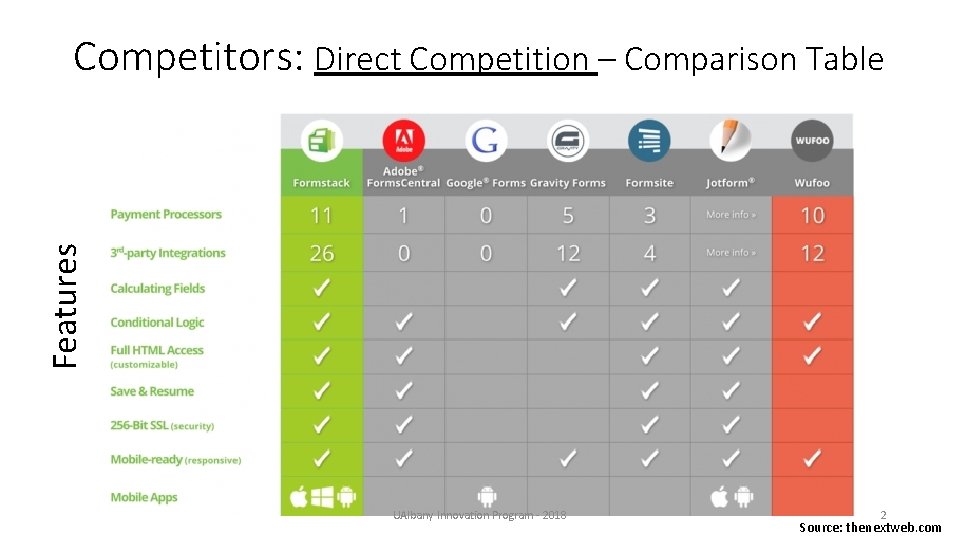
Features Competitors: Direct Competition – Comparison Table UAlbany Innovation Program - 2018 2 Source: thenextweb. com
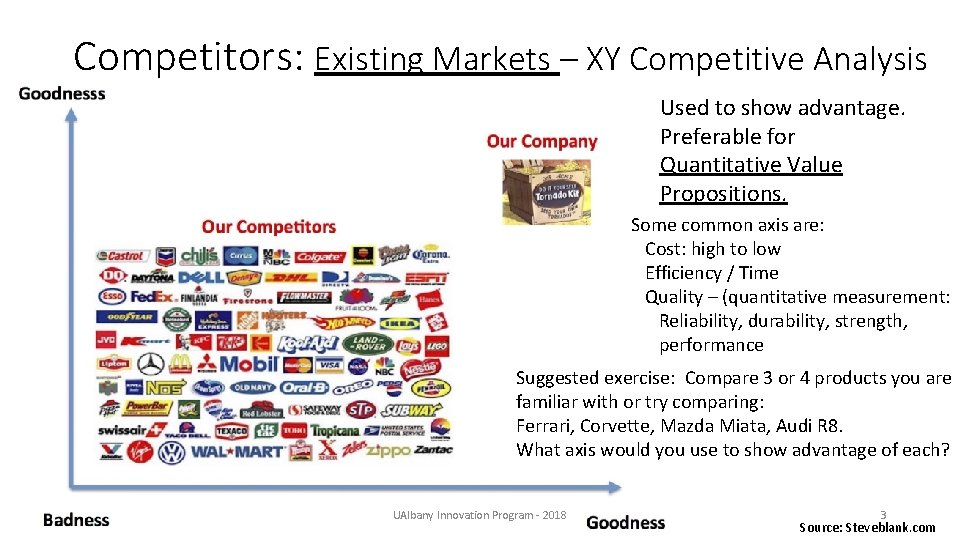
Competitors: Existing Markets – XY Competitive Analysis Used to show advantage. Preferable for Quantitative Value Propositions. Some common axis are: Cost: high to low Efficiency / Time Quality – (quantitative measurement: Reliability, durability, strength, performance Suggested exercise: Compare 3 or 4 products you are familiar with or try comparing: Ferrari, Corvette, Mazda Miata, Audi R 8. What axis would you use to show advantage of each? UAlbany Innovation Program - 2018 3 Source: Steveblank. com
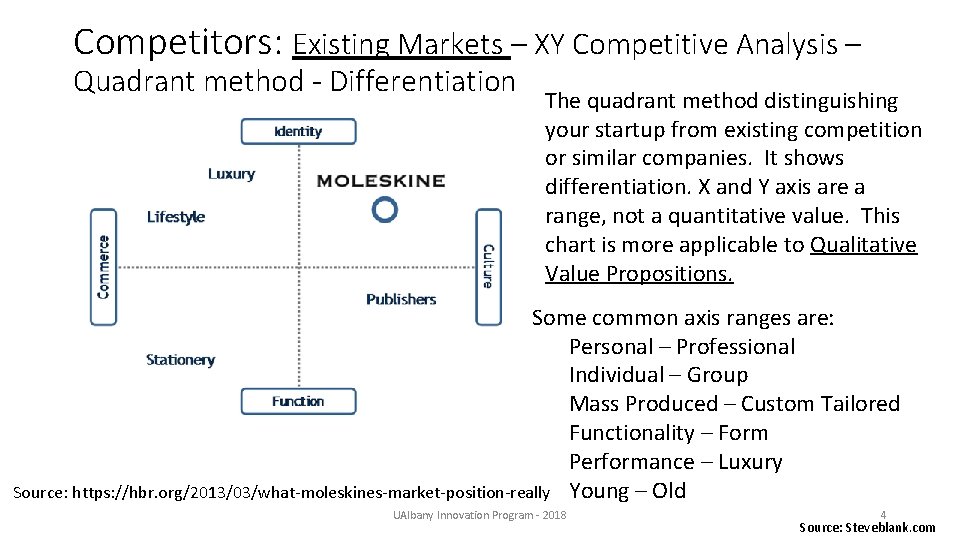
Competitors: Existing Markets – XY Competitive Analysis – Quadrant method - Differentiation The quadrant method distinguishing your startup from existing competition or similar companies. It shows differentiation. X and Y axis are a range, not a quantitative value. This chart is more applicable to Qualitative Value Propositions. Some common axis ranges are: Personal – Professional Individual – Group Mass Produced – Custom Tailored Functionality – Form Performance – Luxury Source: https: //hbr. org/2013/03/what-moleskines-market-position-really Young – Old UAlbany Innovation Program - 2018 4 Source: Steveblank. com
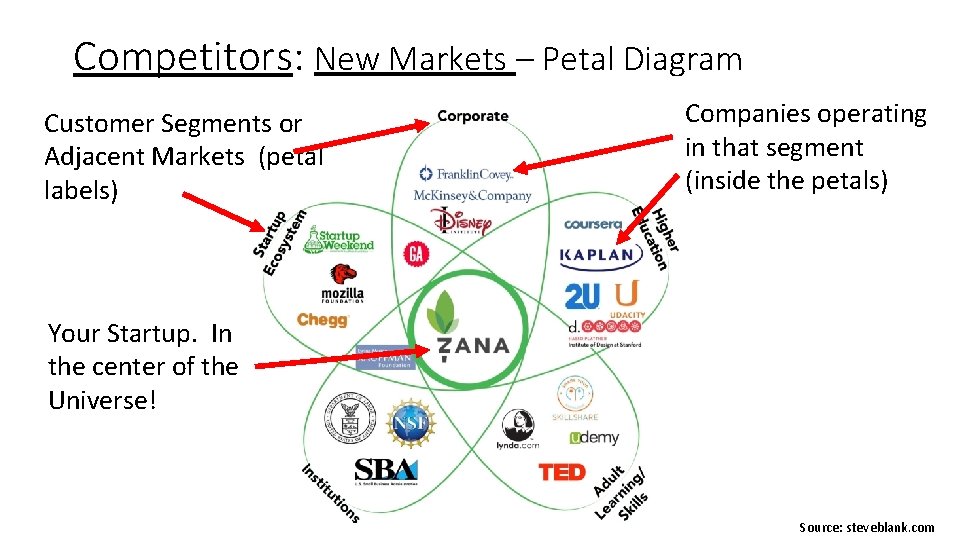
Competitors: New Markets – Petal Diagram Customer Segments or Adjacent Markets (petal labels) Companies operating in that segment (inside the petals) Your Startup. In the center of the Universe! Source: steveblank. com
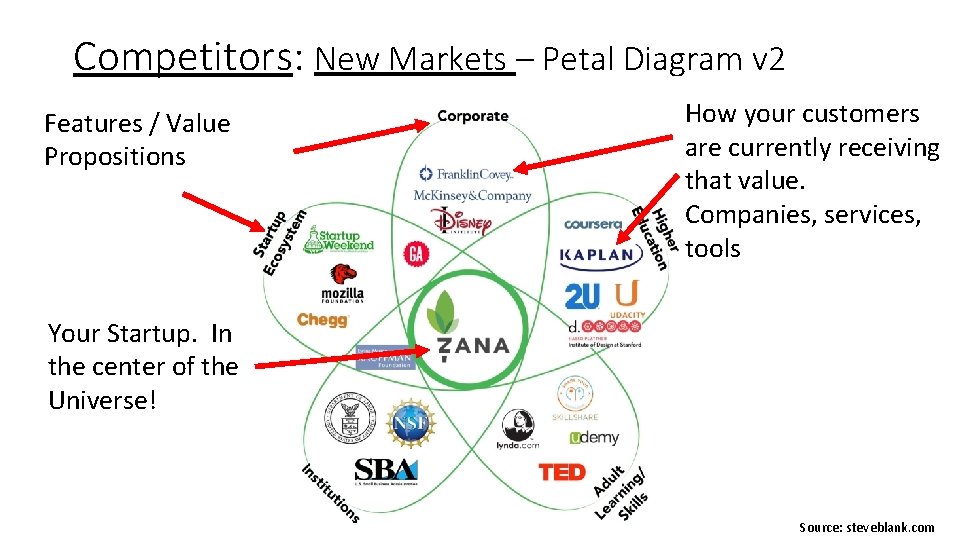
Competitors: New Markets – Petal Diagram v 2 Features / Value Propositions How your customers are currently receiving that value. Companies, services, tools Your Startup. In the center of the Universe! Source: steveblank. com
- Slides: 6