
Competition Predation and Symbiosis Bellringer Name a biotic
Competition, Predation and Symbiosis
Bellringer Name a biotic factor in a forest. Name two limiting factors for a population of lions. What is carrying capacity? A mouse eats acorns what is a mouse called in the food web? (Producer, Consumer, Decomposer)

Competition What are three major types of interactions among organisms? There are three major types of interactions among organisms: 1. Competition 2. Predation 3. Symbiosis
Competition What is competition? What do organisms have to do in order to reduce competition? �Different species can share the same habitat and food requirements. �Competition is the struggle between organisms to survive as they attempt to use the same limited resource. �In any ecosystem, there is a limited amount of food, water and shelter. �Organisms that survive have adaptations that enable them to reduce competition.
An adaptation is a change that helps an organism, such as a plant or animal, survive in its environment.

Predation What is predation? What is the relationship between predator and prey? Predation is an interaction in which one organism kills another food. The organism that does the killing for food is the predator. The organisms that is killed for food is the prey.
Bellringer 1. What is the difference between a food chain and a food web? 2. Name three adaption that prey use to protect themselves against predators. 3. Who are nature’s recyclers?
Symbiosis What is symbiosis? What are three types of symbiotic relationships? Symbiosis – is a close relationship between two species that benefits at least one of the species. There are three types of symbiotic relationships: 1. Mutualism 2. Commensalism 3. Parasitism

Mutualism What is Mutualism? Mutualism – A relationship in which both species benefit. Example: The relationship between the Saguaro Cactus and Long Eared Bats. Cactus flowers provide bats with food The cactus benefits because the bats carry pollen from cactus to cactus on their noses.
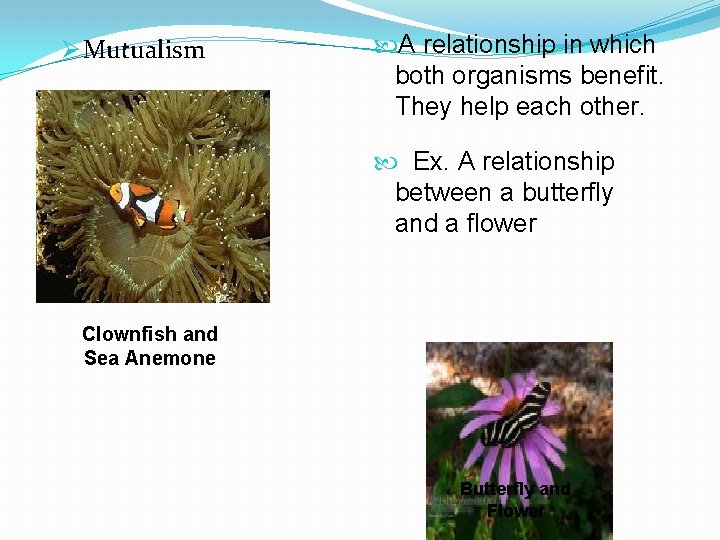
Ø Mutualism A relationship in which both organisms benefit. They help each other. Ex. A relationship between a butterfly and a flower Clownfish and Sea Anemone Butterfly and Flower
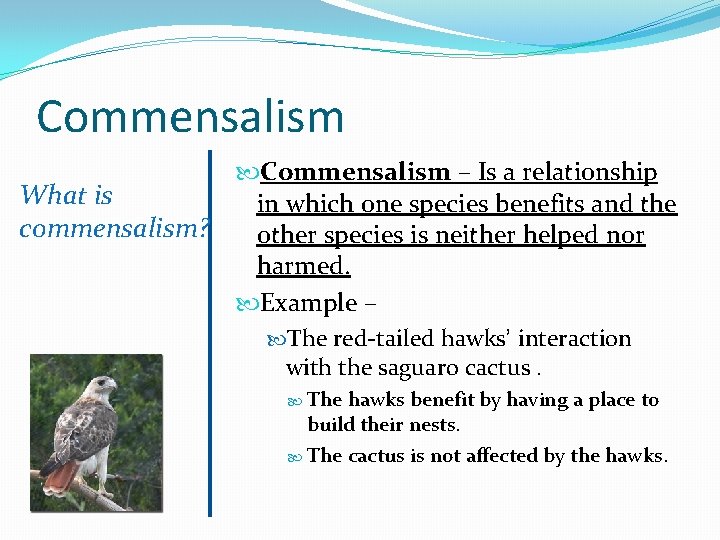
Commensalism – Is a relationship What is in which one species benefits and the commensalism? other species is neither helped nor harmed. Example – The red-tailed hawks’ interaction with the saguaro cactus. The hawks benefit by having a place to build their nests. The cactus is not affected by the hawks.
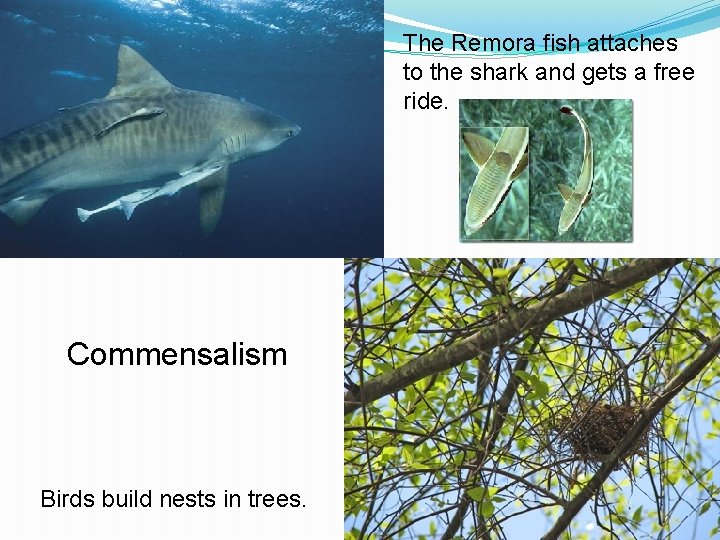
The Remora fish attaches to the shark and gets a free ride. Commensalism Birds build nests in trees.
Commensalism is not very common in nature because species are usually either helped or harmed a little by any interaction.
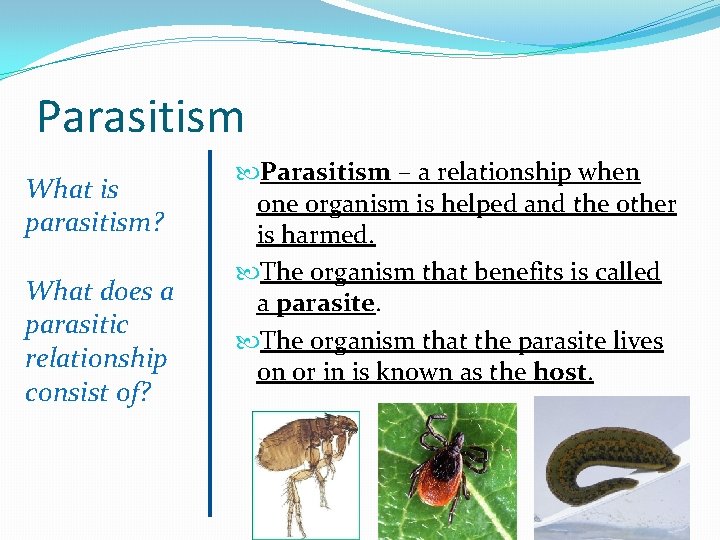
Parasitism What is parasitism? What does a parasitic relationship consist of? Parasitism – a relationship when one organism is helped and the other is harmed. The organism that benefits is called a parasite. The organism that the parasite lives on or in is known as the host.
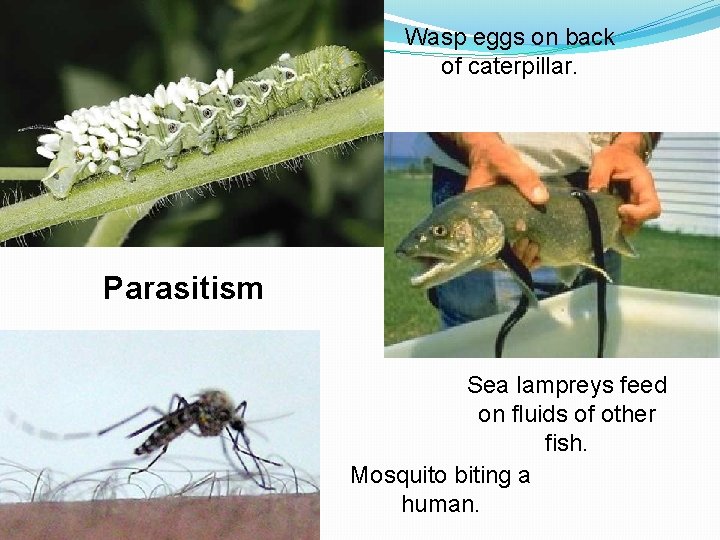
Wasp eggs on back of caterpillar. Parasitism Sea lampreys feed on fluids of other fish. Mosquito biting a human.
Parasitism Common parasites are fleas, ticks and leeches. These parasites have adaptation that enable them to attach to their host and feed on their blood. Other parasites live inside the host’s body such as tapeworms, that live inside the digestive systems of dogs, wolves, and some other mammals.
Parasitism Unlike predators, a parasite does not usually kill the organism it feeds on.
- Slides: 17