
Competition Intraspecific between organisms of the same species
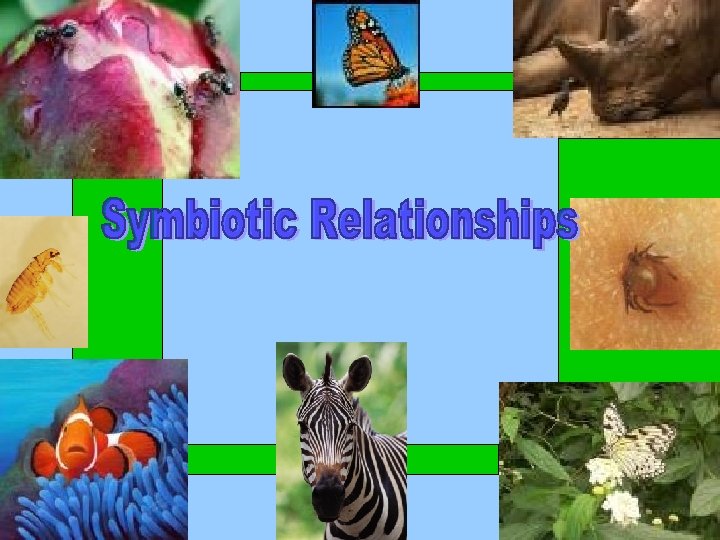

Competition • Intraspecific: between organisms of the same species • Interspecific: between organisms of different species. • Predation: when one organism feeds on another organism.
• SYMBIOSIS is the interaction between 2 different organisms living together – HOST- usually the LARGER of the 2 organisms – SYMBIONT- usually the SMALLER member
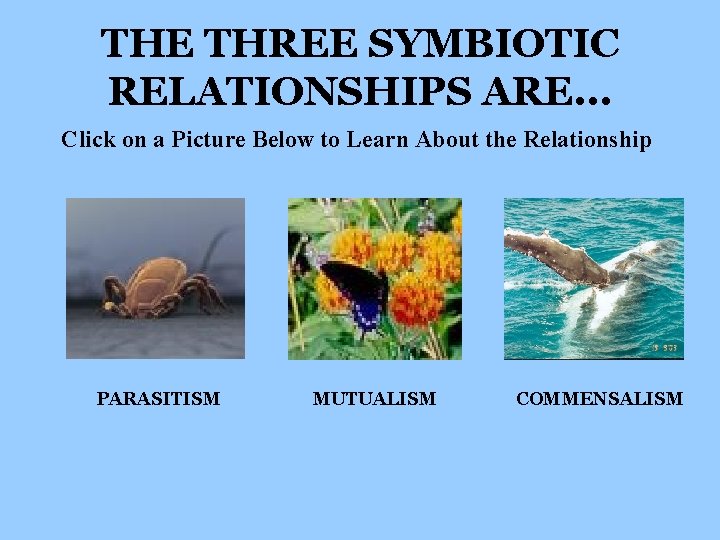
THE THREE SYMBIOTIC RELATIONSHIPS ARE. . . Click on a Picture Below to Learn About the Relationship PARASITISM MUTUALISM COMMENSALISM
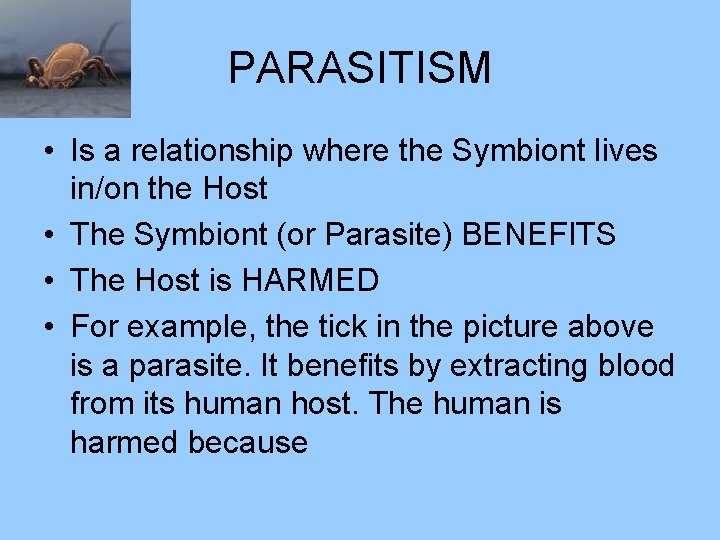
PARASITISM • Is a relationship where the Symbiont lives in/on the Host • The Symbiont (or Parasite) BENEFITS • The Host is HARMED • For example, the tick in the picture above is a parasite. It benefits by extracting blood from its human host. The human is harmed because
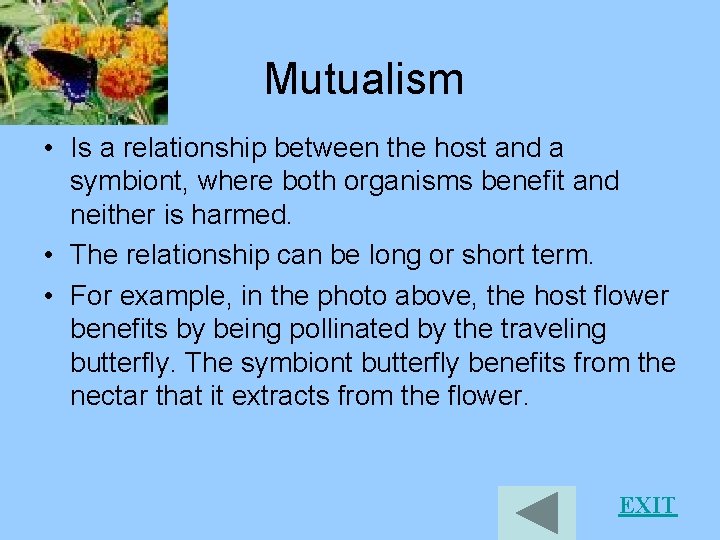
Mutualism • Is a relationship between the host and a symbiont, where both organisms benefit and neither is harmed. • The relationship can be long or short term. • For example, in the photo above, the host flower benefits by being pollinated by the traveling butterfly. The symbiont butterfly benefits from the nectar that it extracts from the flower. EXIT
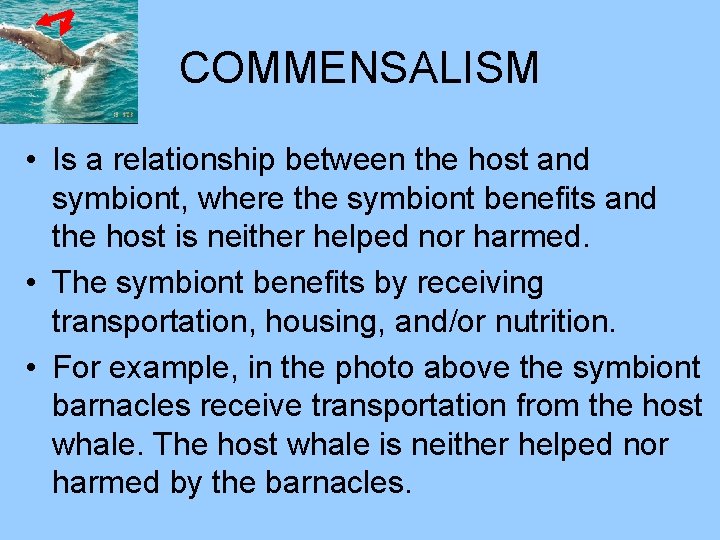
COMMENSALISM • Is a relationship between the host and symbiont, where the symbiont benefits and the host is neither helped nor harmed. • The symbiont benefits by receiving transportation, housing, and/or nutrition. • For example, in the photo above the symbiont barnacles receive transportation from the host whale. The host whale is neither helped nor harmed by the barnacles.

Cycling of Matter Cycles in the Biosphere
Law of Conservation of Mass/Matter • Mass/matter is neither created nor destroyed – it is RECYCLED! • Matter – anything that takes up space and has mass. – Provides the nutrients needed for organisms to function • Nutrient – a chemical substance that an organism must obtain from its environment to sustain life and undergo life processes
Where do we get our nutrients? • Producers/Plants get nutrients from the air, soil, or water (in the form of elements or compounds). – They use SUN energy to convert nutrients into usable forms • Consumers get their nutrients from the producers and other consumers • Decomposers return the nutrients to the cycle

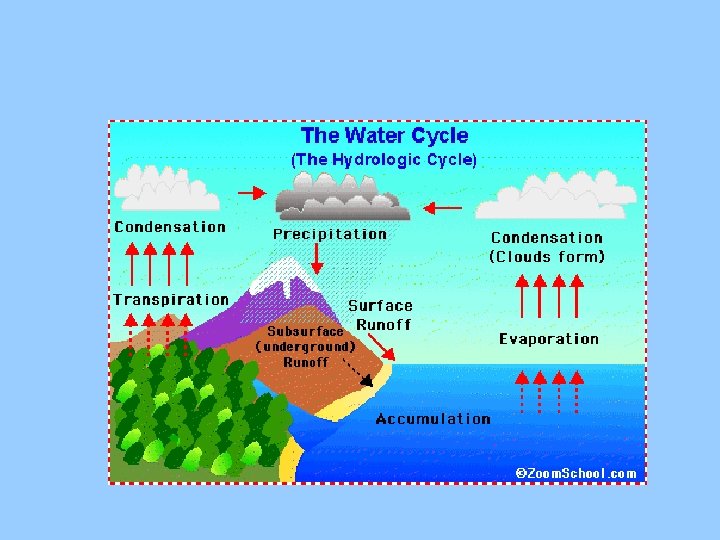
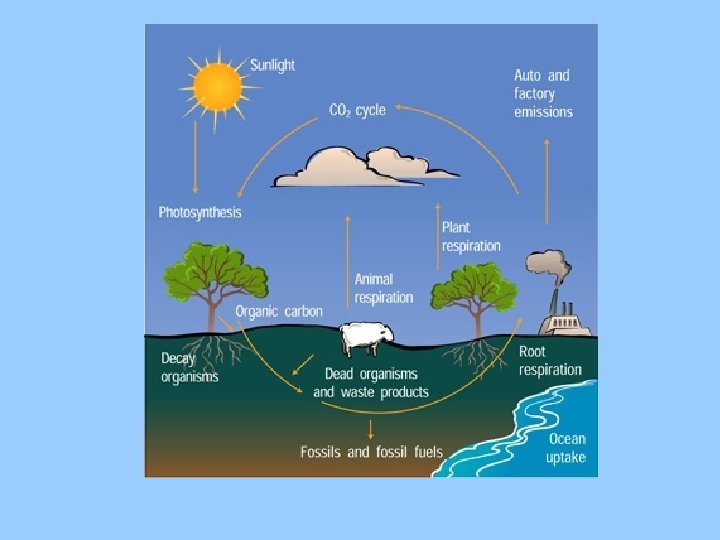
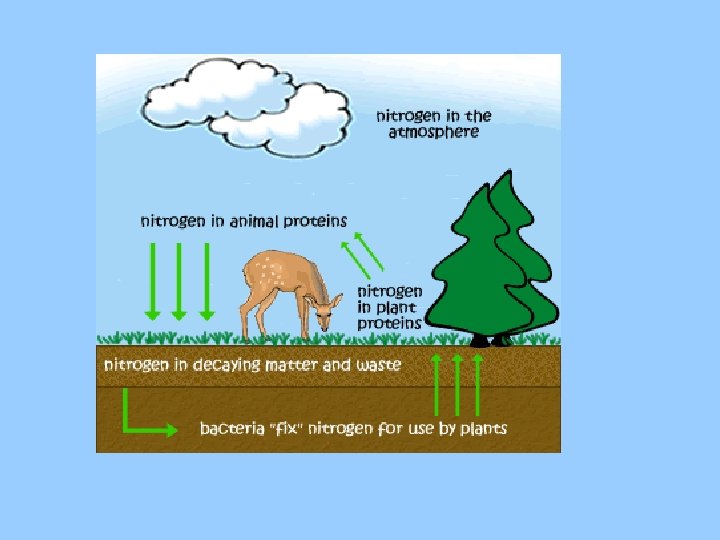
Biogeochemical Cycle • The cycling of matter includes living organisms and physical processes • Biogeochemical Cycle – the exchange of matter through the biosphere. – Includes: • Living organisms (bio) • Geological processes (geo) • Chemical processes (chemical)
Energy Cycles
- Slides: 15