
Competent Learner Model Overview June 08 1 Today
- Slides: 53
Competent Learner Model Overview June 08 1
Today you will learn… • • • What is the CLM What is the goal of the CLM What are the foundations of the CLM Who benefits from the CLM What are the components of the CLM What repertoires does the CLM curriculum include • Who can participate in the CLM project • What is the role of the CLM coach June 08 2
Competent Learner Model a multi-component package for addressing the individual learning needs of children who have difficulty participating in typical learning environments June 08 3
Competent Learner Model Goal: To implement effective and sustainable educational programs for children with challenging learning problems June 08 4
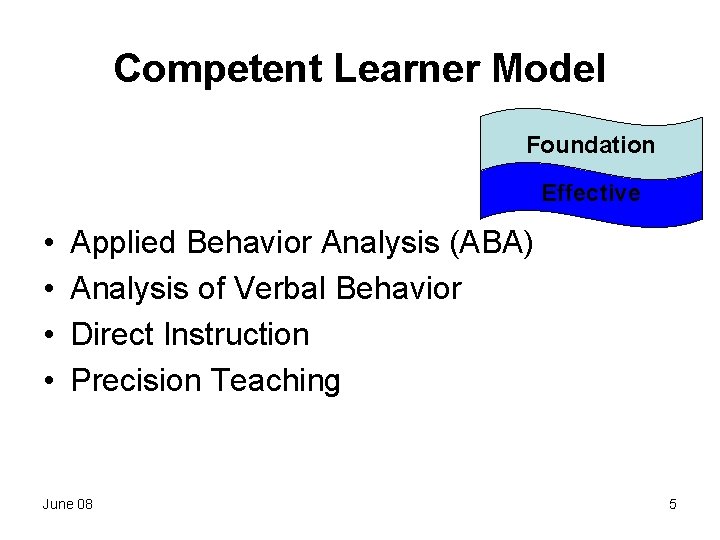
Competent Learner Model Foundation Effective • • Applied Behavior Analysis (ABA) Analysis of Verbal Behavior Direct Instruction Precision Teaching June 08 5
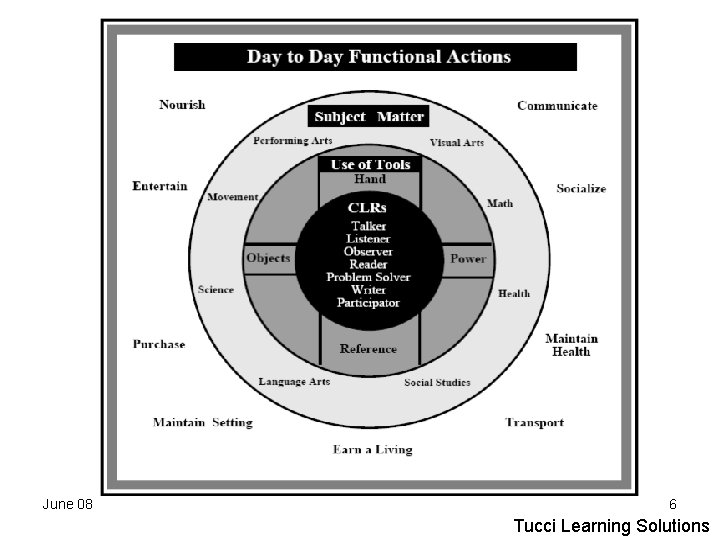
June 08 6 Tucci Learning Solutions
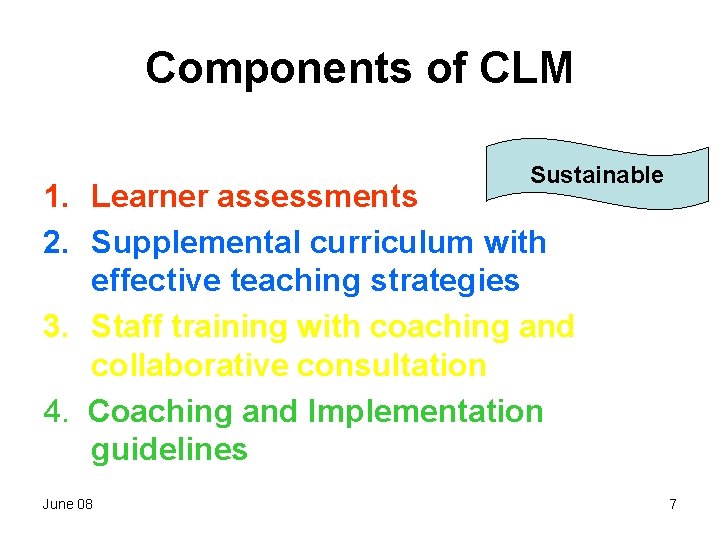
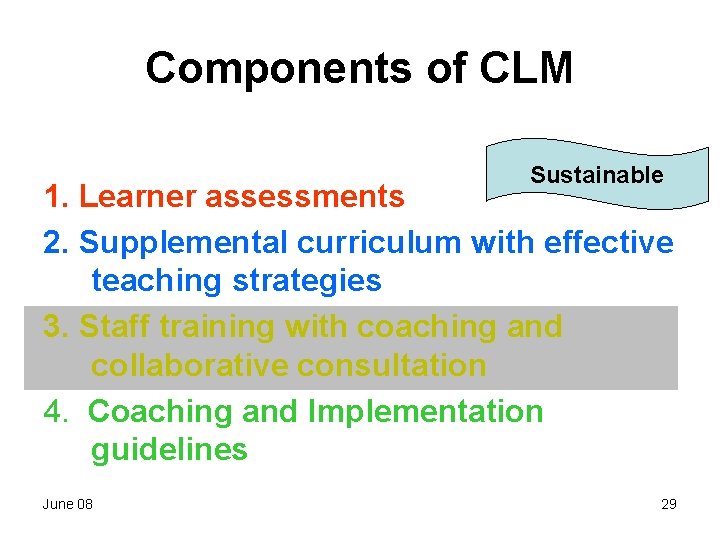
Components of CLM Sustainable 1. Learner assessments 2. Supplemental curriculum with effective teaching strategies 3. Staff training with coaching and collaborative consultation 4. Coaching and Implementation guidelines June 08 7
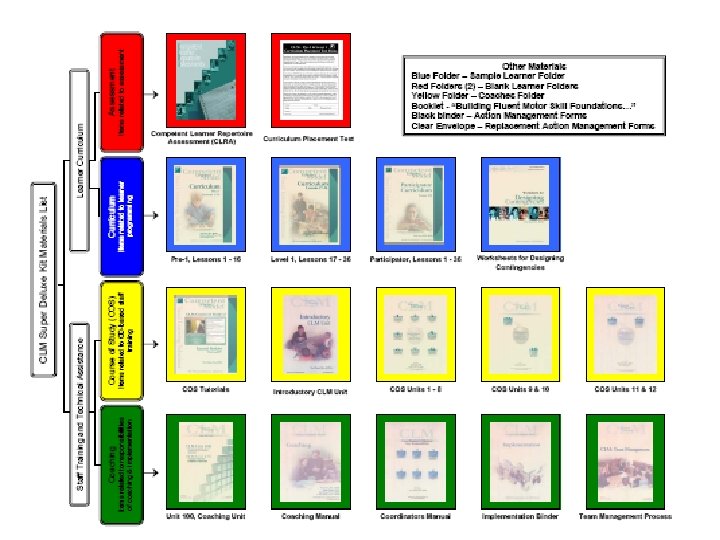
June 08 8
Components of CLM Sustainable 1. Learner assessments 2. Supplemental curriculum with effective teaching strategies 3. Staff training with coaching and collaborative consultation 4. Coaching and Implementation guidelines June 08 9
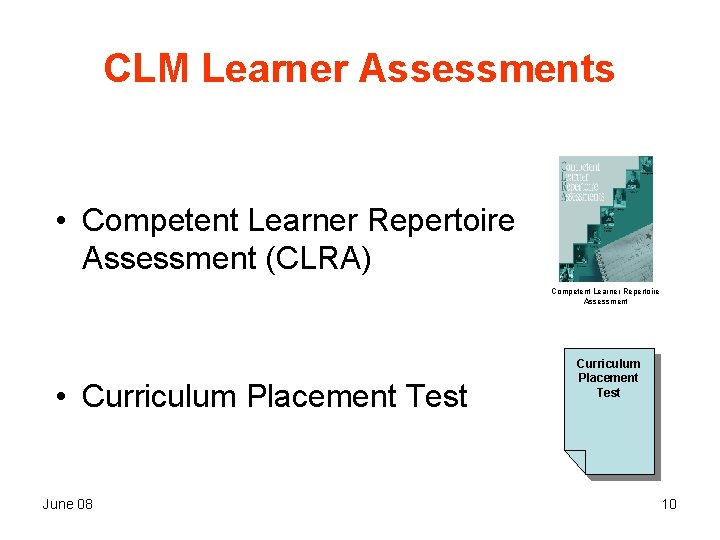
CLM Learner Assessments • Competent Learner Repertoire Assessment (CLRA) Competent Learner Repertoire Assessment • Curriculum Placement Test June 08 Curriculum Placement Test 10
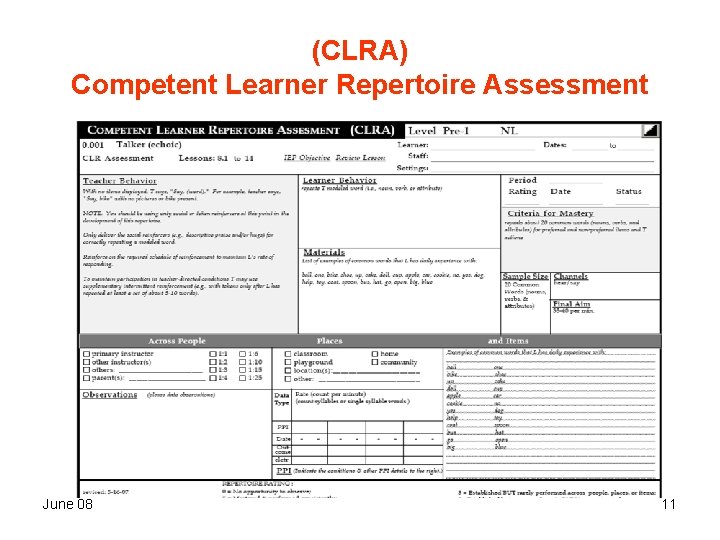
(CLRA) Competent Learner Repertoire Assessment June 08 11
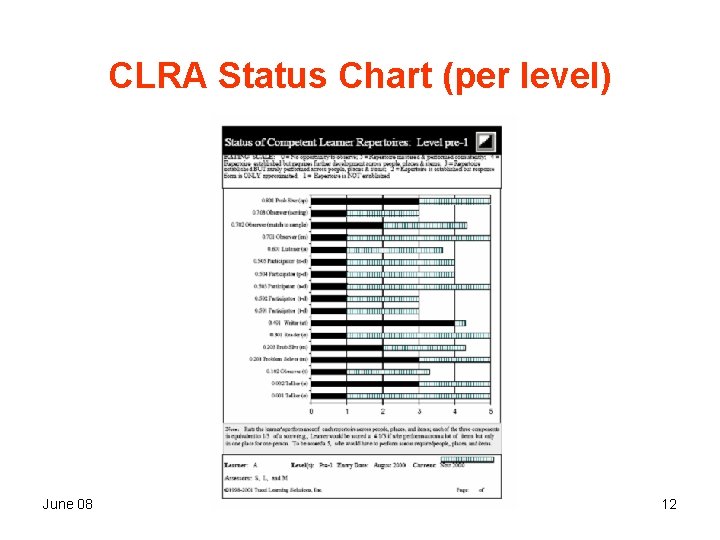
CLRA Status Chart (per level) June 08 12
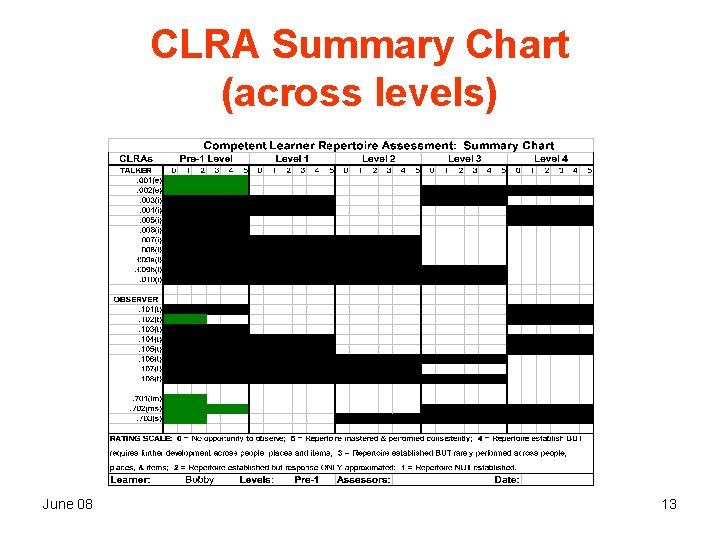
CLRA Summary Chart (across levels) June 08 13
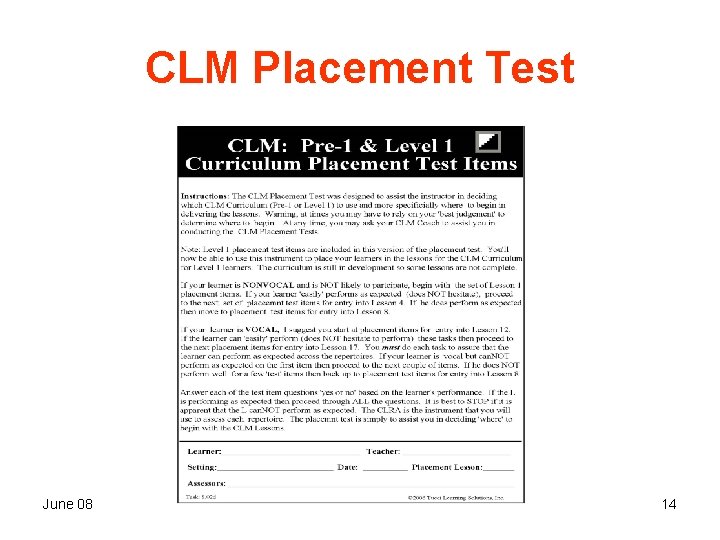
CLM Placement Test June 08 14
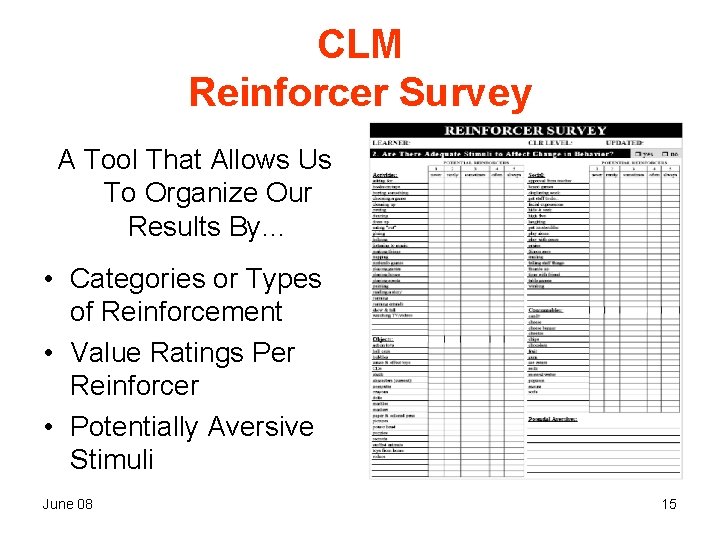
CLM Reinforcer Survey A Tool That Allows Us To Organize Our Results By… • Categories or Types of Reinforcement • Value Ratings Per Reinforcer • Potentially Aversive Stimuli June 08 15
Assessments are used to answer: 1. What Repertoires Are To Be Developed (Strengthened, or Weakened)? 2. Are There Adequate Stimuli To Affect Change? 3. What Supplementary Contingencies Will be Delivered Given the Type of Programming Required? 4. How Can Parts of the Instructional Conditions be Arranged and Re-arranged Given the Required Contingencies or Programming? June 08 16
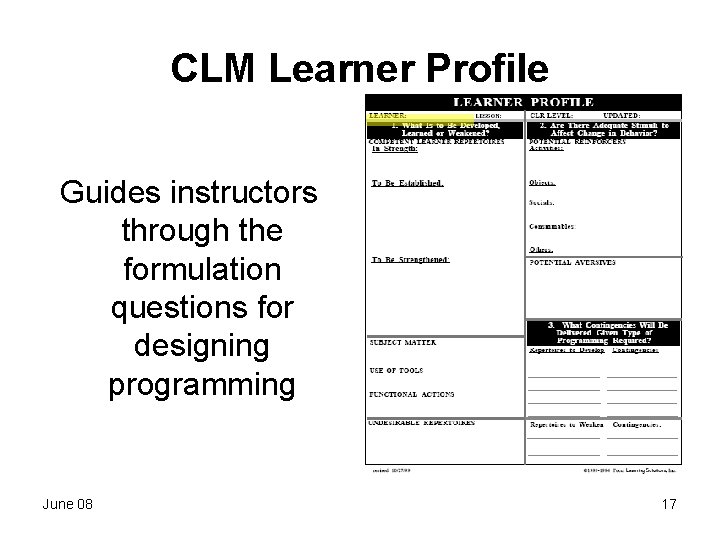
CLM Learner Profile Guides instructors through the formulation questions for designing programming June 08 17
Components of CLM Sustainable 1. Learner assessments 2. Supplemental curriculum with effective teaching strategies 3. Staff training with coaching and collaborative consultation 4. Coaching and Implementation guidelines June 08 18
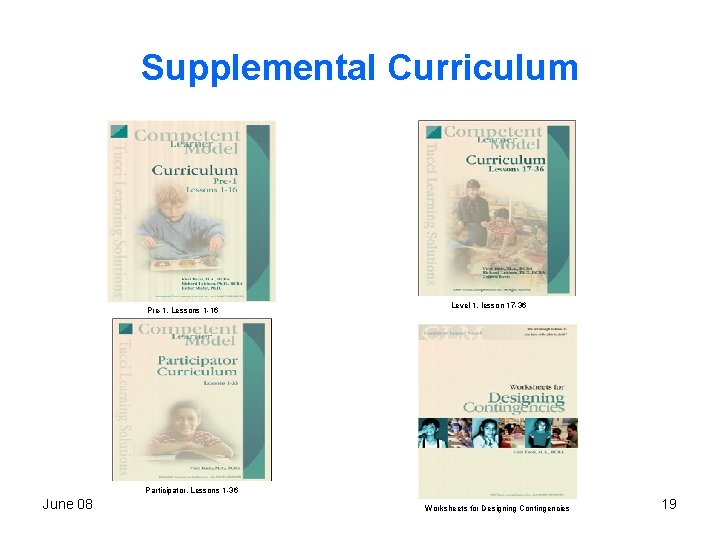
Supplemental Curriculum Pre-1, Lessons 1 -16 Level 1, lesson 17 -36 Participator, Lessons 1 -36 June 08 Worksheets for Designing Contingencies 19
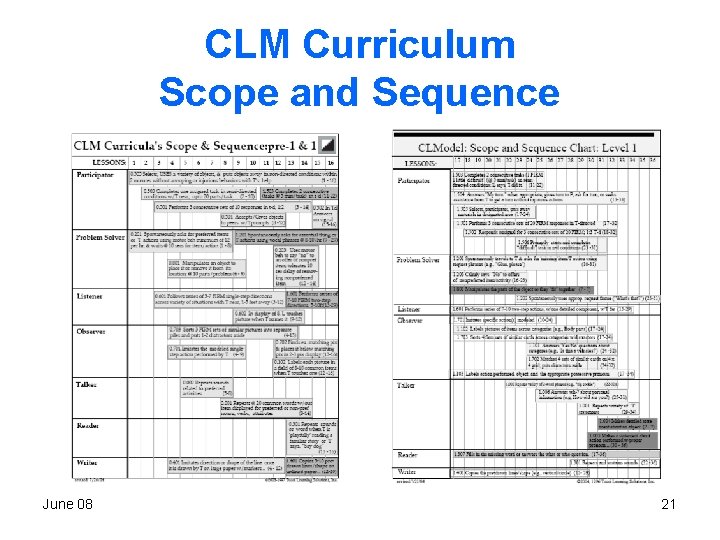
CLM Curriculum Components • Scope and Sequence • Lessons • Formats June 08 20
CLM Curriculum Scope and Sequence June 08 21
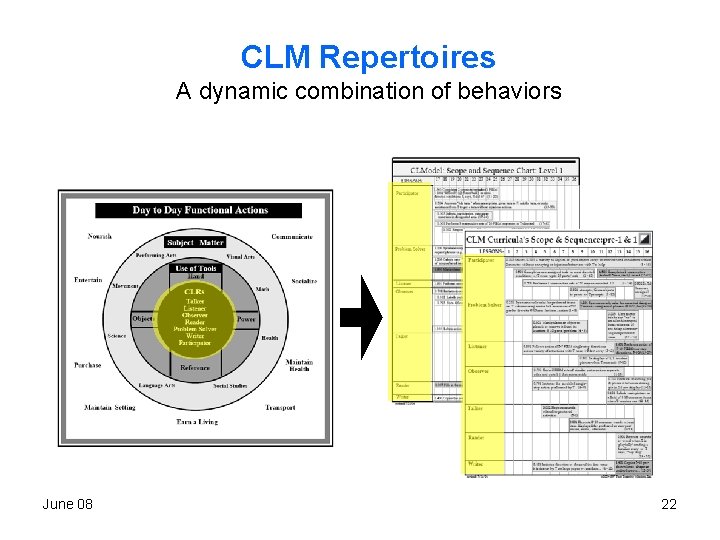
CLM Repertoires A dynamic combination of behaviors June 08 22
The Seven CLM Repertoires • • Talker Listener Observer Reader Problem Solver Writer Participator June 08 23
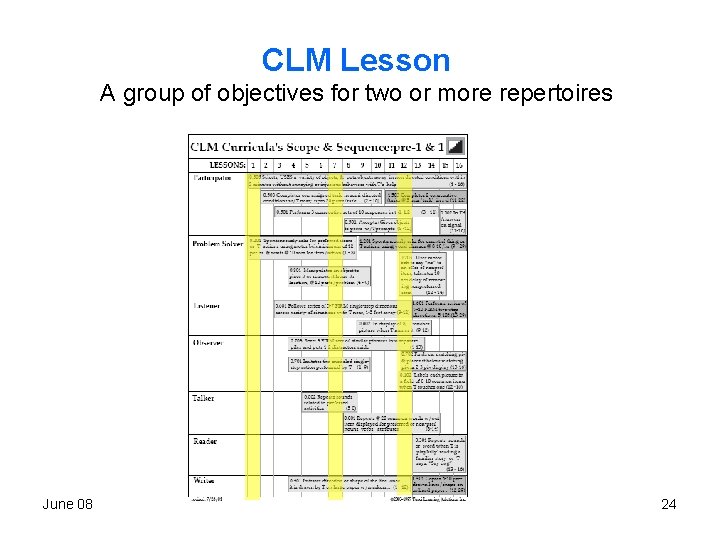
CLM Lesson A group of objectives for two or more repertoires June 08 24
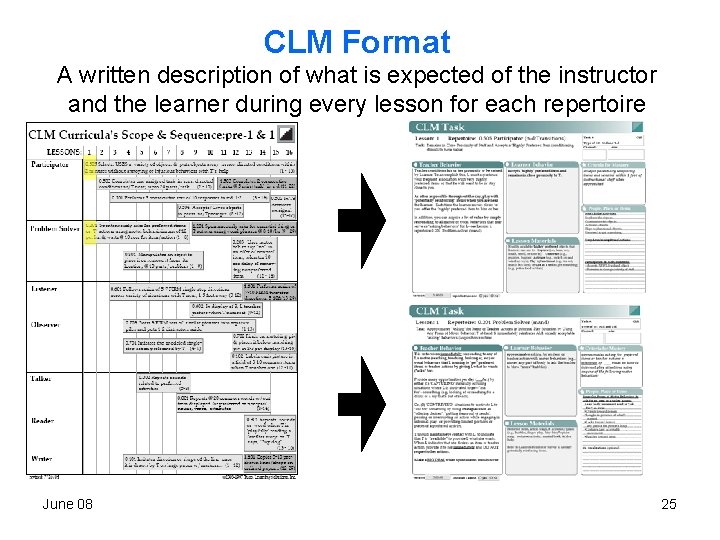
CLM Format A written description of what is expected of the instructor and the learner during every lesson for each repertoire June 08 25
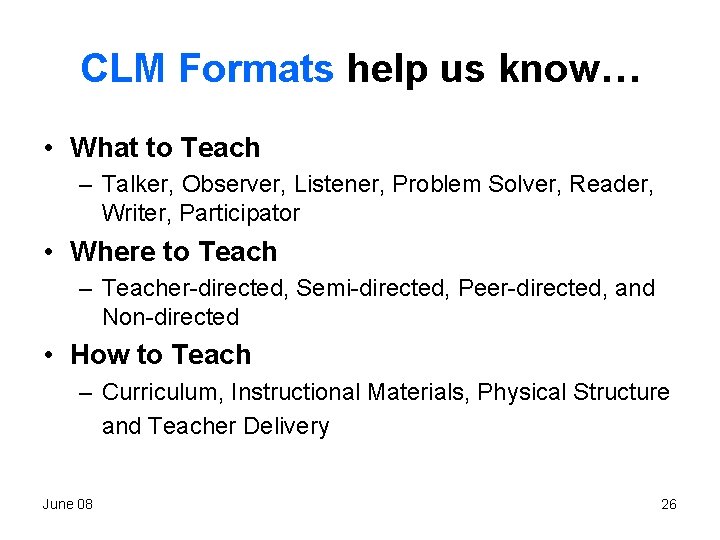
CLM Formats help us know… • What to Teach – Talker, Observer, Listener, Problem Solver, Reader, Writer, Participator • Where to Teach – Teacher-directed, Semi-directed, Peer-directed, and Non-directed • How to Teach – Curriculum, Instructional Materials, Physical Structure and Teacher Delivery June 08 26
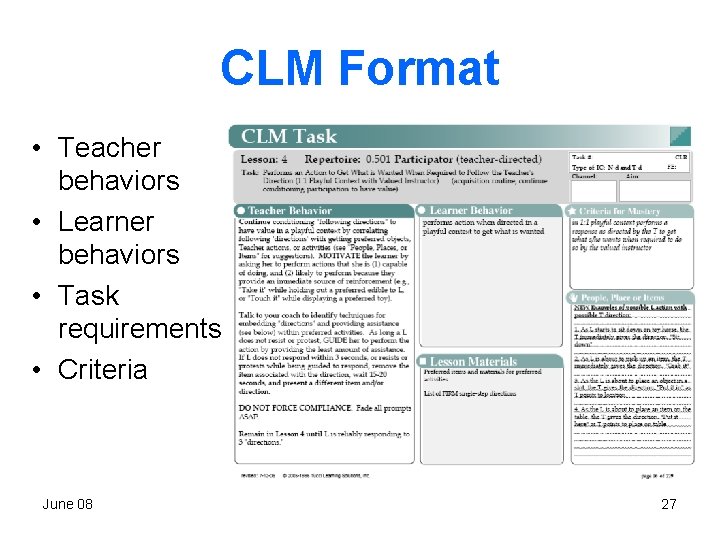
CLM Format • Teacher behaviors • Learner behaviors • Task requirements • Criteria June 08 27
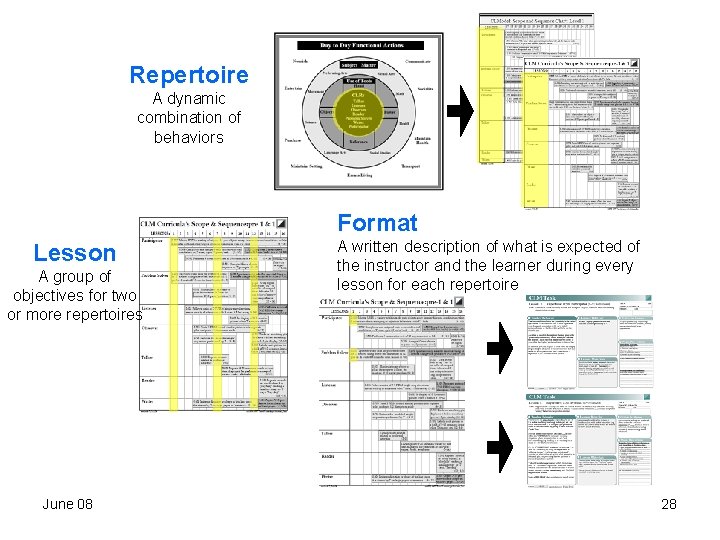
Repertoire A dynamic combination of behaviors Format Lesson A group of objectives for two or more repertoires June 08 A written description of what is expected of the instructor and the learner during every lesson for each repertoire 28
Components of CLM Sustainable 1. Learner assessments 2. Supplemental curriculum with effective teaching strategies 3. Staff training with coaching and collaborative consultation 4. Coaching and Implementation guidelines June 08 29
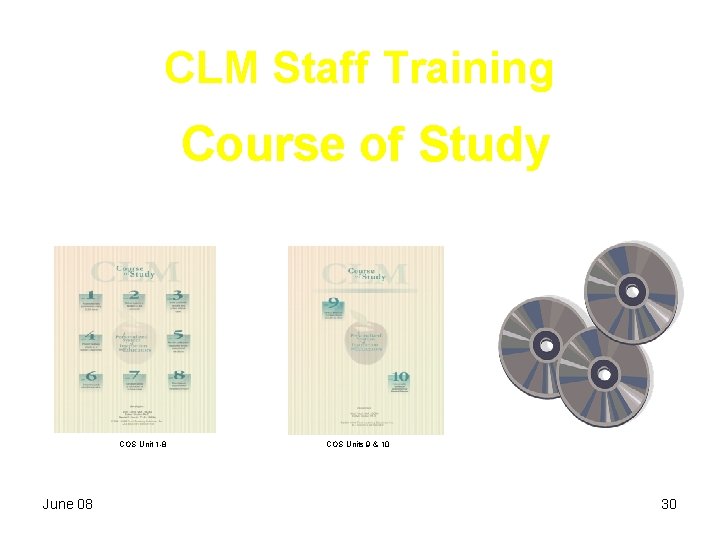
CLM Staff Training Course of Study COS Unit 1 -8 June 08 COS Units 9 & 10 30
Staff Performance Checkouts • Checks for mastery of concepts targeted in units • Provides opportunities for knowledge to be applied through assignments and roleplaying • Allows time for discussion and problemsolving June 08 31
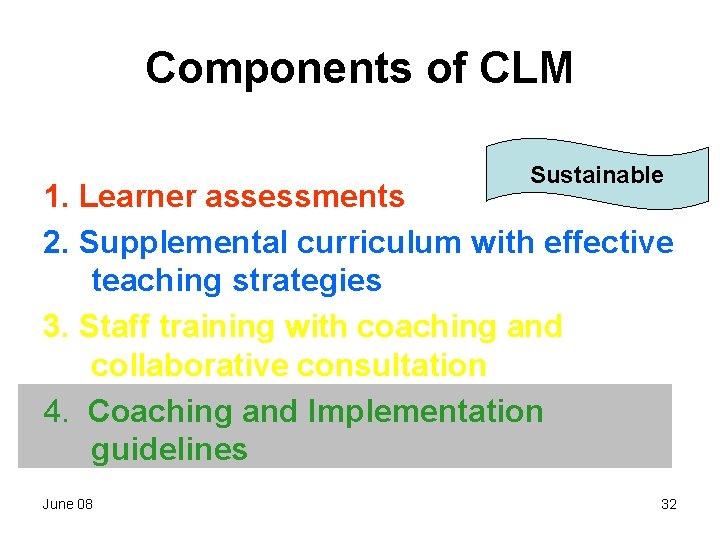
Components of CLM Sustainable 1. Learner assessments 2. Supplemental curriculum with effective teaching strategies 3. Staff training with coaching and collaborative consultation 4. Coaching and Implementation guidelines June 08 32
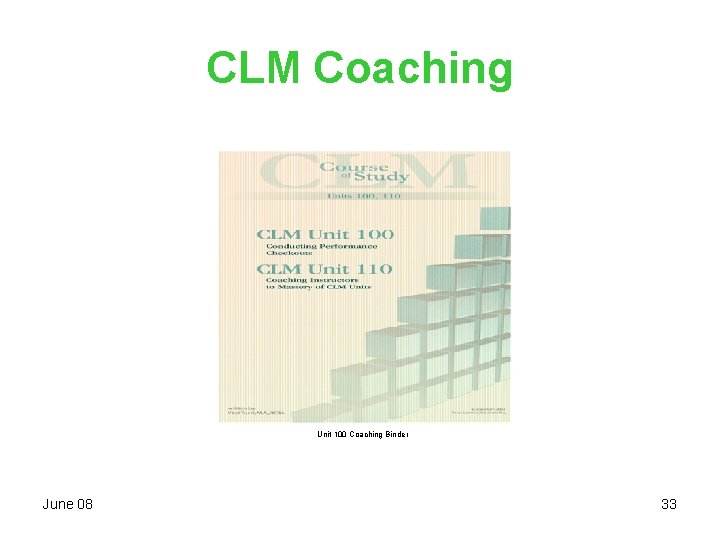
CLM Coaching Unit 100 Coaching Binder June 08 33
On-site Coaching Provides: • Successful implementation of the model in the classroom • Assistance in assessing and developing programs for learners • Demonstration of instructional techniques • A partner for problem-solving June 08 34
Collaborative Consultation • Team expertise supports the student and classroom • Collaboration among parents and educators increases the likelihood of student success June 08 35
Implementation Checklist • Provides a step by step guide to the implementation of all components of the CLM June 08 36
Four Phases of CLM Implementation June 08 37
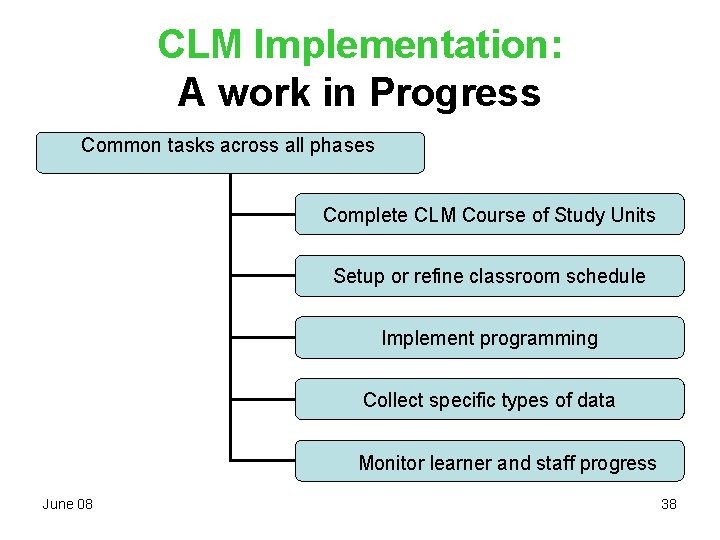
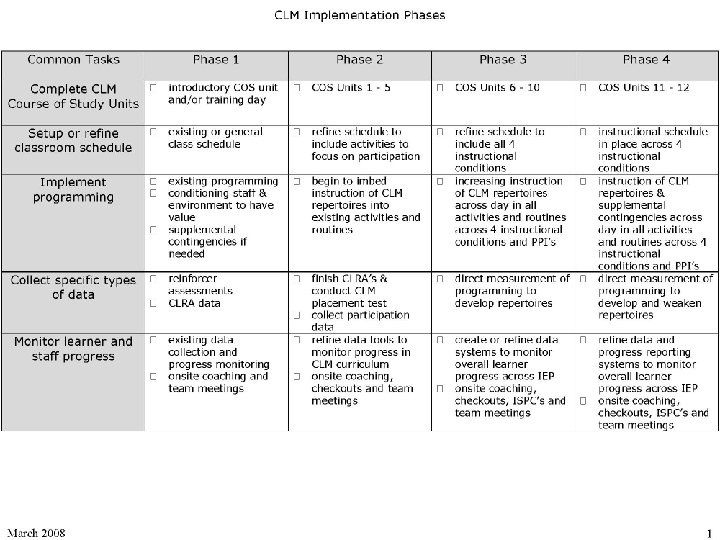
CLM Implementation: A work in Progress Common tasks across all phases Complete CLM Course of Study Units Setup or refine classroom schedule Implement programming Collect specific types of data Monitor learner and staff progress June 08 38
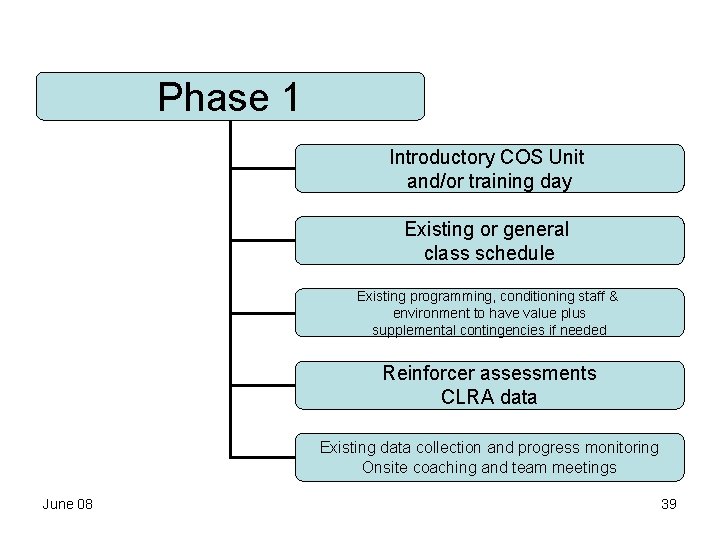
Phase 1 Introductory COS Unit and/or training day Existing or general class schedule Existing programming, conditioning staff & environment to have value plus supplemental contingencies if needed Reinforcer assessments CLRA data Existing data collection and progress monitoring Onsite coaching and team meetings June 08 39
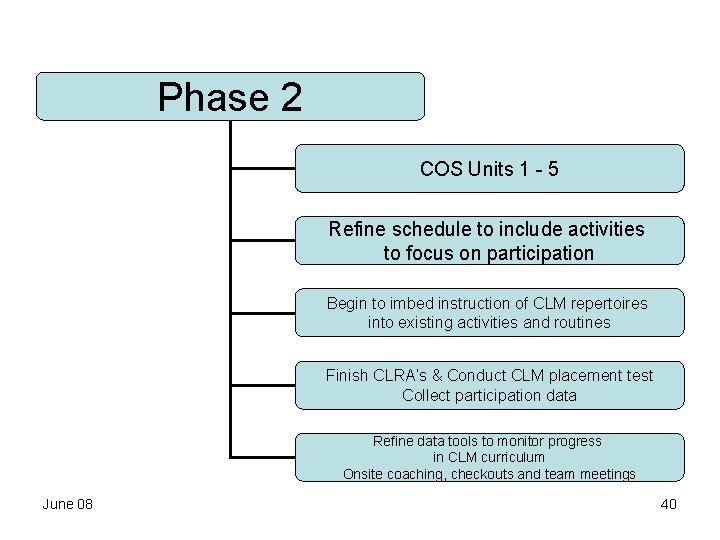
Phase 2 COS Units 1 - 5 Refine schedule to include activities to focus on participation Begin to imbed instruction of CLM repertoires into existing activities and routines Finish CLRA’s & Conduct CLM placement test Collect participation data Refine data tools to monitor progress in CLM curriculum Onsite coaching, checkouts and team meetings June 08 40
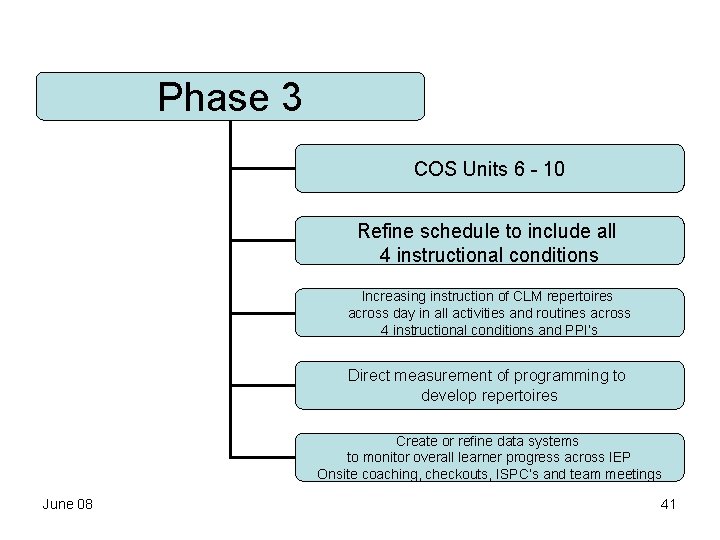
Phase 3 COS Units 6 - 10 Refine schedule to include all 4 instructional conditions Increasing instruction of CLM repertoires across day in all activities and routines across 4 instructional conditions and PPI’s Direct measurement of programming to develop repertoires Create or refine data systems to monitor overall learner progress across IEP Onsite coaching, checkouts, ISPC’s and team meetings June 08 41
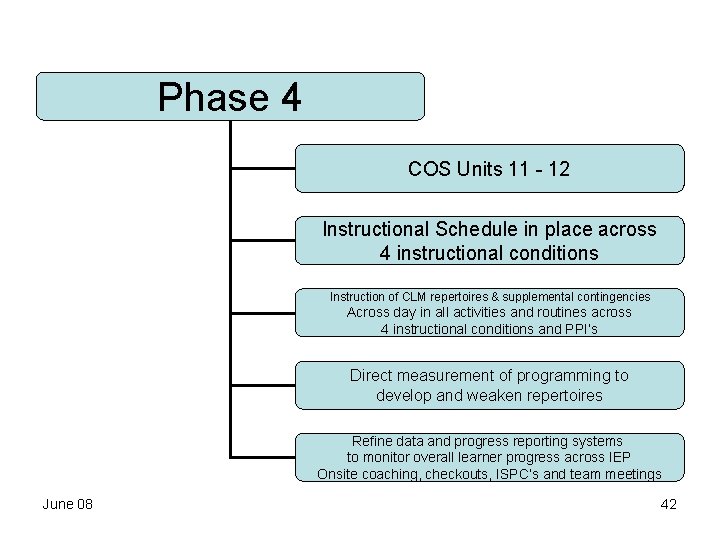
Phase 4 COS Units 11 - 12 Instructional Schedule in place across 4 instructional conditions Instruction of CLM repertoires & supplemental contingencies Across day in all activities and routines across 4 instructional conditions and PPI’s Direct measurement of programming to develop and weaken repertoires Refine data and progress reporting systems to monitor overall learner progress across IEP Onsite coaching, checkouts, ISPC’s and team meetings June 08 42
June 08 43
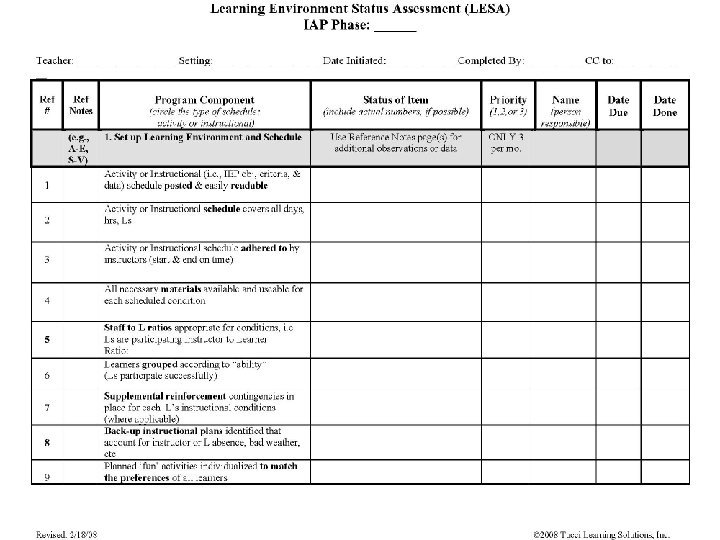
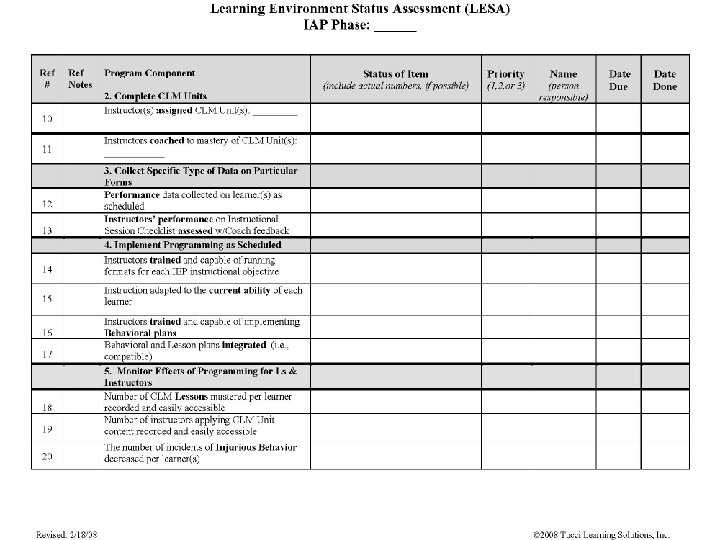
LESA Learning Environment Status Assessment An ongoing classroom progress monitoring tool June 08 44
June 08 45
June 08 46
Components of CLM Sustainable 1. Learner assessments 2. Supplemental curriculum with effective teaching strategies 3. Staff training with coaching and collaborative consultation 4. Coaching and Implementation guidelines June 08 47
Participation in the CLM project June 08 48
Entire Classroom Teams • • • Classroom teachers Paraeducators Speech and Language Therapists Occupational Therapists Physical Therapists Parents Administrators Psychologists Behavior specialists June 08 49
Family Involvement A foundation of the CLM is the belief that teams benefit from having common language, knowledge, skills and competencies to create success for learners across people, places and items. Families must be provided with opportunities to learn about the CLM and be provided with resources to assist them in utilizing the skills taught at school to support their family priorities and routines at home and in the community. June 08 50
Behavioral Health Agency Staff Agency staff assigned to a student within a classroom, with agency permission May: • Go through the Course of Study units • Checkout on the units with classroom staff • Apply strategies when working with students May not: • Remove CLM materials from the classroom • Copy CLM materials • Become certified CLM coaches June 08 51
CLM internal coaches roles and responsibilities • • Work in the classroom one day per week Follow CLM implementation checklist Implement the CLM with fidelity Support and coach staff toward competency in delivery of the CLM • Systematically decrease support to classroom staff as their knowledge and performance skills progress June 08 52
What can I expect from my Pa. TTAN coach? Your Pa. TTAN coach will: • Work in the classroom with you up to 2 days per month • Assist in adhering to the implementation steps found in the Implementation Checklist • Provide coaching and support to you by modeling all aspects of the CLM implementation June 08 53