
Competent Kids Caring Communities A SocialEmotional Learning Program
- Slides: 27
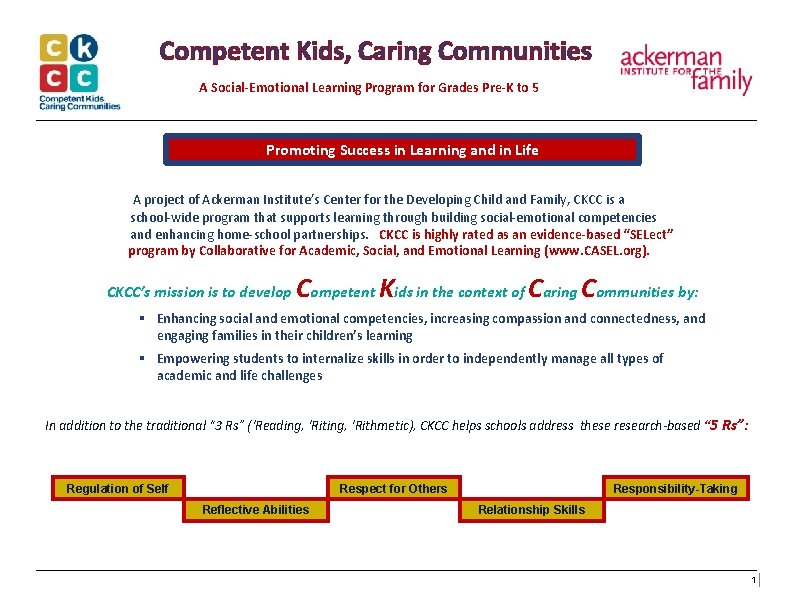
Competent Kids, Caring Communities A Social-Emotional Learning Program for Grades Pre-K to 5 Promoting Success in Learning and in Life A project of Ackerman Institute’s Center for the Developing Child and Family, CKCC is a school-wide program that supports learning through building social-emotional competencies and enhancing home-school partnerships. CKCC is highly rated as an evidence-based “SELect” program by Collaborative for Academic, Social, and Emotional Learning (www. CASEL. org). CKCC’s mission is to develop Competent Kids in the context of Caring Communities by: § Enhancing social and emotional competencies, increasing compassion and connectedness, and engaging families in their children’s learning § Empowering students to internalize skills in order to independently manage all types of academic and life challenges In addition to the traditional “ 3 Rs” (‘Reading, ‘Rithmetic), CKCC helps schools address these research-based “ 5 Rs”: Regulation of Self Respect for Others Reflective Abilities Responsibility-Taking Relationship Skills 1
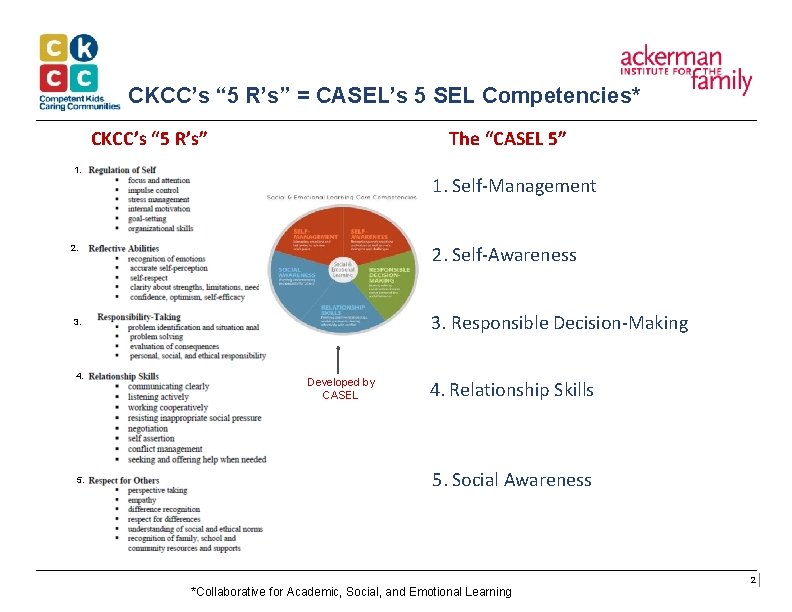
CKCC’s “ 5 R’s” = CASEL’s 5 SEL Competencies* CKCC’s “ 5 R’s” The “CASEL 5” 1. Self-Management 2. Self-Awareness 2. 3. Responsible Decision-Making 3. 4. 5. Developed by CASEL 4. Relationship Skills 5. Social Awareness 2 *Collaborative for Academic, Social, and Emotional Learning
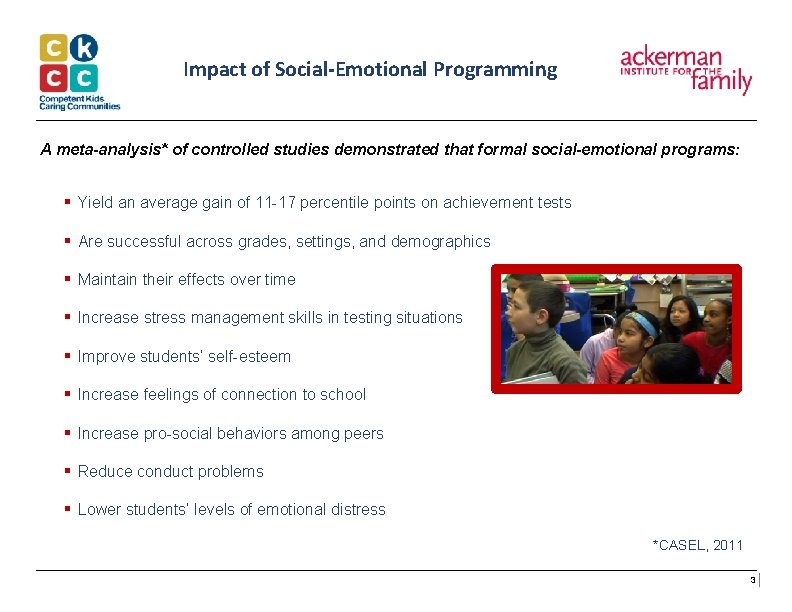
Impact of Social-Emotional Programming A meta-analysis* of controlled studies demonstrated that formal social-emotional programs: § Yield an average gain of 11 -17 percentile points on achievement tests § Are successful across grades, settings, and demographics § Maintain their effects over time § Increase stress management skills in testing situations § Improve students’ self-esteem § Increase feelings of connection to school § Increase pro-social behaviors among peers § Reduce conduct problems § Lower students’ levels of emotional distress *CASEL, 2011 3
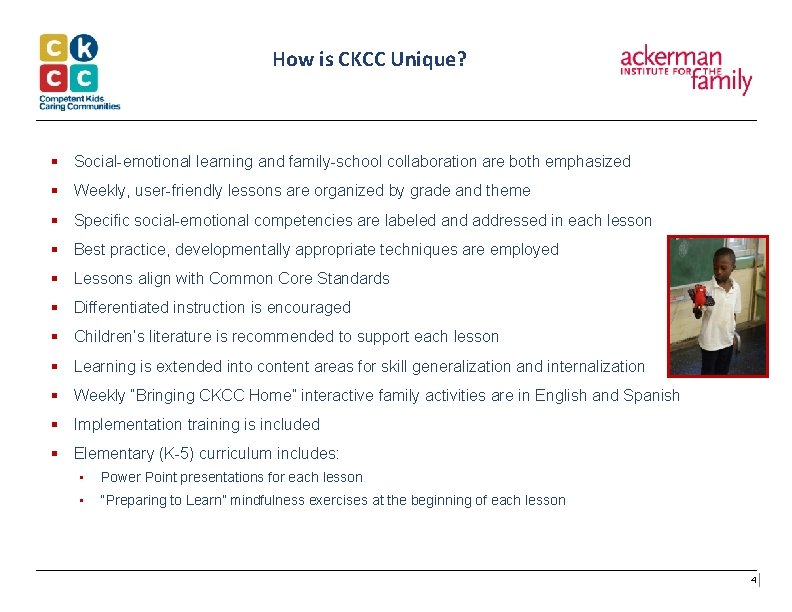
How is CKCC Unique? § Social-emotional learning and family-school collaboration are both emphasized § Weekly, user-friendly lessons are organized by grade and theme § Specific social-emotional competencies are labeled and addressed in each lesson § Best practice, developmentally appropriate techniques are employed § Lessons align with Common Core Standards § Differentiated instruction is encouraged § Children’s literature is recommended to support each lesson § Learning is extended into content areas for skill generalization and internalization § Weekly “Bringing CKCC Home” interactive family activities are in English and Spanish § Implementation training is included § Elementary (K-5) curriculum includes: • Power Point presentations for each lesson • “Preparing to Learn” mindfulness exercises at the beginning of each lesson 4
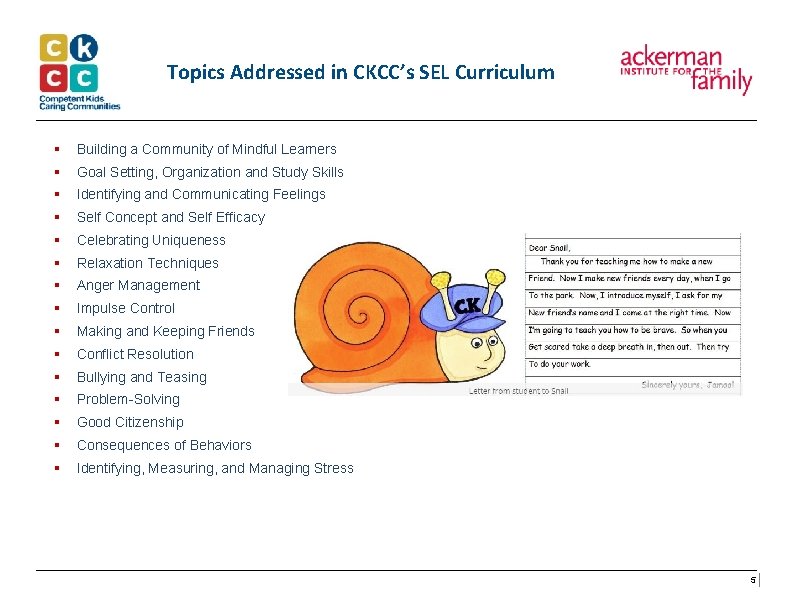
Topics Addressed in CKCC’s SEL Curriculum § Building a Community of Mindful Learners § Goal Setting, Organization and Study Skills § Identifying and Communicating Feelings § Self Concept and Self Efficacy § Celebrating Uniqueness § Relaxation Techniques § Anger Management § Impulse Control § Making and Keeping Friends § Conflict Resolution § Bullying and Teasing § Problem-Solving § Good Citizenship § Consequences of Behaviors § Identifying, Measuring, and Managing Stress 5
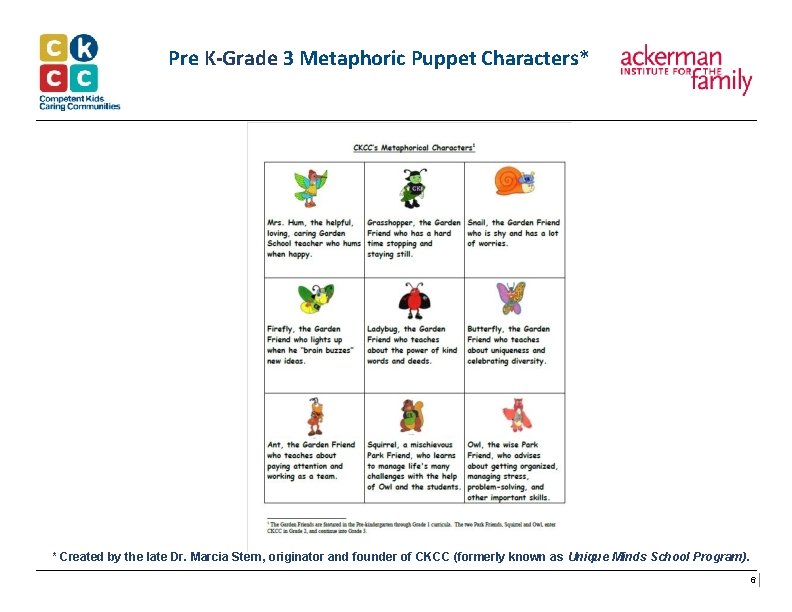
Pre K-Grade 3 Metaphoric Puppet Characters* * Created by the late Dr. Marcia Stern, originator and founder of CKCC (formerly known as Unique Minds School Program). 6
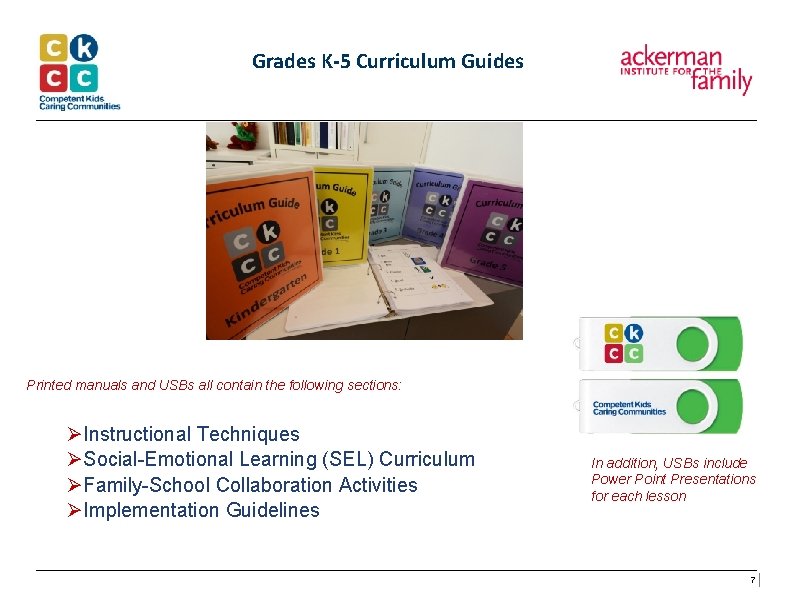
Grades K-5 Curriculum Guides Printed manuals and USBs all contain the following sections: ØInstructional Techniques ØSocial-Emotional Learning (SEL) Curriculum ØFamily-School Collaboration Activities ØImplementation Guidelines In addition, USBs include Power Point Presentations for each lesson 7
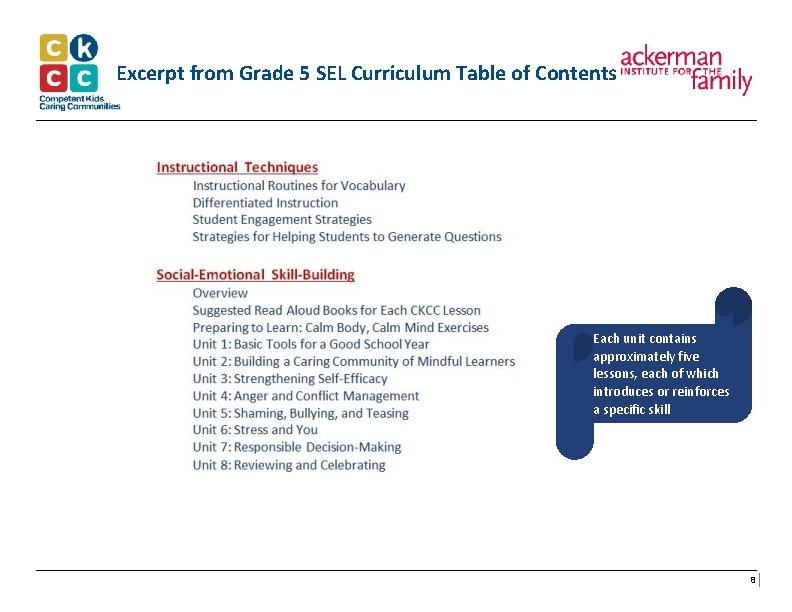
Excerpt from Grade 5 SEL Curriculum Table of Contents Each unit contains approximately five lessons, each of which introduces or reinforces a specific skill 8
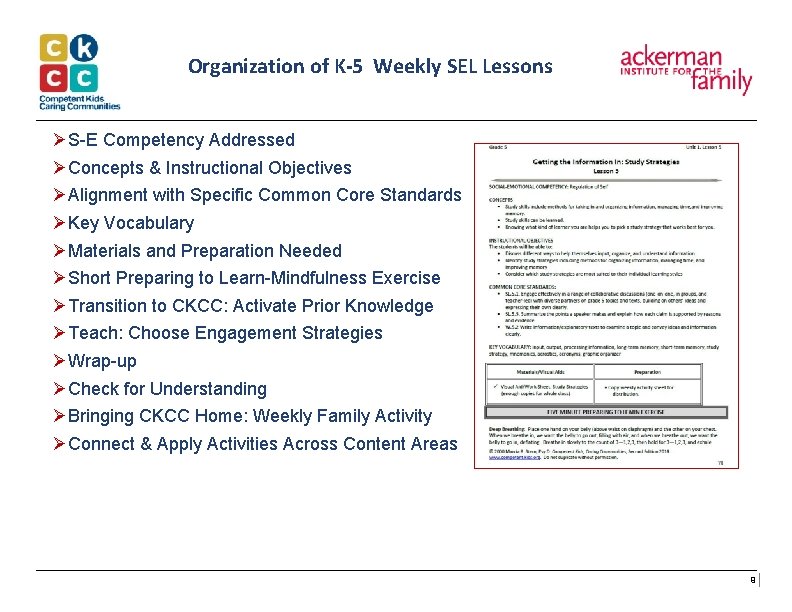
Organization of K-5 Weekly SEL Lessons ØS-E Competency Addressed ØConcepts & Instructional Objectives ØAlignment with Specific Common Core Standards ØKey Vocabulary ØMaterials and Preparation Needed ØShort Preparing to Learn-Mindfulness Exercise ØTransition to CKCC: Activate Prior Knowledge ØTeach: Choose Engagement Strategies ØWrap-up ØCheck for Understanding ØBringing CKCC Home: Weekly Family Activity ØConnect & Apply Activities Across Content Areas 9
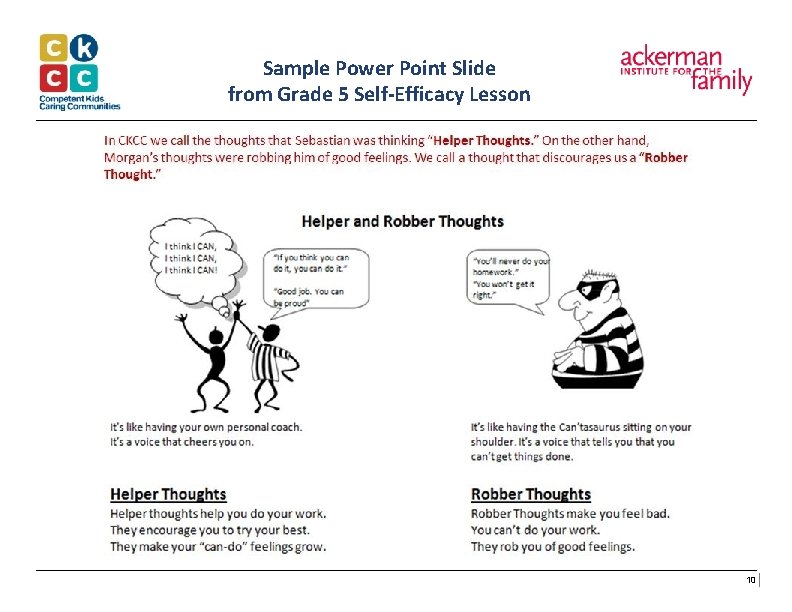
Sample Power Point Slide from Grade 5 Self-Efficacy Lesson 10
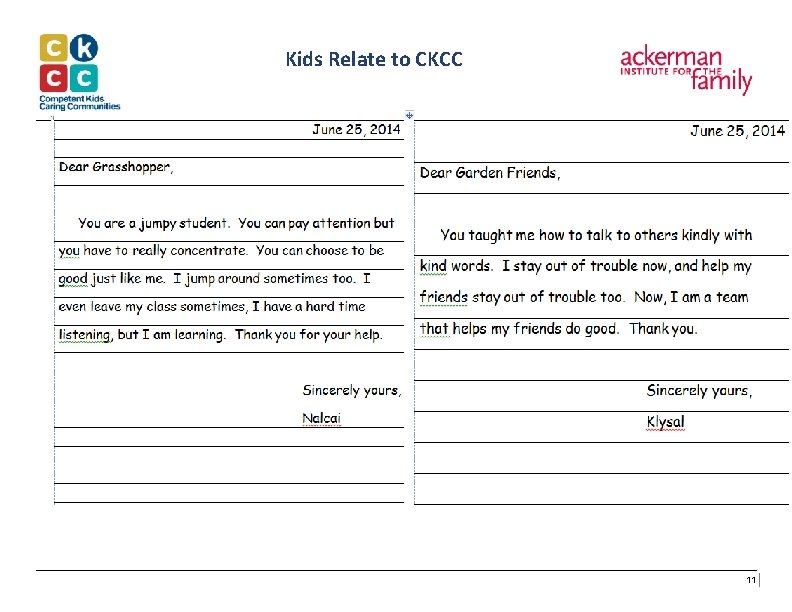
Kids Relate to CKCC 11
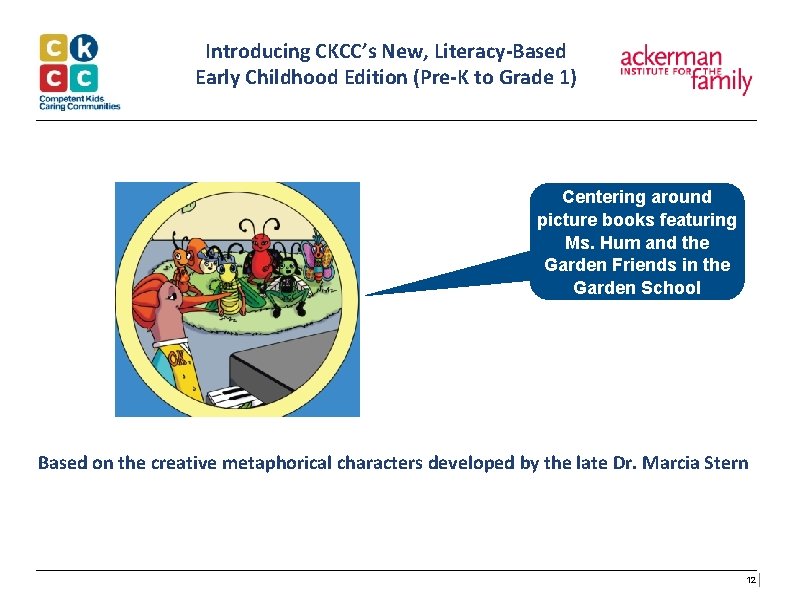
Introducing CKCC’s New, Literacy-Based Early Childhood Edition (Pre-K to Grade 1) Centering around picture books featuring Ms. Hum and the Garden Friends in the Garden School Based on the creative metaphorical characters developed by the late Dr. Marcia Stern 12
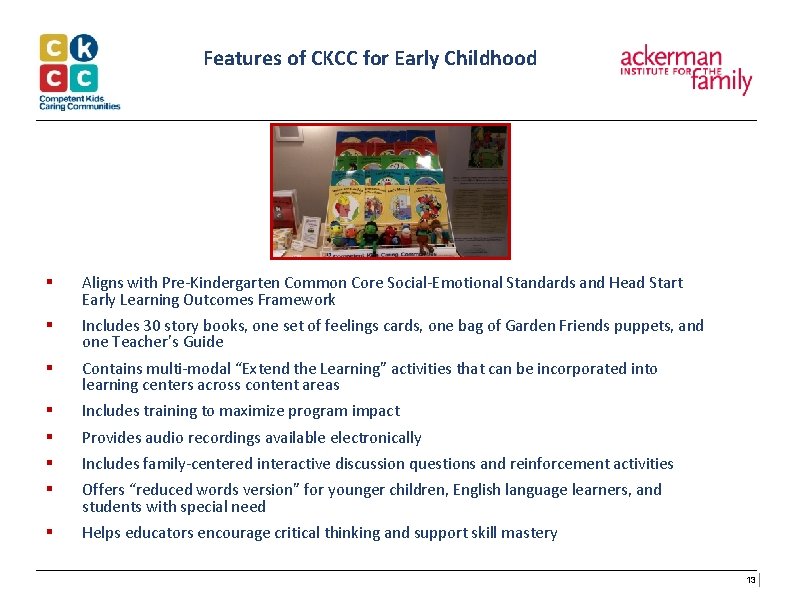
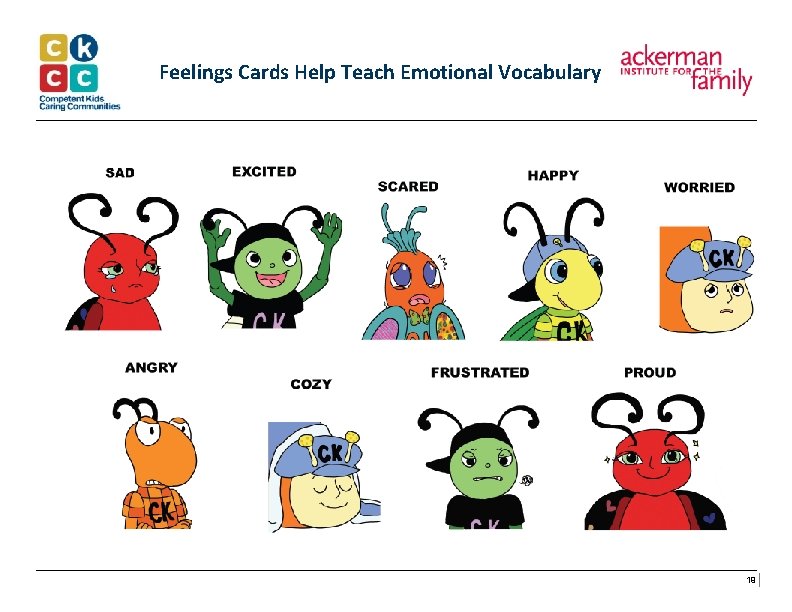
Features of CKCC for Early Childhood § Aligns with Pre-Kindergarten Common Core Social-Emotional Standards and Head Start Early Learning Outcomes Framework § Includes 30 story books, one set of feelings cards, one bag of Garden Friends puppets, and one Teacher’s Guide § Contains multi-modal “Extend the Learning” activities that can be incorporated into learning centers across content areas § Includes training to maximize program impact § Provides audio recordings available electronically § Includes family-centered interactive discussion questions and reinforcement activities § Offers “reduced words version” for younger children, English language learners, and students with special need § Helps educators encourage critical thinking and support skill mastery 13
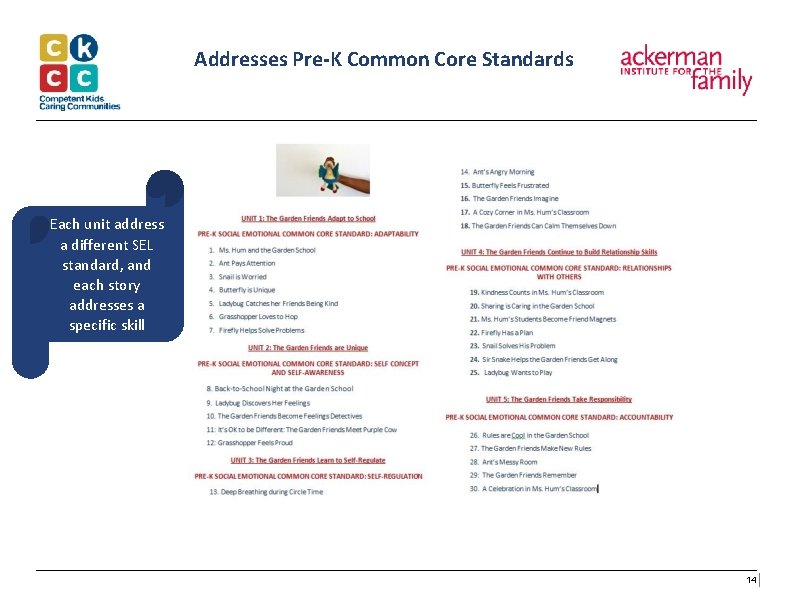
Addresses Pre-K Common Core Standards Each unit address a different SEL standard, and each story addresses a specific skill 14
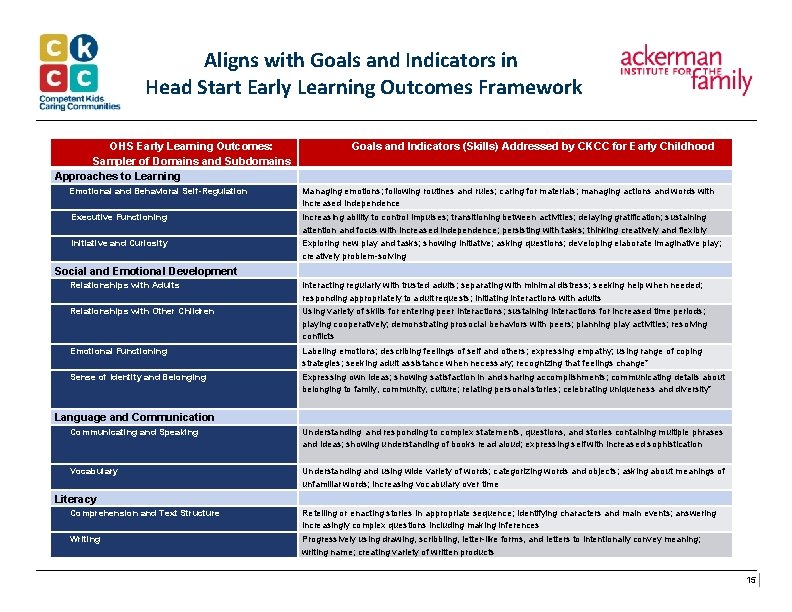
Aligns with Goals and Indicators in Head Start Early Learning Outcomes Framework OHS Early Learning Outcomes: Sampler of Domains and Subdomains Approaches to Learning Goals and Indicators (Skills) Addressed by CKCC for Early Childhood Emotional and Behavioral Self-Regulation Managing emotions; following routines and rules; caring for materials; managing actions and words with increased independence Executive Functioning Increasing ability to control impulses; transitioning between activities; delaying gratification; sustaining attention and focus with increased independence; persisting with tasks; thinking creatively and flexibly Initiative and Curiosity Exploring new play and tasks; showing initiative; asking questions; developing elaborate imaginative play; creatively problem-solving Social and Emotional Development Relationships with Adults Interacting regularly with trusted adults; separating with minimal distress; seeking help when needed; responding appropriately to adult requests; initiating interactions with adults Relationships with Other Children Using variety of skills for entering peer interactions; sustaining interactions for increased time periods; playing cooperatively; demonstrating prosocial behaviors with peers; planning play activities; resolving conflicts Emotional Functioning Labeling emotions; describing feelings of self and others; expressing empathy; using range of coping strategies; seeking adult assistance when necessary; recognizing that feelings change* Sense of Identity and Belonging Expressing own ideas; showing satisfaction in and sharing accomplishments; communicating details about belonging to family, community, culture; relating personal stories; celebrating uniqueness and diversity* Language and Communication Communicating and Speaking Understanding and responding to complex statements, questions, and stories containing multiple phrases and ideas; showing understanding of books read aloud; expressing self with increased sophistication Vocabulary Understanding and using wide variety of words; categorizing words and objects; asking about meanings of unfamiliar words; increasing vocabulary over time Literacy Comprehension and Text Structure Retelling or enacting stories in appropriate sequence; identifying characters and main events; answering increasingly complex questions including making inferences Writing Progressively using drawing, scribbling, letter-like forms, and letters to intentionally convey meaning; writing name; creating variety of written products 15
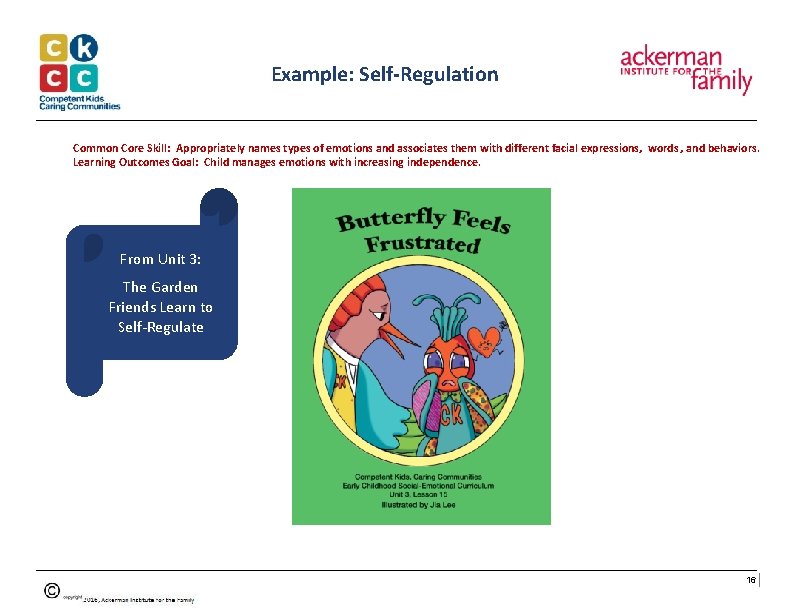
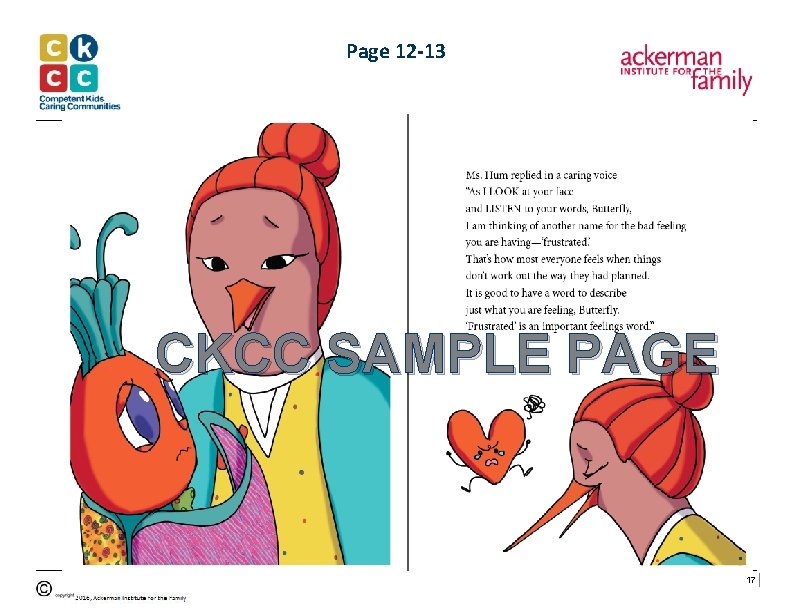
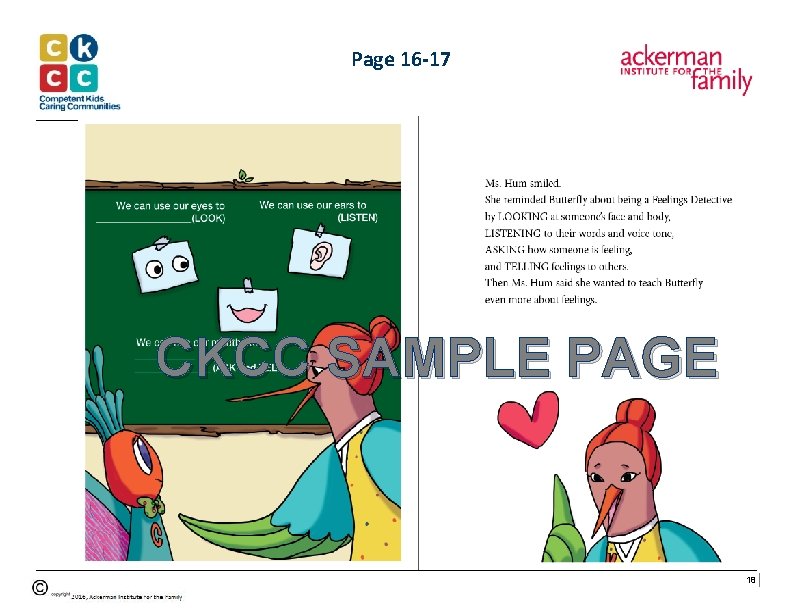
Example: Self-Regulation Common Core Skill: Appropriately names types of emotions and associates them with different facial expressions, words , and behaviors. Learning Outcomes Goal: Child manages emotions with increasing independence. From Unit 3: The Garden Friends Learn to Self-Regulate 16
Page 12 -13 CKCC SAMPLE PAGE 17
Page 16 -17 CKCC SAMPLE PAGE 18
Feelings Cards Help Teach Emotional Vocabulary 19
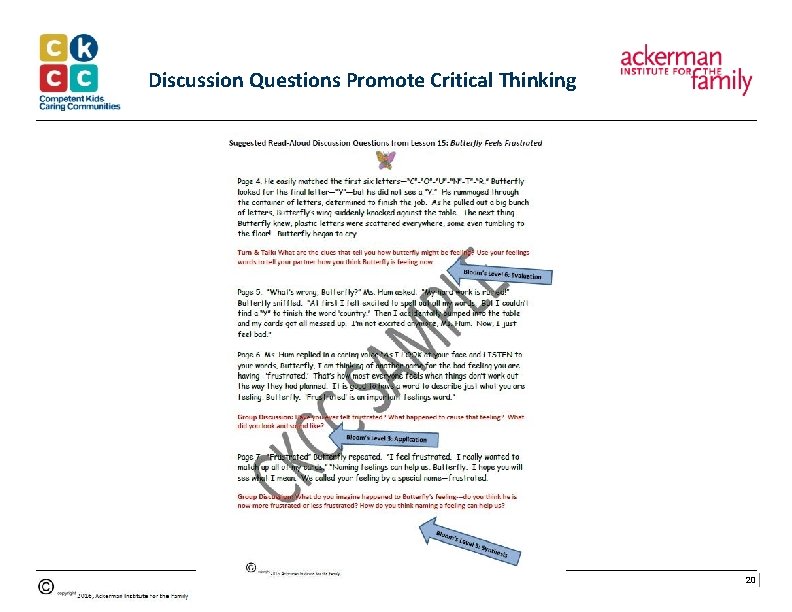
Discussion Questions Promote Critical Thinking 20
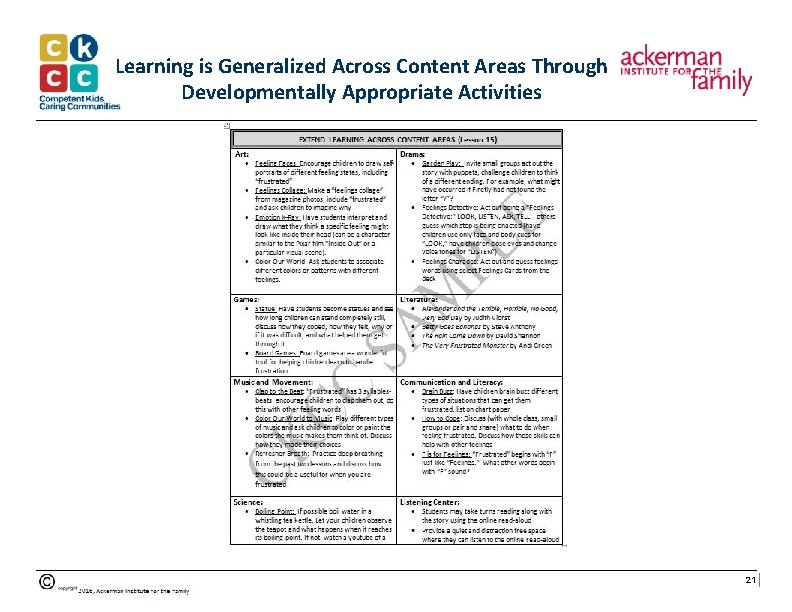
Learning is Generalized Across Content Areas Through Developmentally Appropriate Activities 21
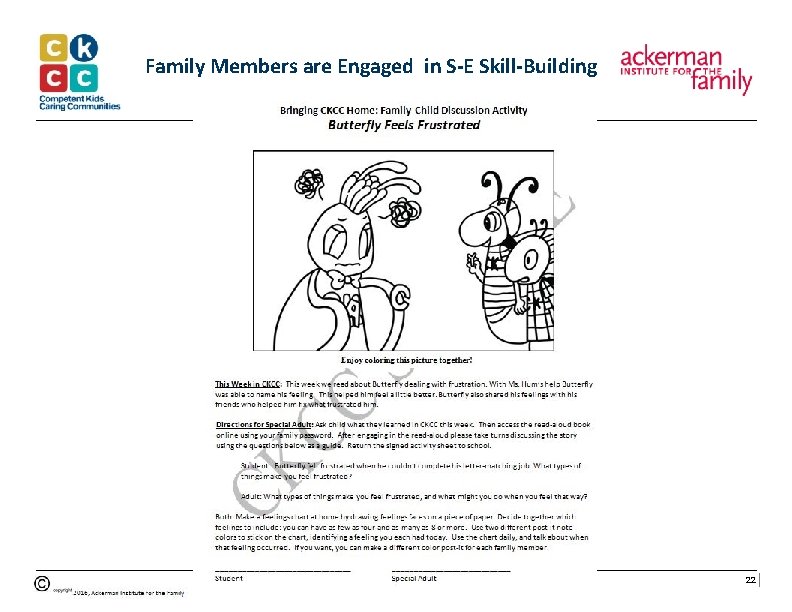
Family Members are Engaged in S-E Skill-Building 22
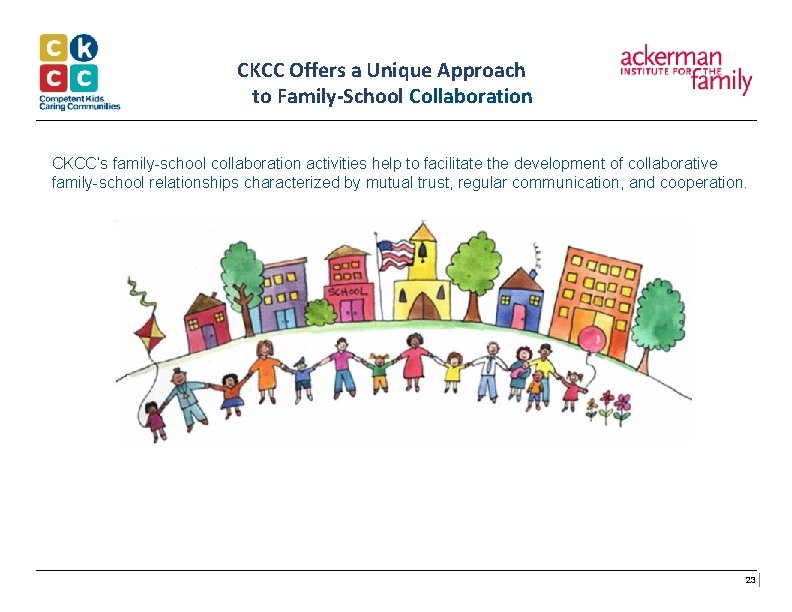
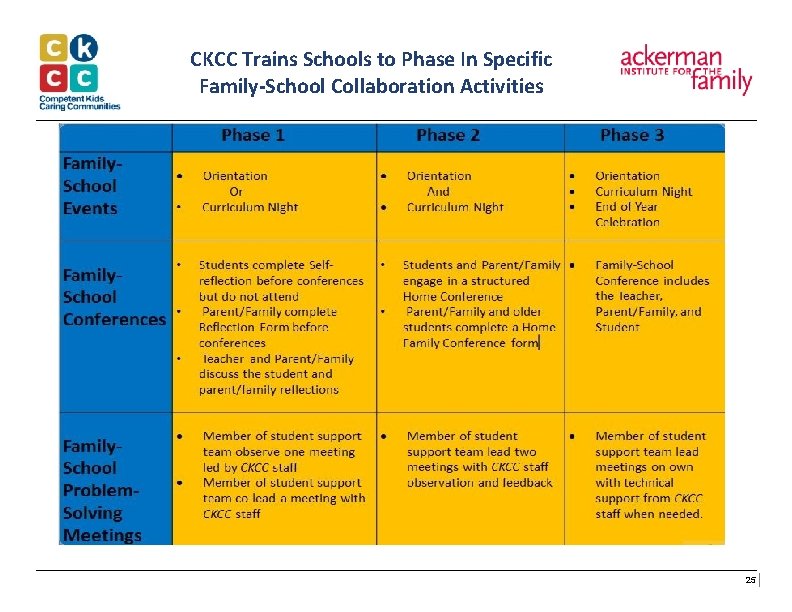
CKCC Offers a Unique Approach to Family-School Collaboration CKCC’s family-school collaboration activities help to facilitate the development of collaborative family-school relationships characterized by mutual trust, regular communication, and cooperation. 23
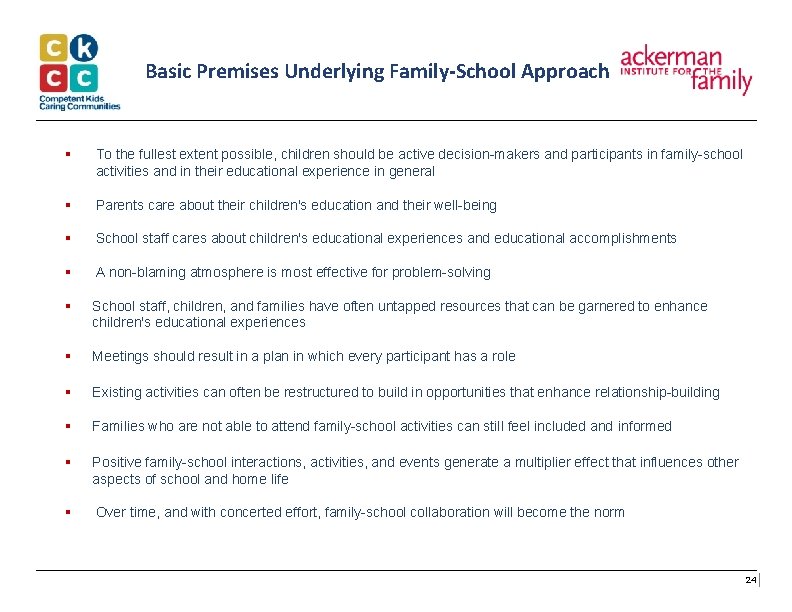
Basic Premises Underlying Family-School Approach § To the fullest extent possible, children should be active decision-makers and participants in family-school activities and in their educational experience in general § Parents care about their children's education and their well-being § School staff cares about children's educational experiences and educational accomplishments § A non-blaming atmosphere is most effective for problem-solving § School staff, children, and families have often untapped resources that can be garnered to enhance children's educational experiences § Meetings should result in a plan in which every participant has a role § Existing activities can often be restructured to build in opportunities that enhance relationship-building § Families who are not able to attend family-school activities can still feel included and informed § Positive family-school interactions, activities, and events generate a multiplier effect that influences other aspects of school and home life § Over time, and with concerted effort, family-school collaboration will become the norm 24
CKCC Trains Schools to Phase In Specific Family-School Collaboration Activities 25
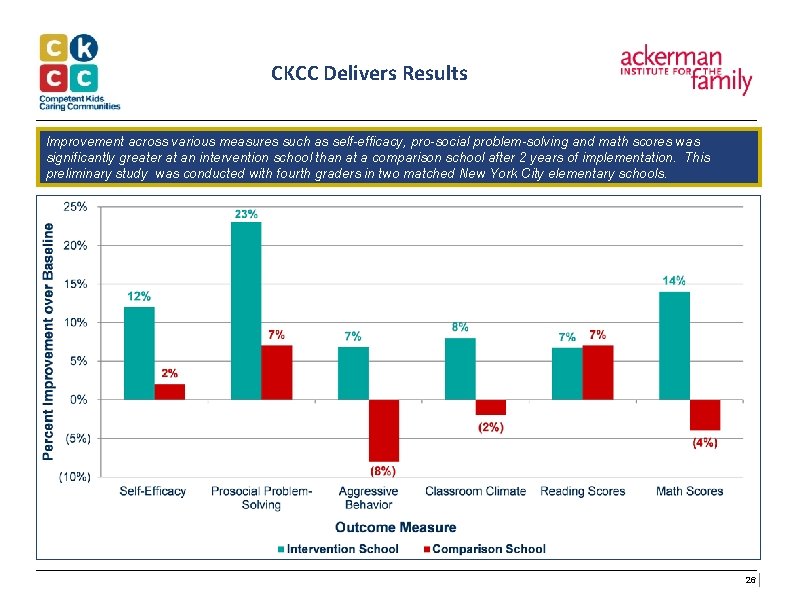
CKCC Delivers Results Improvement across various measures such as self-efficacy, pro-social problem-solving and math scores was significantly greater at an intervention school than at a comparison school after 2 years of implementation. This preliminary study was conducted with fourth graders in two matched New York City elementary schools. 26
What’s Next? We welcome the opportunity to collaborate-partner with you! For further information, please contact CKCC’s Program Coordinator, Dr. Arlean Wells: Email: awells@ackerman. org Looking forward to hearing from you! Visit us at: www. competentkids. org 27