
Competency Management Defining Mc Gills Competency Directory MANAGEMENT
- Slides: 25
Competency Management Defining Mc. Gill’s Competency Directory MANAGEMENT FORUM JUNE 7, 2005
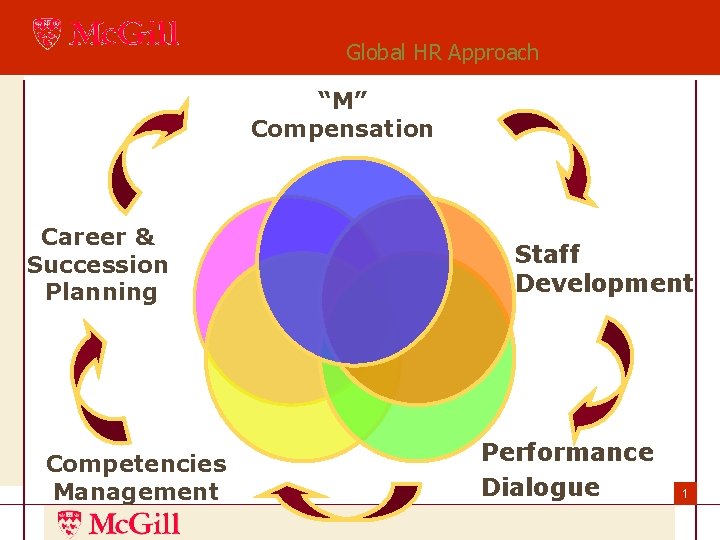
Global HR Approach “M” Compensation Career & Succession Planning Competencies Management Staff Development Performance Dialogue 1
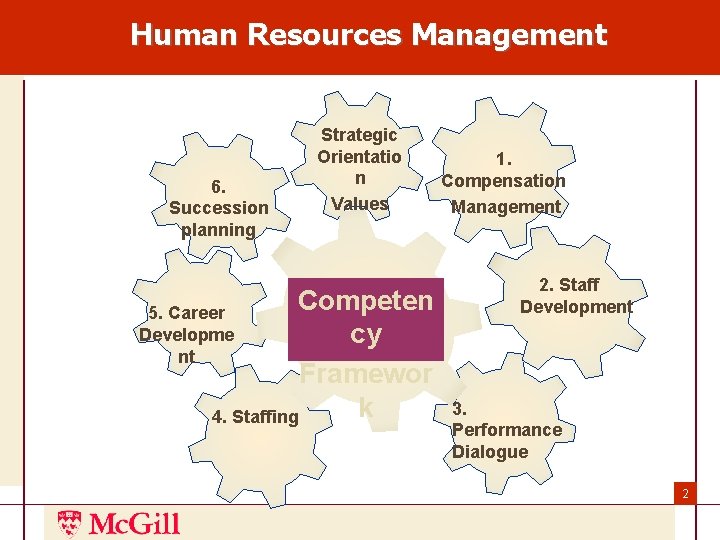
Human Resources Management 6. Succession planning Strategic Orientatio n Values Competen cy Framewor k 4. Staffing 5. Career Developme nt 1. Compensation Management ed at gr ch te oa In ppr a y c en ent t pe em m g Co na a m 2. Staff Development 3. Performance Dialogue 2
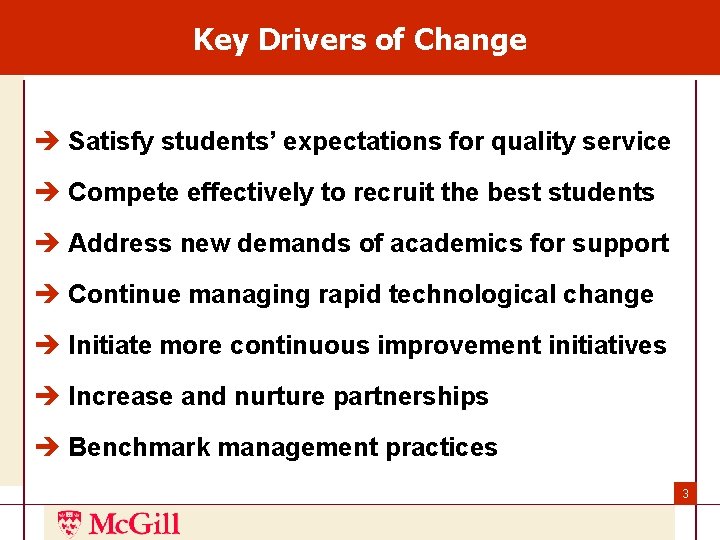
Key Drivers of Change è Satisfy students’ expectations for quality service è Compete effectively to recruit the best students è Address new demands of academics for support è Continue managing rapid technological change è Initiate more continuous improvement initiatives è Increase and nurture partnerships è Benchmark management practices 3
Emerging Institutional Capabilities ü Customer Focus ü Excellence and Quality ü Innovation and Creativity ü Tolerance and Diversity ü Personal Growth and Development ü Accountability ü Collaboration 4
Emerging Institutional Capabilities Customer Focus ü experience a customer/stakeholder service mindset; ü evaluate and enhance services with the customer/stakeholder in mind; ü present a professional image in our communications and service orientation 5
Emerging Institutional Capabilities Excellence and Quality ü apply best practices in everything we do; ü raise the bar in setting goals and performance standards; ü encourage risk taking and accept mistakes as learning opportunities; 6
Emerging Institutional Capabilities Personal Growth and Development ü coach and evaluate staff for both performance and potential; ü take responsibility for self-development; ü plan and account for the development of team members. 7
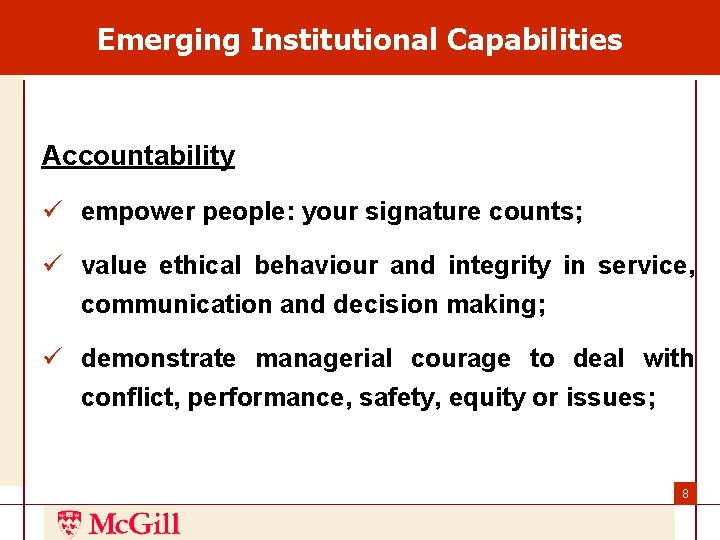
Emerging Institutional Capabilities Accountability ü empower people: your signature counts; ü value ethical behaviour and integrity in service, communication and decision making; ü demonstrate managerial courage to deal with conflict, performance, safety, equity or issues; 8
Mc. Gill Competency Directory What Competencies Will Be Required To: § Work In Mc. Gill’s Changing Environment? § Achieve Mc. Gill’s Mission over the next 3 years? 9
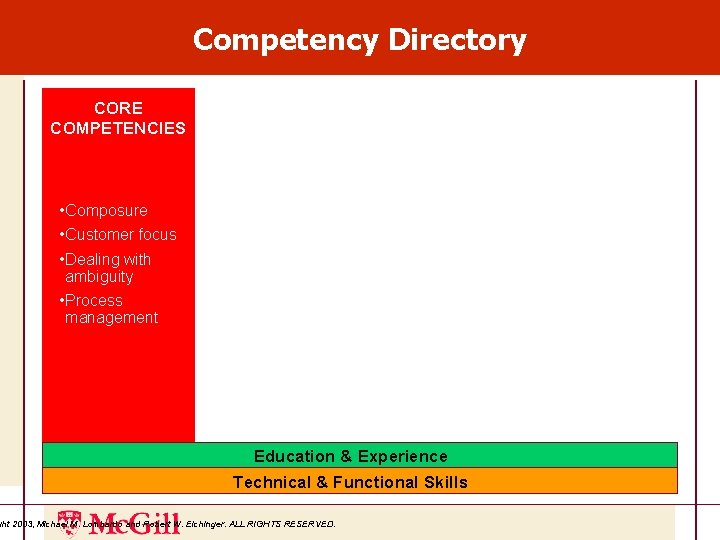
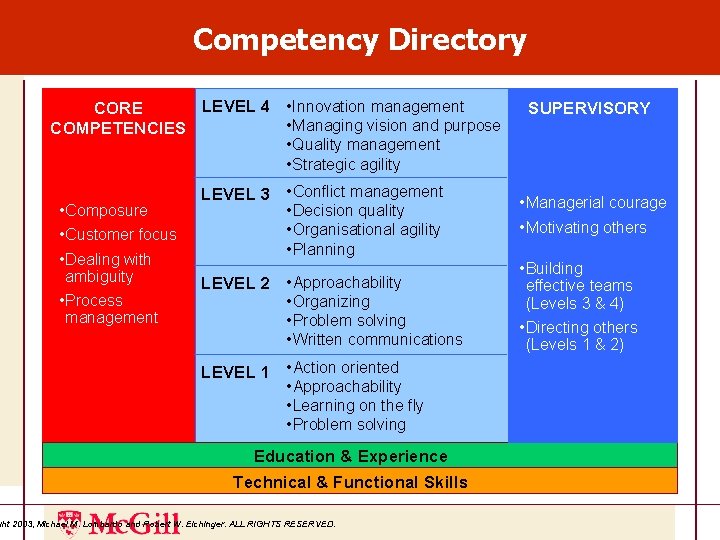
Competency Directory CORE COMPETENCIES SUPERVISORY • Composure • Customer focus • Dealing with ambiguity • Process management • Managerial courage • Motivating others • Building effective teams (Levels 3 & 4) • Directing others (Levels 1 & 2) Education & Experience Technical & Functional Skills ght 2003, Michael M. Lombardo and Robert W. Eichinger. ALL RIGHTS RESERVED.
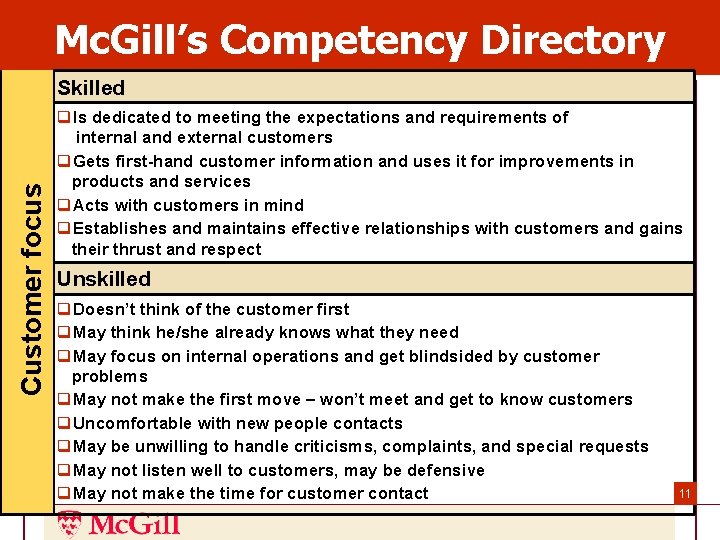
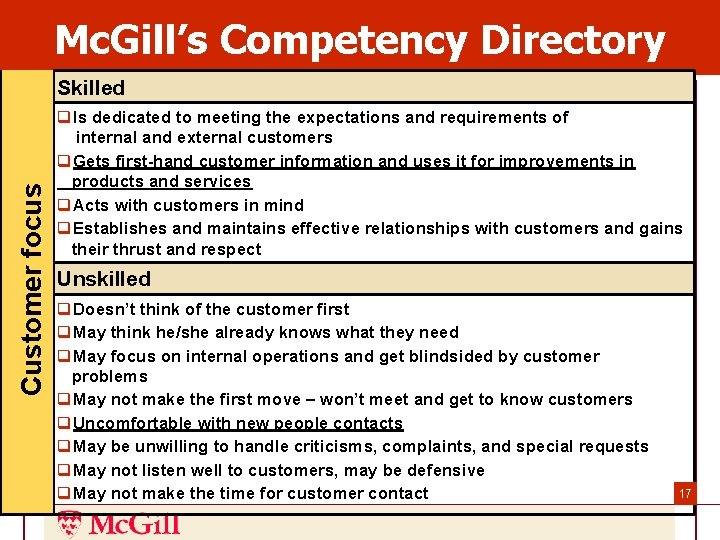
Mc. Gill’s Competency Directory Customer focus Skilled q. Is dedicated to meeting the expectations and requirements of internal and external customers q. Gets first-hand customer information and uses it for improvements in products and services q. Acts with customers in mind q. Establishes and maintains effective relationships with customers and gains their thrust and respect Unskilled q. Doesn’t think of the customer first q. May think he/she already knows what they need q. May focus on internal operations and get blindsided by customer problems q. May not make the first move – won’t meet and get to know customers q. Uncomfortable with new people contacts q. May be unwilling to handle criticisms, complaints, and special requests q. May not listen well to customers, may be defensive q. May not make the time for customer contact 11
Competency Directory LEVEL 4 • Innovation management CORE • Managing vision and purpose COMPETENCIES • Quality management • Strategic agility • Composure • Customer focus • Dealing with ambiguity • Process management SUPERVISORY LEVEL 3 • Conflict management • Decision quality • Organisational agility • Planning • Managerial courage • Motivating others LEVEL 2 • Approachability • Organizing • Problem solving • Written communications • Building effective teams (Levels 3 & 4) • Directing others (Levels 1 & 2) LEVEL 1 • Action oriented • Approachability • Learning on the fly • Problem solving Education & Experience Technical & Functional Skills ght 2003, Michael M. Lombardo and Robert W. Eichinger. ALL RIGHTS RESERVED.
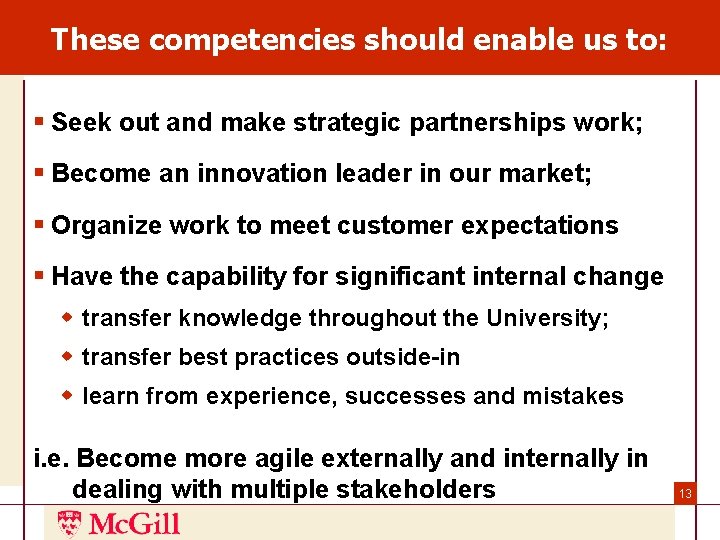
These competencies should enable us to: § Seek out and make strategic partnerships work; § Become an innovation leader in our market; § Organize work to meet customer expectations § Have the capability for significant internal change w transfer knowledge throughout the University; w transfer best practices outside-in w learn from experience, successes and mistakes i. e. Become more agile externally and internally in dealing with multiple stakeholders 13
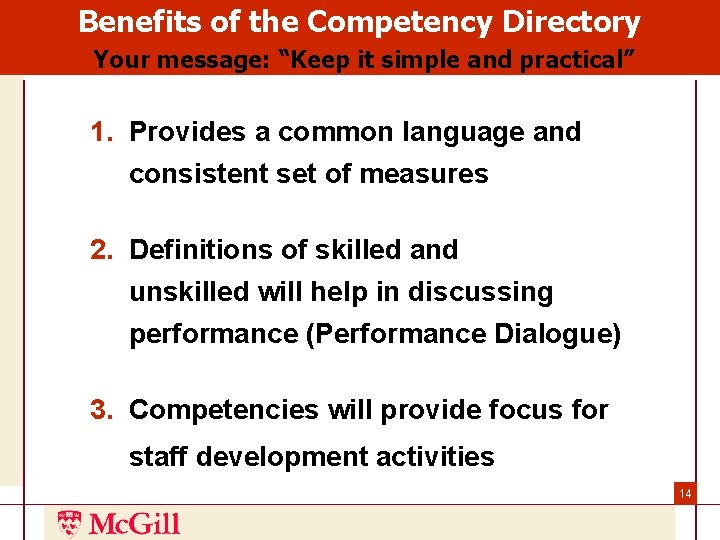
Benefits of the Competency Directory Your message: “Keep it simple and practical” 1. Provides a common language and consistent set of measures 2. Definitions of skilled and unskilled will help in discussing performance (Performance Dialogue) 3. Competencies will provide focus for staff development activities 14
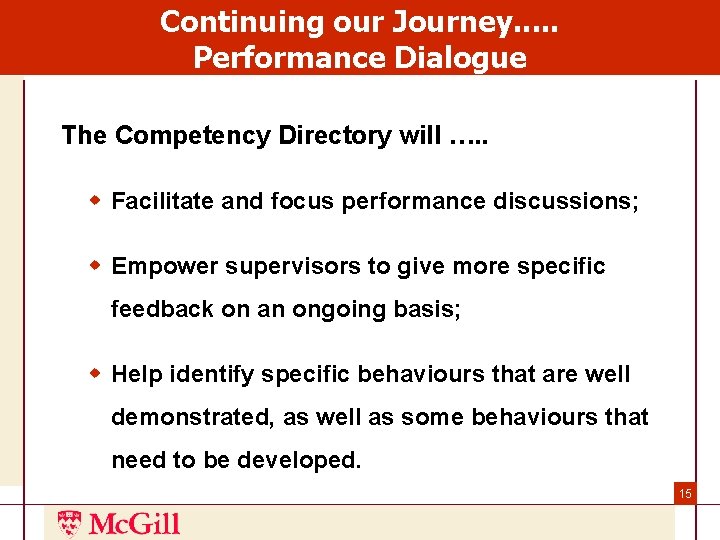
Continuing our Journey. . . Performance Dialogue The Competency Directory will …. . w Facilitate and focus performance discussions; w Empower supervisors to give more specific feedback on an ongoing basis; w Help identify specific behaviours that are well demonstrated, as well as some behaviours that need to be developed. 15
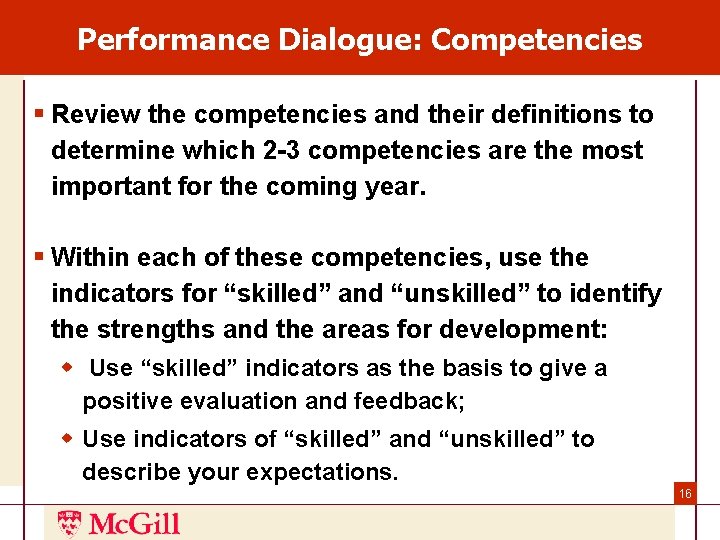
Performance Dialogue: Competencies § Review the competencies and their definitions to determine which 2 -3 competencies are the most important for the coming year. § Within each of these competencies, use the indicators for “skilled” and “unskilled” to identify the strengths and the areas for development: w Use “skilled” indicators as the basis to give a positive evaluation and feedback; w Use indicators of “skilled” and “unskilled” to describe your expectations. 16
Mc. Gill’s Competency Directory Customer focus Skilled q. Is dedicated to meeting the expectations and requirements of internal and external customers q. Gets first-hand customer information and uses it for improvements in products and services q. Acts with customers in mind q. Establishes and maintains effective relationships with customers and gains their thrust and respect Unskilled q. Doesn’t think of the customer first q. May think he/she already knows what they need q. May focus on internal operations and get blindsided by customer problems q. May not make the first move – won’t meet and get to know customers q. Uncomfortable with new people contacts q. May be unwilling to handle criticisms, complaints, and special requests q. May not listen well to customers, may be defensive q. May not make the time for customer contact 17
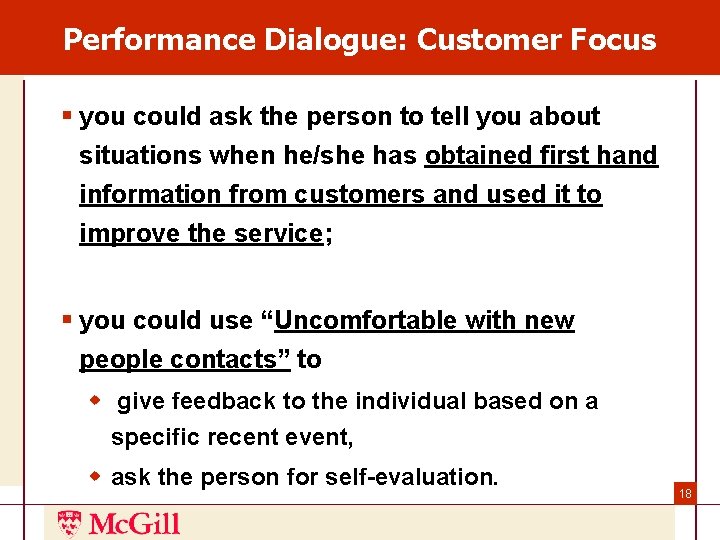
Performance Dialogue: Customer Focus § you could ask the person to tell you about situations when he/she has obtained first hand information from customers and used it to improve the service; § you could use “Uncomfortable with new people contacts” to w give feedback to the individual based on a specific recent event, w ask the person for self-evaluation. 18
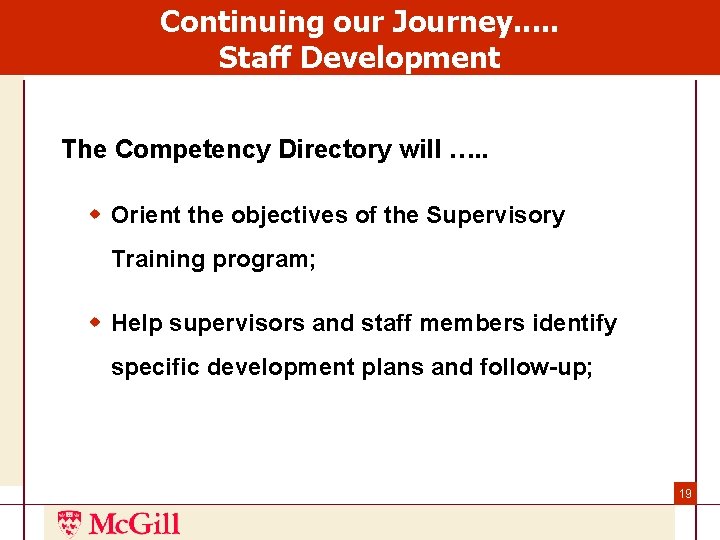
Continuing our Journey. . . Staff Development The Competency Directory will …. . w Orient the objectives of the Supervisory Training program; w Help supervisors and staff members identify specific development plans and follow-up; 19
Customer Focus Development Resources 1. Workshops (HR Staff Development): w “Managing in a Customer Focused Service Environment” w “Managing Conflict and Differences” could be a complementary workshop if necessary. 2. Special projects and developmental assignments: • Survey current and past clients to identify their needs and assess the satisfaction, and make recommendations; • co-lead training sessions for staff members. 3. Additional reading: • The Pursuit of WOW 20
Continuing our Journey. . . Staffing and Career Management The Competency Directory will …. . w Describe “other qualifying skills/ abilities” for staffing; w Guide career planning and development. 21
STAFFING: BEHAVIOURAL INTERVIEW QUESTIONS Customer Focus 1. Describe a situation when you implemented new practices to improve service quality or timeliness. - How were the changes received by the staff and by the customers? - How did you measure the improvements and the client satisfaction? 2. Describe a situation when you gave feedback to a staff member concerning his/her interaction with a customer. What was the person’s reaction? 22
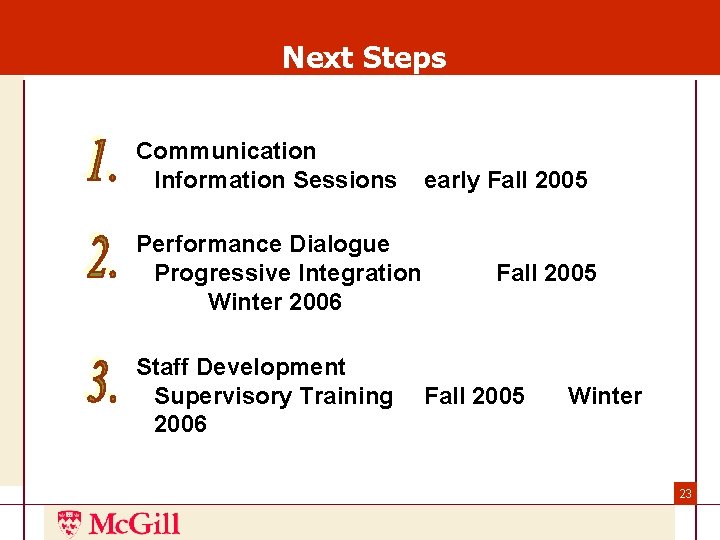
Next Steps Communication Information Sessions Performance Dialogue Progressive Integration Winter 2006 Staff Development Supervisory Training 2006 early Fall 2005 Winter 23
Wrap-up Comments and questions 24