
Competency Based Education Transformation Success William J Ryan
Competency Based Education: Transformation & Success William J. Ryan, Ph. D.
What is Competency-Based Ed? “Competency-based education is a flexible way for students to get credit for what they know, build on their knowledge and skills by learning more at their own pace, and earn high quality degrees, certificates, and other credentials that help them in their lives and careers. Students in these programs show what they know and how well they know it through multiple ways of evaluating learning. This is another choice for learning offered at many institutions, through a variety of programs, with full support to help students when needed. ”
It’s about Design It’s about the student’s ability to apply basic and other skills in situations that are commonly encountered in everyday life. • Students Advance upon Demonstrated Mastery • Explicit and Measurable Learning Objectives Empower Students • Assessment Is Meaningful and a Positive Learning Experience for Students • Students Receive Rapid, Differentiated Support • Learning Outcomes Emphasize Include Application and Creation of Knowledge
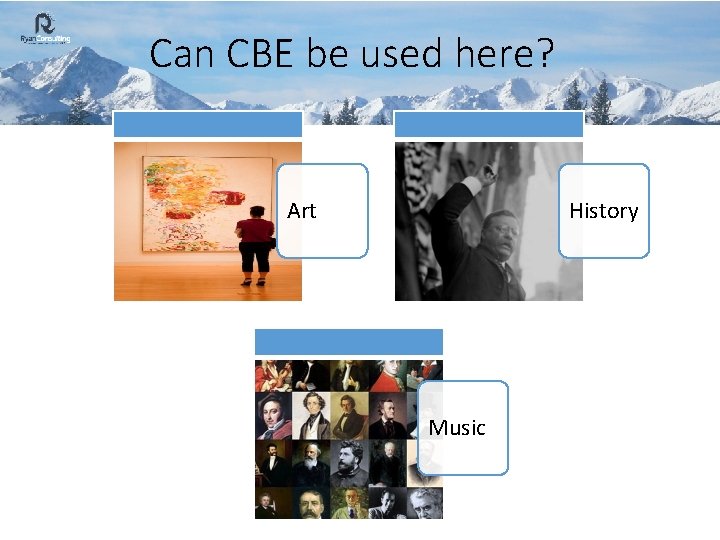
Can CBE be used here? Art History Music
Competency & outcomes • A competency is the capability to apply a set of related knowledge, skills, and abilities to successfully perform functions or tasks in a defined work setting. Competencies often serve as the basis for skill standards that specify the level of knowledge, skills, and abilities needed for success, as well as potential measurement criteria for assessing competency attainment. Competency Model Clearinghouse

CBE Assessment Pyramid
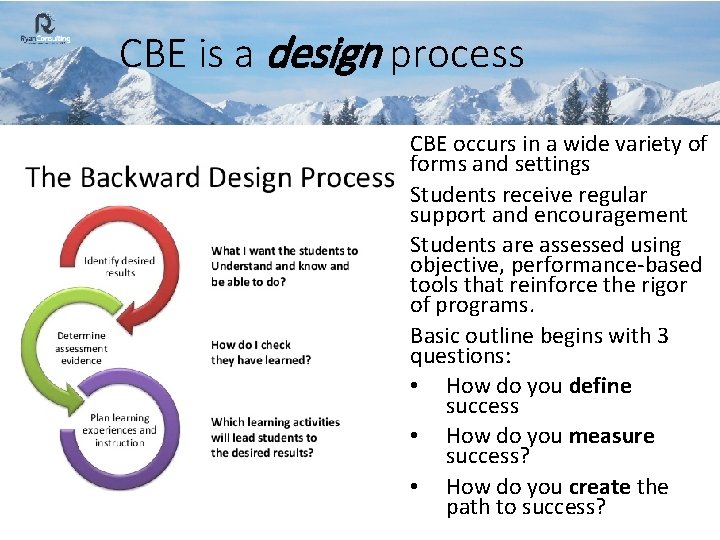
CBE is a design process CBE occurs in a wide variety of forms and settings Students receive regular support and encouragement Students are assessed using objective, performance-based tools that reinforce the rigor of programs. Basic outline begins with 3 questions: • How do you define success • How do you measure success? • How do you create the path to success?
CBE Design Principles: • The degree reflects robust and valid competencies • Students are able to learn at variable pace and are supported in their learning • Effective learning resources are available any time and are reusable • Assessments are secure and reliable • Balance between time, assessment, and demonstrated learning Reference: Johnstone, S. M. & Soares, L. (2014, March-April). Principles for Developing Competency-Based Education Programs. Change. Retrieved from http: //www. changemag. org/Archives/Back%20 Issues/2014/March-April%202014/Principles_full. html
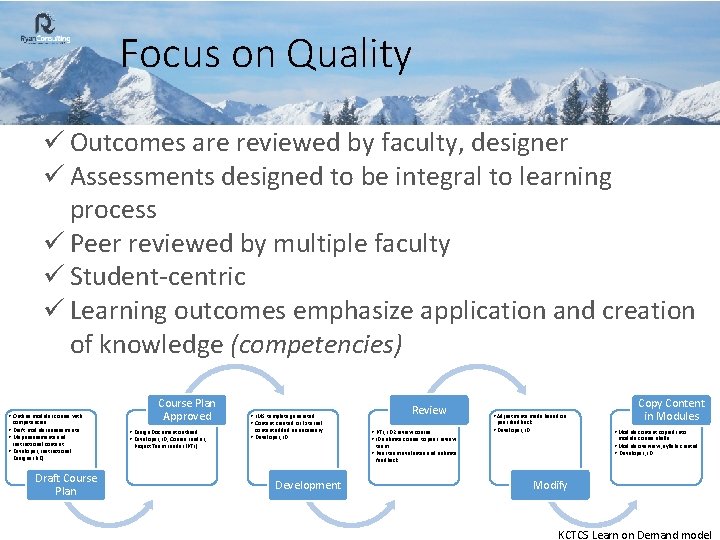
Focus on Quality ü Outcomes are reviewed by faculty, designer ü Assessments designed to be integral to learning process ü Peer reviewed by multiple faculty ü Student-centric ü Learning outcomes emphasize application and creation of knowledge (competencies) • Outline modular course with competencies • Draft modular assessments • Map assessments and instructional content • Developer, Instructional Designer (ID) Draft Course Plan Approved • Design Document outlined • Developer, ID, Course Leader, • LMS template generated • Content created or External content added as necessary • Developer, ID Project Team Leader (PTL) Review • Adjustments made based on peer feedback • PTL, ID 2 review course • ID submits course to peer review • Developer, ID • Module content copied into module course shells • Module overview, syllabi created • Developer, ID team • Peer team evaluates and submits feedback Development Copy Content in Modules Modify KCTCS Learn on Demand model
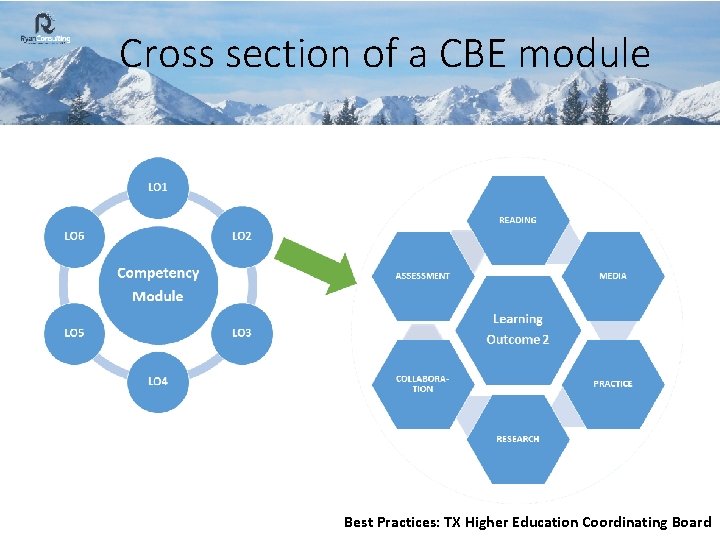
Cross section of a CBE module Best Practices: TX Higher Education Coordinating Board
Well defined competence • A competency describes knowledge and skills that can be applied to novel, complex situations. • Learning objectives are accompanied by clear performance criteria that help students identify their performance level(s) and what they need to do to improve. • Learning objectives are accompanied by effective rubrics that help students understand themselves better as learners. • The competency and the learning objectives allow for personalization and opportunities for deeper learning. The Art and Science of Designing Competencies

Best Practice in Education • Encourage contact between students and faculty • Develop reciprocity and cooperation among students • Encourages active learning • Give prompt feedback on performance • Emphasizes time on task • Communicates high expectations • Respects diverse talents and ways of learning ----A. W. Chickering & Z. F. Gamson, 1987. AAHE.
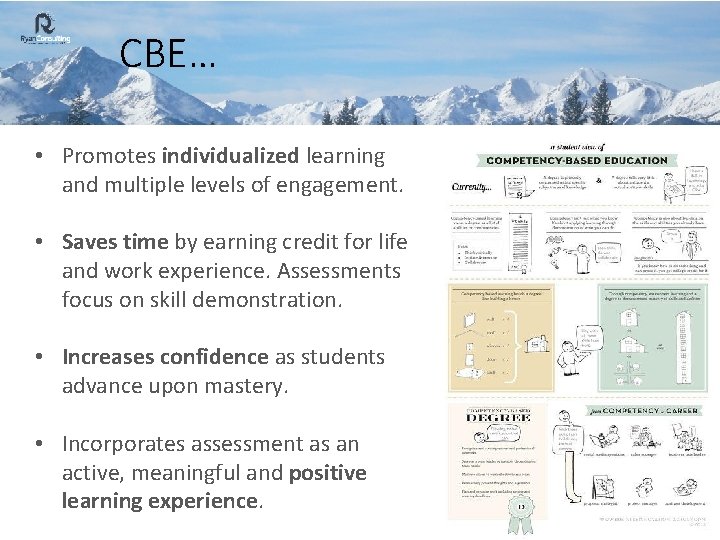
CBE… • Promotes individualized learning and multiple levels of engagement. • Saves time by earning credit for life and work experience. Assessments focus on skill demonstration. • Increases confidence as students advance upon mastery. • Incorporates assessment as an active, meaningful and positive learning experience.

Experts Say… “For many students, assessment is not an educational experience in itself, but a process of ‘guessing what the teacher wants. ’” (Mc. Laughlin & Simpson, 2004)
Traditional vs. Authentic Assessment Traditional Curriculum drives assessment. 1. Body of knowledge is determined first 2. Curriculum is developed 3. Assess to determine if acquisition of the curriculum occurred Authentic Assessment drives the curriculum. 1. Tasks are determined first 2. Success criteria are defined 3. Assessments are developed 4. Curriculum development begins
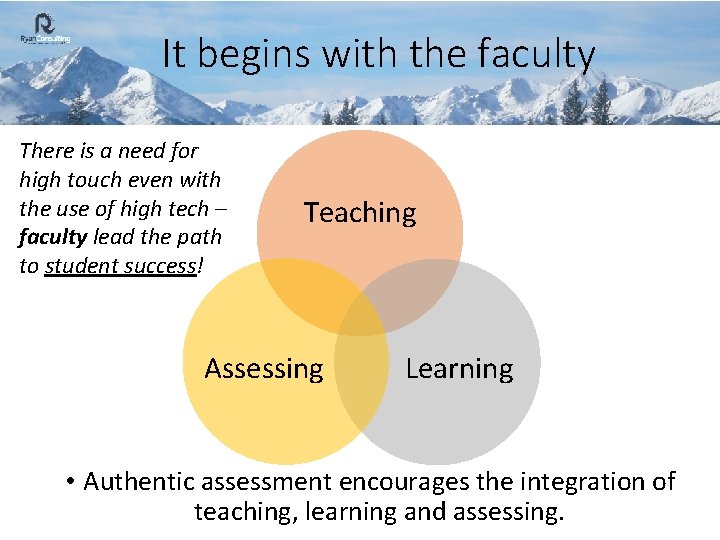
It begins with the faculty There is a need for high touch even with the use of high tech – faculty lead the path to student success! Teaching Assessing Learning • Authentic assessment encourages the integration of teaching, learning and assessing.
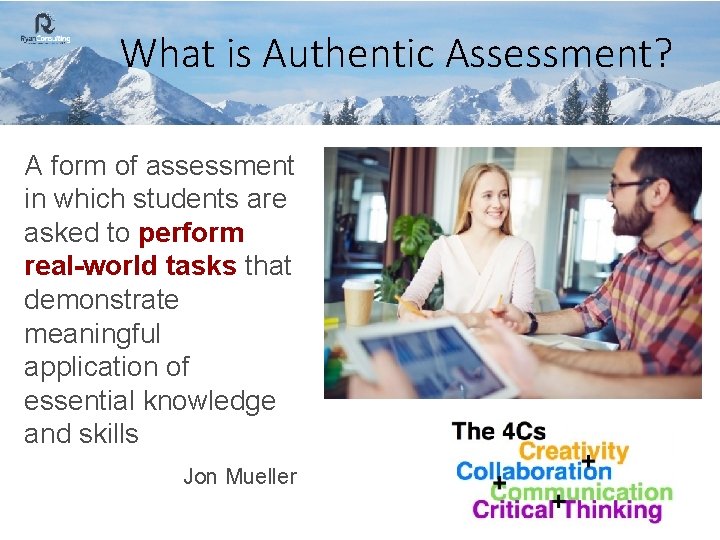
What is Authentic Assessment? A form of assessment in which students are asked to perform real-world tasks that demonstrate meaningful application of essential knowledge and skills Jon Mueller
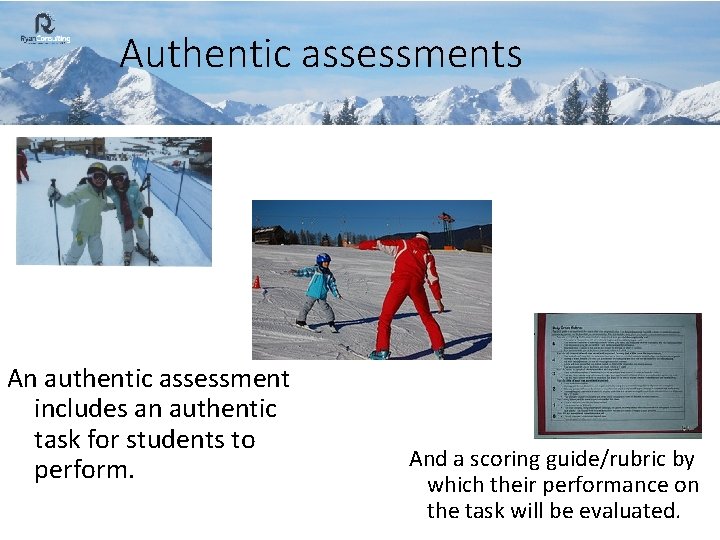
Authentic assessments An authentic assessment includes an authentic task for students to perform. And a scoring guide/rubric by which their performance on the task will be evaluated.
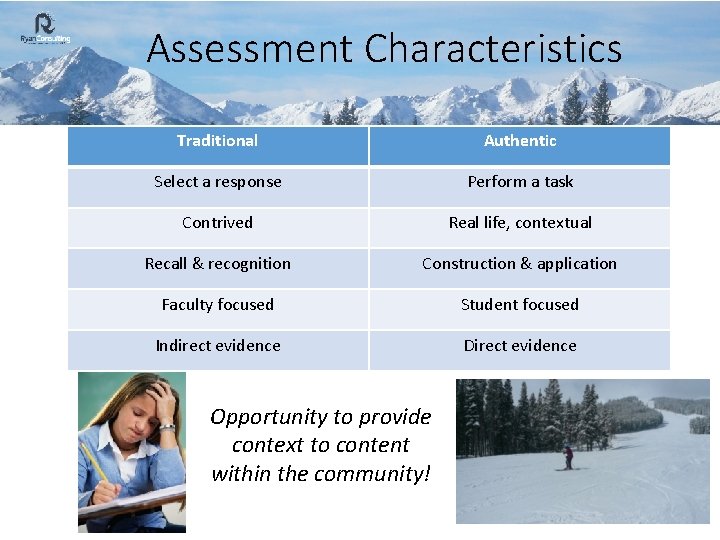
Assessment Characteristics Traditional Authentic Select a response Perform a task Contrived Real life, contextual Recall & recognition Construction & application Faculty focused Student focused Indirect evidence Direct evidence Opportunity to provide context to content within the community!
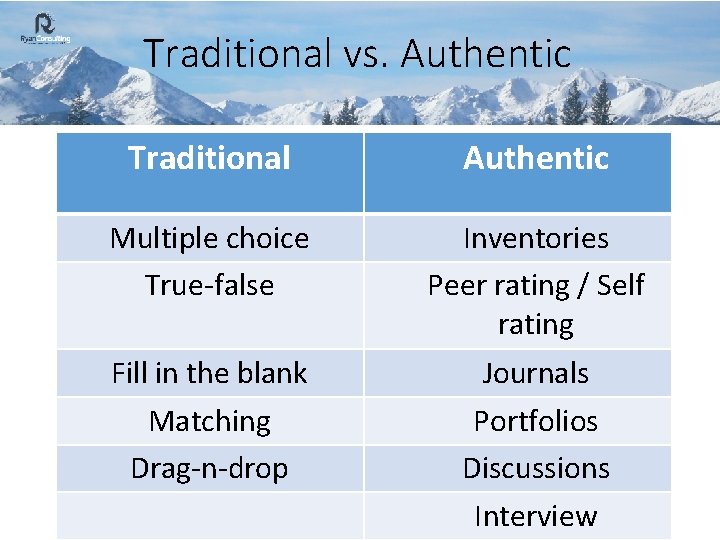
Traditional vs. Authentic Traditional Authentic Multiple choice True-false Inventories Peer rating / Self rating Fill in the blank Matching Drag-n-drop Journals Portfolios Discussions Interview
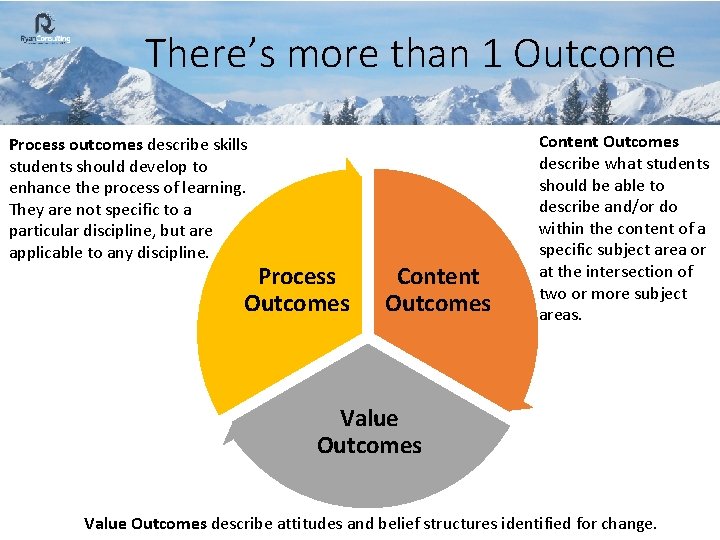
There’s more than 1 Outcome Process outcomes describe skills students should develop to enhance the process of learning. They are not specific to a particular discipline, but are applicable to any discipline. Process Outcomes Content Outcomes describe what students should be able to describe and/or do within the content of a specific subject area or at the intersection of two or more subject areas. Value Outcomes describe attitudes and belief structures identified for change.
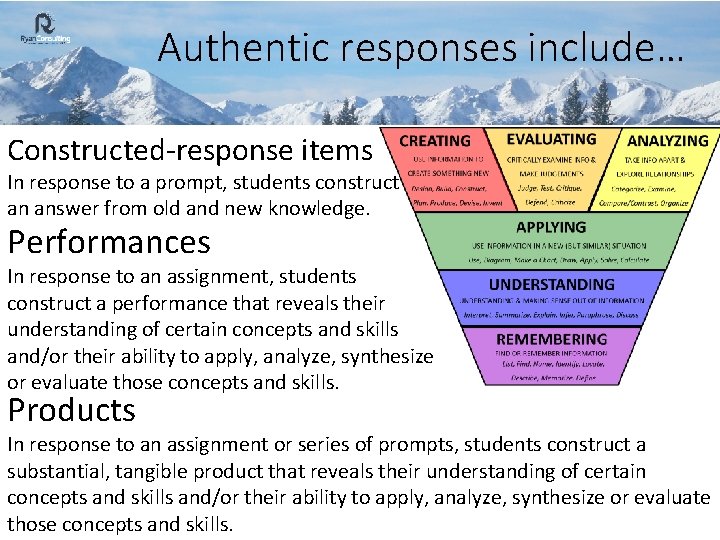
Authentic responses include… Constructed-response items In response to a prompt, students construct an answer from old and new knowledge. Performances In response to an assignment, students construct a performance that reveals their understanding of certain concepts and skills and/or their ability to apply, analyze, synthesize or evaluate those concepts and skills. Products In response to an assignment or series of prompts, students construct a substantial, tangible product that reveals their understanding of certain concepts and skills and/or their ability to apply, analyze, synthesize or evaluate those concepts and skills.
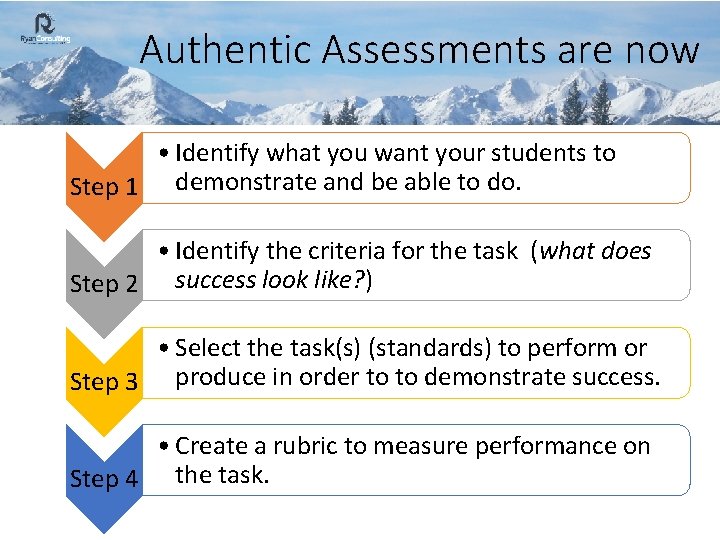
Authentic Assessments are now • Identify what you want your students to Step 1 demonstrate and be able to do. • Identify the criteria for the task (what does Step 2 success look like? ) • Select the task(s) (standards) to perform or Step 3 produce in order to to demonstrate success. • Create a rubric to measure performance on Step 4 the task.
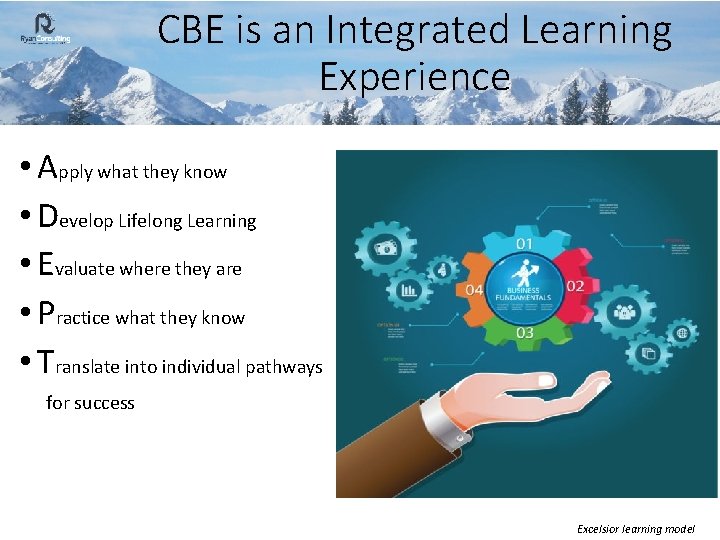
CBE is an Integrated Learning Experience • Apply what they know • Develop Lifelong Learning • Evaluate where they are • Practice what they know • Translate into individual pathways for success Excelsior learning model
CBE opens active partnerships • Competencies developed & reviewed by faculty and industry experts • Validated by industry advisors • Context to the content • Assessment ideas and examples shared • External partners become vested as they become involved, engagement can lead to employment • Internal partners are actively engaged • Student support services – registration, library • Administrative systems – business office, transcripts • Accreditors and reviewers – state, regional, national
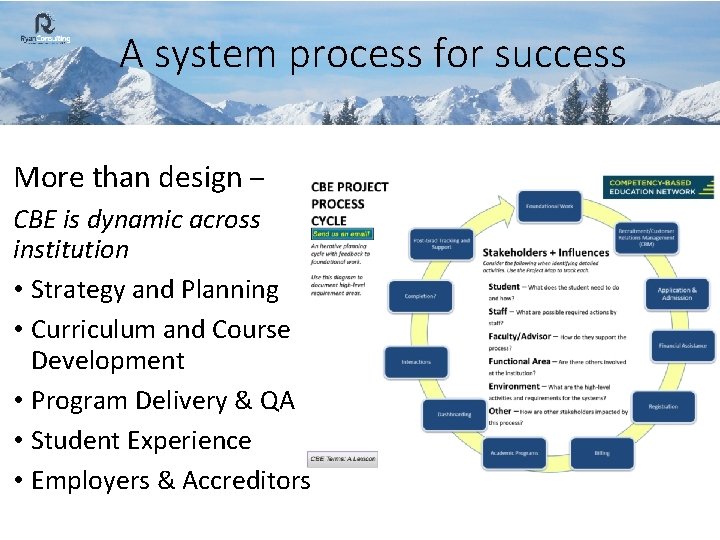
A system process for success More than design – CBE is dynamic across institution • Strategy and Planning • Curriculum and Course Development • Program Delivery & QA • Student Experience • Employers & Accreditors
CBE Value Proposition Area of Concern Opportunity with CBE Student Learning ü Transparent about and focused on learning outcomes ü External stakeholders ensure competencies are meaningful to job market ü An intense focus on application and demonstration Changing Demographics Cost and Access Faculty Role ü Flexible and personalized pathways catered to needs of student • Build on their knowledge and skills • Learn at their own pace ü Recognition that learning can and does occur outside of the classroom • Get credit for what they know ü Faculty provide the focus and connection to student success. ü Key is facilitating learning, guiding discussion & discovery ü Faculty are the connection to the academic community
? s n o i t s ue Q William J. Ryan, Ph. D. wjryan@ix. netcom. com
- Slides: 28