
COMPETENCY AND PROFICIENCY ASSESSMENT OF ANIMAL CARE TRAINING

- Slides: 18
COMPETENCY AND PROFICIENCY ASSESSMENT OF ANIMAL CARE TRAINING PROGRAMS IN ACADEMIC INSTITUTIONS Elizabeth Dodemaide B. V. Sc. , M. A. Associate Director, Laboratory Animal Services Rutgers, the State University of New Jersey
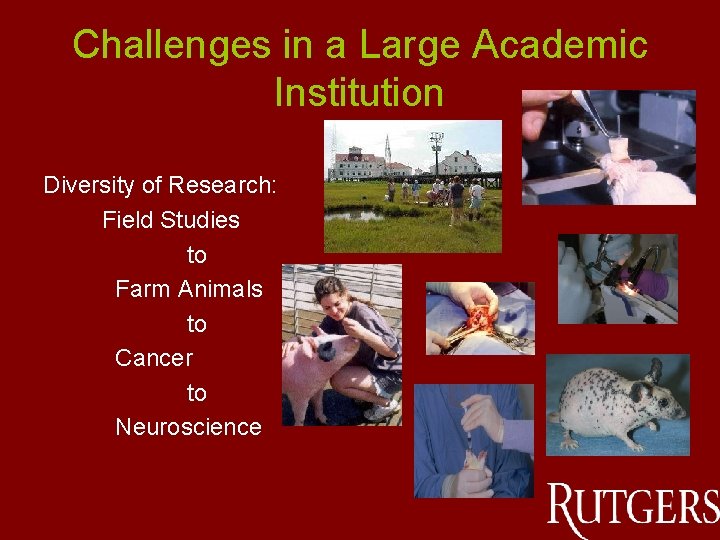
Challenges in a Large Academic Institution Diversity of Research: Field Studies to Farm Animals to Cancer to Neuroscience
Challenges in a Large Academic Institution • Diversity of Researchers: – Professors – Post docs – Students • Graduate, Undergraduate, High School • Animal care staff • Cultural diversity
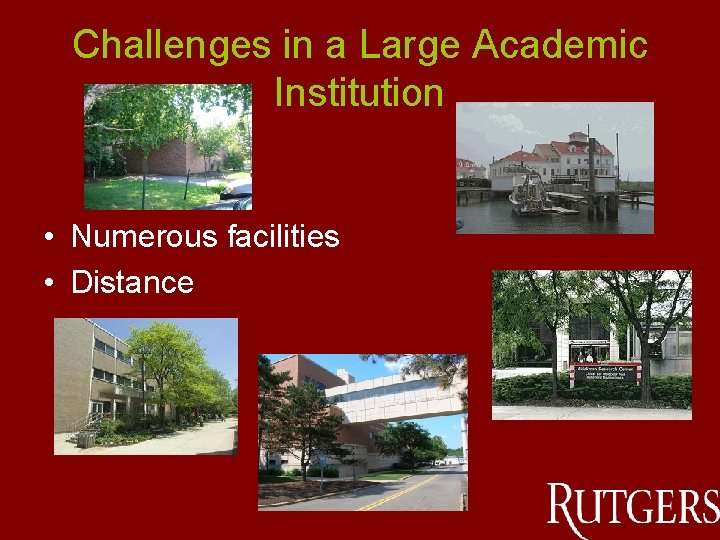
Challenges in a Large Academic Institution • Numerous facilities • Distance
How do we determine competency? • • Adequate animal welfare Research results Non-compliant findings Observation of technical and surgical procedures
How do we achieve competency? • Training – Orientation program – Hands-on training – Department/ lab meeting visits – Re-training
Responsibility for Training • IACUC delegates Laboratory Animal Services veterinarians to provide Orientation Training • Principal Investigators responsible for registering all individuals and ensuring training in protocol specific procedures • Protocol approval contingent on PI completing Orientation training
Orientation Programs Face-to-face • Negatives - Limited number of classes – PIs, students have class scheduling conflicts - Travel problems to location of class – Diverse group with very different needs
Orientation Programs Face-to face • Positives – Participants get to meet a veterinarian or other Lab Animal Services staff member - Able to ask questions - Able to meet and interact with other animal users
Orientation Programs Online • Negatives – Impersonal, don’t meet LAS staff - Can’t ask questions - Computer access necessary
Orientation Programs Online • Positives – Can be completed at any time – Modules provide more focused training
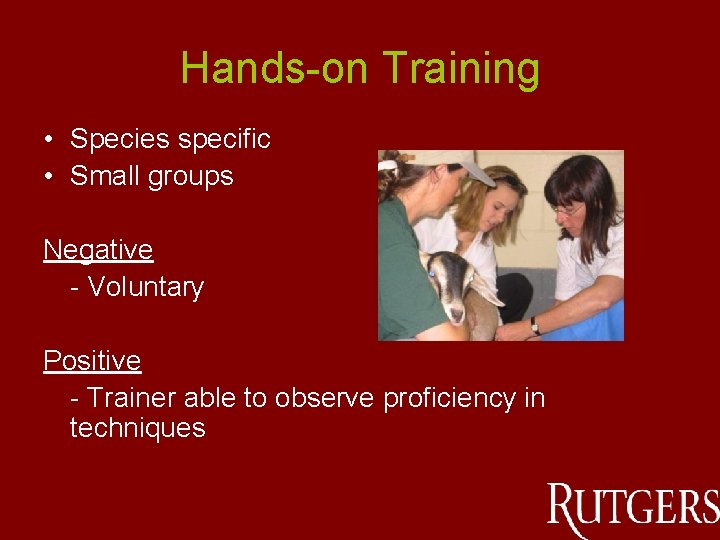
Hands-on Training • Species specific • Small groups Negative - Voluntary Positive - Trainer able to observe proficiency in techniques
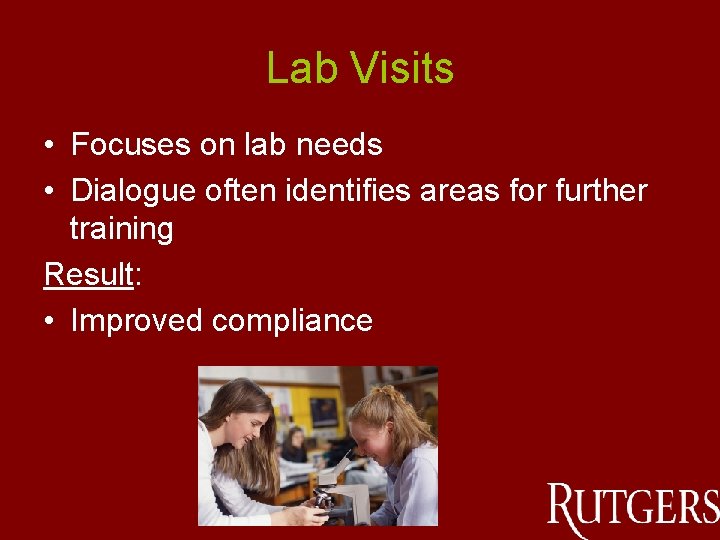
Lab Visits • Focuses on lab needs • Dialogue often identifies areas for further training Result: • Improved compliance
Proficiency Assessment • Observation of surgeries and certain procedures • Often a condition of protocol approval Result: • Better animal welfare and compliance
Hazards • Individual SOP for each hazard • Tied to protocol approval • Training of animal care and investigator’s staff • Observation of first procedure with Health and Safety person – often done as dry run
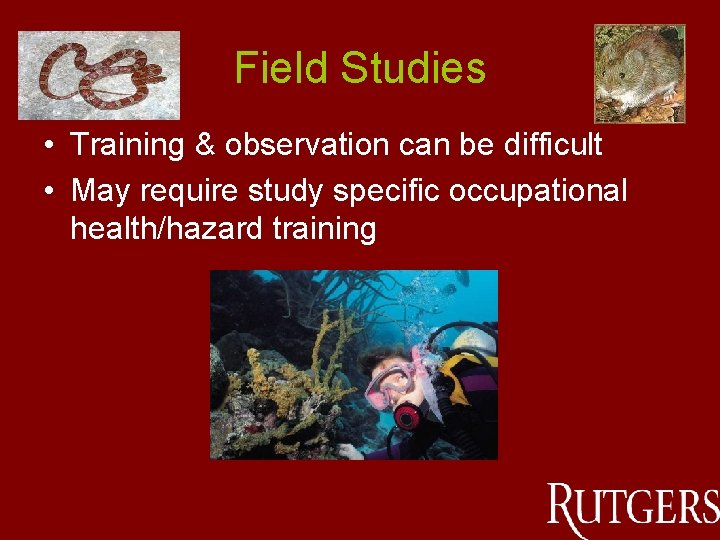
Field Studies • Training & observation can be difficult • May require study specific occupational health/hazard training
Summary • Providing adequate training for all animal users is challenging • Good communication with PIs is vital • Need continual critical evaluation to update and improve programs
THE END