
COMPETENCIES NEEDED AND HOW TO MEASURE THEM IN


- Slides: 40
COMPETENCIES NEEDED AND HOW TO MEASURE THEM IN THE FUTURE ORIENTED PUBLIC LIBRARY Experiences from Canada Presentation to: Scandinavia meets the World Conference: 10 -12 June 2001 A presentation by Josephine Bryant City Librarian: Toronto Public Library 1
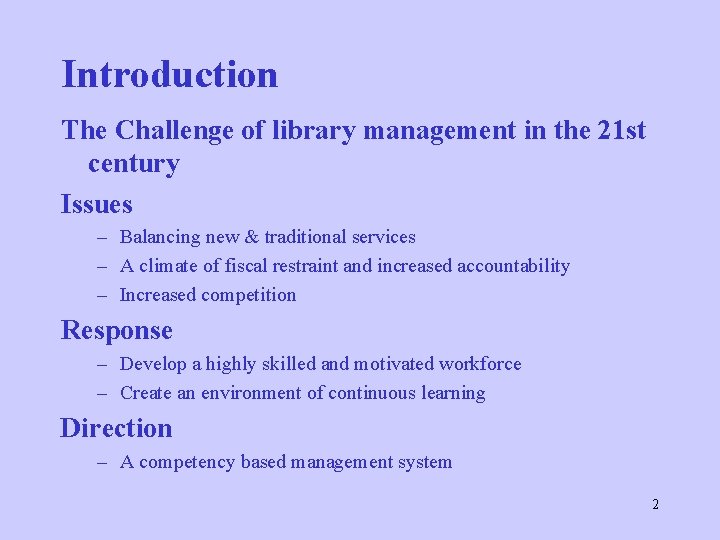
Introduction The Challenge of library management in the 21 st century Issues – Balancing new & traditional services – A climate of fiscal restraint and increased accountability – Increased competition Response – Develop a highly skilled and motivated workforce – Create an environment of continuous learning Direction – A competency based management system 2
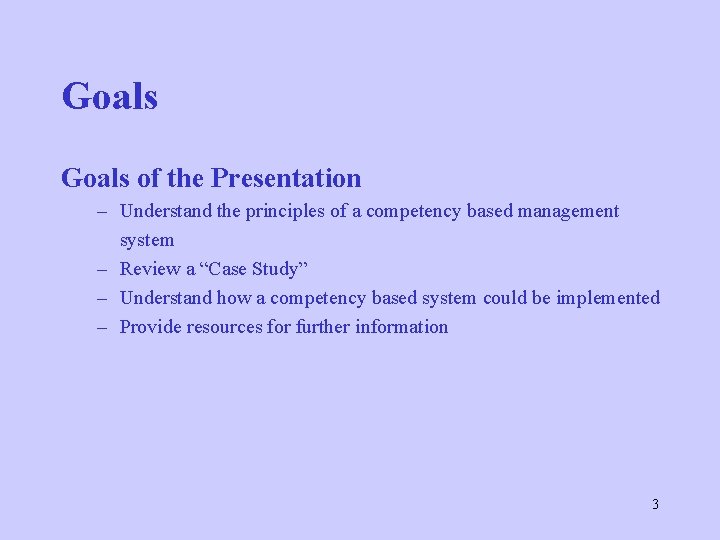
Goals of the Presentation – Understand the principles of a competency based management system – Review a “Case Study” – Understand how a competency based system could be implemented – Provide resources for further information 3
Background Competencies Needed by Public Library Staff Josephine Bryant Kay Poustie Bertelsmann Foundation Gütersloh 2001 www. stiftung. bertelsmann. de/INPL 4
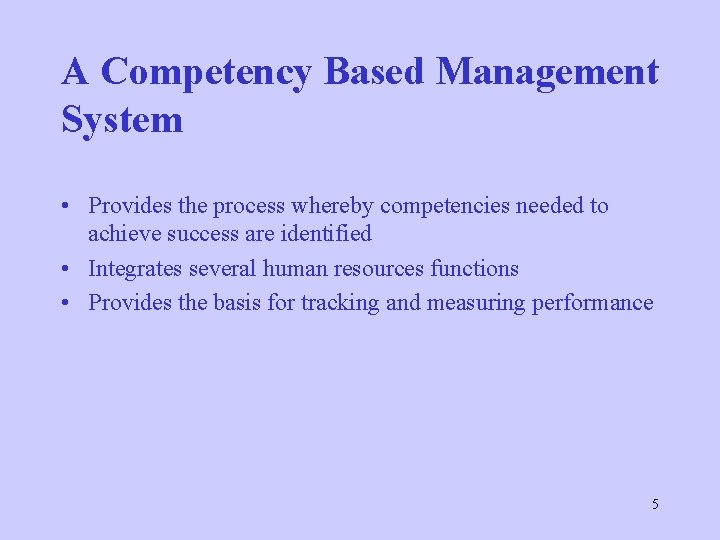
A Competency Based Management System • Provides the process whereby competencies needed to achieve success are identified • Integrates several human resources functions • Provides the basis for tracking and measuring performance 5
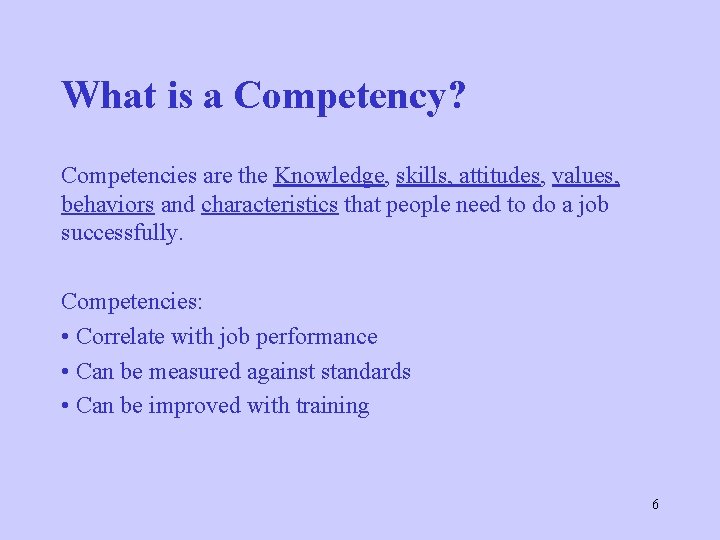
What is a Competency? Competencies are the Knowledge, skills, attitudes, values, behaviors and characteristics that people need to do a job successfully. Competencies: • Correlate with job performance • Can be measured against standards • Can be improved with training 6
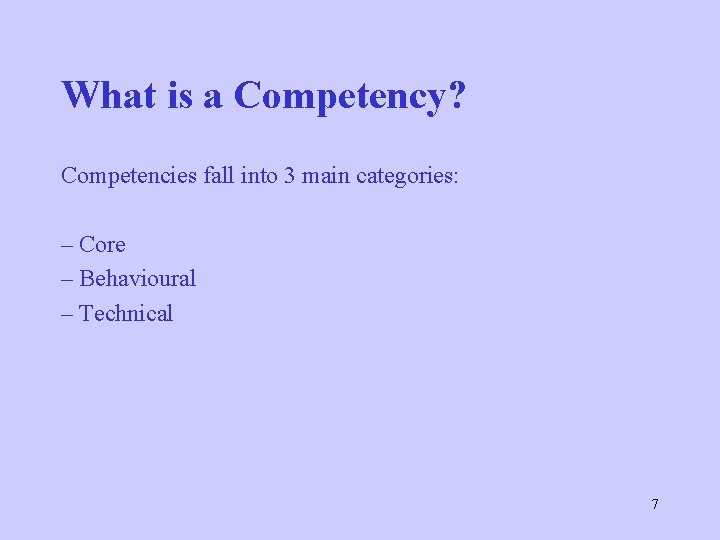
What is a Competency? Competencies fall into 3 main categories: – Core – Behavioural – Technical 7
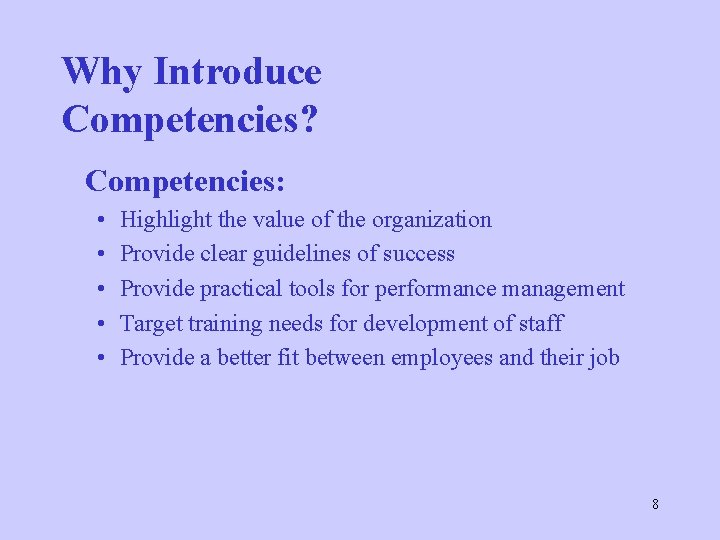
Why Introduce Competencies? Competencies: • • • Highlight the value of the organization Provide clear guidelines of success Provide practical tools for performance management Target training needs for development of staff Provide a better fit between employees and their job 8
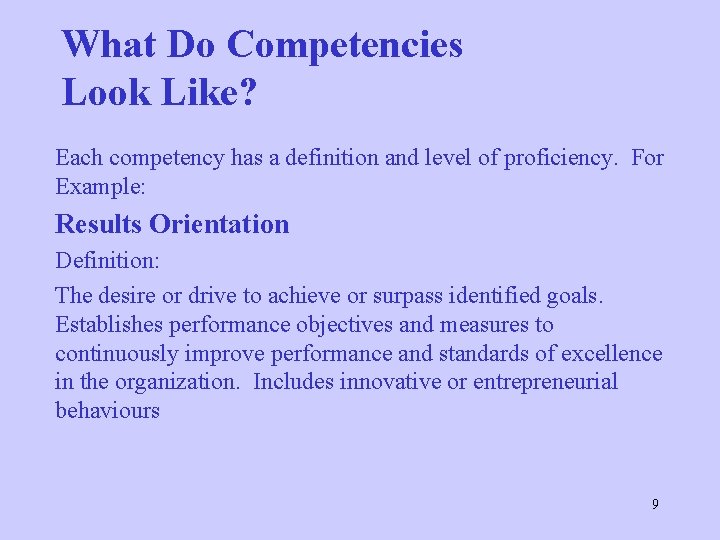
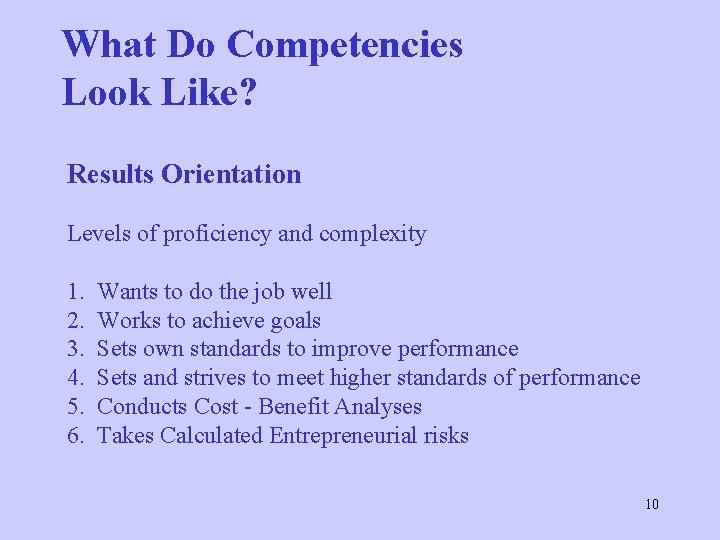
What Do Competencies Look Like? Each competency has a definition and level of proficiency. For Example: Results Orientation Definition: The desire or drive to achieve or surpass identified goals. Establishes performance objectives and measures to continuously improve performance and standards of excellence in the organization. Includes innovative or entrepreneurial behaviours 9
What Do Competencies Look Like? Results Orientation Levels of proficiency and complexity 1. 2. 3. 4. 5. 6. Wants to do the job well Works to achieve goals Sets own standards to improve performance Sets and strives to meet higher standards of performance Conducts Cost - Benefit Analyses Takes Calculated Entrepreneurial risks 10
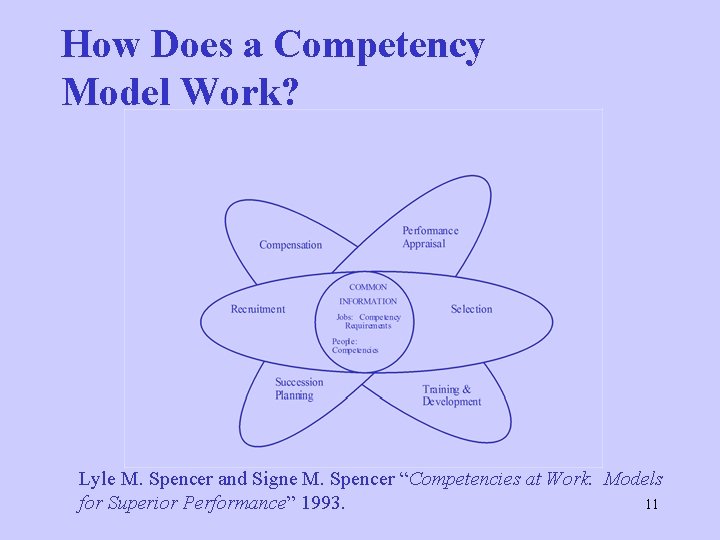
How Does a Competency Model Work? Lyle M. Spencer and Signe M. Spencer “Competencies at Work. Models for Superior Performance” 1993. 11
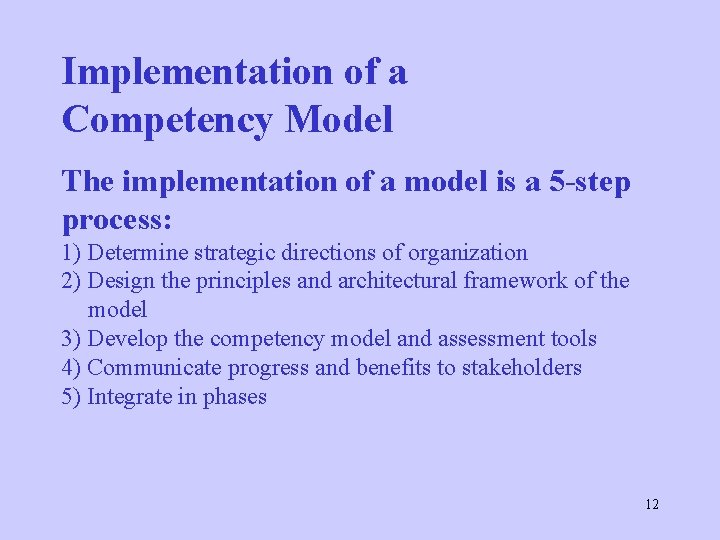
Implementation of a Competency Model The implementation of a model is a 5 -step process: 1) Determine strategic directions of organization 2) Design the principles and architectural framework of the model 3) Develop the competency model and assessment tools 4) Communicate progress and benefits to stakeholders 5) Integrate in phases 12
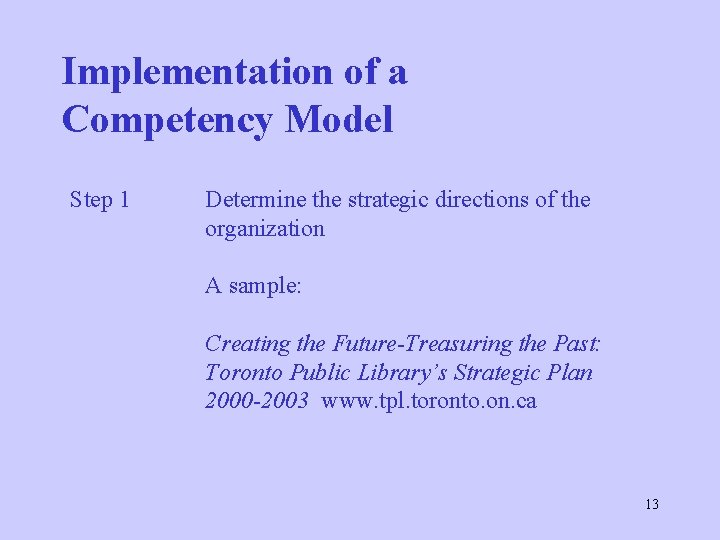
Implementation of a Competency Model Step 1 Determine the strategic directions of the organization A sample: Creating the Future-Treasuring the Past: Toronto Public Library’s Strategic Plan 2000 -2003 www. tpl. toronto. on. ca 13
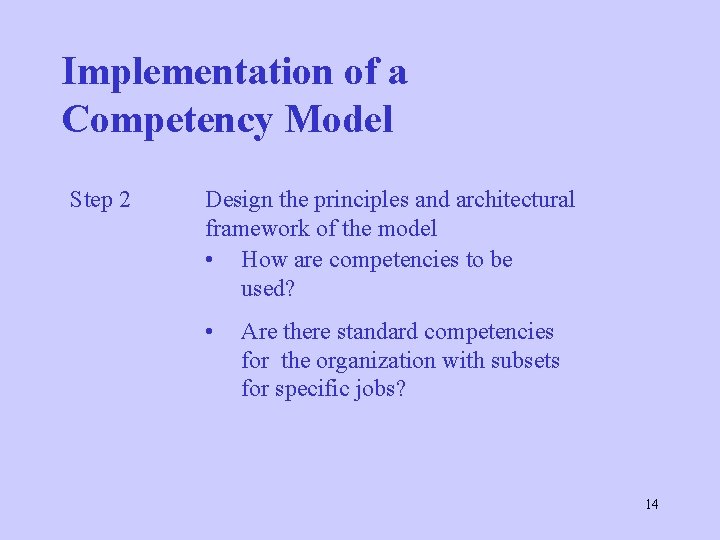
Implementation of a Competency Model Step 2 Design the principles and architectural framework of the model • How are competencies to be used? • Are there standard competencies for the organization with subsets for specific jobs? 14
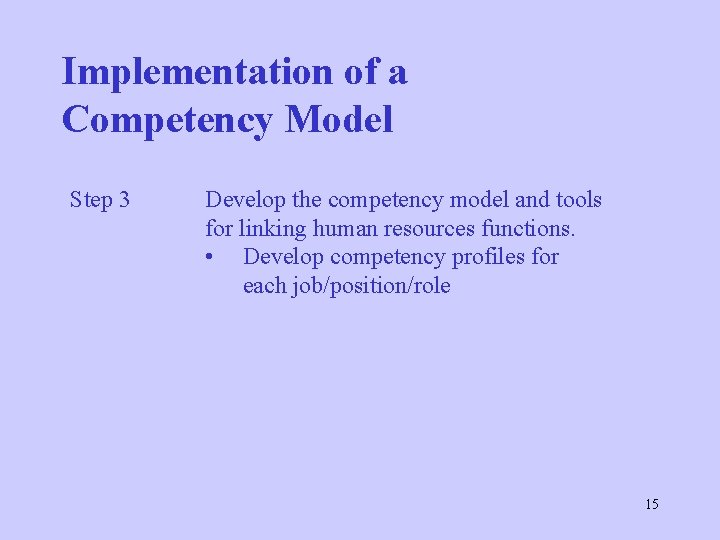
Implementation of a Competency Model Step 3 Develop the competency model and tools for linking human resources functions. • Develop competency profiles for each job/position/role 15
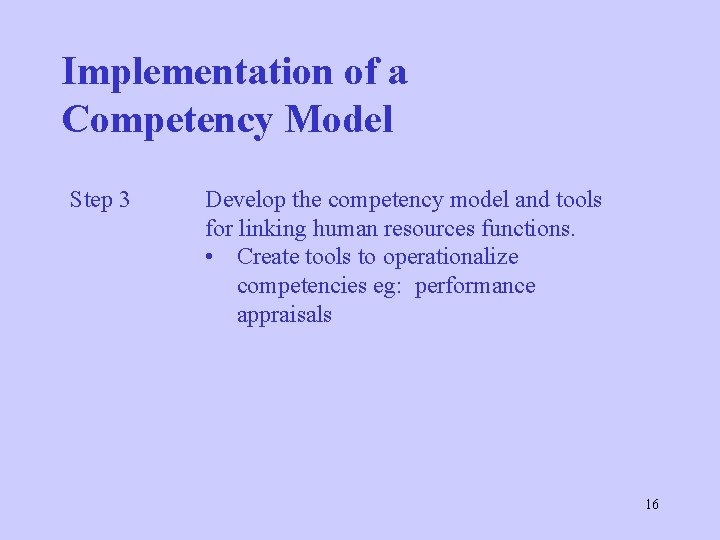
Implementation of a Competency Model Step 3 Develop the competency model and tools for linking human resources functions. • Create tools to operationalize competencies eg: performance appraisals 16
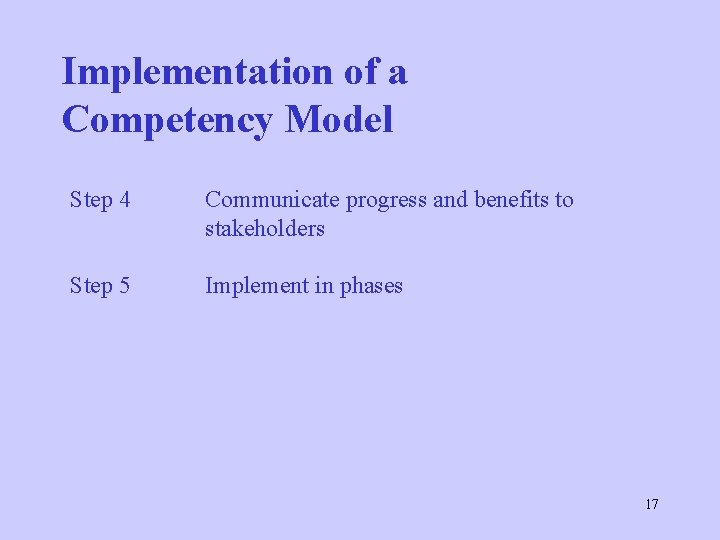
Implementation of a Competency Model Step 4 Communicate progress and benefits to stakeholders Step 5 Implement in phases 17
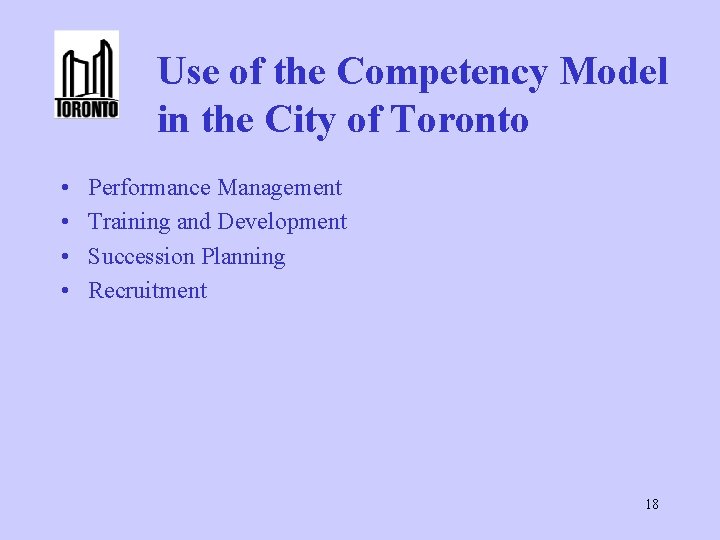
Use of the Competency Model in the City of Toronto • • Performance Management Training and Development Succession Planning Recruitment 18
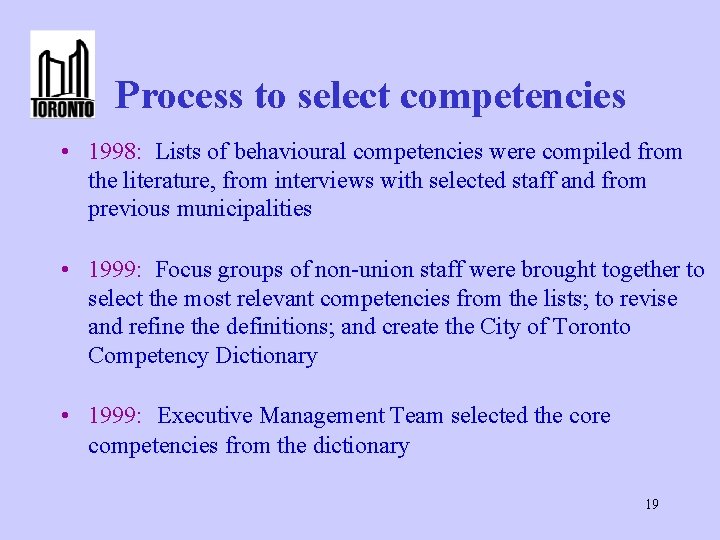
Process to select competencies • 1998: Lists of behavioural competencies were compiled from the literature, from interviews with selected staff and from previous municipalities • 1999: Focus groups of non-union staff were brought together to select the most relevant competencies from the lists; to revise and refine the definitions; and create the City of Toronto Competency Dictionary • 1999: Executive Management Team selected the core competencies from the dictionary 19
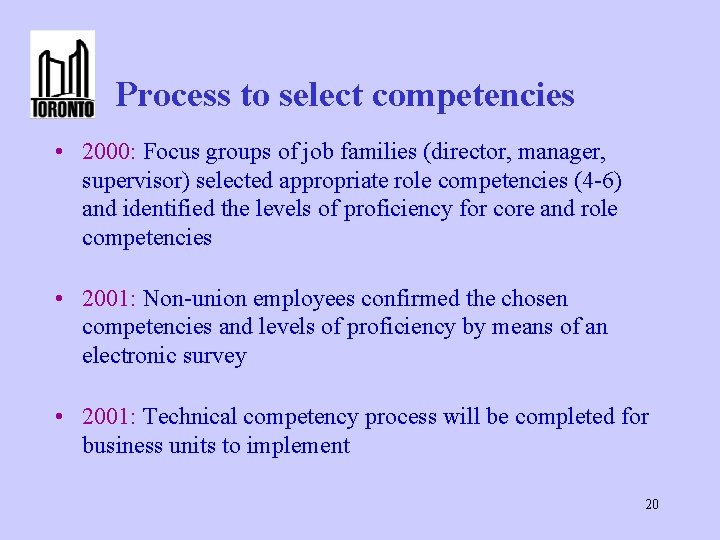
Process to select competencies • 2000: Focus groups of job families (director, manager, supervisor) selected appropriate role competencies (4 -6) and identified the levels of proficiency for core and role competencies • 2001: Non-union employees confirmed the chosen competencies and levels of proficiency by means of an electronic survey • 2001: Technical competency process will be completed for business units to implement 20
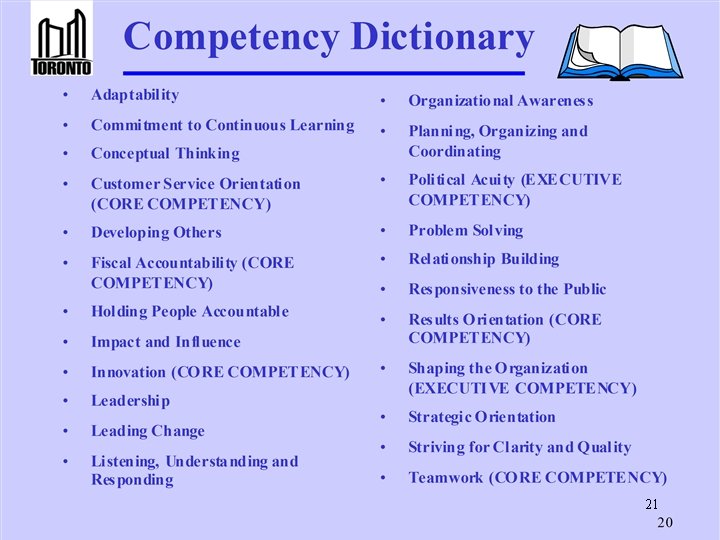
21
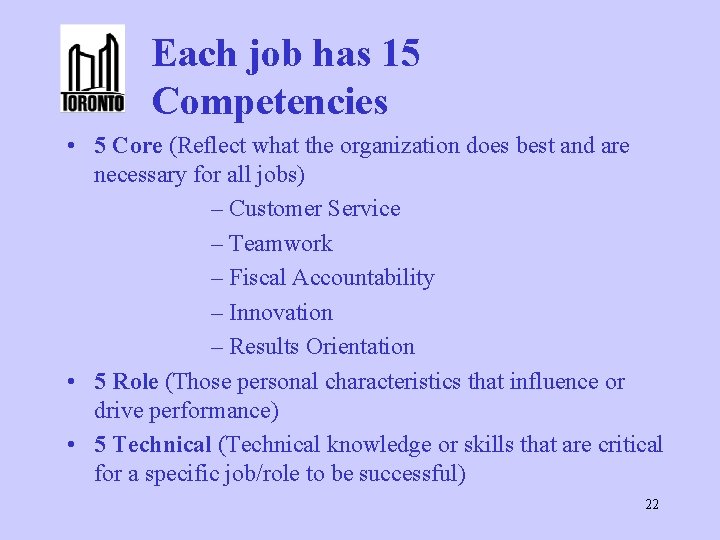
Each job has 15 Competencies • 5 Core (Reflect what the organization does best and are necessary for all jobs) – Customer Service – Teamwork – Fiscal Accountability – Innovation – Results Orientation • 5 Role (Those personal characteristics that influence or drive performance) • 5 Technical (Technical knowledge or skills that are critical for a specific job/role to be successful) 22
Levels of Proficiency • Within each competency levels of proficiency are described • As you progress through job level in the organization employees are expected to demonstrate a higher level of competency 23
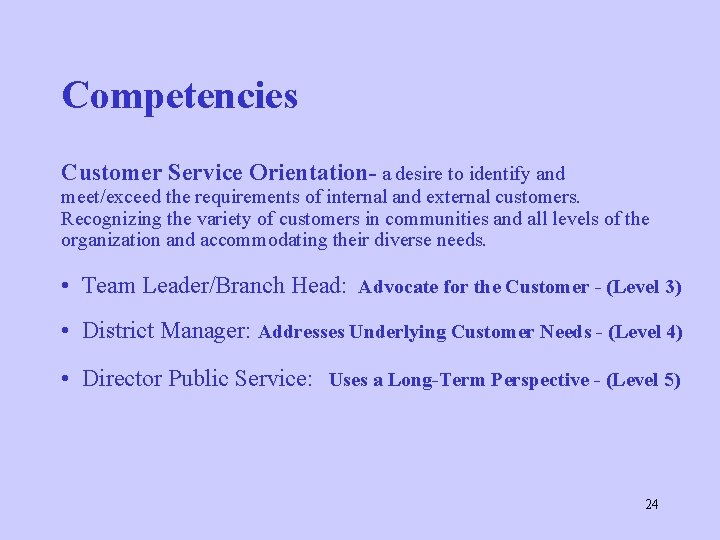
Competencies Customer Service Orientation- a desire to identify and meet/exceed the requirements of internal and external customers. Recognizing the variety of customers in communities and all levels of the organization and accommodating their diverse needs. • Team Leader/Branch Head: Advocate for the Customer - (Level 3) • District Manager: Addresses Underlying Customer Needs - (Level 4) • Director Public Service: Uses a Long-Term Perspective - (Level 5) 24
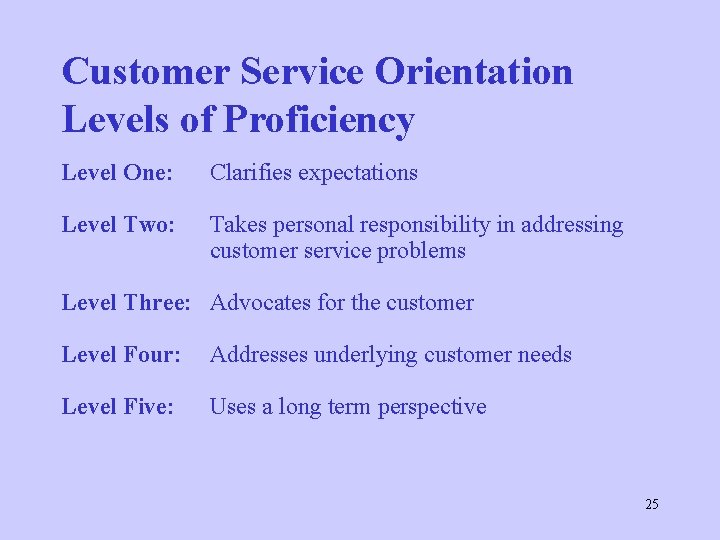
Customer Service Orientation Levels of Proficiency Level One: Clarifies expectations Level Two: Takes personal responsibility in addressing customer service problems Level Three: Advocates for the customer Level Four: Addresses underlying customer needs Level Five: Uses a long term perspective 25
Competencies Team Leader/Branch Head Customer Service Advocate for the Customer (Level 3 ) • Analyzes and interprets customer data • Develops and implements customer service strategy • Acts as an advocate for the customer 26
Competencies District Manager Customer Service Addresses Underlying Customer Needs (Level 4) • Determines the customer’s issues • Accommodates needs of the customer as customized service • Integrates a customer service focus into business strategies, plans and programs 27
Competencies Director Public Service Customer Service Uses a Long-Term Perspective (Level 5) • • • Looks for long term benefits for the customer Researches customer needs to guide strategy development Creates innovative solutions Formulates strategies to optimize customer service Ensures policies reflect responsiveness to the customer 28
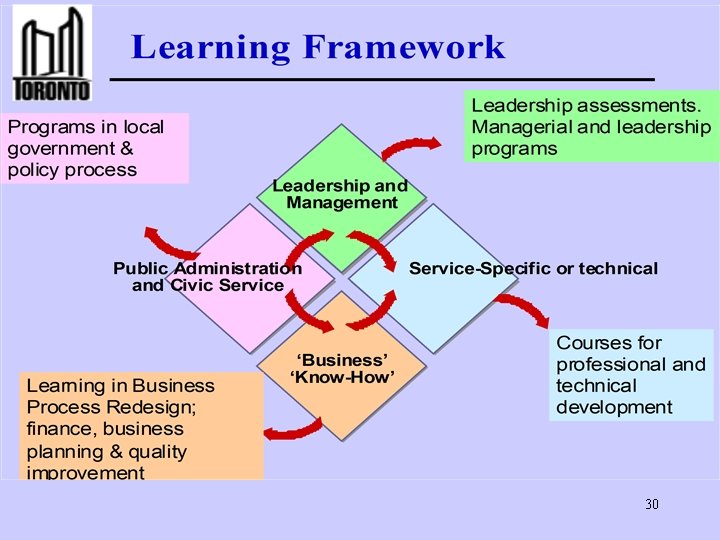
How competencies are organized The city’s competencies are organized into a Learning Framework The framework categorizes the areas of learning and skill needed in the city. The 4 areas are: • Public Administration & Civic Service • Business ‘Know-How’ • Leadership and Management • Service-specific or technical 29
30
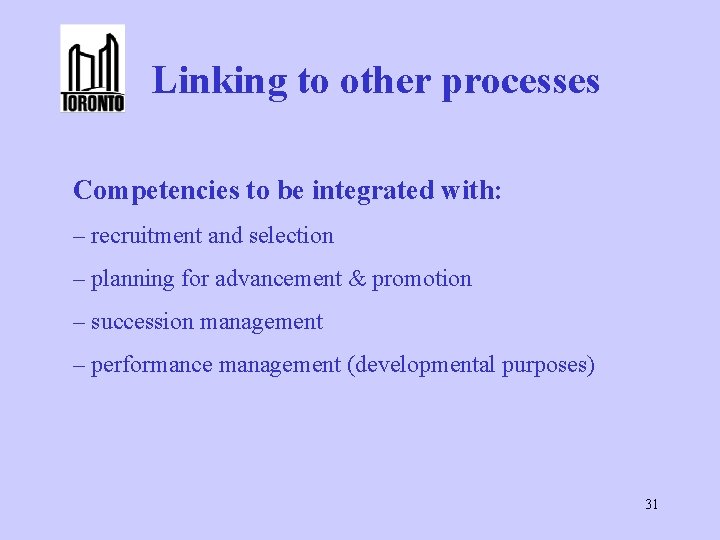
Linking to other processes Competencies to be integrated with: – recruitment and selection – planning for advancement & promotion – succession management – performance management (developmental purposes) 31
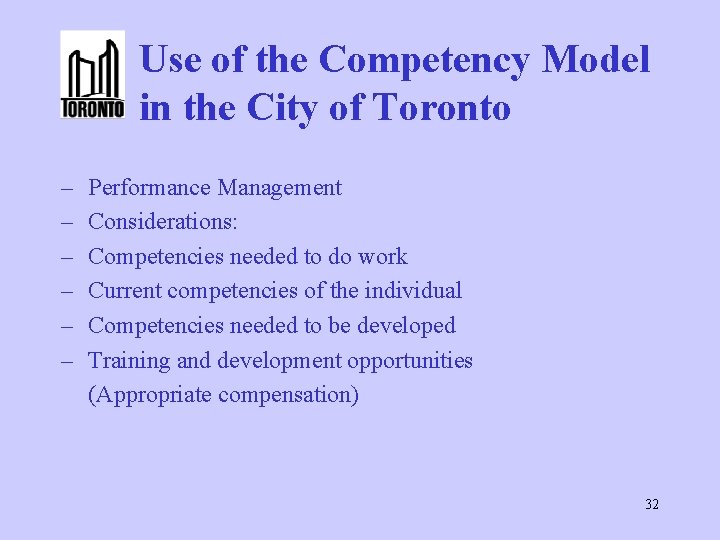
Use of the Competency Model in the City of Toronto – – – Performance Management Considerations: Competencies needed to do work Current competencies of the individual Competencies needed to be developed Training and development opportunities (Appropriate compensation) 32
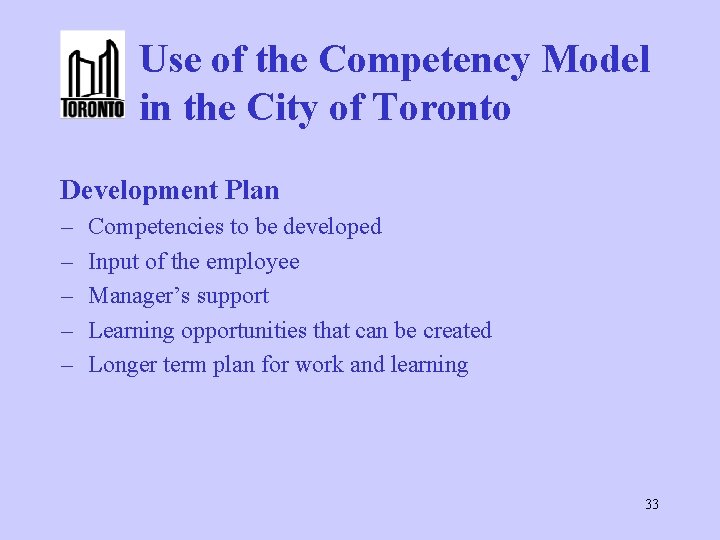
Use of the Competency Model in the City of Toronto Development Plan – – – Competencies to be developed Input of the employee Manager’s support Learning opportunities that can be created Longer term plan for work and learning 33
Use of the Competency Model in the City of Toronto Succession Planning Considerations: – Is there bench strength? – What do you want to keep? 34
Use of the Competency Model in the City of Toronto Retention and Recruitment – – Learning and development opportunities Reward and recognition Challenging and meaningful work Stimulating and supportive environment 35
Examples of Competencies from the Library Profession – Competencies for Special Librarian for the 21 st Century (http: //www. sla. org/professional/ competency. html) – National Library of Canada – Task Force on Core Competencies, American Library Association 36
Implementation of a Competency Model Factors that contribute to success: – – Effective implementation process High level of management commitment and support Development program must be in place Some models fall short when they are used to determine individual pay – Human Resources Dept. should be involved – Competencies must be applied correctly. 37
Implementation of a Competency Model Factors To Bear In Mind: – – Process is labour-intensive Cost Duration of process Organizational culture 38
Goals of the Presentation – Understand the principles of a competency based management system – Review a “Case Study” – Understand how a competency based system could be implemented – Provide resources for further information 39
Further Information Competencies Needed by Public Library Staff Josephine Bryant Kay Poustie Bertelsmann Foundation Gütersloh 2001 www. stiftung. bertelsmann. de/INPL 40