
COMPASSION FATIGUE A CLE PRESENTATION BY LOUIS M
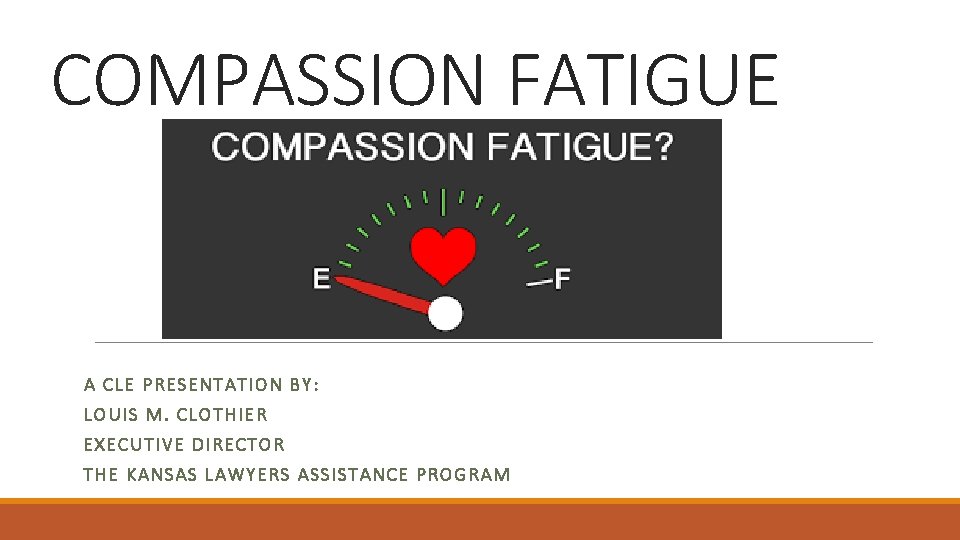
COMPASSION FATIGUE A CLE PRESENTATION BY: LOUIS M. CLOTHIER EXECUTIVE DIRECTOR THE KANSAS LAWYERS ASSISTANCE PROGRAM
COMPASSION FATIGUE What is it? The cumulative: ◦ physical, emotional and psychological effect ◦ of exposure to traumatic stories or events ◦ when working in a helping capacity, ◦ combined with the strain and stress of everyday life. www. american bar. org/groups/lawyer assistance/resources
Not quite the same as burnout Compassion Fatigue has a narrower focus ◦ less about work dissatisfaction ◦ more about being harmed by the work being done ◦ experiencing intrusive imagery and a change in world-view ◦ also known as vicarious trauma, secondary traumatic stress ◦ affects those in the helping professions, including attorneys and others in the legal community.
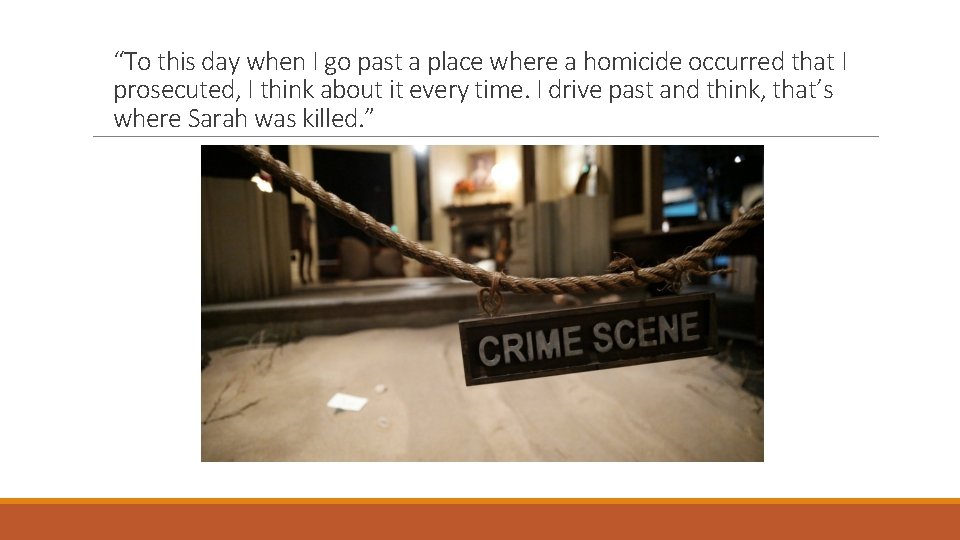
“To this day when I go past a place where a homicide occurred that I prosecuted, I think about it every time. I drive past and think, that’s where Sarah was killed. ”
Symptoms of Compassion Fatigue ◦ Perceiving the demands of work as outweighing the benefits ◦ Client/work demands regularly encroach on personal time ◦ Feeling overwhelmed and physically and emotionally exhausted ◦ Having disturbing images from cases intrude into thoughts and dreams ◦ Becoming pessimistic, cynical, irritable, and prone to anger
Symptoms, continued ◦ View world as inherently dangerous ◦ increasingly vigilant about personal and family safety ◦ Becoming emotionally detached in professional and personal life and personal relationships ◦ Withdrawing socially--becoming emotionally disconnected from others ◦ Becoming demoralized--questioning one’s professional competence and effectiveness
Still more symptoms ◦ Secretive self-medication/addiction (alcohol, drugs, work, sex, food, gambling, etc. ) ◦ Less productive and effective professionally ◦ Feelings of powerlessness, indecisiveness, anxiety irritability, and alienation from others
Wisconsin Lawyer: Our clients have a lot of trauma in their lives: poverty, lack of education, homelessness, joblessness, mental health issues, substance abuse issues. Their issues become ours. You absorb that on a day to day basis and you take it home with you. It can make you irritable and short-fused with your family. ” Yvonne Vegas, 22 year Wisconsin State Public Defenders Office lawyer “
Those in Certain Practice Areas may be more at risk
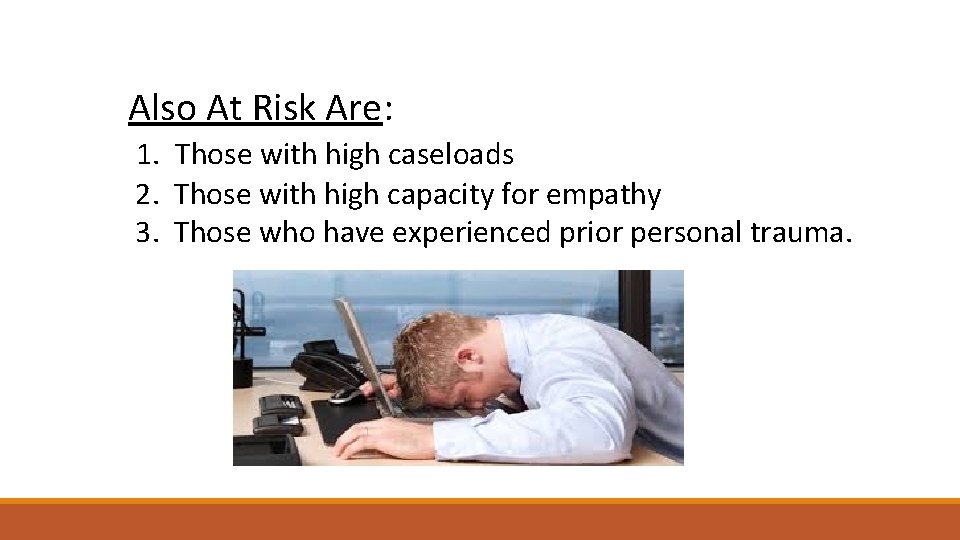
Also At Risk Are: 1. Those with high caseloads 2. Those with high capacity for empathy 3. Those who have experienced prior personal trauma.
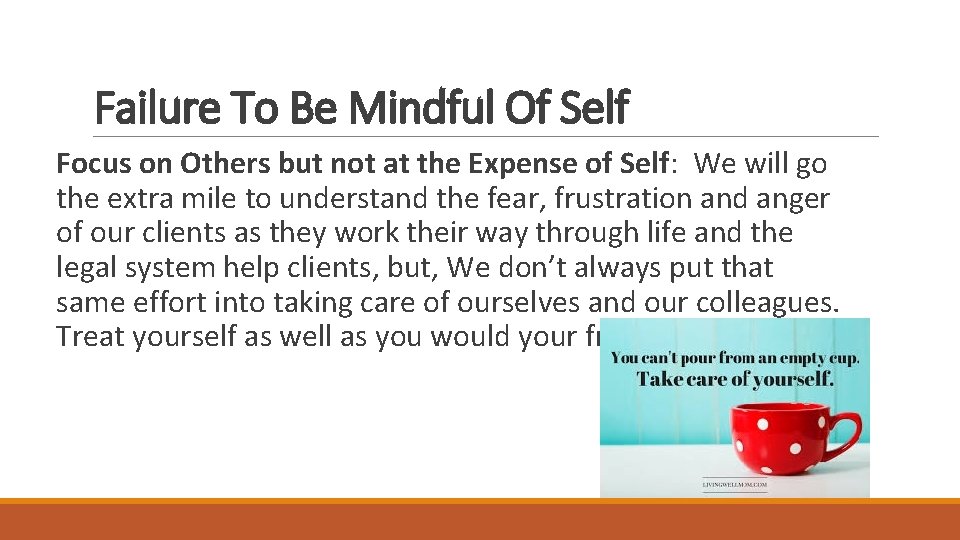
Failure To Be Mindful Of Self Focus on Others but not at the Expense of Self: We will go the extra mile to understand the fear, frustration and anger of our clients as they work their way through life and the legal system help clients, but, We don’t always put that same effort into taking care of ourselves and our colleagues. Treat yourself as well as you would your friend.

Compassion Fatigue & Ethical Lapses Undiagnosed, untreated Compassion Fatigue can lead to ethical lapses. ◦ It can turn into depression ◦ With depression comes fatigue and inability to focus ◦ We start avoiding one or two clients who may be particularly needy ◦ A complaint is filed, listing violations that include: ◦ deficiencies in competence, communication and diligence ◦ Rule 1. 1 (competence), ◦ Rule 1. 3 (diligence and promptness), and ◦ Rule 1. 4 (communication—duty to keep client reasonably informed)
In Addition: Substance Abuse: We may abuse alcohol and or drugs to help relieve our condition and such leads us to neglect of our work resulting in violations of the same professional rules of conduct 1. 1, 1. 3, and 1. 4 Worse Yet: ◦ An attorney may get a DUI or other misdemeanor conviction, which may violate Rule 8. 4 (maintaining the integrity of the profession—misconduct)
And, if things get really bad ◦ An Attorney may fail to respond to the “grey envelope” letter ◦ Rule 207 violation (The members of the bar or any state or local bar association shall assist the Disciplinary Administrator in investigations and such other matters as may be requested of them).
How to Combat Compassion Fatigue and Avoid Ethical Lapses: Awareness Debrief Self care Balance and relationships Being intentional Professional Assistance

Awareness Understand what Compassion Fatigue is and periodically assess for it.
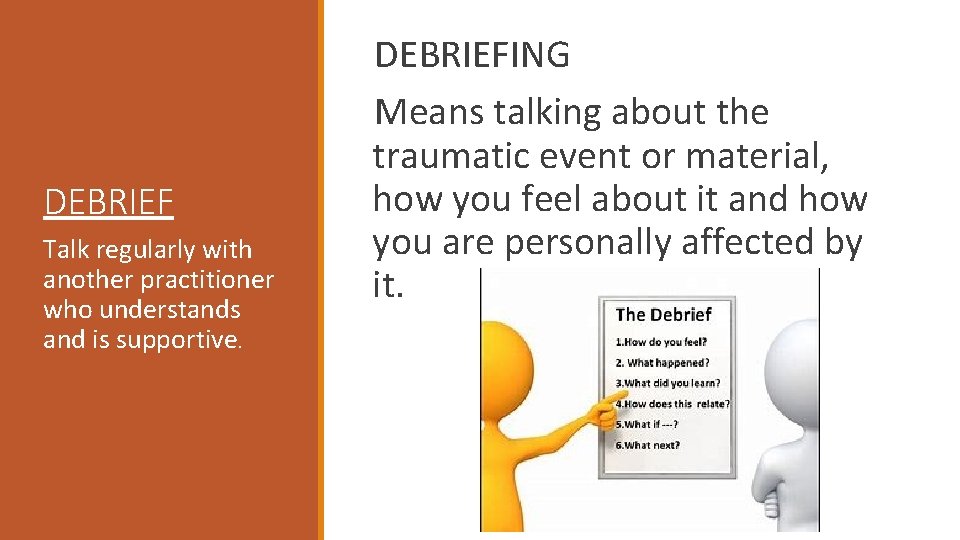
DEBRIEF Talk regularly with another practitioner who understands and is supportive. DEBRIEFING Means talking about the traumatic event or material, how you feel about it and how you are personally affected by it.
SELF CARE LEARN HOW TO TURN OFF YOUR “FIGHT OR FLIGHT” RESPONSE AND TURN ON YOUR “RELAXATION RESPONSE. ” Healthy eating Regular exercise Adequate rest
Balance and Relationships Think about how you can work on balance instead of the reasons you can’t. Develop and maintain healthy relationships. BALANCE & RELATIONSHIPS ◦ Take steps to simplify ◦ Do less ◦ Ask for help ◦ Stop trying to be all things to all people
Be Intentional If needed, put a plan for change in place. Redirect those thoughts that tell you “I should be able to do this all by myself” to “I don’t have to do it all by myself. ” BE INTENTIONAL Recognize that attributes that contribute to your professional success, and your work (e. g. , being motivated, a perfectionist, an achievement-oriented, driven fixer) may be contributing to imbalance in your life.
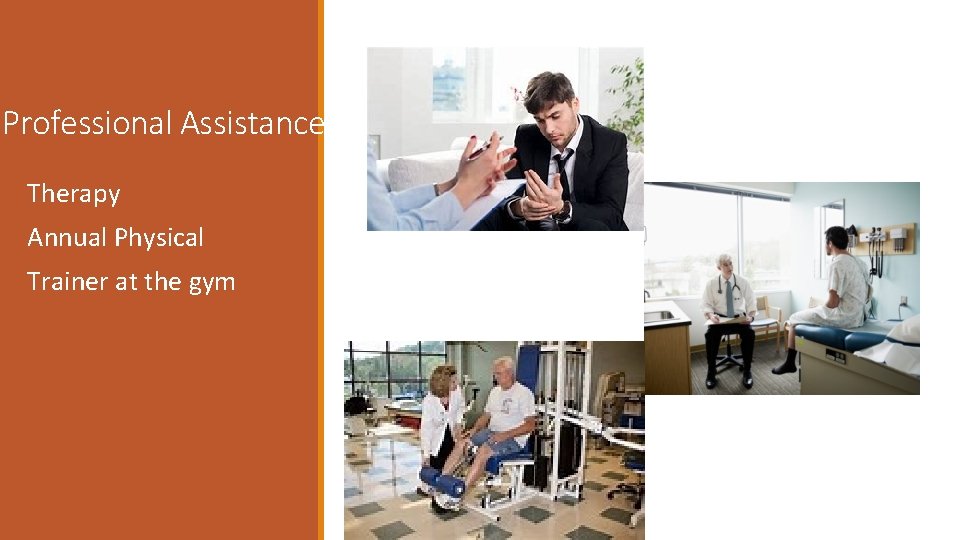
Professional Assistance Therapy Annual Physical Trainer at the gym
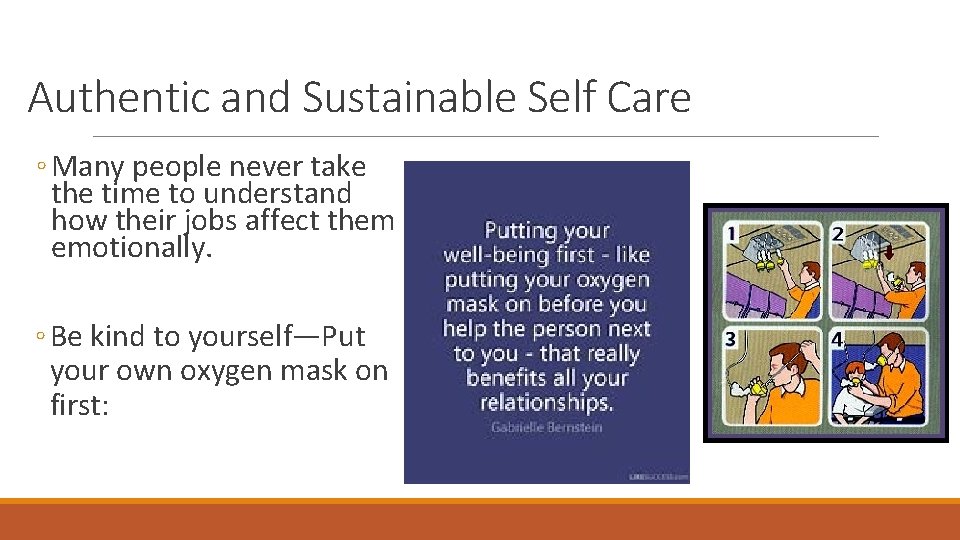
Authentic and Sustainable Self Care ◦ Many people never take the time to understand how their jobs affect them emotionally. ◦ Be kind to yourself—Put your own oxygen mask on first:
Authentic and Sustainable Self Care– Part 2 Enhance your awareness with education Accept where you are on your path. Exchange information and feelings with people who can validate you.
Authentic and Sustainable Self Care – Part 3 ◦ Listen to others ◦ Clarify your personal boundaries. ◦ Express your needs verbally. ◦ Take positive action to bring change, if only in your attitudes. ◦ Practice the art of self management – “No. ” is a complete sentence. ◦ Organize your life so as to be proactive rather than reactive. ◦ Reserve your energy by picking your battles.
Factors That Contribute to Lawyer Happiness ◦ Having a sense of control over one’s choices ◦ Being involved with peers ◦ Feeling competent at the job ◦ Having meaningful work ◦ Feeling supported at work ◦ Having and being aware of one’s own intrinsic values, such as seeking personal growth, helping others, etc.
Practical Approaches to Increase Happiness ◦ Improve attitude – optimists thrive ◦ Work, but do less of it ◦ Reduce your focus on acquiring material things and increase you focus on acquiring experiences ◦ Make or maintain friends ◦ Start laughing ◦ Be mindful of the joy of ordinary experiences ◦ Make your own choices ◦ Volunteer; help others
TEN STEPS TO WELLNESS ◦ Do not try to do them all at one time – select one and practice it until it becomes a working part of your life. ◦ Then move to another and incorporate it until you have progressed through them all.
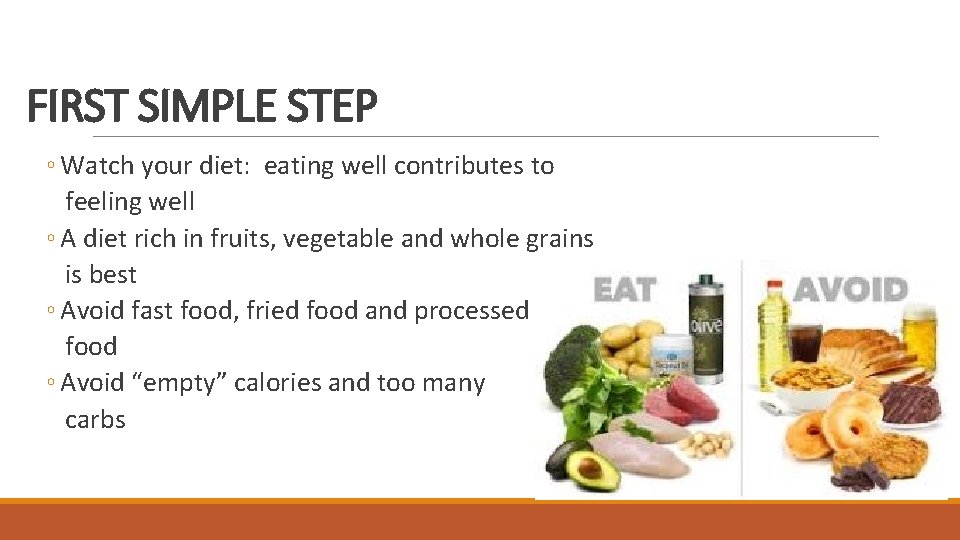
FIRST SIMPLE STEP ◦ Watch your diet: eating well contributes to feeling well ◦ A diet rich in fruits, vegetable and whole grains is best ◦ Avoid fast food, fried food and processed food ◦ Avoid “empty” calories and too many carbs
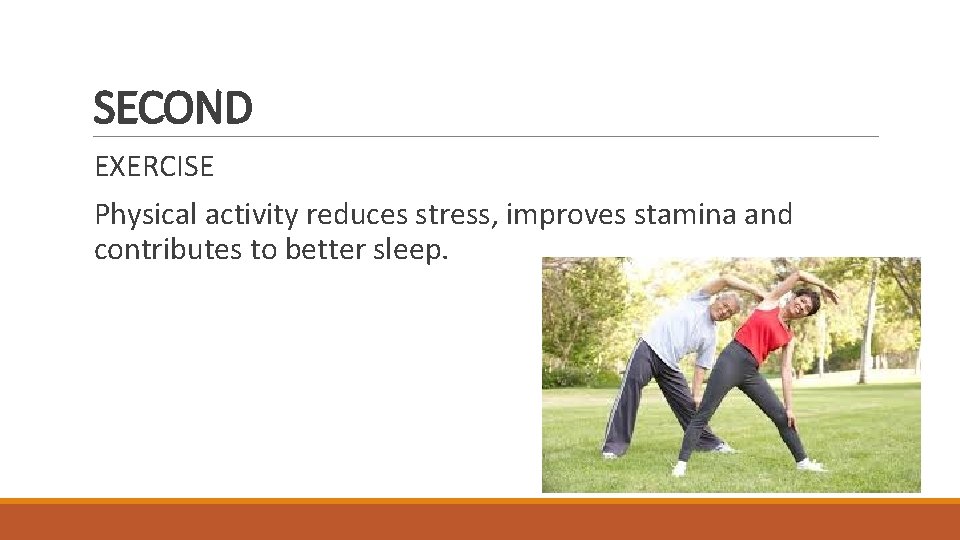
SECOND EXERCISE Physical activity reduces stress, improves stamina and contributes to better sleep.
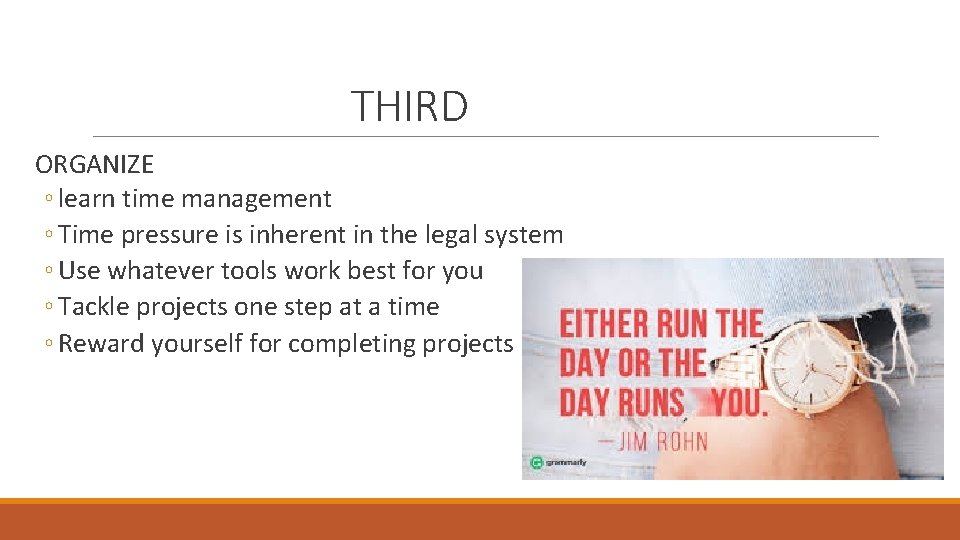
THIRD ORGANIZE ◦ learn time management ◦ Time pressure is inherent in the legal system ◦ Use whatever tools work best for you ◦ Tackle projects one step at a time ◦ Reward yourself for completing projects
FOURTH RELAX AND BREATHE! Take a deep breath or four – it will improve clarity of thought Sit quietly and become aware of your breathing for five minutes a day, working up to 15 to 20 minutes a day STOP: Stop Take a breath Observe yourself and surroundings Proceed mindfully
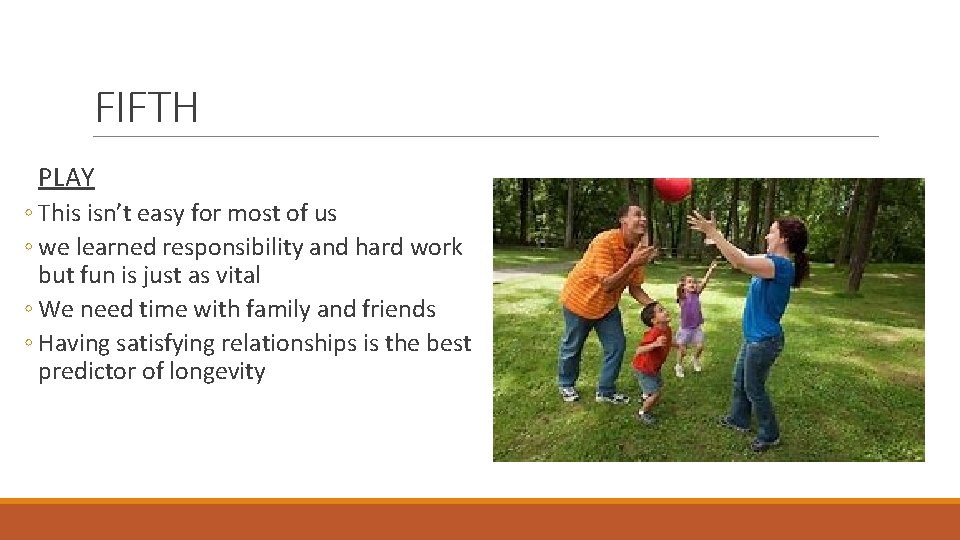
FIFTH PLAY ◦ This isn’t easy for most of us ◦ we learned responsibility and hard work but fun is just as vital ◦ We need time with family and friends ◦ Having satisfying relationships is the best predictor of longevity
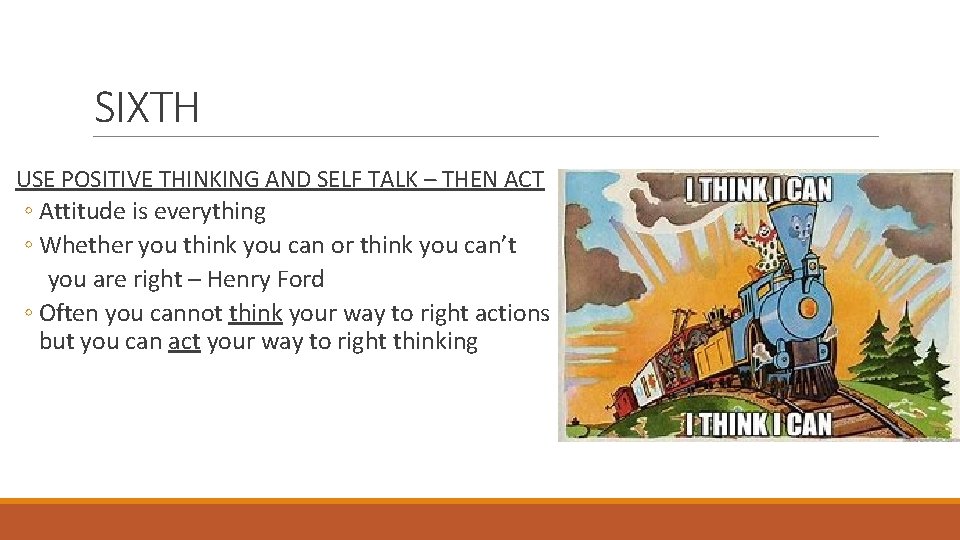
SIXTH USE POSITIVE THINKING AND SELF TALK – THEN ACT ◦ Attitude is everything ◦ Whether you think you can or think you can’t you are right – Henry Ford ◦ Often you cannot think your way to right actions but you can act your way to right thinking
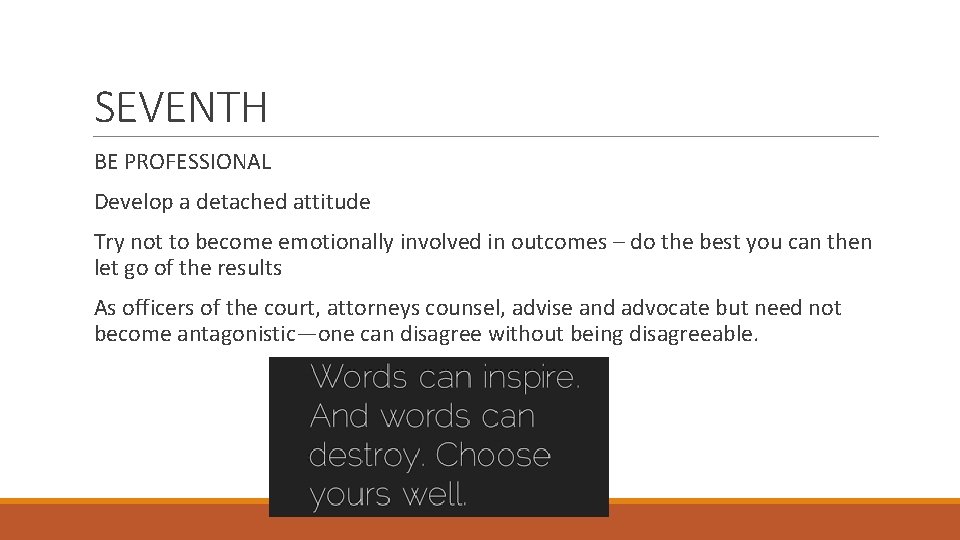
SEVENTH BE PROFESSIONAL Develop a detached attitude Try not to become emotionally involved in outcomes – do the best you can then let go of the results As officers of the court, attorneys counsel, advise and advocate but need not become antagonistic—one can disagree without being disagreeable.
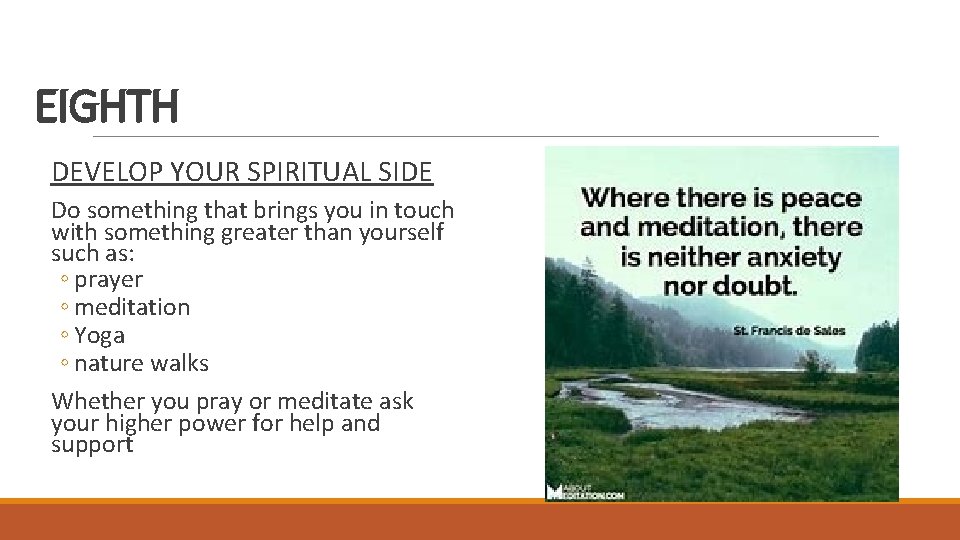
EIGHTH DEVELOP YOUR SPIRITUAL SIDE Do something that brings you in touch with something greater than yourself such as: ◦ prayer ◦ meditation ◦ Yoga ◦ nature walks Whether you pray or meditate ask your higher power for help and support
NINTH HAVE A SENSE OF HUMOR Laughter is a natural stress reducer. You need those endorphins and you deserve them! “Don’t take yourself too seriously”
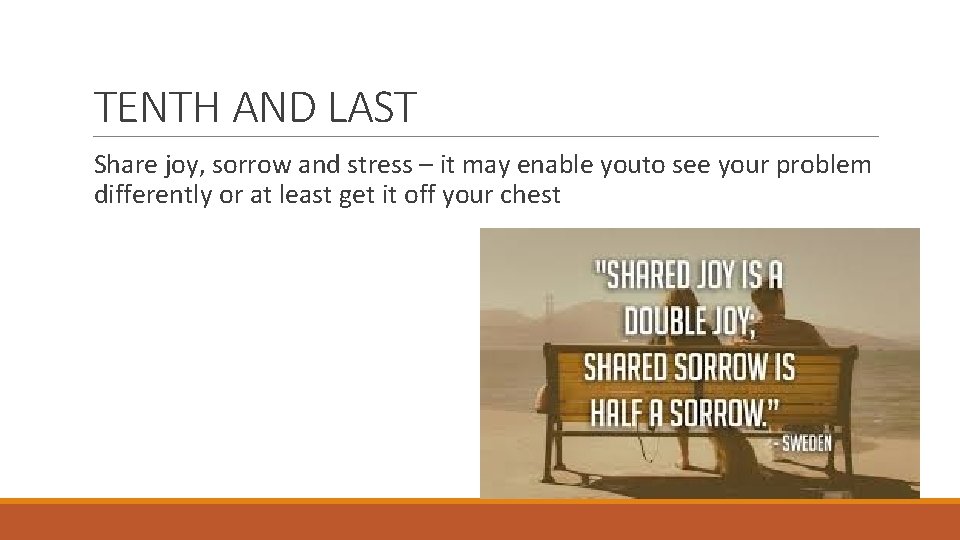
TENTH AND LAST Share joy, sorrow and stress – it may enable youto see your problem differently or at least get it off your chest

To Be The Best Attorney You Can Be - Take Care Of Yourself

You Must Maintain Your Physical and Mental Health
KANSAS LAWAYERS ASSISTANCE PROGRAM 785 -368 -8275 www. kalap. com 515 S. Kansas Ave. , Suite 202 kalap@kscourts. org Topeka KS 66602
- Slides: 40