
Comparison of Visual Texts TASK 2 Part 1

- Slides: 25
Comparison of Visual Texts TASK 2 Part 1 Analysis & Comparison By Eva Arce
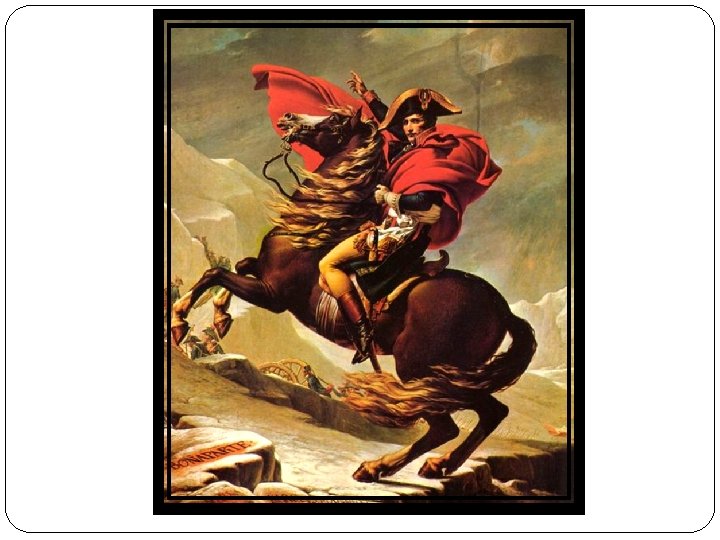
Definition of a Hero Bonaparte Crossing the Saint-Bernard By Jacques-Louis David Musee National du Chateau de Malmaison, Rueil-Malmaison
Analysis I. Work Cited: David, Jacques-Louis David. Bonaparte Crossing the Saint-Bernard 1800. (1801 -1805) Rueil-Malmaison: Musée National du Château de Malmaison. II. Speaker Jacques Louis David; commissioned by Charles IV of Spain III. Style Oil on Canvas; classical portrait medium IV. Context 1801 -1805 France David was the official portrait painter for Napoleon V. Audience Primary: Napoleon Citizens of Napoleon’s Empire Charles IV of Spain wanted to re-establish diplomatic relationships with France (exchange of gifts)
Analysis VI. Artist’s Purpose and Method to define Napoleon as a National hero VII. Assertion/Main Idea A great leader is a fearless master of his people who is willing to invade other territories in order to build his empire. VIII. Tone Confident, dominant, assertive IX. Appeals Logos: Battle of Merengo decisive French Victory over Austrians; one of many victories to conquer Europe Pathos: Respect for military power Ethos: David was French; he supported Napoleon
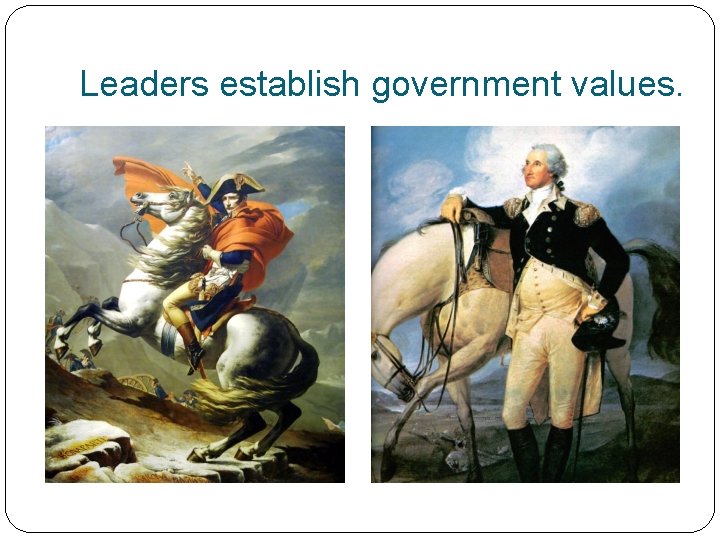
Analysis �Allusions: to his predecessors who also crossed the Alps Hannibal (247– 183 or 182 BC) Carthaginian military commander Charlemagne King of the Franks (768 -814) & Emperor of Rome (800 -814) �Character: impassive expression; dominant pose; confidant, defiant leader; �Detail: right hand =Charge! �Metaphor: Horse = supporters; controlled, scared �Setting: turbulent; winds of war (symbolism)
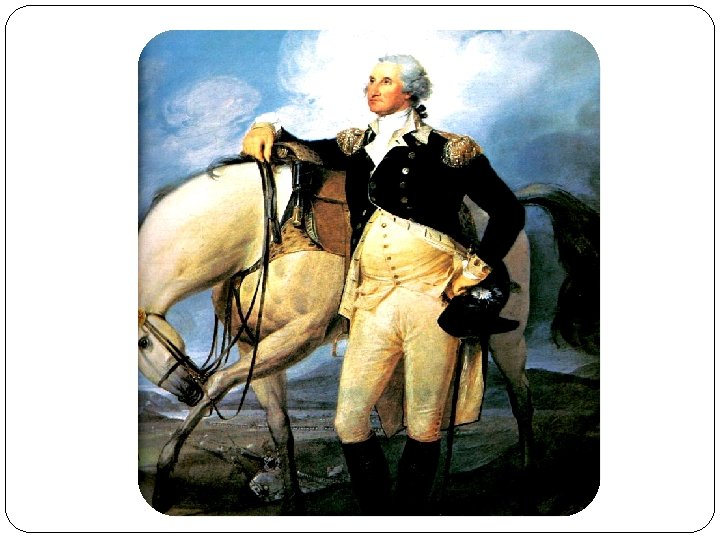
Definition of an American Hero Portrait of George Washington (1790) By John Trumbull City Hall New York City
Analysis I. Work Cited: Trumbull, John. Portrait of George Washington. (1790) New York City: City Hall. II. Speaker John Trumbull III. Style Oil on Canvas; classical portrait medium IV. Context New York City; after winning the American Revolution Trumbull was the official portrait painter for Washington
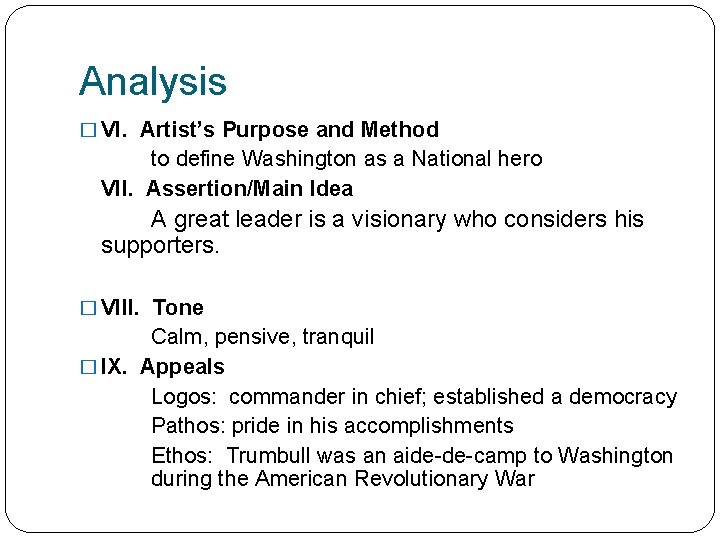
Analysis � VI. Artist’s Purpose and Method to define Washington as a National hero VII. Assertion/Main Idea A great leader is a visionary who considers his supporters. � VIII. Tone Calm, pensive, tranquil � IX. Appeals Logos: commander in chief; established a democracy Pathos: pride in his accomplishments Ethos: Trumbull was an aide-de-camp to Washington during the American Revolutionary War
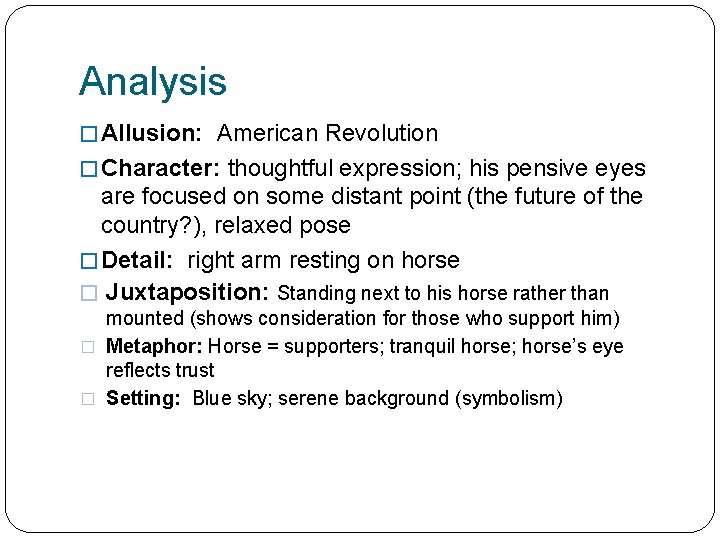
Analysis � Allusion: American Revolution � Character: thoughtful expression; his pensive eyes are focused on some distant point (the future of the country? ), relaxed pose � Detail: right arm resting on horse � Juxtaposition: Standing next to his horse rather than mounted (shows consideration for those who support him) � Metaphor: Horse = supporters; tranquil horse; horse’s eye reflects trust � Setting: Blue sky; serene background (symbolism)
Leaders establish government values.
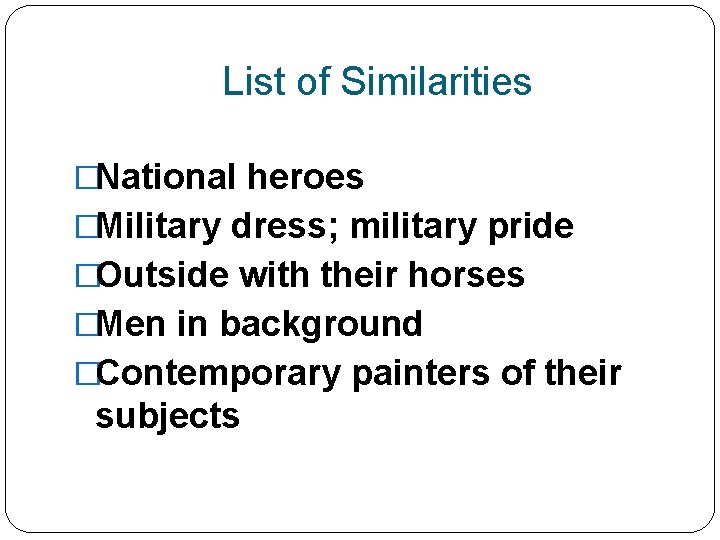
List of Similarities �National heroes �Military dress; military pride �Outside with their horses �Men in background �Contemporary painters of their subjects
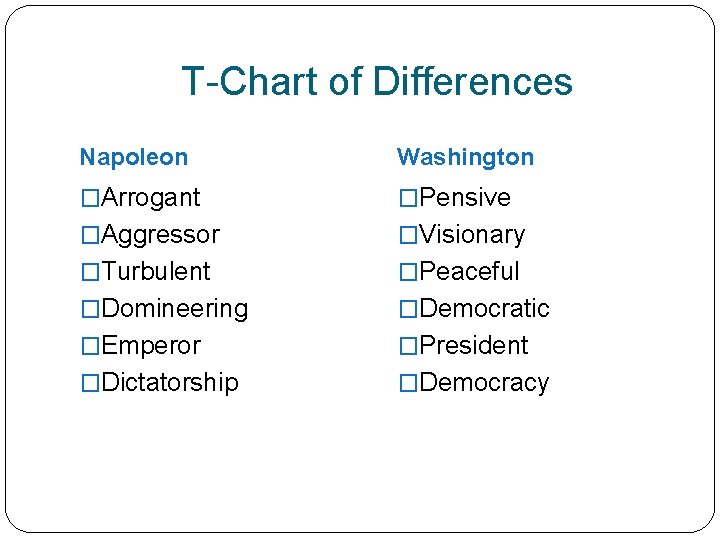
T-Chart of Differences Napoleon Washington �Arrogant �Pensive �Aggressor �Visionary �Turbulent �Peaceful �Domineering �Democratic �Emperor �President �Dictatorship �Democracy
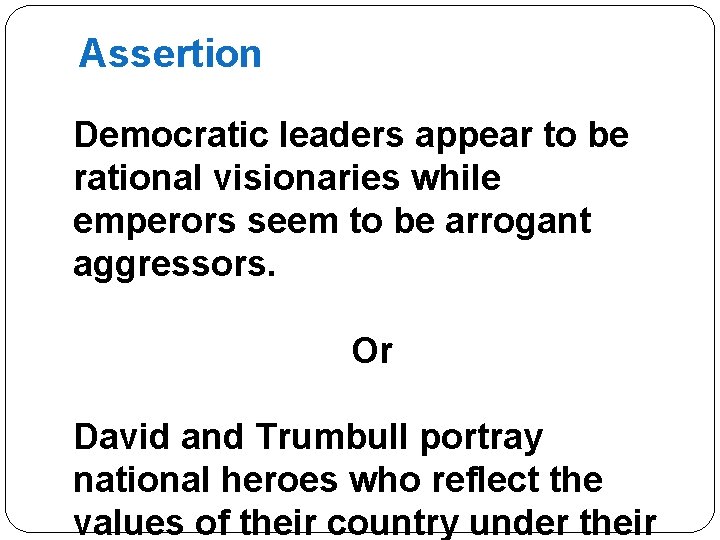
Assertion Democratic leaders appear to be rational visionaries while emperors seem to be arrogant aggressors. Or David and Trumbull portray national heroes who reflect the values of their country under their
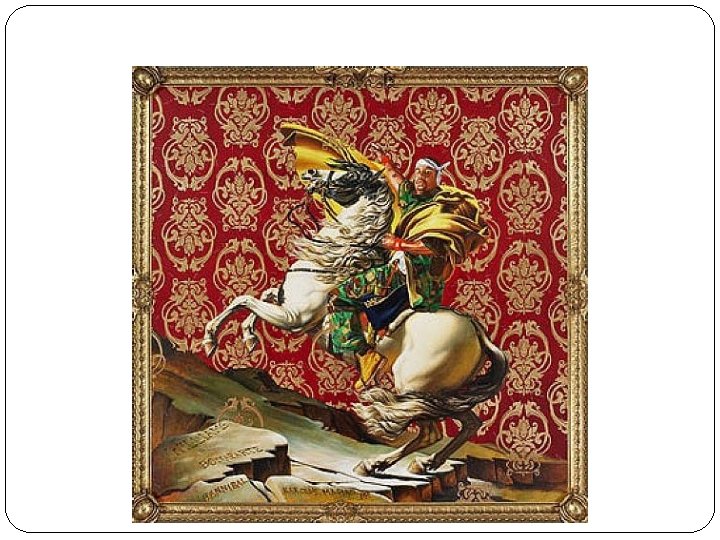
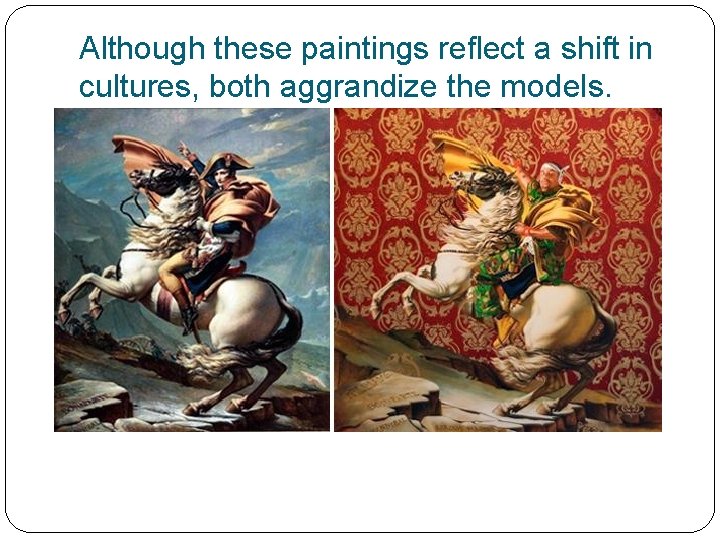
Napoleon Leading the Army over the Alps, 2005 Kehinde Wiley Oil on canvas Brooklyn Museum Brooklyn, New York
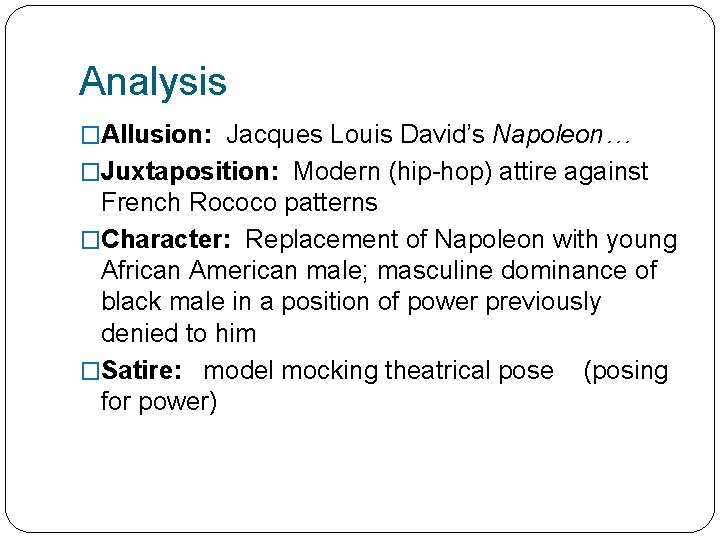
Analysis �Allusion: Jacques Louis David’s Napoleon… �Juxtaposition: Modern (hip-hop) attire against French Rococo patterns �Character: Replacement of Napoleon with young African American male; masculine dominance of black male in a position of power previously denied to him �Satire: model mocking theatrical pose (posing for power)
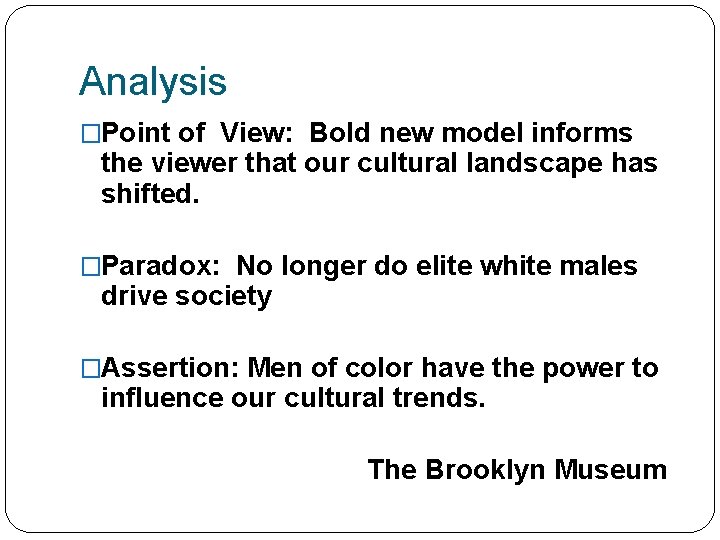
Analysis �Point of View: Bold new model informs the viewer that our cultural landscape has shifted. �Paradox: No longer do elite white males drive society �Assertion: Men of color have the power to influence our cultural trends. The Brooklyn Museum
Although these paintings reflect a shift in cultures, both aggrandize the models.
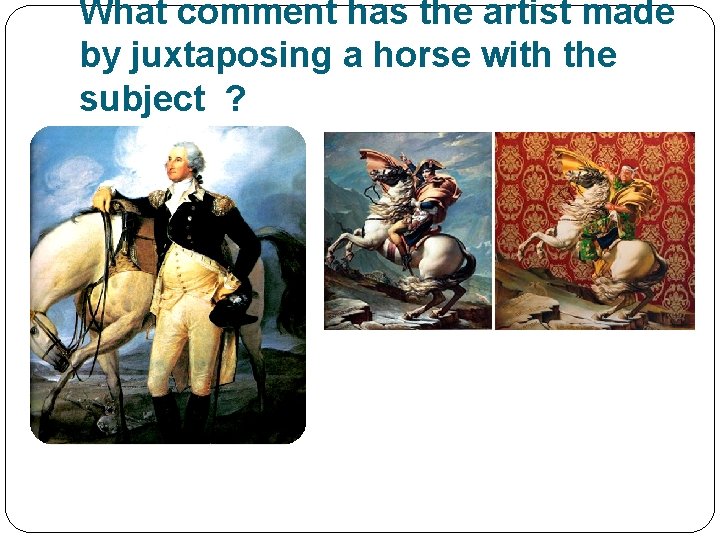
What comment has the artist made by juxtaposing a horse with the subject ?
HORSES AS AN ARTIST’S DEVICE By placing a horse in the composition, what comment do the following artists make about the subject?
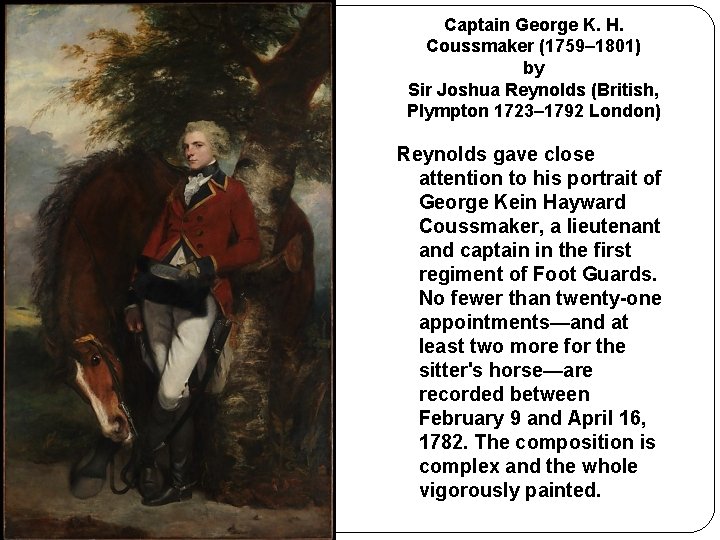
Captain George K. H. Coussmaker (1759– 1801) by Sir Joshua Reynolds (British, Plympton 1723– 1792 London) Reynolds gave close attention to his portrait of George Kein Hayward Coussmaker, a lieutenant and captain in the first regiment of Foot Guards. No fewer than twenty-one appointments—and at least two more for the sitter's horse—are recorded between February 9 and April 16, 1782. The composition is complex and the whole vigorously painted.
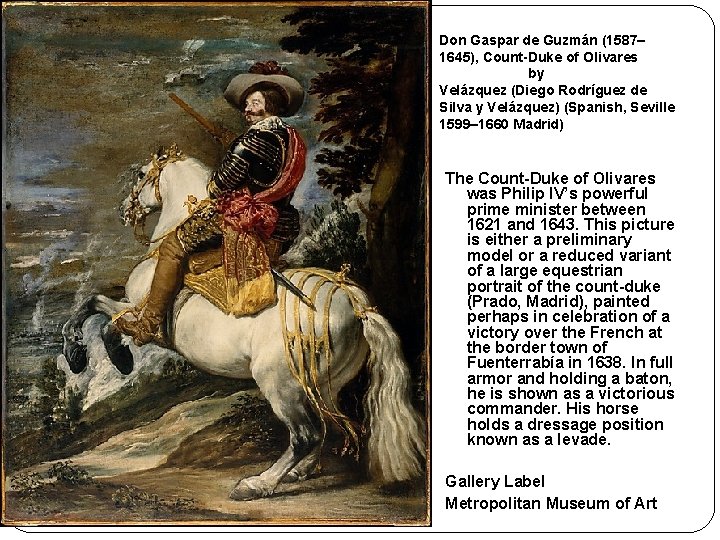
Don Gaspar de Guzmán (1587– 1645), Count-Duke of Olivares by Velázquez (Diego Rodríguez de Silva y Velázquez) (Spanish, Seville 1599– 1660 Madrid) The Count-Duke of Olivares was Philip IV’s powerful prime minister between 1621 and 1643. This picture is either a preliminary model or a reduced variant of a large equestrian portrait of the count-duke (Prado, Madrid), painted perhaps in celebration of a victory over the French at the border town of Fuenterrabía in 1638. In full armor and holding a baton, he is shown as a victorious commander. His horse holds a dressage position known as a levade. Gallery Label Metropolitan Museum of Art
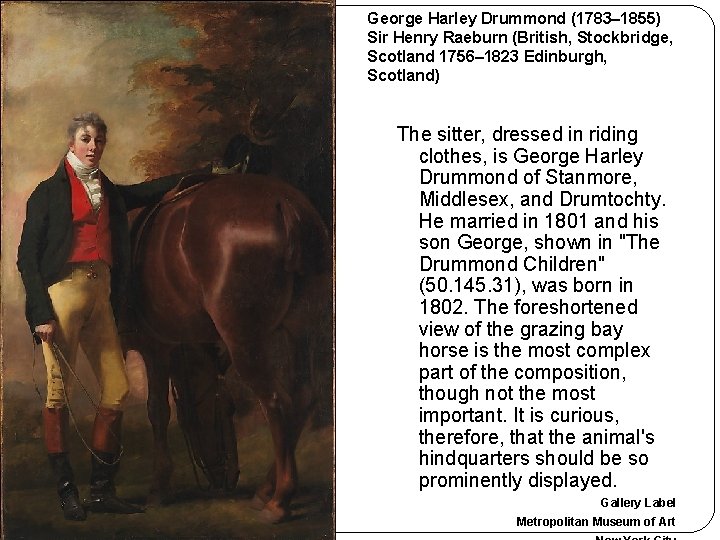
George Harley Drummond (1783– 1855) Sir Henry Raeburn (British, Stockbridge, Scotland 1756– 1823 Edinburgh, Scotland) The sitter, dressed in riding clothes, is George Harley Drummond of Stanmore, Middlesex, and Drumtochty. He married in 1801 and his son George, shown in "The Drummond Children" (50. 145. 31), was born in 1802. The foreshortened view of the grazing bay horse is the most complex part of the composition, though not the most important. It is curious, therefore, that the animal's hindquarters should be so prominently displayed. Gallery Label Metropolitan Museum of Art