
Comparison of Surface Resistivity to Bulk Diffusion Testing
Comparison of Surface Resistivity to Bulk Diffusion Testing of Concrete Christopher C. Ferraro Ph. D. Assistant In Engineering Department of Civil and Coastal Engineering, University of Florida Mario Paredes P. E. State Corrosion Engineer Florida Department Transportation
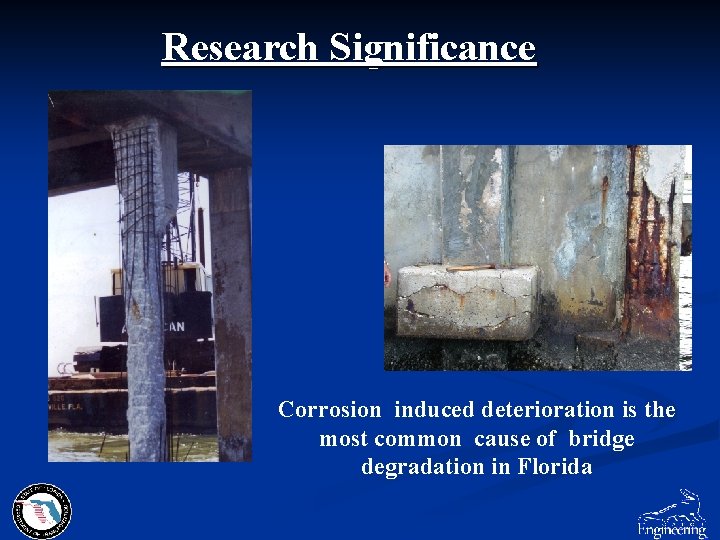
Research Significance Corrosion induced deterioration is the most common cause of bridge degradation in Florida
FDOT Chloride Penetration Research Program Started In 2002, Consisted of 3 phases: 1 st Phase (2002 -2003): Characterization of structural concrete placed in the field using n n n 2 nd Phase(2003 -2007): Find the best electrical indicators of permeability correlated to diffusion n n Bulk Diffusion (NT Build 443) n RMT (NT Build 492) n AASHTO T 277/ASTM C 1202 – Chloride Penetration Test Surface Resistivity (Florida Method FM 5 -578) n n AASHTO T 277/ASTM C 1202 – Chloride Penetration Test Surface Resistivity (Florida Method FM 5 -578) 3 rd Phase (2007 -2009): Surface
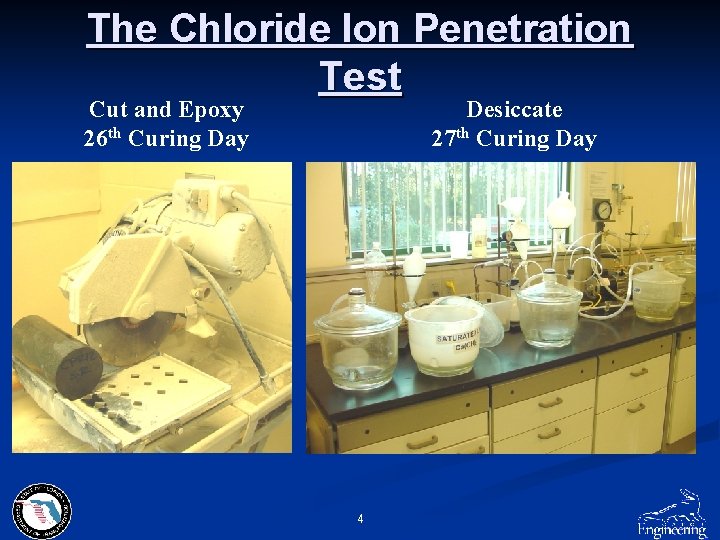
The Chloride Ion Penetration Test Cut and Epoxy 26 th Curing Day Desiccate 27 th Curing Day 4
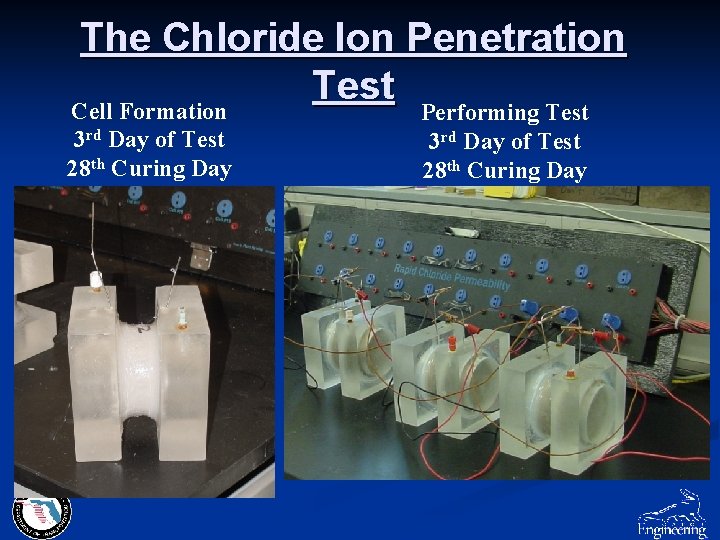
The Chloride Ion Penetration Test Cell Formation Performing Test 3 rd Day of Test 28 th Curing Day
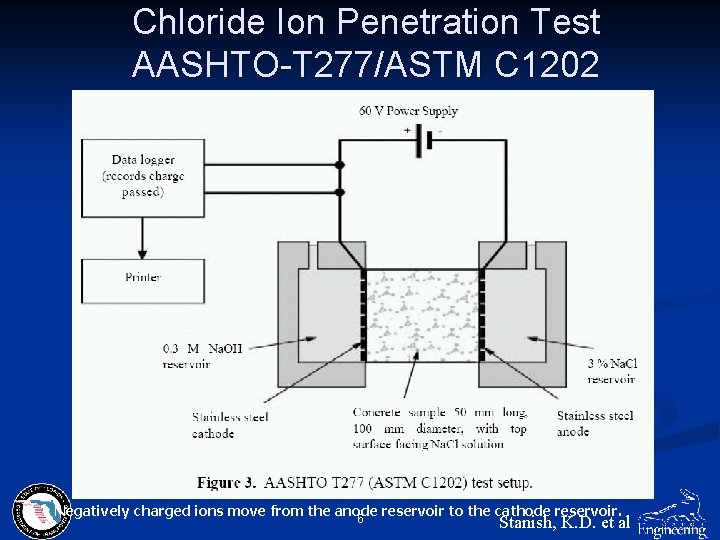
Chloride Ion Penetration Test AASHTO-T 277/ASTM C 1202 Negatively charged ions move from the anode reservoir to the cathode reservoir. 6 Stanish, K. D. et al
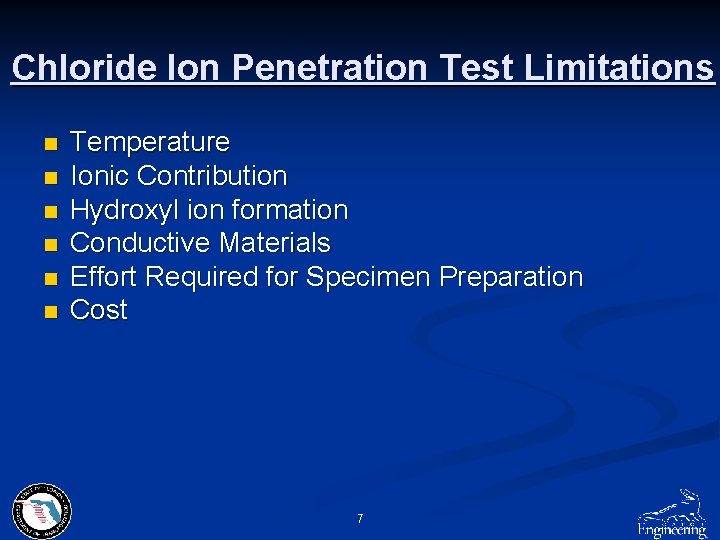
Chloride Ion Penetration Test Limitations n n n Temperature Ionic Contribution Hydroxyl ion formation Conductive Materials Effort Required for Specimen Preparation Cost 7
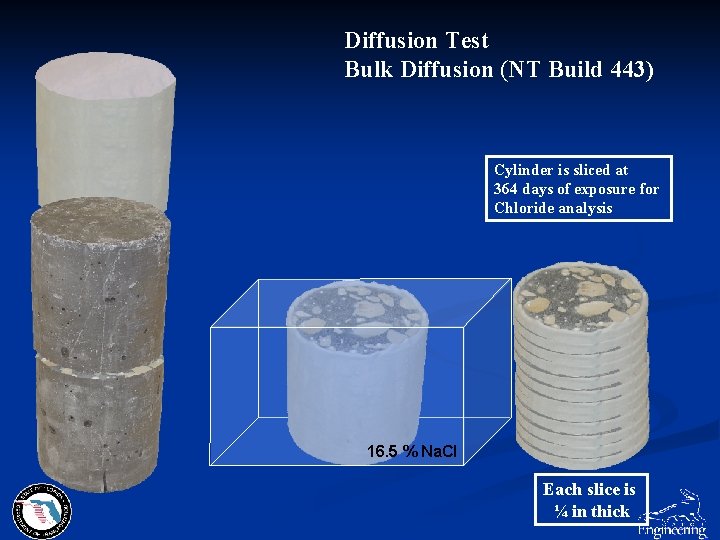
Diffusion Test Bulk Diffusion (NT Build 443) Cylinder is sliced at 364 days of exposure for Chloride analysis 16. 5 % Na. Cl Each slice is ¼ in thick
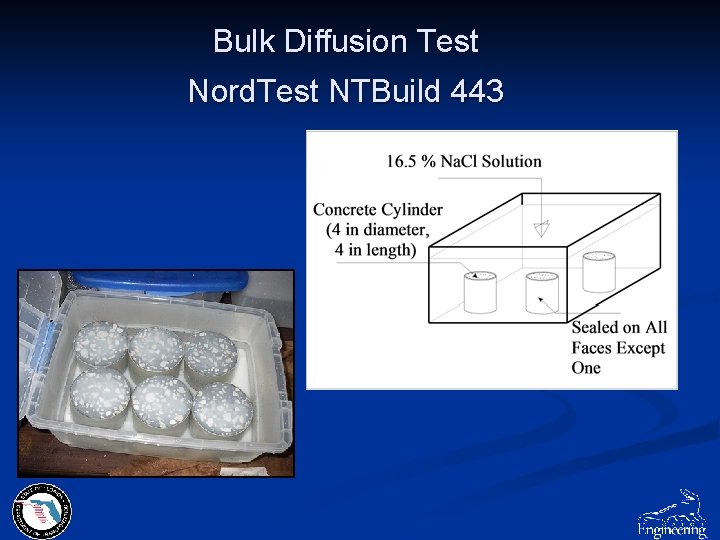
Bulk Diffusion Test Nord. Test NTBuild 443
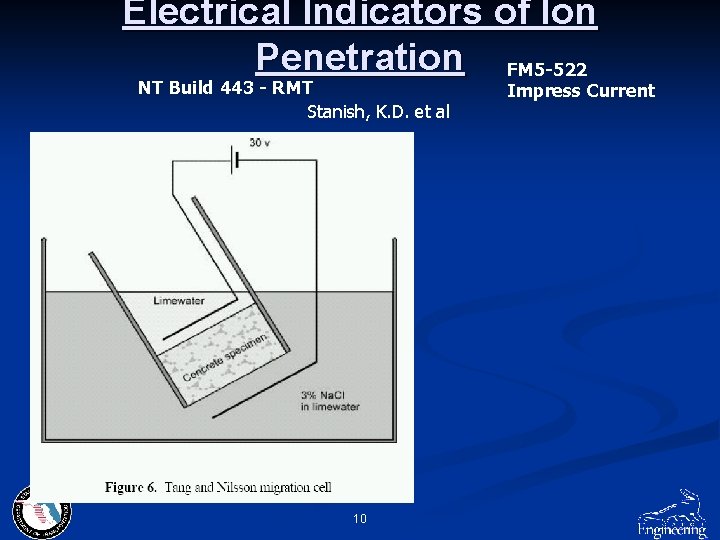
Electrical Indicators of Ion Penetration FM 5 -522 NT Build 443 - RMT Stanish, K. D. et al 10 Impress Current
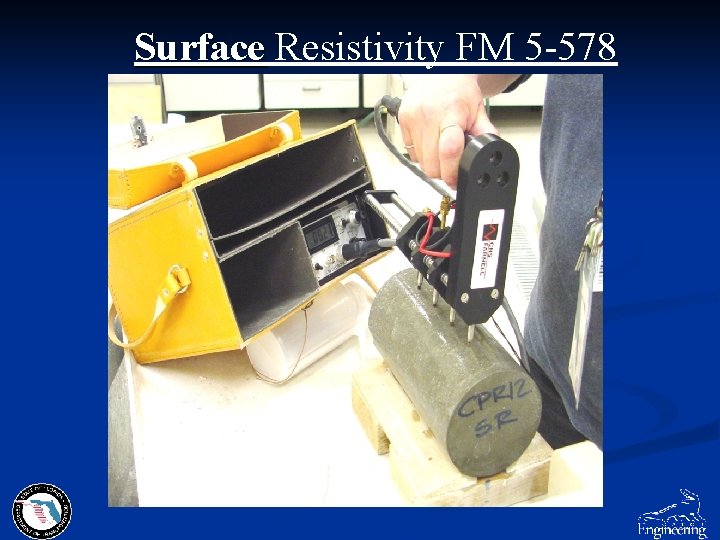
Surface Resistivity FM 5 -578
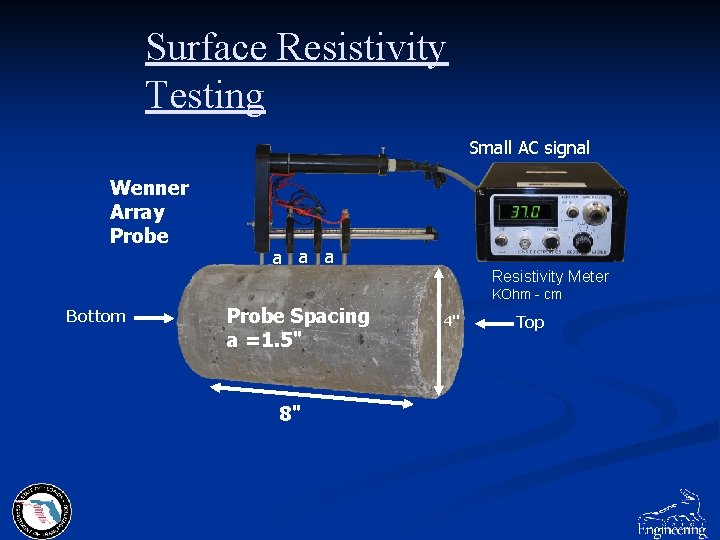
Surface Resistivity Testing Small AC signal Wenner Array Probe a a a Resistivity Meter KOhm - cm Bottom Probe Spacing a =1. 5" 8" 4" Top
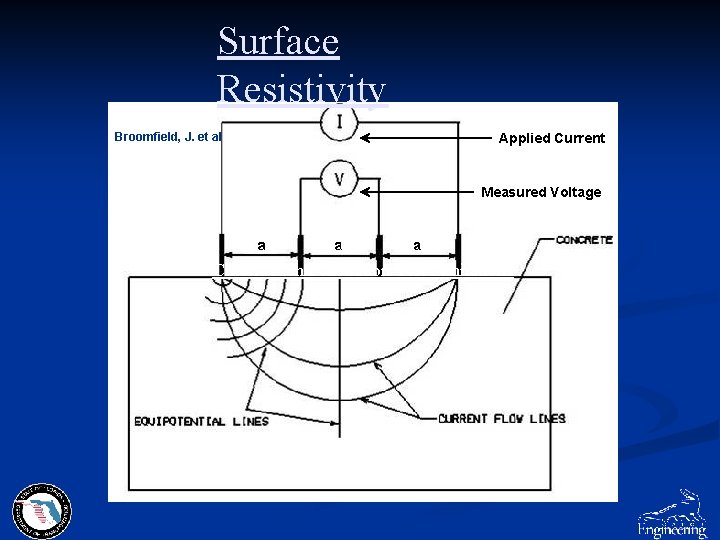
Surface Resistivity Broomfield, J. et al Applied Current Measured Voltage Chloride Ion Penetration Test Limitations
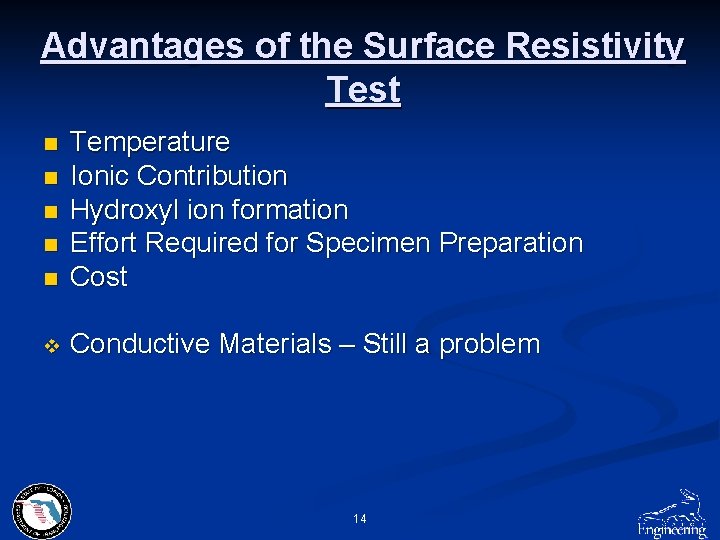
Advantages of the Surface Resistivity Test n Temperature Ionic Contribution Hydroxyl ion formation Effort Required for Specimen Preparation Cost Conductive Materials – Still a problem n n 14
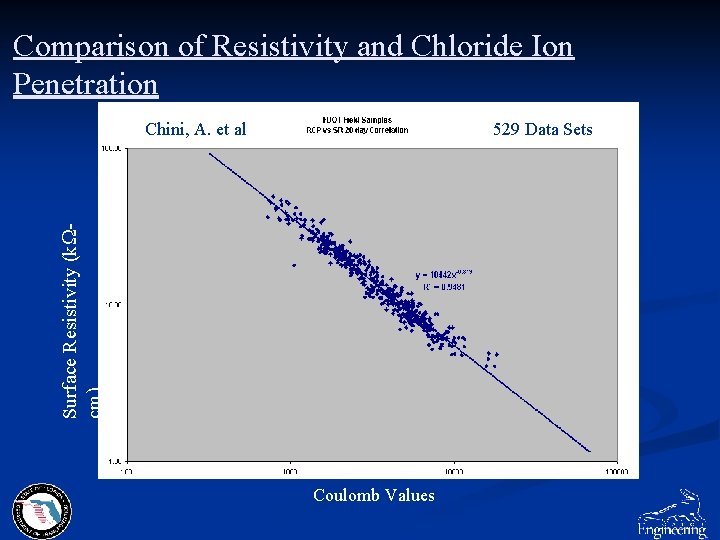
Comparison of Resistivity and Chloride Ion Penetration 529 Data Sets Surface Resistivity (k. Wcm) Chini, A. et al Coulomb Values
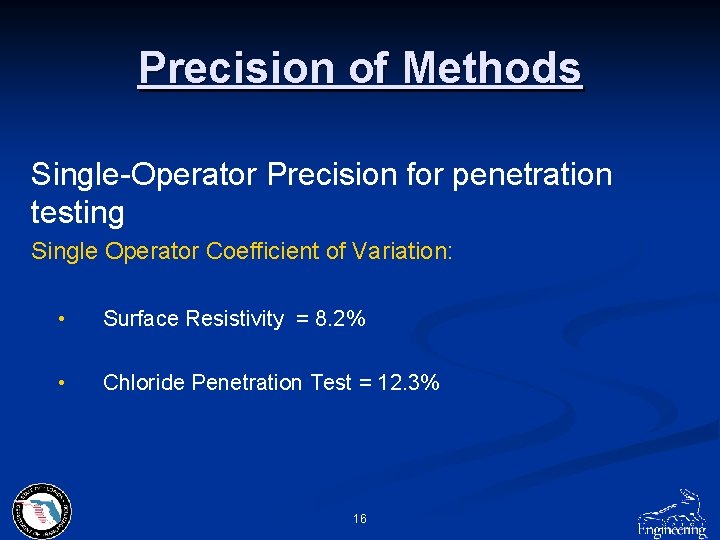
Precision of Methods Single-Operator Precision for penetration testing Single Operator Coefficient of Variation: • Surface Resistivity = 8. 2% • Chloride Penetration Test = 12. 3% 16
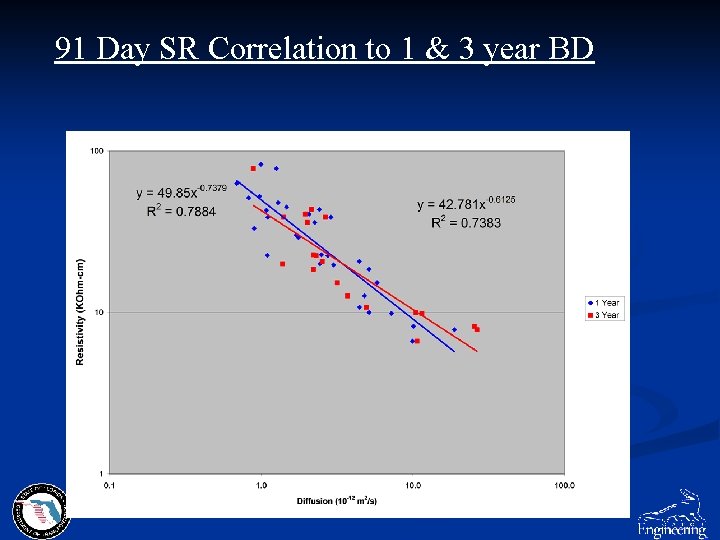
91 Day SR Correlation to 1 & 3 year BD
Research Program cont. The third phase of research n n n Surface resistivity as a NDT test to evaluate field structures Surface Resistivity as a Performance Test for Transport Properties Presuel-Moreno et. al (yesterday’s sesson) 18
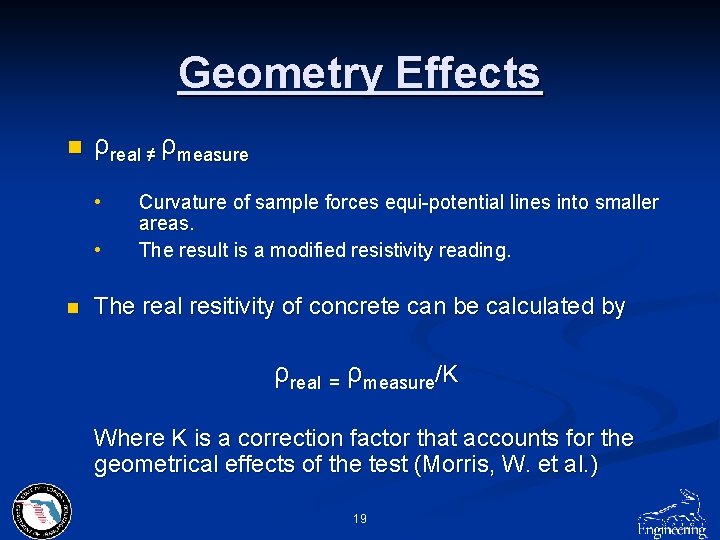
Geometry Effects n ρreal ≠ ρmeasure • • n Curvature of sample forces equi-potential lines into smaller areas. The result is a modified resistivity reading. The real resitivity of concrete can be calculated by ρreal = ρmeasure/K Where K is a correction factor that accounts for the geometrical effects of the test (Morris, W. et al. ) 19
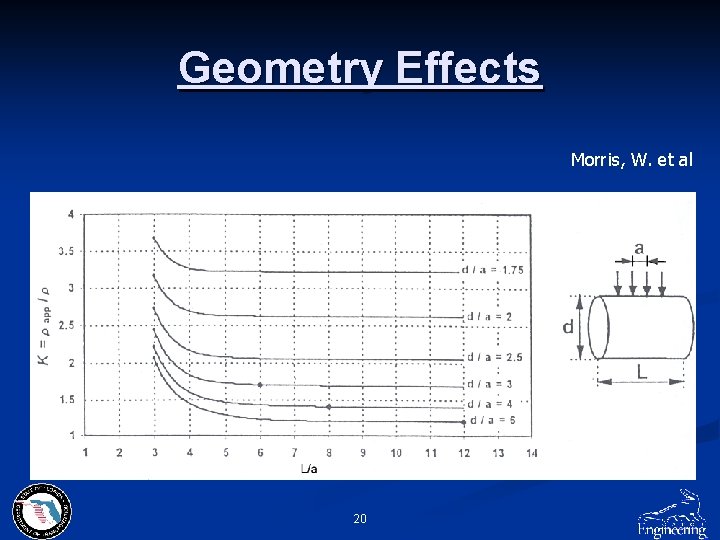
Geometry Effects Morris, W. et al 20
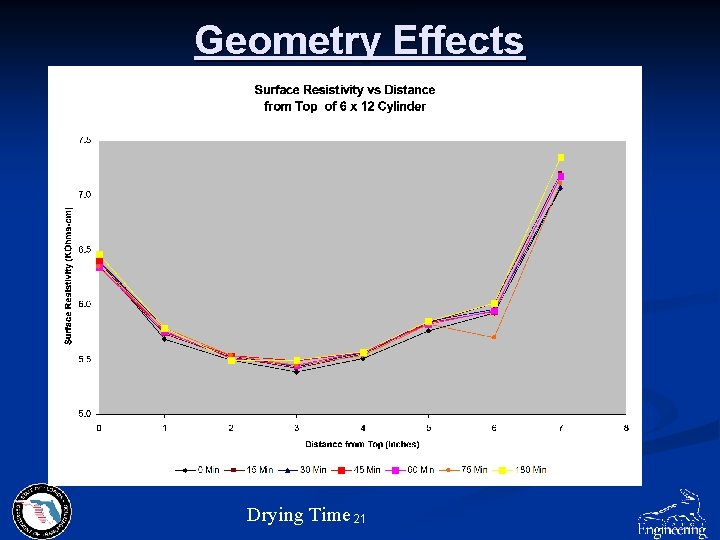
Geometry Effects Drying Time 21
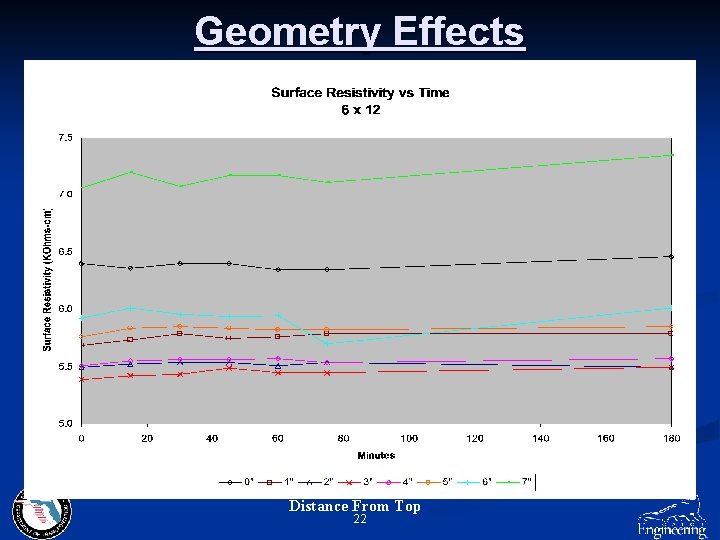
Geometry Effects Distance From Top 22
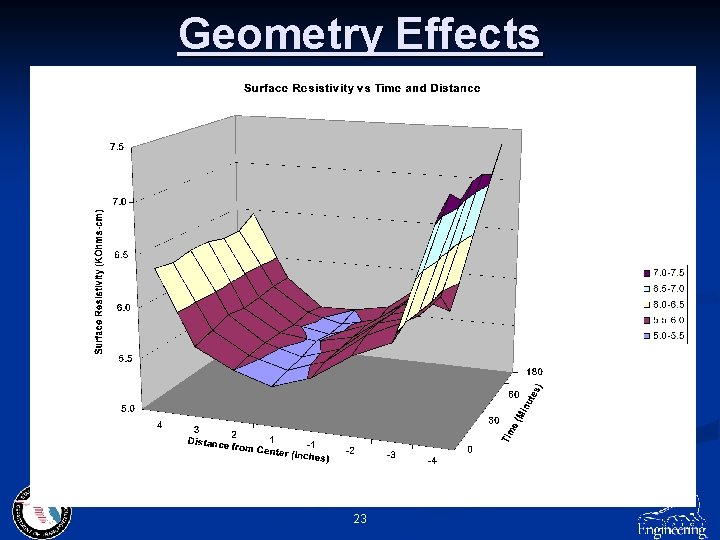
Geometry Effects 23
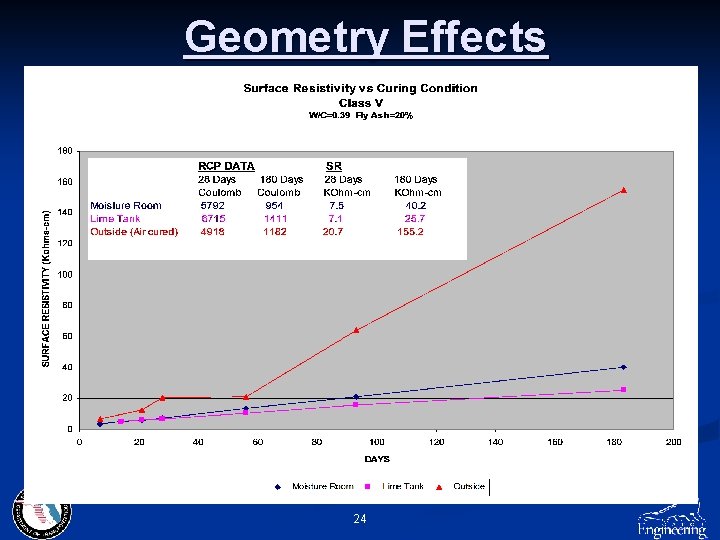
Geometry Effects 24
References: “Florida Method of Test for Concrete Resistivity as an Electrical Indicator of Its Permeability”, (FM 5 -578) Florida Department of Transportation, 2004 “Standard Method of Test for Resistance of Concrete to Chloride Ion Penetration”, (T 259 -80), American Association of State Highway and Transportation Officials, Washington, D. C. , U. S. A. , 1980 “Standard Method of Test for Electrical Indication of Concrete’s Ability to Resist Chloride”, (T 277 -93), American Association of State Highway and Transportation Officials, Washington, D. C. , U. S. A. , 1983 “Standard Test Method for Electrical Indication of Chloride’s Ability to Resist Chloride” (ASTM C 1202 -94) 1994 Annual Book of ASTM Standards V 04. 02, ASTM, Philadelphia, pg. 620 -5 Berke, N. S. , and Hicks, M. C. , “Estimating the Life Cycle of Reinforced Concrete Decks and Marine Piles Using Laboratory Diffusion and Corrosion Data”, Corrosion Forms and Control for Infrastructure, ASTM STP 1137, V. Chaker, ed. , American Society for Testing and Materials, Philadelphia, 1992 Broomfield, J. , and Millard, S. , “Measuring Concrete Resistivity to Assess Corrosion Rates”, Concrete Report from the Concrete Society/Institute of Corrosion Liaison Committee, pp. 37 -39 Chini, A. , Muszynski, L. , Hicks, J. , “Determination of Acceptance Permeability Characteristics of Performance-Related Specifications for Portland Cement Concrete”, Florida Department of Transportation, July 11, 2003 Hooton, R. , Thomas, M. , Stanish, K. , “Prediction of Chloride Penetration in Concrete”, Federal Highway Administration, October 2001 Morris, W. , Moreno, E. I. and Sagues, A. A. , “Practical Evaluation of Resistivity of Concrete in Test Cylinders using a Wenner Array Probe”, Cement and Concrete Research, Vol. 26, No. 12, pp. 1779 -1787, 1996 Powers, R. , Sagues, A. , Cerlanek, W. , Kasper, C. , Li, L. , Liang, H. , Poor, N. , Baskaran, R. , “Corrosion Inhibitors in Concrete Interim Report”, Federal Highway Administration, FHWA-RD-02 -002, March 2002 Stanish, K. , Hooton, R. , Thomas, M. , “Testing the Chloride Penetration Resistance of Concrete: A Literature Review”, FHWA Contract DTFH 61 -97 -R-00022”Prediction of Chloride Penetration in Concrete” Streicher, P. E. and Alexander, M. G. , “A Chloride Conduction Test for Concrete”, Cement and Concrete Research, Vol. 25, No. 6, pp. 1284 -1294, 1995 25
- Slides: 25