
Comparison of Routing Metrics for a Static MultiHop



- Slides: 43
Comparison of Routing Metrics for a Static Multi-Hop Wireless Network Richard Draves, Jitendra Padhye, Brian Zill Microsoft Research Presented by: Jón T. Grétarsson CS 577: Advanced Computer Networks
Outline • • • Introduction Setup Results Conclusions Discussion CS 577: Advanced Computer Networks
Introduction CS 577: Advanced Computer Networks
The Problem • In recent years, ad hoc wireless networks have emerged as a hot topic • Started with Military Applications • Commercial Applications of multi-hop wireless networks becoming popular (Roofnet, BAWUG, Seattle Wireless) • Quality of links aren’t taken into account in current routing algorithms CS 577: Advanced Computer Networks
The Authors • Richard Draves • Jitendra Padhye • Brian Zill CS 577: Advanced Computer Networks
The Paper • About Routing Metrics in Mesh Networks • Presented in ACM SIGCOMM, 2004 • A summary for the impatient CS 577: Advanced Computer Networks
Setup CS 577: Advanced Computer Networks
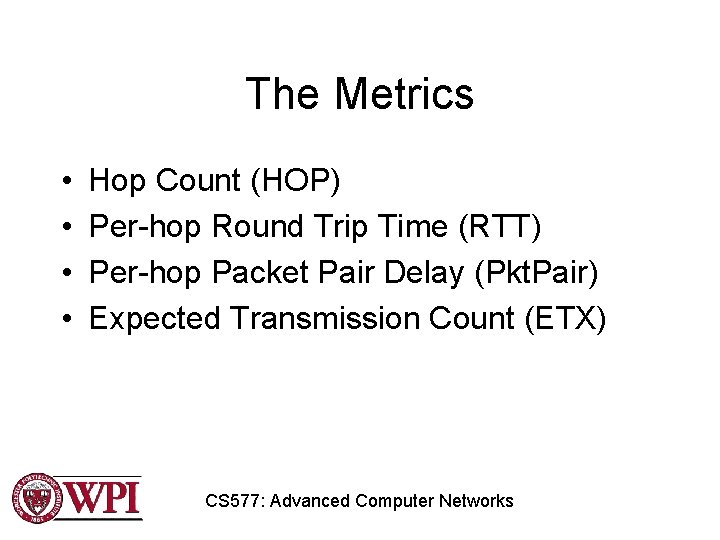
The Metrics • • Hop Count (HOP) Per-hop Round Trip Time (RTT) Per-hop Packet Pair Delay (Pkt. Pair) Expected Transmission Count (ETX) CS 577: Advanced Computer Networks
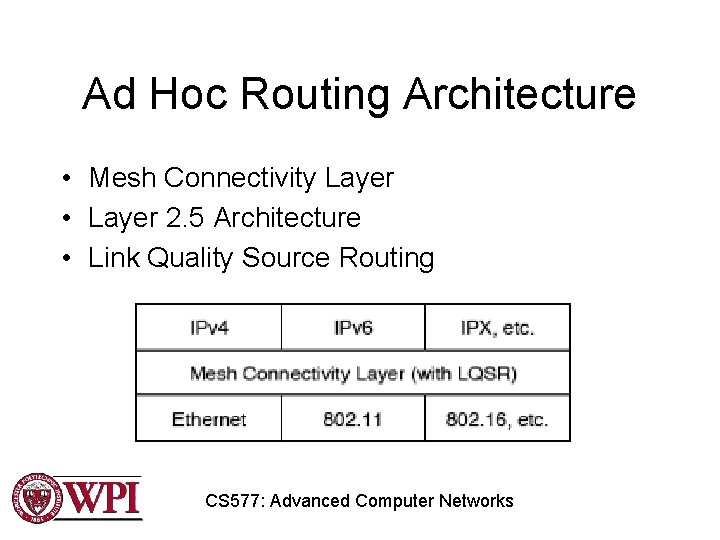
Ad Hoc Routing Architecture • Mesh Connectivity Layer • Layer 2. 5 Architecture • Link Quality Source Routing CS 577: Advanced Computer Networks
LQSR • Modified DSR to include Link Quality Metrics • Link-State routing CS 577: Advanced Computer Networks
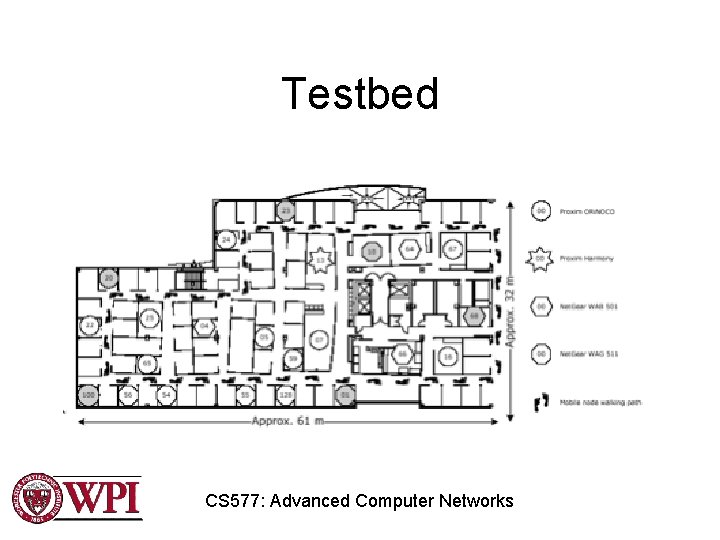
Testbed CS 577: Advanced Computer Networks
Testbed • • • 23 Nodes Not Wireless-Friendly High Node Density Wide Variety of Multi-Hop Paths 801. 11 a Wireless Network Static Positions CS 577: Advanced Computer Networks
Results CS 577: Advanced Computer Networks
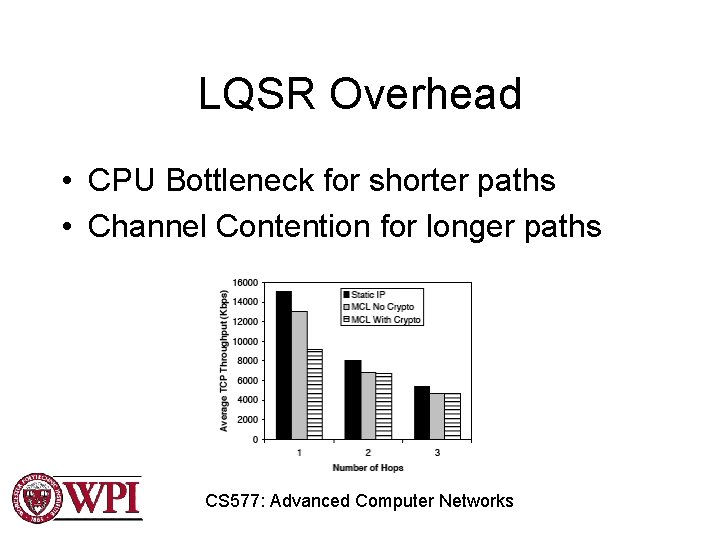
LQSR Overhead • CPU Bottleneck for shorter paths • Channel Contention for longer paths CS 577: Advanced Computer Networks
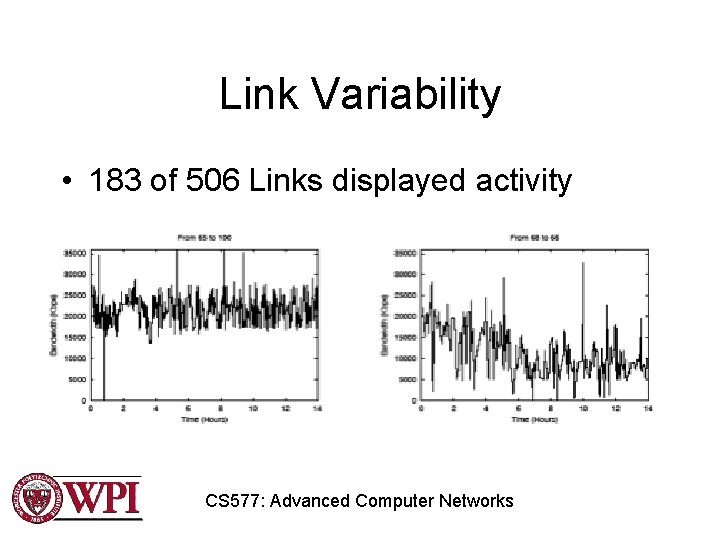
Link Variability • 183 of 506 Links displayed activity CS 577: Advanced Computer Networks
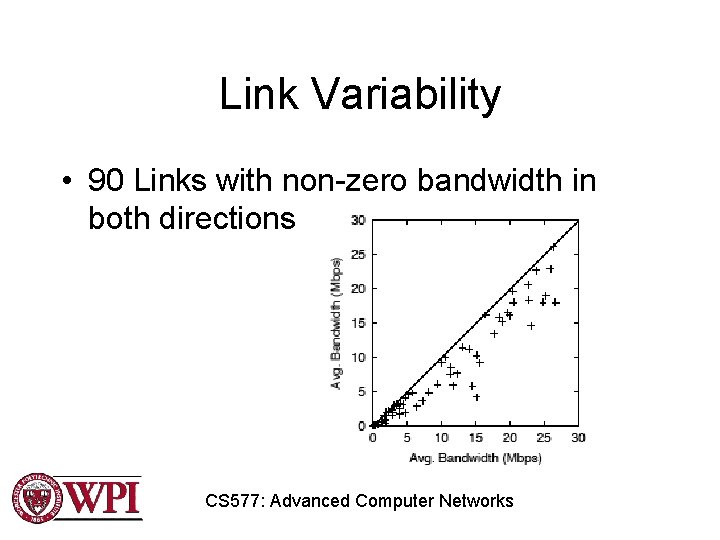
Link Variability • 90 Links with non-zero bandwidth in both directions CS 577: Advanced Computer Networks
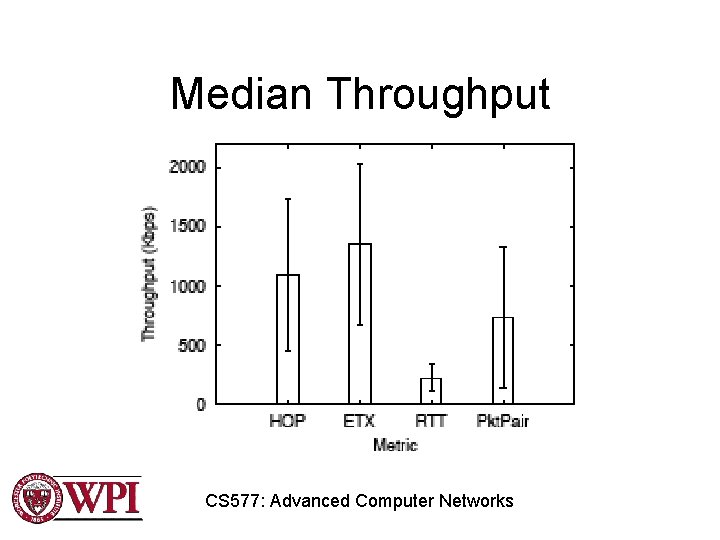
Long Lived TCP Flows • • • Transfer duration fixed One active transfer at a time Semi-Inter Quartile Range bars Large variations in throughput UDP vs TCP Self-Interference CS 577: Advanced Computer Networks
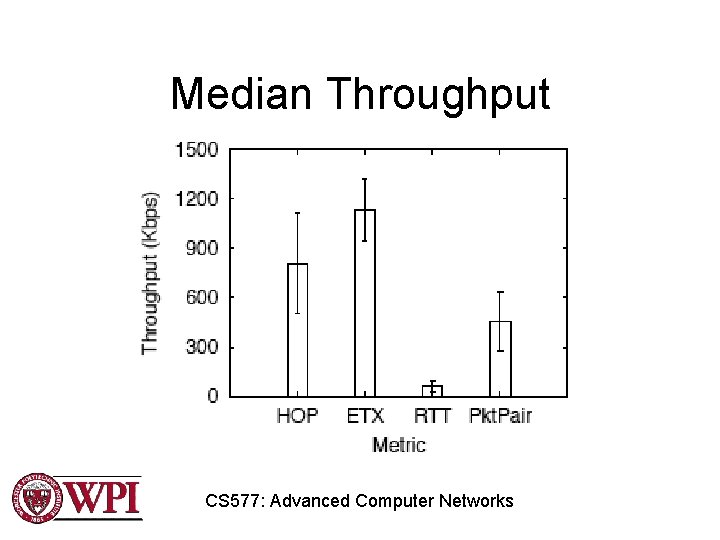
Median Throughput CS 577: Advanced Computer Networks
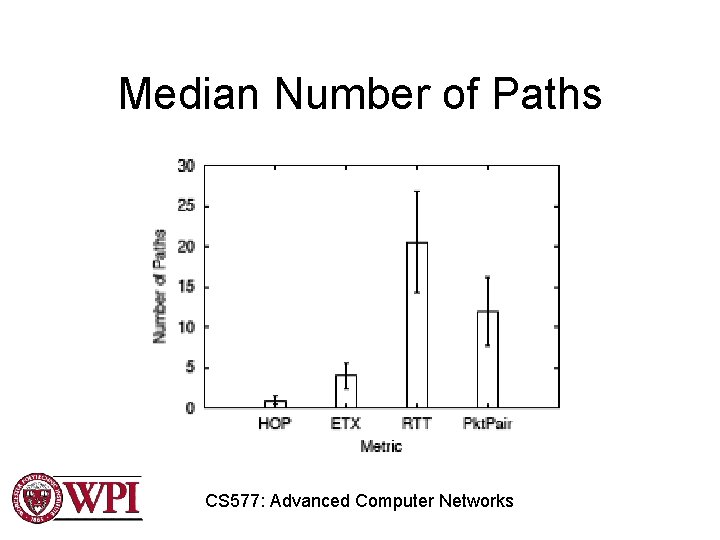
Median Number of Paths CS 577: Advanced Computer Networks
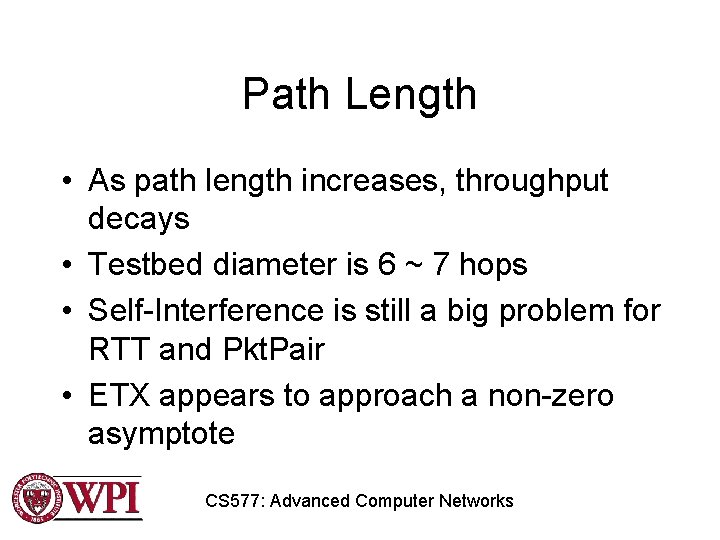
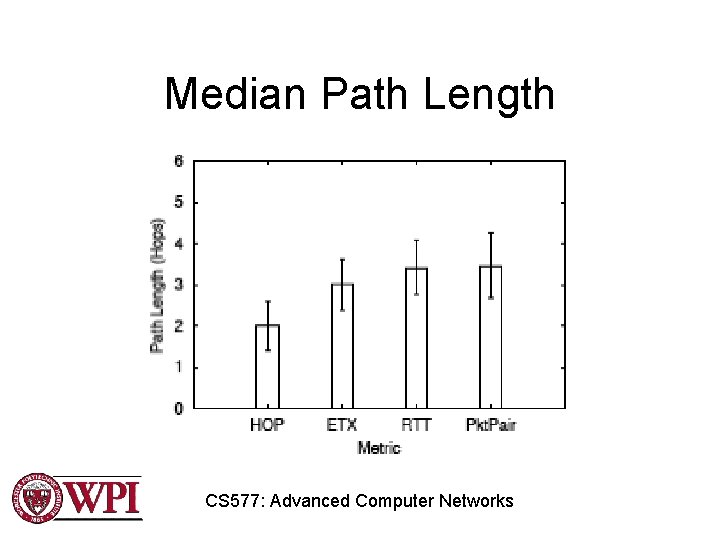
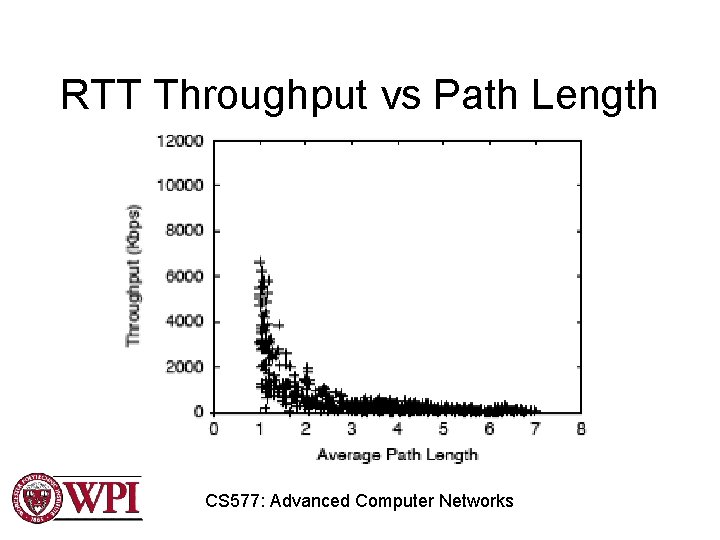
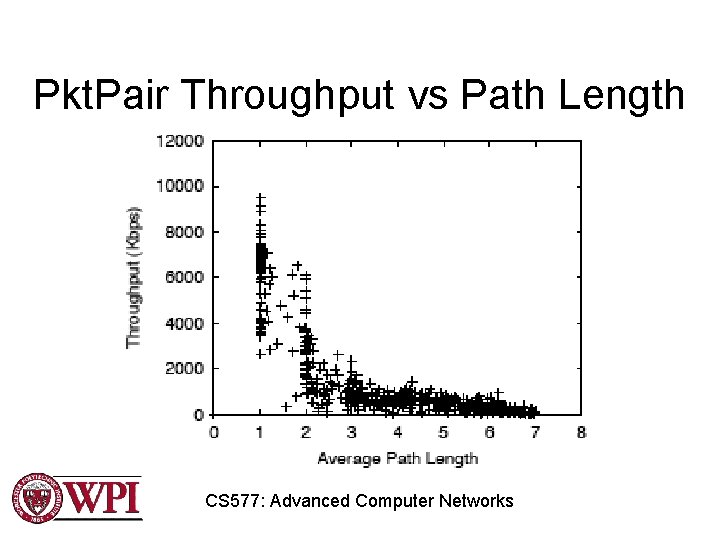
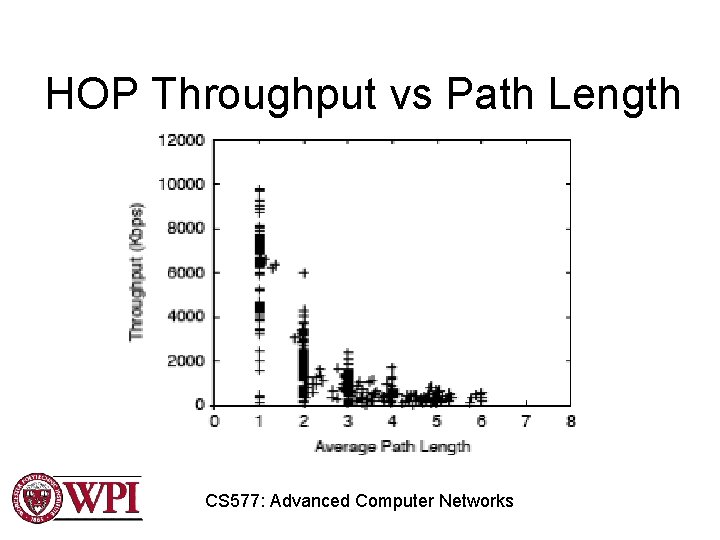
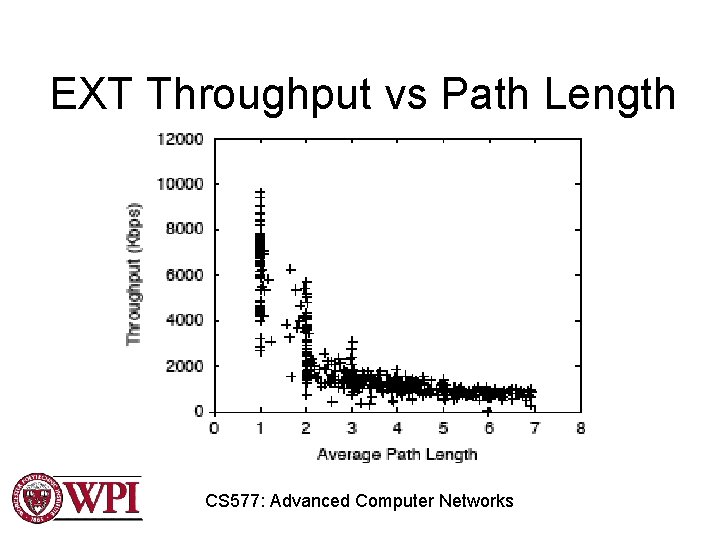
Path Length • As path length increases, throughput decays • Testbed diameter is 6 ~ 7 hops • Self-Interference is still a big problem for RTT and Pkt. Pair • ETX appears to approach a non-zero asymptote CS 577: Advanced Computer Networks
Median Path Length CS 577: Advanced Computer Networks
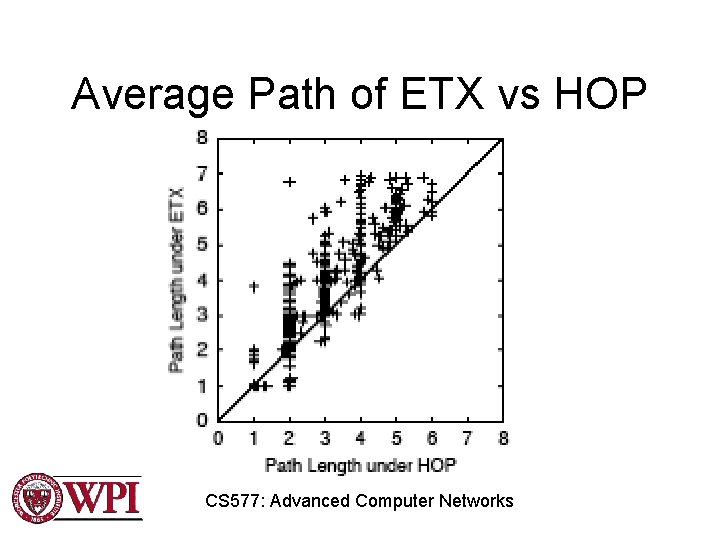
Average Path of ETX vs HOP CS 577: Advanced Computer Networks
RTT Throughput vs Path Length CS 577: Advanced Computer Networks
Pkt. Pair Throughput vs Path Length CS 577: Advanced Computer Networks
HOP Throughput vs Path Length CS 577: Advanced Computer Networks
EXT Throughput vs Path Length CS 577: Advanced Computer Networks
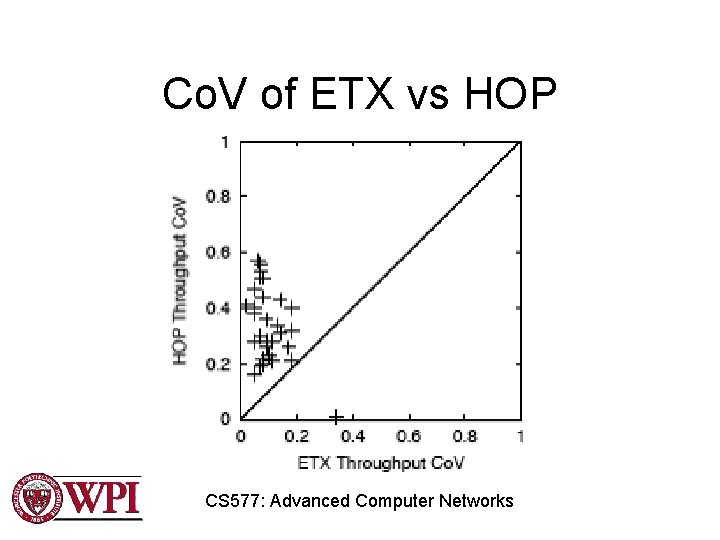
Variability of Throughput • Coefficient of Variation • 6 periphery nodes to 5 receivers • 1 active transfer at any time CS 577: Advanced Computer Networks
Median Throughput CS 577: Advanced Computer Networks
Co. V of ETX vs HOP CS 577: Advanced Computer Networks
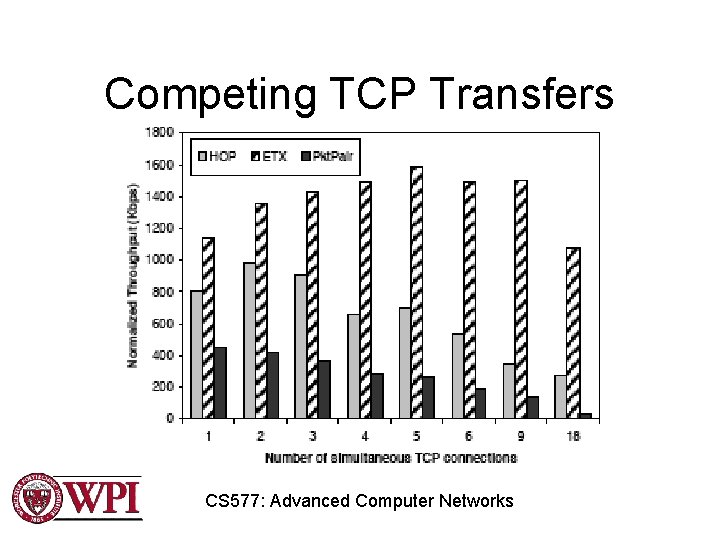
Competing TCP Transfers • RTT not worth demonstrating • Multiple Median Throughput (MMT) CS 577: Advanced Computer Networks
Competing TCP Transfers CS 577: Advanced Computer Networks
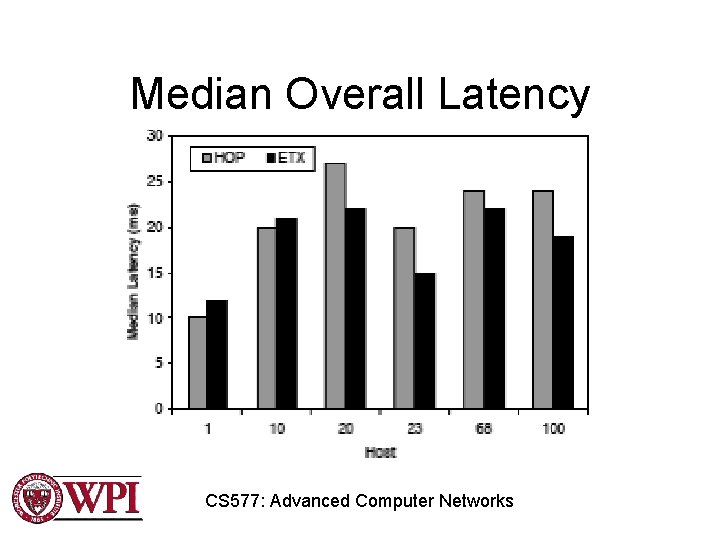
Web Traffic • • • Only one client active at any time 1300 files fetched Transfer using Surge File size within the range [77 B, 700 KB] Measured latency CS 577: Advanced Computer Networks
Median Overall Latency CS 577: Advanced Computer Networks
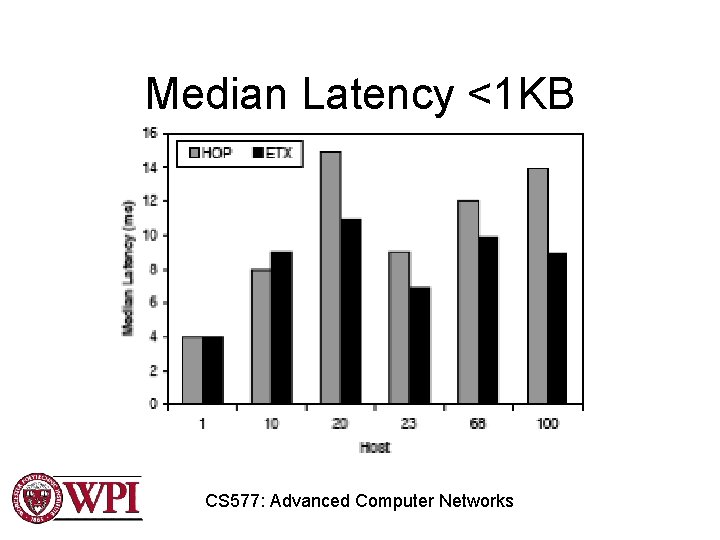
Median Latency <1 KB CS 577: Advanced Computer Networks
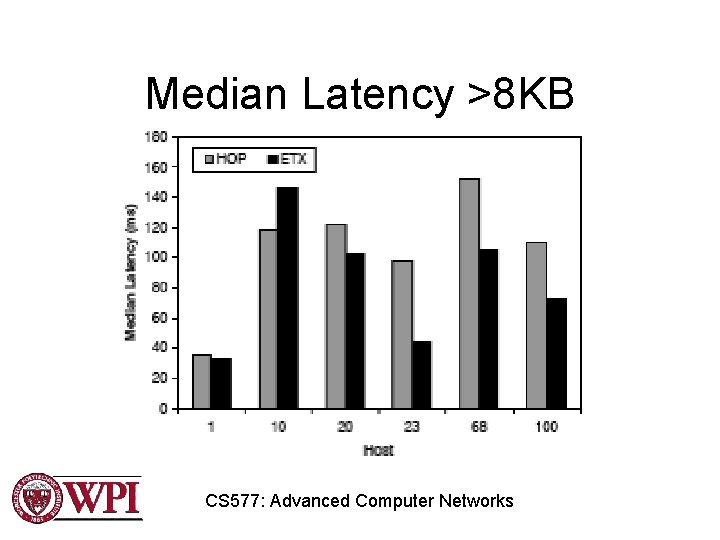
Median Latency >8 KB CS 577: Advanced Computer Networks
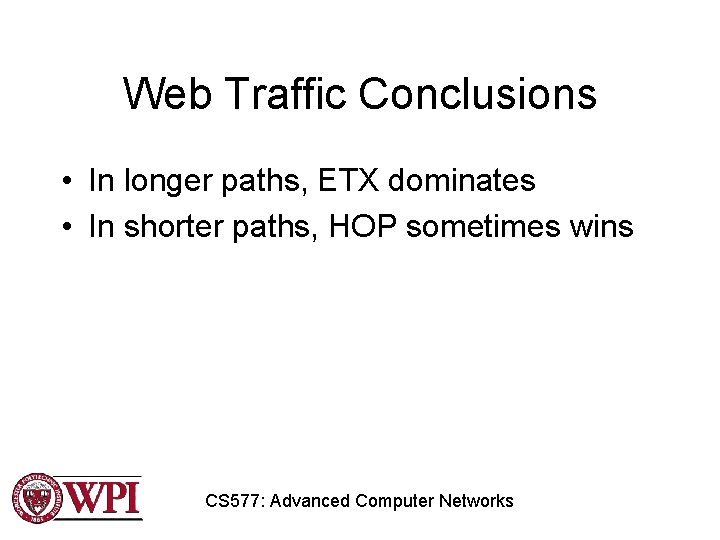
Web Traffic Conclusions • In longer paths, ETX dominates • In shorter paths, HOP sometimes wins CS 577: Advanced Computer Networks
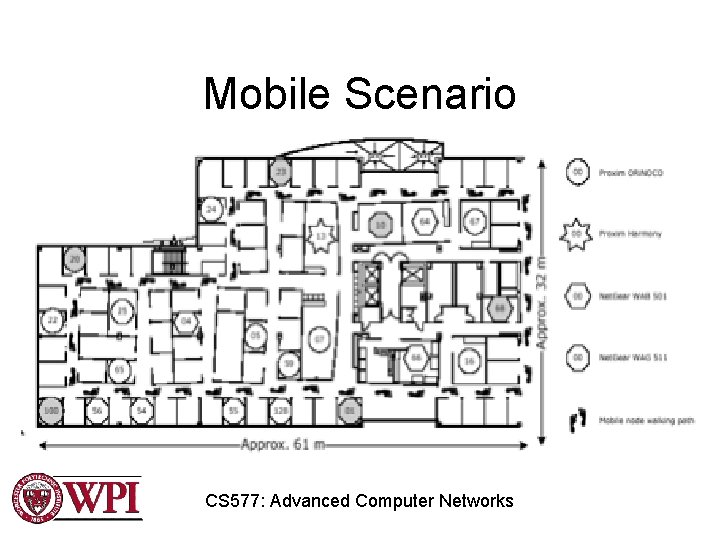
Mobile Scenario CS 577: Advanced Computer Networks
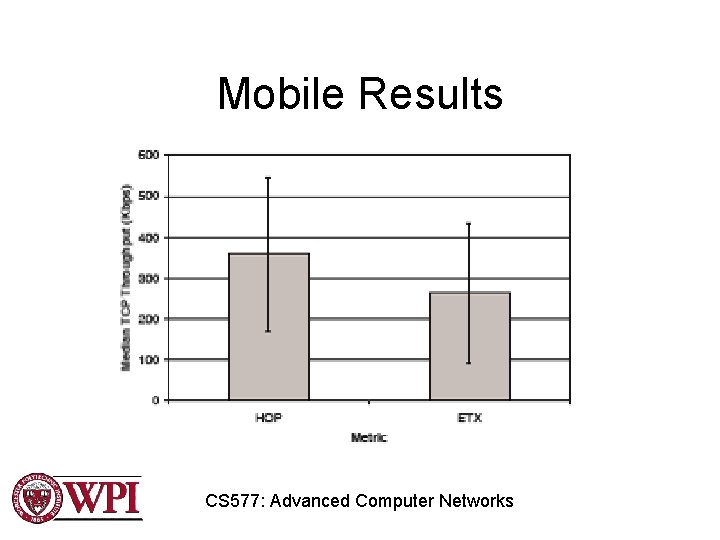
Mobile Results CS 577: Advanced Computer Networks
Mobile Results • ETX has problems adjusting quickly enough • HOP has no such problems CS 577: Advanced Computer Networks
Conclusions
Paper Conclusions • RTT and Pkt. Pair are load-sensitive and suffer from Self-Interference • ETX significantly outperforms HOP in the stationary ad hoc network • ETX relative performance gain increases as path length increases • HOP responds faster to the changes of a mobile ad hoc network CS 577: Advanced Computer Networks
Discussion
Discussion • • Experimental Flaws Logical Fallacies “Beating Up” competition What didn’t the authors do? CS 577: Advanced Computer Networks