
Comparison of Nervous System and Endocrine System Nervous
- Slides: 20
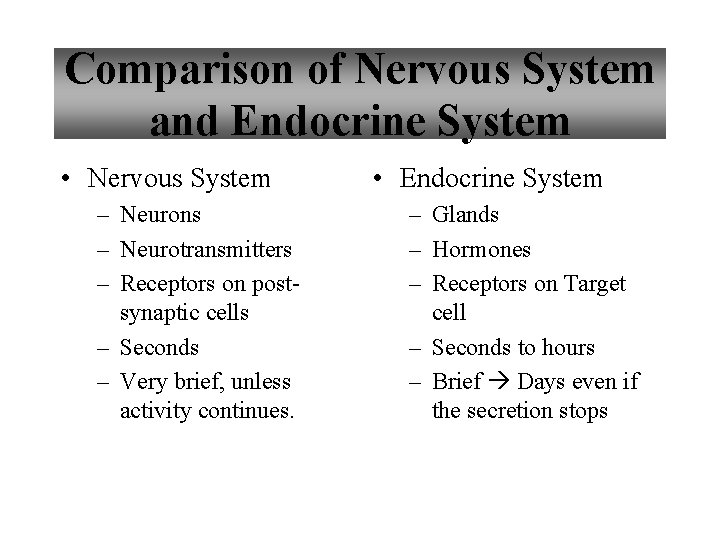
Comparison of Nervous System and Endocrine System • Nervous System – Neurons – Neurotransmitters – Receptors on postsynaptic cells – Seconds – Very brief, unless activity continues. • Endocrine System – Glands – Hormones – Receptors on Target cell – Seconds to hours – Brief Days even if the secretion stops
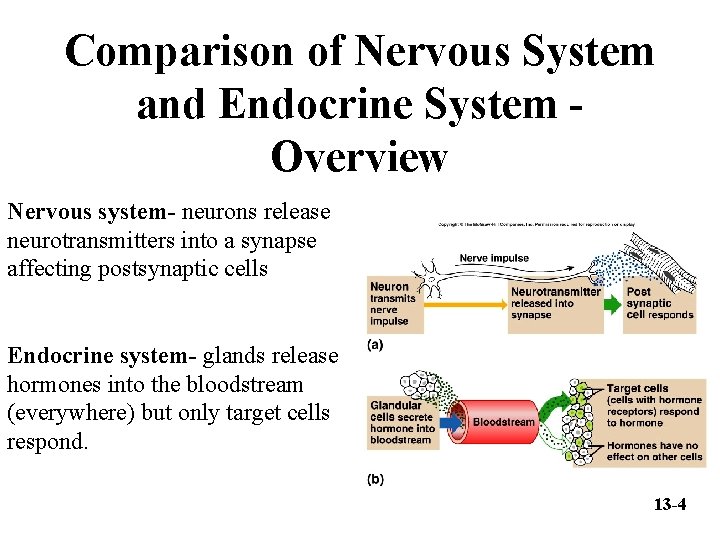
Comparison of Nervous System and Endocrine System Overview Nervous system- neurons release neurotransmitters into a synapse affecting postsynaptic cells Endocrine system- glands release hormones into the bloodstream (everywhere) but only target cells respond. 13 -4
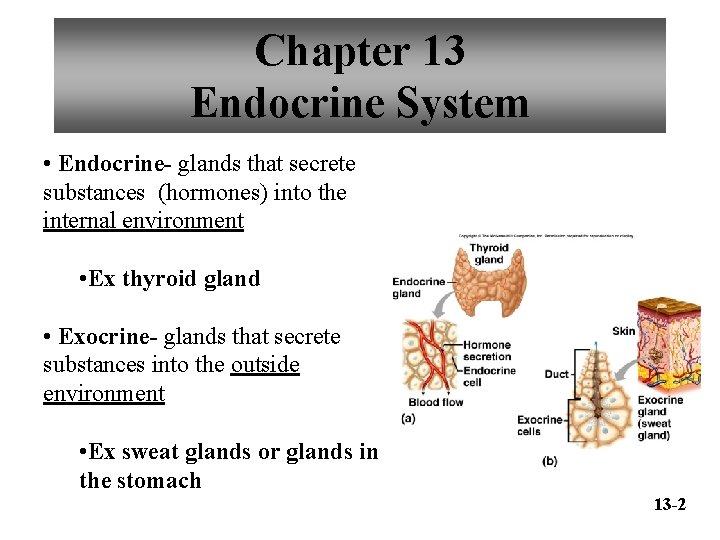
Chapter 13 Endocrine System • Endocrine- glands that secrete substances (hormones) into the internal environment • Ex thyroid gland • Exocrine- glands that secrete substances into the outside environment • Ex sweat glands or glands in the stomach 13 -2
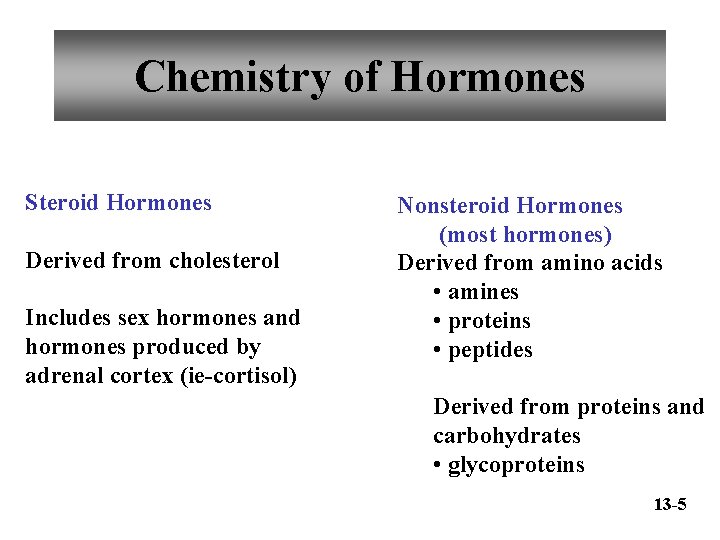
Chemistry of Hormones Steroid Hormones Derived from cholesterol Includes sex hormones and hormones produced by adrenal cortex (ie-cortisol) Nonsteroid Hormones (most hormones) Derived from amino acids • amines • proteins • peptides Derived from proteins and carbohydrates • glycoproteins 13 -5
Prostaglandins • Characteristics: • chemicals that act locally • very potent in small quantities • not stored in cells, but made right before they’re released • wide variety of functions: • dilate passageways by relaxing smooth muscles in blood vessels • help regulate blood pressure • promote inflammation when tissues are injured) 13 -10
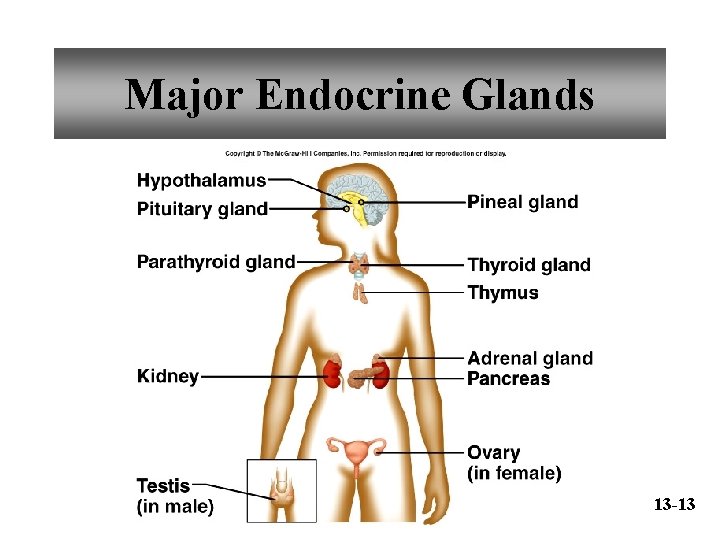
Major Endocrine Glands 13 -13
Anterior Pituitary Hormones Growth Hormone (GH) • stimulates increase in size by promoting growth of long bones. Prolactin (PRL) • sustains milk production after birth Thyroid Stimulating Hormone (TSH) • controls secretions of hormones from thyroid gland 13 -17
Anterior Pituitary Hormones Follicle-Stimulating Hormone (FSH) • stimulates development of egg-containing follicles in ovaries • stimulates follicular cells to secrete estrogen • stimulates production of sperm cells Luteinizing Hormone (LH) • promotes secretions of sex hormones • stimulates release of egg from ovary • promotes growth of long bones 13 -19
Posterior Pituitary Hormones Antidiuretic Hormone (ADH) • causes kidneys to reduce water excretion • controlled by changes in blood water concentration and blood volume • Inhibited by alcohol and diabetes Oxytocin (OT) • stimulates uterine contractions stimulates labor • stimulates mammary glands to release milk • is present in males but has no real function. 13 -20
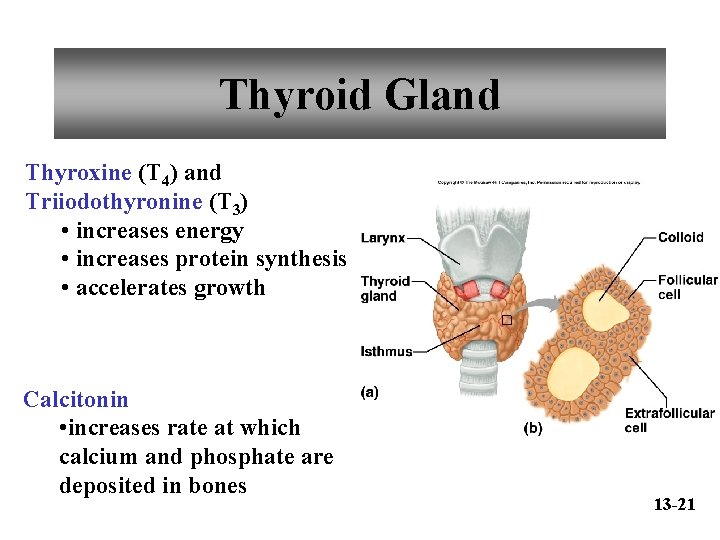
Thyroid Gland Thyroxine (T 4) and Triiodothyronine (T 3) • increases energy • increases protein synthesis • accelerates growth Calcitonin • increases rate at which calcium and phosphate are deposited in bones 13 -21
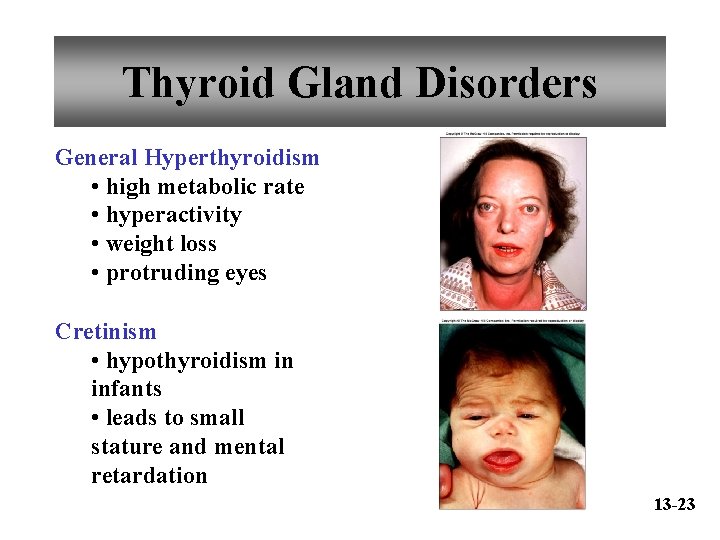
Thyroid Gland Disorders General Hyperthyroidism • high metabolic rate • hyperactivity • weight loss • protruding eyes Cretinism • hypothyroidism in infants • leads to small stature and mental retardation 13 -23
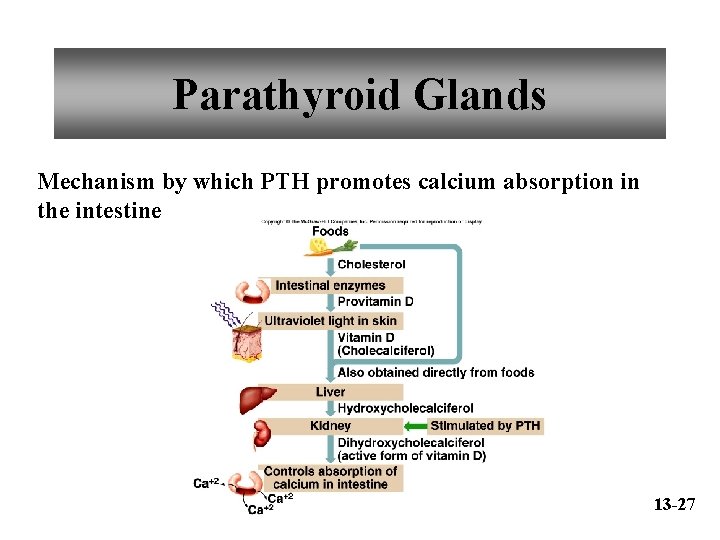
Parathyroid Glands Mechanism by which PTH promotes calcium absorption in the intestine 13 -27
Parathyroid Gland Disorders Hyperparathyroidism • caused by tumor • fatigue • muscular weakness • altered mental functions • bone weakening Hypoparathyroidism • caused by injury or removal of gland • muscle cramps • seizures • low blood calcium levels 13 -28
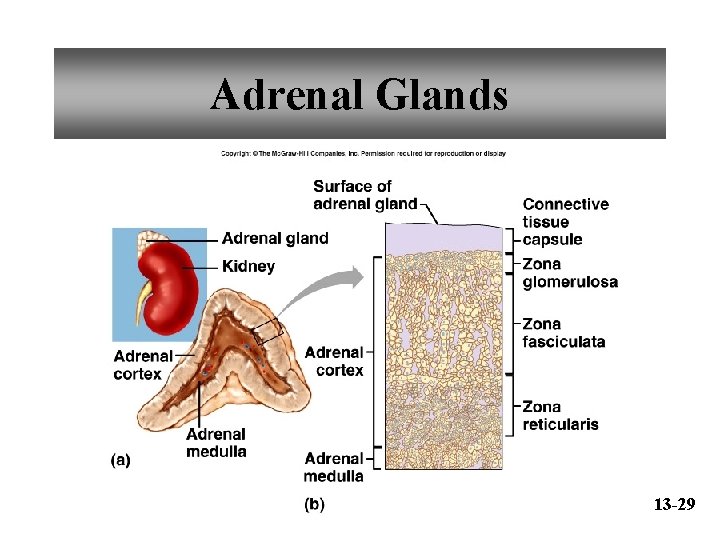
Adrenal Glands 13 -29
Adrenal Hormones Epinephrine and Norepinephrine (Adrenaline) • release controlled by sympathetic nervous system • increases heart rate and blood pressure • dilates respiratory airways • increases metabolic rates Aldosterone • increases blood volume and pressure by promoting conservation of sodium ions and water Cortisol • decreases protein synthesis • increases fatty acid release 13 -30
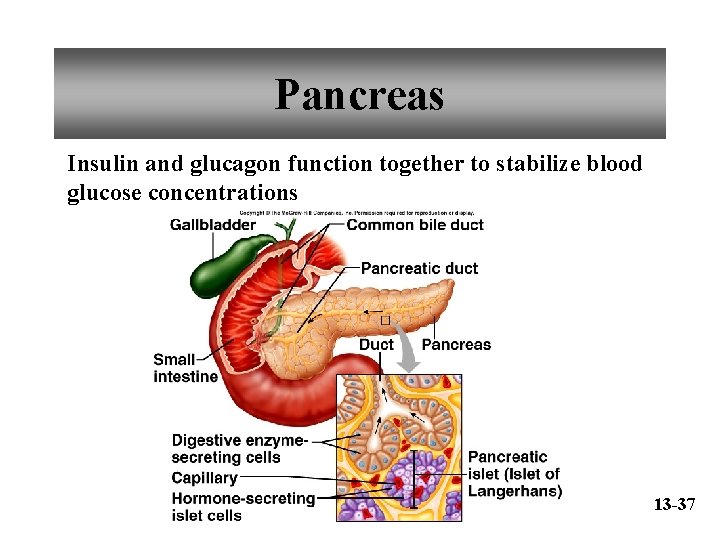
Pancreas Insulin and glucagon function together to stabilize blood glucose concentrations 13 -37
Other Endocrine Glands Pineal Gland • secretes melatonin • regulates circadian rhythms • may control onset of puberty • helps regulate female reproductive cycle Thymus Gland • secretes thymosins • promotes development of certain lymphocytes 13 -38
Other Endocrine Glands Reproductive Glands • ovaries secrete estrogen and progesterone • testes secrete testosterone- 13 -39
Life-Span Changes • endocrine glands shrink • GH levels even out, muscular strength decreases • ADH levels increase due to slow break down • Osteoporosis risk increases • insulin resistance may develop • changes in melatonin secretion affect the body clock • thymosin production declines increasing risk of infections 13 -42
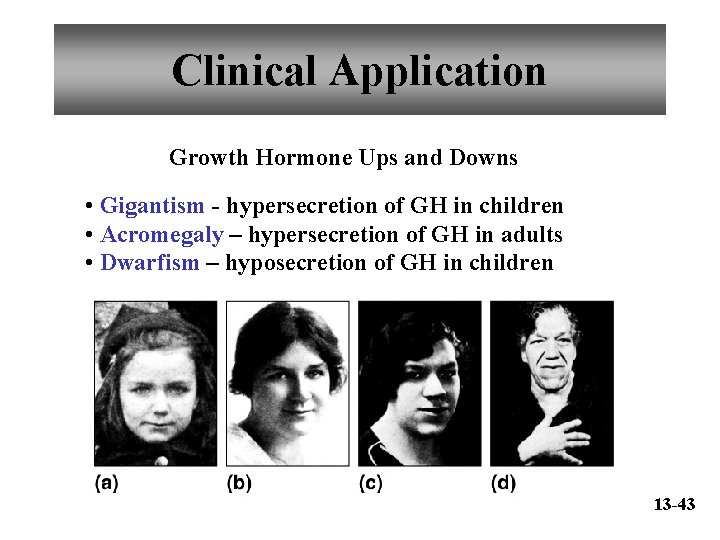
Clinical Application Growth Hormone Ups and Downs • Gigantism - hypersecretion of GH in children • Acromegaly – hypersecretion of GH in adults • Dwarfism – hyposecretion of GH in children 13 -43