
Comparison of High Resolution Whole Slide Imaging WSI
- Slides: 32
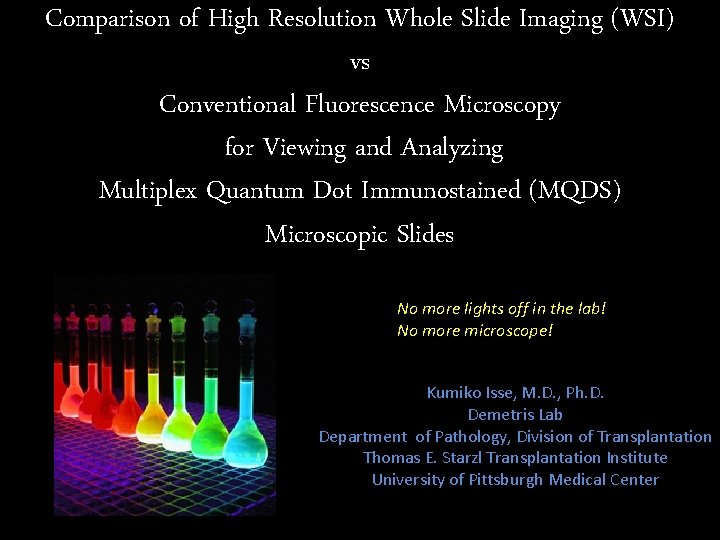
Comparison of High Resolution Whole Slide Imaging (WSI) vs Conventional Fluorescence Microscopy for Viewing and Analyzing Multiplex Quantum Dot Immunostained (MQDS) Microscopic Slides No more lights off in the lab! No more microscope! Kumiko Isse, M. D. , Ph. D. Demetris Lab Department of Pathology, Division of Transplantation Thomas E. Starzl Transplantation Institute University of Pittsburgh Medical Center
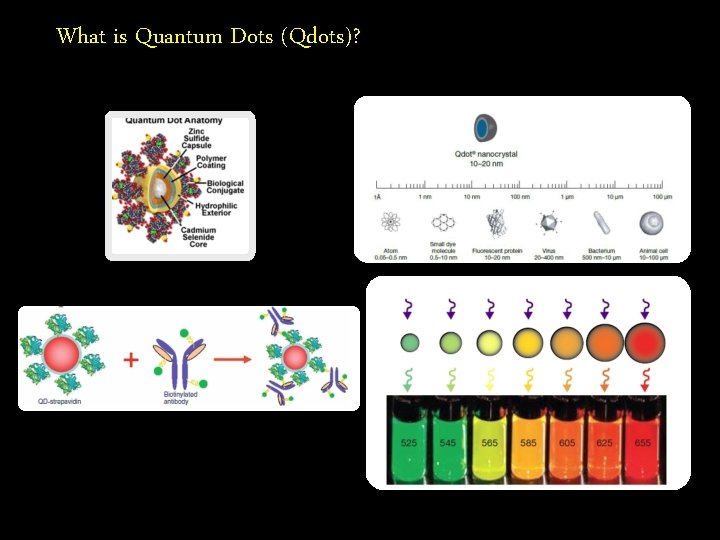
What is Quantum Dots (Qdots)?
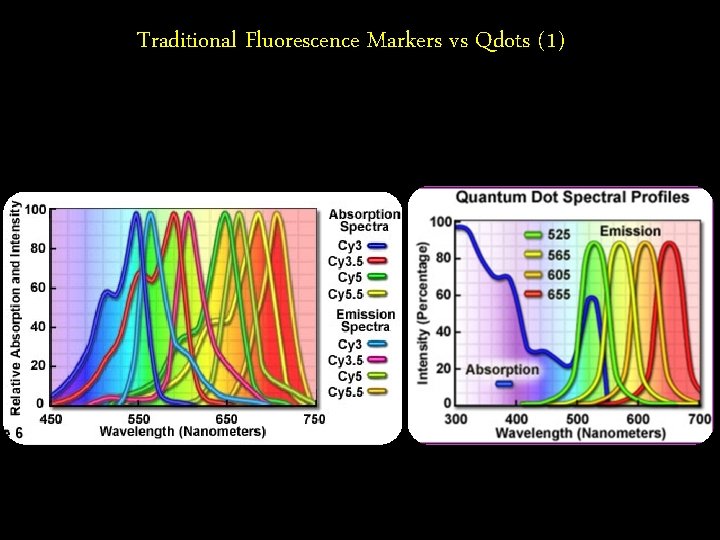
Traditional Fluorescence Markers vs Qdots (1)
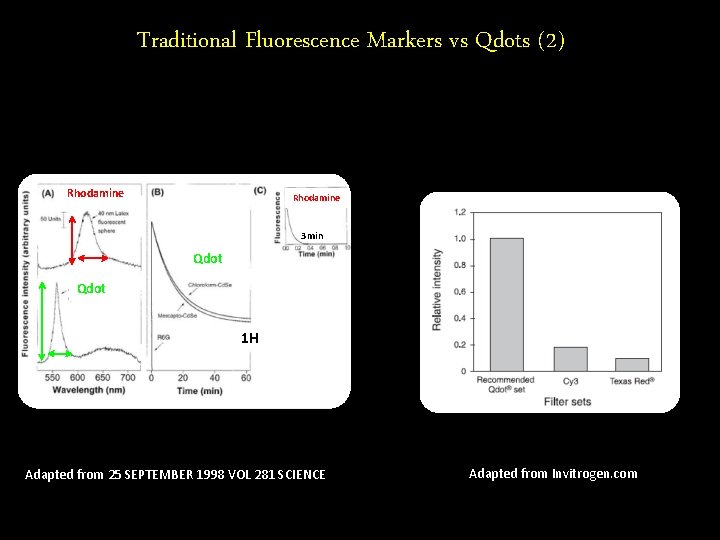
Traditional Fluorescence Markers vs Qdots (2) Rhodamine 3 min Qdot 1 H Adapted from 25 SEPTEMBER 1998 VOL 281 SCIENCE Adapted from Invitrogen. com
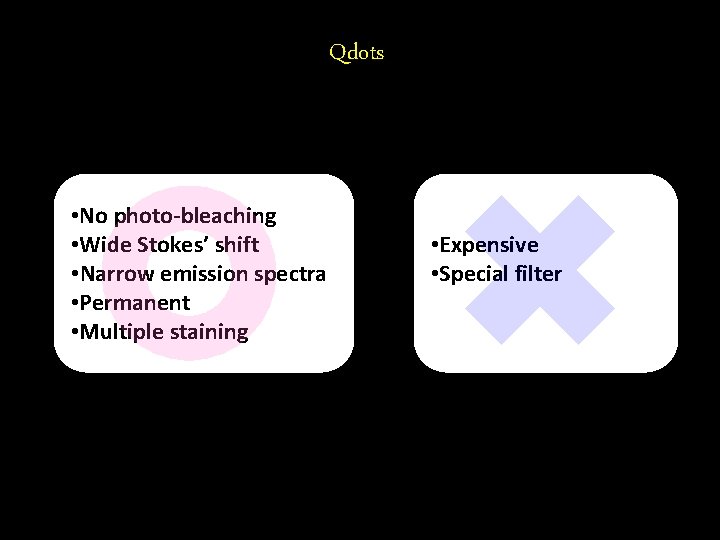
Qdots • No photo-bleaching • Wide Stokes’ shift • Narrow emission spectra • Permanent • Multiple staining • Expensive • Special filter
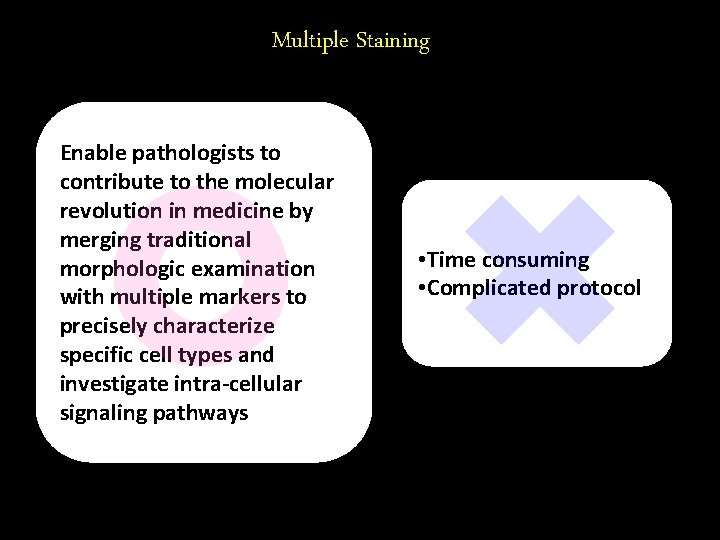
Multiple Staining Enable pathologists to contribute to the molecular revolution in medicine by merging traditional morphologic examination with multiple markers to precisely characterize specific cell types and investigate intra-cellular signaling pathways • Time consuming • Complicated protocol
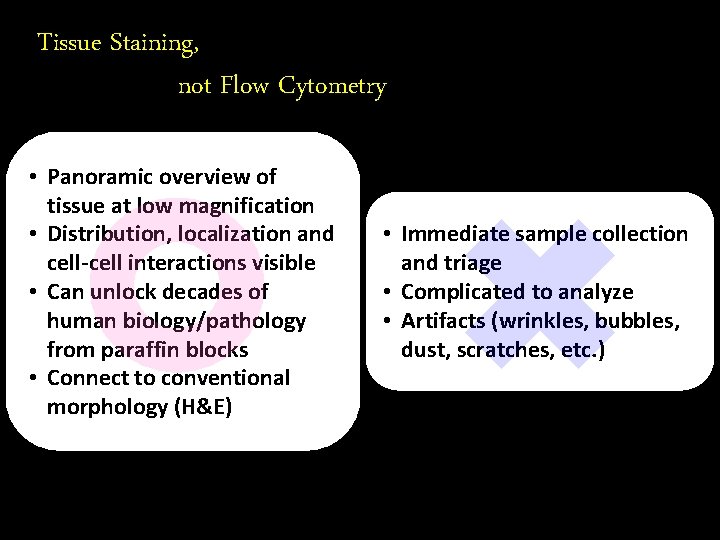
Tissue Staining, not Flow Cytometry • Panoramic overview of tissue at low magnification • Distribution, localization and cell-cell interactions visible • Can unlock decades of human biology/pathology from paraffin blocks • Connect to conventional morphology (H&E) • Immediate sample collection and triage • Complicated to analyze • Artifacts (wrinkles, bubbles, dust, scratches, etc. )
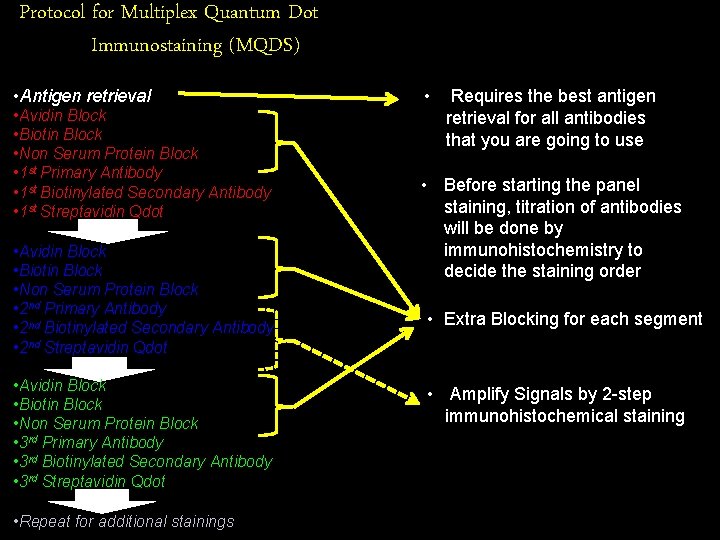
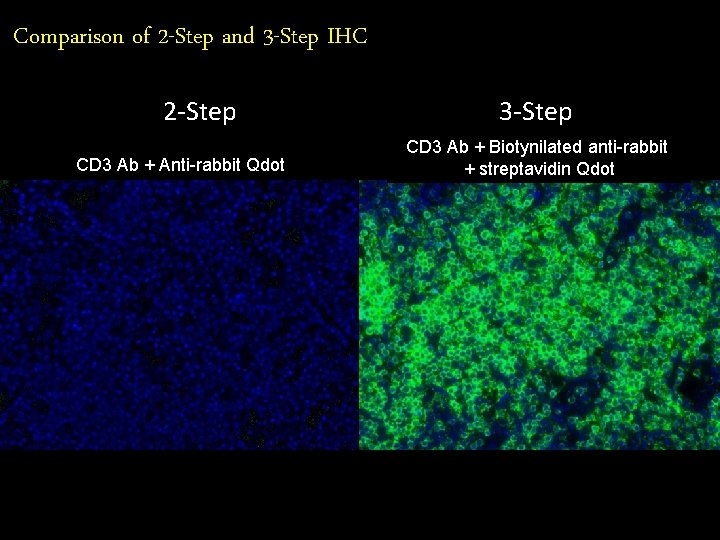
Protocol for Multiplex Quantum Dot Immunostaining (MQDS) • Antigen retrieval • Avidin Block • Biotin Block • Non Serum Protein Block • 1 st Primary Antibody • 1 st Biotinylated Secondary Antibody • 1 st Streptavidin Qdot • Avidin Block • Biotin Block • Non Serum Protein Block • 2 nd Primary Antibody • 2 nd Biotinylated Secondary Antibody • 2 nd Streptavidin Qdot • Avidin Block • Biotin Block • Non Serum Protein Block • 3 rd Primary Antibody • 3 rd Biotinylated Secondary Antibody • 3 rd Streptavidin Qdot • Repeat for additional stainings • Requires the best antigen retrieval for all antibodies that you are going to use • Before starting the panel staining, titration of antibodies will be done by immunohistochemistry to decide the staining order • Extra Blocking for each segment • Amplify Signals by 2 -step immunohistochemical staining
Comparison of 2 -Step and 3 -Step IHC 2 -Step CD 3 Ab + Anti-rabbit Qdot 3 -Step CD 3 Ab + Biotynilated anti-rabbit + streptavidin Qdot
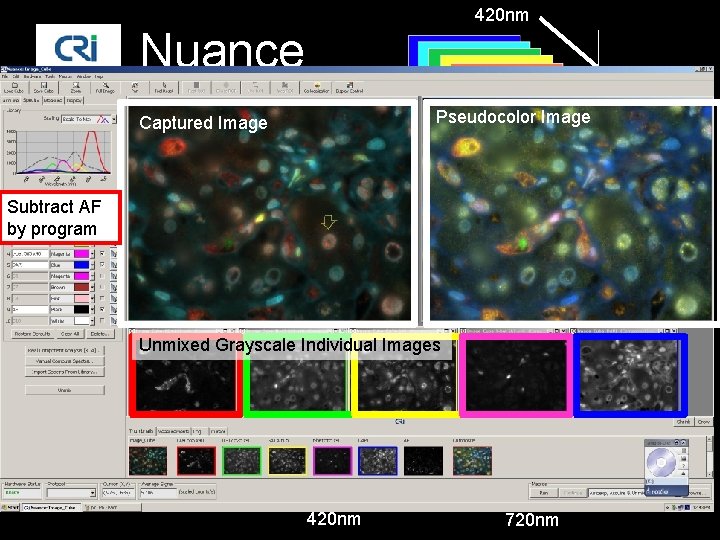
420 nm Nuance Pseudocolor Image Captured Image Subtract AF by program Unmixed Grayscale Individual Images 420 nm unmix 720 nm
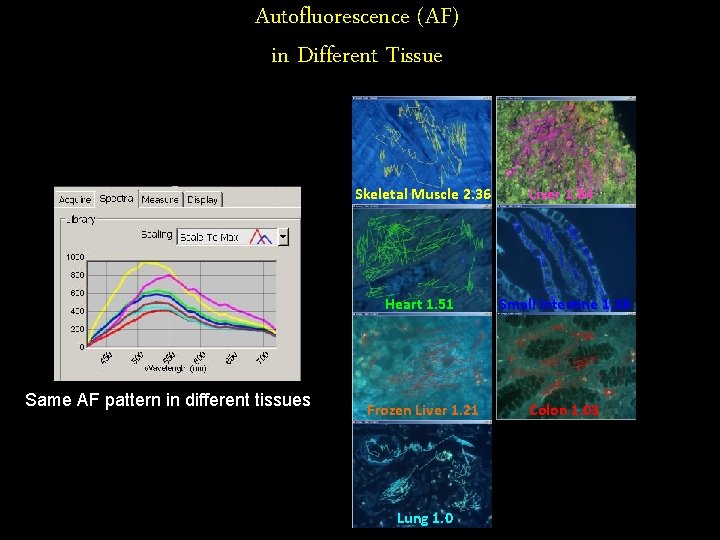
Autofluorescence (AF) in Different Tissue Same AF pattern in different tissues Skeletal Muscle 2. 36 Liver 1. 84 Heart 1. 51 Small Intestine 1. 38 Frozen Liver 1. 21 Colon 1. 03 Lung 1. 0
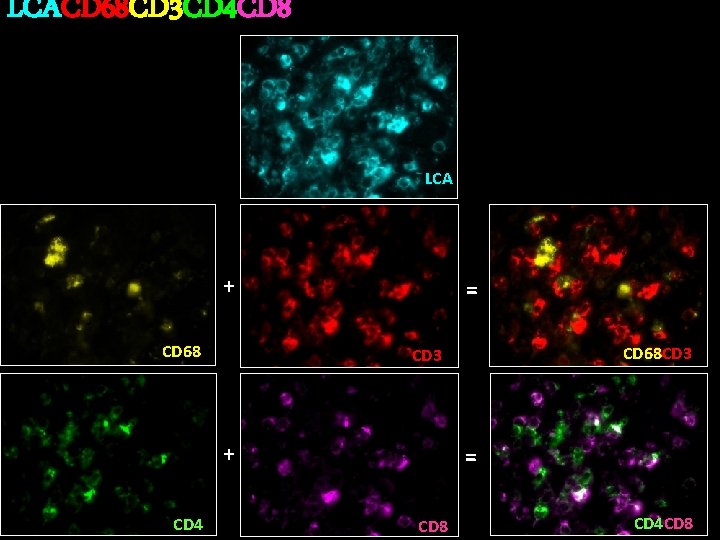
LCACD 68 CD 3 CD 4 CD 8 LCA + CD 68 = + CD 4 CD 68 CD 3 = CD 8 CD 4 CD 8
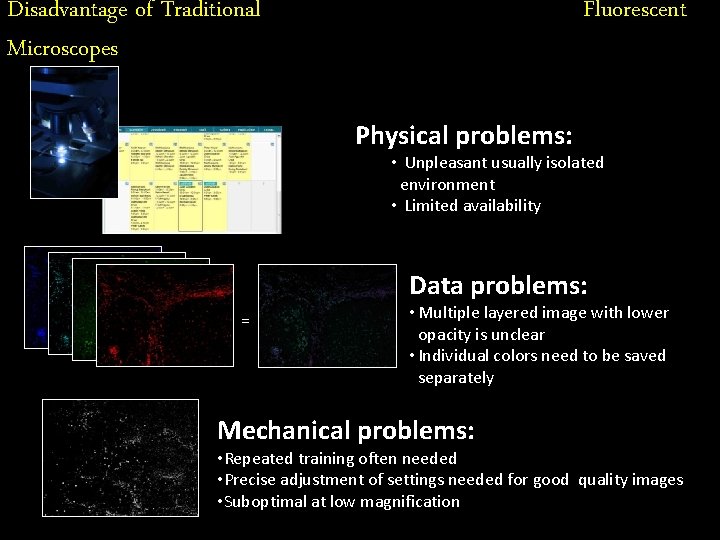
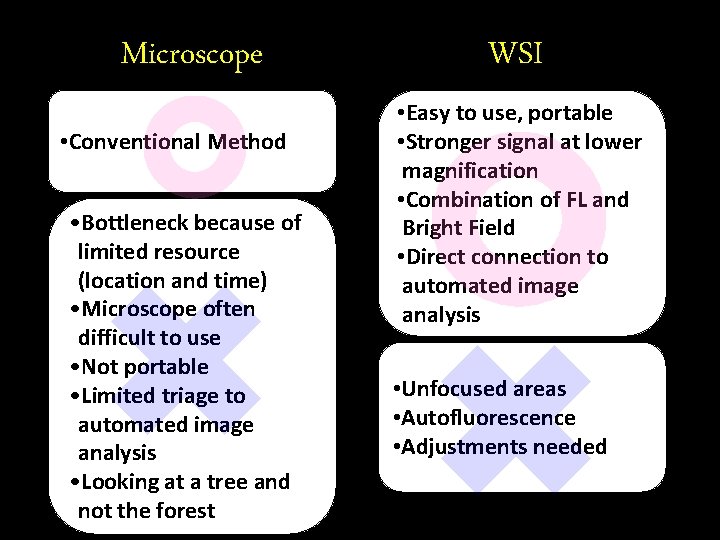
Disadvantage of Traditional Microscopes Fluorescent Physical problems: • Unpleasant usually isolated environment • Limited availability Data problems: = • Multiple layered image with lower opacity is unclear • Individual colors need to be saved separately Mechanical problems: • Repeated training often needed • Precise adjustment of settings needed for good quality images • Suboptimal at low magnification
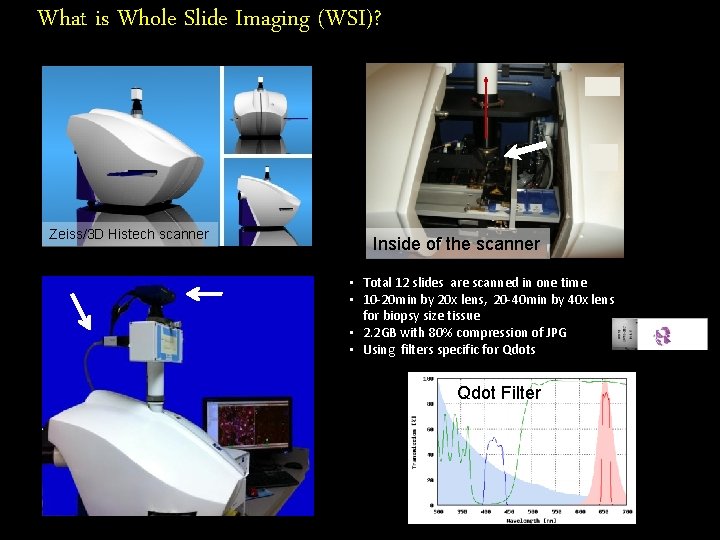
What is Whole Slide Imaging (WSI)? Zeiss/3 D Histech scanner Inside of the scanner • Total 12 slides are scanned in one time • 10 -20 min by 20 x lens, 20 -40 min by 40 x lens for biopsy size tissue • 2. 2 GB with 80% compression of JPG • Using filters specific for Qdots Qdot Filter
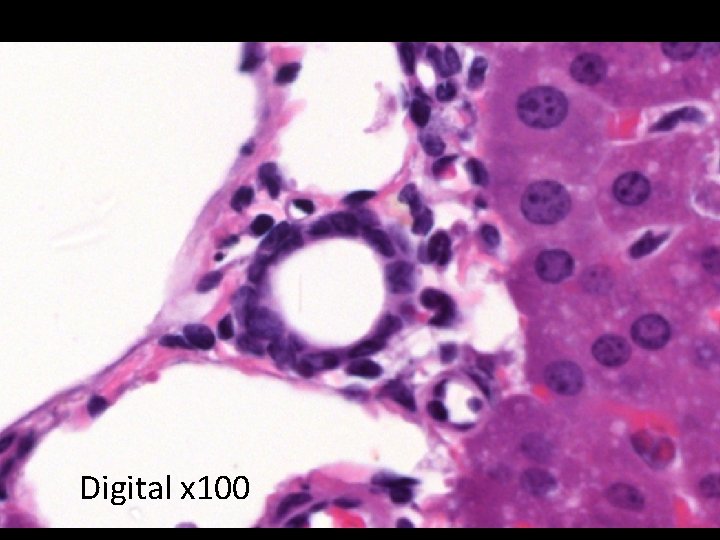
x 40 Digital x 20 Digital x 100
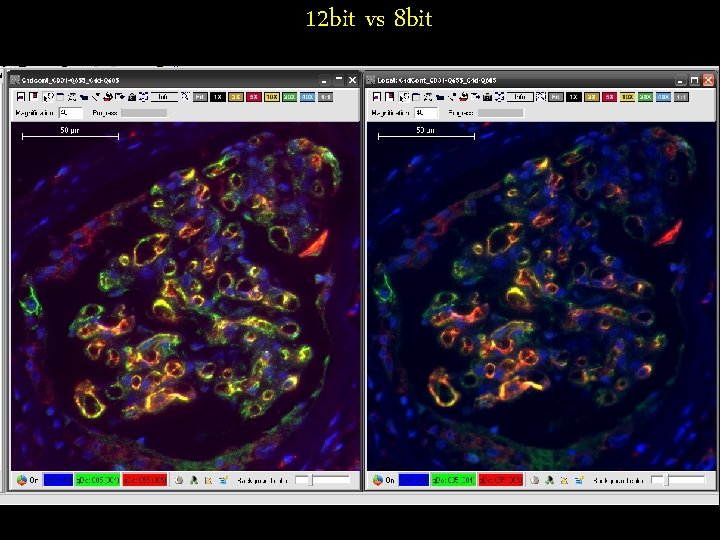
12 bit vs 8 bit
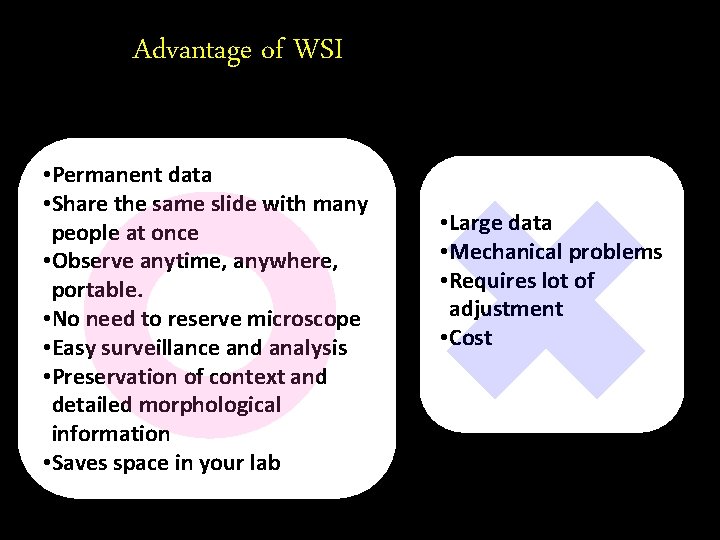
Advantage of WSI • Permanent data • Share the same slide with many people at once • Observe anytime, anywhere, portable. • No need to reserve microscope • Easy surveillance and analysis • Preservation of context and detailed morphological information • Saves space in your lab • Large data • Mechanical problems • Requires lot of adjustment • Cost
Digitally Preserving and Sharing the World’s Cultural Heritage
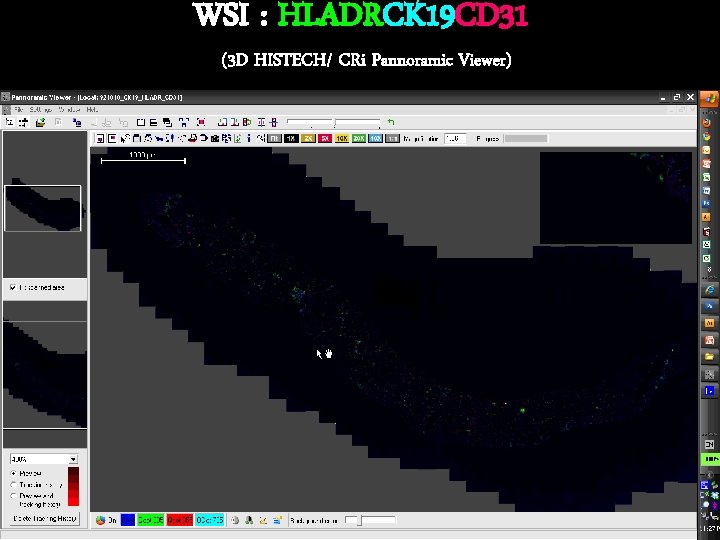
WSI : HLADRCK 19 CD 31 (3 D HISTECH/ CRi Pannoramic Viewer)
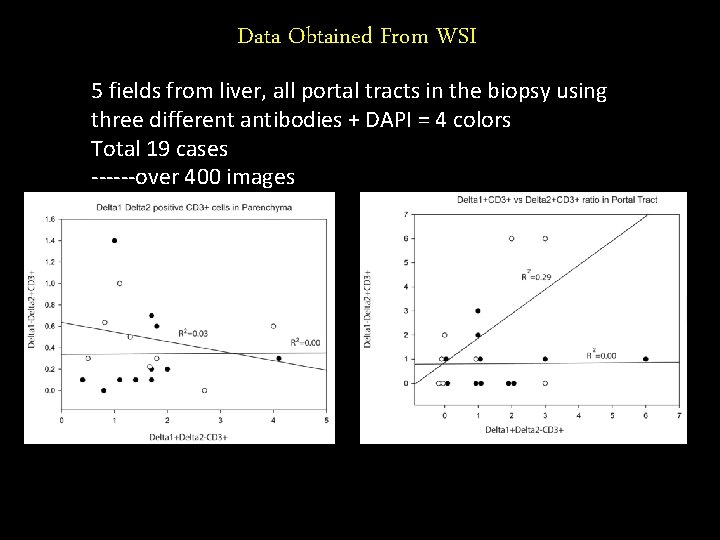
Data Obtained From WSI 5 fields from liver, all portal tracts in the biopsy using three different antibodies + DAPI = 4 colors Total 19 cases ------over 400 images
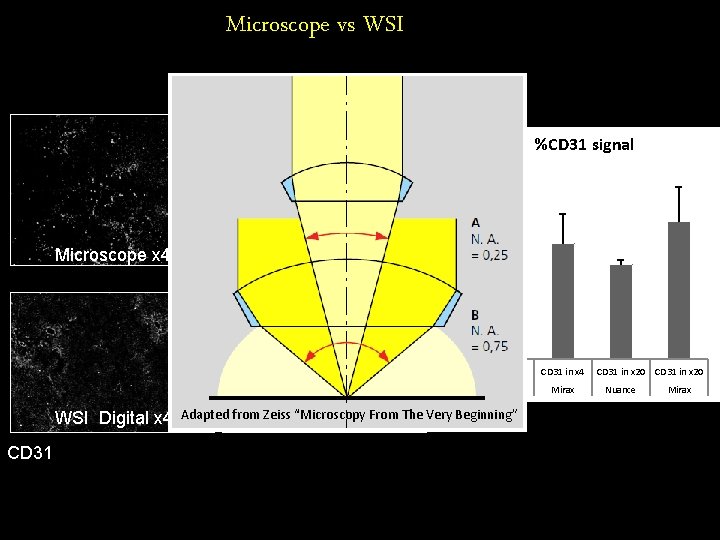
Microscope vs WSI %CD 31 signal 35 30 25 Microscope x 4 Microscope x 20 20 15 10 5 0 WSI Digital x 4 CD 31 in x 20 CD 31 in x 20 Nuance Mirax Adapted from Zeiss From The Very Beginning” WIS“Microscopy Digital x 20
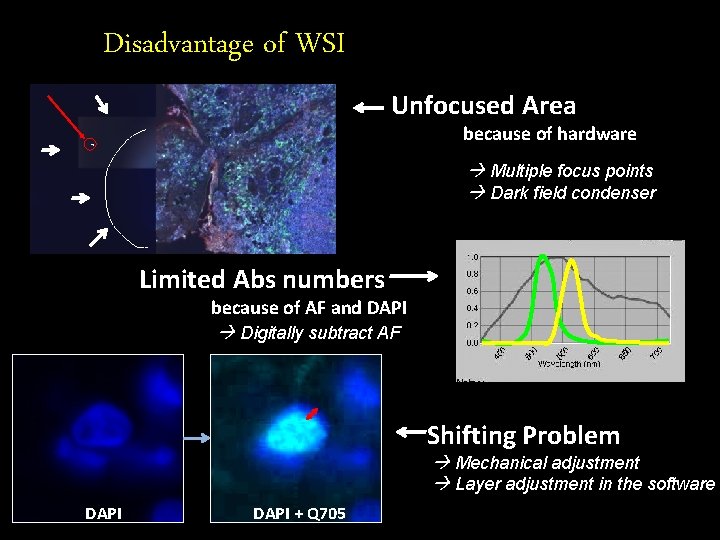
Disadvantage of WSI Unfocused Area because of hardware Multiple focus points Dark field condenser Limited Abs numbers because of AF and DAPI Digitally subtract AF Shifting Problem Mechanical adjustment Layer adjustment in the software DAPI + Q 705
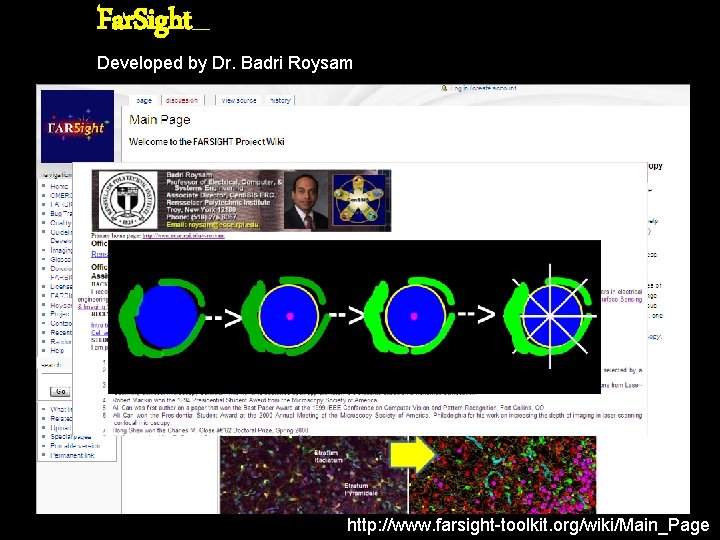
Far. Sight__ Developed by Dr. Badri Roysam http: //www. farsight-toolkit. org/wiki/Main_Page
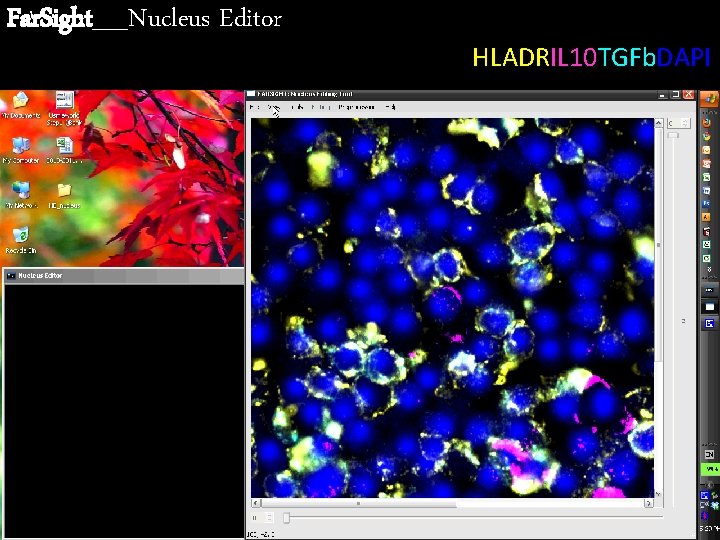
Far. Sight__Nucleus Editor HLADRIL 10 TGFb. DAPI
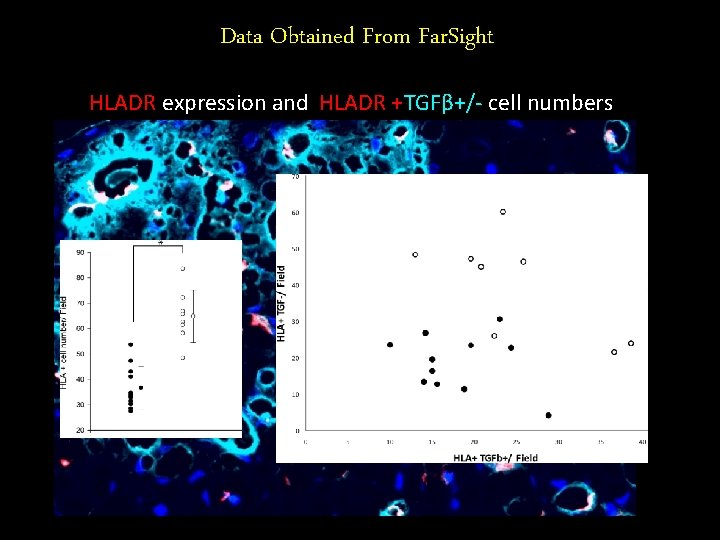
Data Obtained From Far. Sight HLADR expression and HLADR +TGFβ+/- cell numbers
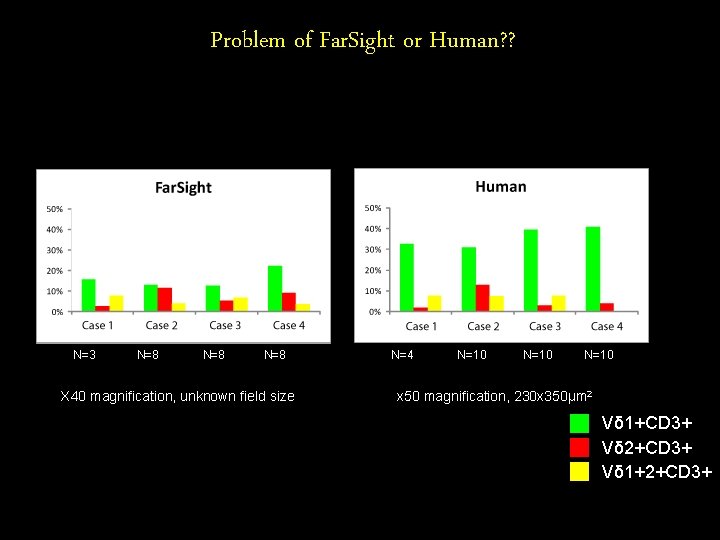
Problem of Far. Sight or Human? ? N=3 N=8 N=8 X 40 magnification, unknown field size N=4 N=10 x 50 magnification, 230 x 350μm 2 Vδ 1+CD 3+ Vδ 2+CD 3+ Vδ 1+2+CD 3+
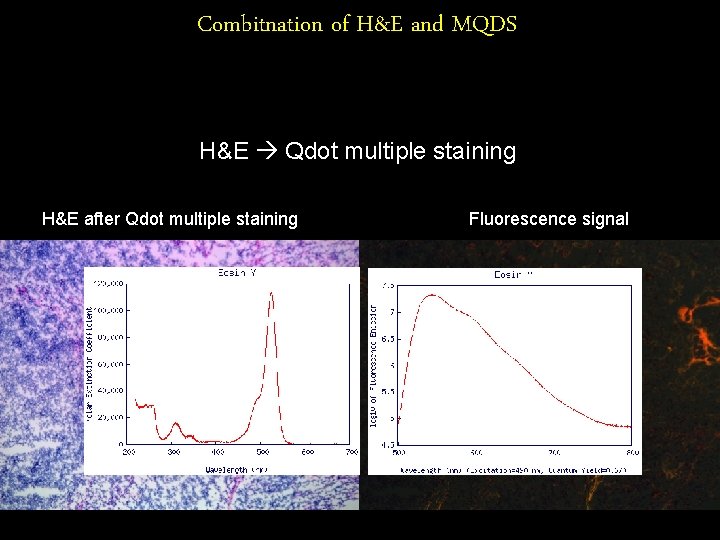
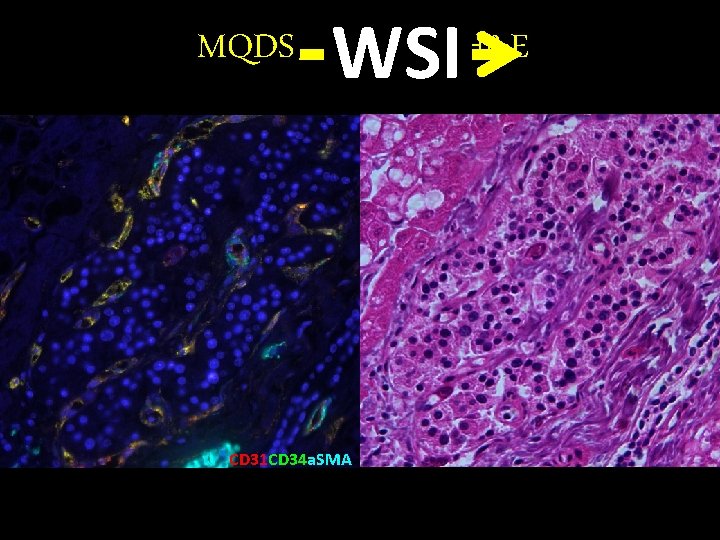
Combitnation of H&E and MQDS H&E Qdot multiple staining H&E after Qdot multiple staining Fluorescence signal
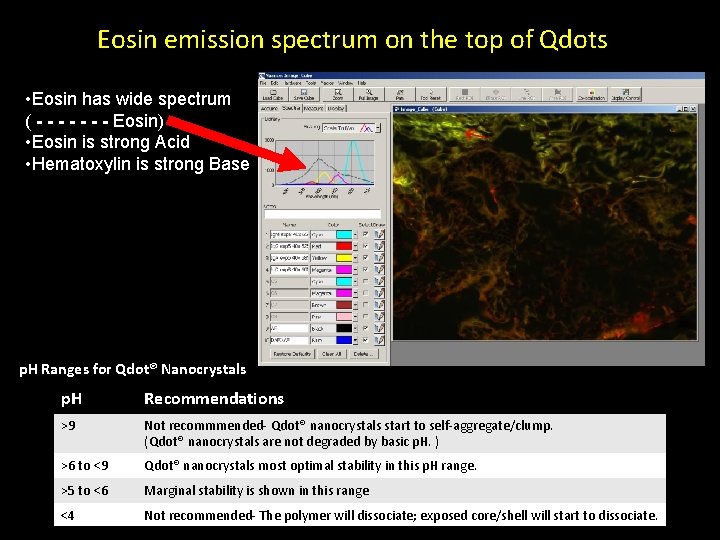
Eosin emission spectrum on the top of Qdots • Eosin has wide spectrum ( - - - - Eosin) • Eosin is strong Acid • Hematoxylin is strong Base p. H Ranges for Qdot® Nanocrystals p. H Recommendations >9 Not recommmended- Qdot® nanocrystals start to self-aggregate/clump. (Qdot® nanocrystals are not degraded by basic p. H. ) >6 to <9 Qdot® nanocrystals most optimal stability in this p. H range. >5 to <6 Marginal stability is shown in this range <4 Not recommended- The polymer will dissociate; exposed core/shell will start to dissociate.
MQDS WSI CD 31 CD 34 a. SMA H&E
Microscope • Conventional Method • Bottleneck because of limited resource (location and time) • Microscope often difficult to use • Not portable • Limited triage to automated image analysis • Looking at a tree and not the forest WSI • Easy to use, portable • Stronger signal at lower magnification • Combination of FL and Bright Field • Direct connection to automated image analysis • Unfocused areas • Autofluorescence • Adjustments needed
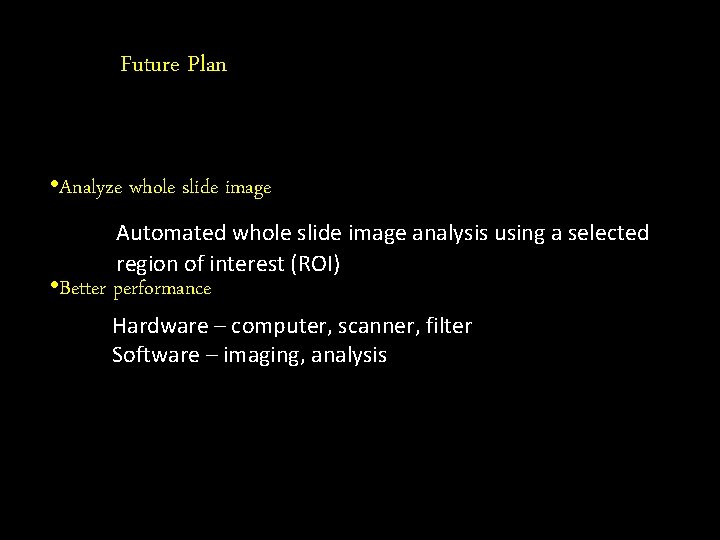
Future Plan • Analyze whole slide image Automated whole slide image analysis using a selected region of interest (ROI) • Better performance Hardware – computer, scanner, filter Software – imaging, analysis
Thank you! MIDI and system Consultant Demetris Lab RHS Lab Dr. Demetris John Lunz III Susan Specht Yoshiaki Mizuguchi Natasha Corbitt Enrico Pegolo Lisa Chedwick Andrew Lesniak Lori Perez Trevor Benyack Eleck Walton Traci Ondik Rensselaer Polytechnic Institute Roysam Lab Dr. Badri Roysam Kedar Grama ISH Lab Kathy Cieply