
Comparison of Gravimetric Geoid Models Over the Great

- Slides: 18
Comparison of Gravimetric Geoid Models Over the Great Lakes Region Daniel R. Roman and Xiaopeng Li
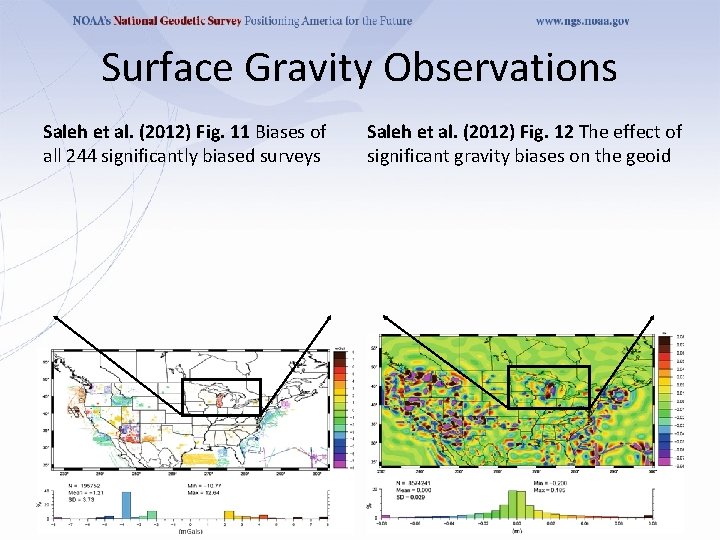
Surface Gravity Observations Saleh et al. (2012) Fig. 11 Biases of all 244 significantly biased surveys Saleh et al. (2012) Fig. 12 The effect of significant gravity biases on the geoid
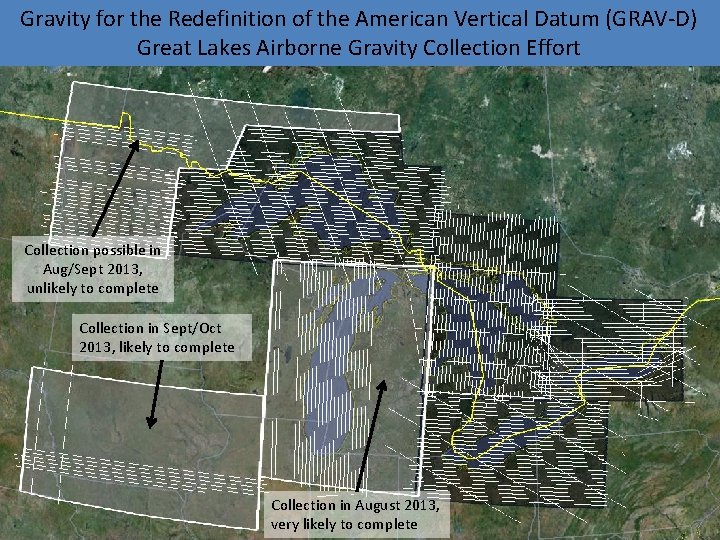
Gravity for the Redefinition of the American Vertical Datum (GRAV-D) Great Lakes Airborne Gravity Collection Effort Collection possible in Aug/Sept 2013, unlikely to complete Collection in Sept/Oct 2013, likely to complete Collection in August 2013, very likely to complete
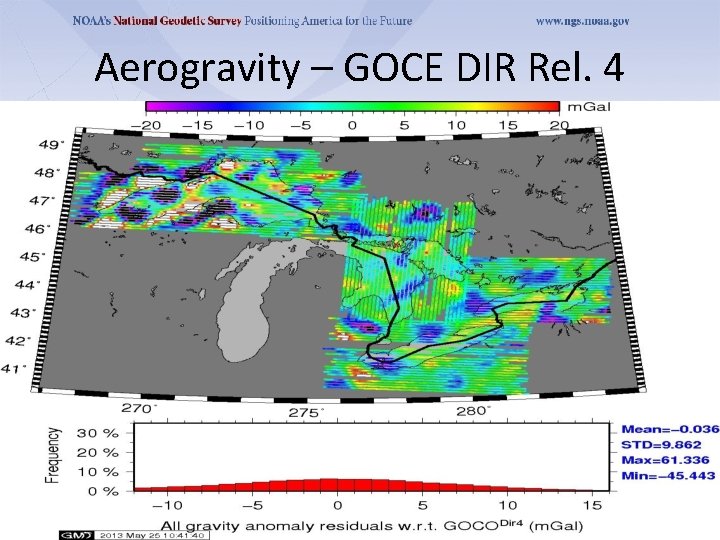
Aerogravity – GOCE DIR Rel. 4
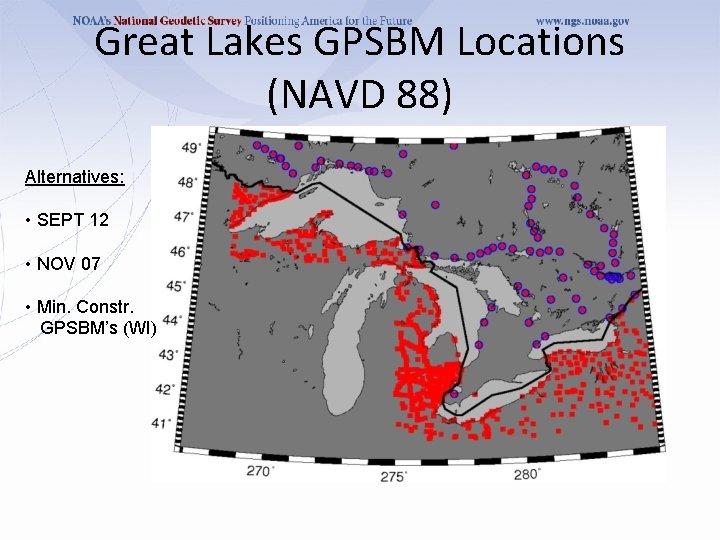
Great Lakes GPSBM Locations (NAVD 88) Alternatives: • SEPT 12 • NOV 07 • Min. Constr. GPSBM’s (WI)
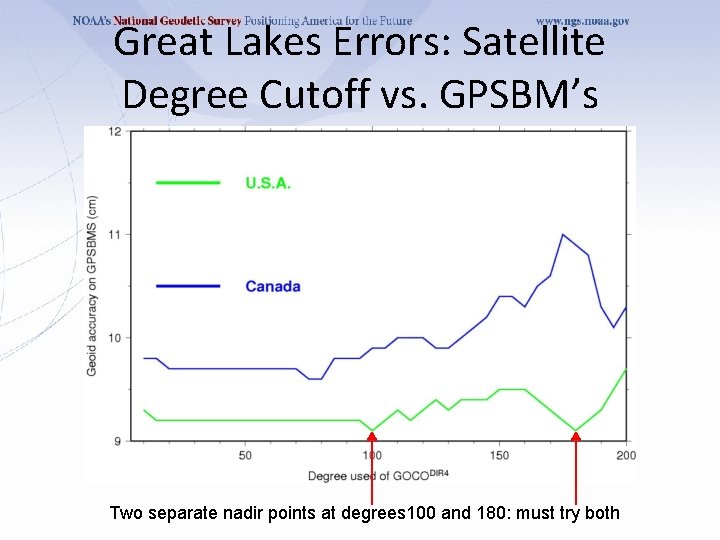
Great Lakes Errors: Satellite Degree Cutoff vs. GPSBM’s Two separate nadir points at degrees 100 and 180: must try both
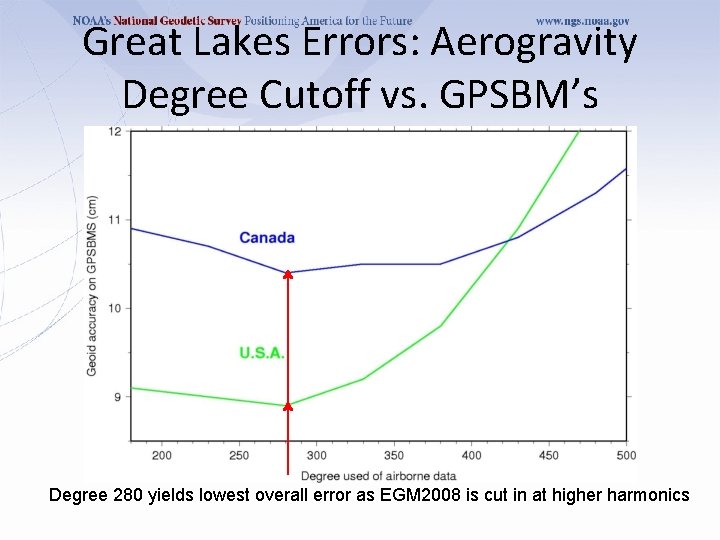
Great Lakes Errors: Aerogravity Degree Cutoff vs. GPSBM’s Degree 280 yields lowest overall error as EGM 2008 is cut in at higher harmonics
2. E GRAV-D Surface Gravity Error Detection and Cleaning • Check terrestrial gravity at suspect sites noted by Saleh et al. (2012) • Determine and remove potential biases trends in 40 km and longer bandwidth
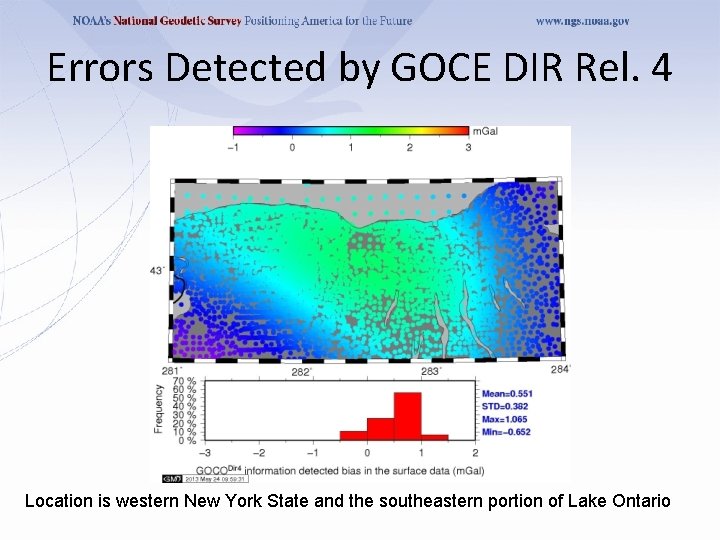
Errors Detected by GOCE DIR Rel. 4 Location is western New York State and the southeastern portion of Lake Ontario
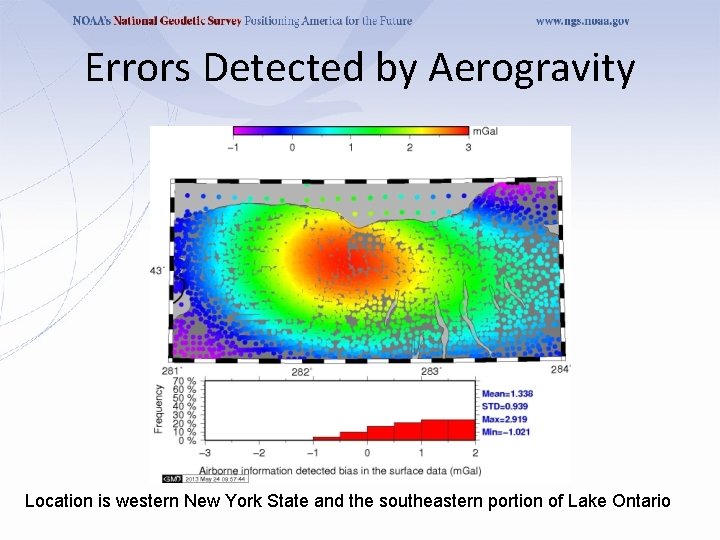
Errors Detected by Aerogravity Location is western New York State and the southeastern portion of Lake Ontario
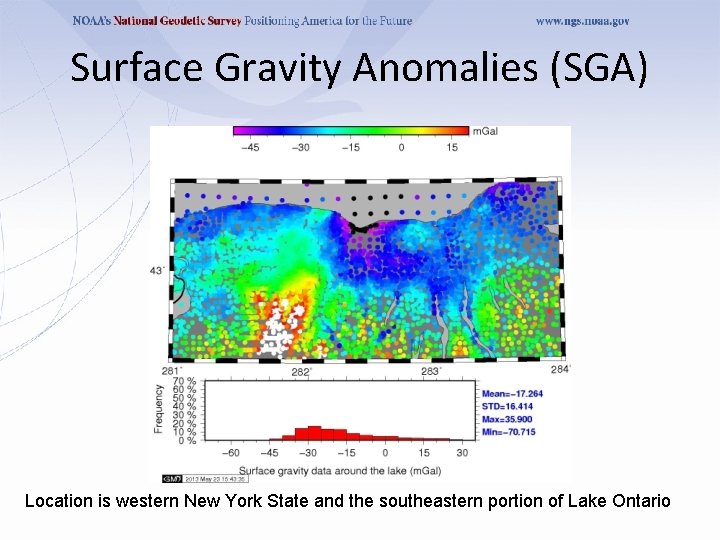
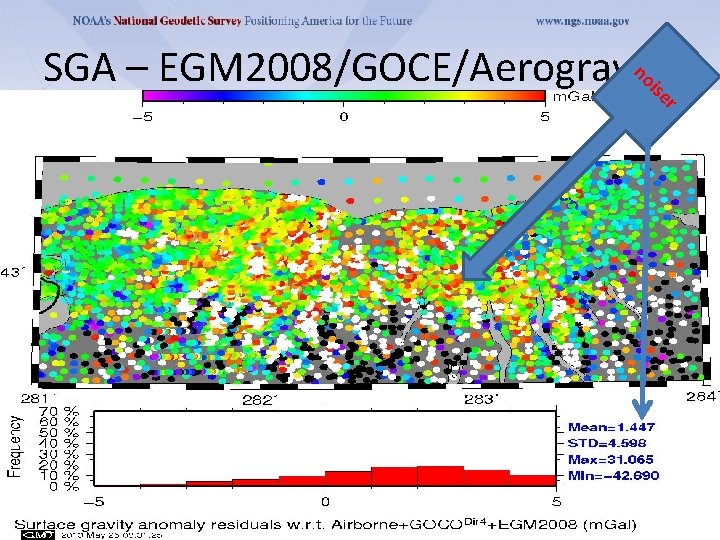
Surface Gravity Anomalies (SGA) Location is western New York State and the southeastern portion of Lake Ontario
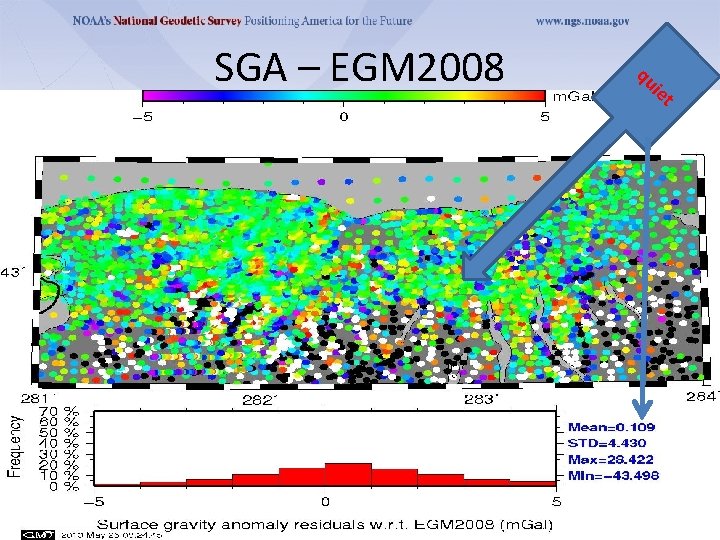
et i qu SGA – EGM 2008
se i no SGA – EGM 2008/GOCE-DIR R. 4
ise no SGA – EGM 2008/GOCE/Aerogravity r
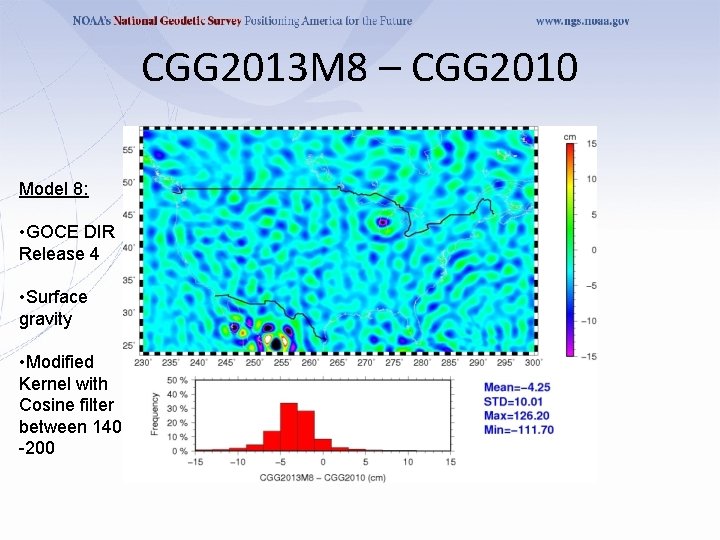
CGG 2013 M 8 – CGG 2010 Model 8: • GOCE DIR Release 4 • Surface gravity • Modified Kernel with Cosine filter between 140 -200
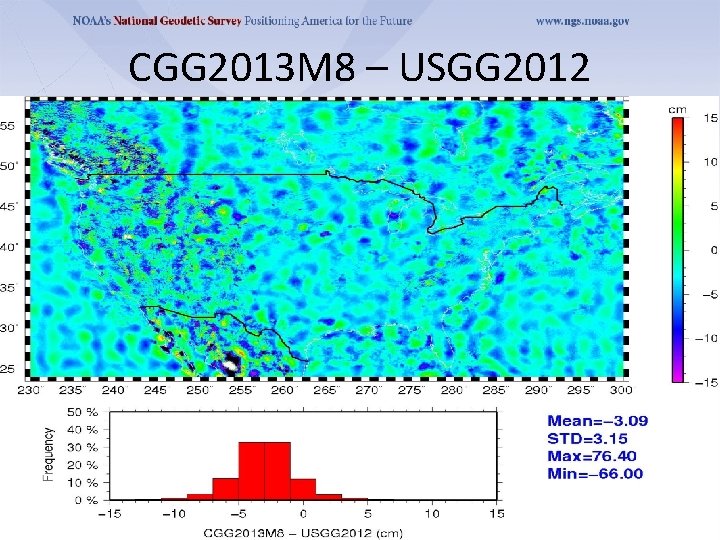
CGG 2013 M 8 – USGG 2012
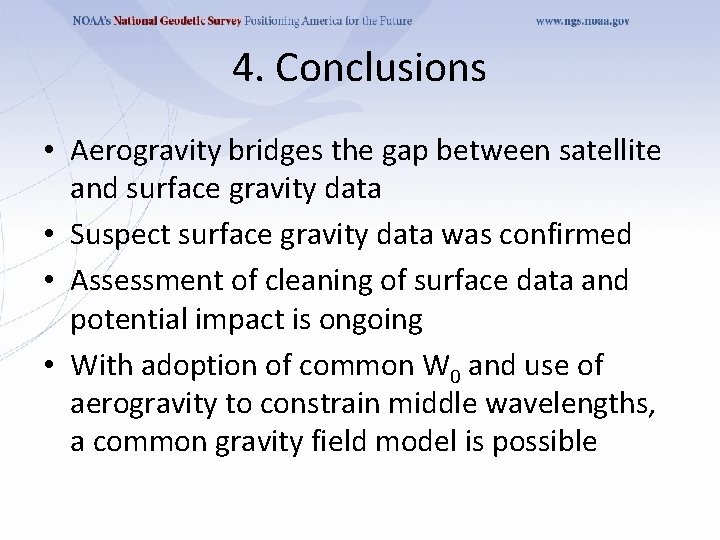
4. Conclusions • Aerogravity bridges the gap between satellite and surface gravity data • Suspect surface gravity data was confirmed • Assessment of cleaning of surface data and potential impact is ongoing • With adoption of common W 0 and use of aerogravity to constrain middle wavelengths, a common gravity field model is possible
5. Future Work • Use NOV 07, SEPT 12, & M. C. GPSBM to model • Test all surface gravity data in region • Develop regional model spanning same region as CGG 2013 • Compare final CGG 2013 against USGG 2012, XGG 13 D, and any follow-on models • Test against tide gauges/MODT • Water level gauges on Lakes