
COMPARISON OF DIFFERENT DOSIMETRY SYSTEMS FOR DOSE MEASUREMENTS




- Slides: 22
COMPARISON OF DIFFERENT DOSIMETRY SYSTEMS FOR DOSE MEASUREMENTS IN DIAGNOSTIC RADIOLOGY Đ. Milković, M. Ranogajec-Komor, S. Miljanić, Ž. Knežević and K. Krpan Children Hospital Srebrnjak Zagreb, Croatia Ruđer Bošković Institute, Zagreb, Croatia
Our wish is that all children are safe and protected in radiology department!
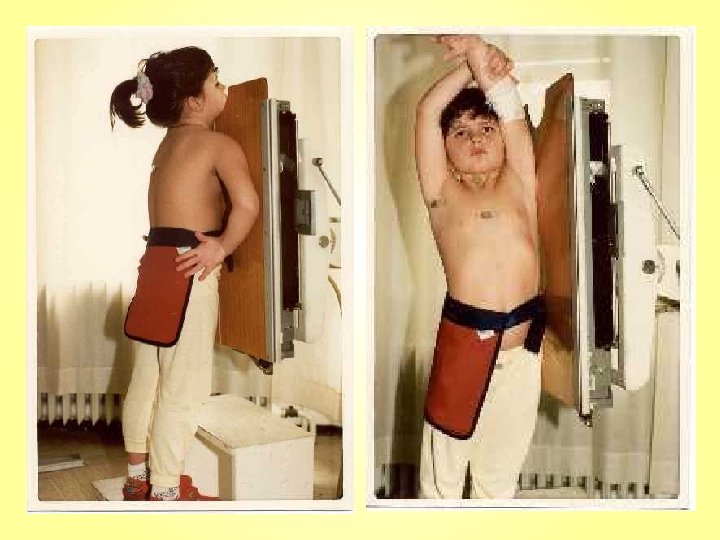
INTRODUCTION Pulmonary X-rays are essential in the diagnostics of lung diseases of children and youth. Chest radiography represents the majority of radiological examinations. The starting basis for radiation protection is the exact determination of doses.
FEATURES: very low doses at low and variable energies have to be measured there exists a considerable variation in radiation doses delivered to patients (different X-ray equipment, different staff, etc. ).
AIM to test a new Shimadzu X-ray unit used for thorax examination of children to compare a thermoluminescence (TL) dosimetry system based on Li. F: Mg, Cu, P with the radiophotoluminescent (RPL) glass dosimetry system (FGD-200).
MATERIALS AND METHODS Irradiations: 137 Cs gamma rays in air – for calibration ISOVOLT 420 X Ray Unit (40 -300 k. V, 1 -20 m. A) at the SSDL in air and on the water phantom (plastic bottle, Φ=11 cm, V=2. 5 l) – energy dependence Energies: 33, 48, 65 ke. V Dnom= 2 m. Gy (air kerma) 150 k. V Shimadzu CH-200 M unit in air Phantoms: water phantom (plastic bottle) doll phantom
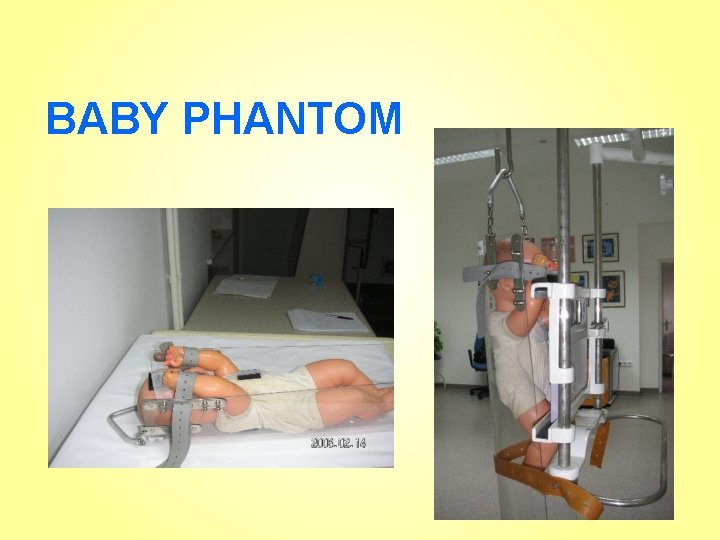
BABY PHANTOM
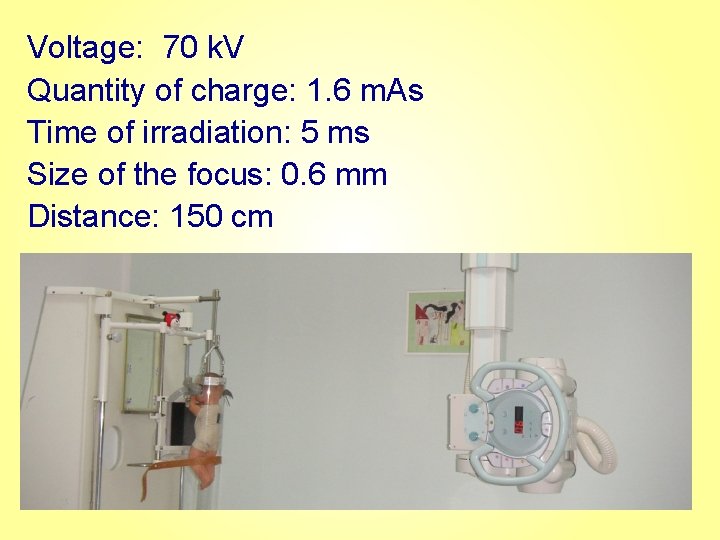
Voltage: 70 k. V Quantity of charge: 1. 6 m. As Time of irradiation: 5 ms Size of the focus: 0. 6 mm Distance: 150 cm
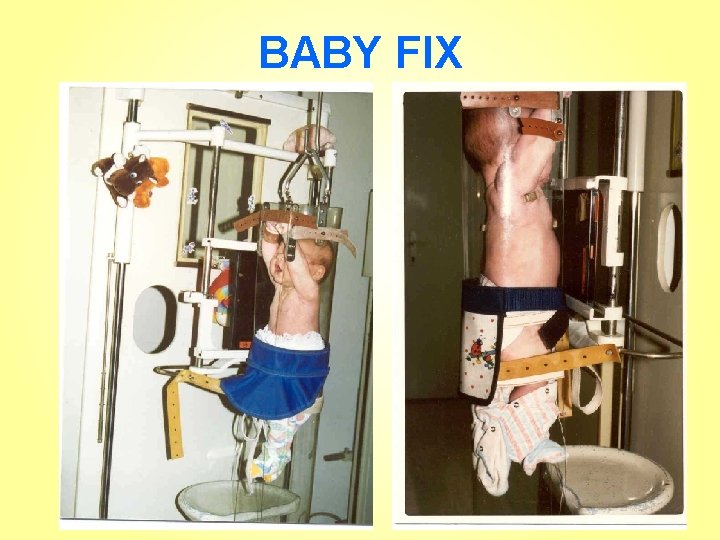
BABY FIX
Dosimetry systems
RESULTS Energy dependence in SSDL Doses in diagnostic X-ray unit
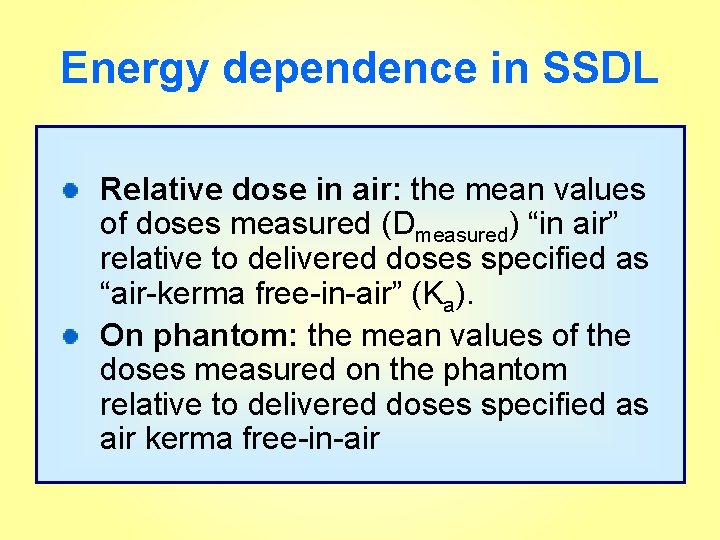
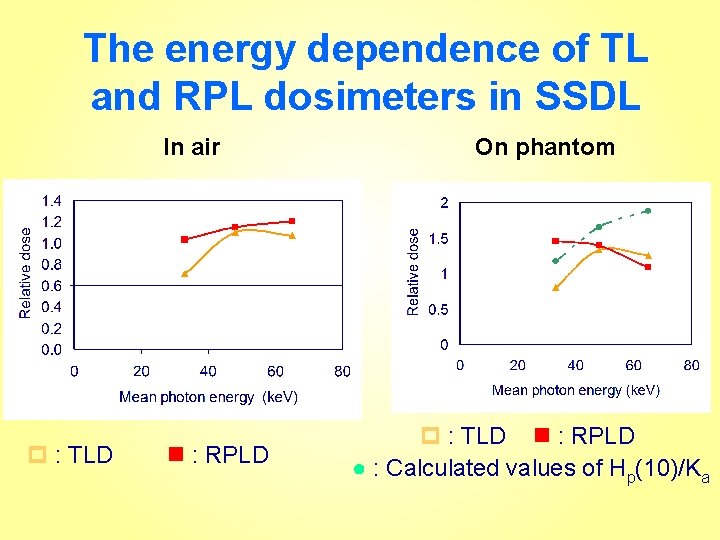
Energy dependence in SSDL Relative dose in air: the mean values of doses measured (Dmeasured) “in air” relative to delivered doses specified as “air-kerma free-in-air” (Ka). On phantom: the mean values of the doses measured on the phantom relative to delivered doses specified as air kerma free-in-air
The energy dependence of TL and RPL dosimeters in SSDL In air : TLD : RPLD On phantom : TLD : RPLD ● : Calculated values of Hp(10)/Ka
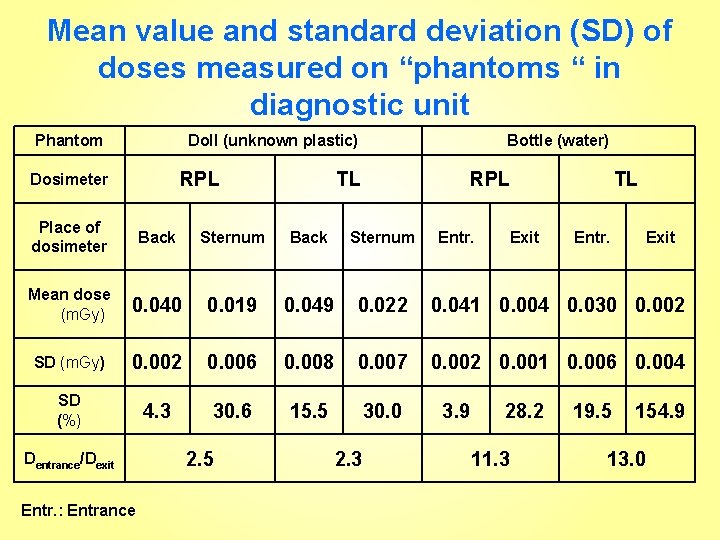
Mean value and standard deviation (SD) of doses measured on “phantoms “ in diagnostic unit Phantom Doll (unknown plastic) RPL Dosimeter Bottle (water) TL RPL TL Place of dosimeter Back Sternum Mean dose (m. Gy) 0. 040 0. 019 0. 049 0. 022 0. 041 0. 004 0. 030 0. 002 SD (m. Gy) 0. 002 0. 006 0. 008 0. 007 0. 002 0. 001 0. 006 0. 004 SD (%) 4. 3 30. 6 15. 5 30. 0 Dentrance/Dexit Entr. : Entrance 2. 5 2. 3 Entr. 3. 9 Exit 28. 2 11. 3 Entr. 19. 5 Exit 154. 9 13. 0
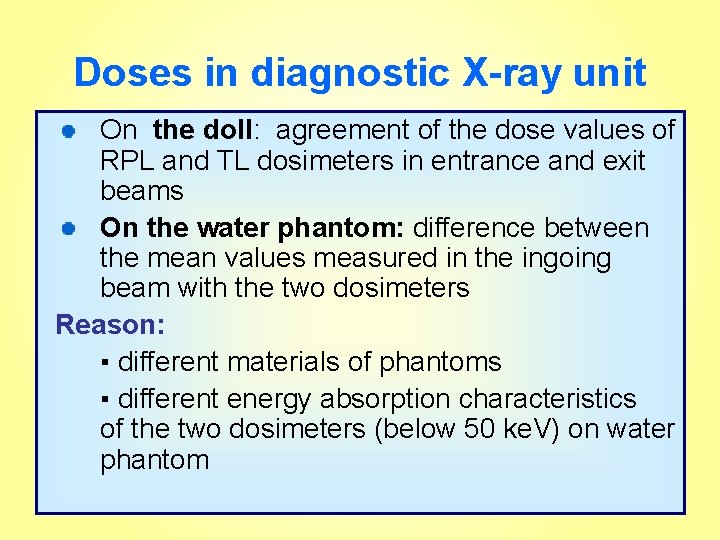
Doses in diagnostic X-ray unit On the doll: agreement of the dose values of RPL and TL dosimeters in entrance and exit beams On the water phantom: difference between the mean values measured in the ingoing beam with the two dosimeters Reason: ▪ different materials of phantoms ▪ different energy absorption characteristics of the two dosimeters (below 50 ke. V) on water phantom
CONCLUSION TLD (Li. F: Mg, Cu, P ) (termoluminiscent dosimeter) RPL (radiophotoluminiscent glass dosimeter)
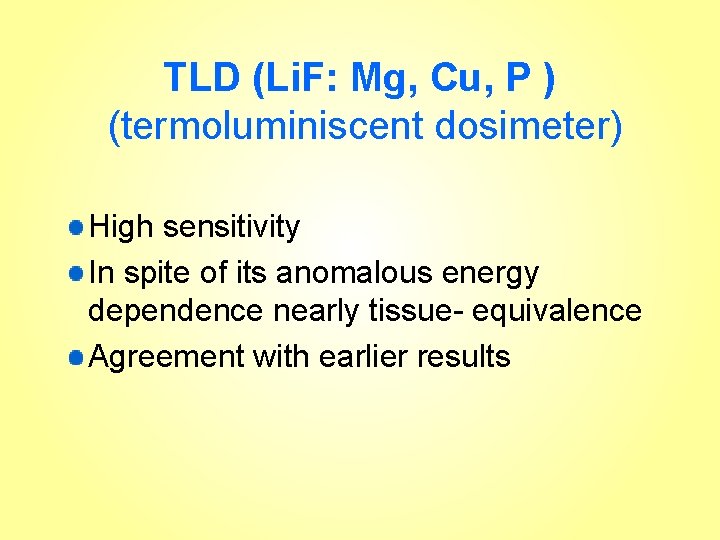
TLD (Li. F: Mg, Cu, P ) (termoluminiscent dosimeter) High sensitivity In spite of its anomalous energy dependence nearly tissue- equivalence Agreement with earlier results
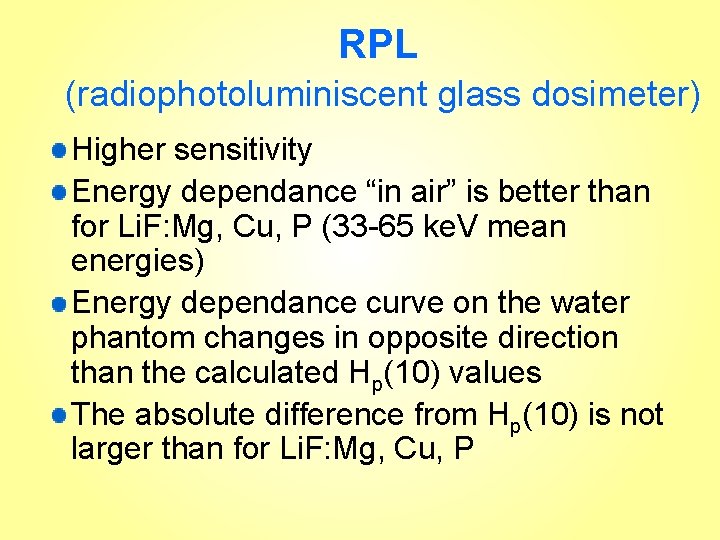
RPL (radiophotoluminiscent glass dosimeter) Higher sensitivity Energy dependance “in air” is better than for Li. F: Mg, Cu, P (33 -65 ke. V mean energies) Energy dependance curve on the water phantom changes in opposite direction than the calculated Hp(10) values The absolute difference from Hp(10) is not larger than for Li. F: Mg, Cu, P
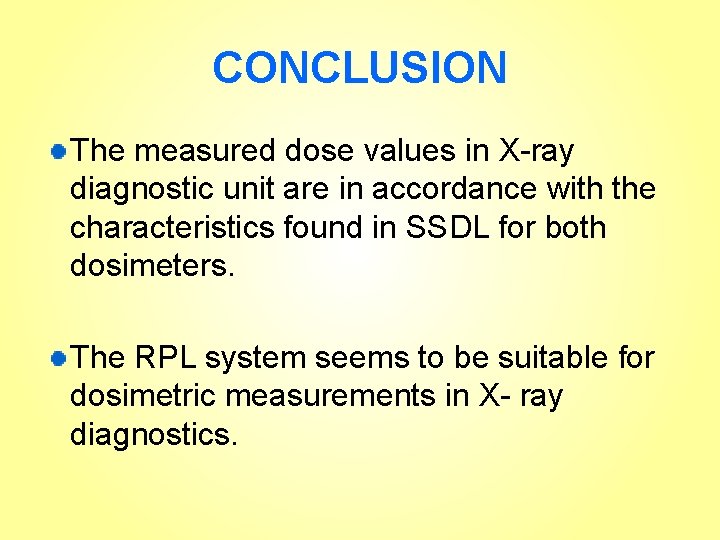
CONCLUSION The measured dose values in X-ray diagnostic unit are in accordance with the characteristics found in SSDL for both dosimeters. The RPL system seems to be suitable for dosimetric measurements in X- ray diagnostics.
ZAGREB
Thank you for your attention! The authors are grateful to Chiyoda Technol Corporation, Japan for the support of this work.