
Comparison of 2 Models of Aspheric Diffractive Multifocal



- Slides: 19
Comparison of 2 Models of Aspheric Diffractive Multifocal IOL Dr. Magda Rau, Augenklinik Cham Germany
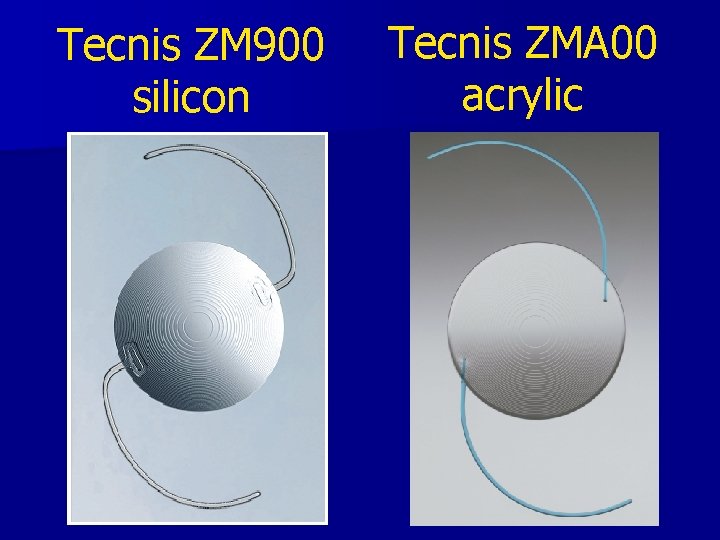
Tecnis ZM 900 silicon Tecnis ZMA 00 acrylic
Clinical study -prospective case study -from July 2008 until December 2008 -40 diffractive MIOLs in 40 eyes of 20 patients -Tecnis ZM 900 silicon in one eye, Tecnis ZMA 00 acrylic in the other eye of the same patient -mean age 76
Material and Methods n Selection criteria - Cataract bilateral Strong desire to achieve spectacle independence Willingness to accept potential optical side effects and longer optical adaptation period after surgery No retinal and optic nerve pathology n Exclusion criteria: - Patients with astigmatism of more than 1. 25 D Patients who had never been satisfied with prescription of multifocal glasses Patients with overly high expectations for postoperative vision, anxious or demanding persons -
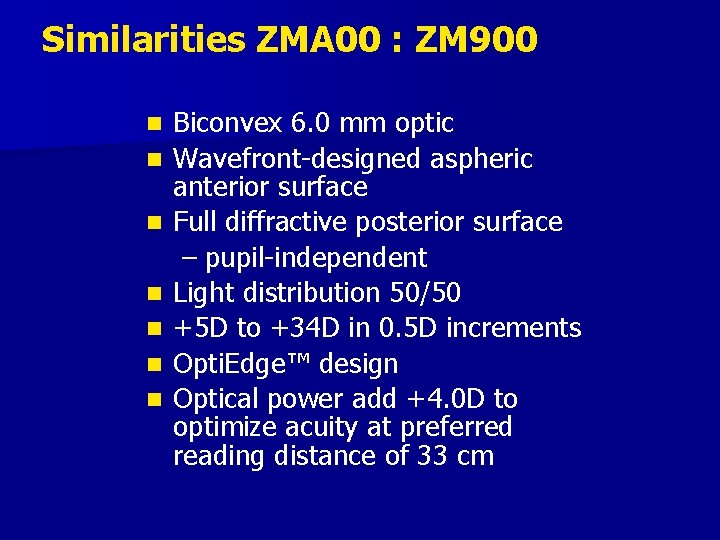
Similarities ZMA 00 : ZM 900 n n n n Biconvex 6. 0 mm optic Wavefront-designed aspheric anterior surface Full diffractive posterior surface – pupil-independent Light distribution 50/50 +5 D to +34 D in 0. 5 D increments Opti. Edge™ design Optical power add +4. 0 D to optimize acuity at preferred reading distance of 33 cm
Differences: ZMA 00 : ZM 900 ZMA 00 • ZMA 00 Hydrophobic Acrylic ZM 900 Silicone Haptics: • 13. 0 mm • 12. 0 mm • Modified C • Cap C • Blue PMMA • Clear PVDF • 5° • 6°
Video implantation of Tecnis ZMA 00
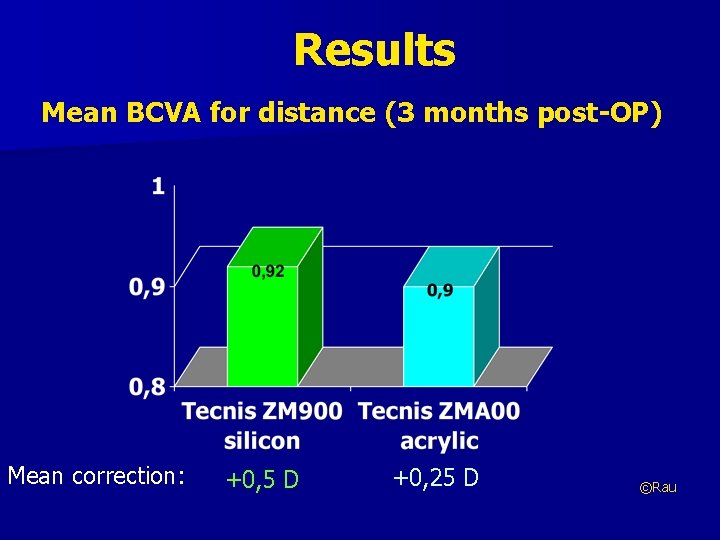
Results Mean BCVA for distance (3 months post-OP) Mean correction: +0, 5 D +0, 25 D ©Rau
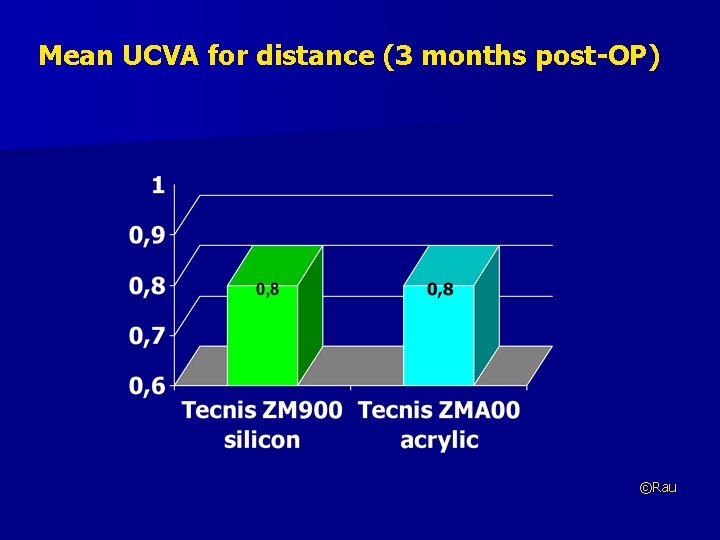
Mean UCVA for distance (3 months post-OP) ©Rau
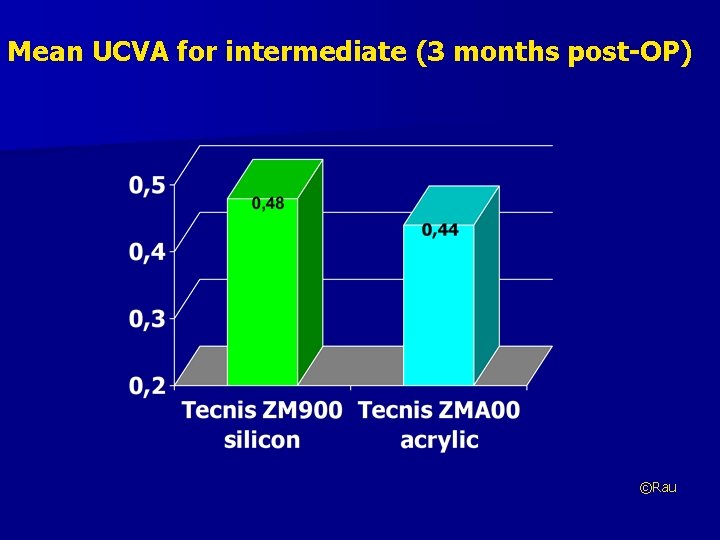
Mean UCVA for intermediate (3 months post-OP) ©Rau
Mean UCVA for near (3 months post-OP) ©Rau
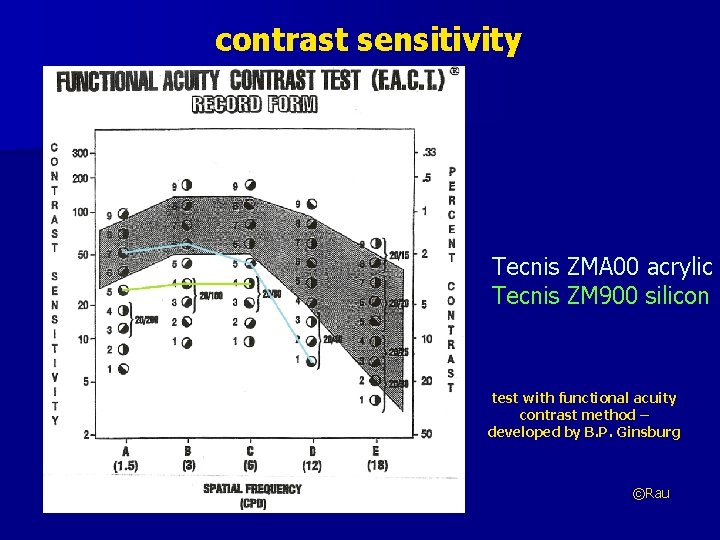
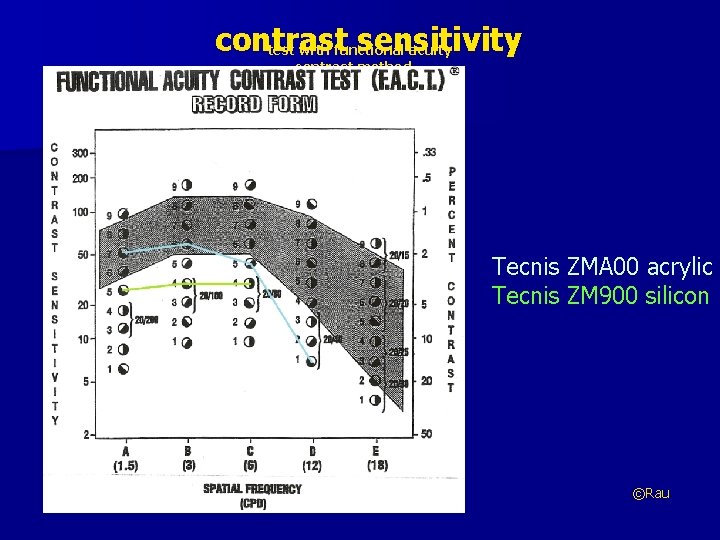
contrast sensitivity Tecnis ZMA 00 acrylic Tecnis ZM 900 silicon test with functional acuity contrast method – developed by B. P. Ginsburg ©Rau
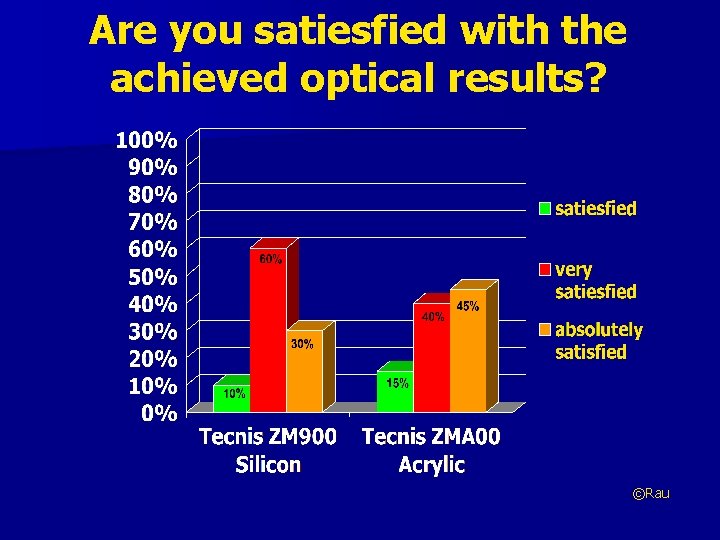
Are you satiesfied with the achieved optical results? ©Rau
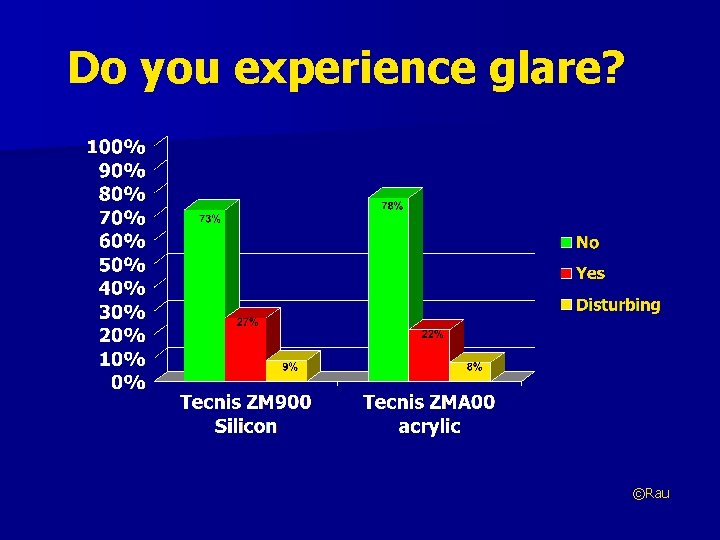
Do you experience glare? ©Rau
Do you notice halos? ©Rau
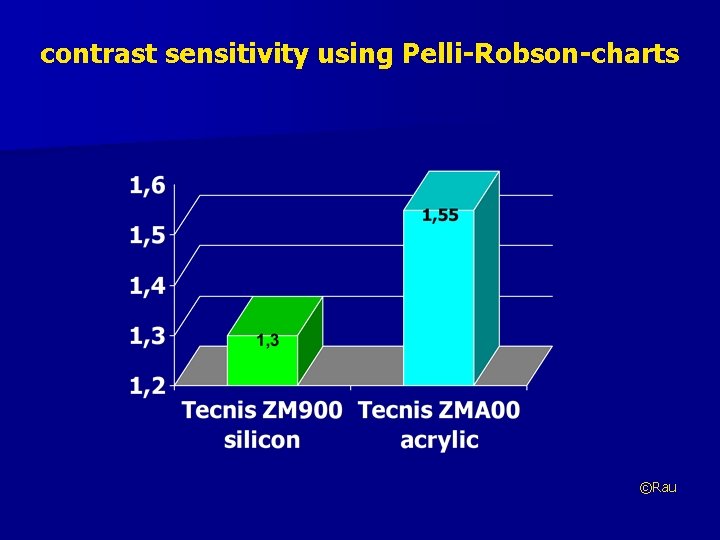
contrast sensitivity using Pelli-Robson-charts ©Rau
contrast sensitivity test with functional acuity contrast method – developed by B. P. Ginsburg Tecnis ZMA 00 acrylic Tecnis ZM 900 silicon ©Rau
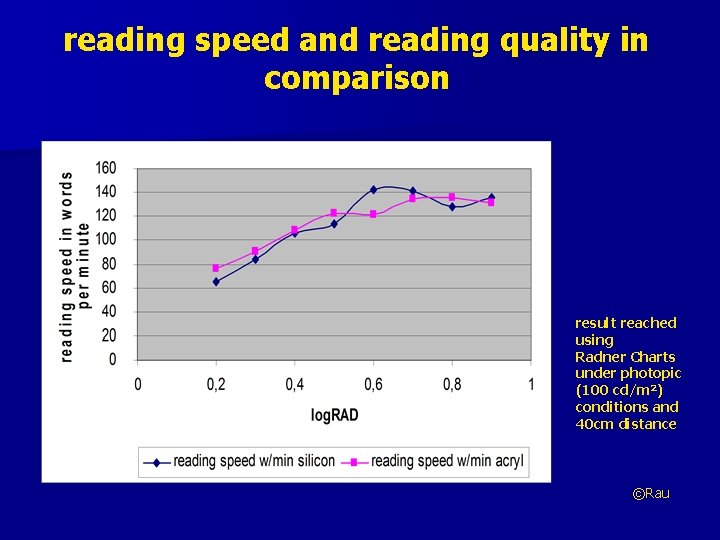
reading speed and reading quality in comparison result reached using Radner Charts under photopic (100 cd/m 2) conditions and 40 cm distance ©Rau
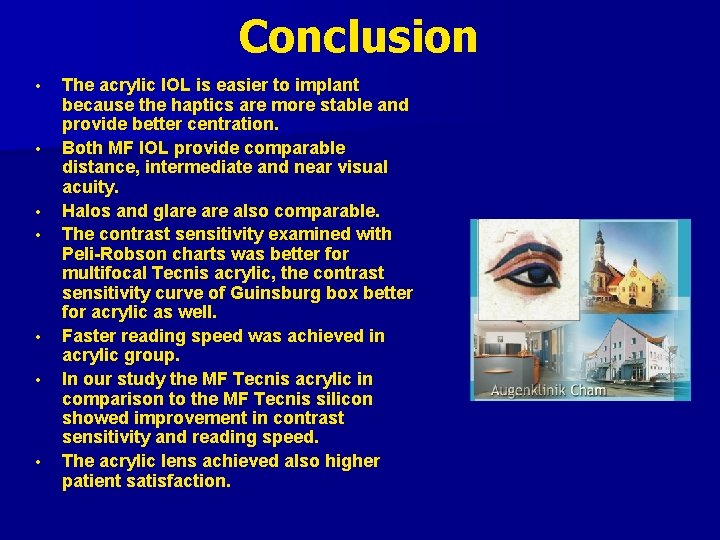
Conclusion • • The acrylic IOL is easier to implant because the haptics are more stable and provide better centration. Both MF IOL provide comparable distance, intermediate and near visual acuity. Halos and glare also comparable. The contrast sensitivity examined with Peli-Robson charts was better for multifocal Tecnis acrylic, the contrast sensitivity curve of Guinsburg box better for acrylic as well. Faster reading speed was achieved in acrylic group. In our study the MF Tecnis acrylic in comparison to the MF Tecnis silicon showed improvement in contrast sensitivity and reading speed. The acrylic lens achieved also higher patient satisfaction.