
Comparison between a THGEM made of ARLON and
Comparison between a THGEM made of ARLON and a traditional THGEM made of FR 4 Jinky Agarwala INFN, Trieste - ICTP, Trieste Tuesday, September 27, 2017 RD 51 Collaboration Meeting 1
Outlines ARLON and FR 4 THGEMs Set up and conditions of the measurements Comparison of results Effect of x-ray illumination Previous characterization of a THGEM made of Permaglass • Conclusions • • • Tuesday, September 27, 2017 RD 51 Collaboration Meeting 2
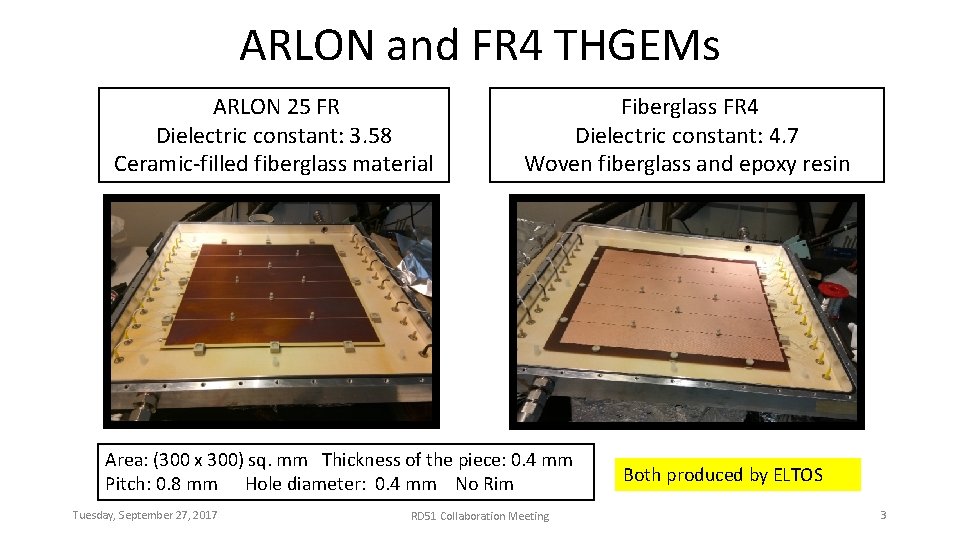
ARLON and FR 4 THGEMs ARLON 25 FR Dielectric constant: 3. 58 Ceramic-filled fiberglass material Fiberglass FR 4 Dielectric constant: 4. 7 Woven fiberglass and epoxy resin Area: (300 x 300) sq. mm Thickness of the piece: 0. 4 mm Pitch: 0. 8 mm Hole diameter: 0. 4 mm No Rim Tuesday, September 27, 2017 RD 51 Collaboration Meeting Both produced by ELTOS 3
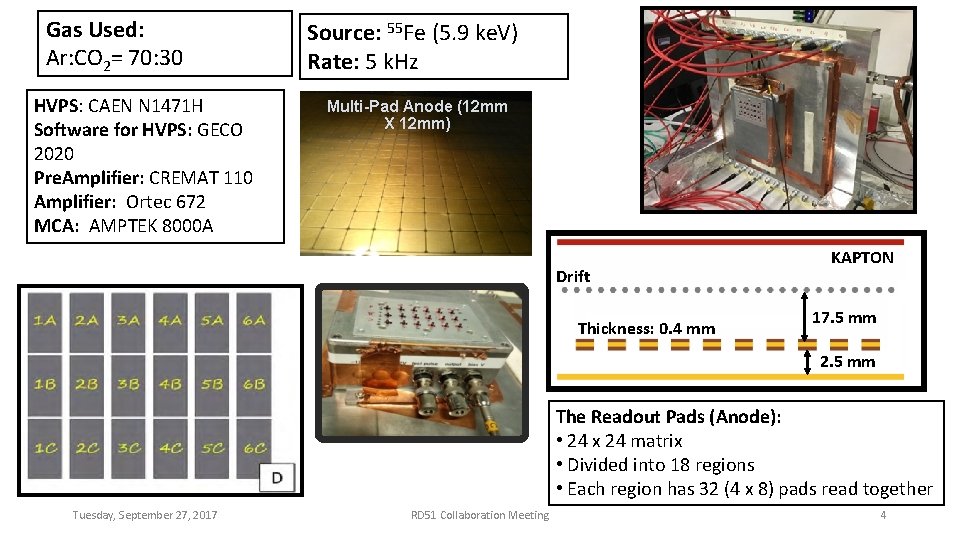
Gas Used: Ar: CO 2= 70: 30 HVPS: CAEN N 1471 H Software for HVPS: GECO 2020 Pre. Amplifier: CREMAT 110 Amplifier: Ortec 672 MCA: AMPTEK 8000 A Source: 55 Fe (5. 9 ke. V) Rate: 5 k. Hz Multi-Pad Anode (12 mm X 12 mm) Drift Thickness: 0. 4 mm KAPTON 17. 5 mm 2. 5 mm The Readout Pads (Anode): • 24 x 24 matrix • Divided into 18 regions • Each region has 32 (4 x 8) pads read together Tuesday, September 27, 2017 RD 51 Collaboration Meeting 4
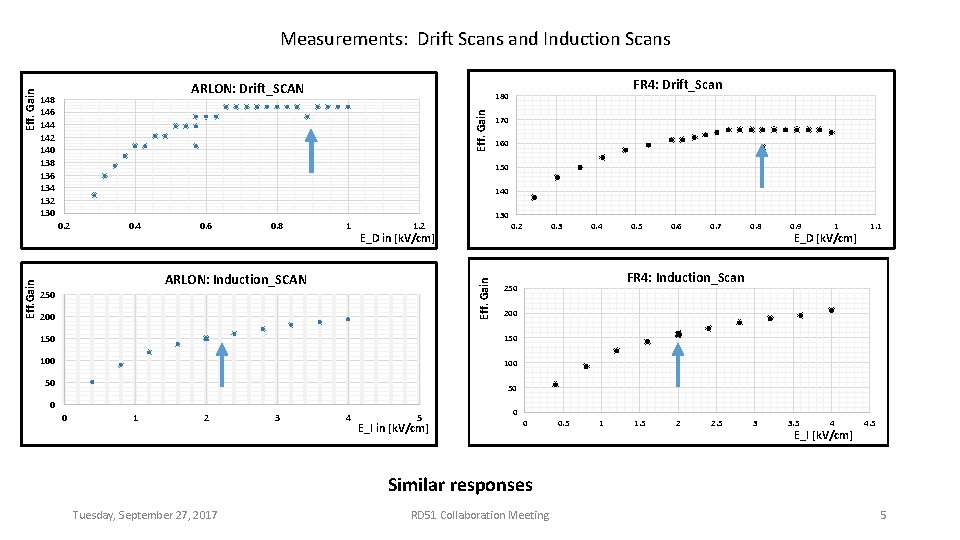
ARLON: Drift_SCAN 170 160 150 140 0. 2 Eff. Gain FR 4: Drift_Scan 180 Eff. Gain 148 146 144 142 140 138 136 134 132 130 0. 4 0. 6 0. 8 1 130 1. 2 E_D in [k. V/cm] ARLON: Induction_SCAN Eff. Gain Measurements: Drift Scans and Induction Scans 250 200 0. 2 100 50 50 1 2 3 4 5 E_I in [k. V/cm] 0. 5 0. 6 0. 7 0. 8 0. 9 3 3. 5 1 E_D [k. V/cm] 1. 1 FR 4: Induction_Scan 200 150 0 0. 4 250 150 0 0. 3 0 0 0. 5 1 1. 5 2 2. 5 4 E_I [k. V/cm] 4. 5 Similar responses Tuesday, September 27, 2017 RD 51 Collaboration Meeting 5
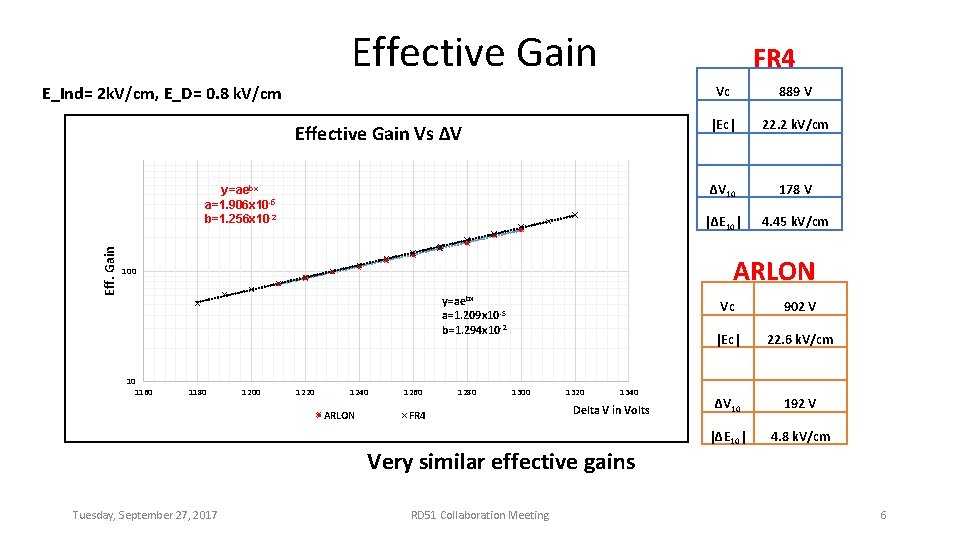
Effective Gain FR 4 E_Ind= 2 k. V/cm, E_D= 0. 8 k. V/cm Effective Gain Vs ΔV Eff. Gain y=aebx a=1. 906 x 10 -5 b=1. 256 x 10 -2 889 V |Ec| 22. 2 k. V/cm ΔV 10 178 V |ΔE 10| 4. 45 k. V/cm ARLON 100 y=aebx a=1. 209 x 10 -5 b=1. 294 x 10 -2 10 1160 Vc 1180 1200 1220 1240 ARLON 1260 1280 1300 FR 4 1320 1340 Delta V in Volts Very similar effective gains Tuesday, September 27, 2017 RD 51 Collaboration Meeting Vc 902 V |Ec| 22. 6 k. V/cm ΔV 10 192 V |ΔE 10| 4. 8 k. V/cm 6
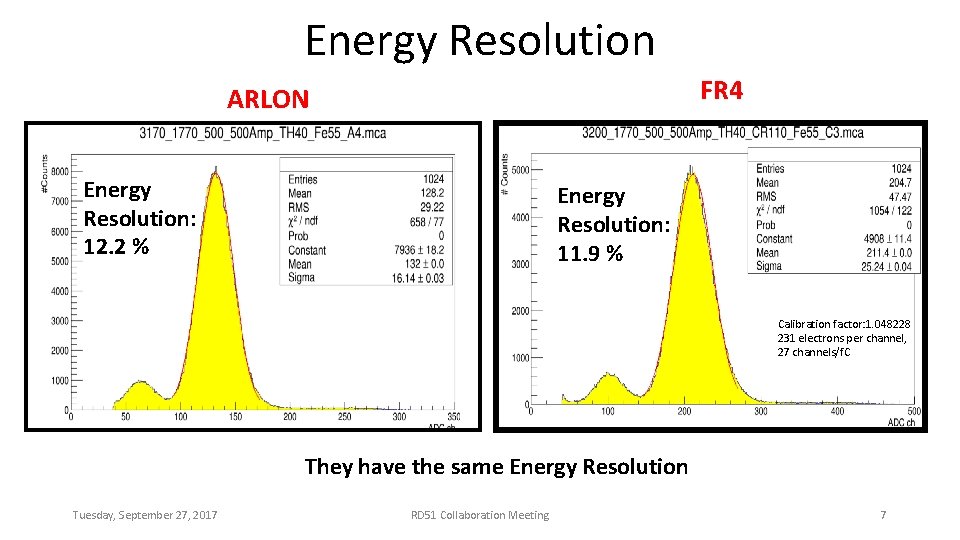
Energy Resolution FR 4 ARLON Energy Resolution: 12. 2 % Energy Resolution: 11. 9 % Calibration factor: 1. 048228 231 electrons per channel, 27 channels/f. C They have the same Energy Resolution Tuesday, September 27, 2017 RD 51 Collaboration Meeting 7
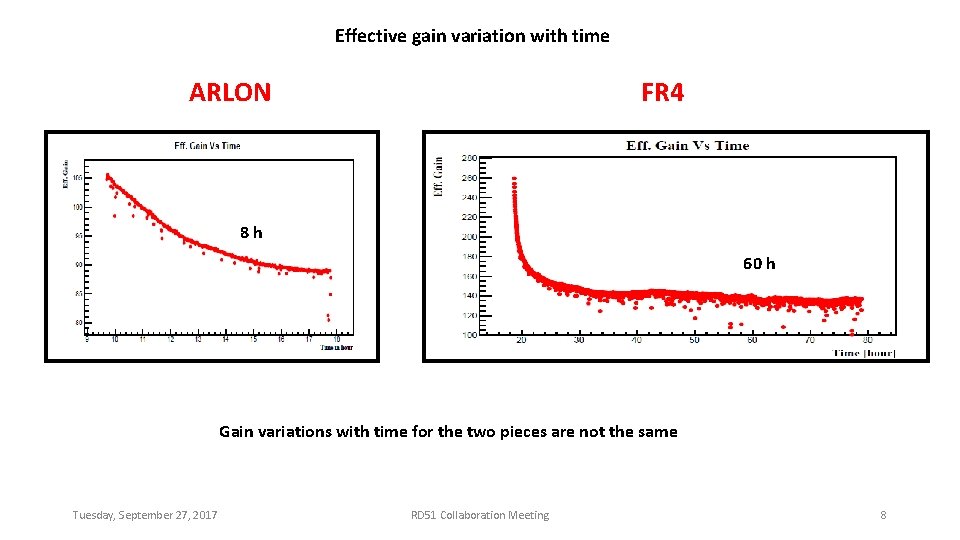
Effective gain variation with time ARLON FR 4 8 h 60 h Gain variations with time for the two pieces are not the same Tuesday, September 27, 2017 RD 51 Collaboration Meeting 8
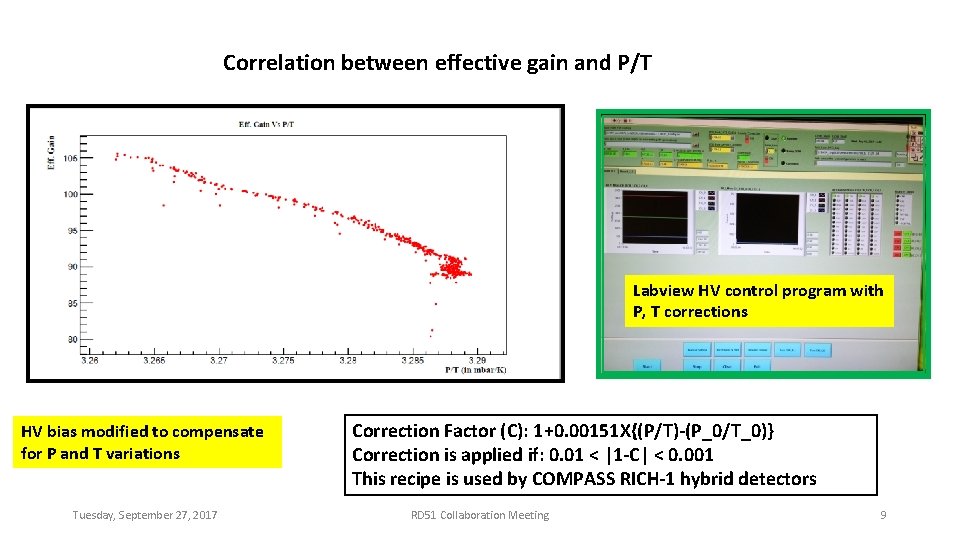
Correlation between effective gain and P/T Labview HV control program with P, T corrections HV bias modified to compensate for P and T variations Tuesday, September 27, 2017 Correction Factor (C): 1+0. 00151 X{(P/T)-(P_0/T_0)} Correction is applied if: 0. 01 < |1 -C| < 0. 001 This recipe is used by COMPASS RICH-1 hybrid detectors RD 51 Collaboration Meeting 9
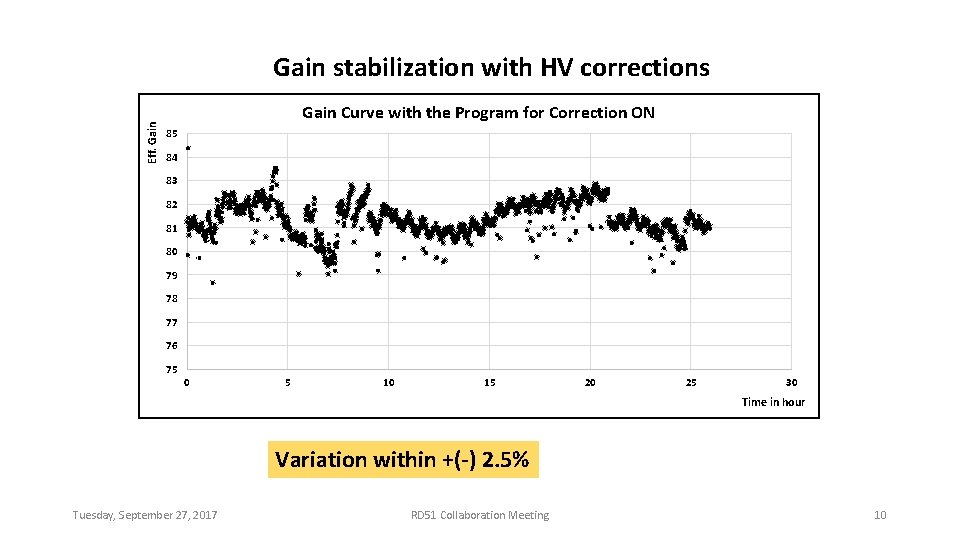
Eff. Gain stabilization with HV corrections Gain Curve with the Program for Correction ON 85 84 83 82 81 80 79 78 77 76 75 0 5 10 15 20 25 30 Time in hour Variation within +(-) 2. 5% Tuesday, September 27, 2017 RD 51 Collaboration Meeting 10
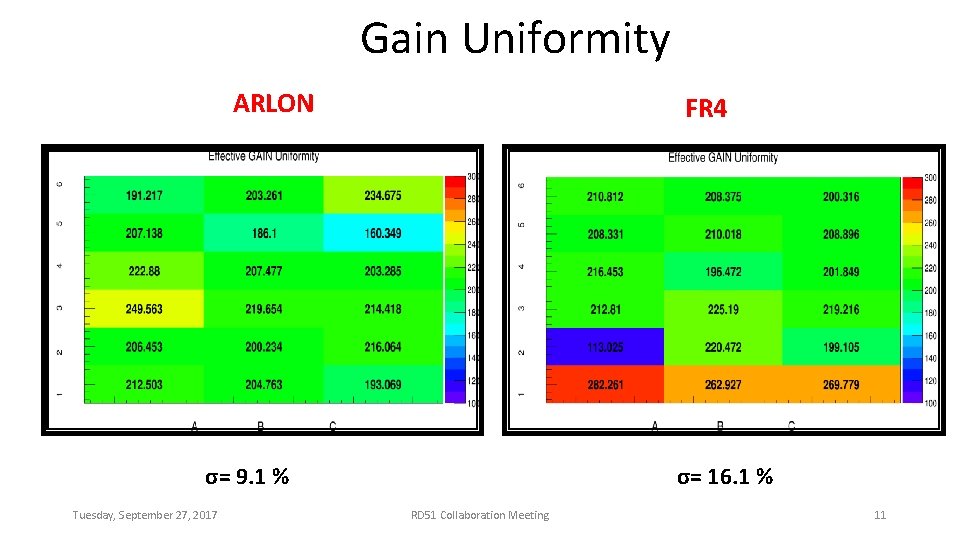
Gain Uniformity ARLON FR 4 σ= 9. 1 % Tuesday, September 27, 2017 σ= 16. 1 % RD 51 Collaboration Meeting 11
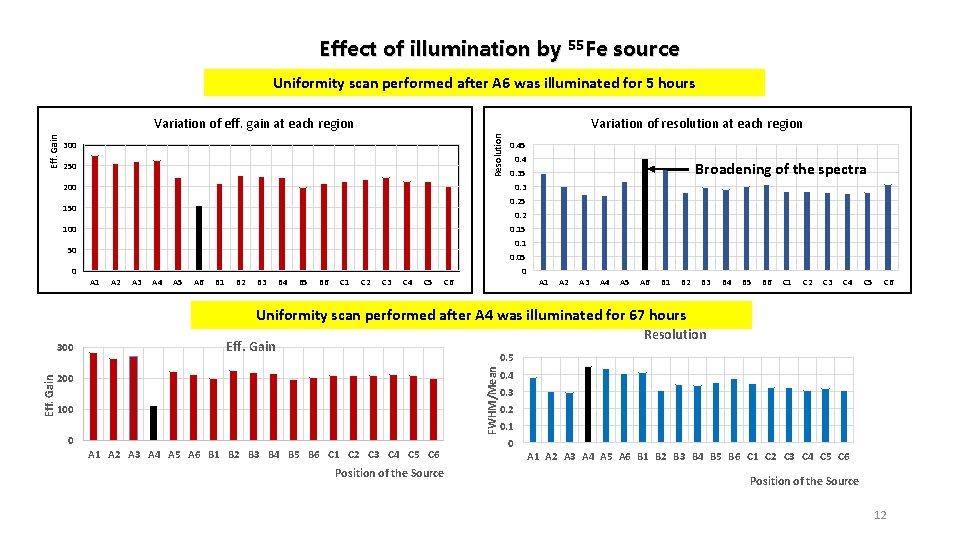
Effect of illumination by 55 Fe source Uniformity scan performed after A 6 was illuminated for 5 hours Variation of resolution at each region Resolution Eff. Gain Variation of eff. gain at each region 300 250 0. 45 0. 4 200 0. 3 0. 25 150 0. 2 100 0. 15 0. 1 50 0 Broadening of the spectra 0. 35 0. 05 A 1 A 2 A 3 A 4 A 5 A 6 B 1 B 2 B 3 B 4 B 5 B 6 C 1 C 2 C 3 C 4 C 5 0 C 6 A 1 A 2 A 3 A 4 A 5 A 6 B 1 B 2 B 3 B 4 B 5 B 6 C 1 C 2 C 3 C 4 C 5 C 6 Uniformity scan performed after A 4 was illuminated for 67 hours Resolution Eff. Gain 0. 5 FWHM/Mean Eff. Gain 300 200 100 0 A 1 A 2 A 3 A 4 A 5 A 6 B 1 B 2 B 3 B 4 B 5 B 6 C 1 C 2 C 3 C 4 C 5 C 6 Position of the Source 0. 4 0. 3 0. 2 0. 1 0 A 1 A 2 A 3 A 4 A 5 A 6 B 1 B 2 B 3 B 4 B 5 B 6 C 1 C 2 C 3 C 4 C 5 C 6 Position of the Source 12
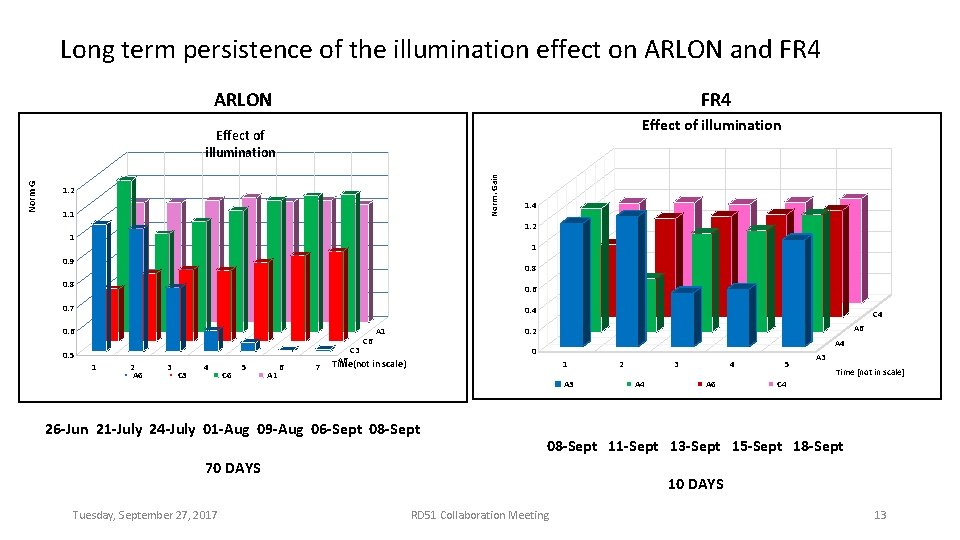
Long term persistence of the illumination effect on ARLON and FR 4 ARLON FR 4 Effect of illumination Norm. Gain Norm G Effect of illumination 1. 2 1. 1 1. 4 1. 2 1 1 0. 9 0. 8 0. 6 0. 7 0. 4 0. 6 C 3 0. 5 1 2 A 6 3 C 3 4 C 6 5 A 1 6 7 C 6 A 1 C 4 A 6 0. 2 A 4 0 A 6 Time(not in scale) 1 A 3 26 -Jun 21 -July 24 -July 01 -Aug 09 -Aug 06 -Sept 08 -Sept 3 A 4 4 A 6 5 A 3 Time [not in scale] C 4 08 -Sept 11 -Sept 13 -Sept 15 -Sept 18 -Sept 70 DAYS Tuesday, September 27, 2017 2 10 DAYS RD 51 Collaboration Meeting 13
Conclusions • The responses of identical THGEMs made of ARLON and FR 4 have been compared • The gain and the energy resolution are the same • The charging up is faster in FR 4 • The recovery from the illumination effect is much slower in ARLON • The ARLON material is not suitable for high rate THGEM application Tuesday, September 27, 2017 RD 51 Collaboration Meeting 14
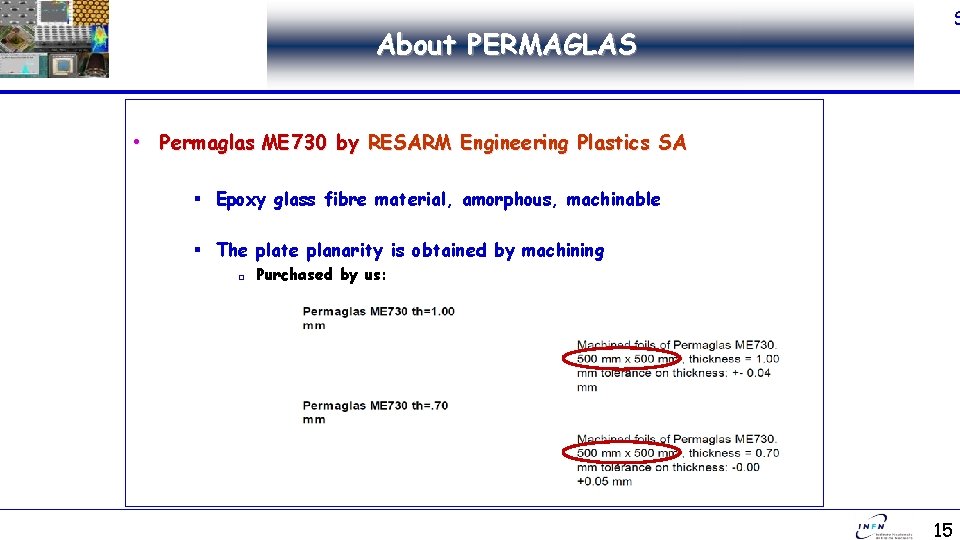
About PERMAGLAS GAS DETECTORS • Permaglas ME 730 by RESARM Engineering Plastics SA § Epoxy glass fibre material, amorphous, machinable § The plate planarity is obtained by machining ¨ Purchased by us: 15
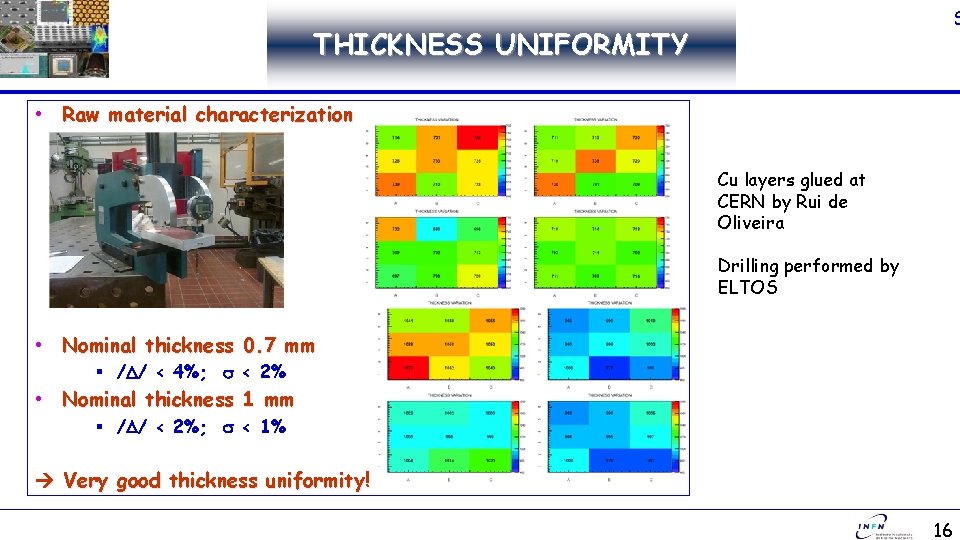
THICKNESS UNIFORMITY GAS DETECTORS • Raw material characterization Cu layers glued at CERN by Rui de Oliveira Drilling performed by ELTOS • Nominal thickness 0. 7 mm § /D/ < 4%; s < 2% • Nominal thickness 1 mm § /D/ < 2%; s < 1% Very good thickness uniformity! 16
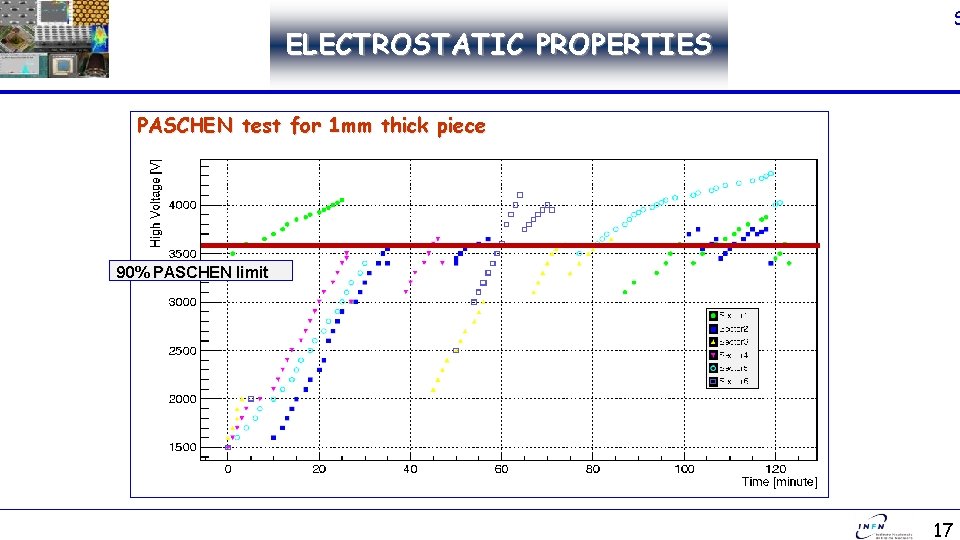
ELECTROSTATIC PROPERTIES GAS DETECTORS PASCHEN test for 1 mm thick piece 90% PASCHEN limit 17
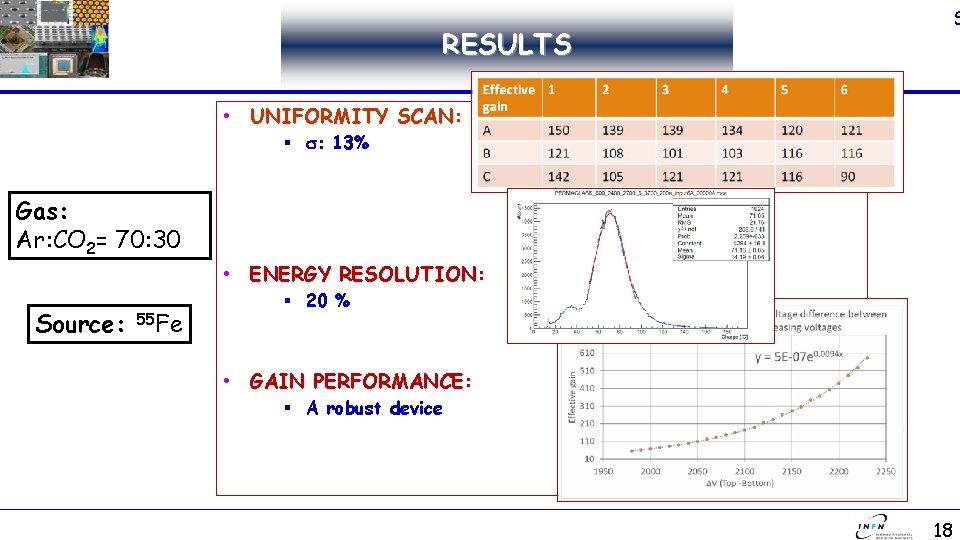
RESULTS GAS DETECTORS • UNIFORMITY SCAN: § s: 13% Gas: Ar: CO 2= 70: 30 • ENERGY RESOLUTION: Source: 55 Fe § 20 % • GAIN PERFORMANCE: § A robust device 18
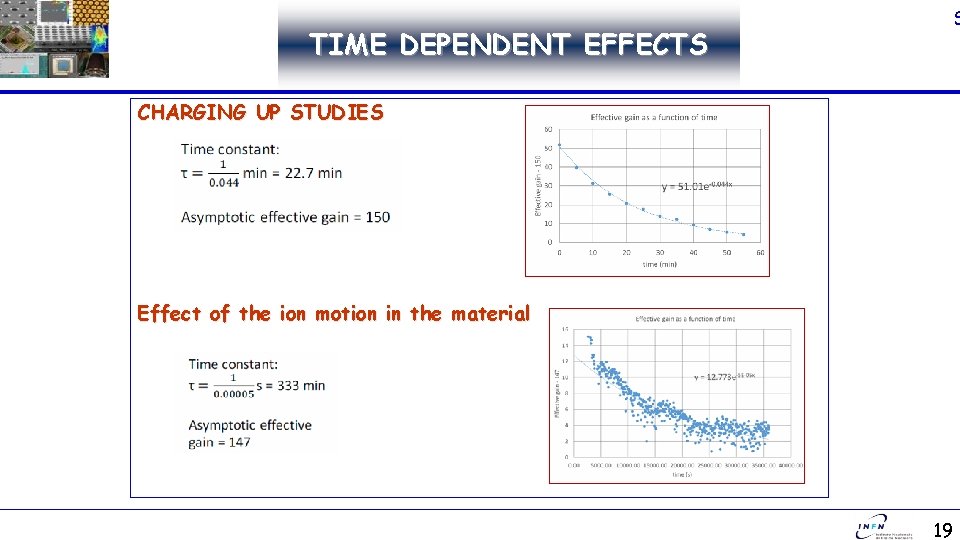
TIME DEPENDENT EFFECTS GAS DETECTORS CHARGING UP STUDIES Effect of the ion motion in the material 19
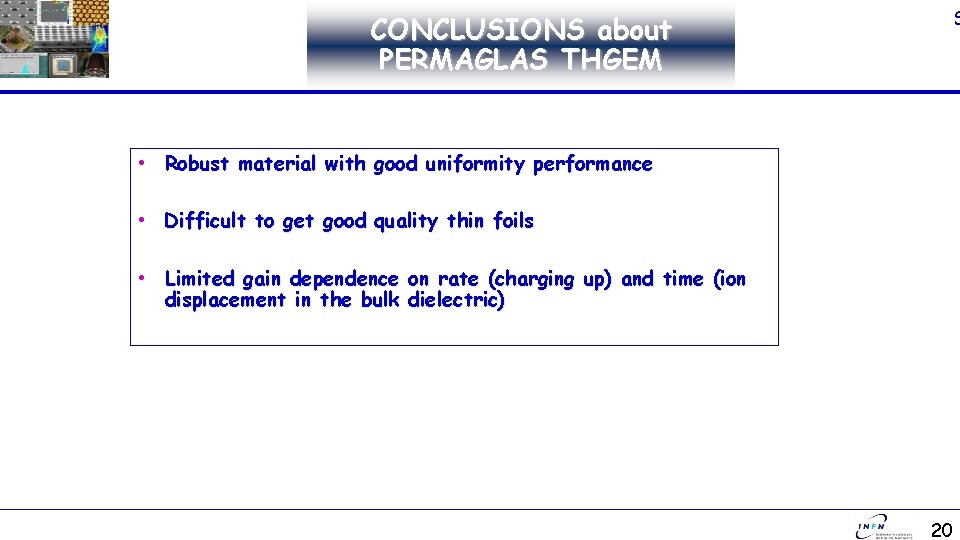
CONCLUSIONS about PERMAGLAS THGEM GAS DETECTORS • Robust material with good uniformity performance • Difficult to get good quality thin foils • Limited gain dependence on rate (charging up) and time (ion displacement in the bulk dielectric) 20
Thank You Tuesday, September 27, 2017 RD 51 Collaboration Meeting 21
- Slides: 21