
Comparison and Analysis of Equalization Techniques for the

- Slides: 23
Comparison and Analysis of Equalization Techniques for the Time-Varying Underwater Acoustic Channel Ballard Blair bjblair@mit. edu Ph. D Candidate MIT/WHOI Joint Program Advisor: Jim Presisig 10/5/2009 1
Outline • Introduction: – Underwater Communication – Decision Feedback Equalization • Channel Estimate Based • Direct Adaptation • • Analysis of Equalization Behavior Simulation Results Summary and Conclusion Future Directions 10/5/2009 2
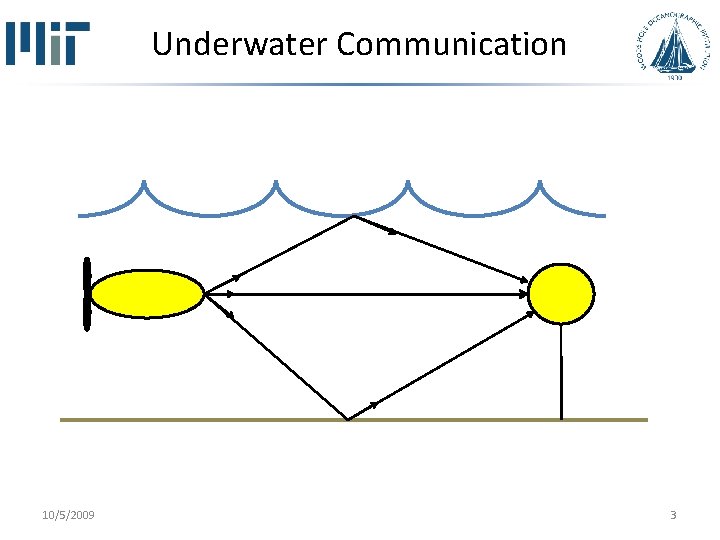
Underwater Communication 10/5/2009 3
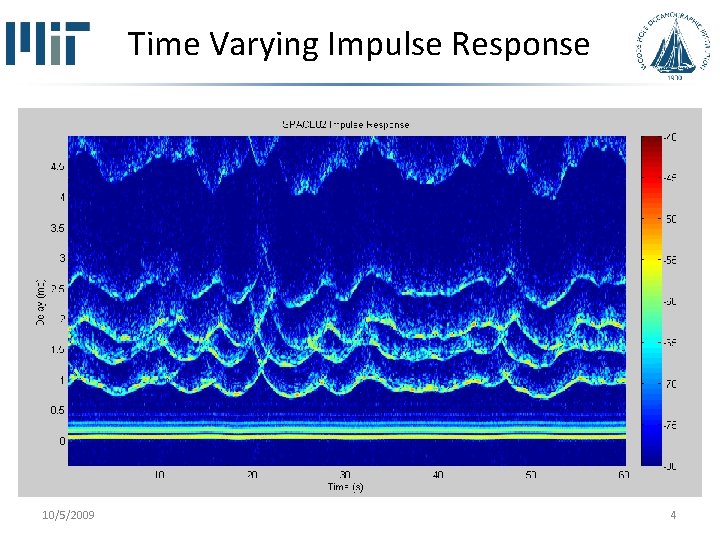
Time Varying Impulse Response 10/5/2009 4
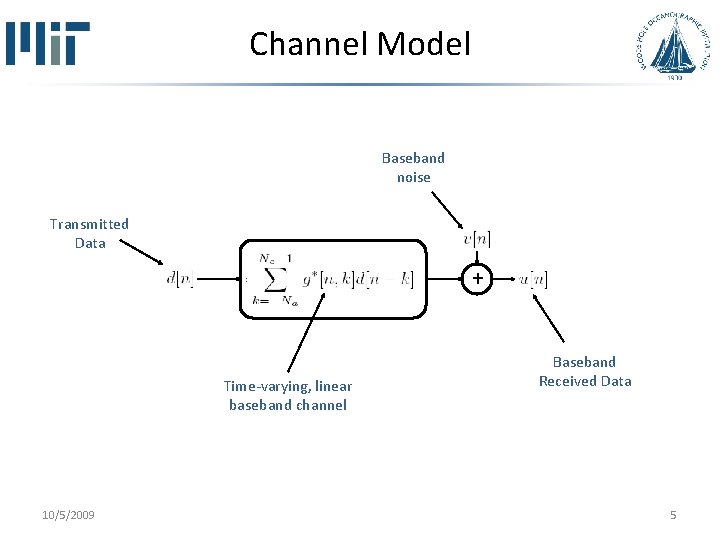
Channel Model Baseband noise Transmitted Data + Time-varying, linear baseband channel 10/5/2009 Baseband Received Data 5
Channel Model (cont. ) Vector-form: g*[n, -Nc+1] g*[n, Nc+2] … g*[n, 0] … g*[n, Na] d[n-Nc+1] … d[n+Na] + Matrix Vector-form: g*[n-Lc+1, Nc-1] … g*[n-Lc+1, 0] … g*[n-Lc+1, Na] 0 0 … 0 0 g*[n-Lc+2, Nc-1] … g*[n-Lc+2, 0] … g*[n-Lc+2, Na] 0 … 0. . 0 g*[n+La-1, Nc-1] … g*[n-La-1, 0] … g*[n+La-1, Na] 0 0. . 0 0 0 g*[n+La, Nc-1] … g*[n-La, 0] … g*[n+La, Na] 10/5/2009 d[n-Lc-Nc+1] d[n-Lc-Nc+2] … d[n+La+Na-1] d[n+La+Na] v[n-Lc+1] … v[n+La] + u[n-Lc+1] … u[n+La] 6
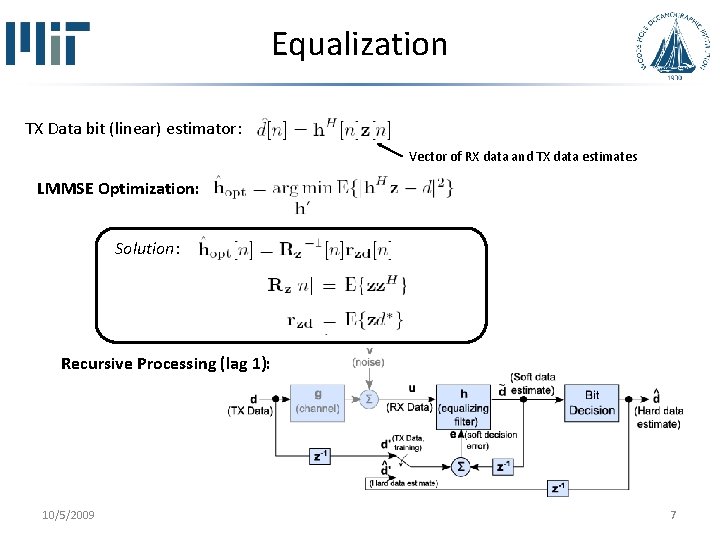
Equalization TX Data bit (linear) estimator: Vector of RX data and TX data estimates LMMSE Optimization: Solution: Recursive Processing (lag 1): 10/5/2009 7
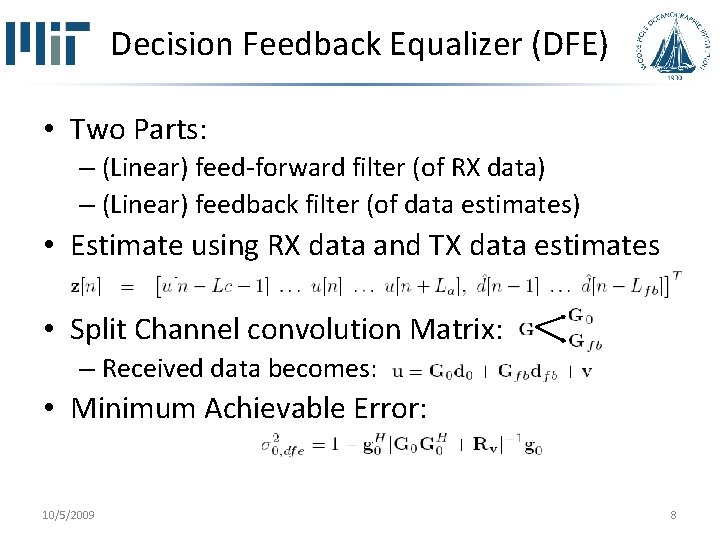
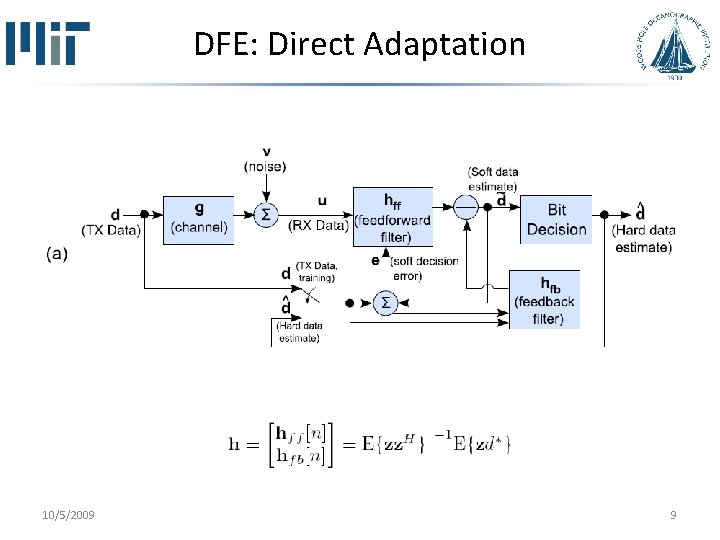
Decision Feedback Equalizer (DFE) • Two Parts: – (Linear) feed-forward filter (of RX data) – (Linear) feedback filter (of data estimates) • Estimate using RX data and TX data estimates • Split Channel convolution Matrix: – Received data becomes: • Minimum Achievable Error: 10/5/2009 8
DFE: Direct Adaptation 10/5/2009 9
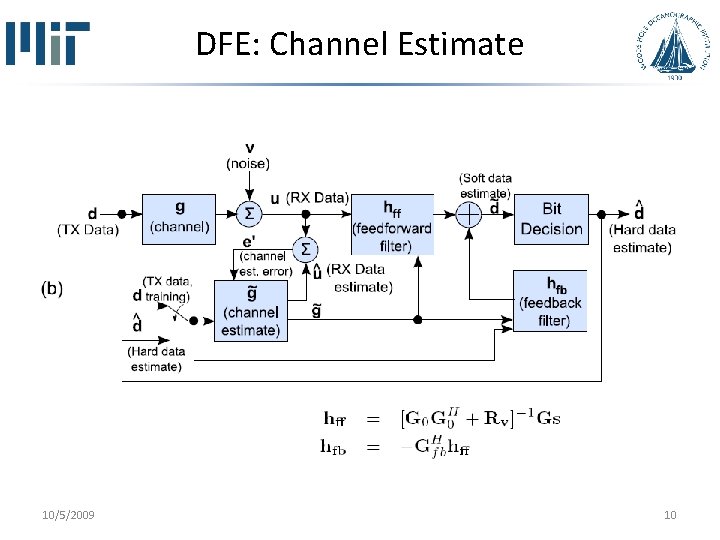
DFE: Channel Estimate 10/5/2009 10
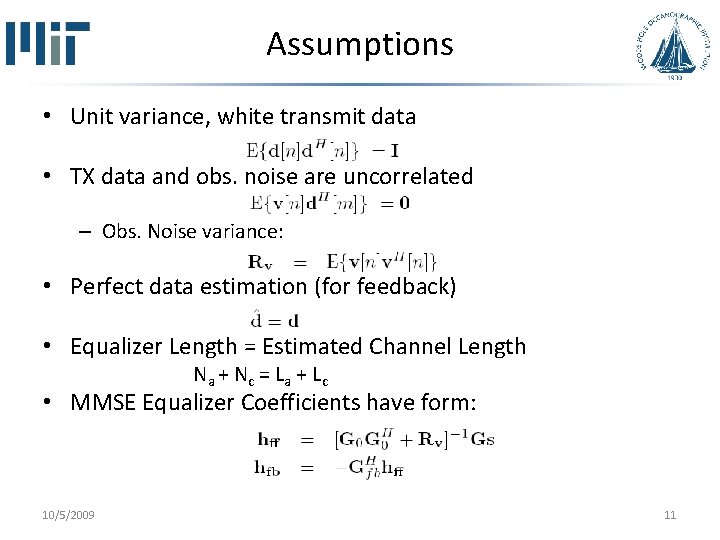
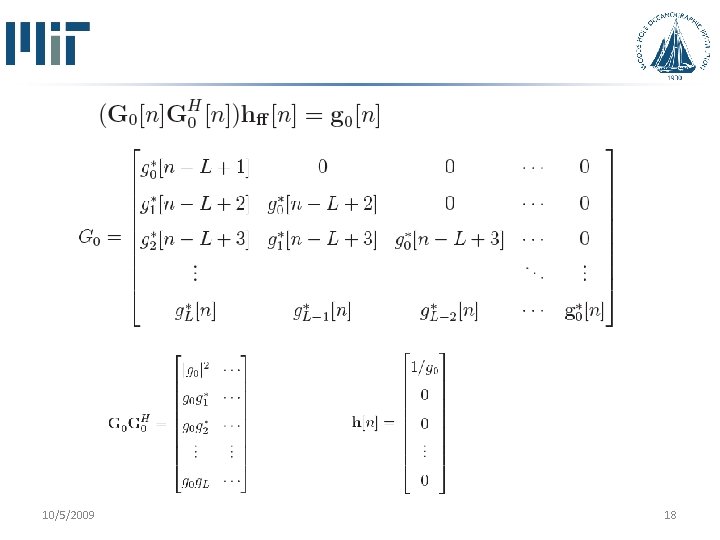
Assumptions • Unit variance, white transmit data • TX data and obs. noise are uncorrelated – Obs. Noise variance: • Perfect data estimation (for feedback) • Equalizer Length = Estimated Channel Length N a + Nc = La + Lc • MMSE Equalizer Coefficients have form: 10/5/2009 11
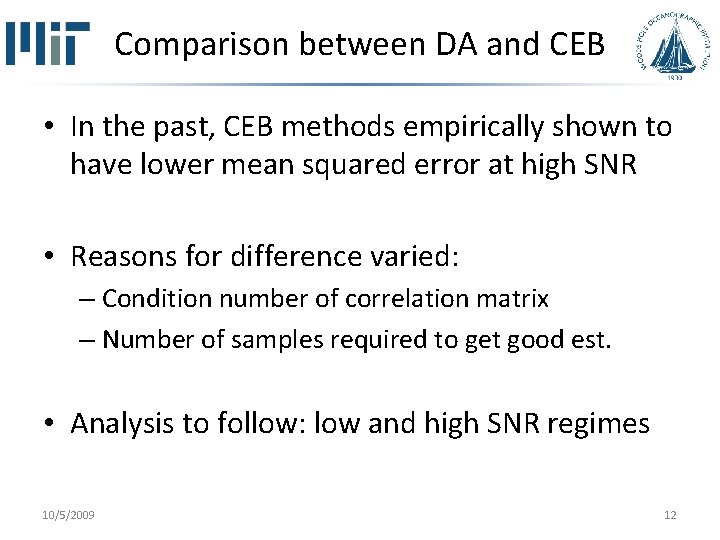
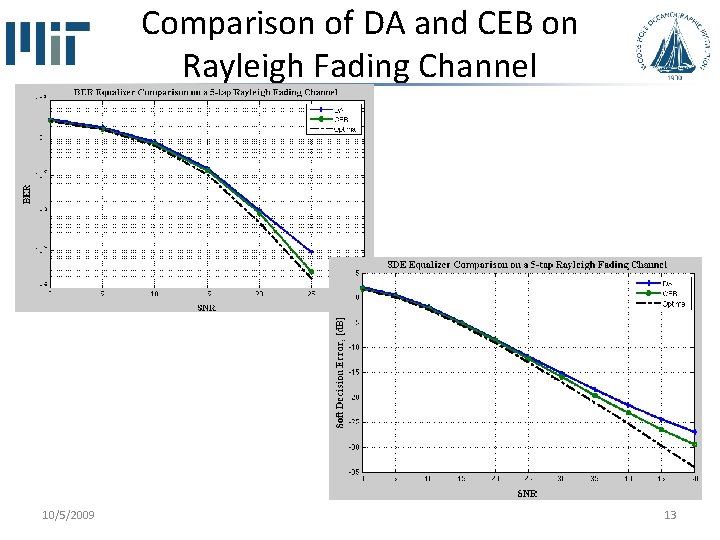
Comparison between DA and CEB • In the past, CEB methods empirically shown to have lower mean squared error at high SNR • Reasons for difference varied: – Condition number of correlation matrix – Number of samples required to get good est. • Analysis to follow: low and high SNR regimes 10/5/2009 12
Comparison of DA and CEB on Rayleigh Fading Channel 10/5/2009 13
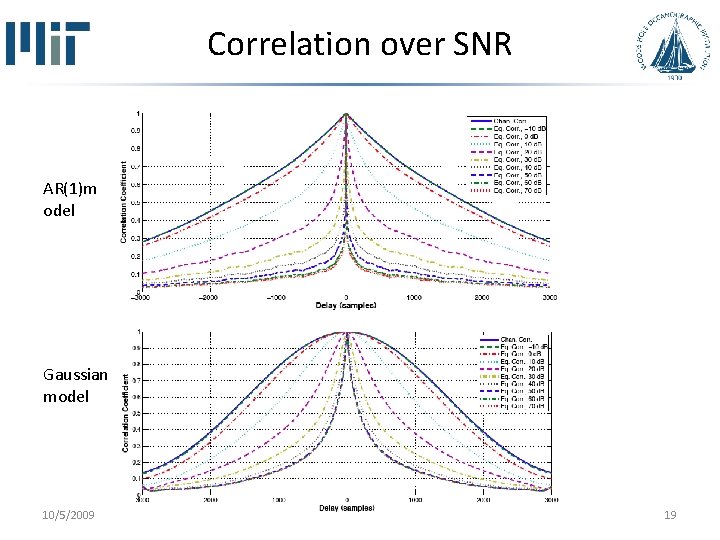
Why the difference? • Correlation time – DA equalizer taps have lower correlation time at high SNR – At low SNR, two methods equivalent • But how do we show this? – Combination of analysis and simulation 10/5/2009 14
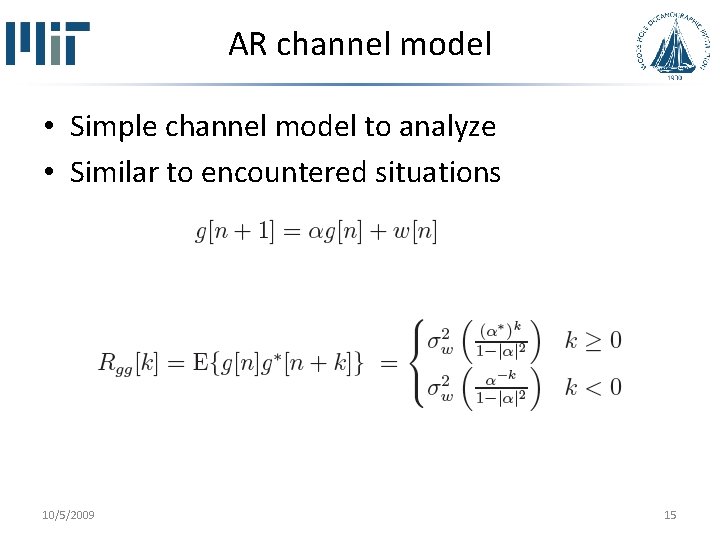
AR channel model • Simple channel model to analyze • Similar to encountered situations 10/5/2009 15
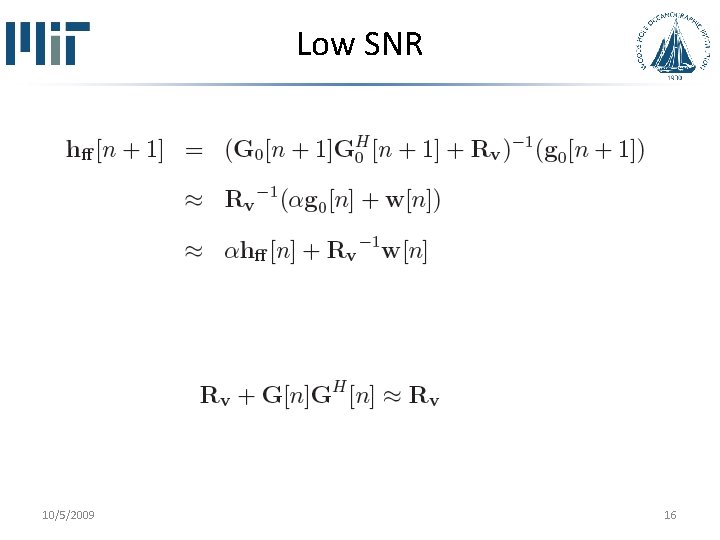
Low SNR 10/5/2009 16
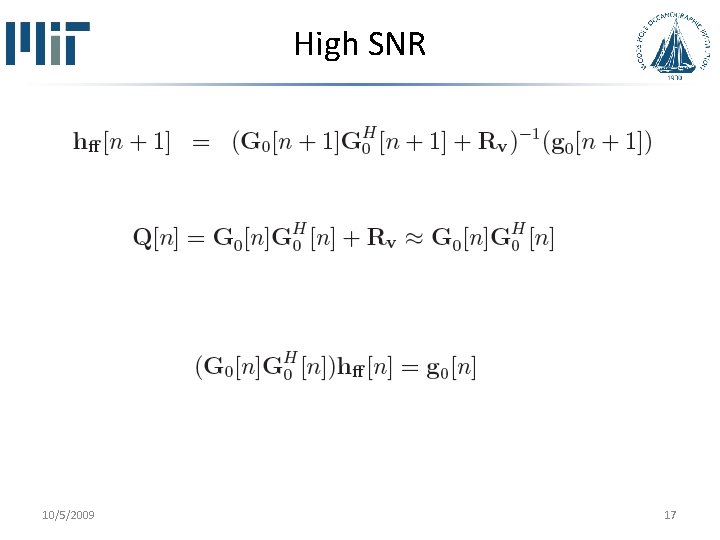
High SNR 10/5/2009 17
10/5/2009 18
Correlation over SNR AR(1)m odel Gaussian model 10/5/2009 19
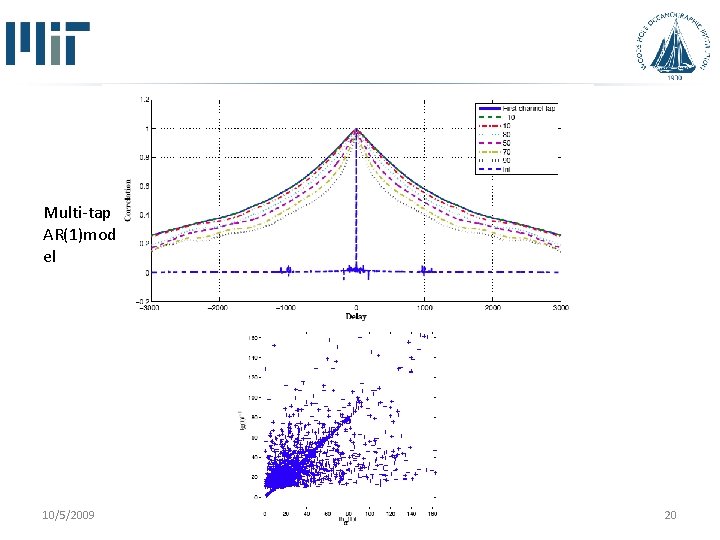
Multi-tap AR(1)mod el 10/5/2009 20
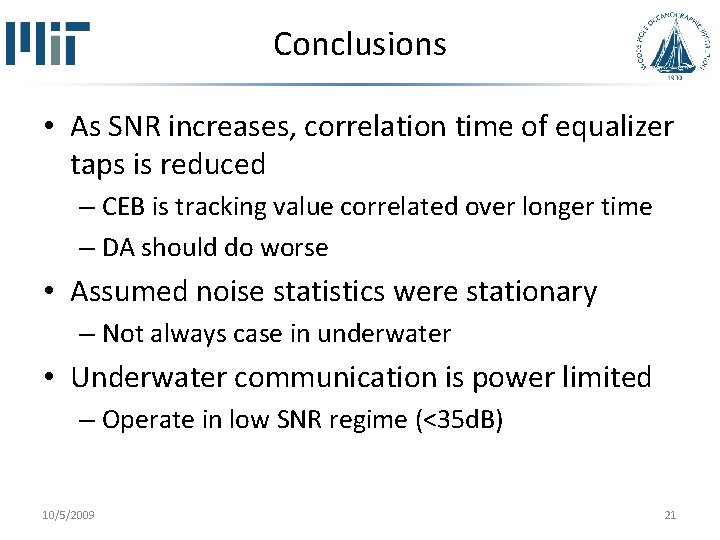
Conclusions • As SNR increases, correlation time of equalizer taps is reduced – CEB is tracking value correlated over longer time – DA should do worse • Assumed noise statistics were stationary – Not always case in underwater • Underwater communication is power limited – Operate in low SNR regime (<35 d. B) 10/5/2009 21
Future Work • Include channel state information into DA – Sparsity • Reduce number of snapshots for channel model – Physical constraints? – Compressed sensing? 10/5/2009 22
Questions? 10/5/2009 23