
Comparing Windows NT and Netware 4 Tony Brett
Comparing Windows NT and Netware 4 Tony Brett IT Systems Manager Corpus Christi College Tel. 76695, e-mail: tony. brett@ccc. ox. ac. uk O. U. C. S. 25 & 26 November 1998
Why this talk? b Corpus Christi College b Currently NT 4. 0/3. 51 system b 2 domains b Moving to Netware 4. 11
What Users Need b A way to receive and send E -mail b A way to Print b Somewhere to keep files safe b Access to the internet b Access to standard officetype applications
What IT Staff Need b A system that is standard, and off-the shelf b A system that can continue to be supported if staff change b Public machines configured so they don’t need constant reconfiguration b Reduced cost of ownership
Why are we moving ? (1) b Many Institutions moving from Netware to NT. b Microsoft Marketing. b Who buys NT for Domains? b Domains are not scalable, not hierarchical, not distributed. b More sensible filing system - shares are archaic!
Why are we moving ? (2) b Novell only produce Network software. b NT Server almost identical to NT workstation. Minor changes. b No quota in NT! b Trust relationships rapidly become unmanageable. b Directory Services is the answer!
Novell Directory Services. b Heirarchical, reflecting College Structure. b NDS based on X 500 standard b No one server is any more “the boss” than another. b Database is distributed and replicated. b Objects can exist for every entity on the network. b Single point of management - NWAdmin.
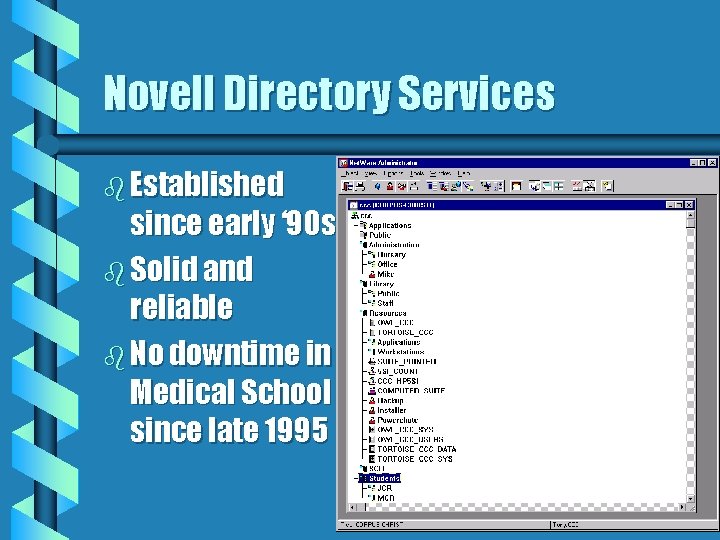
Novell Directory Services b Established since early ‘ 90 s b Solid and reliable b No downtime in Medical School since late 1995
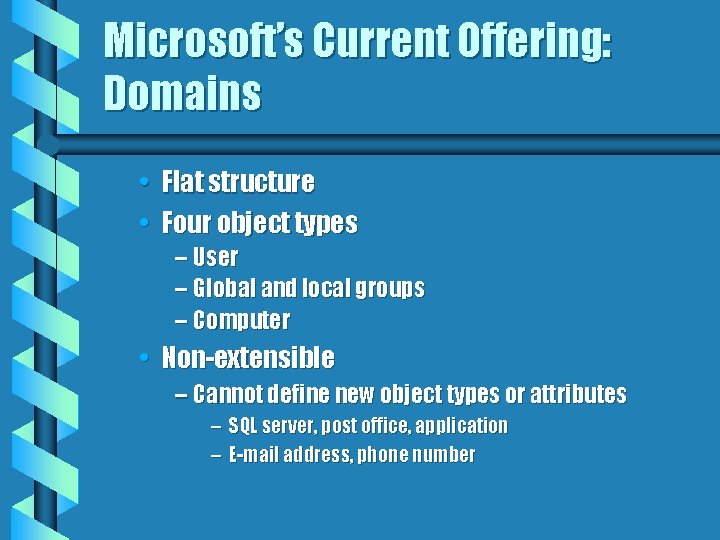
Microsoft’s Current Offering: Domains • Flat structure • Four object types – User – Global and local groups – Computer • Non-extensible – Cannot define new object types or attributes – SQL server, post office, application – E-mail address, phone number
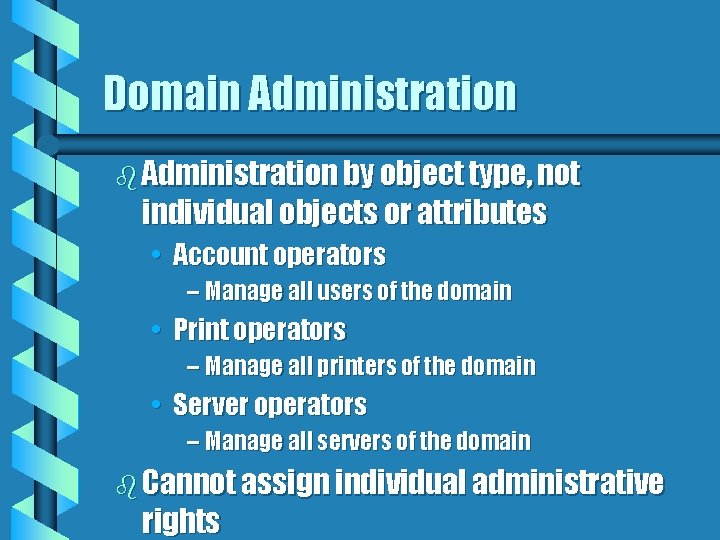
Domain Administration by object type, not individual objects or attributes • Account operators – Manage all users of the domain • Print operators – Manage all printers of the domain • Server operators – Manage all servers of the domain b Cannot assign individual administrative rights
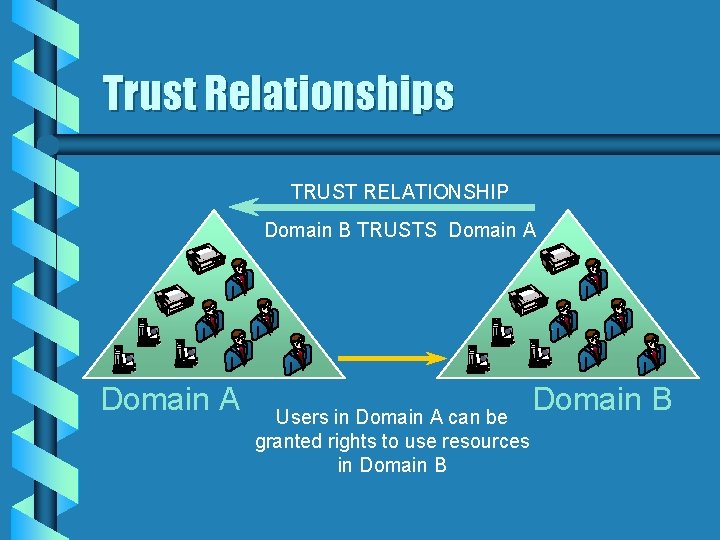
Trust Relationships TRUST RELATIONSHIP Domain B TRUSTS Domain A Users in Domain A can be granted rights to use resources in Domain B
Microsoft’s Offering sometime in the future: MAD b Moves some way towards NDS b MAD O. U. s cannot: • Grant rights to other MAD objects – Users, other organizational units, groups • Grant rights to resources – Printers – File system, Shares • Inherit services based on OU – Applications (NAL)
When will it Appear? b Sometime 1999? b Rename to Windows 2000 b Y 2 K issues? b Is it wise to move production servers to a completely re-written OS before one or two service packs? b All workstations will have to upgrade to Win 2000 to take advantage
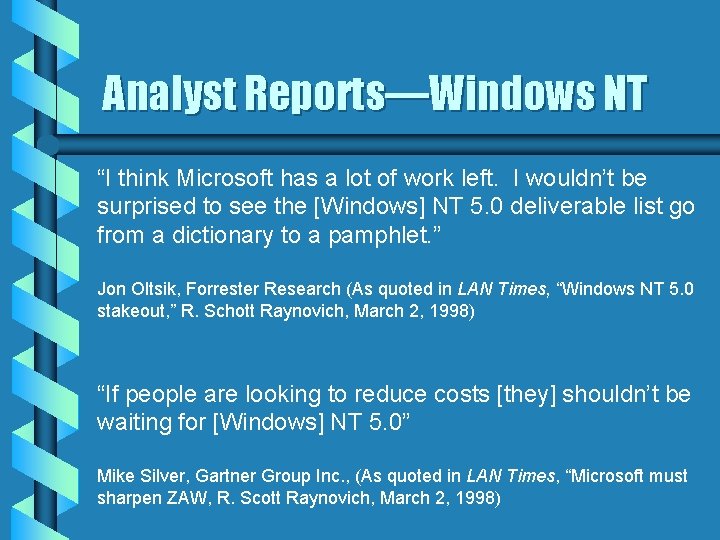
Analyst Reports—Windows NT “I think Microsoft has a lot of work left. I wouldn’t be surprised to see the [Windows] NT 5. 0 deliverable list go from a dictionary to a pamphlet. ” Jon Oltsik, Forrester Research (As quoted in LAN Times, “Windows NT 5. 0 stakeout, ” R. Schott Raynovich, March 2, 1998) “If people are looking to reduce costs [they] shouldn’t be waiting for [Windows] NT 5. 0” Mike Silver, Gartner Group Inc. , (As quoted in LAN Times, “Microsoft must sharpen ZAW, R. Scott Raynovich, March 2, 1998)
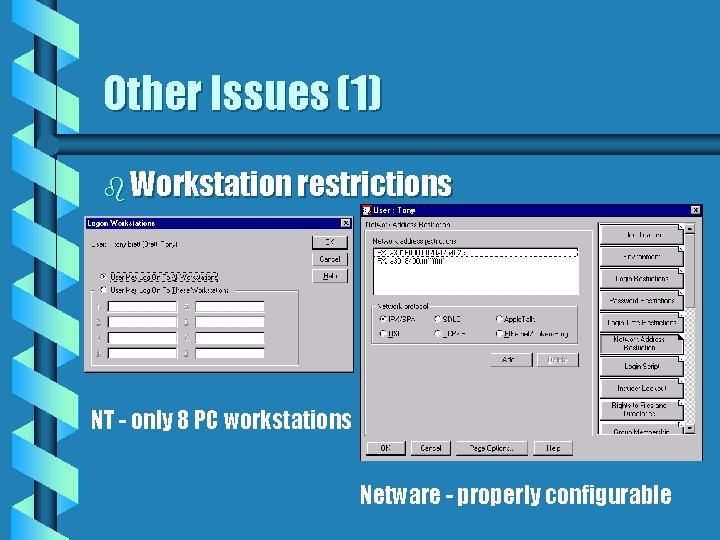
Other Issues (1) b Workstation restrictions NT - only 8 PC workstations Netware - properly configurable
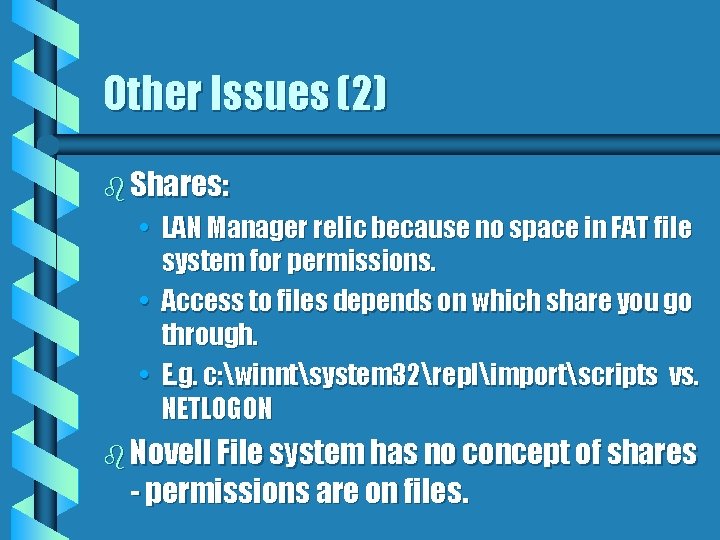
Other Issues (2) b Shares: • LAN Manager relic because no space in FAT file system for permissions. • Access to files depends on which share you go through. • E. g. c: winntsystem 32replimportscripts vs. NETLOGON b Novell File system has no concept of shares - permissions are on files.
Managing desktop MS Operating systems
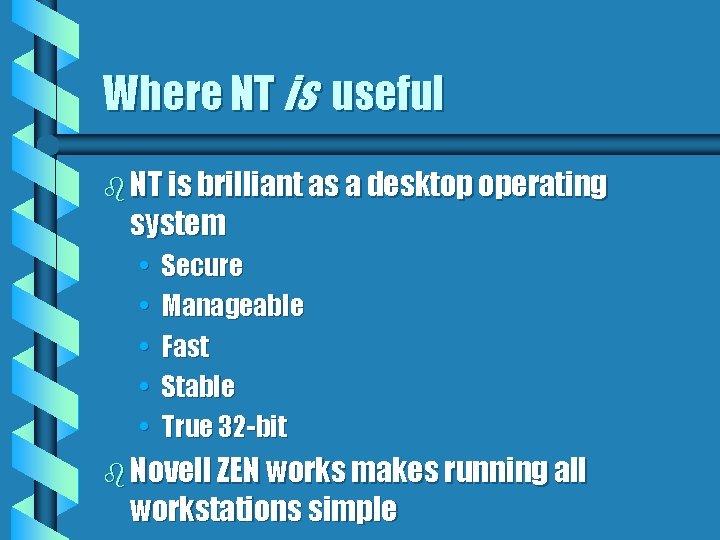
Where NT is useful b NT is brilliant as a desktop operating system • • • Secure Manageable Fast Stable True 32 -bit b Novell ZEN works makes running all workstations simple
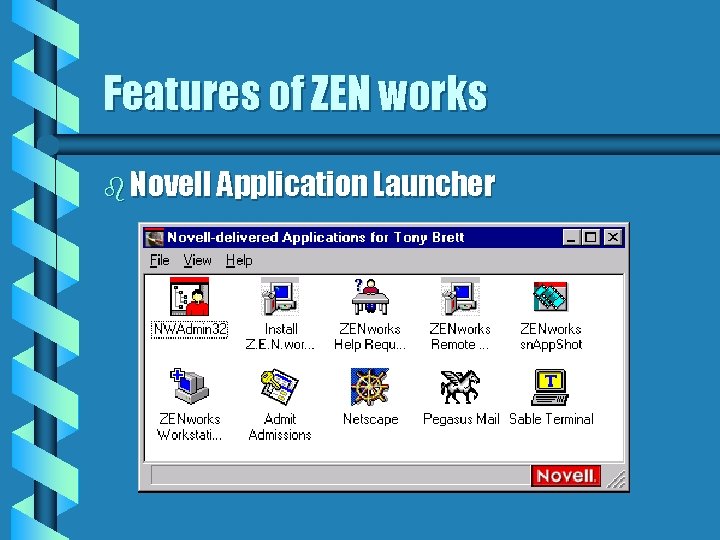
Features of ZEN works b Novell Application Launcher
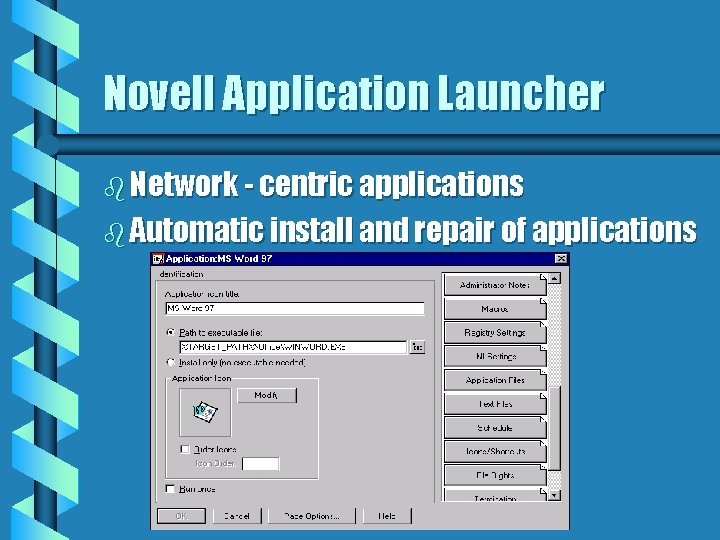
Novell Application Launcher b Network - centric applications b Automatic install and repair of applications
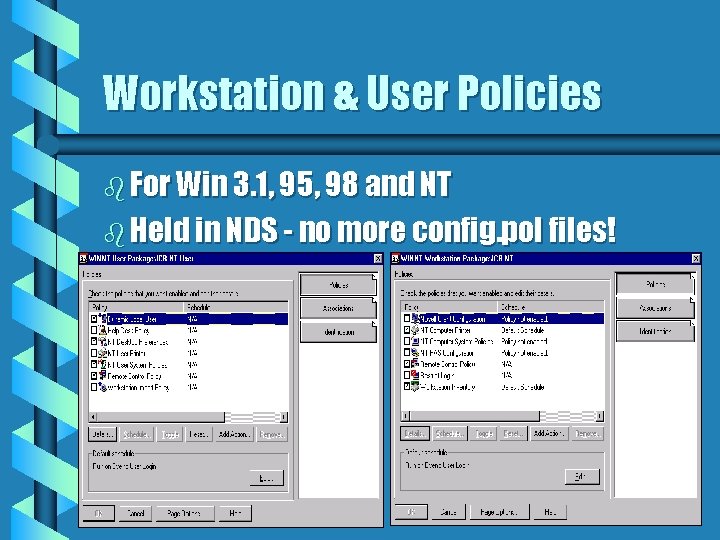
Workstation & User Policies b For Win 3. 1, 95, 98 and NT b Held in NDS - no more config. pol files!
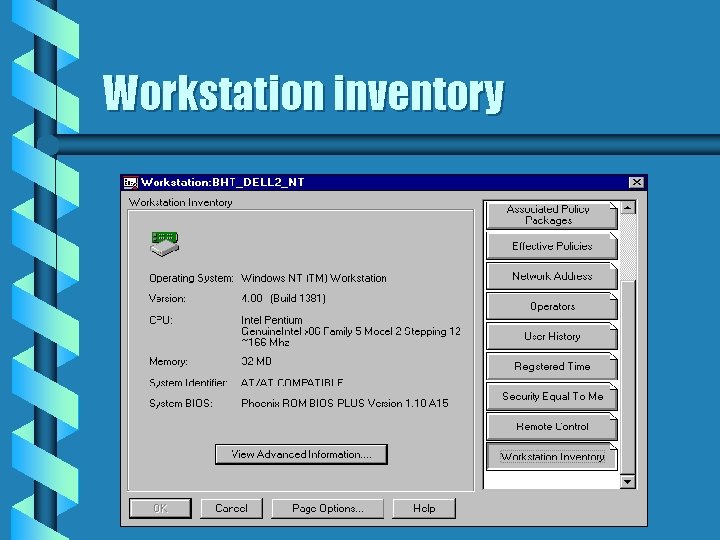
Workstation inventory
Remote Control b Can take over workstations, with or without users knowledge or permission b Enables easy remote support b Can log in and out of NT workstation
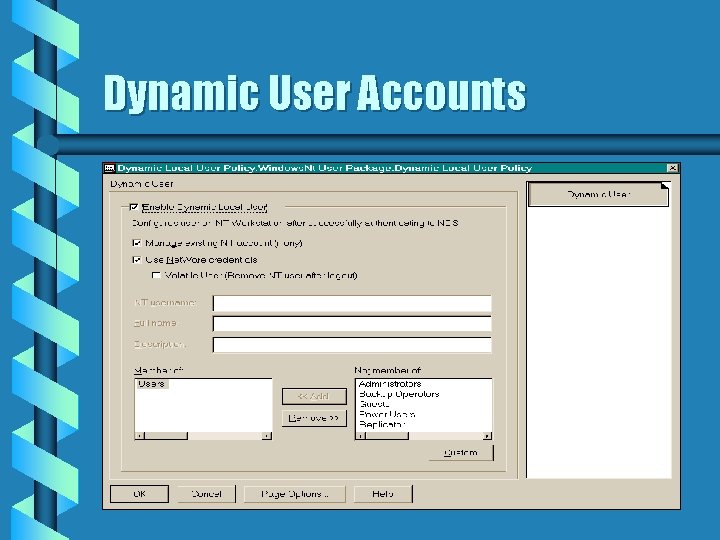
Dynamic User Accounts
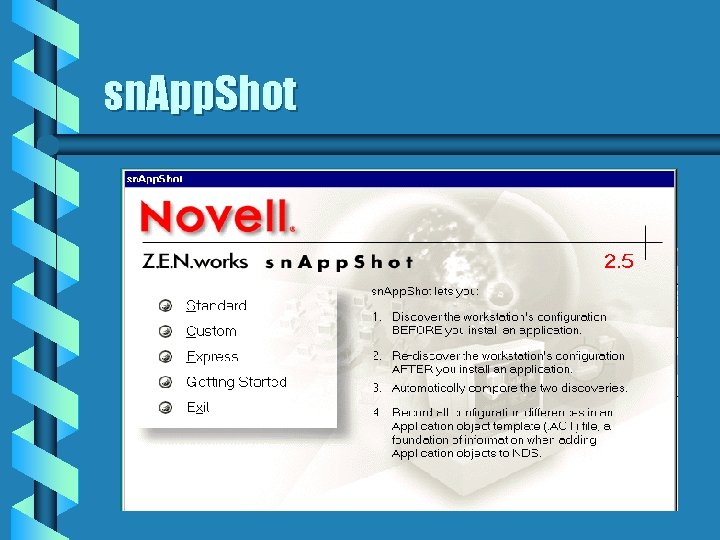
sn. App. Shot
sn. App. Shot b Installing an Application • What changed? – Files added, removed, changed – registry settings – text file changes b All data stored in NDS b Variables can be used to customise b Use normall install program. works out what changed. sn. App. Shot
Microsoft’s Offering b Systems Management Server b Offers hardware inventory and remote control b Used to offer Program Group Control for delivering applications but: It should be noted that shortly after the development of CCCDesk, Microsoft announced that Program Group Control would not be continued in the next version of SMS. -Matthew Dovey, Corpus Christi College Computer Network, Installation and Maintenance Manual, Volume 1, page 43

Questions?
- Slides: 28