
Comparing various LidarRadar inversion strategies using Raman Lidar
- Slides: 25
Comparing various Lidar/Radar inversion strategies using Raman Lidar data (part II) D. Donovan, G-J Zadelhof (KNMI) Z. Wang (NASA/GSFC) D. Whiteman (NASA/GSFC)
Introduction l l Background/Rational Raman-vs-Elastic backscatter lidars Results Summary Cnet October Delft
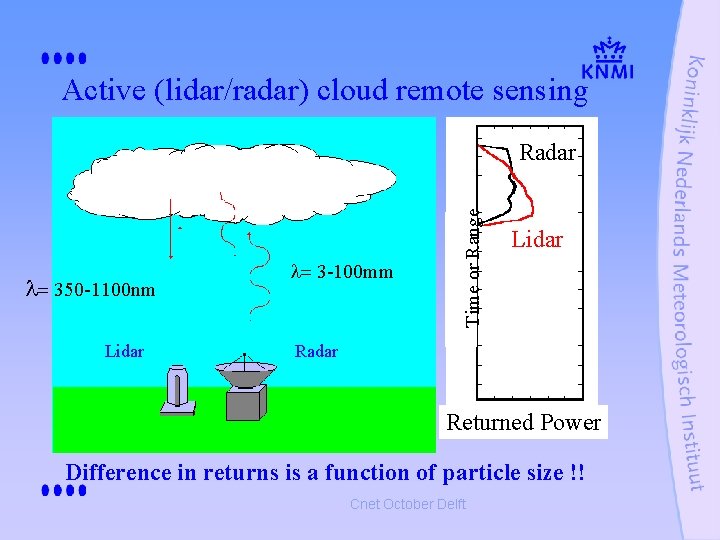
Active (lidar/radar) cloud remote sensing l= 350 -1100 nm Lidar l= 3 -100 mm Time or Range Radar Lidar Radar Returned Power Difference in returns is a function of particle size !! Cnet October Delft
Rational l l KNMI lidar/radar routine developed for simple elastic l. R backscatter lidar. No Rayleigh return MPL lidar data from ARM and SIRTA data has good Rayleigh signal. Should exploit it ! Good Raman lidar data can serve as semiindependent test of the strengths and weakness of different approaches. Will first concentrate on Visible extinction retrieval. Cnet October Delft
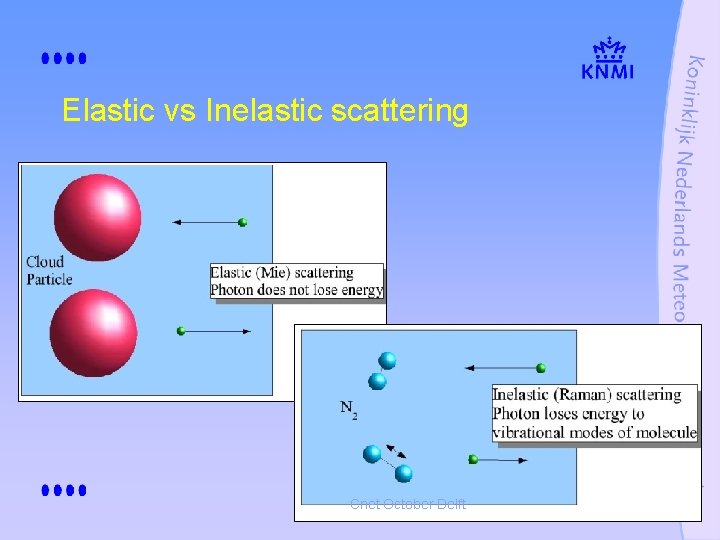
Elastic vs Inelastic scattering Cnet October Delft
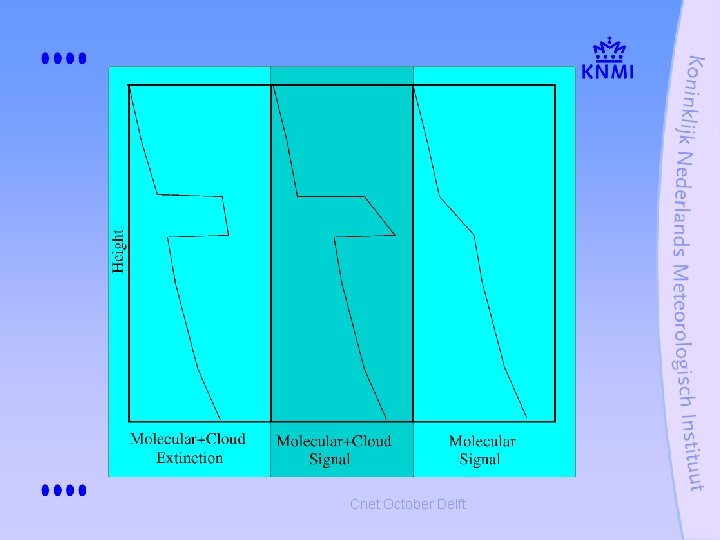
Cnet October Delft
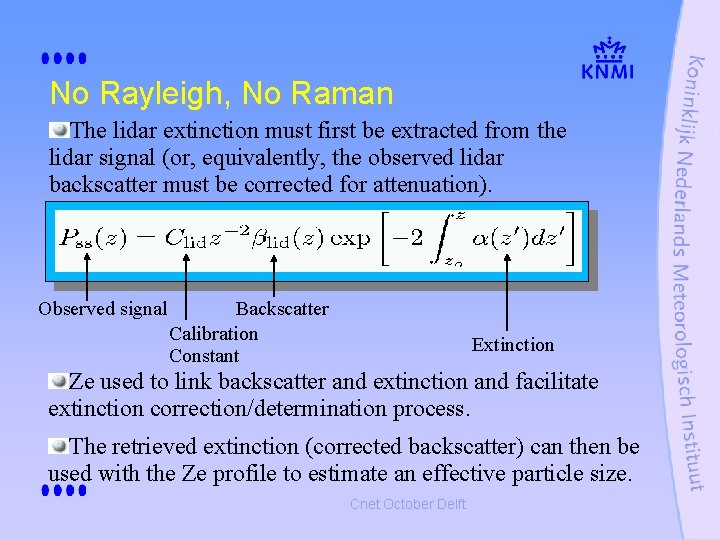
No Rayleigh, No Raman The lidar extinction must first be extracted from the lidar signal (or, equivalently, the observed lidar backscatter must be corrected for attenuation). Observed signal Backscatter Calibration Constant Extinction Ze used to link backscatter and extinction and facilitate extinction correction/determination process. The retrieved extinction (corrected backscatter) can then be used with the Ze profile to estimate an effective particle size. Cnet October Delft
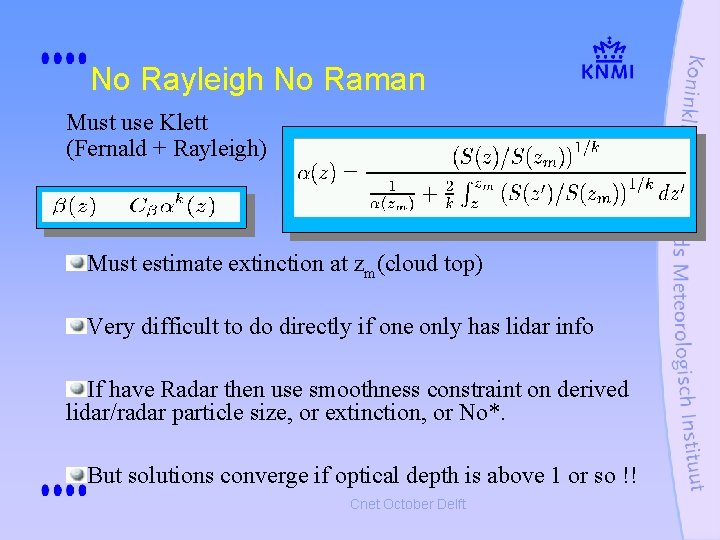
No Rayleigh No Raman Must use Klett (Fernald + Rayleigh) Must estimate extinction at zm(cloud top) Very difficult to do directly if one only has lidar info If have Radar then use smoothness constraint on derived lidar/radar particle size, or extinction, or No*. But solutions converge if optical depth is above 1 or so !! Cnet October Delft
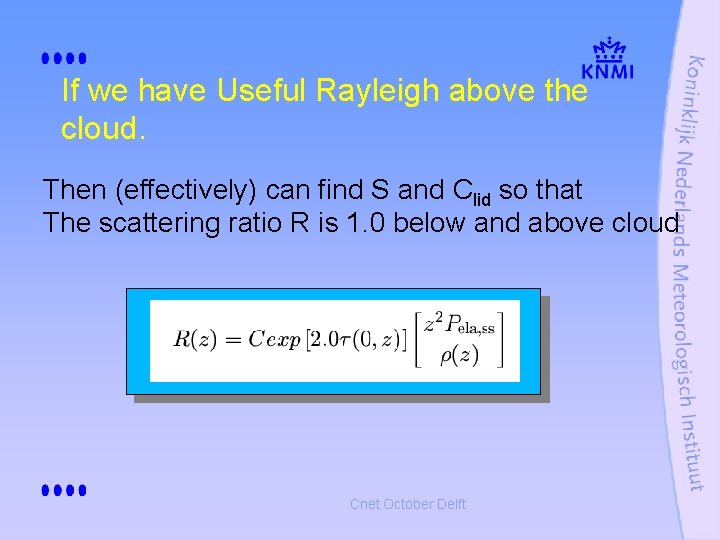
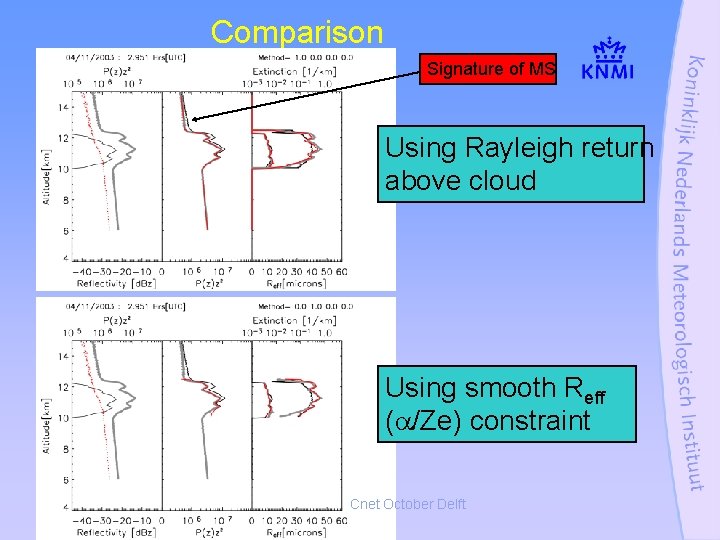
If we have Useful Rayleigh above the cloud. Then (effectively) can find S and Clid so that The scattering ratio R is 1. 0 below and above cloud Cnet October Delft
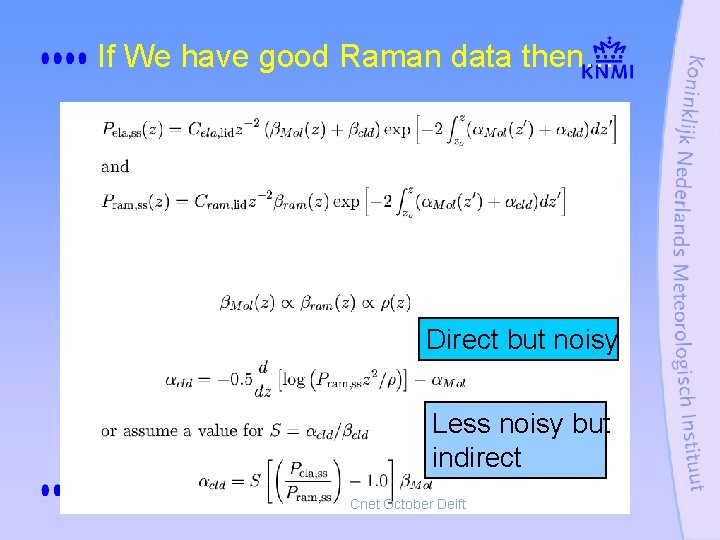
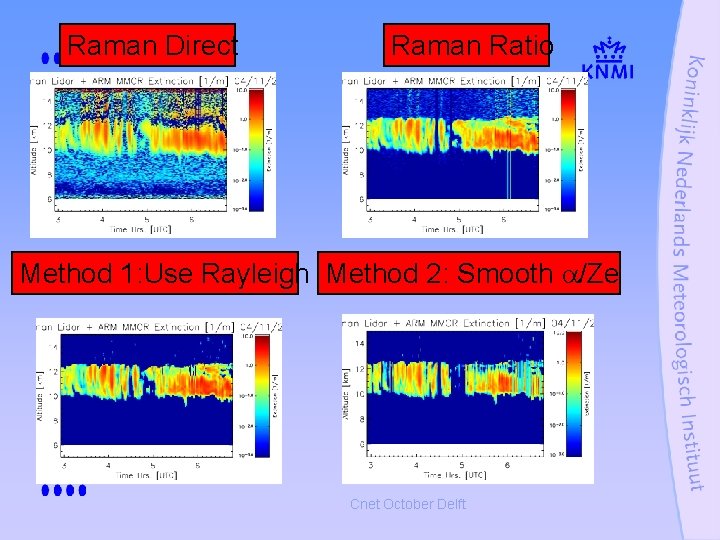
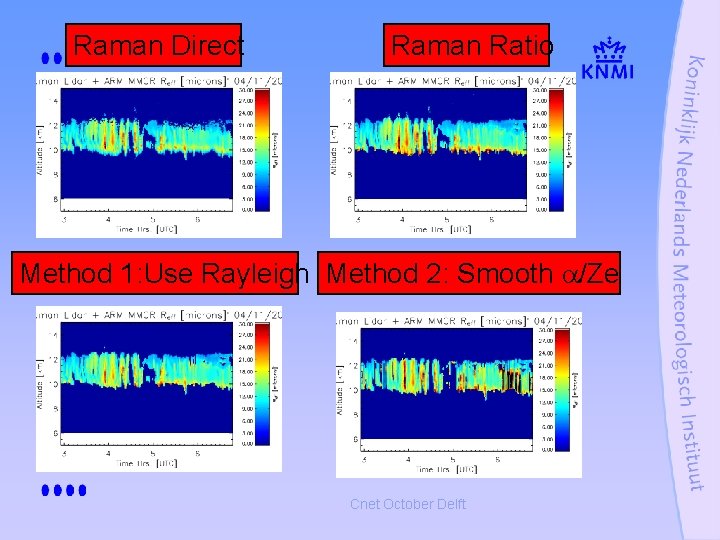
If We have good Raman data then… Direct but noisy Less noisy but indirect Cnet October Delft
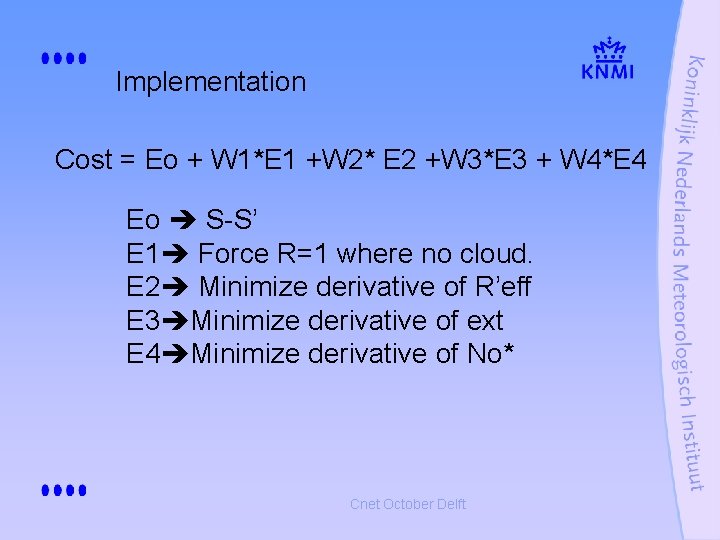
Implementation Cost = Eo + W 1*E 1 +W 2* E 2 +W 3*E 3 + W 4*E 4 Eo S-S’ E 1 Force R=1 where no cloud. E 2 Minimize derivative of R’eff E 3 Minimize derivative of ext E 4 Minimize derivative of No* Cnet October Delft
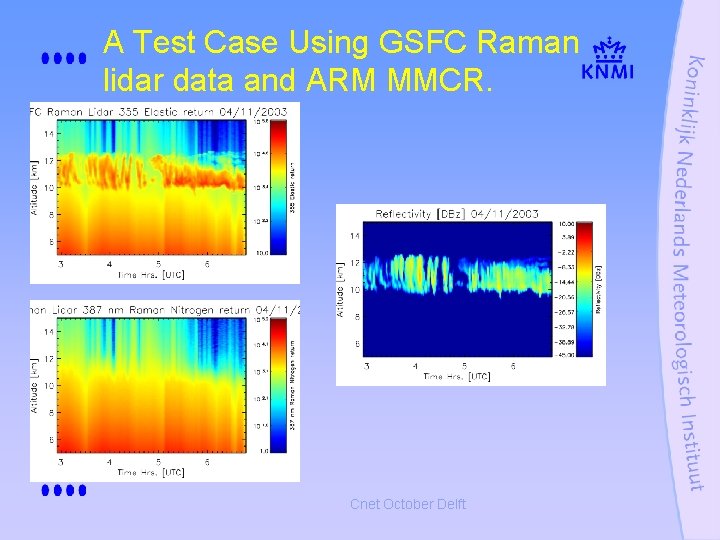
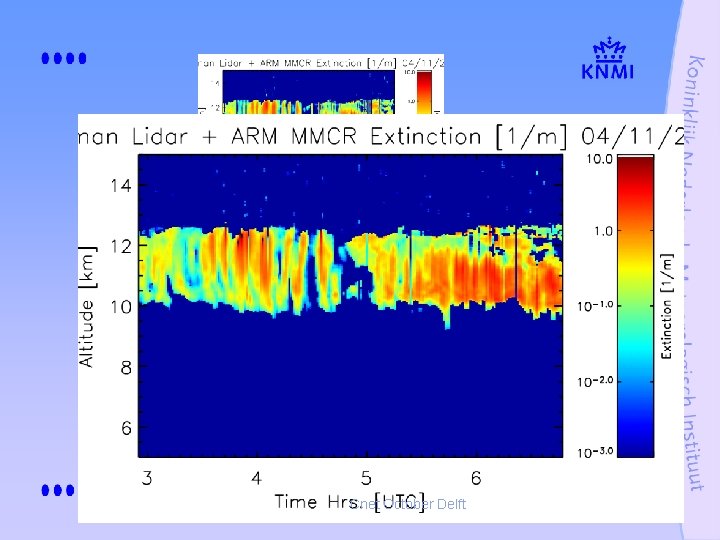
A Test Case Using GSFC Raman lidar data and ARM MMCR. Cnet October Delft
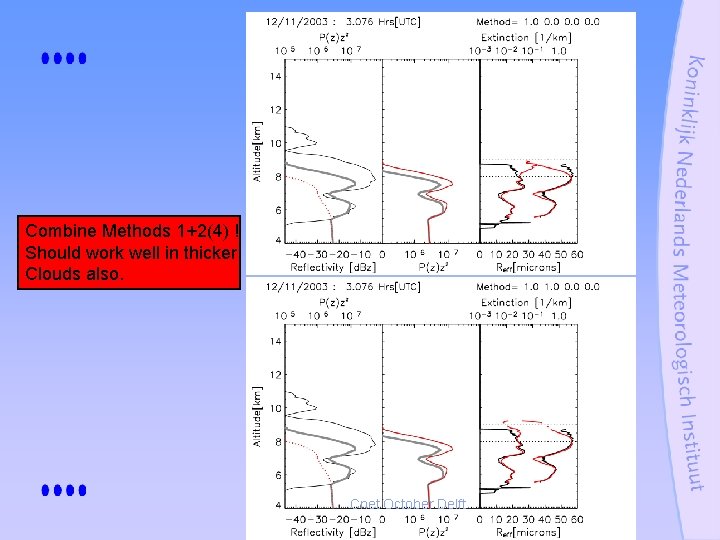
Comparison Signature of MS Using Rayleigh return above cloud Using smooth Reff ( /Ze) constraint Cnet October Delft
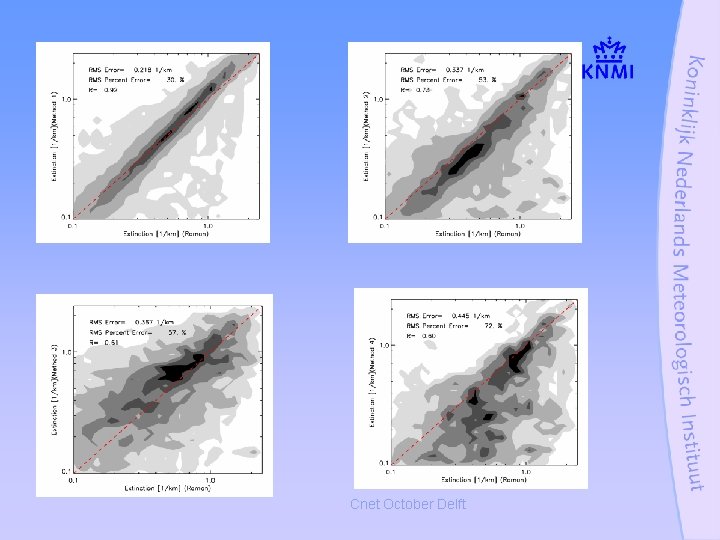
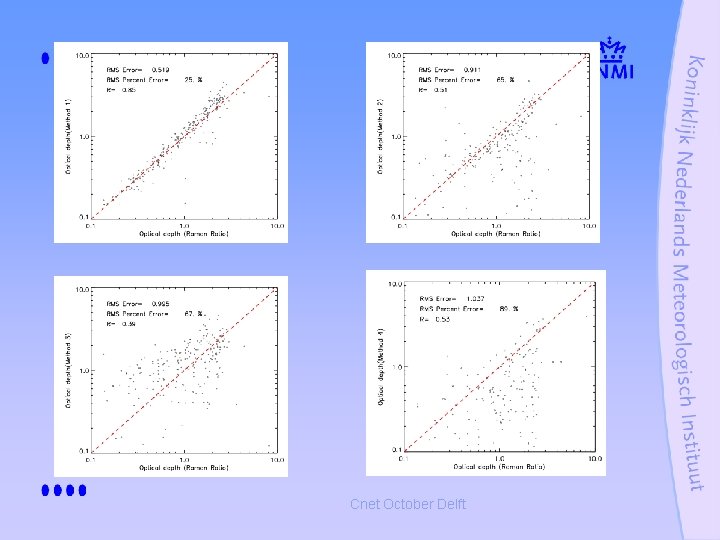
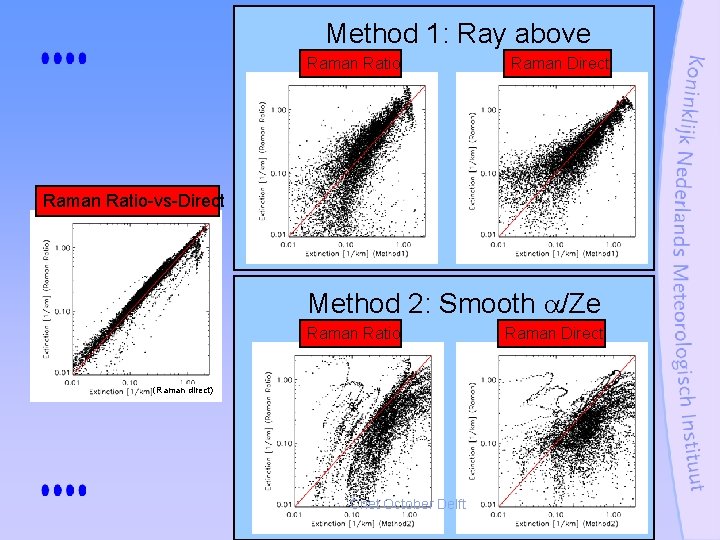
Raman Direct Raman Ratio Method 1: Use Rayleigh Method 2: Smooth /Ze Cnet October Delft
Raman Direct Raman Ratio Method 1: Use Rayleigh Method 2: Smooth /Ze Cnet October Delft
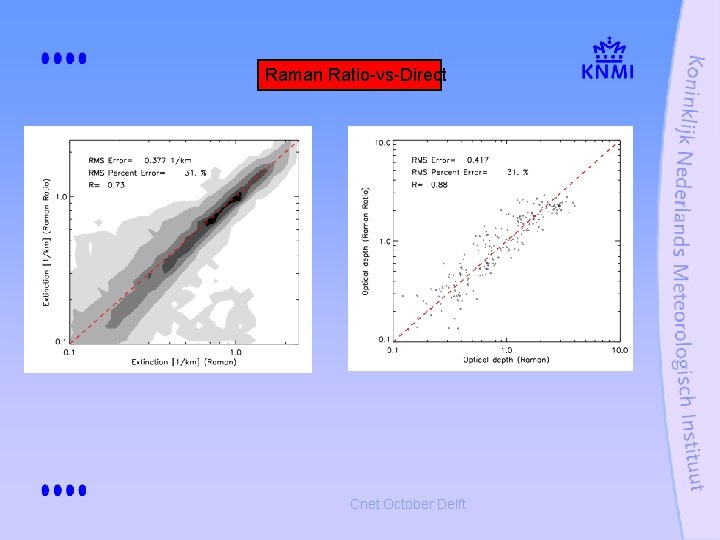
Raman Ratio-vs-Direct Cnet October Delft
Cnet October Delft
Cnet October Delft
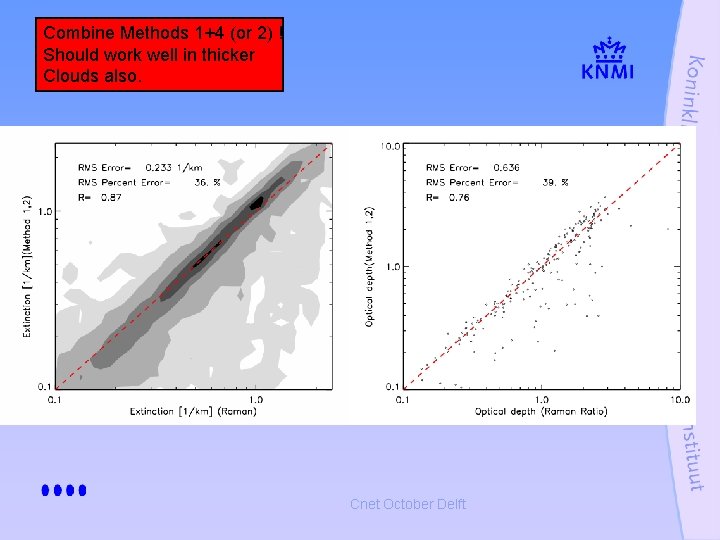
Combine Methods 1+2(4) ! Should work well in thicker Clouds also. Cnet October Delft
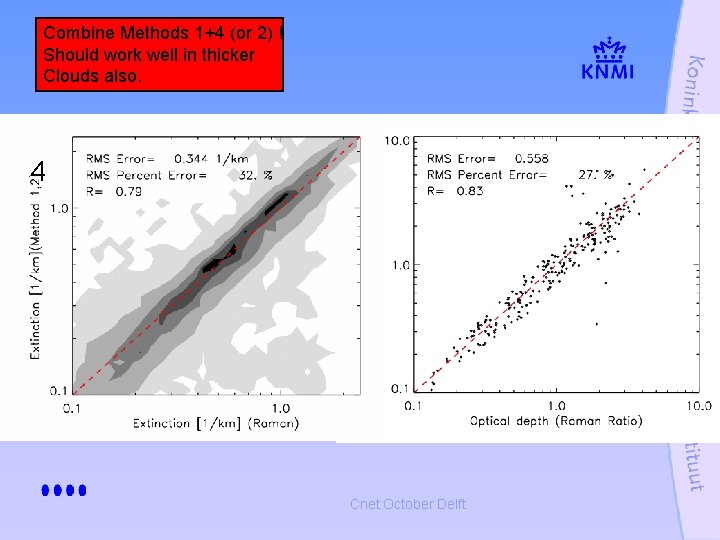
Combine Methods 1+4 (or 2) ! Should work well in thicker Clouds also. 4 Cnet October Delft
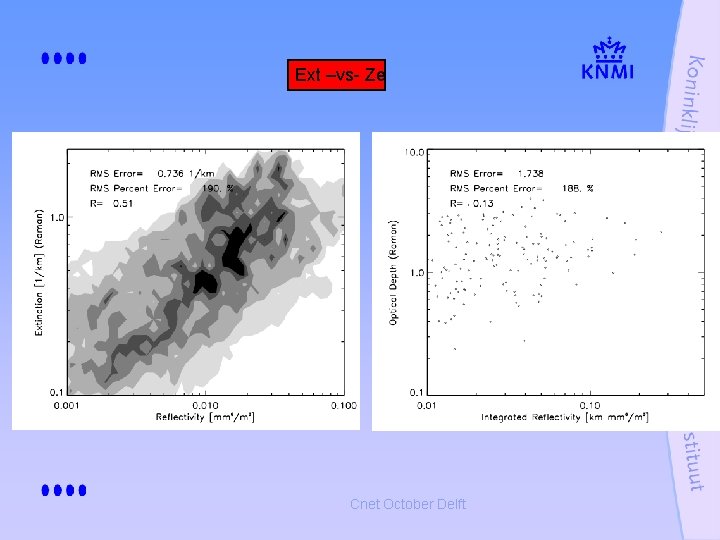
Ext –vs- Ze Cnet October Delft
Conclusions • Multiple scattering effects clearly seen. Appear well accounted for using Eloranta’s approach. • Should use Rayleigh info if available ! • Aim to create blended approach for non-Raman lidars to smoothly handle range of cases for non-Raman (i. e MPL) where Rayleigh signal from above cloud may or may not be available (almost there). • Inferring optical depth using Ze alone very tricky on a case-by-case basis. • Needs robust cloud masking (cld/nocloud/no info) Cnet October Delft
Cnet October Delft
Combine Methods 1+4 (or 2) ! Should work well in thicker Clouds also. Cnet October Delft
Method 1: Ray above Raman Ratio Raman Direct Raman Ratio-vs-Direct Method 2: Smooth /Ze Raman Ratio (Raman direct) Cnet October Delft Raman Direct