
Comparing Mutual Funds in Practice Why does it


- Slides: 17
Comparing Mutual Funds in Practice
Why does it matter? The ability to reliably measure investment performance has become increasingly important given the rapid proliferation of financial products and the unprecedented increase in the public ownership of mutual funds over the past 20 years. Mutual funds are classified into various styles based on their investment objectives: To simplify the fund selection process by investors To evaluate fund manager performance relative to their peers
Past Performance as a Measure Can past performance serve as a reliable indicator of the skill of its manager? Assumption: Past and future performance are related Is “Hot hand” phenomena true? What do we know? Fund investors seem to rely on past performance as an indication of manager skill They heavily invest in funds with higher past performance Numerous academic studies have demonstrated that a fund’s past performance is only a weakly correlated (if at all) with its future performance
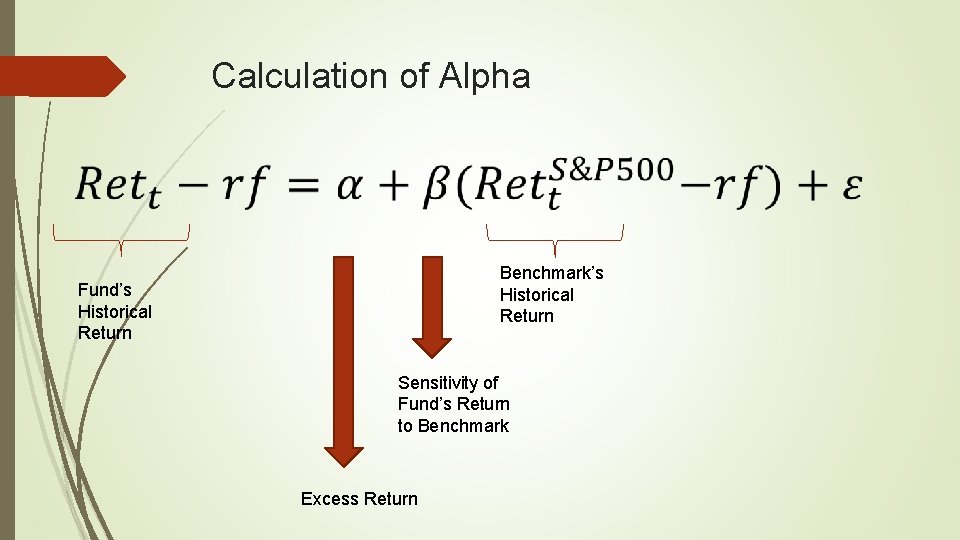
Alpha-Single Factor Model (CAPM) The goal of most performance measurement approaches is to determine a fund’s alpha (α) What is the intuition: A fund’s alpha represents amount by which the fund has outperformed or underperformed its investment benchmark. Determining the appropriate benchmark is usually the most difficult part of performance measurement. A benchmark is typically chosen so as to represent investment with similar level of risk as the fund to represent the universe of investments from which the fund manager chose fund’s holdings
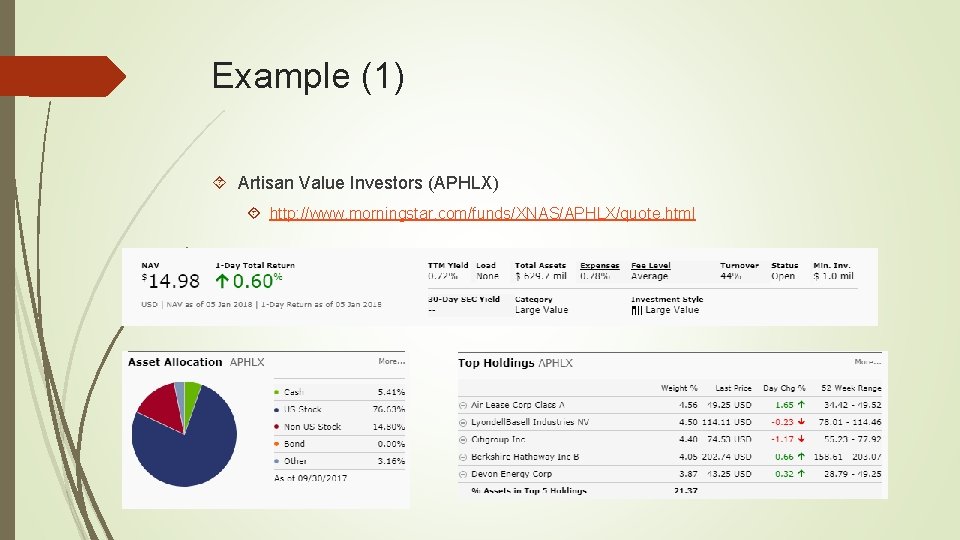
Example (1) Artisan Value Investors (APHLX) http: //www. morningstar. com/funds/XNAS/APHLX/quote. html
Calculation of Alpha Benchmark’s Historical Return Fund’s Historical Return Sensitivity of Fund’s Return to Benchmark Excess Return
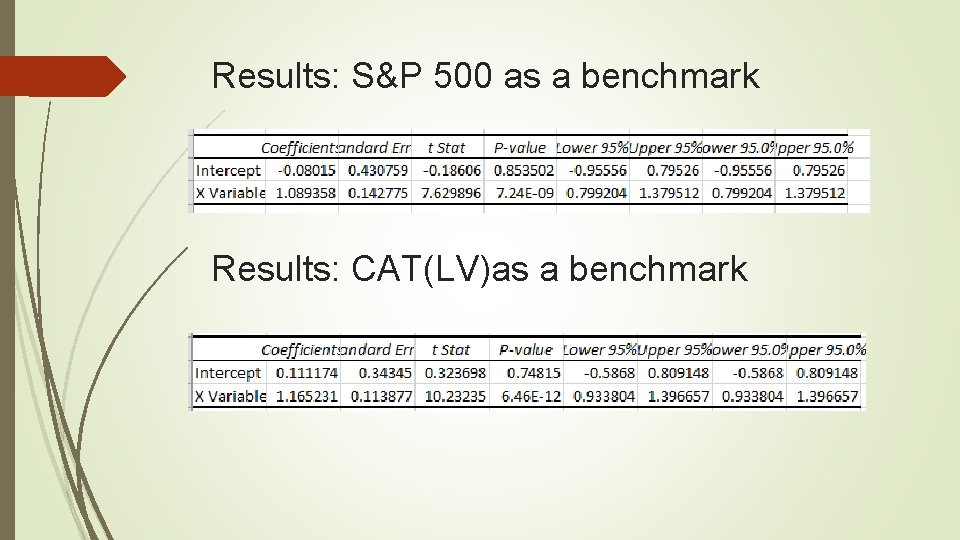
Results: S&P 500 as a benchmark Results: CAT(LV)as a benchmark
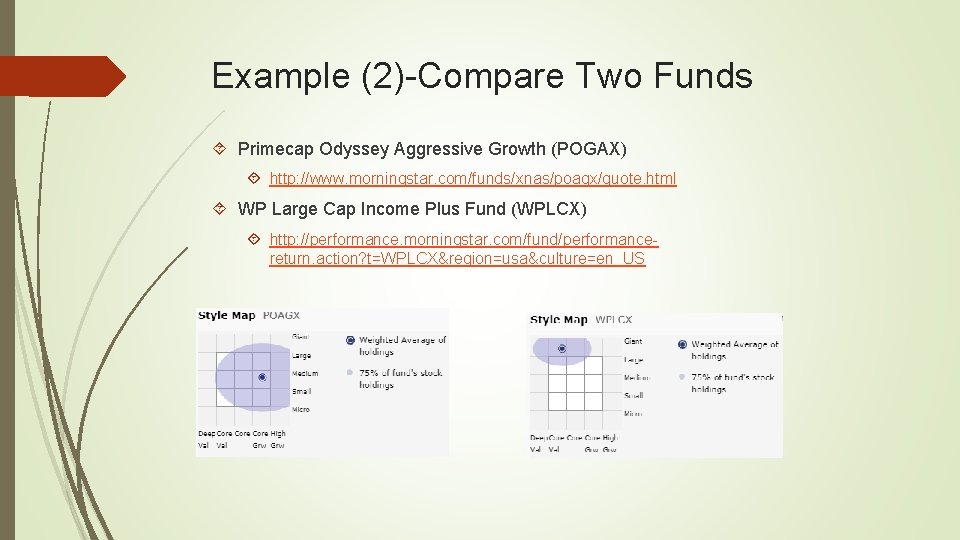
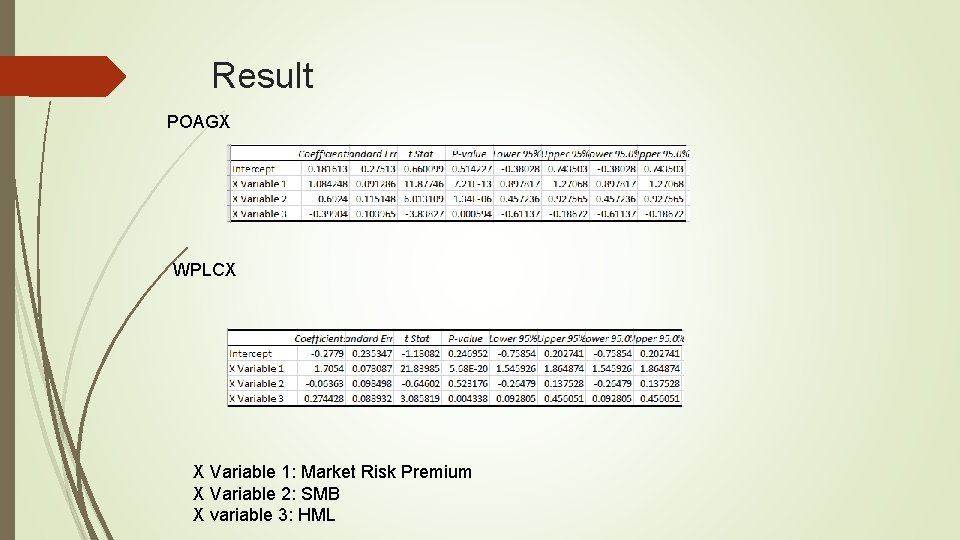
Example (2)-Compare Two Funds Primecap Odyssey Aggressive Growth (POGAX) http: //www. morningstar. com/funds/xnas/poagx/quote. html WP Large Cap Income Plus Fund (WPLCX) http: //performance. morningstar. com/fund/performancereturn. action? t=WPLCX®ion=usa&culture=en_US
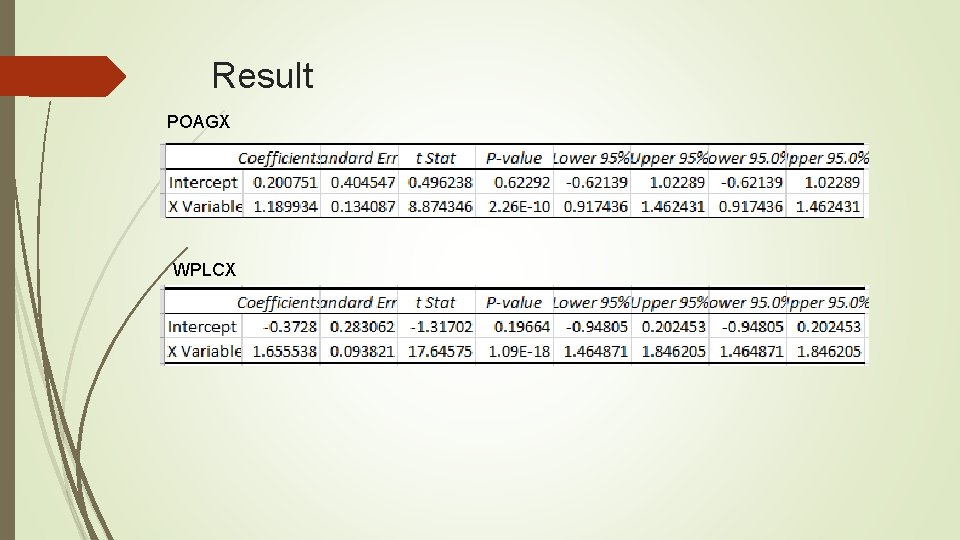
Result POAGX WPLCX
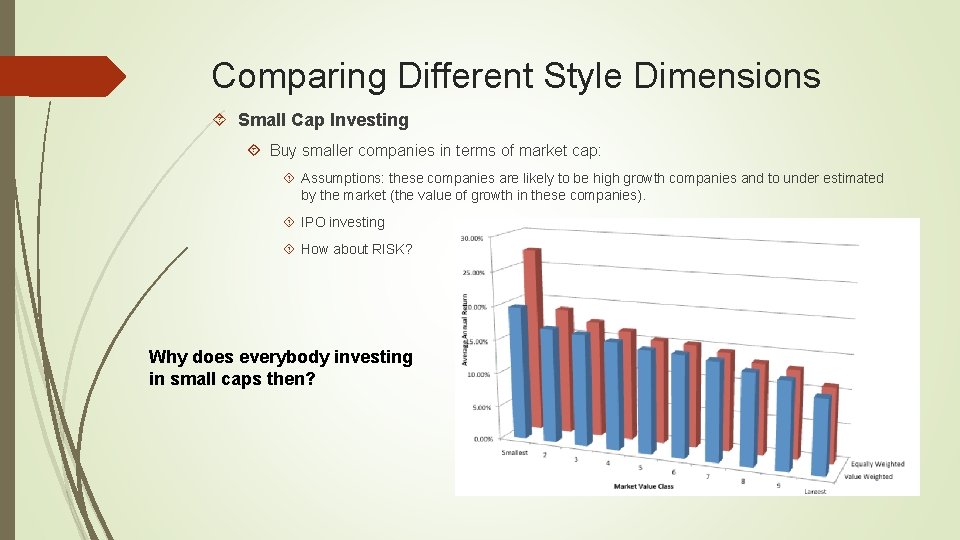
Comparing Different Style Dimensions Small Cap Investing Buy smaller companies in terms of market cap: Assumptions: these companies are likely to be high growth companies and to under estimated by the market (the value of growth in these companies). IPO investing How about RISK? Why does everybody investing in small caps then?
Cycles in Small Firm Premium
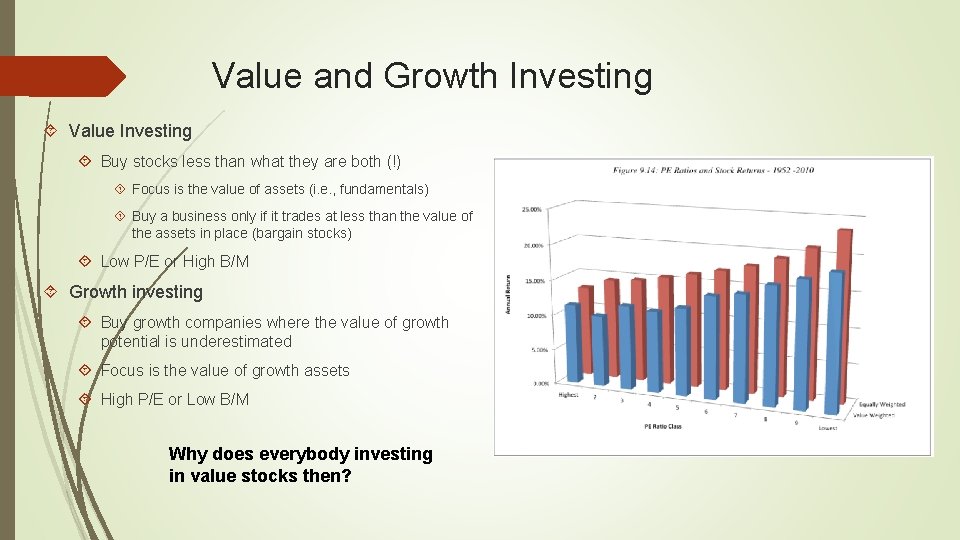
Value and Growth Investing Value Investing Buy stocks less than what they are both (!) Focus is the value of assets (i. e. , fundamentals) Buy a business only if it trades at less than the value of the assets in place (bargain stocks) Low P/E or High B/M Growth investing Buy growth companies where the value of growth potential is underestimated Focus is the value of growth assets High P/E or Low B/M Why does everybody investing in value stocks then?
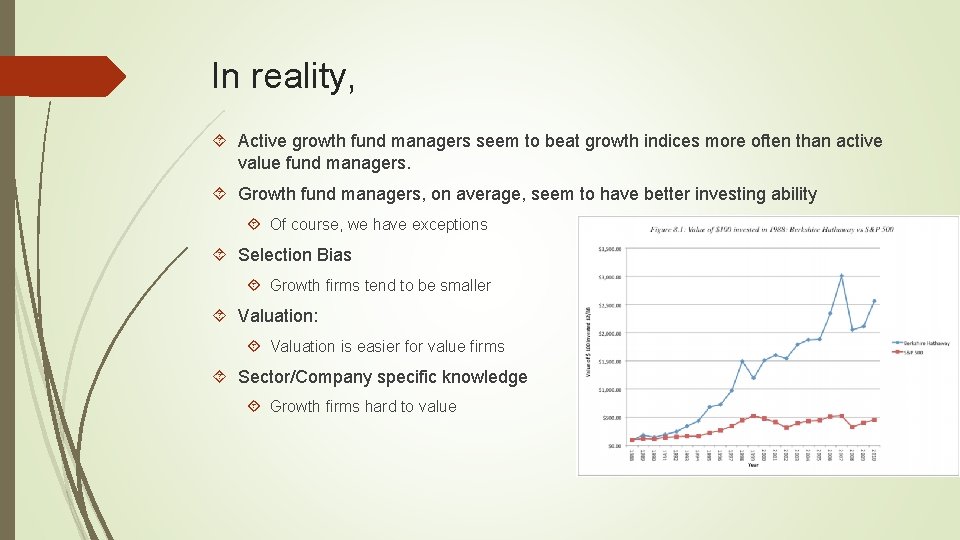
In reality, Active growth fund managers seem to beat growth indices more often than active value fund managers. Growth fund managers, on average, seem to have better investing ability Of course, we have exceptions Selection Bias Growth firms tend to be smaller Valuation: Valuation is easier for value firms Sector/Company specific knowledge Growth firms hard to value
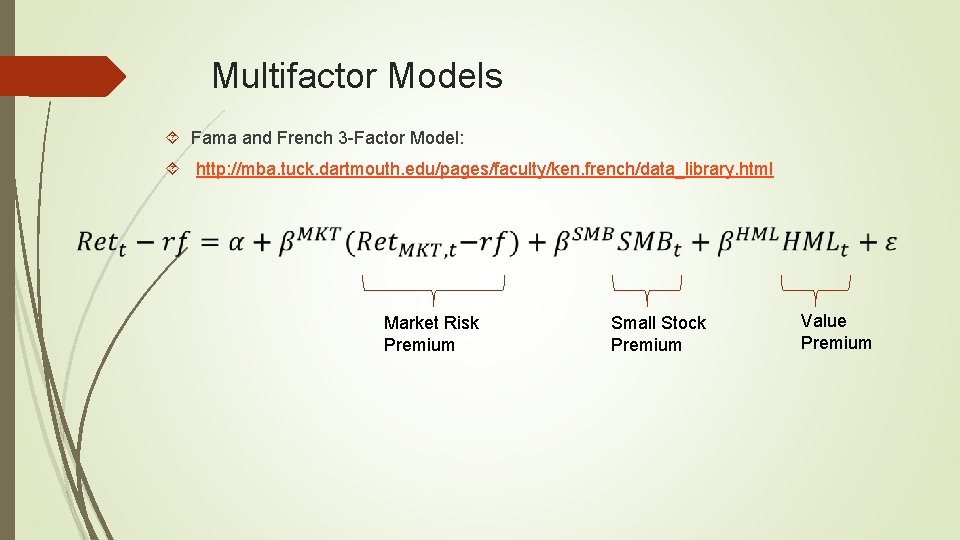
Multifactor Models Fama and French 3 -Factor Model: http: //mba. tuck. dartmouth. edu/pages/faculty/ken. french/data_library. html Market Risk Premium Small Stock Premium Value Premium
Result POAGX WPLCX X Variable 1: Market Risk Premium X Variable 2: SMB X variable 3: HML
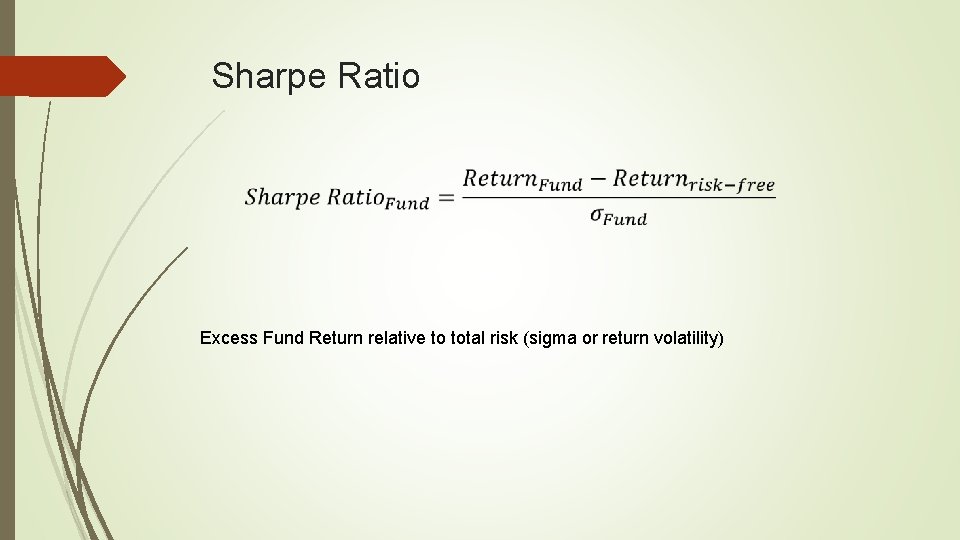
Sharpe Ratio Excess Fund Return relative to total risk (sigma or return volatility)
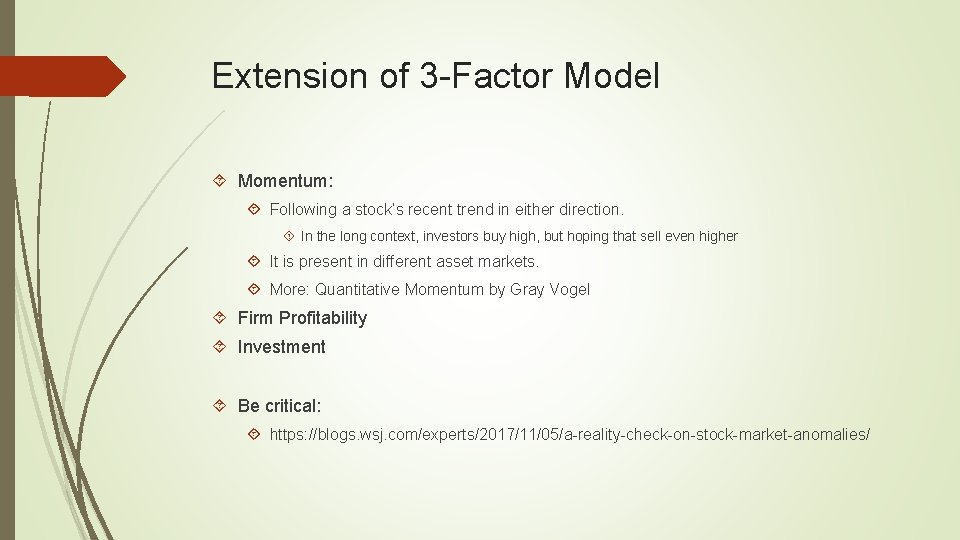
Extension of 3 -Factor Model Momentum: Following a stock’s recent trend in either direction. In the long context, investors buy high, but hoping that sell even higher It is present in different asset markets. More: Quantitative Momentum by Gray Vogel Firm Profitability Investment Be critical: https: //blogs. wsj. com/experts/2017/11/05/a-reality-check-on-stock-market-anomalies/