
Comparing Lengths In this lesson we will compare
- Slides: 23
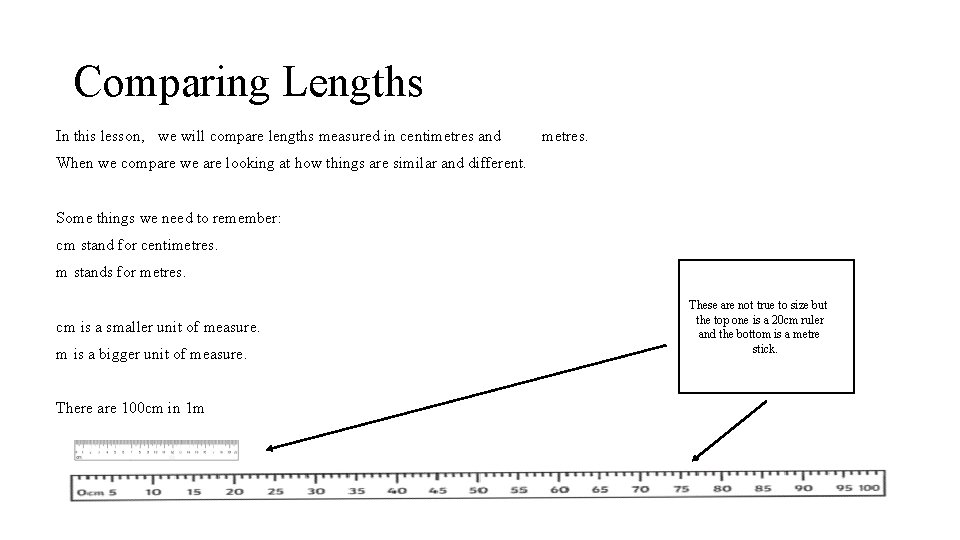
Comparing Lengths In this lesson, we will compare lengths measured in centimetres and metres. When we compare we are looking at how things are similar and different. Some things we need to remember: cm stand for centimetres. m stands for metres. cm is a smaller unit of measure. m is a bigger unit of measure. There are 100 cm in 1 m These are not true to size but the top one is a 20 cm ruler and the bottom is a metre stick.
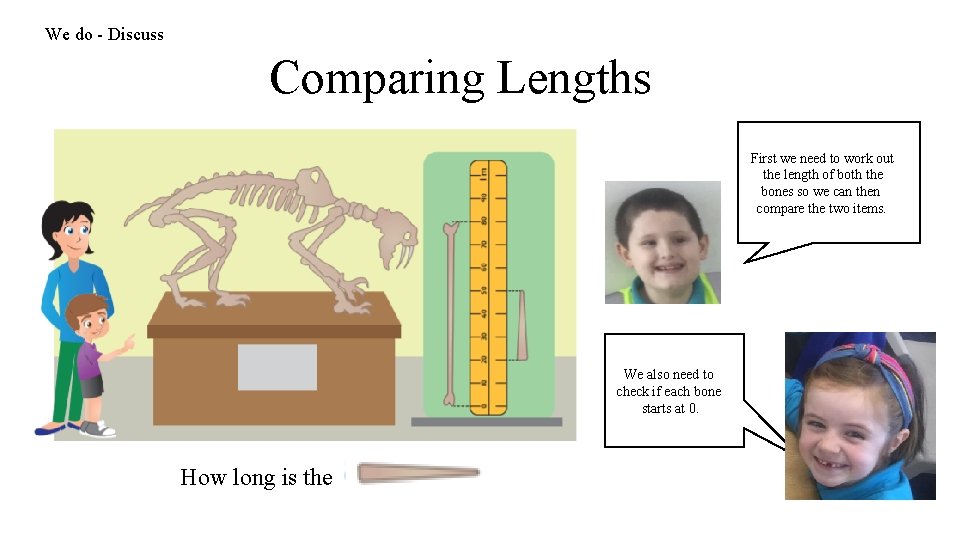
We do - Discuss Comparing Lengths First we need to work out the length of both the bones so we can then compare the two items. We also need to check if each bone starts at 0. How long is the ?
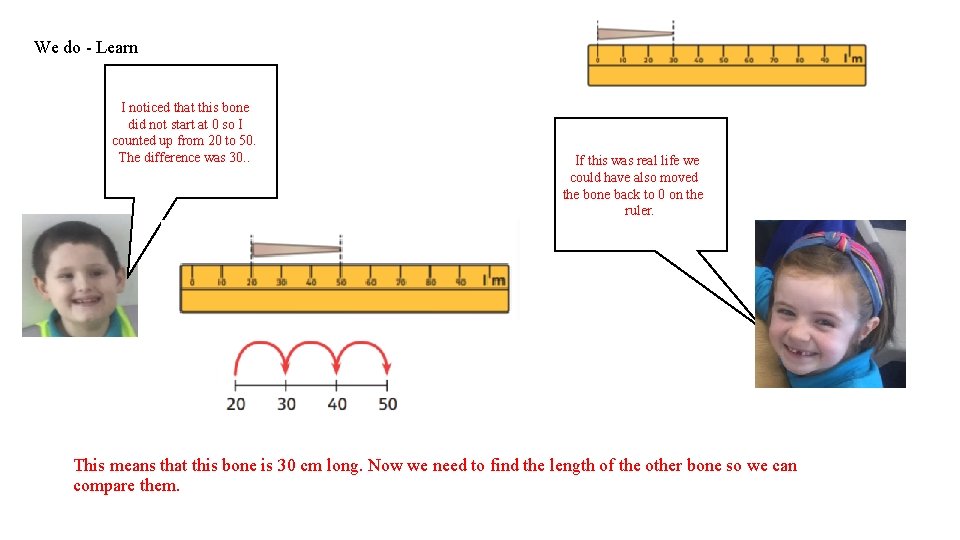
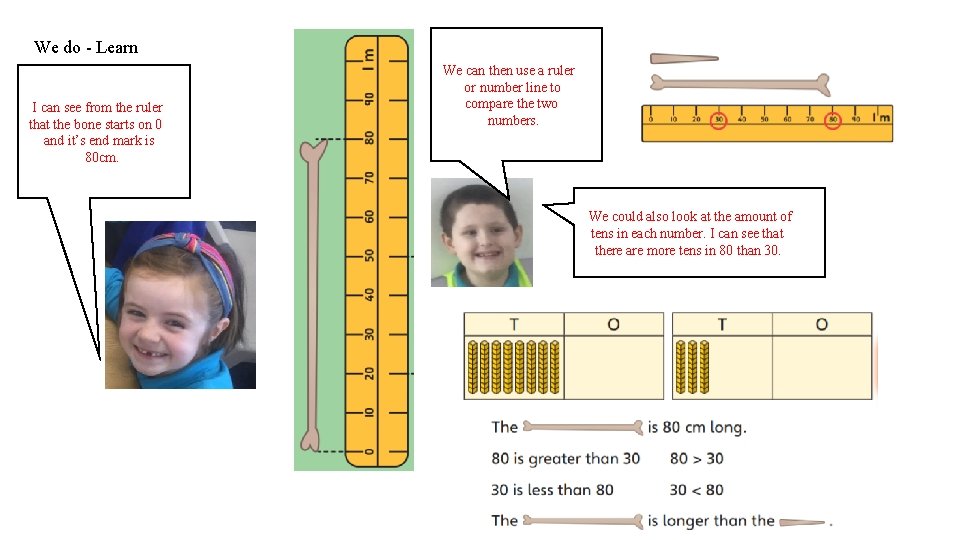
We do - Learn I noticed that this bone did not start at 0 so I counted up from 20 to 50. The difference was 30. . If this was real life we could have also moved the bone back to 0 on the ruler. This means that this bone is 30 cm long. Now we need to find the length of the other bone so we can compare them.
We do - Learn I can see from the ruler that the bone starts on 0 and it’s end mark is 80 cm. We can then use a ruler or number line to compare the two numbers. We could also look at the amount of tens in each number. I can see that there are more tens in 80 than 30.
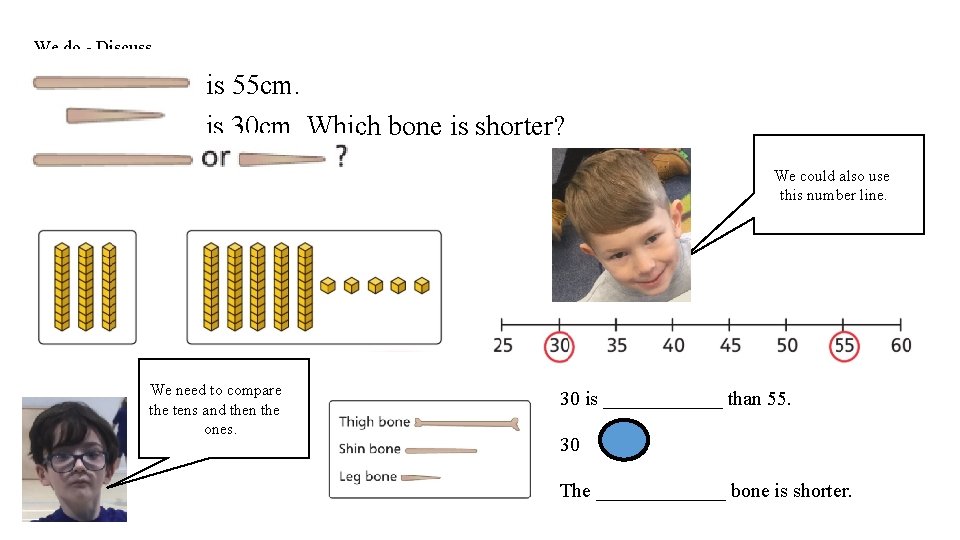
We do - Discuss is 55 cm. is 30 cm. Which bone is shorter? We could also use this number line. We need to compare the tens and then the ones. 30 is ______ than 55. 30 55 The _______ bone is shorter.
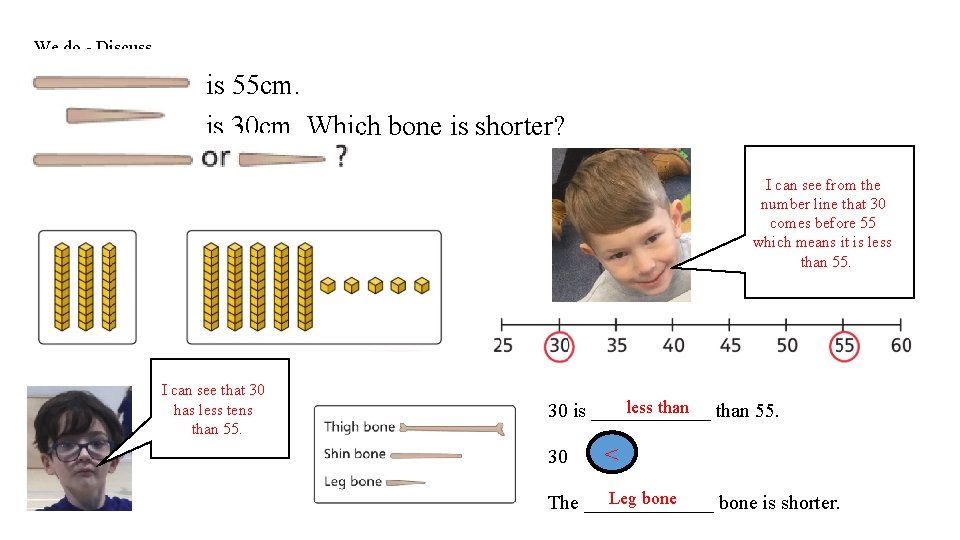
We do - Discuss is 55 cm. is 30 cm. Which bone is shorter? I can see from the number line that 30 comes before 55 which means it is less than 55. I can see that 30 has less tens than 55. less than 30 is ______ than 55. 30 55< Leg bone The _______ bone is shorter.
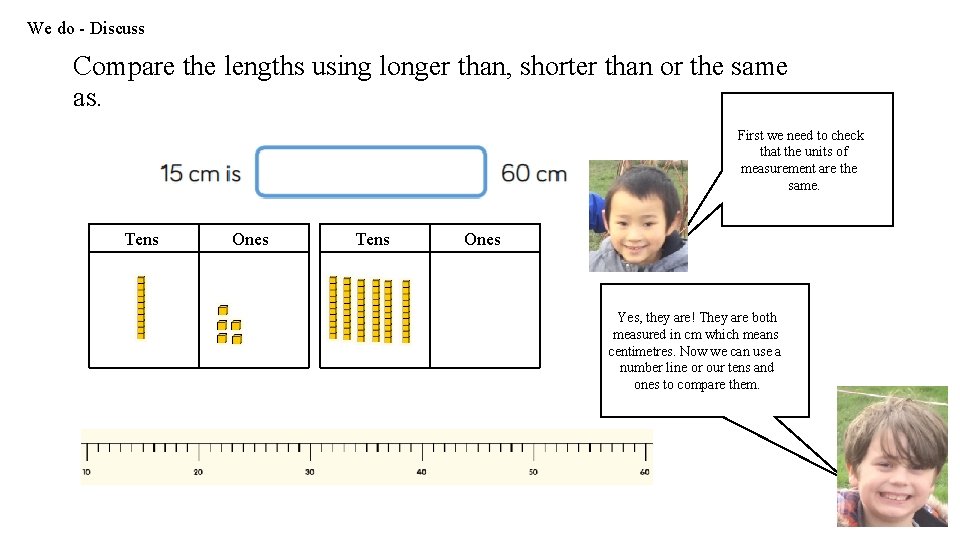
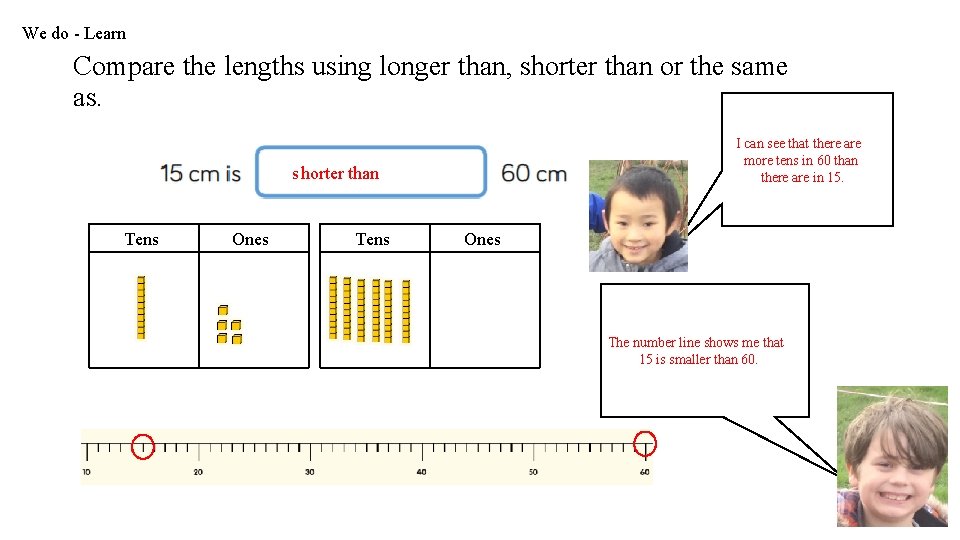
We do - Discuss Compare the lengths using longer than, shorter than or the same as. First we need to check that the units of measurement are the same. Tens Ones Yes, they are! They are both measured in cm which means centimetres. Now we can use a number line or our tens and ones to compare them.
We do - Learn Compare the lengths using longer than, shorter than or the same as. I can see that there are more tens in 60 than there are in 15. s horter than Tens Ones The number line shows me that 15 is smaller than 60.
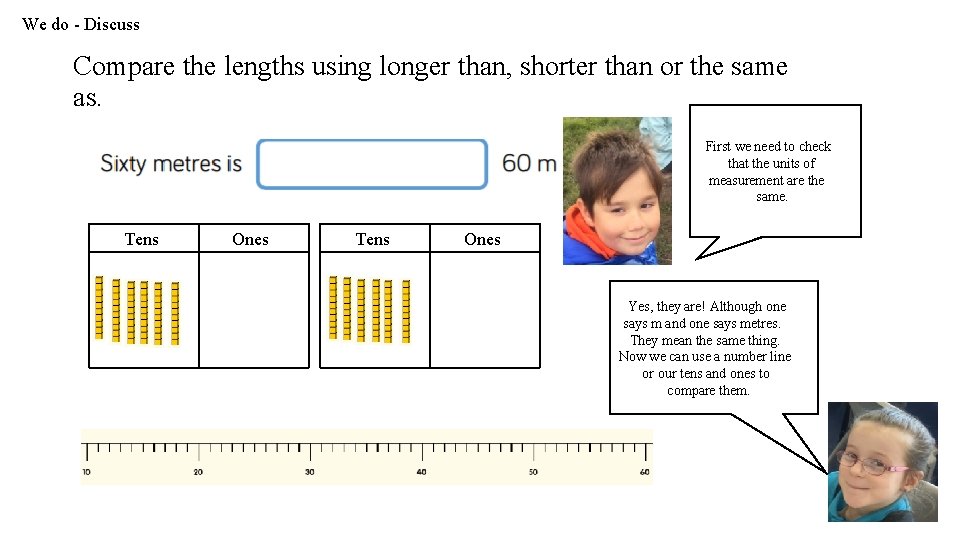
We do - Discuss Compare the lengths using longer than, shorter than or the same as. First we need to check that the units of measurement are the same. Tens Ones Yes, they are! Although one says m and one says metres. They mean the same thing. Now we can use a number line or our tens and ones to compare them.
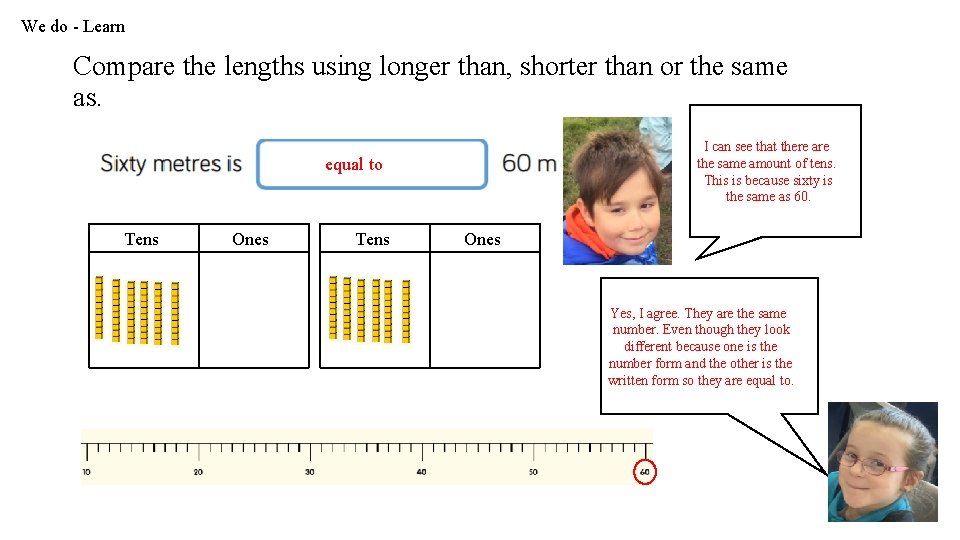
We do - Learn Compare the lengths using longer than, shorter than or the same as. I can see that there are the same amount of tens. This is because sixty is the same as 60. equal to Tens Ones Yes, I agree. They are the same number. Even though they look different because one is the number form and the other is the written form so they are equal to.
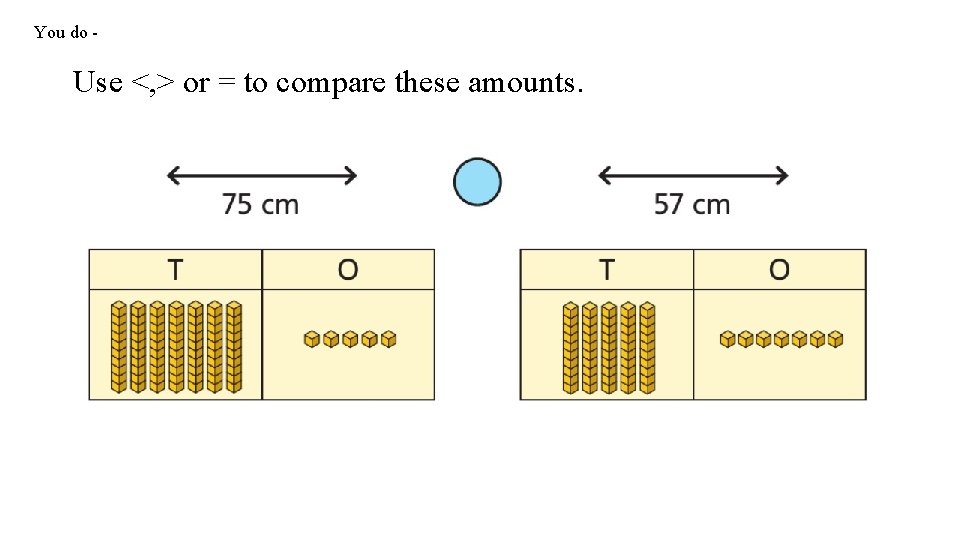
You do - Use <, > or = to compare these amounts.
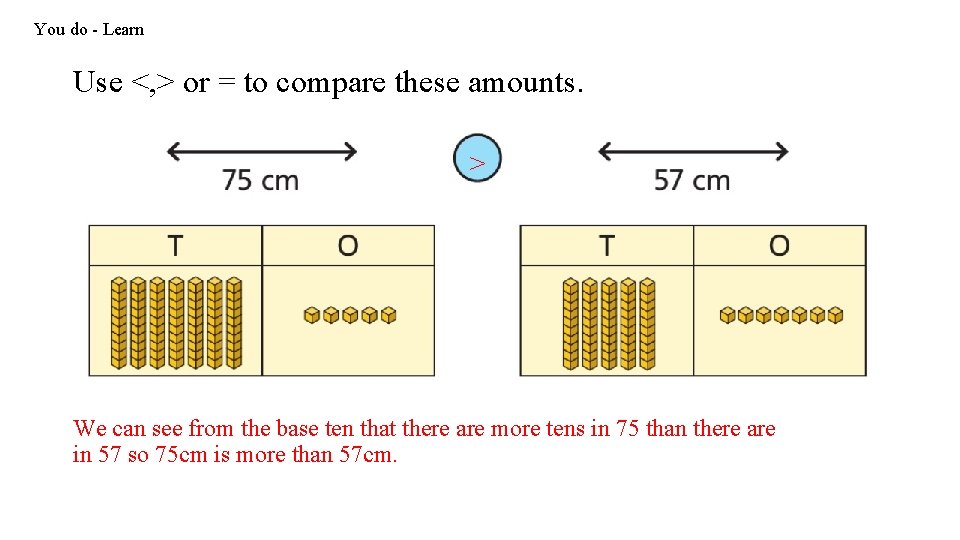
You do - Learn Use <, > or = to compare these amounts. > We can see from the base ten that there are more tens in 75 than there are in 57 so 75 cm is more than 57 cm.
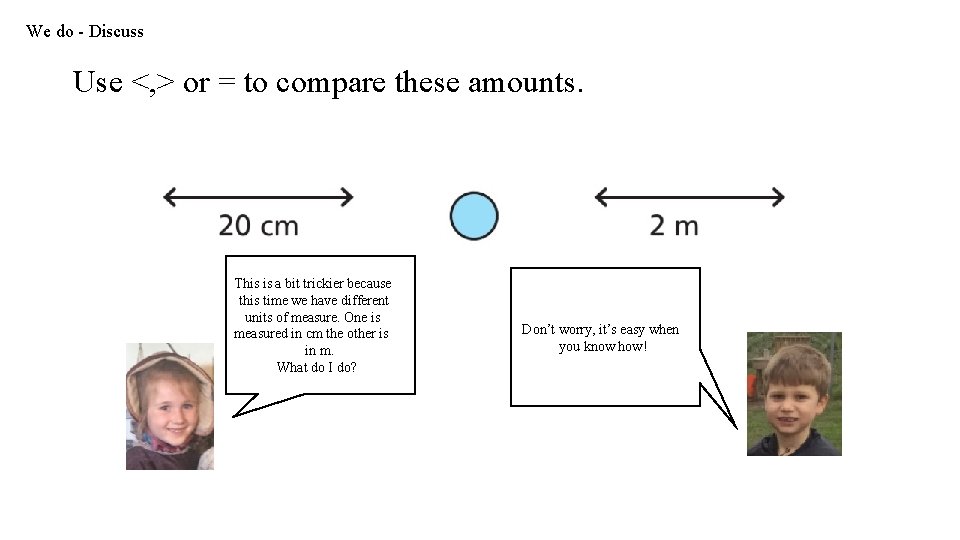
We do - Discuss Use <, > or = to compare these amounts. This is a bit trickier because this time we have different units of measure. One is measured in cm the other is in m. What do I do? Don’t worry, it’s easy when you know how!
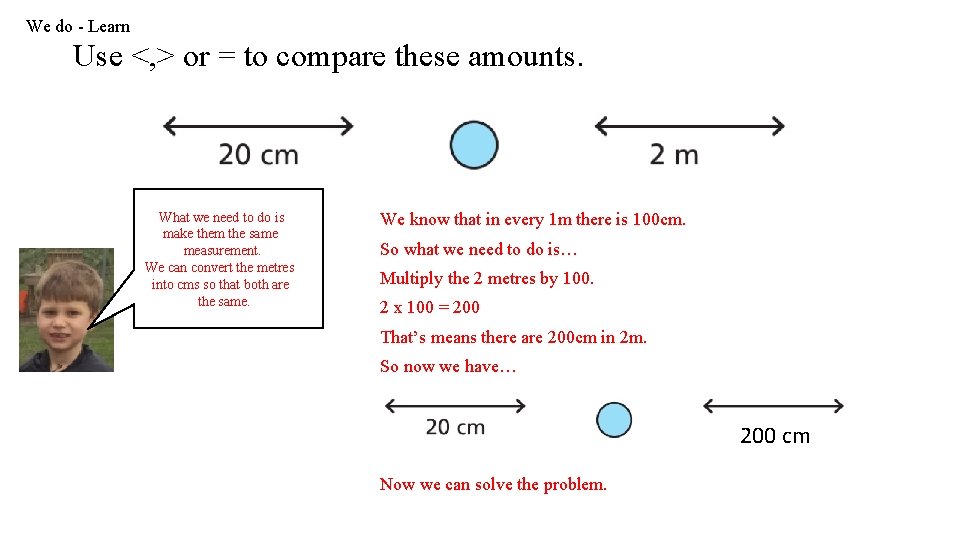
We do - Learn Use <, > or = to compare these amounts. What we need to do is make them the same measurement. We can convert the metres into cms so that both are the same. We know that in every 1 m there is 100 cm. So what we need to do is… Multiply the 2 metres by 100. 2 x 100 = 200 That’s means there are 200 cm in 2 m. So now we have… 200 cm Now we can solve the problem.
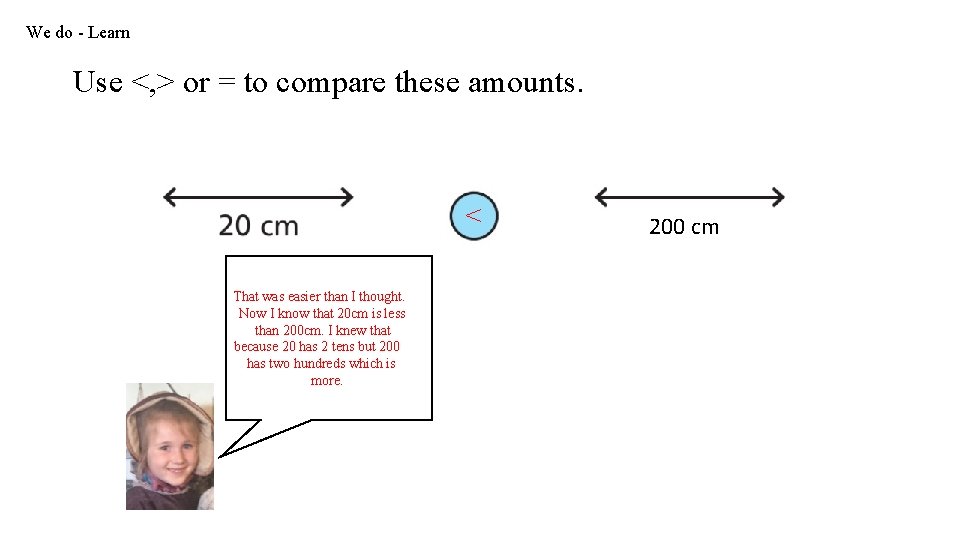
We do - Learn Use <, > or = to compare these amounts. < That was easier than I thought. Now I know that 20 cm is less than 200 cm. I knew that because 20 has 2 tens but 200 has two hundreds which is more. 200 cm
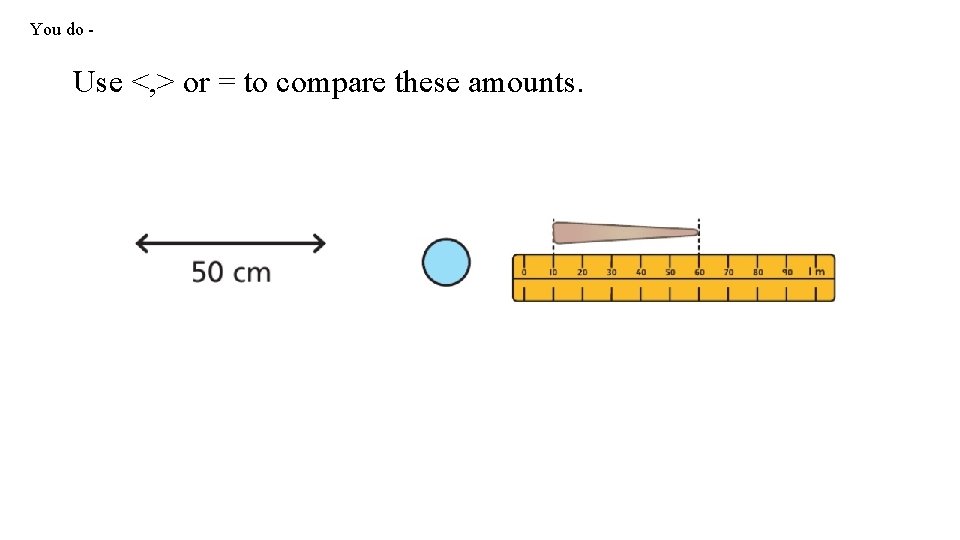
You do - Use <, > or = to compare these amounts.
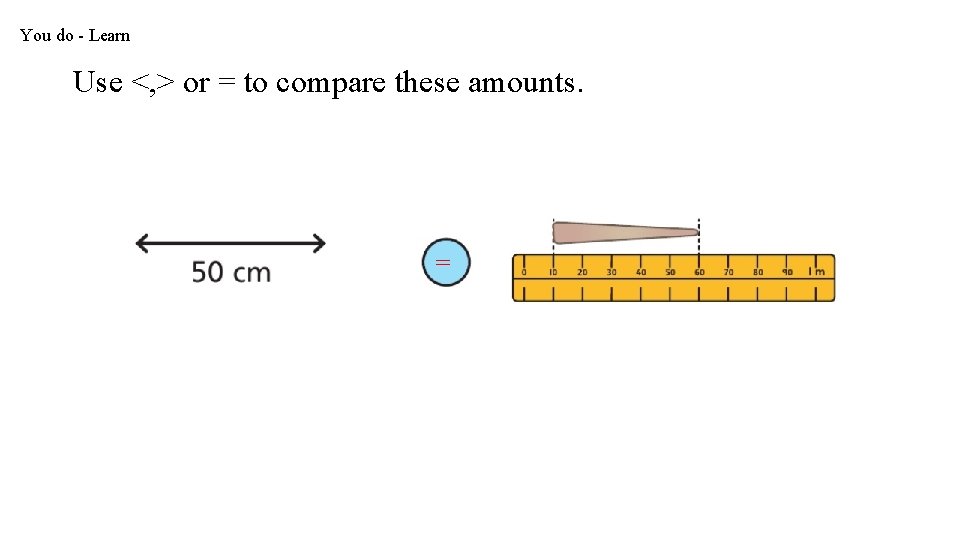
You do - Learn Use <, > or = to compare these amounts. =
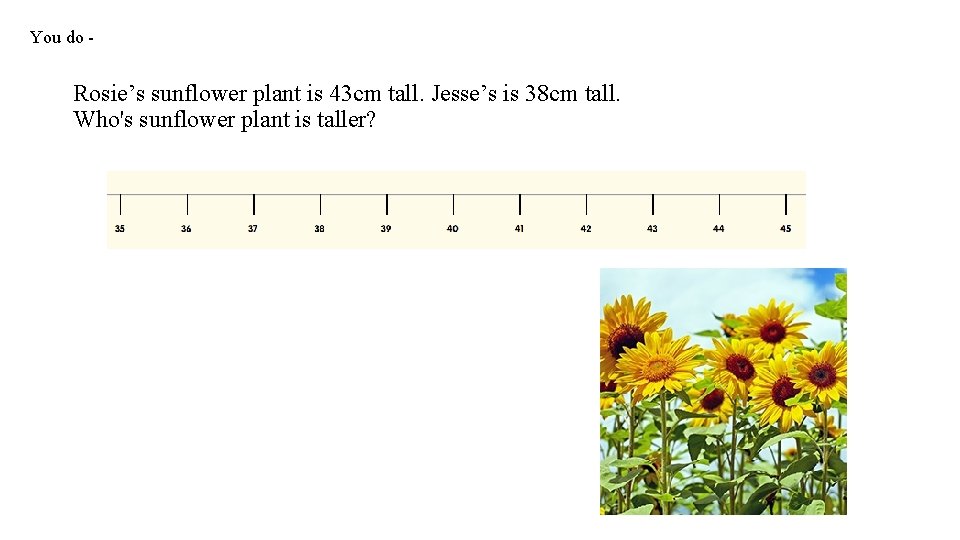
You do - Rosie’s sunflower plant is 43 cm tall. Jesse’s is 38 cm tall. Who's sunflower plant is taller?
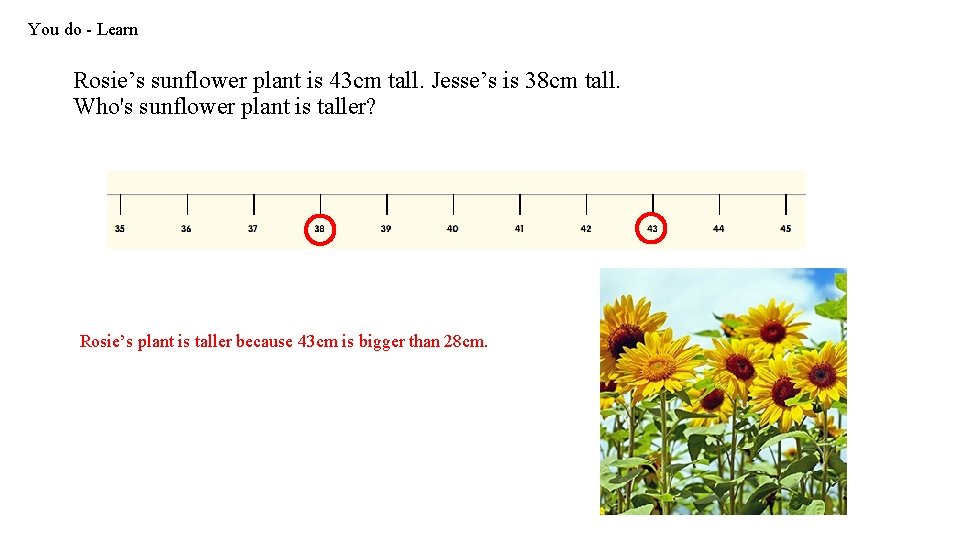
You do - Learn Rosie’s sunflower plant is 43 cm tall. Jesse’s is 38 cm tall. Who's sunflower plant is taller? Rosie’s plant is taller because 43 cm is bigger than 28 cm.
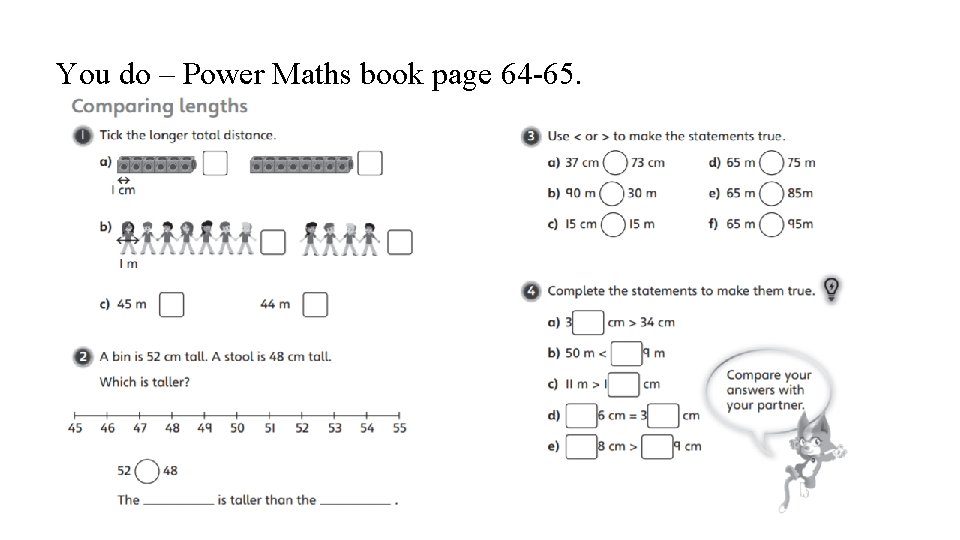
You do – Power Maths book page 64 -65.
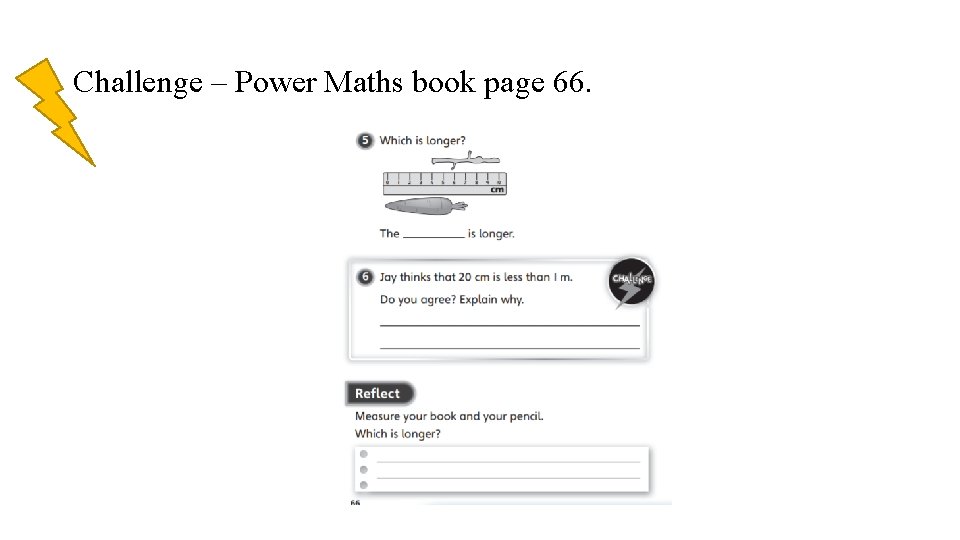
Challenge – Power Maths book page 66.
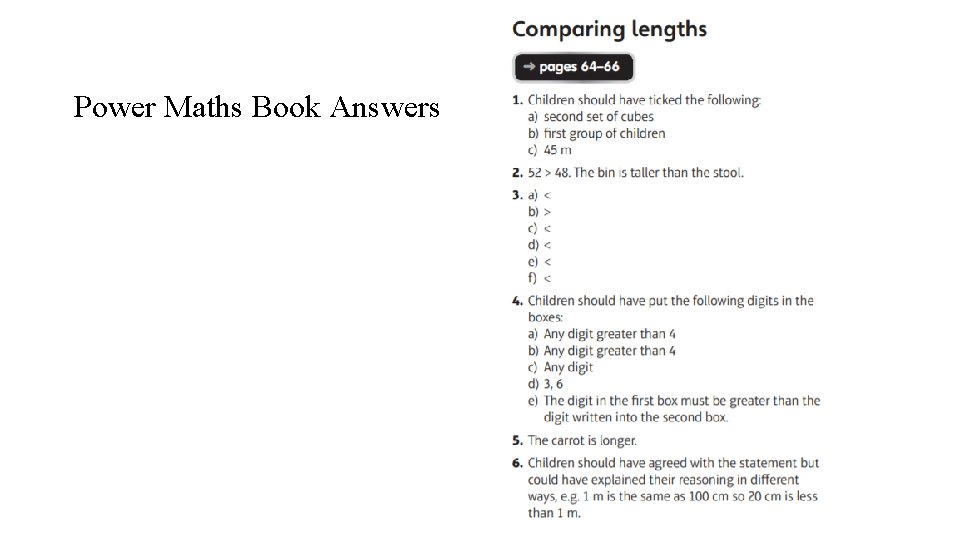
Power Maths Book Answers