
Comparatives What are comparisons l Comparisons are made

- Slides: 13
Comparatives
What are comparisons? l Comparisons are made when one object/one group is compared to another object/group and a difference is apparent. l Comparisons are between 2 things, groups, ideas, or concepts.
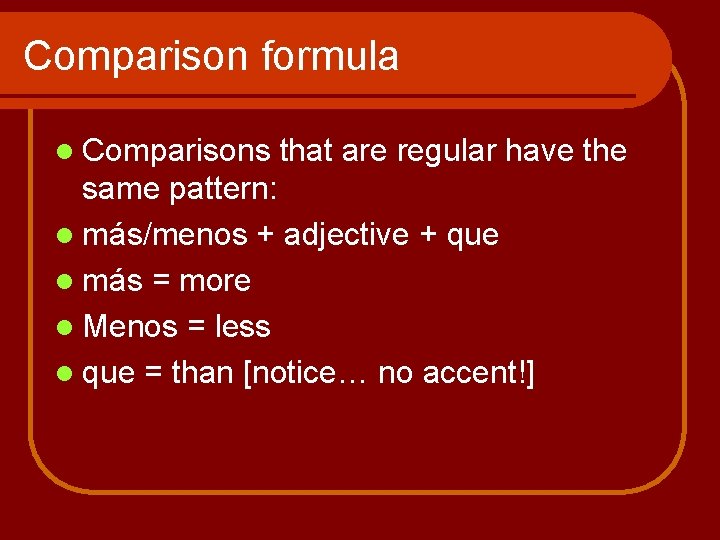
Comparison formula l Comparisons that are regular have the same pattern: l más/menos + adjective + que l más = more l Menos = less l que = than [notice… no accent!]
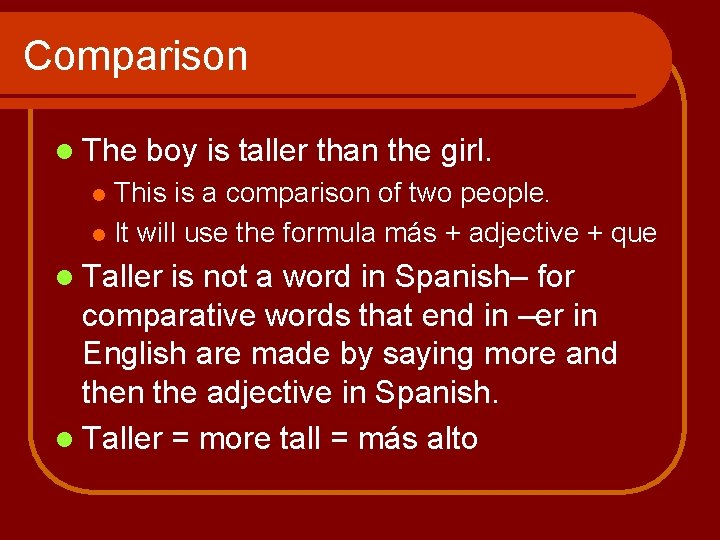
Comparison l The boy is taller than the girl. This is a comparison of two people. l It will use the formula más + adjective + que l l Taller is not a word in Spanish– for comparative words that end in –er in English are made by saying more and then the adjective in Spanish. l Taller = more tall = más alto
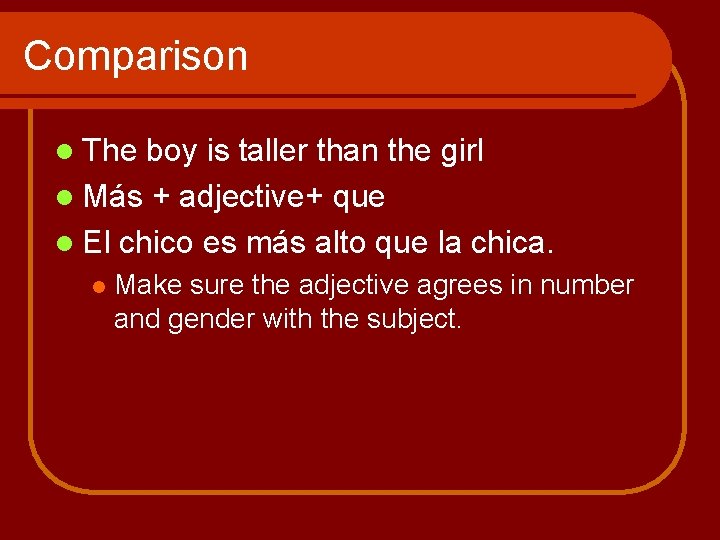
Comparison l The boy is taller than the girl l Más + adjective+ que l El chico es más alto que la chica. l Make sure the adjective agrees in number and gender with the subject.
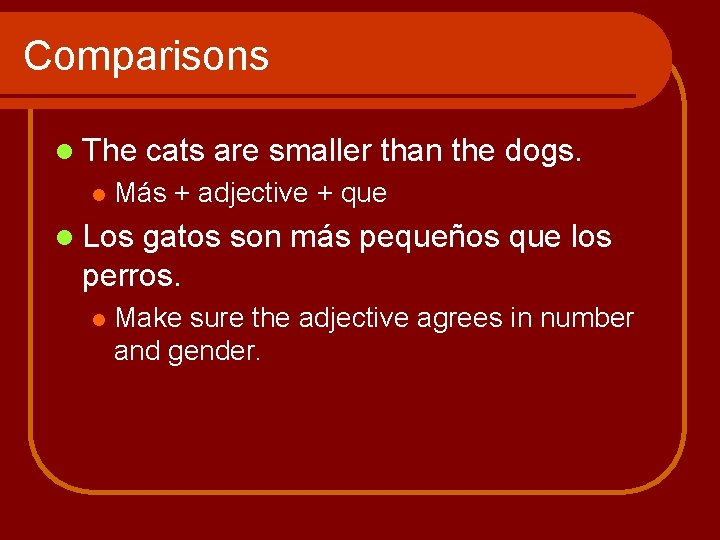
Comparisons l The l cats are smaller than the dogs. Más + adjective + que l Los gatos son más pequeños que los perros. l Make sure the adjective agrees in number and gender.
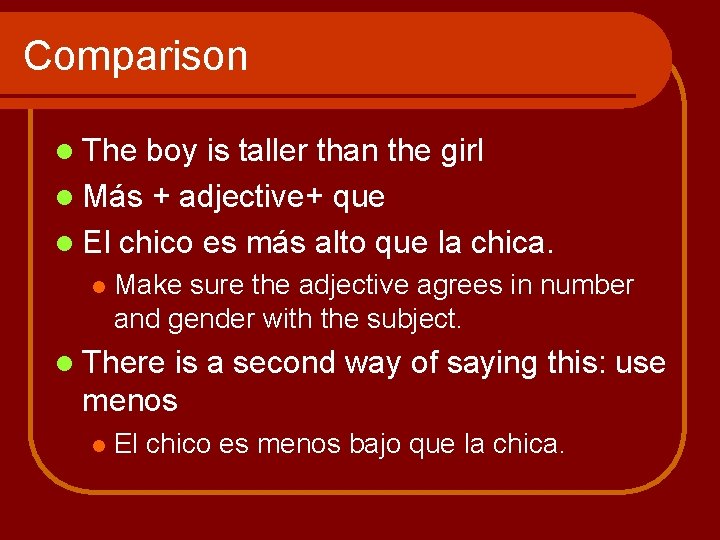
Comparison l The boy is taller than the girl l Más + adjective+ que l El chico es más alto que la chica. l Make sure the adjective agrees in number and gender with the subject. l There is a second way of saying this: use menos l El chico es menos bajo que la chica.
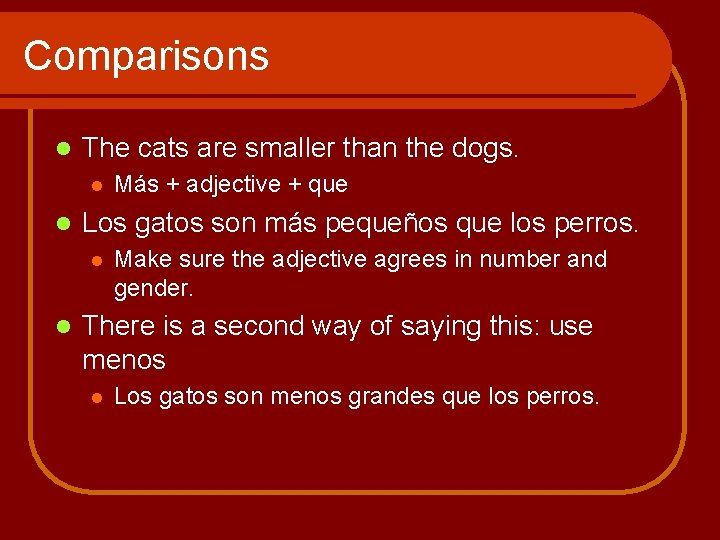
Comparisons l The cats are smaller than the dogs. l l Los gatos son más pequeños que los perros. l l Más + adjective + que Make sure the adjective agrees in number and gender. There is a second way of saying this: use menos l Los gatos son menos grandes que los perros.
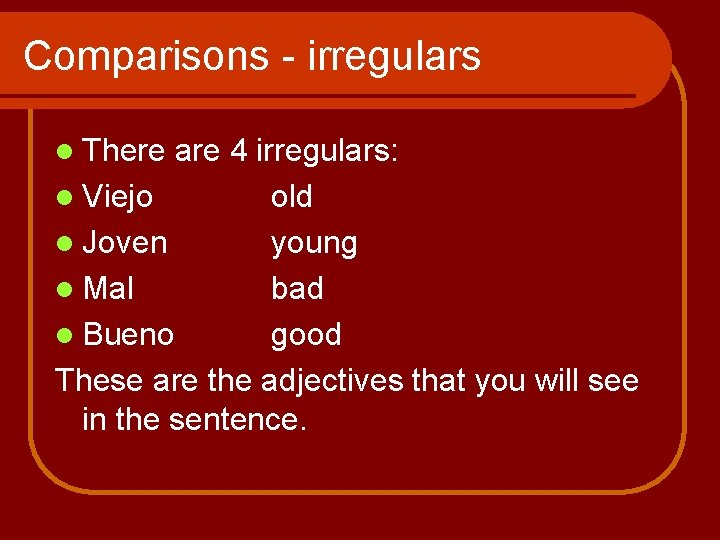
Comparisons - irregulars l There are 4 irregulars: l Viejo old l Joven young l Mal bad l Bueno good These are the adjectives that you will see in the sentence.
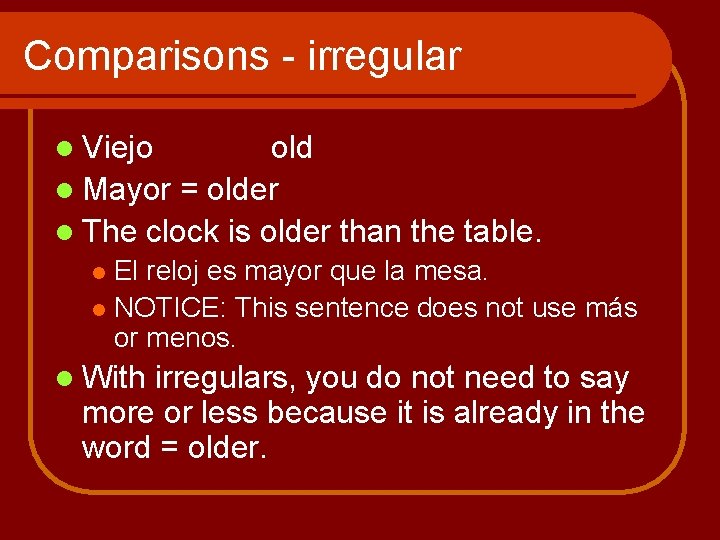
Comparisons - irregular l Viejo old l Mayor = older l The clock is older than the table. El reloj es mayor que la mesa. l NOTICE: This sentence does not use más or menos. l l With irregulars, you do not need to say more or less because it is already in the word = older.
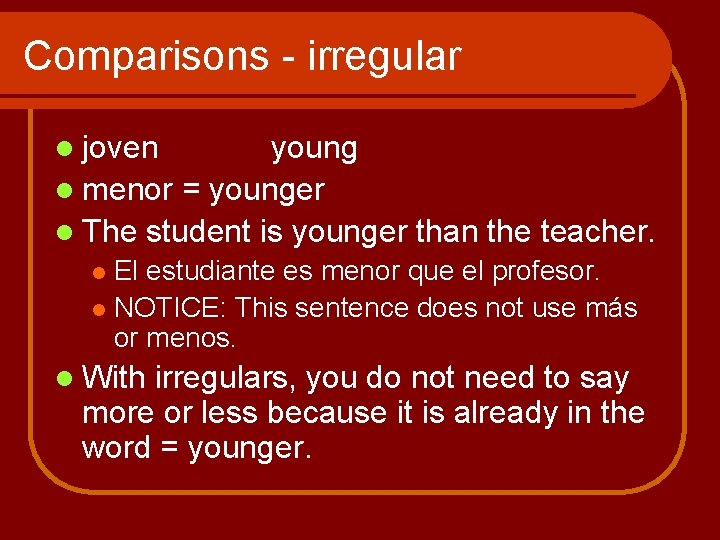
Comparisons - irregular l joven young l menor = younger l The student is younger than the teacher. El estudiante es menor que el profesor. l NOTICE: This sentence does not use más or menos. l l With irregulars, you do not need to say more or less because it is already in the word = younger.
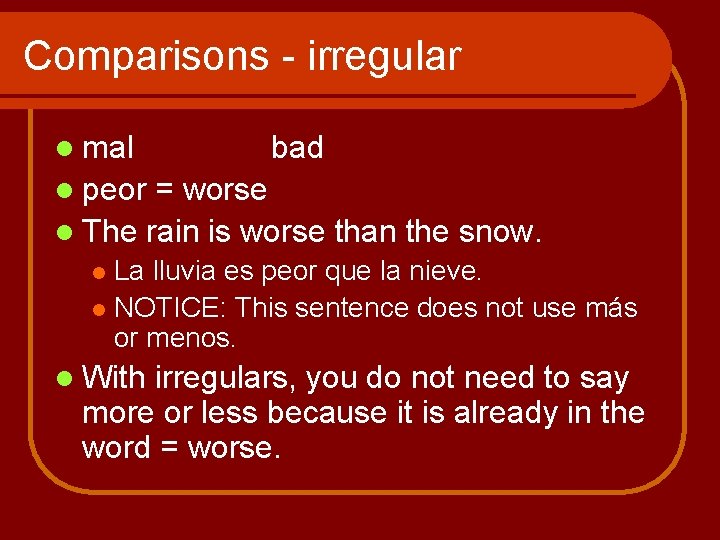
Comparisons - irregular l mal bad l peor = worse l The rain is worse than the snow. La lluvia es peor que la nieve. l NOTICE: This sentence does not use más or menos. l l With irregulars, you do not need to say more or less because it is already in the word = worse.
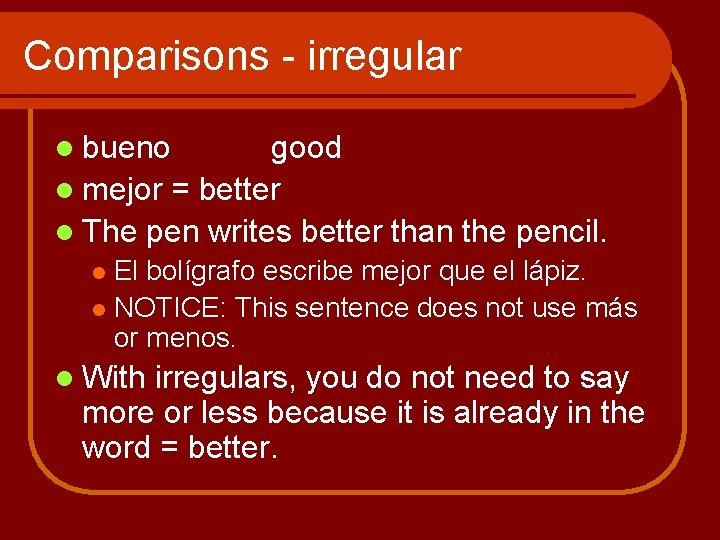
Comparisons - irregular l bueno good l mejor = better l The pen writes better than the pencil. El bolígrafo escribe mejor que el lápiz. l NOTICE: This sentence does not use más or menos. l l With irregulars, you do not need to say more or less because it is already in the word = better.