
Comparative Study Between Traditional and Mannich Base as
Comparative Study Between Traditional and Mannich Base as Lubricant Oil Antioxidants Mohamad Gamil Abdalghani* College of Basic Education, Salahaddin University
International Journal of Chemical Sciences Research Vol: 17, Iss: 2 Impact Factor: 1. 6 Received: February 25, 2019; Accepted: April 22, 2019; Published: April 29, 2019

ABSTRACT
Mannich base was prepared by using pentane diamine, p-octyl phenol, and formaldehyde in existence of nitrogen gas environment. FTIR spectroscopy was used to prove the structure of the product. The behavior of the base as antioxidant for lubricant oil was examined through viscosity, acid number and density variation compared with lubricant oil sample containing no additives.
A percent of 2% of the product was added to a sample of crude lubricating oil type SAE 50 furnished from Al-Dora refinery. The obtained formulation was kept under elevated oxidation conditions at 393 K, in existence of 0. 1% of benzoyl peroxide as free radical initiator for oxidation process, the oxidized samples were taken at periods of 4 h up to 24 hours.
The results showed that during the oxidation process, the values of acid number were increased, and there was a decrease in the density and viscosity values for the nonformulated samples in a comparison with those contained a percent of Mannich base in which the studied parameters were kept with no changes in their initial values.
The induction period during the oxidation process for the base was done by dissolving 2% of the base in a sample of lubricant oil and subjected to elevated temperature 393 K in existence of 0. 1% of benzoyl peroxide by Manometric instillation device based on chemiluminescence mechanism. The behavior of prepared base was compared with traditional universal antioxidants. The results showed an increase in the induction periods for Mannich base during the oxidation operation than those shown in traditional types confirming their high performance.

AIM OF RESEARCH
1. To synthesize Mannich base in order to be used as active antioxidant for crude lubricating oil. 2. To evaluate its ability by monitoring the changes in the values of viscosity, acid number, and density variation for the oil during the oxidation process. 3. To compare its efficiency with those traditional antioxidants based on the differences in induction periods.
INFRA RED SPECTROSCOPY
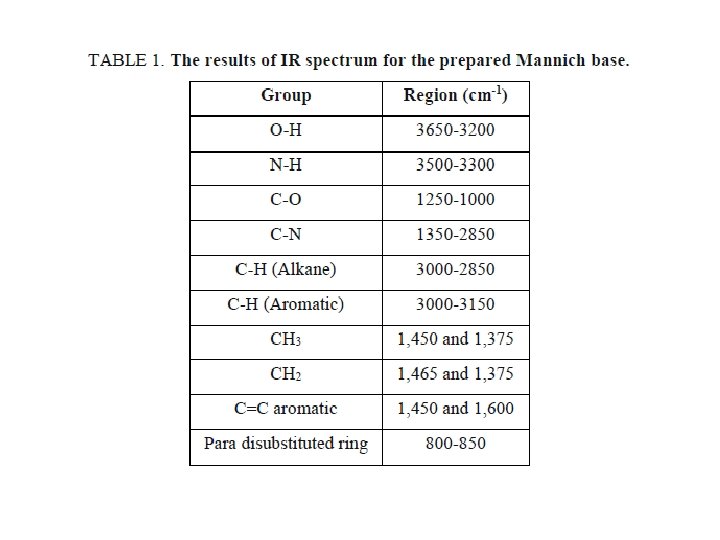
Infrared examination for the synthesized sample was carried out by Burker IFS 113 V with KBr cells, and CHCl 3 solvent with 1% maximum concentration at ambient temperature. The results of IR spectroscopy are listed in TABLE 1.
OXIDATION PROCESS
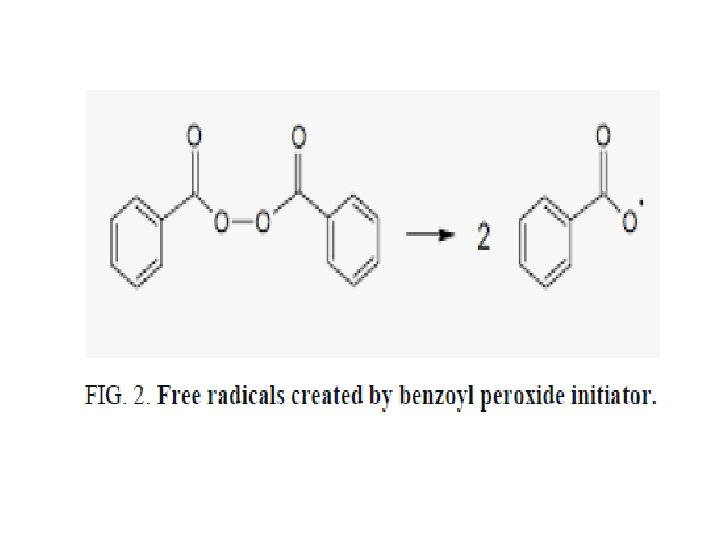
Blend of 2% of the final product was added to a sample of crude lubricant oil SAE 50 provided from Al-Dora refinery, and 0. 1% of benzoyl peroxide as free radical initiator (FIG. 2). The obtained mixture was heated at 393 K with mixing. Samples were taken at periods of 4 h up to 24 h during the oxidation process.
Viscosity, acid number, and density variation were examined, and the results were compared with the crude lubricant oil samples. The induction period test during the oxidation process was examined by Manometric oxidation apparatus based on chemiluminescence mechanism.

RESULTS & DISCUSSION
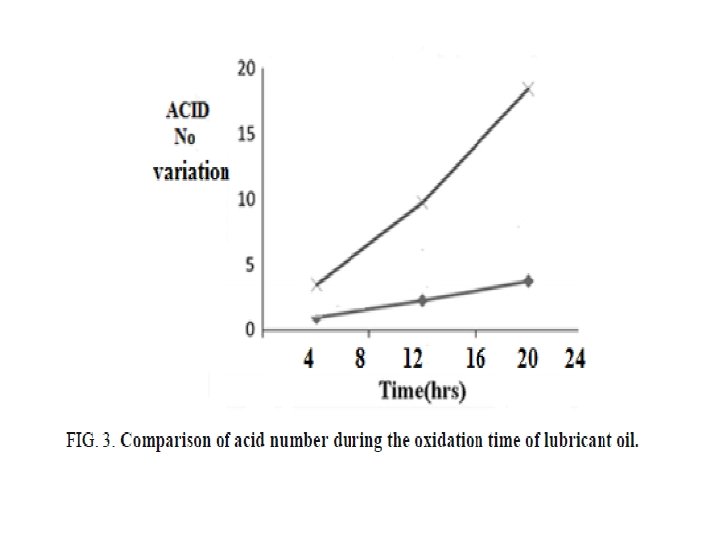
FIG. 3, 4, and 5 showing the acid number, viscosity and density variation for the selected samples during the oxidation process, it is seen that the synthesized base proved better oxidation resistance properties to the lubricant oil compared with the blank crude oil. It has high efficiency as lubricant oil antioxidant, since the variations in the total acid number; viscosity ratio and density were very small.
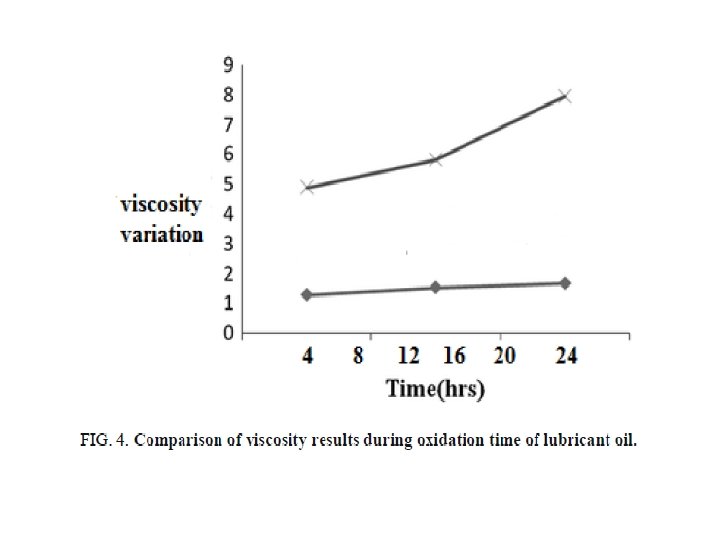
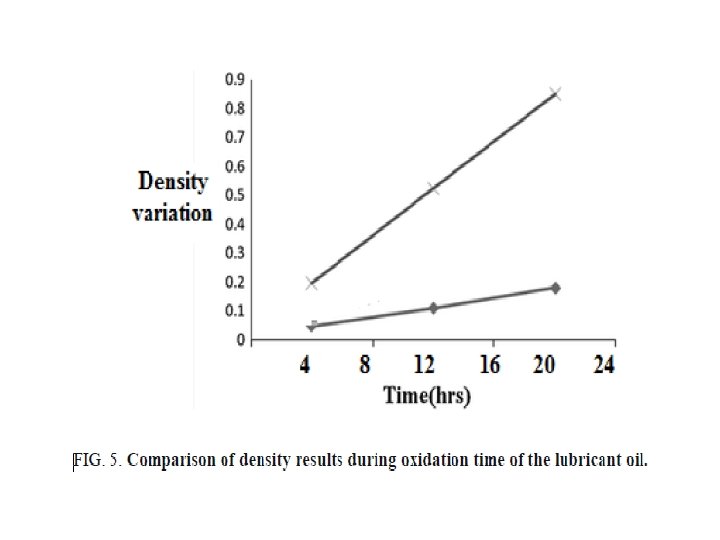
The results of our research showing a big positive behavior of the prepared base in a comparison with those prepared, it means that with increasing the carbon chain in the selected diamine, the resulted base proves higher efficiency.
This is may be attributed to: 1. Amine groups freedom participating in neutralizing the formed acid during the oxidation process. 2. The presence of phenolic aromatic amine compounds as inhibitors functioned by donating versatile hydrogen from (OH or NH) groups to stabilize the chain radicals; i. e. , these inhibitors destroy the peroxide radicals and thus, the oxidation chain is broken. The marked efficiency of hindered phenols is expressed by their radicals being insufficiently reactive to abstract hydrogen from the hydrocarbon and initiate new oxidation chains. 3. The presence of amine part in the structure of prepared Mannich base neutralizes some of the acidic produced during oil oxidation causing small change in total acid number.
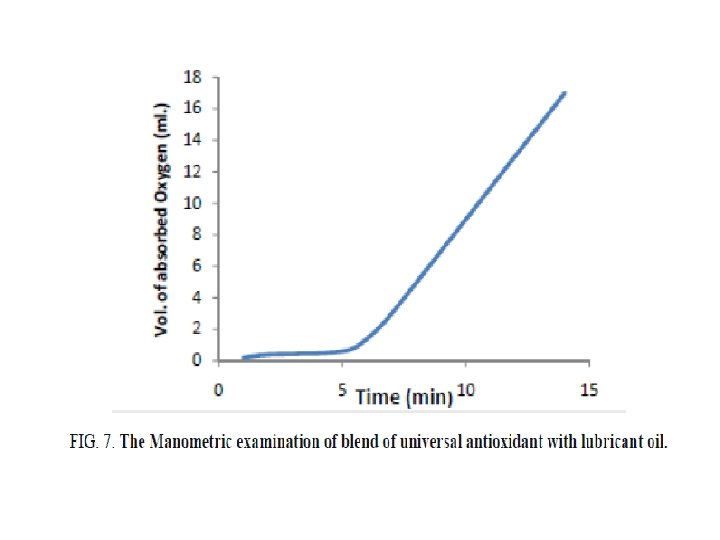
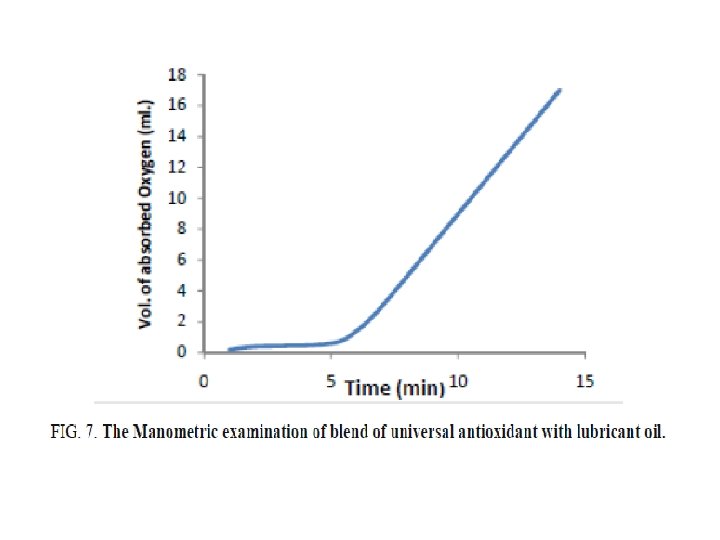
FIG. 6 shows the results of Manometric oxidation based on chemiluminescence mechanism in the presence of 2% of the prepared base and 1% benzoyl peroxide. It is seen that the Mannich base recorded 12 minutes as induction period until the lubricant oil arrives its maximum rate of oxidation which is considered as high value than that recorded in existence of 2% Unol which had the value of 5 as shown in FIG. 7.

CONCLUSIONS
Mannich base proved high performance as antioxidant for lubricant oil in a comparison with the traditional types of antioxidants like Unol or aldehydic and ketonic types. The small variation in acid number, viscosity, and density of lubricant oil during oxidation process in existence of the prepared base proved the high ability of this base in terminating the free radical chain reaction during the oxidation process.
The functionality of the prepared antioxidant is attributed by its multi active groups characterized by free radical scavenging, acidity neutralization, and peroxide termination. The prepared Mannich base with long diamine chain is characterized with higher efficiency as antioxidants than those prepared from short chains. Mannich base recorded high value of induction period in a comparison with these traditional and universal antioxidants.
- Slides: 29