
COMPARATIVE MATERIA MEDICA overview An Dr P R


- Slides: 31
COMPARATIVE MATERIA MEDICA overview An Dr. P. R. SAIJI ASSOCIATE PROFESSOR DEPT OF MATERIA MEDICA
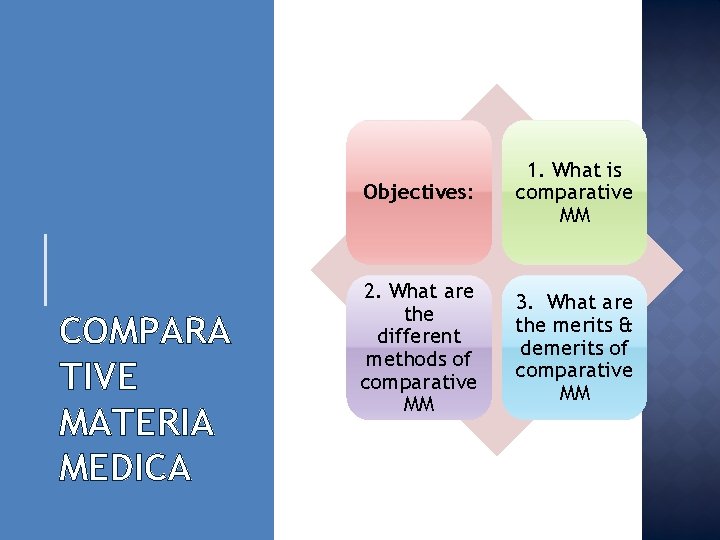
COMPARA TIVE MATERIA MEDICA Objectives: 1. What is comparative MM 2. What are the different methods of comparative MM 3. What are the merits & demerits of comparative MM
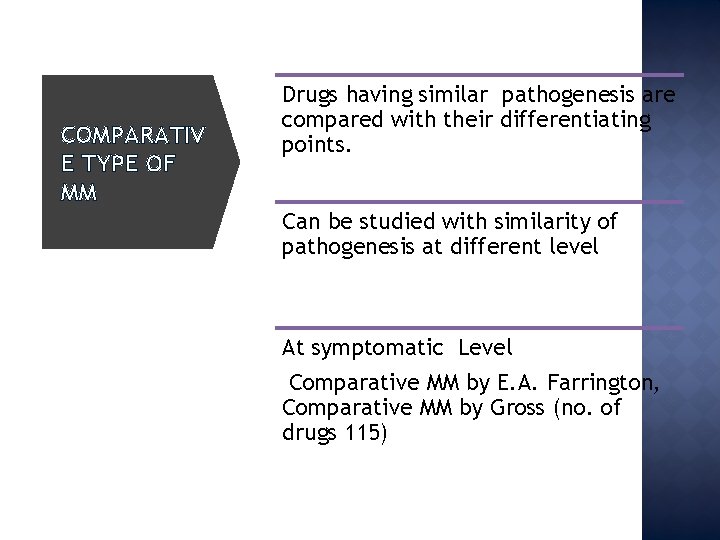
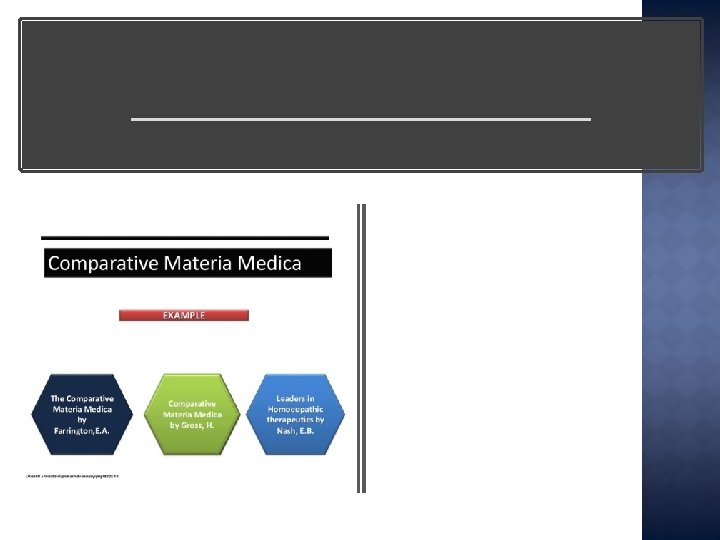
COMPARATIV E TYPE OF MM Drugs having similar pathogenesis are compared with their differentiating points. Can be studied with similarity of pathogenesis at different level At symptomatic Level Comparative MM by E. A. Farrington, Comparative MM by Gross (no. of drugs 115)
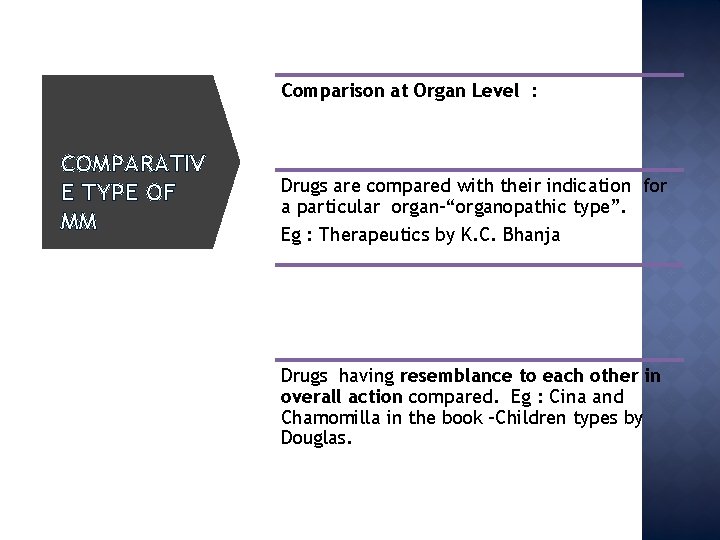
Comparison at Organ Level : COMPARATIV E TYPE OF MM Drugs are compared with their indication for a particular organ-“organopathic type”. Eg : Therapeutics by K. C. Bhanja Drugs having resemblance to each other in overall action compared. Eg : Cina and Chamomilla in the book -Children types by Douglas.
COMPARATIVE MM � Understanding how to relate and compare remedies is essential in the development of homeopathic knowledge. � Comparisons and relationships from the perspectives like constitutional, mental, pathological, miasmatic, keynote, organ affinity etc.
Offers a bridge: COMPARAT IVE MATERIA MEDICA it allows for the exploration of new areas of homeopathic knowledge and seeks to ground our existing knowledge into a coherent pattern, so the practice of homeopathy can be objectively applied and verified.
In order to master the art of prescription one should not only learn MM but should also be able to differentiate between remedies. Comparative MM is one of the finer ways of understanding the distinct nature of each remedy It is also a step towards reducing the probability of error in our prescriptions.
Knowing pathogenetic power Individualisation PURPOSE
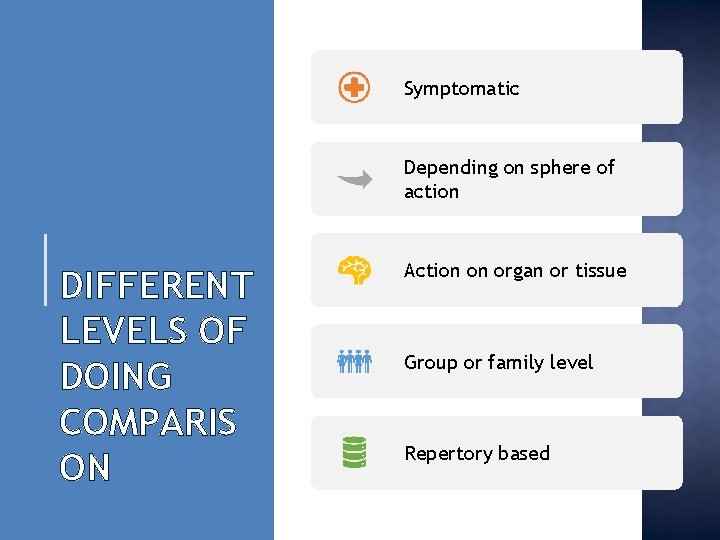
Symptomatic Depending on sphere of action DIFFERENT LEVELS OF DOING COMPARIS ON Action on organ or tissue Group or family level Repertory based
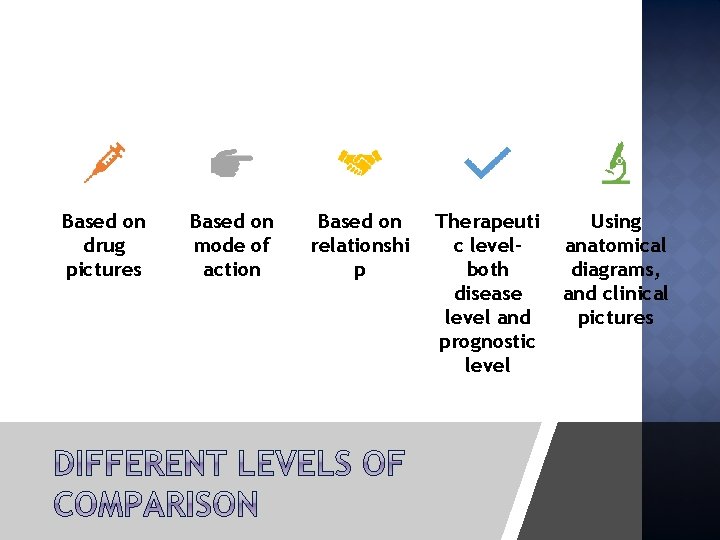
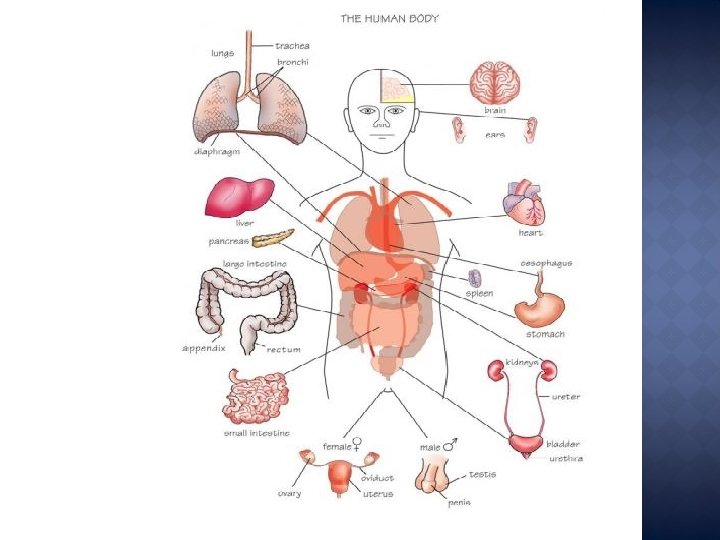
Based on drug pictures Based on mode of action Based on relationshi p Therapeuti c levelboth disease level and prognostic level Using anatomical diagrams, and clinical pictures
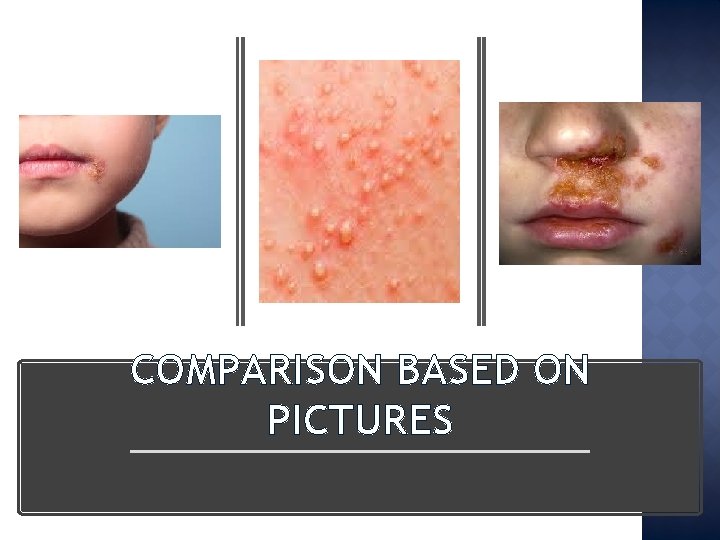
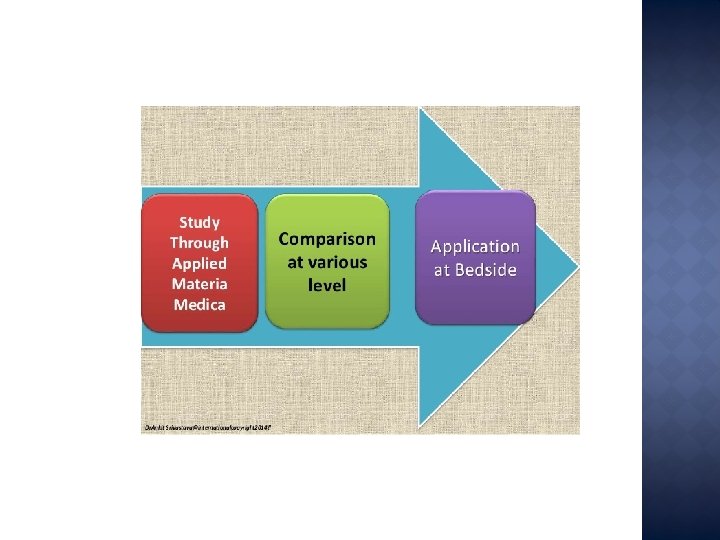
COMPARISON BASED ON PICTURES
Using the diagrams and pictures- name of different remedies having action on same organs can be stuck by the students Also remedies with similar mode of action can be depicted HOW TO DO COMPARIS ON Using charts Using computers and soft wares
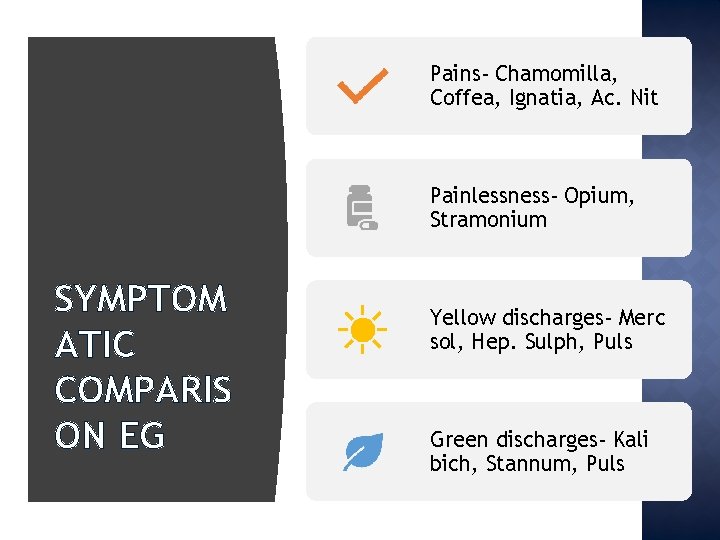
Pains- Chamomilla, Coffea, Ignatia, Ac. Nit Painlessness- Opium, Stramonium SYMPTOM ATIC COMPARIS ON EG Yellow discharges- Merc sol, Hep. Sulph, Puls Green discharges- Kali bich, Stannum, Puls
Coryza Neuralgia CLINICAL COMPARIS ON Post herpetic neuralgia Plica polonica
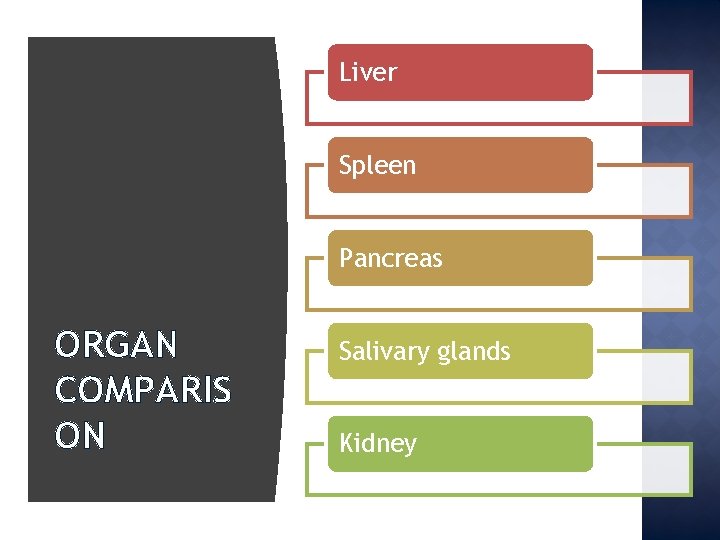
Liver Spleen Pancreas ORGAN COMPARIS ON Salivary glands Kidney
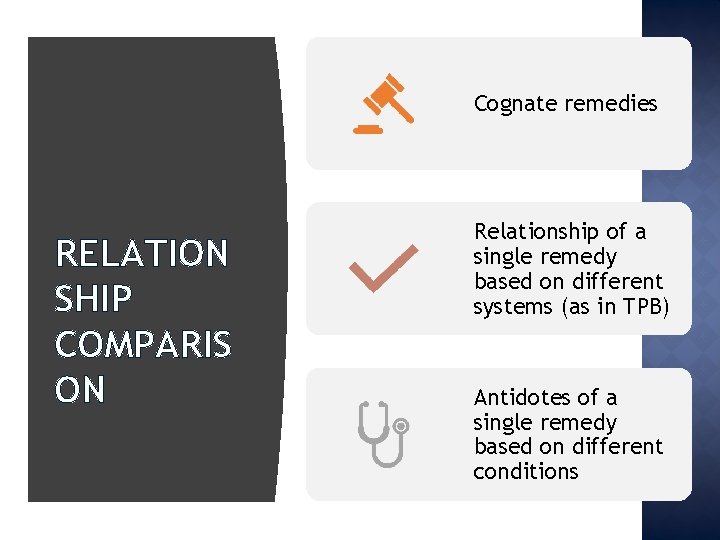
Cognate remedies RELATION SHIP COMPARIS ON Relationship of a single remedy based on different systems (as in TPB) Antidotes of a single remedy based on different conditions
BASED ON REPERTORY Converting symptom into rubrics and comparing with the different remedies mentioned in the rubrics
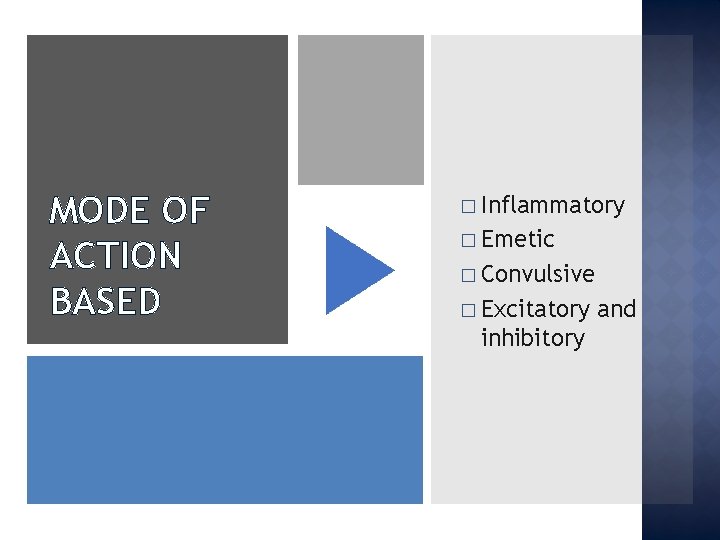
MODE OF ACTION BASED � Inflammatory � Emetic � Convulsive � Excitatory inhibitory and
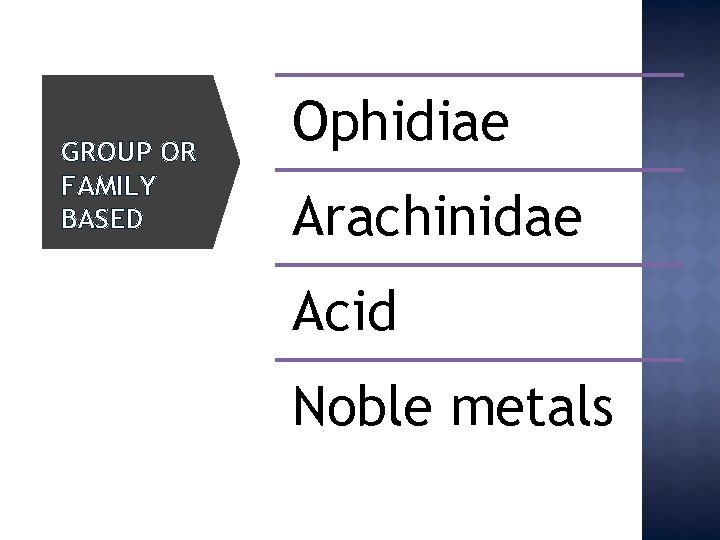
GROUP OR FAMILY BASED Ophidiae Arachinidae Acid Noble metals
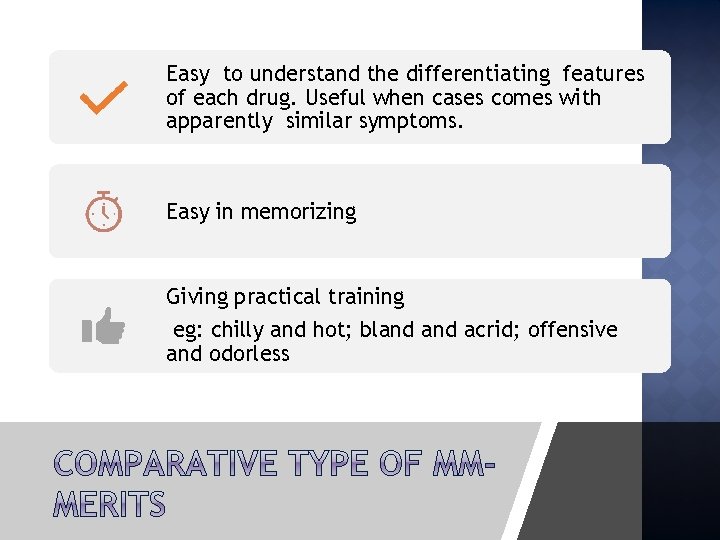
Easy to understand the differentiating features of each drug. Useful when cases comes with apparently similar symptoms. Easy in memorizing Giving practical training eg: chilly and hot; bland acrid; offensive and odorless
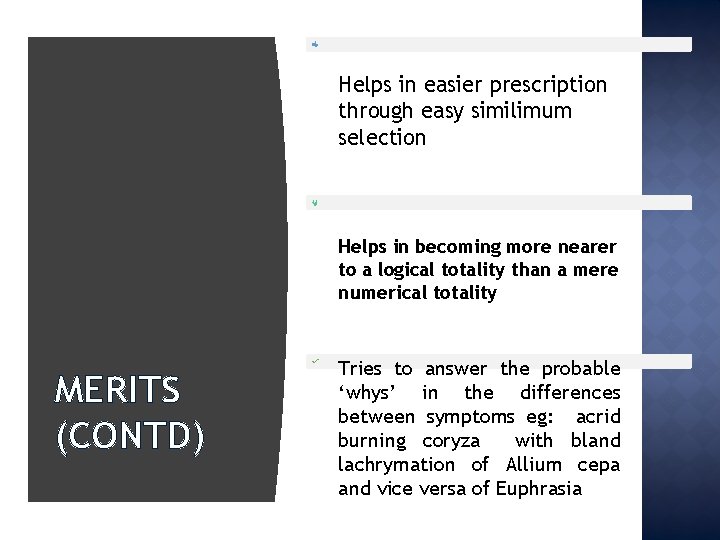
Helps in easier prescription through easy similimum selection Helps in becoming more nearer to a logical totality than a mere numerical totality MERITS (CONTD) Tries to answer the probable ‘whys’ in the differences between symptoms eg: acrid burning coryza with bland lachrymation of Allium cepa and vice versa of Euphrasia
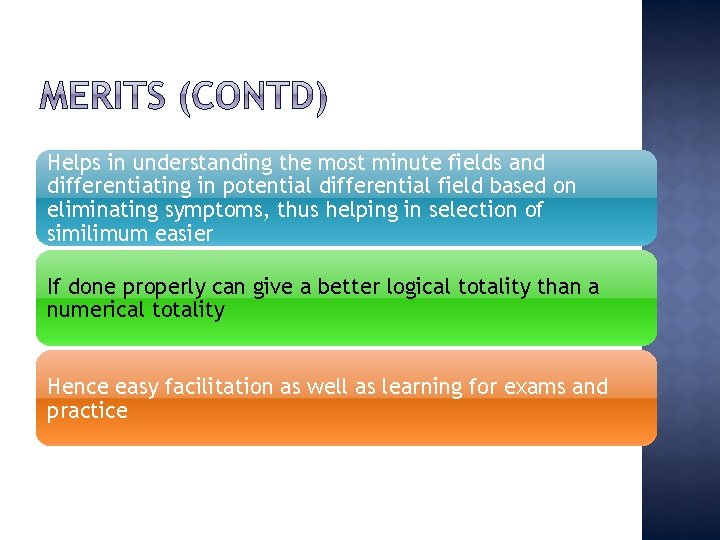
Helps in understanding the most minute fields and differentiating in potential differential field based on eliminating symptoms, thus helping in selection of similimum easier If done properly can give a better logical totality than a numerical totality Hence easy facilitation as well as learning for exams and practice
� All COMPARATI VE MMDEMERITS the symptoms can’t be studied this way. Understanding of the whole drug not possible in this type of MM.
�No comprehensive drug picture.
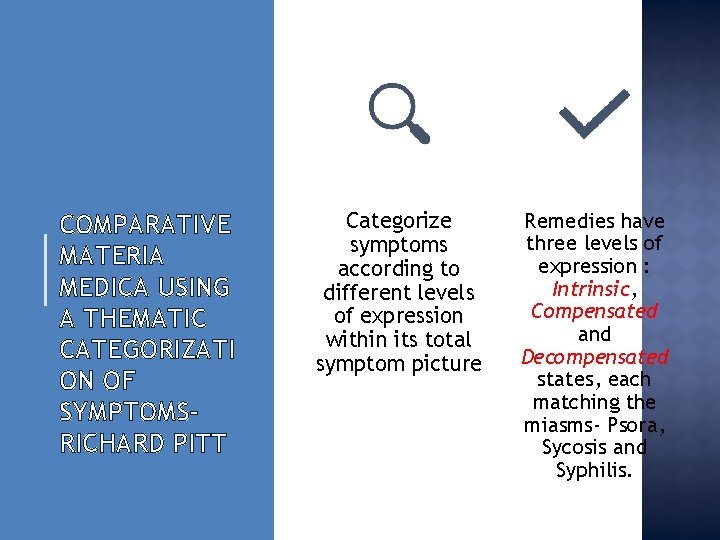
COMPARATIVE MATERIA MEDICA USING A THEMATIC CATEGORIZATI ON OF SYMPTOMSRICHARD PITT Categorize symptoms according to different levels of expression within its total symptom picture Remedies have three levels of expression : Intrinsic, Compensated and Decompensated states, each matching the miasms- Psora, Sycosis and Syphilis.
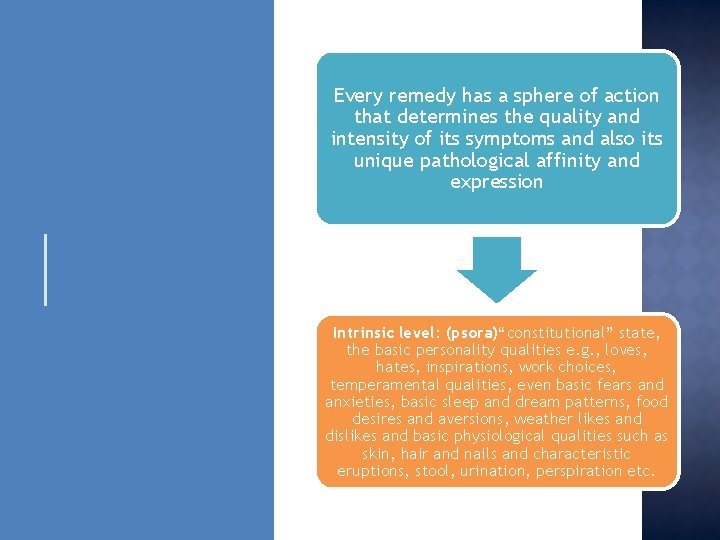
Every remedy has a sphere of action that determines the quality and intensity of its symptoms and also its unique pathological affinity and expression Intrinsic level: (psora)“constitutional” state, the basic personality qualities e. g. , loves, hates, inspirations, work choices, temperamental qualities, even basic fears and anxieties, basic sleep and dream patterns, food desires and aversions, weather likes and dislikes and basic physiological qualities such as skin, hair and nails and characteristic eruptions, stool, urination, perspiration etc.
� Eg intrinsic (psora) Calcium, Potassium, Magnesium, Manganese, Natrum, Ferrum, Phosphorus, Silicea and Sulphur, Carbon and related compoundsminerals found as part of basic biological functioning.