
Comparative Government What is a state There are
- Slides: 36
Comparative Government
What is a state? • There are four key characteristics of a state • Can you guess what they are?
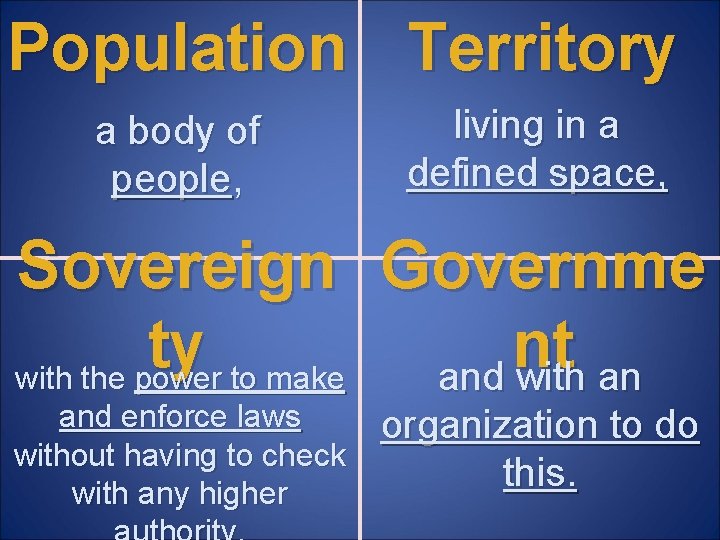
Population Territory a body of people, living in a defined space, Sovereign Governme ty nt with the power to make and with an and enforce laws without having to check with any higher organization to do this.
Who Rules? Forms of Government
Forms of Government When people decide to form the social contracts that we call governments, they make many different decisions about how their government will look. ? g n i K r o t n Rule by few or rule by all? e d i Pres Hol d el ecti ons Where do the rulers get their power? ?
Democracy Any form of government in which political power is exercised by all citizens, either directly or through their elected representatives. There are two kinds of Democracies … Direct! Representative!
Democracy Any form of government in which political power is exercised by all citizens, either directly or through their elected representatives. There are two kinds of Democracies … Direct! Representative!
Direct Democracy v Who Rules? All citizens v No representatives in government: The citizens vote on everything! • All citizens can create public policy if they want to v Examples: ancient Athens & Greece (they held assemblies where citizens voted to pass law)
Representative Democracy v Who Rules? Elected representatives v. People elect representatives who vote on laws for the citizens v. Representatives answer to the people through regular elections v. Representatives held accountable by a constitution
Let’s Review DEMOCRACY !
The two forms of democracy are _____ direct representative and __________.
In a democracy, all _____ citizens participate in government.
All citizens vote on everything in a direct democracy ___________.
In a direct democracy, there are no representatives ________ in the government.
In a representative democracy, the representatives answer to the people through regular elections ___________.
Autocracy A form of government in which political power is controlled by one individual such as a monarch, dictator, emperor, etc. We’re going to talk about two kinds of autocracy … Monarchs! Dictators!
Monarchy v. Rule by kings, queens, princes, and princesses… sometimes by other names, but always MONARCHS! v. Leaders usually gain their power because their parents were rulers too. (aka Divine Right)
Monarchy v. Absolute Monarchy: monarch has complete control over his/her people • Example: Louis XIV v. Constitutional Monarchy: monarch acts as Head of State; ability to pass laws resides with elected Parliament • Examples: Japan, England
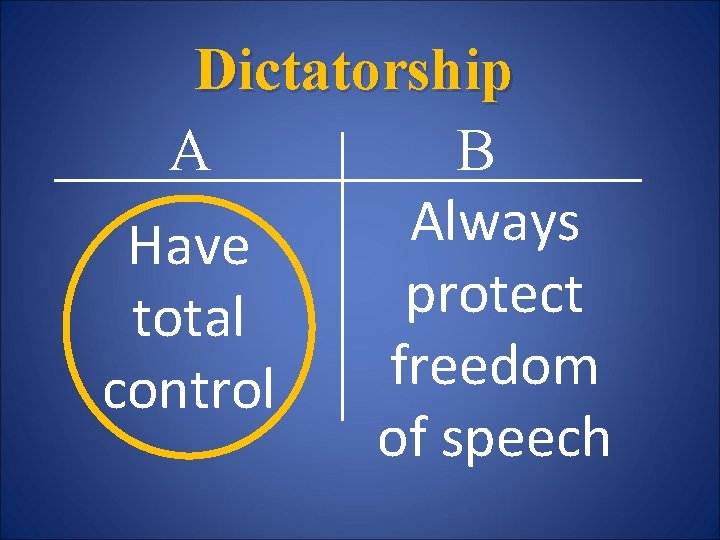
Dictatorship v. In a dictatorship, power is not inherited, but is acquired by force (military or political) v. Dictators have absolute control over the lives of their citizens and usually people are not allowed to voice their negative opinions v. Authoritarian: v. Totalitarian
Dictatorship • Authoritarian: one person or small groups that is not constitutionally accountable to the people and individual freedom is completely subordinate to the state – Example: Spain under Franco • Totalitarian: state holds total authority over the society and seeks to control all aspects of public and private life wherever possible – Example: Mussolini; North Korea
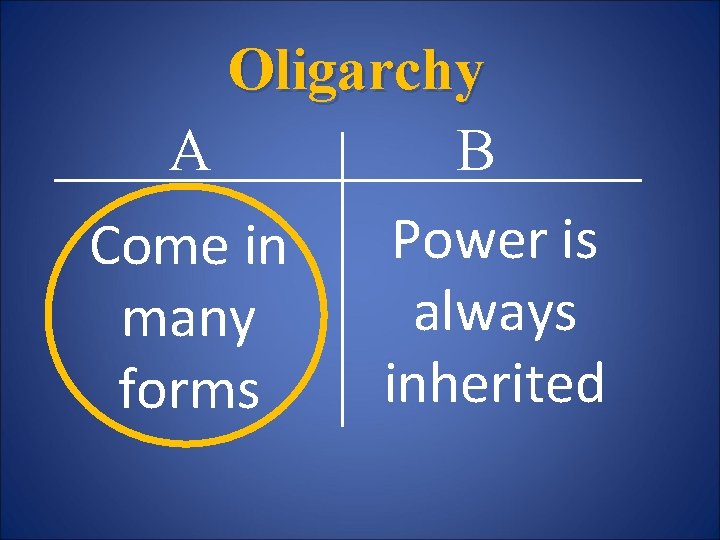
Oligarchy v “Rule by few” v. Power can be based on several things: üMilitary strength = Military Junta üFamily power = Aristocracy üReligious control = Theocratic Oligarchy v Oligarchies can often come from or lead to other forms of government (like autocracies)
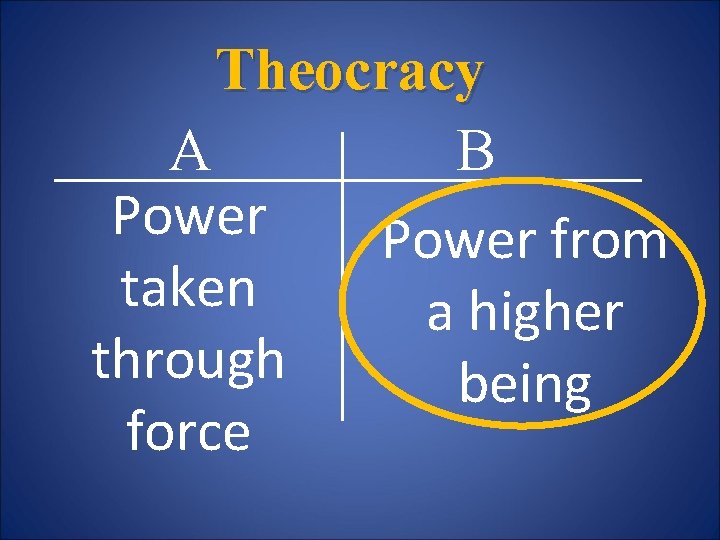
Theocracy v“Theo” means “god” in Greek… so if a government is THEO-cratic that means it is ruled by… That’s right! A god or higher power! v. Leaders (autocratic or oligarchic ) are usually religious leaders and society uses religious law to settle its disputes v. Example: The Islamic Republic of Iran is a modern theocracy that uses the holy Islamic book, The Qur’an, as its guide.
WHO HAS THE POWER?
UNITARY SYSTEM • Central government holds all legal power • Local government has no independent power – Carries out decisions made by the central government
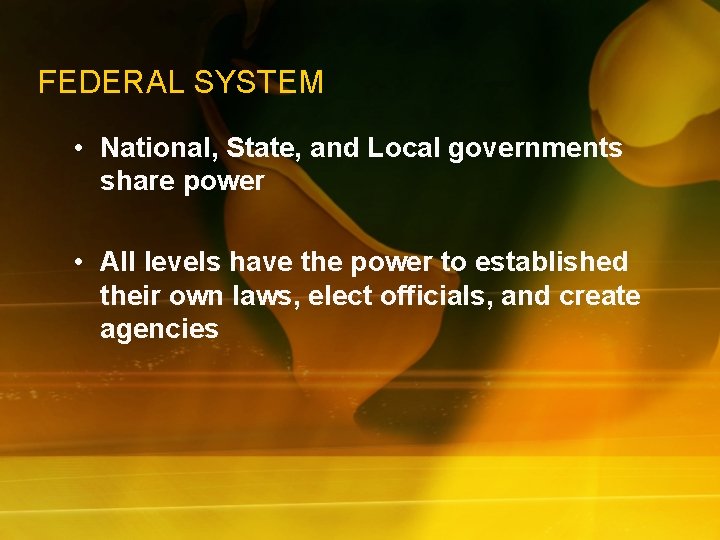
FEDERAL SYSTEM • National, State, and Local governments share power • All levels have the power to established their own laws, elect officials, and create agencies
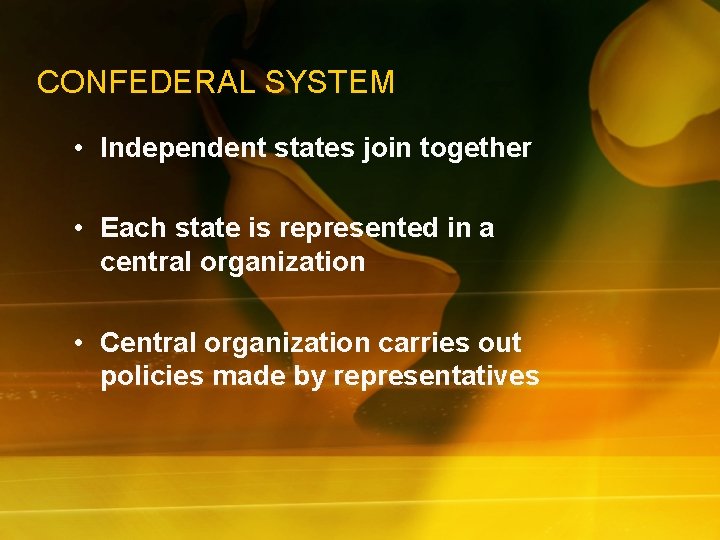
CONFEDERAL SYSTEM • Independent states join together • Each state is represented in a central organization • Central organization carries out policies made by representatives
WHEW! We had better review… Time for some “A or B!”
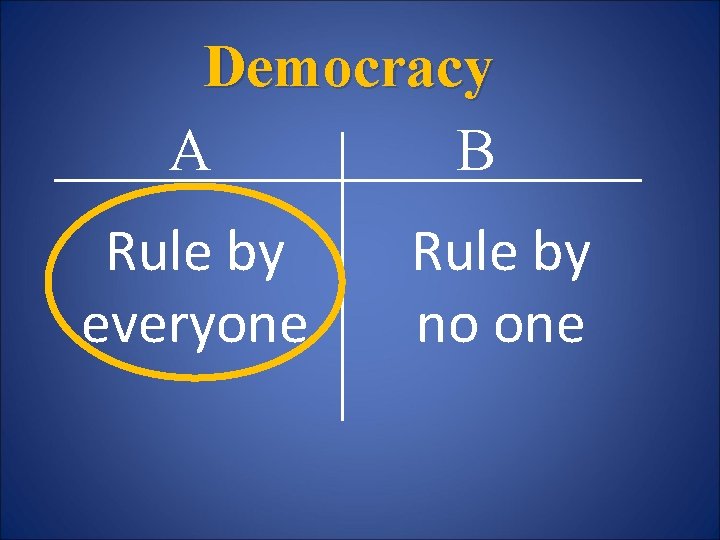
Democracy A B Rule by everyone Rule by no one
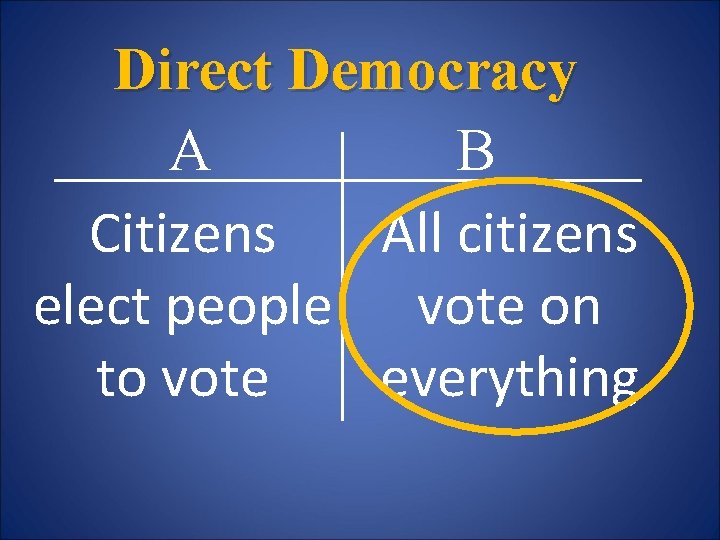
Direct Democracy A B Citizens All citizens elect people vote on to vote everything
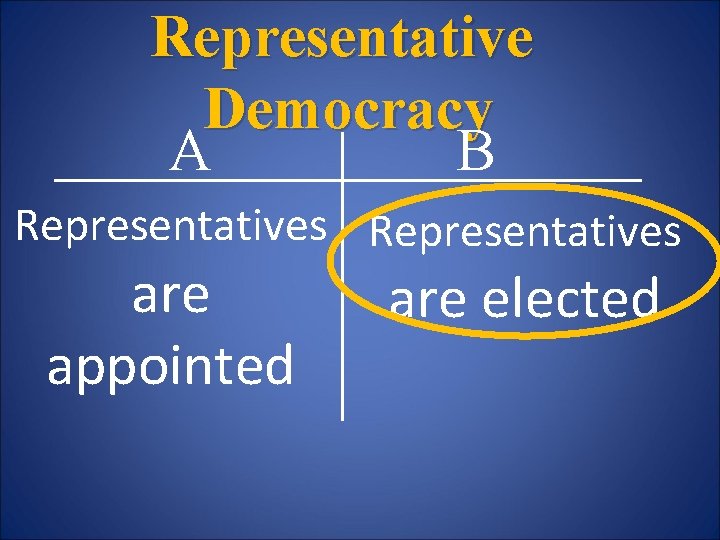
Representative Democracy A B Representatives are appointed are elected
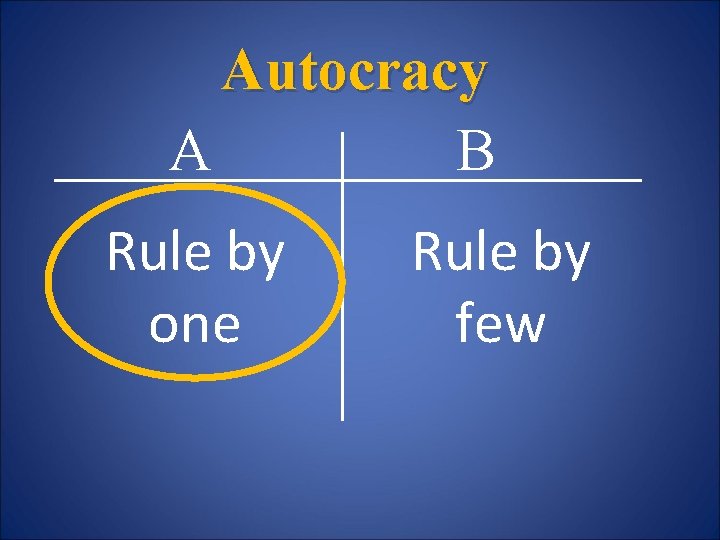
Autocracy A B Rule by one Rule by few
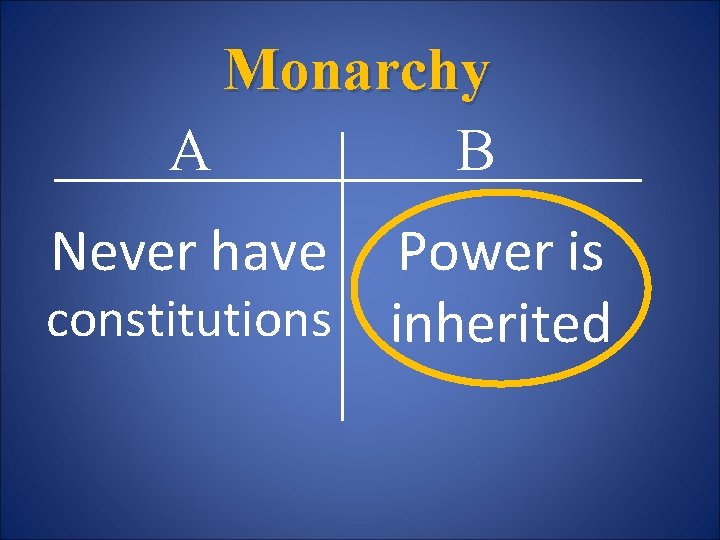
Monarchy A B Never have Power is constitutions inherited
Dictatorship A B Always Have protect total freedom control of speech
Oligarchy A B Power is Come in always many inherited forms
Theocracy A B Power from taken a higher through being force
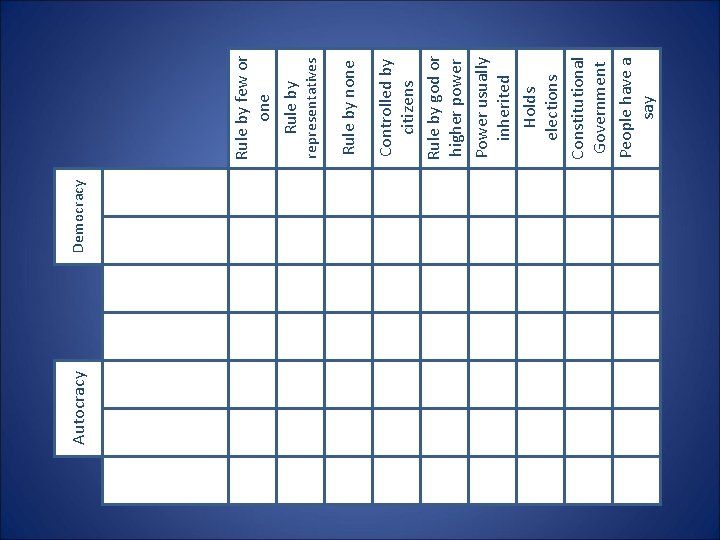
Autocracy Democracy Controlled by citizens Rule by god or higher power Power usually inherited Holds elections Constitutional Government People have a say Rule by none representatives Rule by few or one