
COMPANY LOGO HERE COMPNAY NAME HERE Training for

- Slides: 32
COMPANY LOGO HERE COMPNAY NAME HERE Training for Affected Employees
Defining Affected Employees • OSHA defines an affected employee as “An employee whose job requires him/her to operate or use a machine or equipment on which servicing or maintenance is being performed under lockout or tagout, or whose job requires him/her to work in an area in which such servicing or maintenance is being performed. ” 2
Defining Affected Employees • Affected employees do not perform Lockout/Procedures. • Affected employees receive annual training on the company’s overall Lockout/Tagout program; however, the training does not include the actual Lockout/Tagout procedures for individual machines as affected employees are not authorized to perform these procedures. 3
Defining Affected Employees • An affected employee will become an authorized employee if that employee’s duties evolve to include performing servicing or maintenance on a machine or piece or equipment. 4
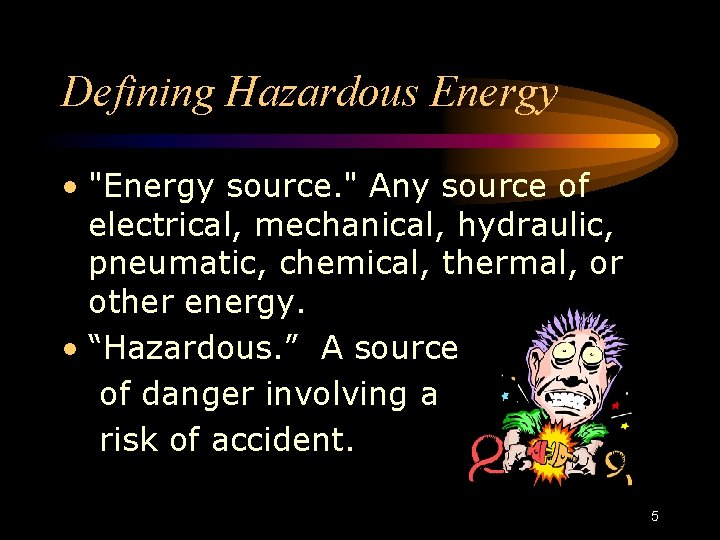
Defining Hazardous Energy • "Energy source. " Any source of electrical, mechanical, hydraulic, pneumatic, chemical, thermal, or other energy. • “Hazardous. ” A source of danger involving a risk of accident. 5
Lockout/Tagout Overview Workers performing service or maintenance on equipment may be exposed to injuries from the unexpected startup of a machine or piece of equipment. 6
Lockout/Tagout Overview The Lockout/Tagout standard requires the implementation of practices and procedures to shut down equipment under certain circumstances. 7
What Activities are Covered? Any servicing and/or maintenance of a machine or equipment when the source of energy to the equipment is electrical, mechanical, hydraulic, pneumatic, chemical, thermal, or other type of energy. 8
What Activities Are Covered? Installing, maintaining and/or servicing equipment. . 9
What Activities Are Covered? . . . including adjustments, cleaning or unjamming where employees could be exposed to the unexpected energization or startup of the equipment. 10
What is the Purpose? To prevent injury to employees
Why Must Employees be Trained? To understand the purpose and function of the energy control program (lockout/tagout program)
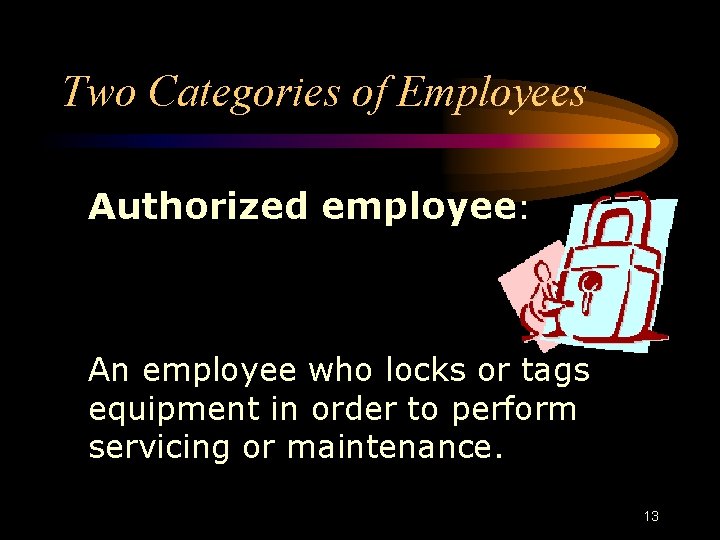
Two Categories of Employees Authorized employee: An employee who locks or tags equipment in order to perform servicing or maintenance. 13
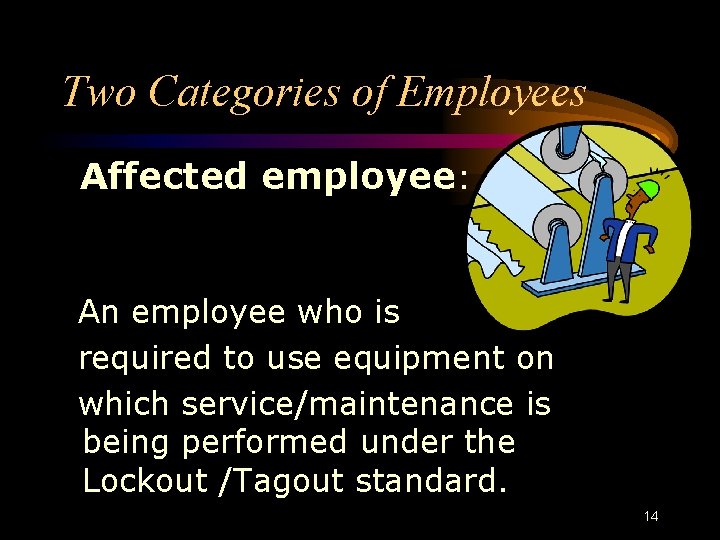
Two Categories of Employees Affected employee: An employee who is required to use equipment on which service/maintenance is being performed under the Lockout /Tagout standard. 14
Tags & Lockout Devices 15
Lockout Device A device that utilizes a positive means such as a lock, either key or combination type, to hold an energy isolating device in the safe position and prevent the energizing of a machine or equipment. 16
Tags are warning devices affixed to a machine or equipment but do not provide the physical restraint provided by a lockout device.
Tags There are two kinds of tags: - Warning Tags - Danger Tags 18
Tags Warning Tags: used in conjunction with lockout actions to inform affected employees that a machine or piece of equipment has been locked out for servicing and or maintenance and that the machine or piece of equipment must not be energized. 19
Tags Danger Tags: used in conjunction with tagout actions to inform affected employees that a machine or piece of equipment has been tagged out for servicing and or maintenance and that the machine or piece of equipment must not be energized. 20
Tags Warning tags used in conjunction with lockout actions must be standardized and identifiable from danger tags used in conjunction with tagout actions. 21
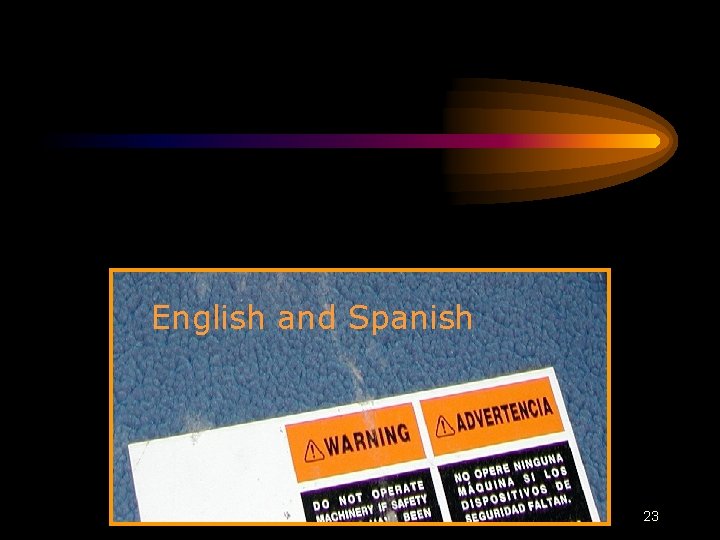
Tags & Lockout Devices Tags and lockout devices must be legible and understandable by all employees. If you have Spanishspeaking employees, ensure that the tags and lockout devices are in Spanish as well as English.
English and Spanish 23
Tags & Lockout Devices Tags and lockout devices must be made of materials which will withstand the environmental conditions encountered in the workplace.
Tags & Lockout Devices Tags and lockout devices must be securely attached to equipment so that they cannot be accidentally detached
Tags & Lockout Devices (If possible, insert a photo of a properly constructed and labeled tag and/or lockout device used by your company and properly attached to a machine or piece of equipment used in your operation. This will provide the employee in training with a visual aid in understanding the purpose and effective use of tags and lockout devices. ) 26
Tags & Lockout Devices When a tag or lockout device is attached to equipment, it is not to be removed without authorization and it is never to be bypassed, ignored.
Tags & Lockout Devices • Tags and lockout devices may only be removed by the authorized employee who applied them in the first place. • Affected employees should never remove tags or lockout devices from machine or equipment. 28
Tags & Lockout Devices If your assigned piece of machinery has a tag or lockout device attached to it, you should:
Tags & Lockout Devices • You should NOT. . . attempt to touch, energize, or start that machine or piece of equipment • You should. . . immediately find your supervisor for instructions 30
Knowledge Review 31
CONGRATULATIONS 32