
COMP 430 Intro to Database Systems Design Patterns

COMP 430 Intro. to Database Systems Design Patterns
Design patterns from a practical viewpoint Most of these ideas previously mentioned in modeling examples.
Special uses of one-to-many
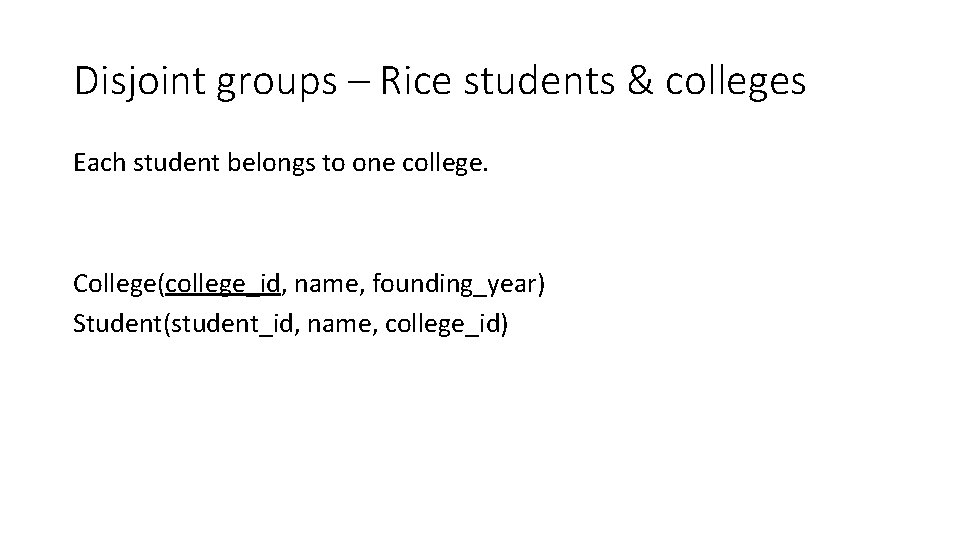
Disjoint groups – Rice students & colleges Each student belongs to one college. College(college_id, name, founding_year) Student(student_id, name, college_id)
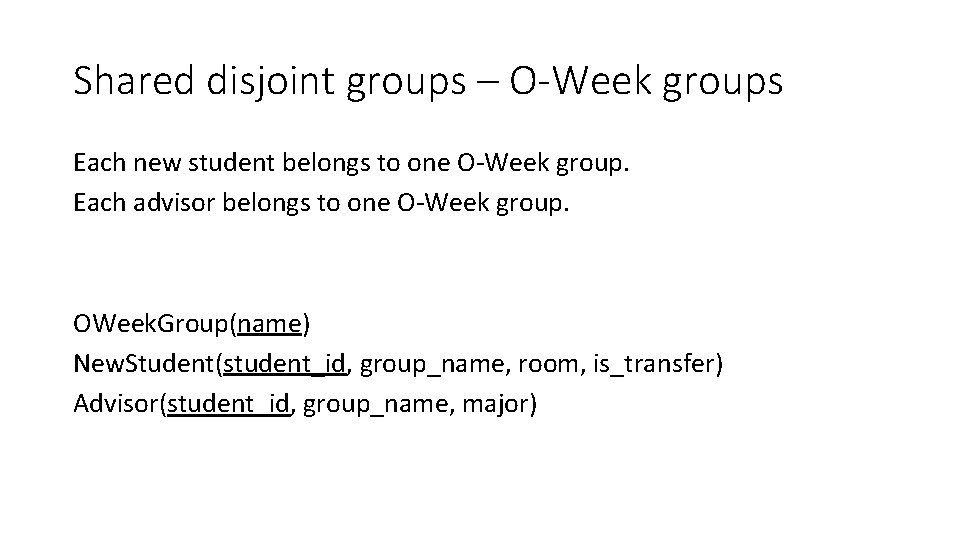
Shared disjoint groups – O-Week groups Each new student belongs to one O-Week group. Each advisor belongs to one O-Week group. OWeek. Group(name) New. Student(student_id, group_name, room, is_transfer) Advisor(student_id, group_name, major)
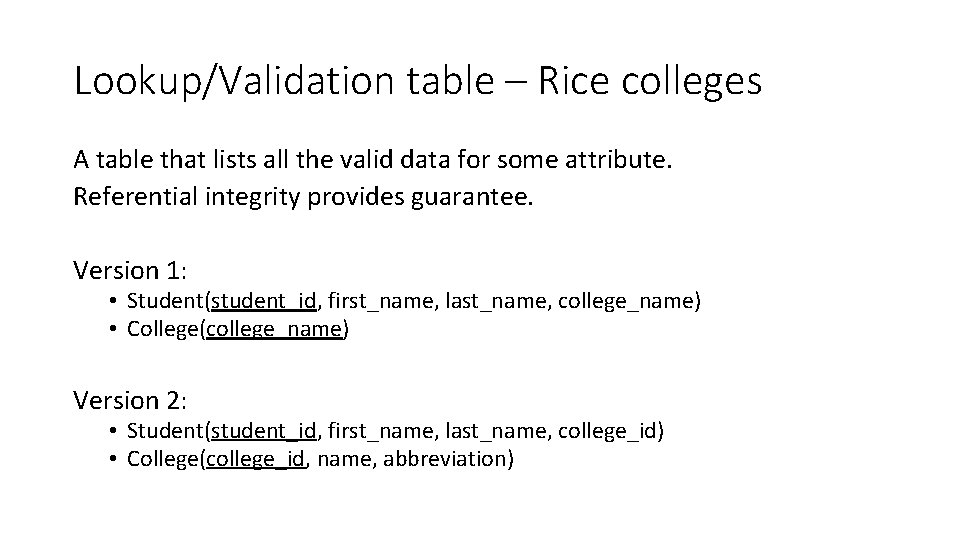
Lookup/Validation table – Rice colleges A table that lists all the valid data for some attribute. Referential integrity provides guarantee. Version 1: • Student(student_id, first_name, last_name, college_name) • College(college_name) Version 2: • Student(student_id, first_name, last_name, college_id) • College(college_id, name, abbreviation)
Common many-to-many variants
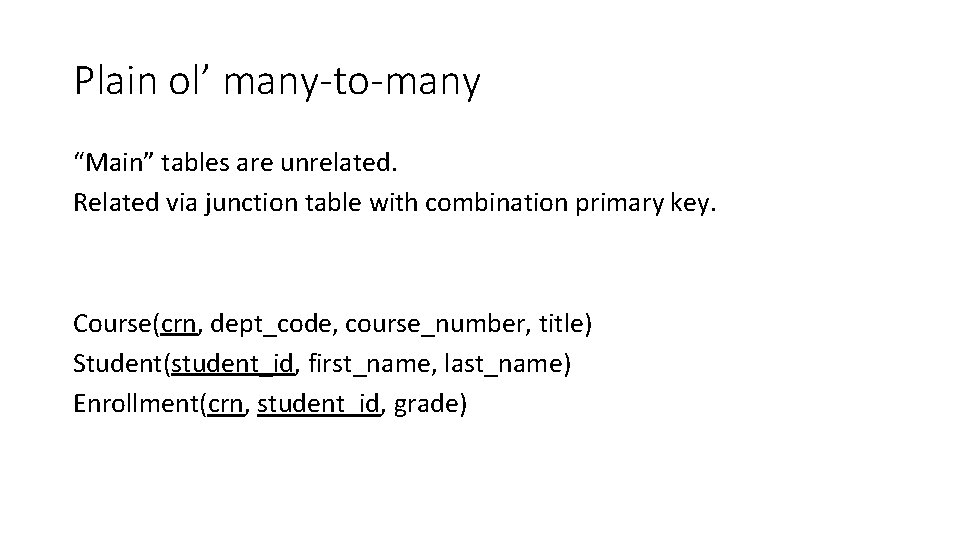
Plain ol’ many-to-many “Main” tables are unrelated. Related via junction table with combination primary key. Course(crn, dept_code, course_number, title) Student(student_id, first_name, last_name) Enrollment(crn, student_id, grade)
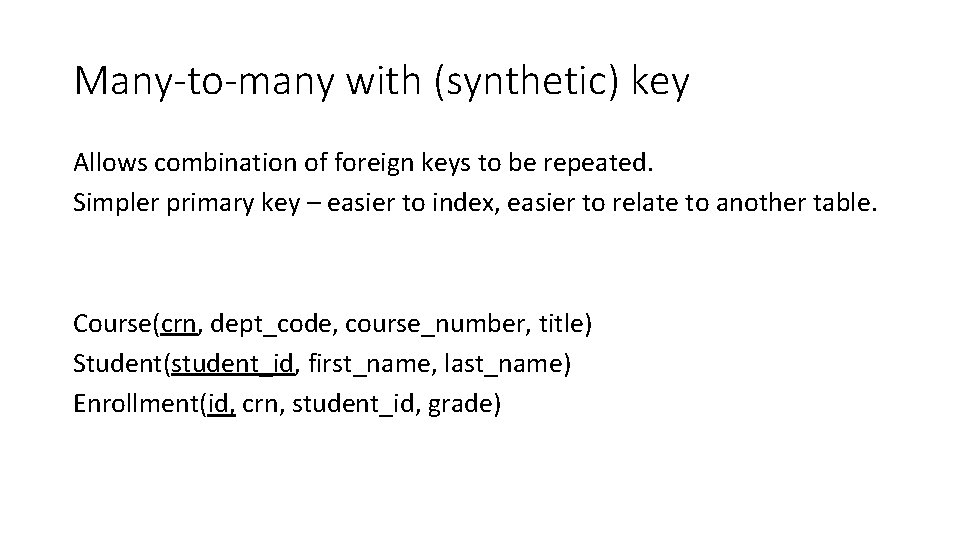
Many-to-many with (synthetic) key Allows combination of foreign keys to be repeated. Simpler primary key – easier to index, easier to relate to another table. Course(crn, dept_code, course_number, title) Student(student_id, first_name, last_name) Enrollment(id, crn, student_id, grade)
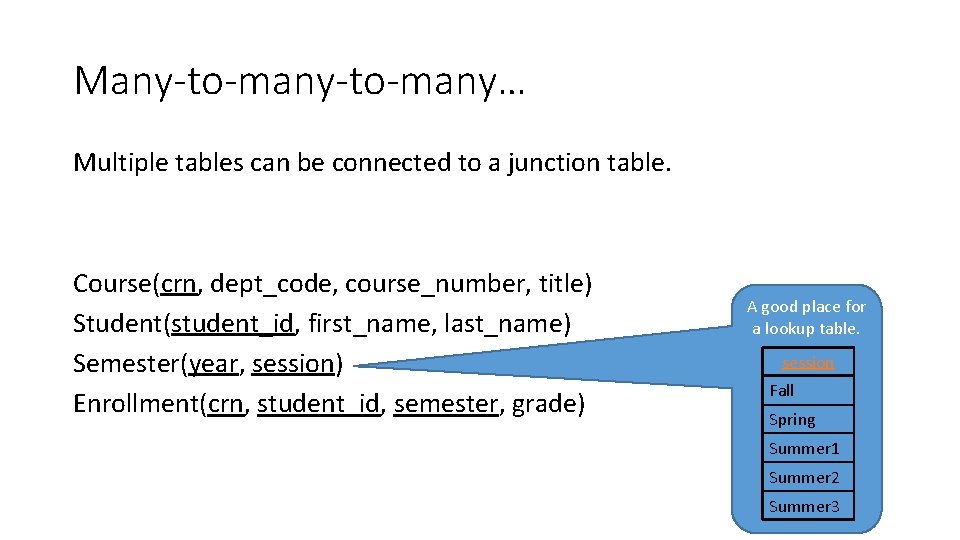
Many-to-many… Multiple tables can be connected to a junction table. Course(crn, dept_code, course_number, title) Student(student_id, first_name, last_name) Semester(year, session) Enrollment(crn, student_id, semester, grade) A good place for a lookup table. session Fall Spring Summer 1 Summer 2 Summer 3
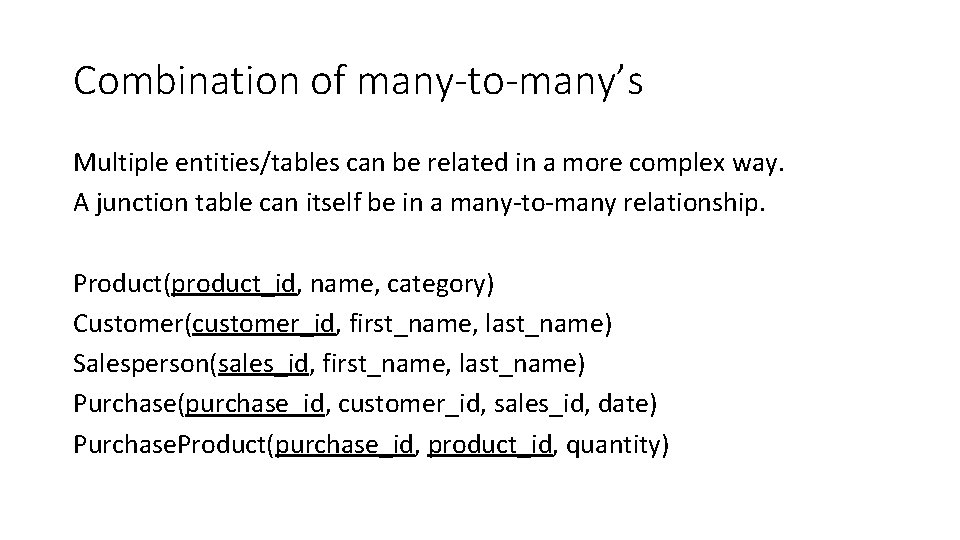
Combination of many-to-many’s Multiple entities/tables can be related in a more complex way. A junction table can itself be in a many-to-many relationship. Product(product_id, name, category) Customer(customer_id, first_name, last_name) Salesperson(sales_id, first_name, last_name) Purchase(purchase_id, customer_id, sales_id, date) Purchase. Product(purchase_id, product_id, quantity)
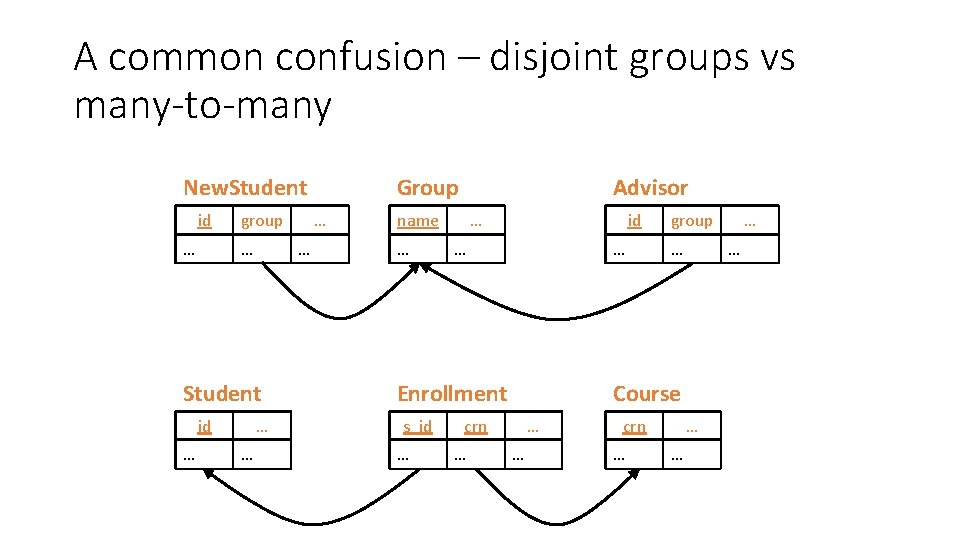
A common confusion – disjoint groups vs many-to-many Group New. Student id … group … … Student id … … Advisor name … … id … … Enrollment s_id … … crn … … … Course crn … group
- Slides: 12