
Communitybased NCD prevention 40 years experience in Finland
Community-based NCD prevention - 40 years experience in Finland Pekka Jousilahti, Research Professor National Institute for Health and Welfare 14/02/2022 1
GLOBAL PUBLIC HEALTH IN TRANSITION Chronic diseases – especially cardiovascular diseases ØLeading health problem in industrialized countries ØMain killers and rapidly growing problem in developing countries 14/02/2022 2
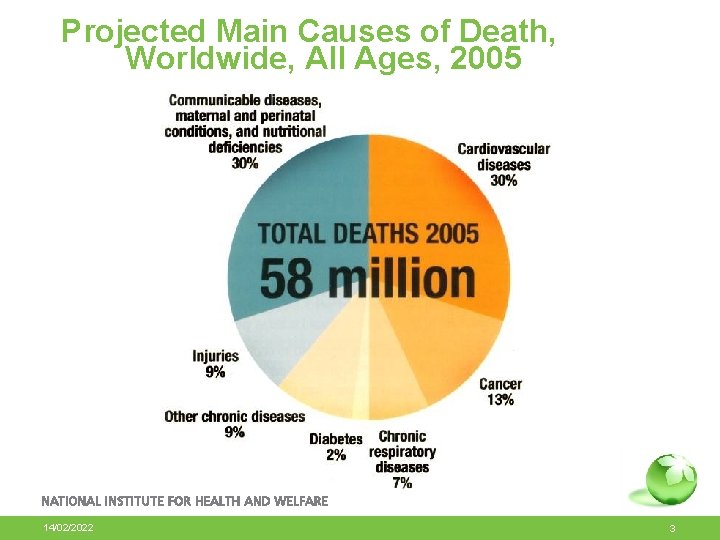
Projected Main Causes of Death, Worldwide, All Ages, 2005 14/02/2022 3
14/02/2022 4
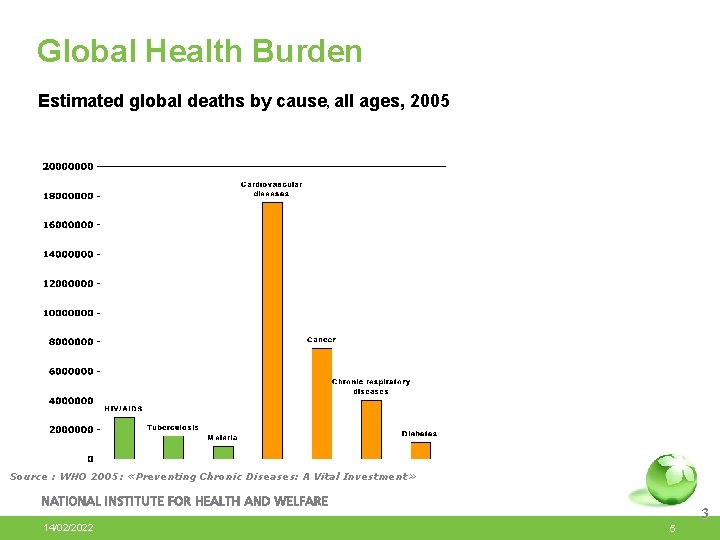
Global Health Burden Estimated global deaths by cause, all ages, 2005 Source : WHO 2005: «Preventing Chronic Diseases: A Vital Investment» 3 14/02/2022 5
CVDS ARE TO A GREAT EXTENT PREVENTABLE DISEASES Ø Medical evidence for prevention exists. Ø Population-based prevention is the most costeffective and the only affordable option for major public health improvement in CVD rates. Ø Major changes in population rates can take place in a surprisingly short time. 14/02/2022 6
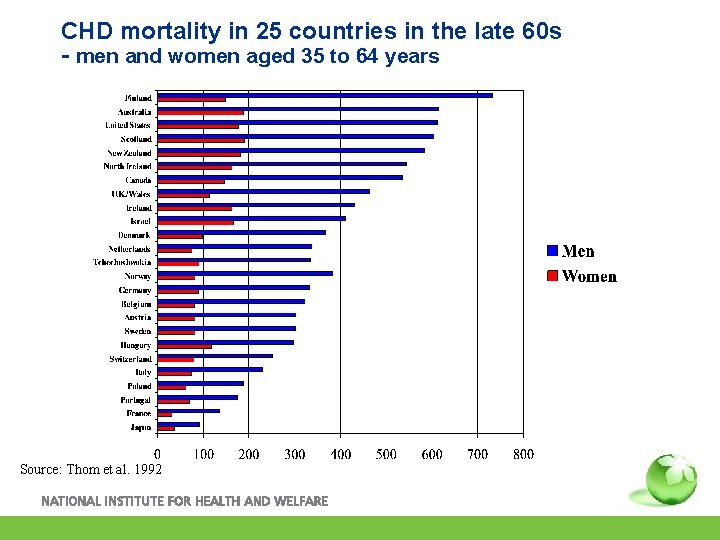
CHD mortality in 25 countries in the late 60 s - men and women aged 35 to 64 years Source: Thom et al. 1992
5
Prevention targets the population levels of most important risk factors. 14/02/2022 9
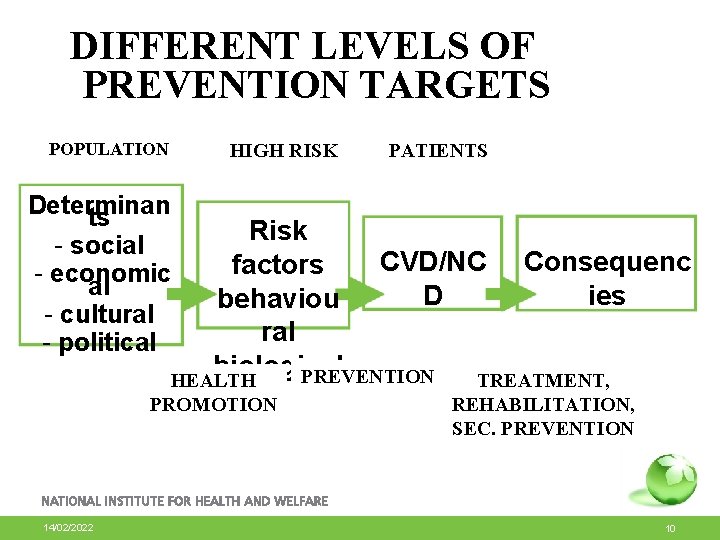
DIFFERENT LEVELS OF PREVENTION TARGETS POPULATION HIGH RISK PATIENTS Determinan ts - social - economic al Risk CVD/NC Consequenc factors ies D behaviou - cultural - political biological PREVENTION HEALTH TREATMENT, PROMOTION 14/02/2022 REHABILITATION, SEC. PREVENTION 10
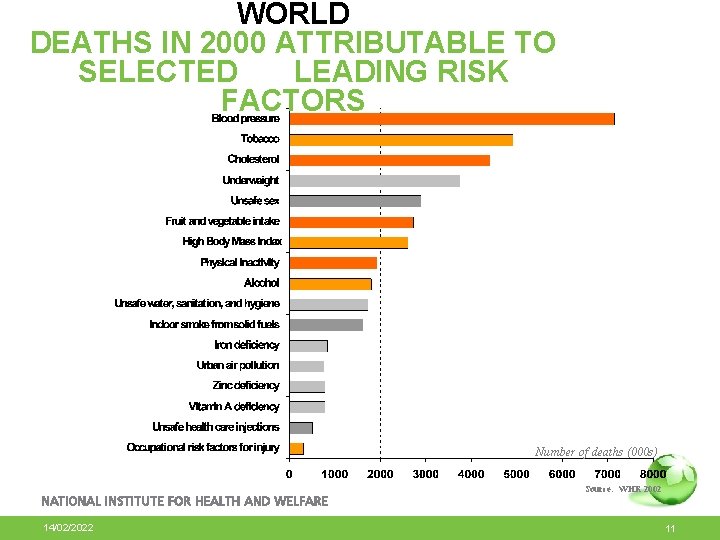
WORLD DEATHS IN 2000 ATTRIBUTABLE TO SELECTED LEADING RISK FACTORS Number of deaths (000 s) Source: WHR 2002 14/02/2022 11
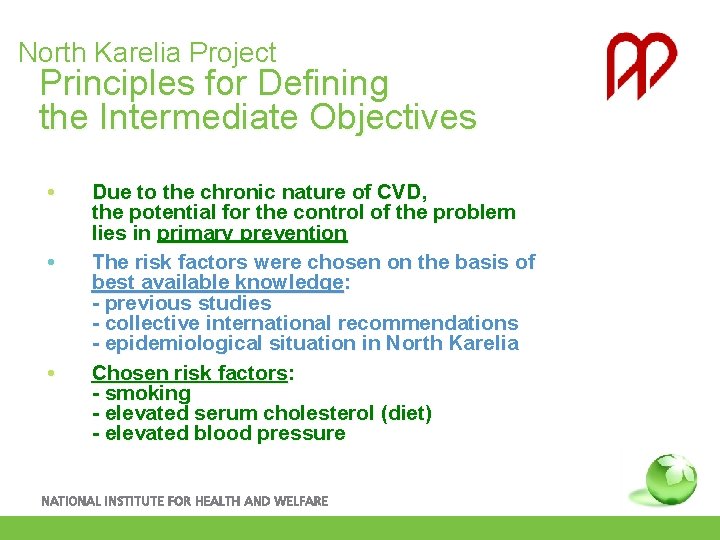
North Karelia Project Principles for Defining the Intermediate Objectives • • • Due to the chronic nature of CVD, the potential for the control of the problem lies in primary prevention The risk factors were chosen on the basis of best available knowledge: - previous studies - collective international recommendations - epidemiological situation in North Karelia Chosen risk factors: - smoking - elevated serum cholesterol (diet) - elevated blood pressure
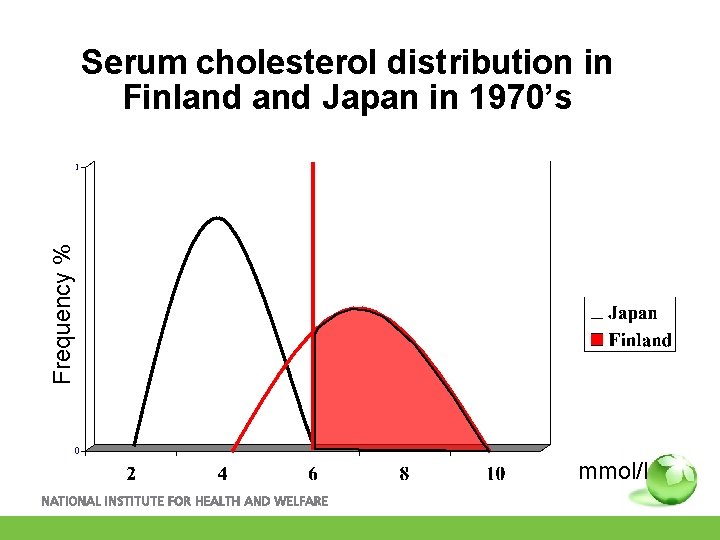
Frequency % Serum cholesterol distribution in Finland Japan in 1970’s mmol/l
Main Principles of the North Karelia Project • Prevention is the only sustainable public health approach • Risk factors identified by prospective studies, closely linked with certain behaviours - deeply enrooted in the community • Community based preventive programme 1 Target: the community (not individuals) 2 Intervention: through community structures (not external intervention) • Emphasis on community organization, general community changes
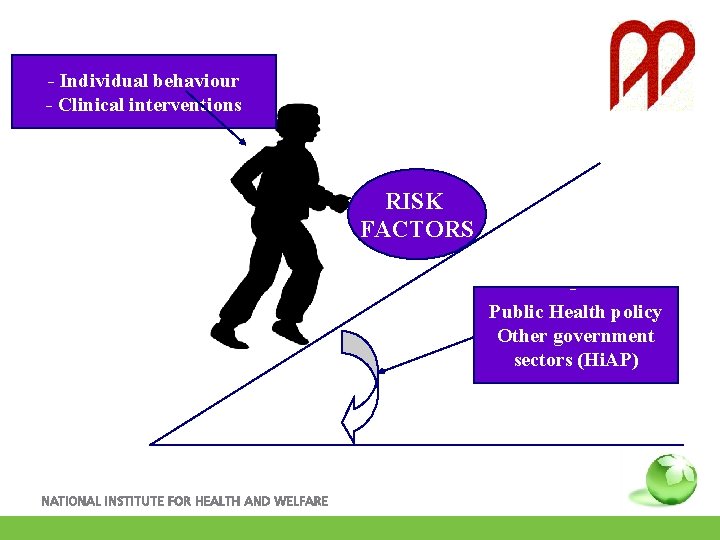
COMBING PERSONAL AND PUBLIC RESPONSIBILITIES ØPersonal Responsibility ”Nobody can take better care of your health than yourself” ØPublic Responsibility ”Make the healthy choices the easy ones” (Ottawa declaration) 14/02/2022 15
- Individual behaviour - Clinical interventions RISK FACTORS Public Health policy Other government sectors (Hi. AP)
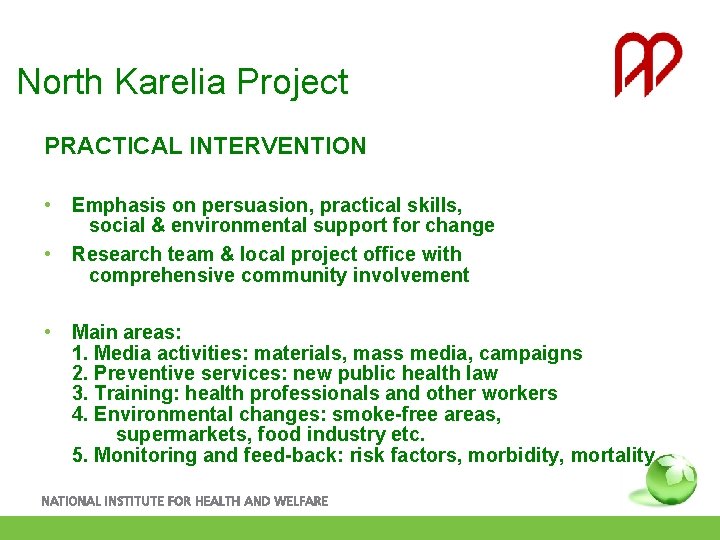
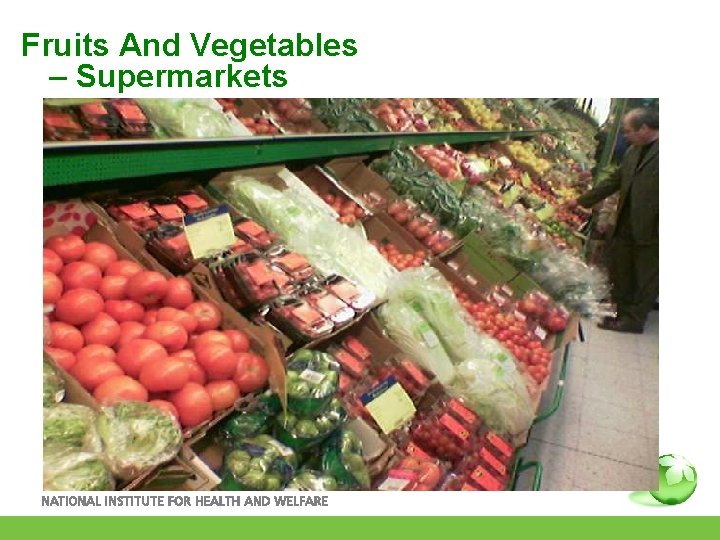
North Karelia Project PRACTICAL INTERVENTION • • • Emphasis on persuasion, practical skills, social & environmental support for change Research team & local project office with comprehensive community involvement Main areas: 1. Media activities: materials, mass media, campaigns 2. Preventive services: new public health law 3. Training: health professionals and other workers 4. Environmental changes: smoke-free areas, supermarkets, food industry etc. 5. Monitoring and feed-back: risk factors, morbidity, mortality
Cardiovascular disease Action Plan for Promoting Finnish Heart Health
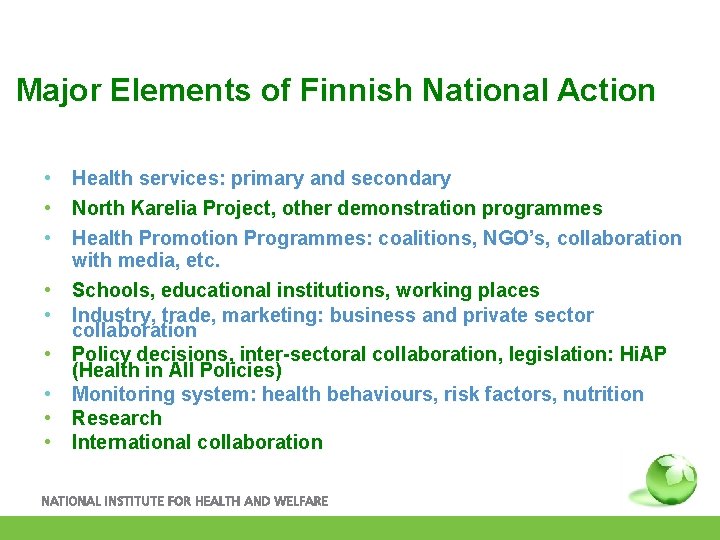
Major Elements of Finnish National Action • Health services: primary and secondary • North Karelia Project, other demonstration programmes • Health Promotion Programmes: coalitions, NGO’s, collaboration with media, etc. • Schools, educational institutions, working places • Industry, trade, marketing: business and private sector collaboration • Policy decisions, inter-sectoral collaboration, legislation: Hi. AP (Health in All Policies) • Monitoring system: health behaviours, risk factors, nutrition • Research • International collaboration
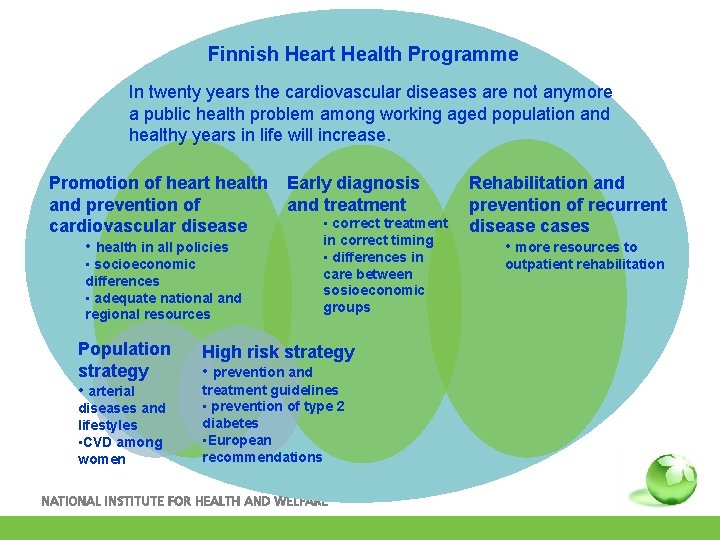
Finnish Heart Health Programme In twenty years the cardiovascular diseases are not anymore a public health problem among working aged population and healthy years in life will increase. Promotion of heart health and prevention of cardiovascular disease Early diagnosis and treatment • health in all policies • socioeconomic differences • adequate national and regional resources • correct treatment in correct timing • differences in care between sosioeconomic groups Population strategy High risk strategy • arterial treatment guidelines • prevention of type 2 diabetes • European recommendations diseases and lifestyles • CVD among women • prevention and Rehabilitation and prevention of recurrent disease cases • more resources to outpatient rehabilitation
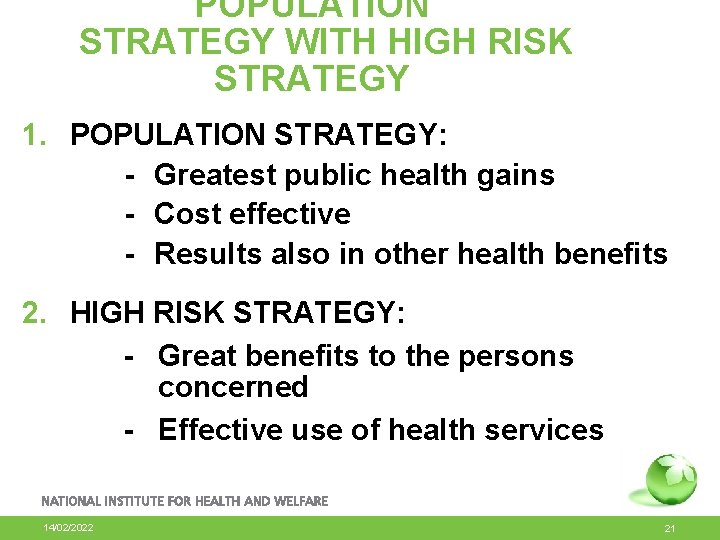
POPULATION STRATEGY WITH HIGH RISK STRATEGY 1. POPULATION STRATEGY: - Greatest public health gains - Cost effective - Results also in other health benefits 2. HIGH RISK STRATEGY: - Great benefits to the persons concerned - Effective use of health services 14/02/2022 21
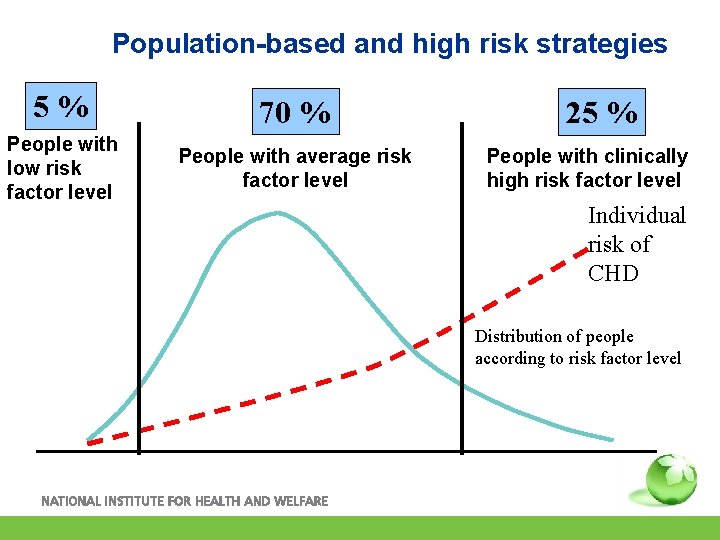
Population-based and high risk strategies 5% 70 % People with low risk factor level People with average risk factor level 25 % People with clinically high risk factor level Individual risk of CHD Distribution of people according to risk factor level
LIFESTYLES AND RISK FACTORS CAN CHANGE! 14/02/2022 23
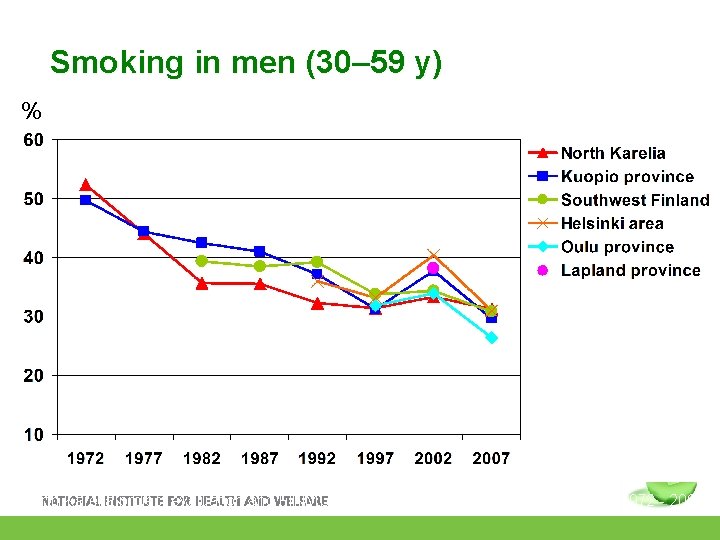
Smoking in men (30– (30 59 y) % North Karelia project evaluation and FINMONICA and the National FINRISK Studies 1972 - 2007
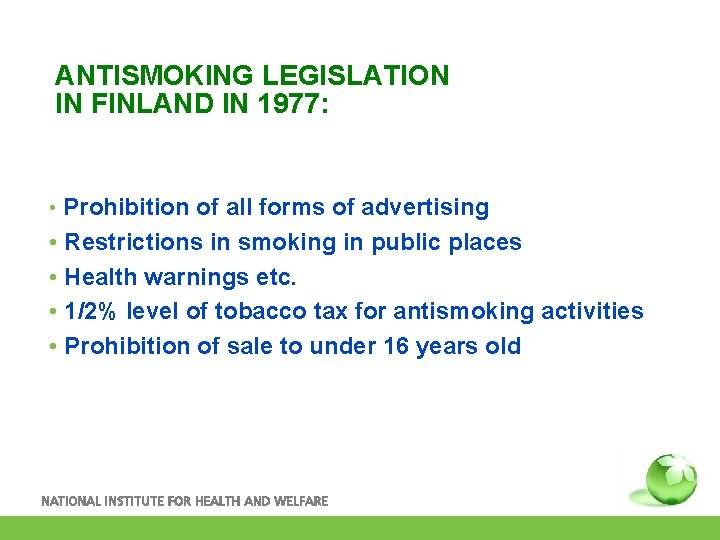
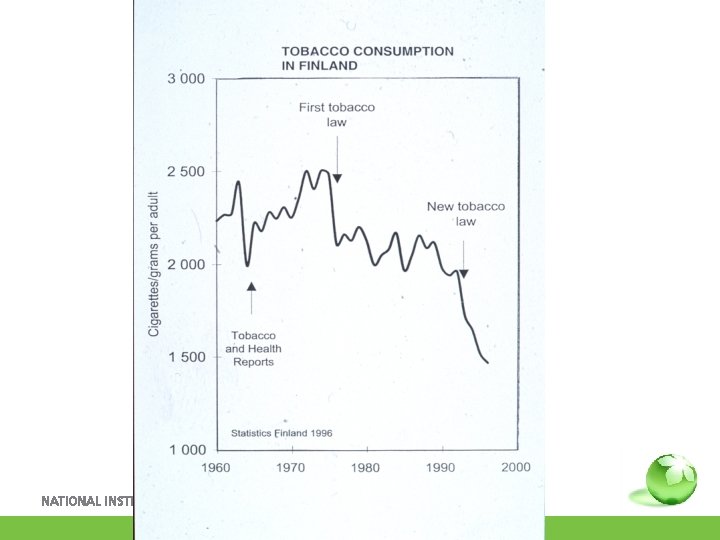
ANTISMOKING LEGISLATION IN FINLAND IN 1977: • Prohibition of all forms of advertising • Restrictions in smoking in public places • Health warnings etc. • 1/2% level of tobacco tax for antismoking activities • Prohibition of sale to under 16 years old
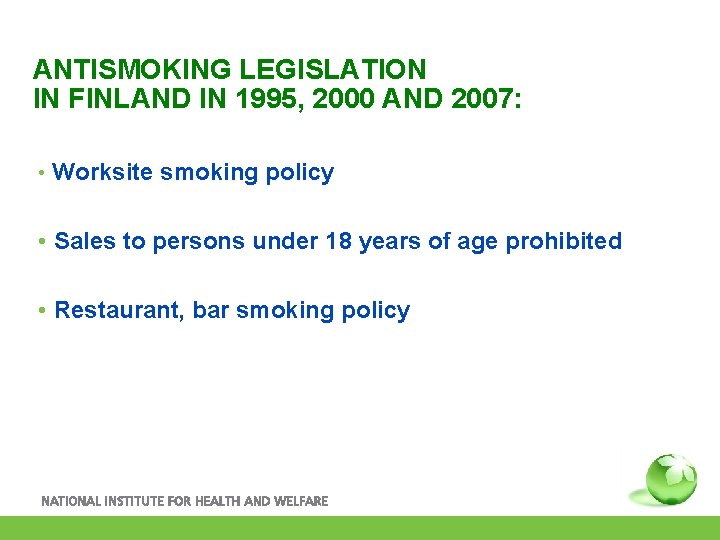
ANTISMOKING LEGISLATION IN FINLAND IN 1995, 2000 AND 2007: • Worksite smoking policy • Sales to persons under 18 years of age prohibited • Restaurant, bar smoking policy
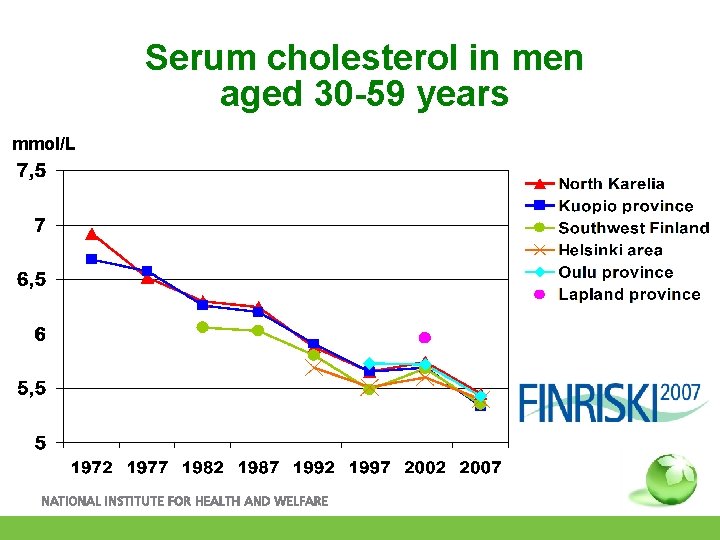
Serum cholesterol in men aged 30 -59 years mmol/L
Fruits And Vegetables – Supermarkets
www. sydanmerkki. fi
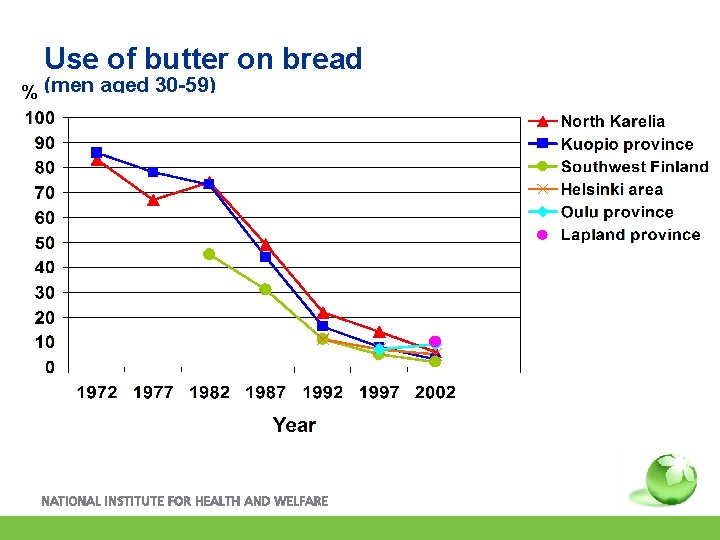
Use of butter on bread % (men aged 30 -59)
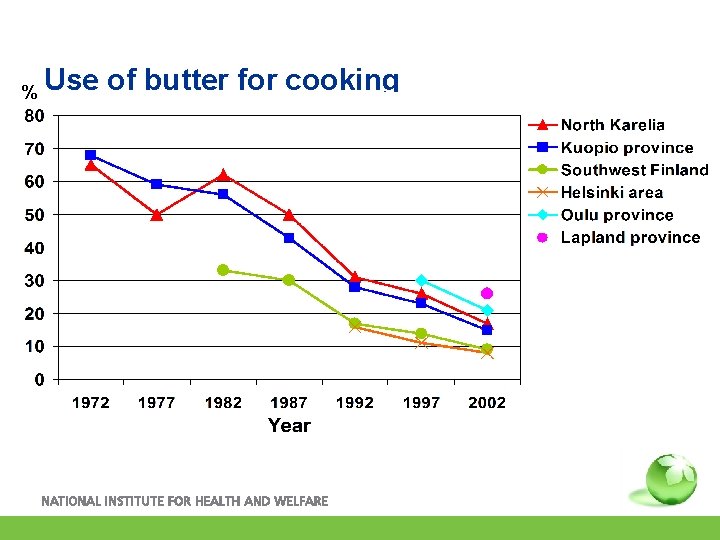
% Use of butter for cooking
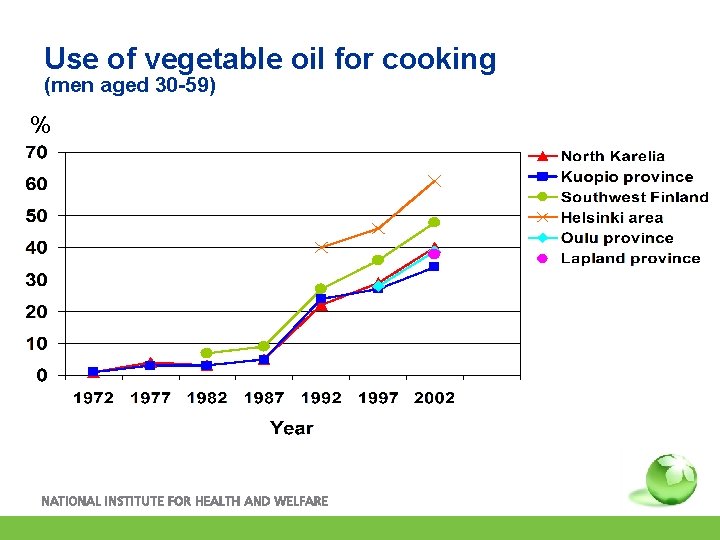
Use of vegetable oil for cooking (men aged 30 -59) %
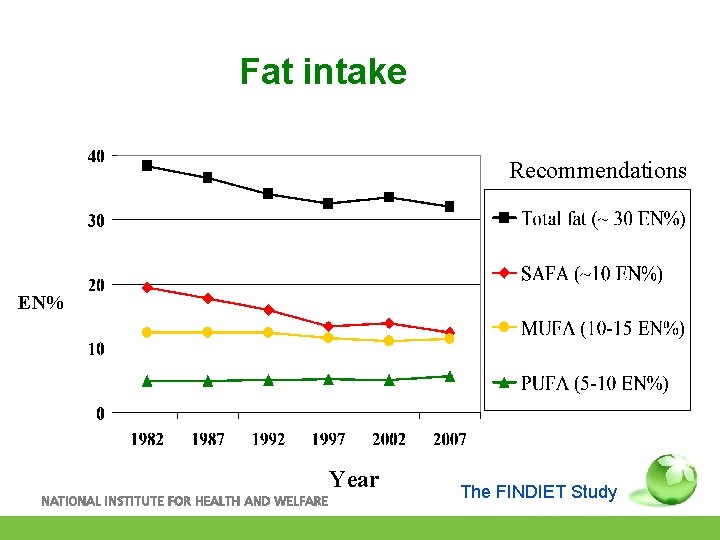
Fat intake Recommendations EN% Year The FINDIET Study
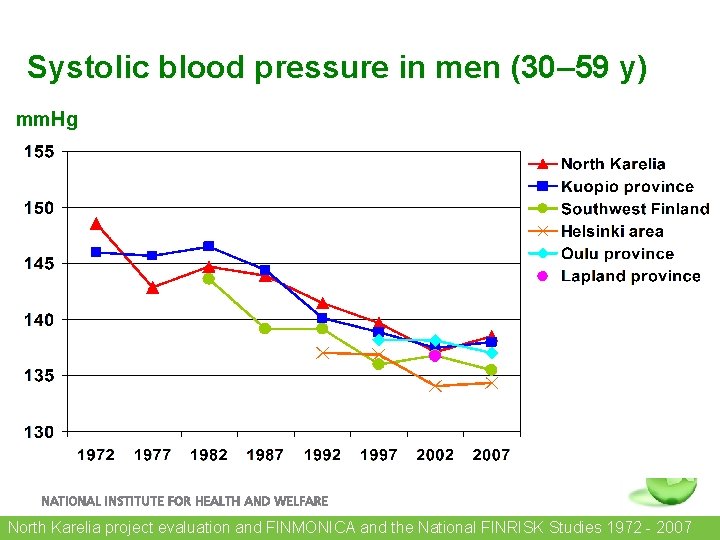
Systolic blood pressure in men (30– (30 59 y) mm. Hg North Karelia project evaluation and FINMONICA and the National FINRISK Studies 1972 - 2007
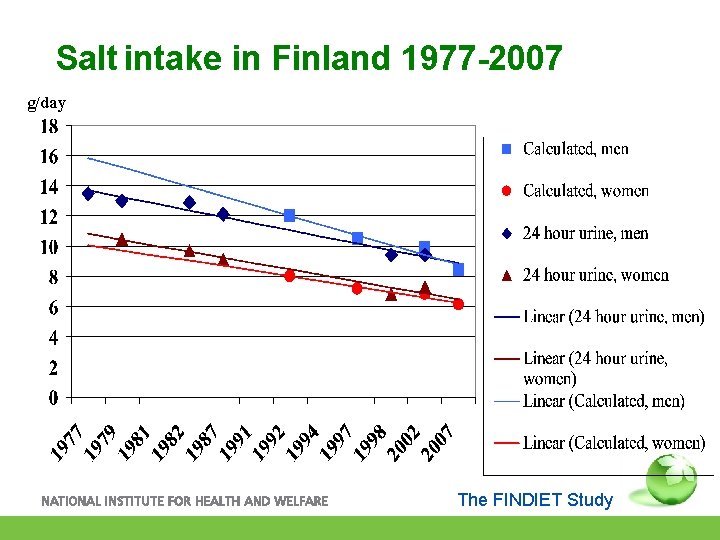
Salt intake in Finland 1977 -2007 g/day The FINDIET Study
Morbidity and mortality changes follow risk factor change! 14/02/2022 38
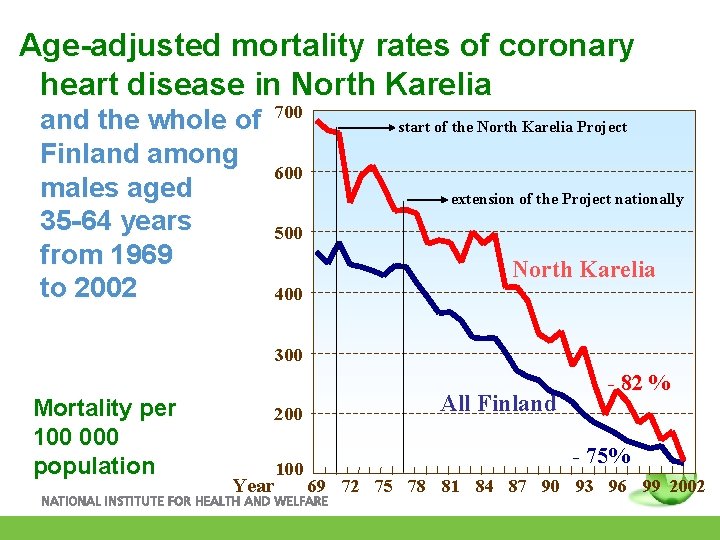
Age-adjusted mortality rates of coronary heart disease in North Karelia and the whole of Finland among males aged 35 -64 years from 1969 to 2002 700 start of the North Karelia Project 600 extension of the Project nationally 500 400 North Karelia 300 Mortality per 100 000 population 200 100 Year All Finland - 82 % - 75% 69 72 75 78 81 84 87 90 93 96 99 2002
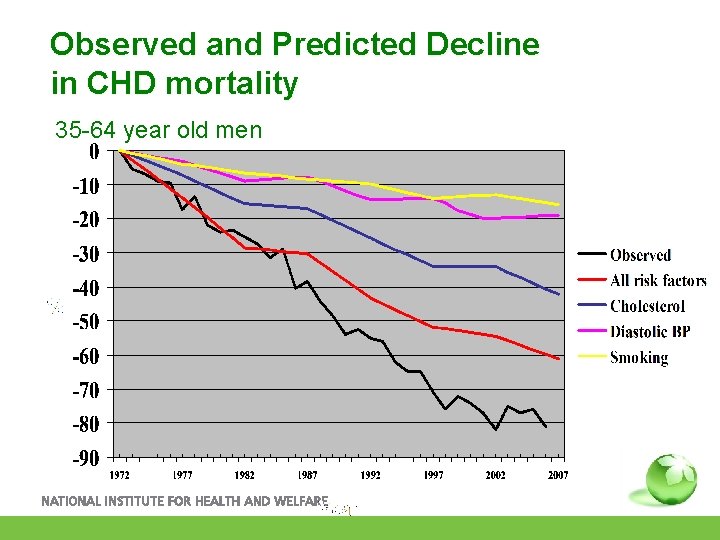
Observed and Predicted Decline in CHD mortality 35 -64 year old men
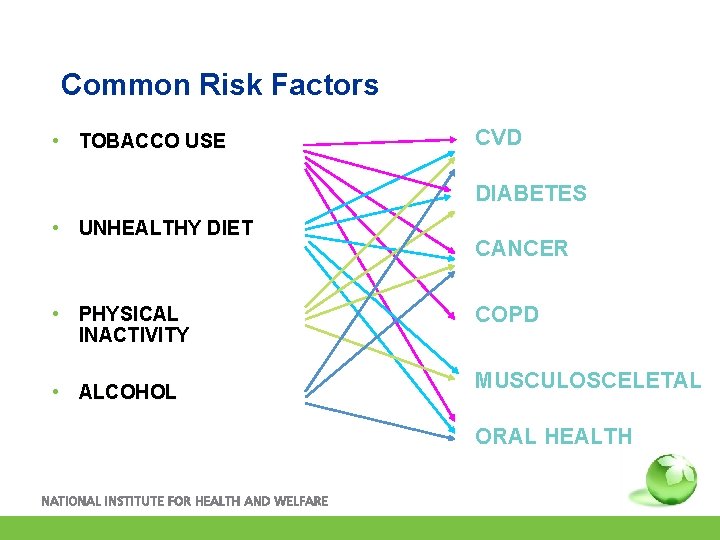
Common Risk Factors • TOBACCO USE CVD DIABETES • UNHEALTHY DIET • PHYSICAL INACTIVITY • ALCOHOL CANCER COPD MUSCULOSCELETAL ORAL HEALTH
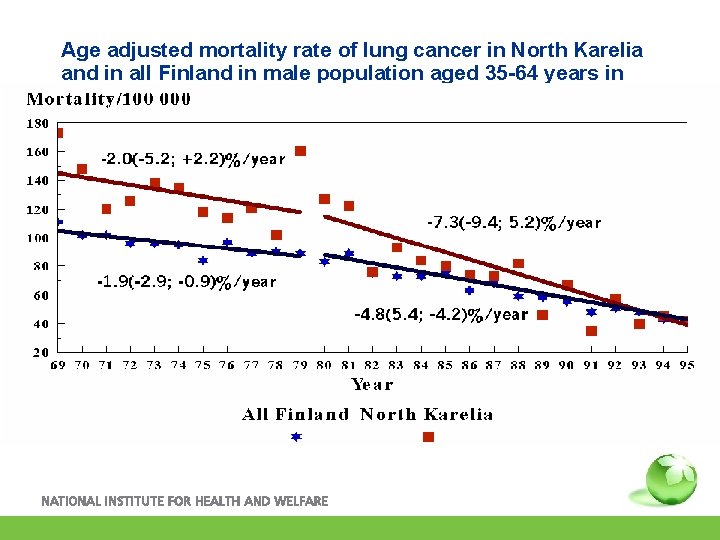
Age adjusted mortality rate of lung cancer in North Karelia and in all Finland in male population aged 35 -64 years in 1969 -1995
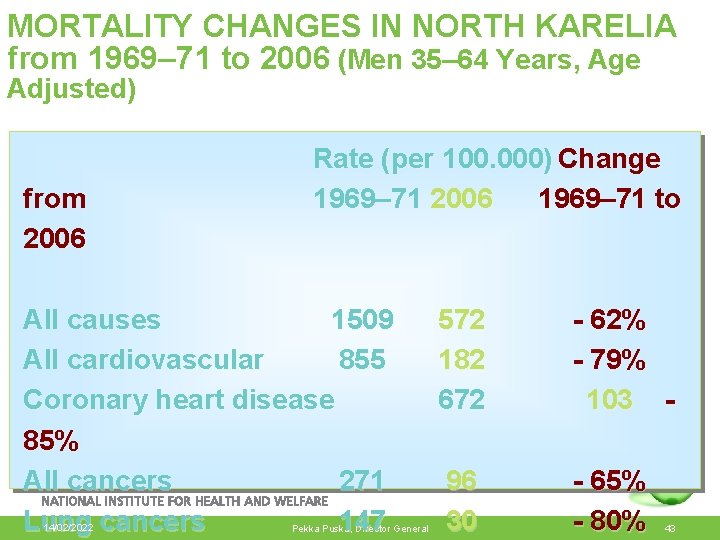
MORTALITY CHANGES IN NORTH KARELIA from 1969– 71 to 2006 (Men 35– 64 Years, Age Adjusted) from 2006 Rate (per 100. 000) Change 1969– 71 2006 1969– 71 to All causes 1509 All cardiovascular 855 Coronary heart disease 85% All cancers 271 Lung cancers 147 14/02/2022 Pekka Puska, Director General 572 182 672 - 62% - 79% 103 - 96 30 - 65% - 80% 43
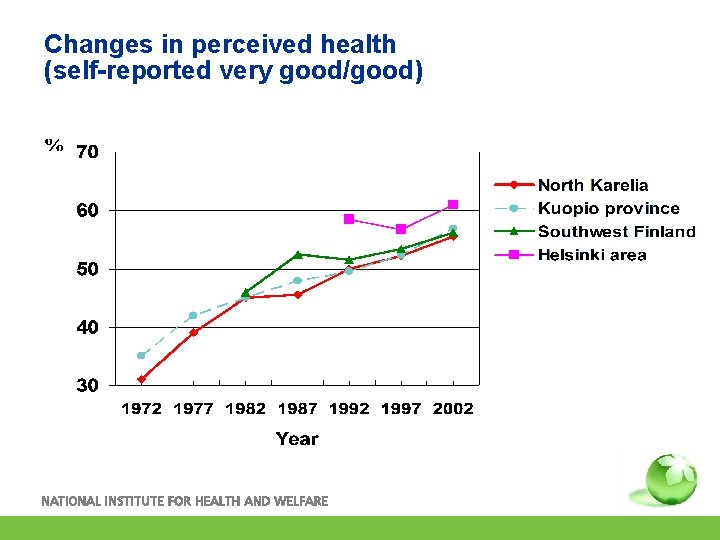
Changes in perceived health (self-reported very good/good)
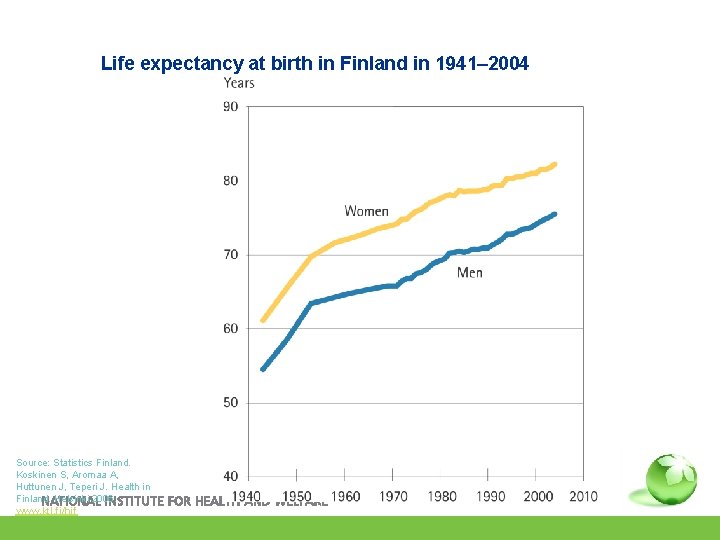
Life expectancy at birth in Finland in 1941– 2004 Source: Statistics Finland. Koskinen S, Aromaa A, Huttunen J, Teperi J. Health in Finland. Helsinki 2006. www. ktl. fi/hif
Finland Has Shown • Prevention of major chronic diseases is possible and pays off • Population based prevention is the only cost effective and sustainable public health approach to chronic disease control • Prevention calls for simple changes in some lifestyles (individual, family, community, national and global level action) • Influencing lifestyles is a key issue • Many results of prevention occur surprisingly quickly (CVD, diabetes) and also at relatively late age • Comprehensive action, broad collaboration with dedicated leadership and strong government policy support are crucial
THE MAIN CHALLENGE IS NOT WHAT TO DO, BUT HOW TO DO! 14/02/2022 47
FOR SUCCESSFUL PREVENTION ØStrong leadership combined with ØGood partnership ØDo the right things ØDo enough 14/02/2022 48
STRONGER SUPPORT FOR IMPLEMENTATION ØStronger public health infrastructures ØStronger health surveillance/monitoring ØInnovative financial support mechanisms 14/02/2022 49
CIVIL SOCIETY ØThe role of civil society is increasing in most countries ØNGO’s: mobilize people, serve people, watchdogs, etc. ØPush for childhood obesity to public / political agenda 14/02/2022 50
PRIVATE SECTOR Ø Food, eating, physical activity Ø Commercial issues are of increasing impact to public health Ø Health is increasingly important business argument Ø Product development, marketing Ø Social responsibility? Regulation? Market push? 14/02/2022 51
HEALTH MONITORING ØPower of monitoring ØFeed back to people and decision makers ØNeed to emphasize risk factors, lifestyles, determinants 14/02/2022 52
Partnerships are important, but Governments have a basic responsibility for public health! 14/02/2022 53
Thank you! 53 14/02/2022 54
- Slides: 54