
Community Reception Center Operations for Radiation Emergency Response
- Slides: 24
Community Reception Center Operations for Radiation Emergency Response: Tools for Training and Planning Kevin Caspary, MPH Oak Ridge Institute for Science and Education National Center for Environmental Health Division of Environmental Hazards and Health Effects
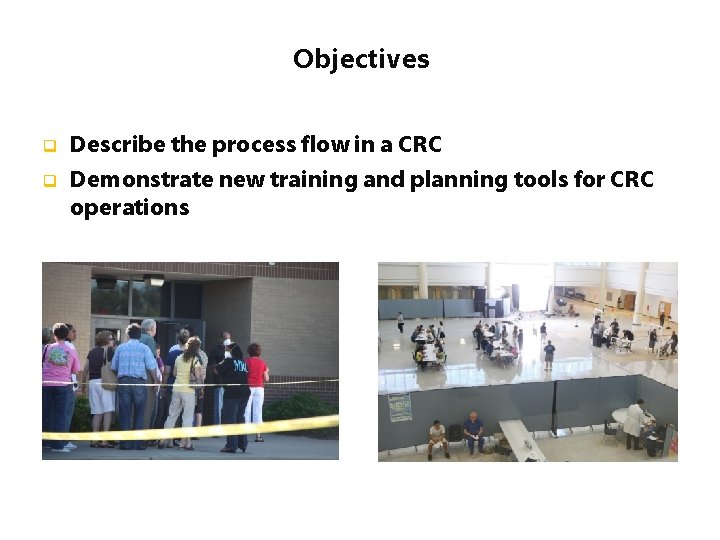
Objectives q q Describe the process flow in a CRC Demonstrate new training and planning tools for CRC operations
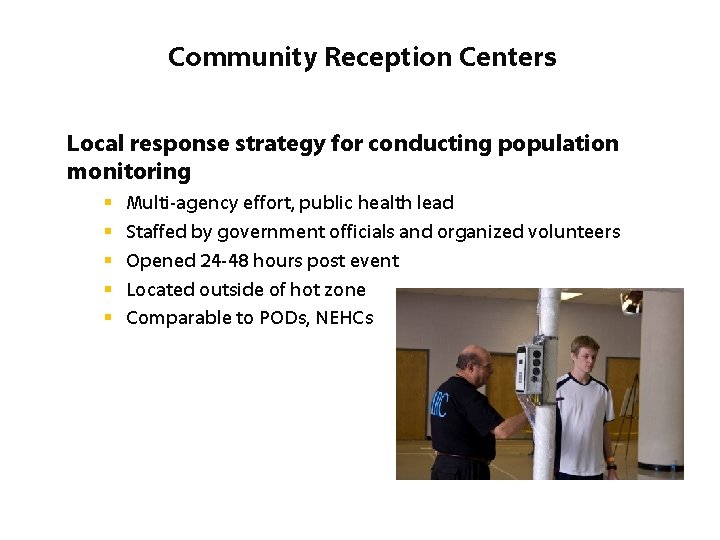
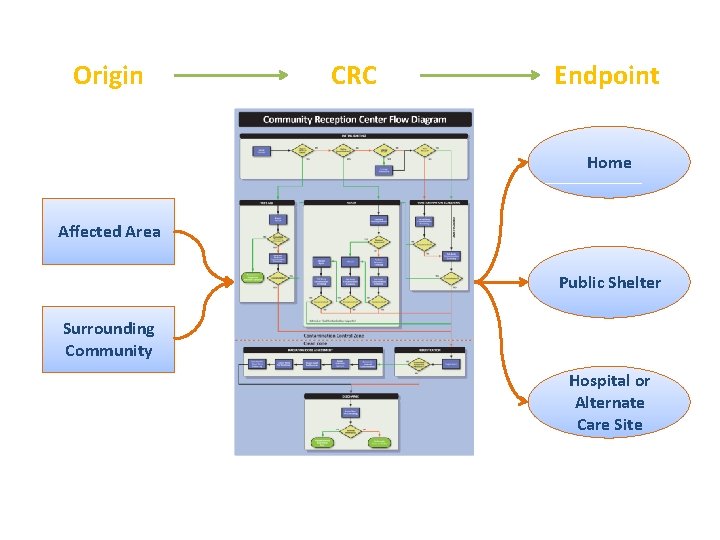
Community Reception Centers Local response strategy for conducting population monitoring § § § Multi-agency effort, public health lead Staffed by government officials and organized volunteers Opened 24 -48 hours post event Located outside of hot zone Comparable to PODs, NEHCs
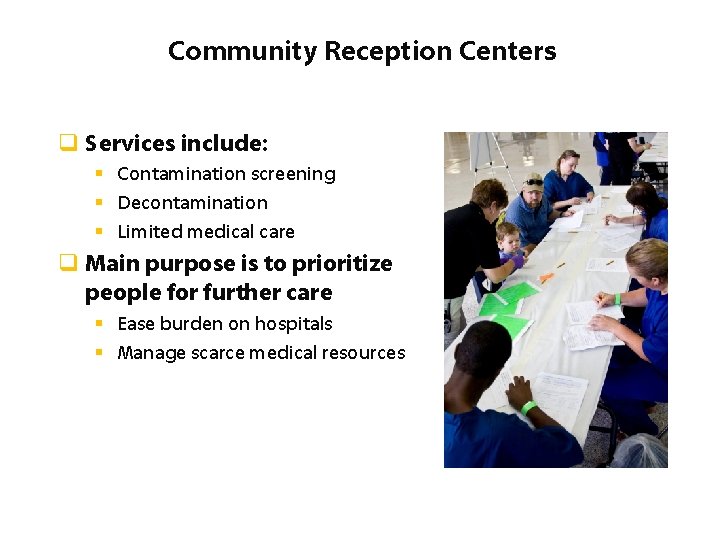
Community Reception Centers q Services include: § Contamination screening § Decontamination § Limited medical care q Main purpose is to prioritize people for further care § Ease burden on hospitals § Manage scarce medical resources
Origin CRC Endpoint Home Affected Area Public Shelter Surrounding Community Hospital or Alternate Care Site
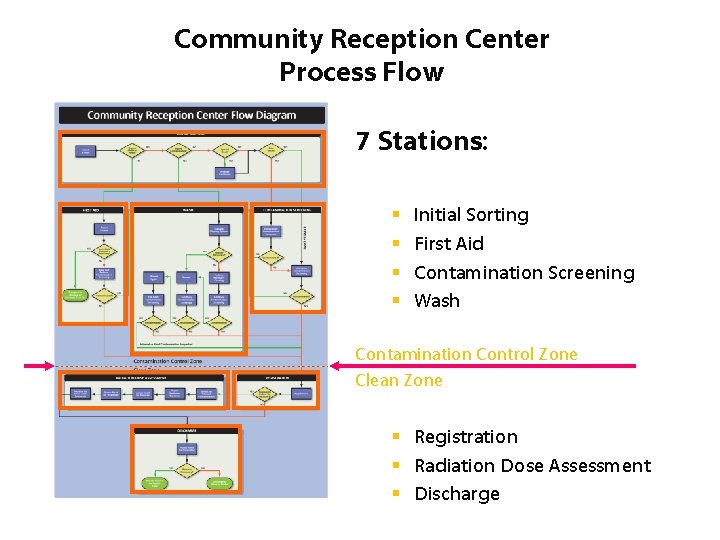
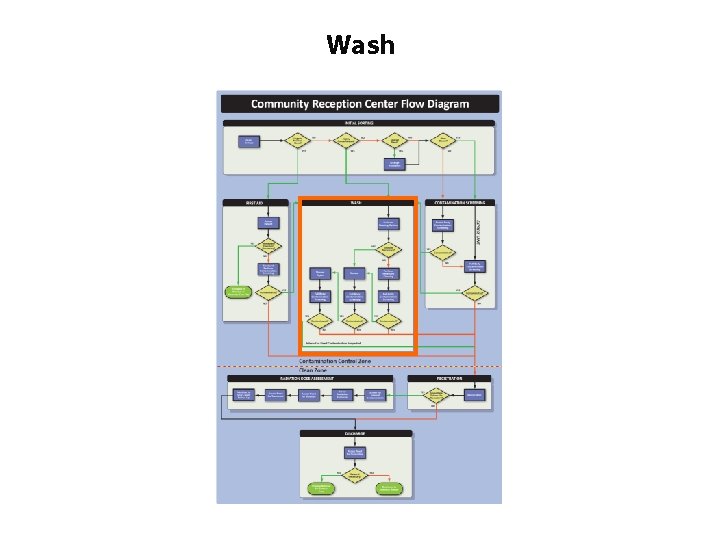
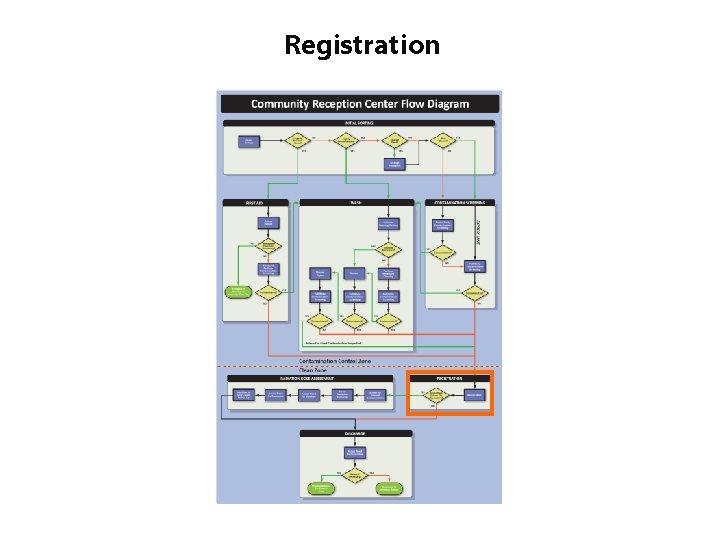
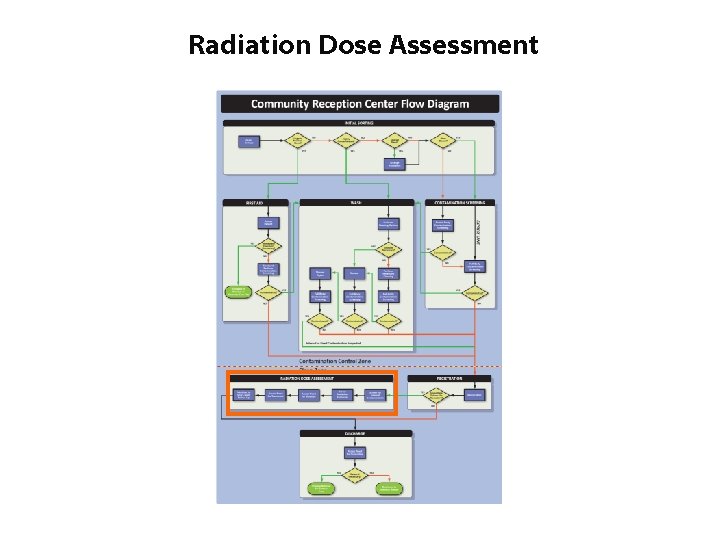
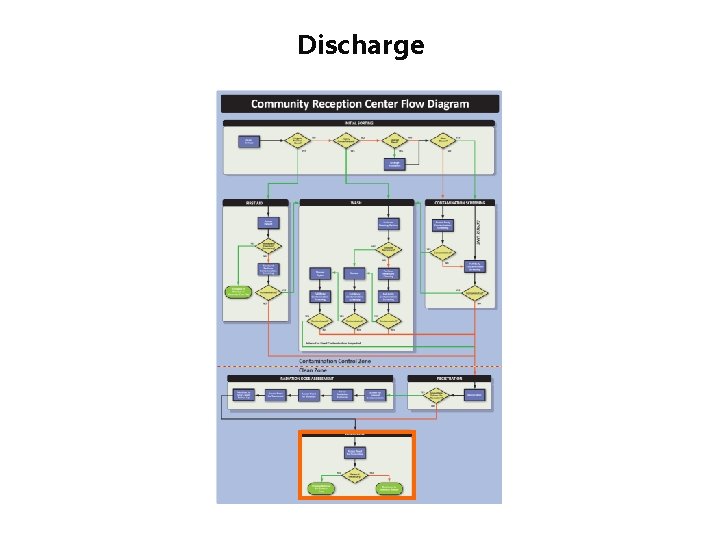
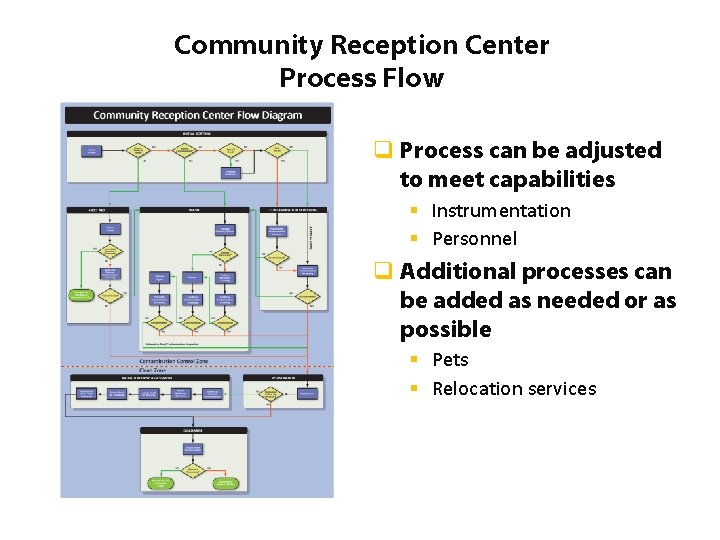
Community Reception Center Process Flow 7 Stations: § § Initial Sorting First Aid Contamination Screening Wash Contamination Control Zone Clean Zone § Registration § Radiation Dose Assessment § Discharge
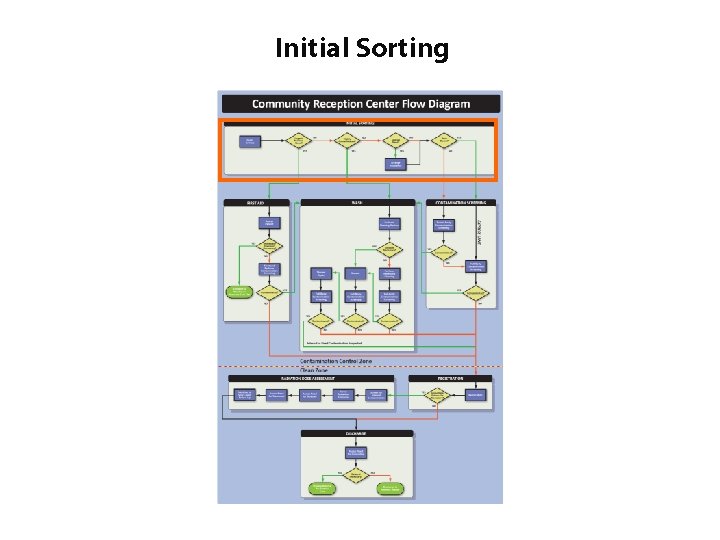
Initial Sorting
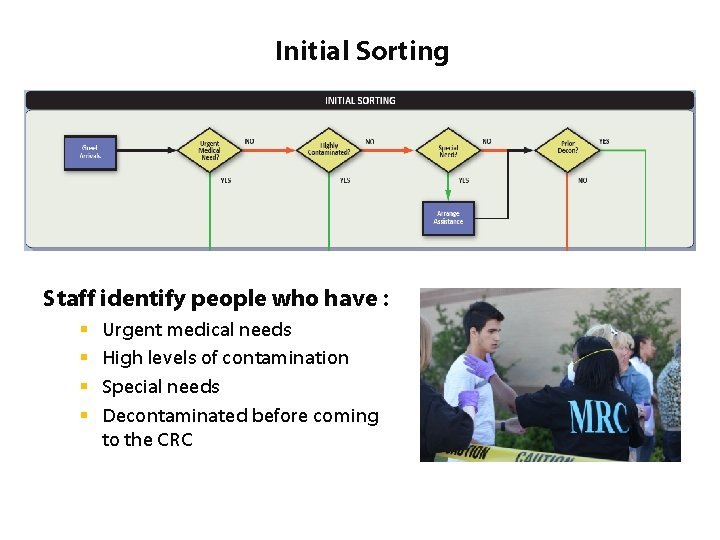
Initial Sorting Staff identify people who have : § § Urgent medical needs High levels of contamination Special needs Decontaminated before coming to the CRC
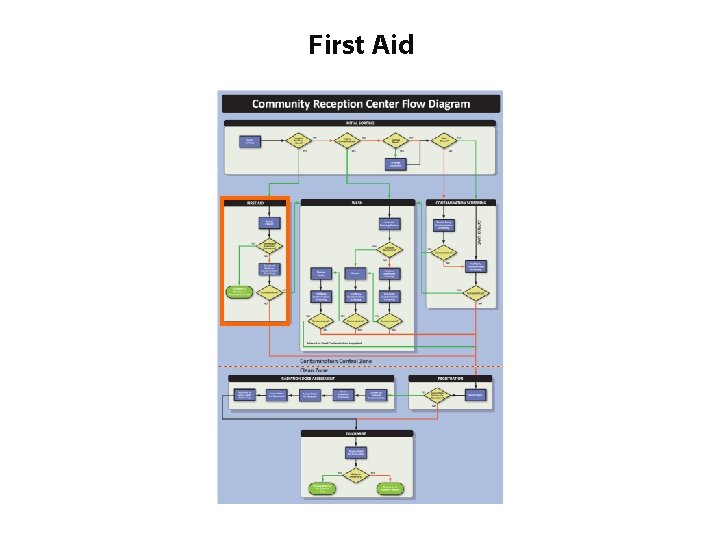
First Aid
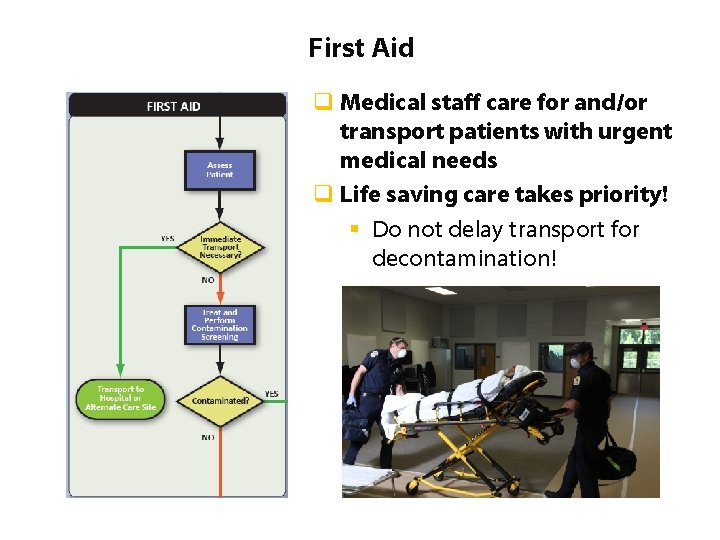
First Aid q Medical staff care for and/or transport patients with urgent medical needs q Life saving care takes priority! § Do not delay transport for decontamination!
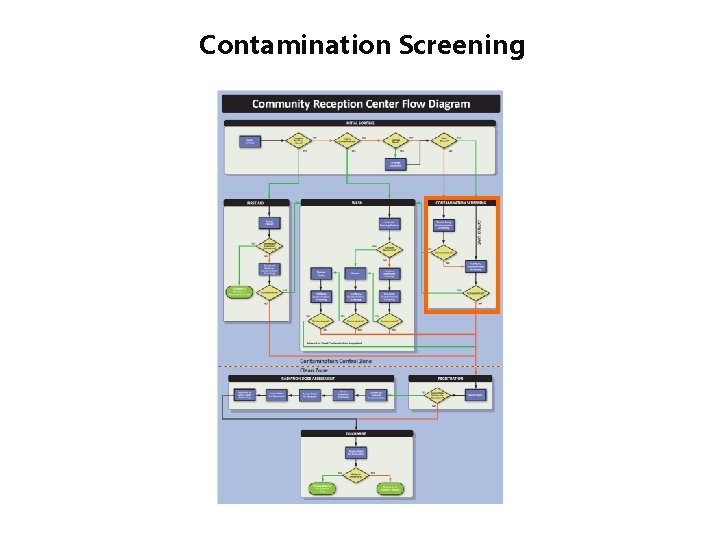
Contamination Screening
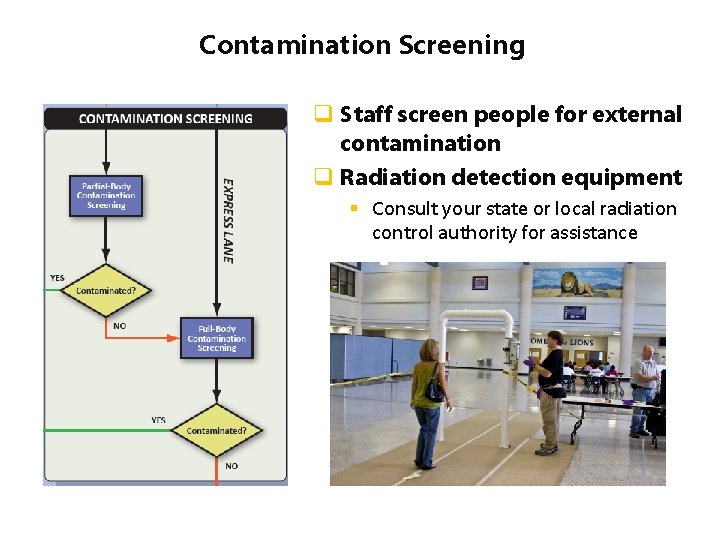
Contamination Screening q Staff screen people for external contamination q Radiation detection equipment § Consult your state or local radiation control authority for assistance
Wash
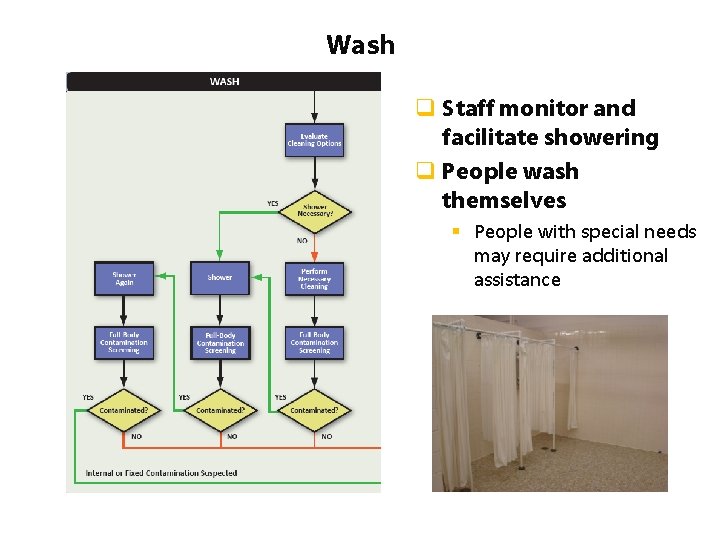
Wash q Staff monitor and facilitate showering q People wash themselves § People with special needs may require additional assistance
Registration
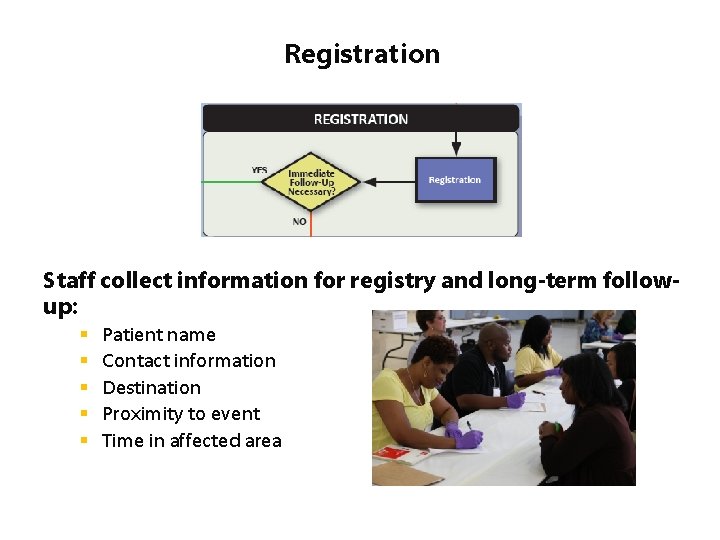
Registration Staff collect information for registry and long-term followup: § § § Patient name Contact information Destination Proximity to event Time in affected area
Radiation Dose Assessment
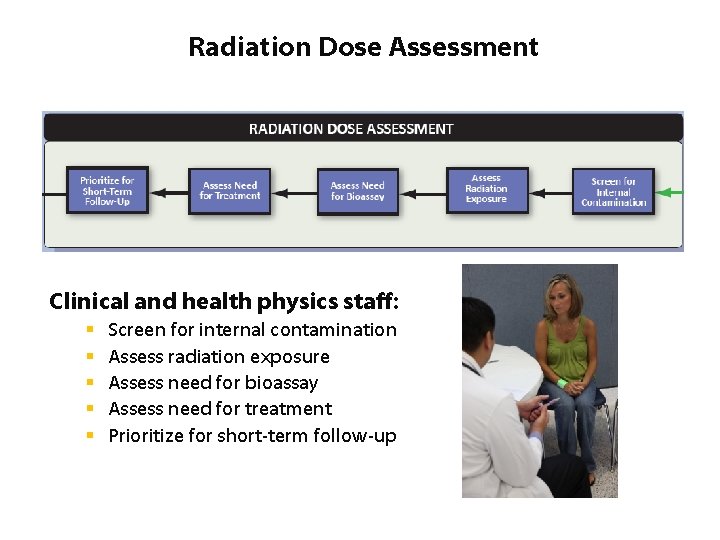
Radiation Dose Assessment Clinical and health physics staff: § § § Screen for internal contamination Assess radiation exposure Assess need for bioassay Assess need for treatment Prioritize for short-term follow-up
Discharge
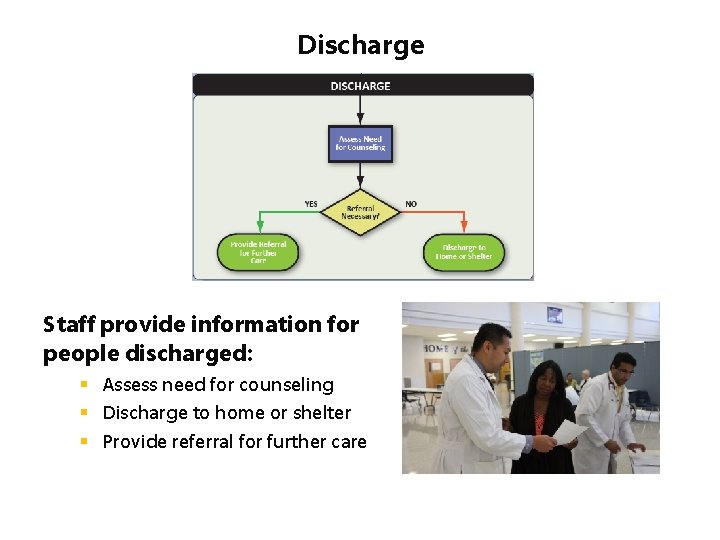
Discharge Staff provide information for people discharged: § Assess need for counseling § Discharge to home or shelter § Provide referral for further care
Community Reception Center Process Flow q Process can be adjusted to meet capabilities § Instrumentation § Personnel q Additional processes can be added as needed or as possible § Pets § Relocation services
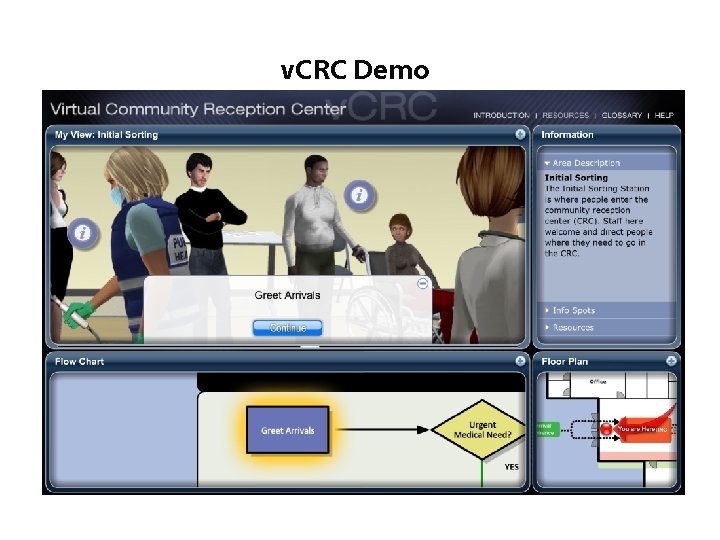
v. CRC Demo
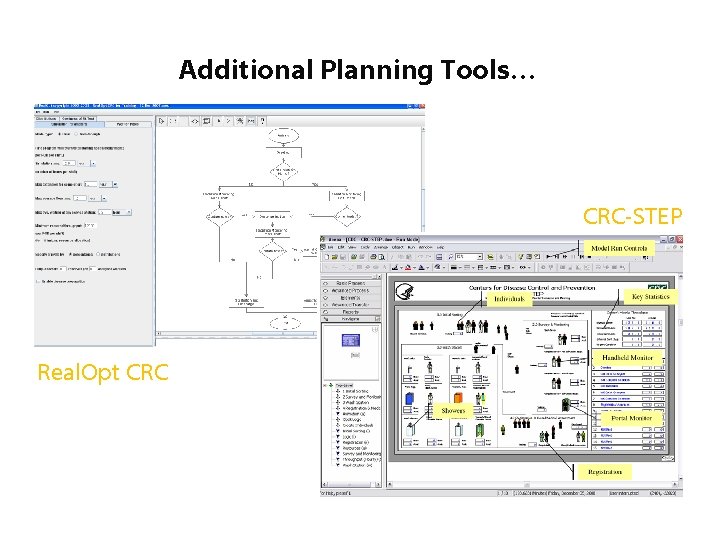
Additional Planning Tools… CRC-STEP Real. Opt CRC
v. CRC available online: http: //www. emergency. cdc. gov/radiation/crc /vcrc Or to request a complimentary copy: cdcinfo@cdc. gov or 800 -CDC-INFO For more information please contact Radiation. Studies Branch, CDC 4770 Buford Highway NE, Atlanta, GA 30341 Telephone, 1 -770 -488 -3800 E-mail: rsbinfo@cdc. gov Web: emergency. cdc. gov/radiation The findings and conclusions in this report are those of the authors and do not necessarily represent the official position of the Centers for Disease Control and Prevention. National Center for Environmental Health Division of Environmental Hazards and Health Effects