
Community Planning for disaster management Disasters in India
- Slides: 17
Community Planning for disaster management
Disasters in India Moving away from the Great Bengal famine of 1769 -1770 in which a third of the population perished. u The Chalisa famine of 1783, the Doji Bara or Skull famine of 1790 to 1792, the North West Provinces famine of 1838, the North West India Famine of 1861, the Bengal and Orissa famine of 1866, the Rajputana famine of 1869, the famine of 1899 to 1901, the Bengal famine of 1943… u The drought years of 1965, 1972, 1979, 1987, 2002 u
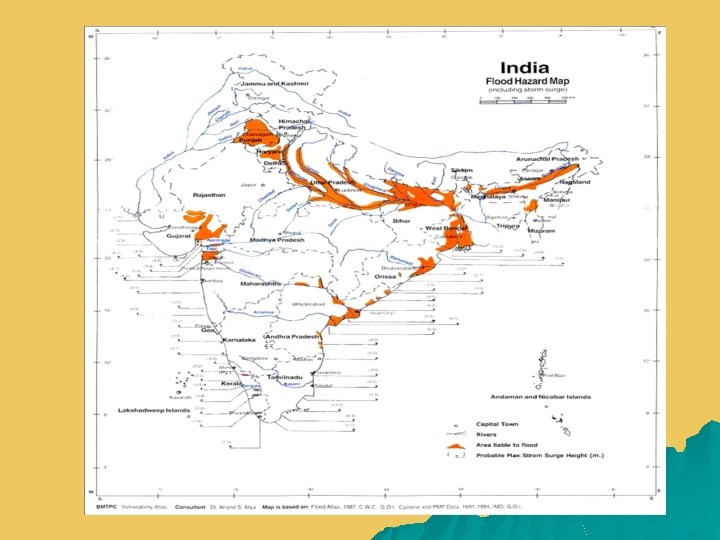
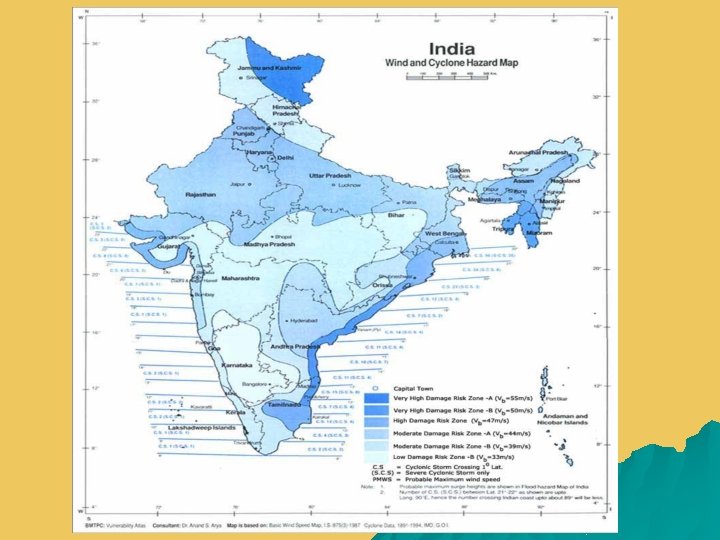
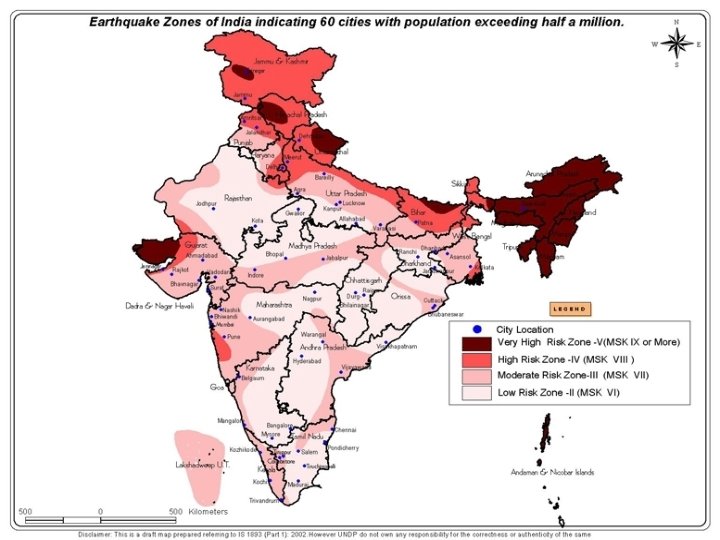
India’s Vulnerability to Disasters 57% land is vulnerable to earthquakes. Of these, 12% is vulnerable to severe earthquakes. u 68% land is vulnerable to drought. u 12% land is vulnerable to floods. u 8% land is vulnerable to cyclones. u Apart from natural disasters, some cities in India are also vulnerable to chemical and industrial disasters and man-made disasters. u
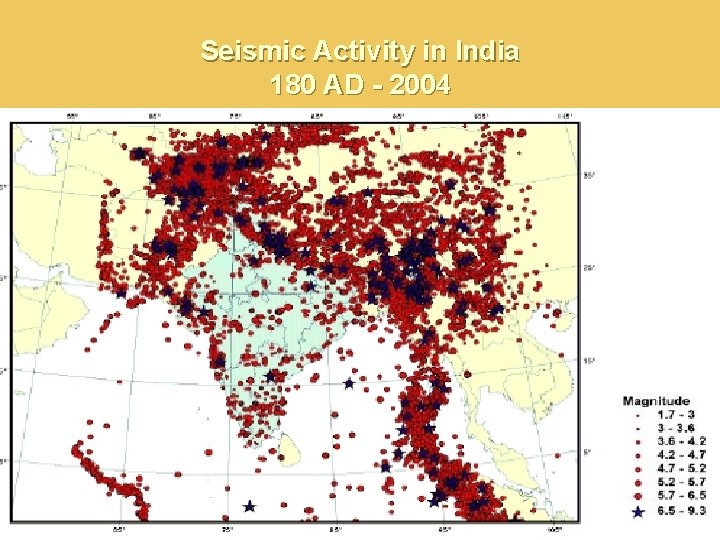
Seismic Activity in India 180 AD - 2004
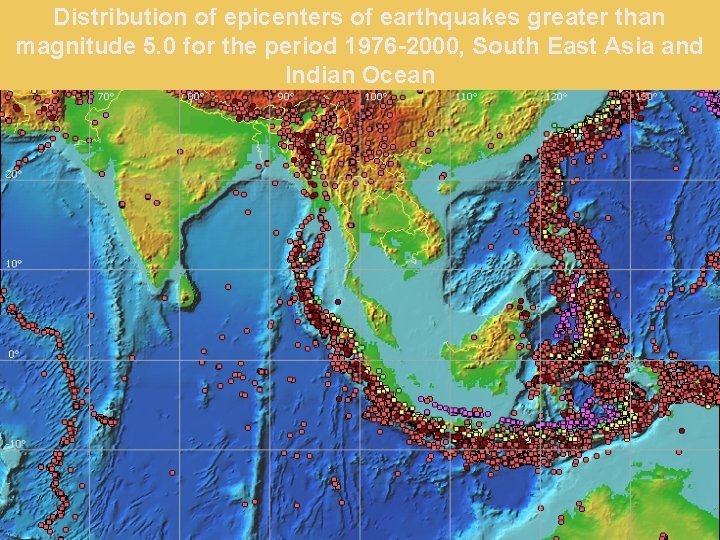
Distribution of epicenters of earthquakes greater than magnitude 5. 0 for the period 1976 -2000, South East Asia and Indian Ocean
Areas of Concern Activating an Early Warning System network and its close monitoring u Mechanisms for integrating the scientific, technological and administrative agencies for effective disaster management u Terrestrial communication links which collapse in the event of a rapid onset disaster u Vulnerability of critical infrastructures (power supply, communication, water supply, transport, etc. ) to disaster events u
Areas of Concern Funding : Primacy of relief as disaster response. u Preparedness and Mitigation very often ignored. u Lack of integrated efforts to collect and compile data, information and local knowledge on disaster history and traditional response patterns. u Need for standardised efforts in compiling and interpreting geo-spatial data, satellite imagery and early warning signals. u Weak areas continue to be forecasting, modelling, risk prediction, simulation and scenario analysis, etc. u
Areas of Concern Absence of a national level, state level, and district level directory of experts and inventory of resources. u Absence of a National Disaster Management Plan, and State level and district level disaster management plans. u Sustainability of efforts u Effective Inter Agency Co-ordination and Standard Operating Procedures for stakeholder groups, especially critical first responder agencies. u Emergency medicine, critical care medicine, triage, first aid u
WHAT WE LEARN FROM IT u Be Prepared : Preparedness and Mitigation is bound to yield more effective returns than distributing relief after a disaster. u Create a Culture of Preparedness and Prevention. u Evolve a code of conduct for all stakeholders
THINGS THAT CAN BE DONE u Investments in Preparedness and Prevention (Mitigation) will yield sustainable results, rather than spending money on relief after a disaster. u Most disasters are predictable, especially in their seasonality and the disasterprone areas which are vulnerable. u Communities must be involved in disaster preparedness.
u u u u Mobilising stakeholder participation of Self Help Groups, Women’s Groups, Youth Groups, Panchayati Raj Institutions Anticipatory Governance: Simulation exercises, Mock drills and Scenario Analysis Indigenous knowledge systems and coping practices Living with Risk: Community Based Disaster Risk Management Inclusive, participatory, gender sensitive, child friendly, eco-friendly and disabled friendly disaster management Technology driven but people owned Knowledge Management: Documentation and dissemination of good practices Public Private Partnership
Encourage and consolidate knowledge networks u Mobilise and train disaster volunteers for more effective preparedness, mitigation and response (NSS, NCC, Scouts and Guides, NYK, Civil Defence, Homeguards) u Increased capacity building leads to faster vulnerability reduction. u Learn from best practices in disaster preparedness, mitigation and disaster response u
EFFORTS BY u DHAIRYA NAGPAL u X-A u ROLL NO -7 u SCHOOL- NEO CONVENT SR SEC SCHOOL u ID- 173/2002
Ppt by u Dhairya nagpal u Fr more txt me at facebook u www. facebook. com/dhairya 1209 All ppt will be made available to you