
Community ophthalmology Dr Yogita Phadke Blindness A devastating
Community ophthalmology Dr Yogita Phadke
Blindness • A devastating physical condition with deep emotional and economic implications. • Consequences affect-The individual • The family • The community
Loss of independence A sense of profound loss Depression Family experiences economic and emotional burden, indirectly to the community • Blindness from birth or early childhood has unique problems • •
• ECONOMIC BLINDNESS-Level of vision which hampers the earning potential of that person. • SOCIAL BLINDNESS- Further deterioration in vision that the individual cannot undertake activities for daily sustenance and proper interaction. • ABSOLUTE BLINDNESS-no perception of light. • AVOIDABLE BLINDNESS- preventable or treatable blindness.
• WHO criteria for blindness i. e visual acuity of less than 3/60 in better eye with best possible refractive correction. • Approximately 45 million people are estimated to be blind. Another 135 million people are visually impaired. . • 90% of blind people in developing countries.
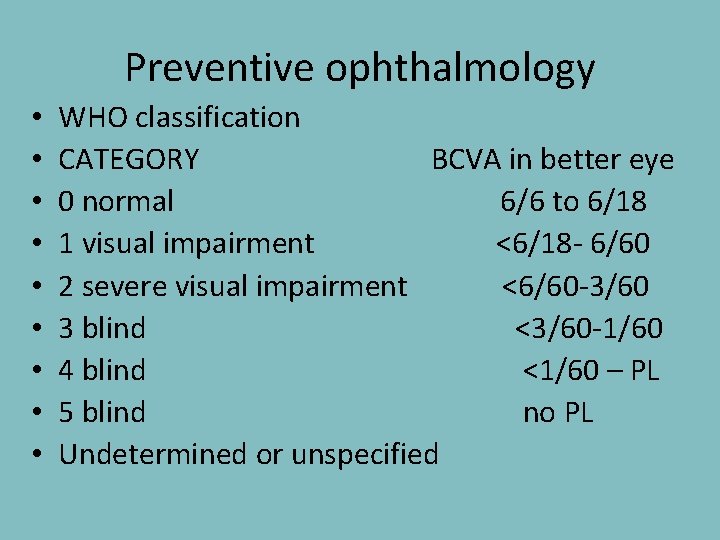
Preventive ophthalmology • • • WHO classification CATEGORY BCVA in better eye 0 normal 6/6 to 6/18 1 visual impairment <6/18 - 6/60 2 severe visual impairment <6/60 -3/60 3 blind <3/60 -1/60 4 blind <1/60 – PL 5 blind no PL Undetermined or unspecified
• Diseases like cataract, glaucoma and DR occur globallly, affect individuals(predominantly adults), require surgery or laser therapy & need eye specialist • Trachoma, vit A def and oncocerciasis are focal diseases : occur in specific areas of the world, affect communities, start in childhood, can be controlled with medicines
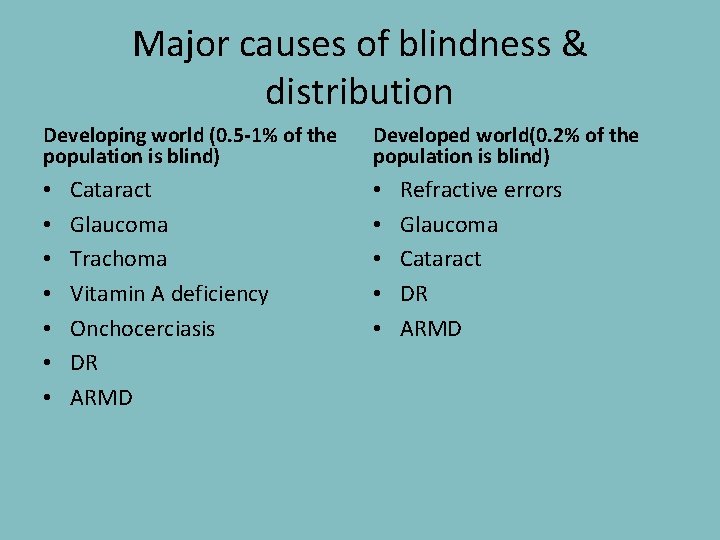
Major causes of blindness & distribution Developing world (0. 5 -1% of the population is blind) • • Cataract Glaucoma Trachoma Vitamin A deficiency Onchocerciasis DR ARMD Developed world(0. 2% of the population is blind) • • • Refractive errors Glaucoma Cataract DR ARMD
Preventive ophthalmology-blindness control • A) STRATEGY • 1) PRIMARY PREVENTION-prevention of disease occuring in first place • 2) SECONDARY PREVENTION-prevention of visual loss from disease once it occurs. • 3)TERTIARY PREVENTION-restoration of sight to a blind person
• Disease oriented approach to blindness involves • 1) Provision of services for cataract surgery • 2) Provision of vitamin A supplementation • 3)Control of trachoma • 4)Screening of school children for refractive error • 5) Distribution of Ivermectin for onchocerciasis.
Services oriented approach 1) Primary care services at community level 2)Secondary care services at district hospital level 3)Tertiary care services at medical colleges level. A community approach for specific blindness control • measures is directed at the target population at risk. • • •
Primary health care includes…. • Good quality of food, water and a clean environment • Control and prevention of epidemics • Control of endemic diseases • Education • Improved level of maternal and child health
Primary eye care • Defined as the provision of promotive, preventive and therapeutic measures for eye health to individuals and the community. • To be effective it has to be supported and • sustained by an effective and adequate referral system and • includes regular refresher training courses for primary care workers.
Promotive and preventive activities focus health education directed at target groups village leaders, community councils local administrative authorities individual families, patients, school teachers and students
Education • making the people aware that the majority of blinding diseases are preventable or curable, • and the methods for prevention and available avenues • for seeking curative measures • importance of hygiene (both environmental and personal), • sanitation, • proper nutrition • and measures for eye protection at work and play
• diseases which should be recognized and treated by a trained primary health care worker – • acute conjunctivitis, • ophthalmia neonatorum, trachoma, allergic conjunctivitis, • styes, chalazia, subconjunctival haemorrhage, • Conjunctival foreign bodies, corneal abrasions, mild hyphaema • vitamin A deficiency;
• Recognized and referred to secondary- or tertiary-level centres (after treatment has been initiated. • corneal ulcers, lacerations or penetrating injuries of the eyeball, • lid lacerations, entropion and trichiasis, chemical and thermal burns, • Any of the conditions if they do not show signs of resolution in 3– 5 days; • Conditions that should be recognized and referred immediately for treatment, such as a painful red eye with visual loss, cataract, • pterygium (if the vision is affected), and any patient • who has decreased vision which is recorded to be worse than 6/18 in any of the eye.
Preventive activities • (i) instructing midwives and birth attendants to apply prophylactic treatment to the eyes of newborns for the prevention of ophthalmia neonatorum, • i. e. by cleansing of the closed eyelids followed by a • single application of tetracycline 1% eye ointment, or with • Crede prophylaxis–silver nitrate 1% drops in both eyes (as • recommended by the WHO for deliveries in remote areas in • communities with poor hygiene) • (ii) administration of vitamin A orally • (iii) application of tetracycline eye ointment in areas endemic for trachoma.
Primary eye care • Community based and uses the grassroots level health worker who is trained in identifying common symptoms like DOV, pain and redness. • Promotive, preventive and some curative actions. • Provided with basic kit, a hand torch, vision measuring chart, antibiotics , vit A capsules, bandages, sticking, epilation forceps and shields • Focus on education & community participation
Secondary eye care • Management of common blinding conditions • Training of primary care workers. • Hospital based for treatment of common conditions- cataract, refractive errors. • Screening for diabetic retinopathy and glaucoma.
Tertiary eye care • Large institutes, Medical college. • Management of less common blinding conditions which require highly specialized staff and expensive sophisticated equipment • Specialized diseases like diabetic retinopathy, corneal diseases, retinal detachment surgery, ocular malignancies. • Research and training.
Mobile eye services • Mobile van with a team of trained ophthalmologist, nurses, optometrists and technicians. • Eye camps in rural and peripheral areas. • Comprehensive eye care – screening for common eye diseases, refraction , cataract and other surgeries. • Referral for complicated cases.
Strategies for prevention of blindness • VISION 2020 • Maximum emphasis on prevention of blindness. • 80% of blindness is avoidable i. e conditions that can be prevented or controlled if intervention is timely done like trachoma. • Condition like cataract where the sight can be restored. • Significant progress has been made in the aspect of preventable blindness. • VISION 2020 - the Right to Sight: a global initiative for the elimination of avoidable blindness. • Combined initiative of WHO and task force of international NGO”S. , International Agency for Prevention of blindness • Global Elimination of Trachoma by 2000 AD has been launched
• Original plan launched in 1999 by WHO, updated in 2006 and replaced by WHO Global Action Plan (GAP) 2014 -2019: Towards Universal Eye Health; Inegrating an equitable, sustainable, comprehensive eye-care system into every national health system. • Based on the concept that every living person has a right to sight & aims to reduce the prevalence of avoidable VI by 25% from the baseline of 2010 by the year 2019
VISION 2020 • • • VISION 2020 STRATEGIES to fight avoidable blindness 1)disease prevention and control 2) training of personnel 3)strengthening the existing eye care infrastructure 4) use of appropriate and affordable technology 5)mobilization of existing resources. 5 major blinding eye conditions 1) Cataract 2)trachoma 3)onchocerciasis 4) childhood blindness 5) refractive errors and low vision
Vision 2020 • Under vision 2020, target and norms will be developed for hospital beds for eye patients, operating rooms, instruments, essential medication refraction room. • Global targets include achievement of not less than • 1) 95% availability • 2) 90% accessibility • 3) 90% utilization • 4) 90% coverage of services
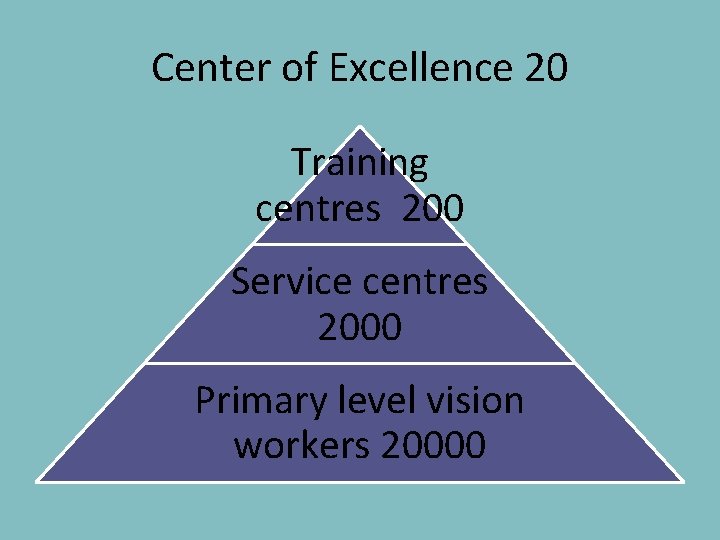
Center of Excellence 20 Training centres 200 Service centres 2000 Primary level vision workers 20000
Goal achievement • unique multi-pronged approach • identification of communities with high levels of blindness, • provision of eye-care infrastructure and manpower to these communities • supply of affordable high quality eye care services
Responsibilities of the program • Increasing awareness of blindness as a major public health issue • control the major causes of blindness • train ophthalmologists and other eye-care personnel to provide appropriate eyecare • create an infrastructure to manage the problem
Disease specific approach • CATARACT • Responsible for 50% of blindness in the world, the overall prevalence rate varies from 1 -4% of the population • Occurs earlier in fifth decade in southern Asia & later(6/7) in developed countries • Utilization of primary health care worker for identification and referral of cataract patients. • Training of manpower in modern surgical techniques including IOL surgery. increasing accessibility of cataract surgical services to the communities worst affected. • Priority attention to bilateral blind patients. • Provision of follow up services.
Higher prevalence • Early onset • absence of an effective eye health care delivery system • relatively poor surgical care for cataract • Suspected risk factors for development of cataract are mainly exposure to • UV-B radiation and sunlight, X-rays, oral and topical corticosteroids, • malnutrition and dehydrational states • Diabetes faster progression F>M
Interventions for Prevention and Treatment • At the primary level, the health worker screens for cataract • those with vision less than usually -3/60 - 6/60 for surgery. • counselling and motivating those affected to undergo surgery. • Secondary level-cataract surgery
• At the tertiary level lies the provision of facilities for surgical treatment of complicated cases such as congenital cataract, subluxated lens, complicated cataracts • and cataract associated with systemic diseases such as uncontrolled or inadequately controlled diabetes. In addition, • responsibility of training staff at other centres, providing outreach facilities and services, and providing organizational leadership and • technical expertise in programmes to eliminate cataract related blindness
Disease specific approach • GLAUCOMA • Approximately 15% of blindness is due to glaucoma. • Around 600000 persons per year go blind from glaucoma worldwide • POAG more Common in global distribution • PACG more common in India (50%), Eskimos, Japanese, hypermetropes & shallow AC • Primary care health worker must be taught to recognize signs of glaucoma with immediate referral.
• Vision lost cannot be regained • Early detection & proper treatment is the key • Risk factors for POAG-Age, raised IOP, race(Afro -american), positive family history, myopia diabetes, HT and possibly alcohol intake & smoking • 21 mm. Hg cut-off • Two stage screenings
• • Two-stage screening techniques have often been employed where intraocular pressure readings are taken in large populations, and those with elevated pressures or fundus changes are further subjected to visual field examination. However, only 1 out of 30 people referred with ocular hypertension may actually have a glaucomatous field defect and 30– 50% of those with abnormal fields may have a normal intraocular pressure
Disease specific approach • DIABETIC RETINOPATHY • Leading cause of blindness in adults in their productive years • Uniform worldwide • Duration most imp predictor • Sight threatening retinopathy occurs at the rate of 6% per year- 2/3 have maculopathy and 1/3 have PDR. • PERIODIC SCREENING of all diabetic patients for eye changes.
• Lost vn cant be recovered • T/t by laser photocoagulation, effective in preventing visual loss & reduce the risk of blindness by 60 -95%.
Disease specific approach • CHILDHOOD BLINDNESS • 1. 5 million children suffer from severe visual impairment and blindness. • CAUSES OF IMPAIRED VISION IN CHILDHOOD • A) ANATOMICAL CLASSIFICATION • 1) whole globe- microphthalmos, anopthalmos, phthisis bulbi • 2) cornea- scar, anterior staphyloma, dystrophy • 3) lens- cataract, dislocation, aphakia • 4) uvea- aniridia, coloboma, uvietis • 5) retina-ROP, RD, vasculitis, retinal dystrophy • 6)glaucoma-buphthalmos • 7)Optic nerve- optic atrophy, hypoplasia • 8)other- cortical blindness, amblyopia
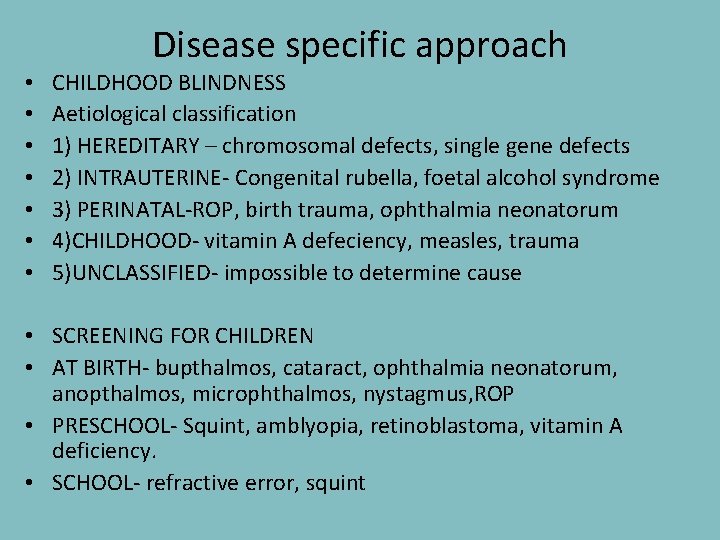
• • Disease specific approach CHILDHOOD BLINDNESS Aetiological classification 1) HEREDITARY – chromosomal defects, single gene defects 2) INTRAUTERINE- Congenital rubella, foetal alcohol syndrome 3) PERINATAL-ROP, birth trauma, ophthalmia neonatorum 4)CHILDHOOD- vitamin A defeciency, measles, trauma 5)UNCLASSIFIED- impossible to determine cause • SCREENING FOR CHILDREN • AT BIRTH- bupthalmos, cataract, ophthalmia neonatorum, anopthalmos, microphthalmos, nystagmus, ROP • PRESCHOOL- Squint, amblyopia, retinoblastoma, vitamin A deficiency. • SCHOOL- refractive error, squint
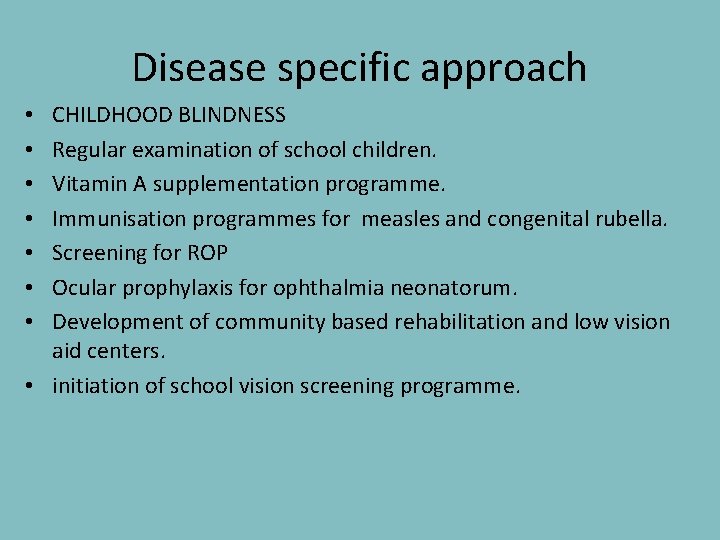
Disease specific approach CHILDHOOD BLINDNESS Regular examination of school children. Vitamin A supplementation programme. Immunisation programmes for measles and congenital rubella. Screening for ROP Ocular prophylaxis for ophthalmia neonatorum. Development of community based rehabilitation and low vision aid centers. • initiation of school vision screening programme. • •
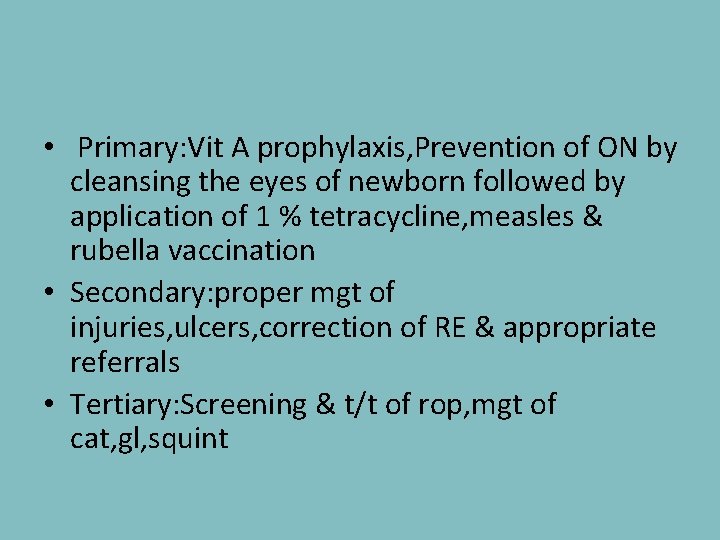
• Primary: Vit A prophylaxis, Prevention of ON by cleansing the eyes of newborn followed by application of 1 % tetracycline, measles & rubella vaccination • Secondary: proper mgt of injuries, ulcers, correction of RE & appropriate referrals • Tertiary: Screening & t/t of rop, mgt of cat, gl, squint
Disease specific approach • TRACHOMA • Endemic in countries with hot arid climate. • 150 million people are known to be affected and 6 million people are blind or severely visually impaired.
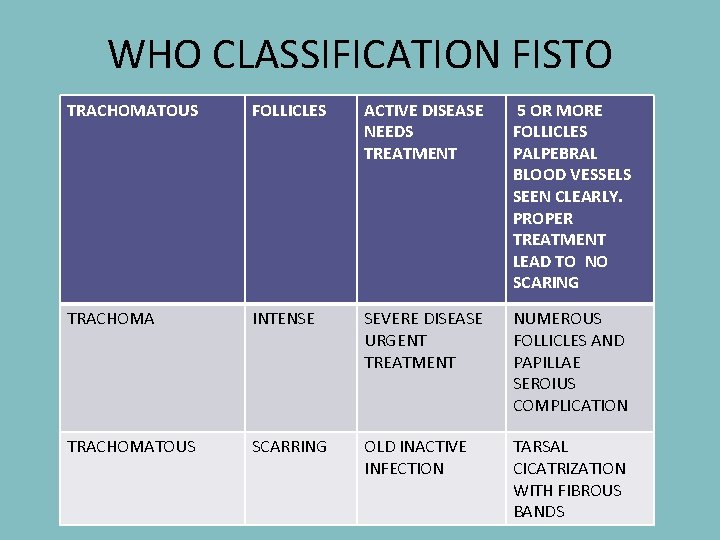
WHO CLASSIFICATION FISTO TRACHOMATOUS FOLLICLES ACTIVE DISEASE NEEDS TREATMENT 5 OR MORE FOLLICLES PALPEBRAL BLOOD VESSELS SEEN CLEARLY. PROPER TREATMENT LEAD TO NO SCARING TRACHOMA INTENSE SEVERE DISEASE URGENT TREATMENT NUMEROUS FOLLICLES AND PAPILLAE SEROIUS COMPLICATION TRACHOMATOUS SCARRING OLD INACTIVE INFECTION TARSAL CICATRIZATION WITH FIBROUS BANDS
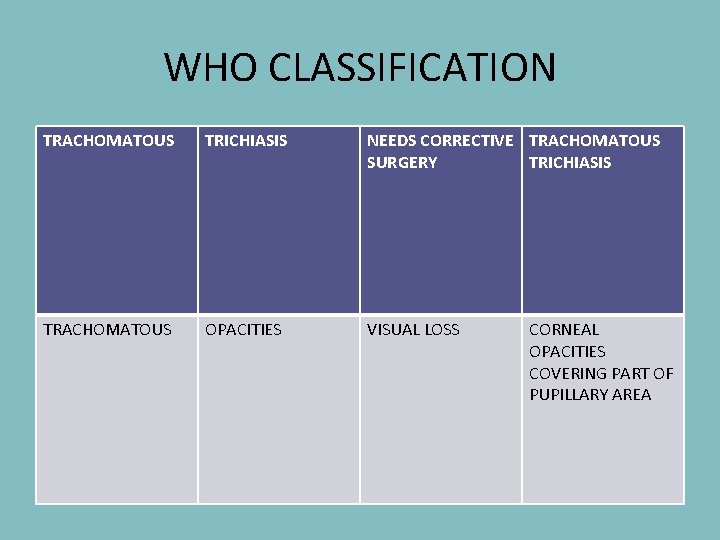
WHO CLASSIFICATION TRACHOMATOUS TRICHIASIS NEEDS CORRECTIVE TRACHOMATOUS SURGERY TRICHIASIS TRACHOMATOUS OPACITIES VISUAL LOSS CORNEAL OPACITIES COVERING PART OF PUPILLARY AREA
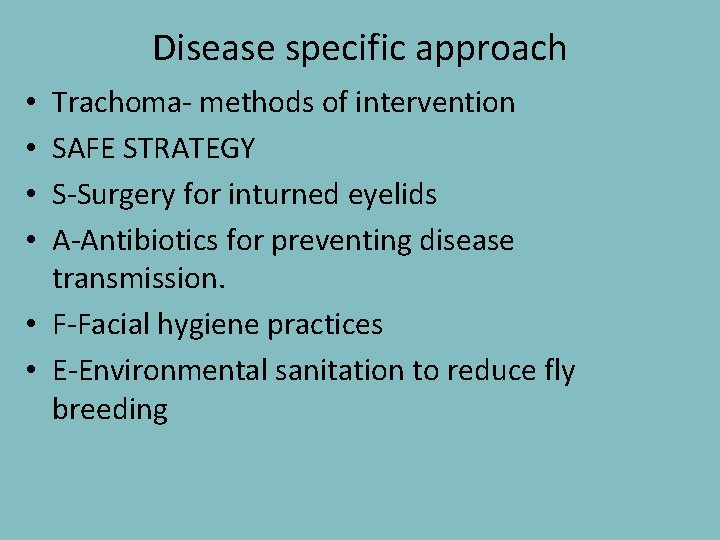
Disease specific approach Trachoma- methods of intervention SAFE STRATEGY S-Surgery for inturned eyelids A-Antibiotics for preventing disease transmission. • F-Facial hygiene practices • E-Environmental sanitation to reduce fly breeding • •
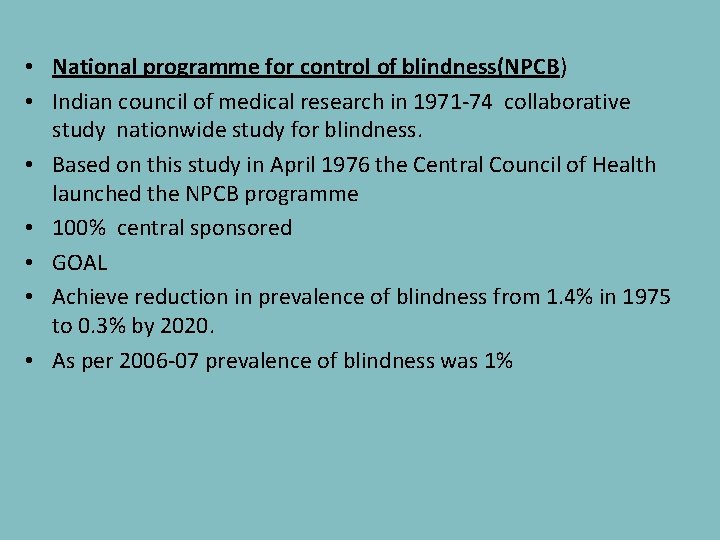
• National programme for control of blindness(NPCB) • Indian council of medical research in 1971 -74 collaborative study nationwide study for blindness. • Based on this study in April 1976 the Central Council of Health launched the NPCB programme • 100% central sponsored • GOAL • Achieve reduction in prevalence of blindness from 1. 4% in 1975 to 0. 3% by 2020. • As per 2006 -07 prevalence of blindness was 1%
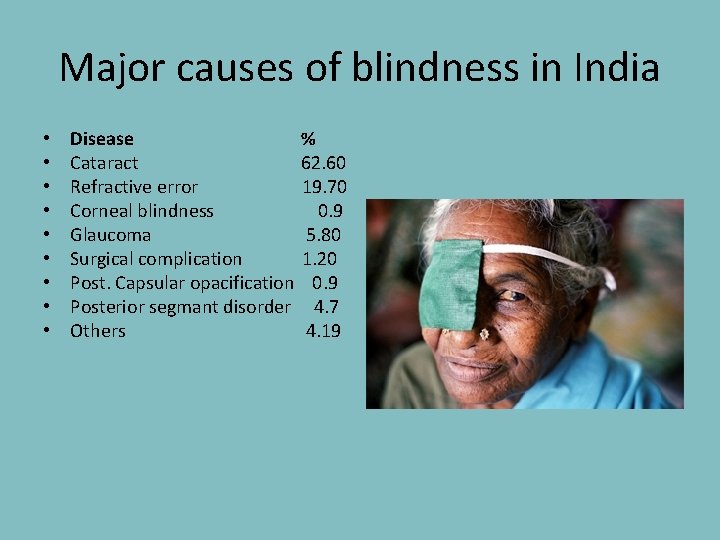
Major causes of blindness in India • • • Disease Cataract Refractive error Corneal blindness Glaucoma Surgical complication Post. Capsular opacification Posterior segmant disorder Others % 62. 60 19. 70 0. 9 5. 80 1. 20 0. 9 4. 7 4. 19
NPCB • OBJECTIVE • Provision of comprehensive eye care facilities at primary, secondary and tertiary care levels. • Reduction in prevalence of blindness to 0. 3% by 2020. • Reduce backlog of blindness through identification and treatment of blindness. • To develop eye care facilities in each district.
Four pronged strategy of the programme • Strengthening service delivery, • Developing human resources for eye care, • Promoting outreach activities and public awareness and • Developing institutional capacity
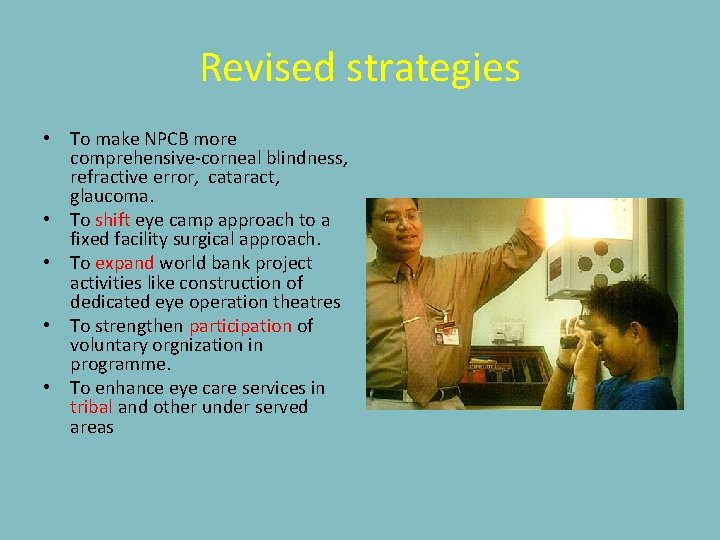
Revised strategies • To make NPCB more comprehensive-corneal blindness, refractive error, cataract, glaucoma. • To shift eye camp approach to a fixed facility surgical approach. • To expand world bank project activities like construction of dedicated eye operation theatres • To strengthen participation of voluntary orgnization in programme. • To enhance eye care services in tribal and other under served areas
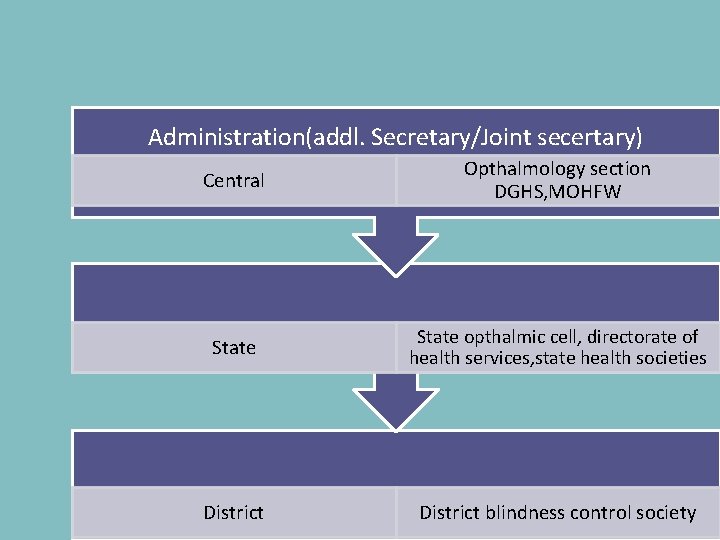
Administration(addl. Secretary/Joint secertary) Central Opthalmology section DGHS, MOHFW State opthalmic cell, directorate of health services, state health societies District blindness control society
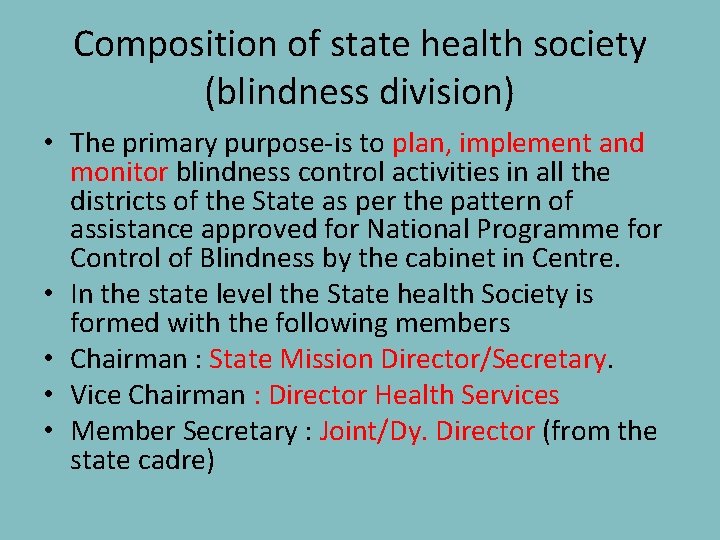
Composition of state health society (blindness division) • The primary purpose-is to plan, implement and monitor blindness control activities in all the districts of the State as per the pattern of assistance approved for National Programme for Control of Blindness by the cabinet in Centre. • In the state level the State health Society is formed with the following members • Chairman : State Mission Director/Secretary. • Vice Chairman : Director Health Services • Member Secretary : Joint/Dy. Director (from the state cadre)
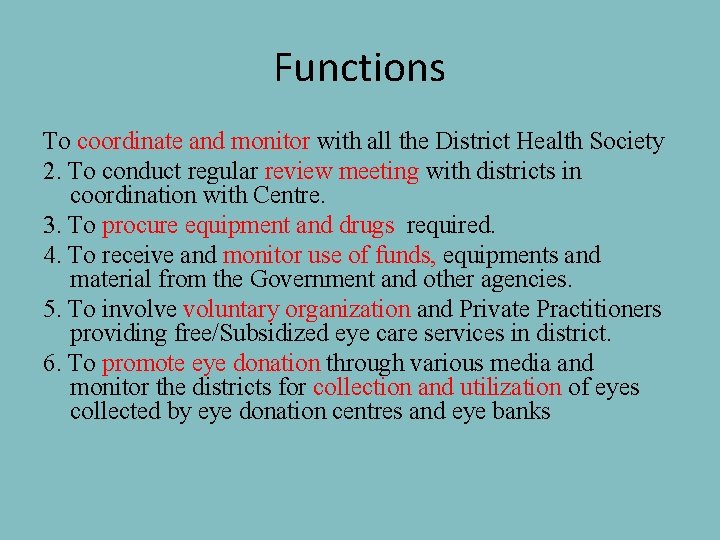
Functions To coordinate and monitor with all the District Health Society 2. To conduct regular review meeting with districts in coordination with Centre. 3. To procure equipment and drugs required. 4. To receive and monitor use of funds, equipments and material from the Government and other agencies. 5. To involve voluntary organization and Private Practitioners providing free/Subsidized eye care services in district. 6. To promote eye donation through various media and monitor the districts for collection and utilization of eyes collected by eye donation centres and eye banks
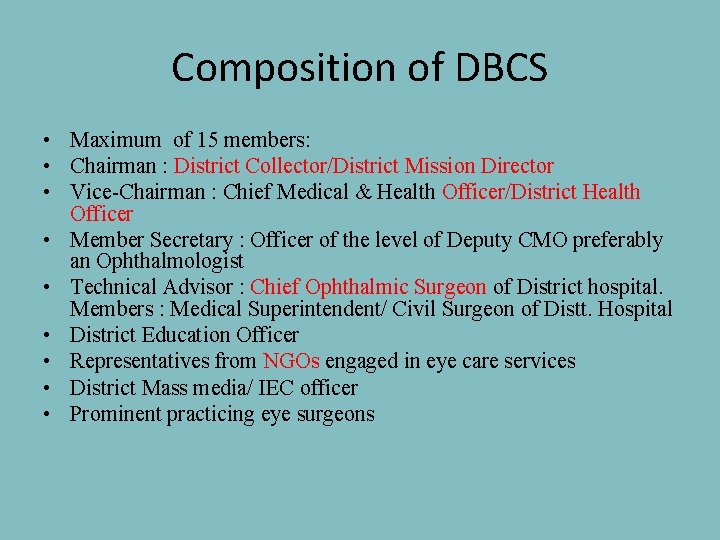
Composition of DBCS • Maximum of 15 members: • Chairman : District Collector/District Mission Director • Vice-Chairman : Chief Medical & Health Officer/District Health Officer • Member Secretary : Officer of the level of Deputy CMO preferably an Ophthalmologist • Technical Advisor : Chief Ophthalmic Surgeon of District hospital. Members : Medical Superintendent/ Civil Surgeon of Distt. Hospital • District Education Officer • Representatives from NGOs engaged in eye care services • District Mass media/ IEC officer • Prominent practicing eye surgeons
Functions • To assess the magnitude and spread of blindness in the district • To organize screening camps for identifying those requiring cataract surgery and other blinding disorders, ; • To plan and organize training; • To procure drugs and consumables • To receive and monitor use of funds • To involve voluntary and private hospitals providing free/subsidized eye care services • To organize screening of school children; • To promote eye donation through various media and monitor collection and utilization of eyes collected by eye donation centers and eye banks. • The PMOAs shall be doing the regular screening for and other diseases in the out reach camps.
GRANT-IN-AID • Funds will be released by the GOI to State Health Society (or State Health & FW Society) based on Annual Action Plan submitted to GOI. a. Statement on performance and expenditure b. Audited Statement of Accounts c. Utilization Certificate d. State Annual Action Plan for the current financial year. • GOI will release funds in two equal instalments in a financial year; first instalment will be equivalent to 50% of the planned budget
Grant-in-aid • Honorarium to Member Secretary and other staff • Procurement of goods • Provision of spectacles • Information Education and Communication • Grant-in-aid to voluntary organizations • Training activities within the District • Operational Expenditure
Record maintenance • • blind register, cataract surgery record, diabetic register, glaucoma register, squint register, keratoplasty, monthly and quarterly reporting format, cash book, balance sheet, utilization certificate
MONITORING FOR QUALITY CONTROL Random checks need to be carried out to assess the validity of reported data, status of follow-up, provision of glasses and patient satisfaction. • Standard Cataract Surgery Records (Format II) should be filled up for each operation performed. • Periodic review should be undertaken by the District Health Society to assess the progress in each block and by each provider unit. • The District Health Society should be concerned about the outcomes i. e. number of persons whose eyesight is restored rather than be satisfied with the product i. e. no. of cataract operations performed. •
Training activities under NPCB • 1. (a). General Training in ECCE / IOL, SICS and Phaco Emulsification(2 months) - Keratometry, Biometry and Yag Laser Capsulotomy along with surgery techniques. • 1. (b). SICS and simultaneously SICS trained surgeons only will be sent for Phaco • 2. Pediatric Ophthalmology(3 mths) - management of Amblyopia and squint, Cataract, Glaucoma and Retinopathy of pre-maturity (ROP). • 3. Medical Retina & Vitreo Retinal Surgery(3 mths) –indirect Ophthalmoscope, fluorescence angiography • 4. Low Vision Services – 1 week Training. • The trainees will be posted to Low Vision units of training institutions. They should be taught handling of various instruments / L. V Aids and Management of patients
New initiatives • • • Construction of dedicated Eye Wards and Eye Operation theaters in Districts Appointment of Ophthalmic Surgeons and Ophthalmic Assistants in new districts Appointment of Ophthalmic Assistants in PHCs/ Vision Centers where there are none (at present ophthalmic assistants are available in block level PHCs only) Appointment of Eye Donation Counselors Grant-in-aid for NGOs for management of other Eye diseases other than Cataract like Diabetic Retinopathy, Glaucoma Management, Laser Techniques, Corneal Transplantation, Vitreoretinal Surgery, Treatment of childhood blindness etc of Rs. 750 per case for Cataract/IOL Implantation Surgery and Rs. 1000 per case of other major Eye Diseases as described above. For North-Eastern States, Hilly and Desert Areas Rs. 850 for Cataract and Rs. 1100 for other major Eye Care Management is proposed. Special attention to clear Cataract Backlog and take care of other Eye Health Care Centers from NE States. Telemedicine in Ophthalmology {Eye Care Management Information and Communication Network} Involvement of Private Practitioners. A provision of Rs. 1550 crore has been proposed for implementation of NPCB during 11 th Five Year Plan.
Role of international agencies • WHO- 40 intra country fellowship in institute of Excellence under specialities, corneal tr ansplantation, vitreo-retinal surgery, laser in opthal, paed opth • Launch workshop on Vision 2020, “the right to sight”initiative • World Sight day • Danish International Development Agency • World Bank- assisted cataract blindness control project, in which Rs. 554 crore had
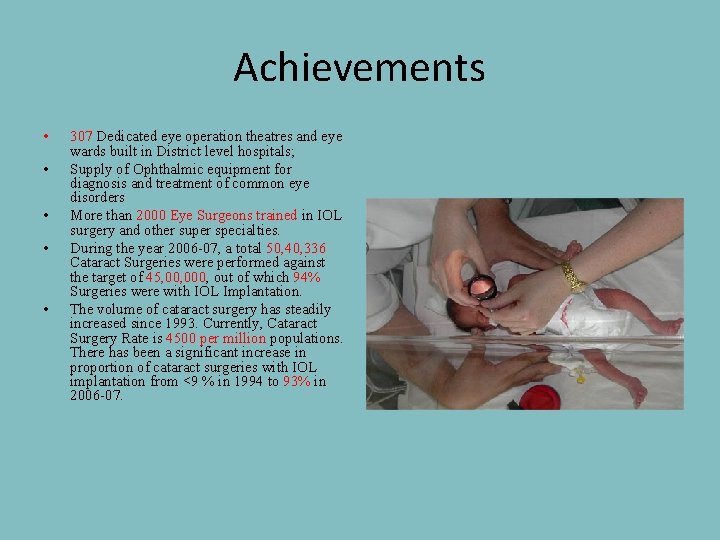
Achievements • • • 307 Dedicated eye operation theatres and eye wards built in District level hospitals; Supply of Ophthalmic equipment for diagnosis and treatment of common eye disorders More than 2000 Eye Surgeons trained in IOL surgery and other super specialties. During the year 2006 -07, a total 50, 40, 336 Cataract Surgeries were performed against the target of 45, 000, out of which 94% Surgeries were with IOL Implantation. The volume of cataract surgery has steadily increased since 1993. Currently, Cataract Surgery Rate is 4500 per million populations. There has been a significant increase in proportion of cataract surgeries with IOL implantation from <9 % in 1994 to 93% in 2006 -07.
Vitamin A deficiency • NUTRITIONAL BLINDNESS • Vitamin A deficiency- Xerophthalmia- xeros( dry) and ophthalmia(inflamed eye) • Preventable disease • Night blindness first described in children with whooping cough by Hippocrates and cure for the same was mentioned by Celsus that is ingestion of animal livers. • In 1920 s it was established that lack of vit A leads to keratomalacia, high infant mortality. • In 1980 s clinical evaluation was done to establish the relationship between vitamin A defeciency and child mortality.
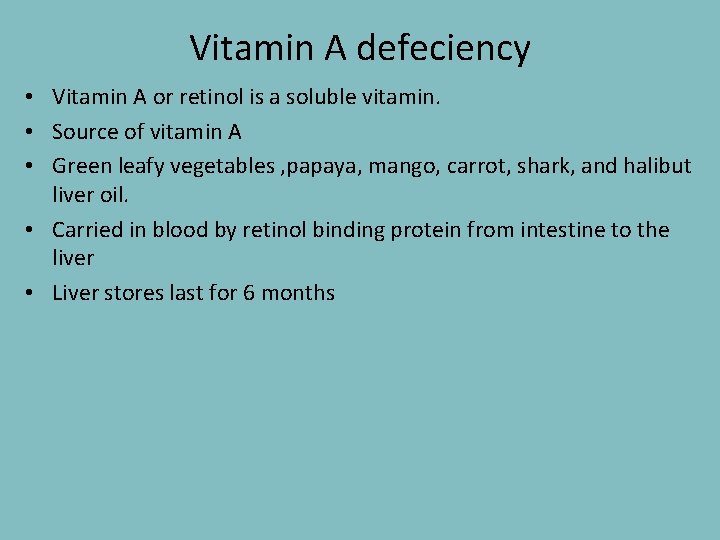
Vitamin A defeciency • Vitamin A or retinol is a soluble vitamin. • Source of vitamin A • Green leafy vegetables , papaya, mango, carrot, shark, and halibut liver oil. • Carried in blood by retinol binding protein from intestine to the liver • Liver stores last for 6 months
Vitamin A deficiency • • • Vitamin A is a fat soluble substance that is essential for Immunity Growth Maintenance of mucosal surface Cell differentiation Reproduction Vision Vitamin A in eye Regulate the expression of keratin and mucins. All trans retinol as precusor in visual cycle
Vitamin A deficiency • Factors that lead to vitamin A deficiency • 1) Decreased intake- early weaning, anorexia, odynophagia. • 2)Impaired absorption –chronic diarrhea, cystic fibrosis, malabsorption, heavy intestinal infestation. • 3)Altered storage-hepatic disease • 4)Decreased circulation- protein energy malnutrition and zinc deficiency can impair metabolism. • 5)Increase utilization- during infections, pregnancy , lactation and periods of rapid growth. • 6)Increased metabolic loss- in infection there is increase loss due to increased urinary output.
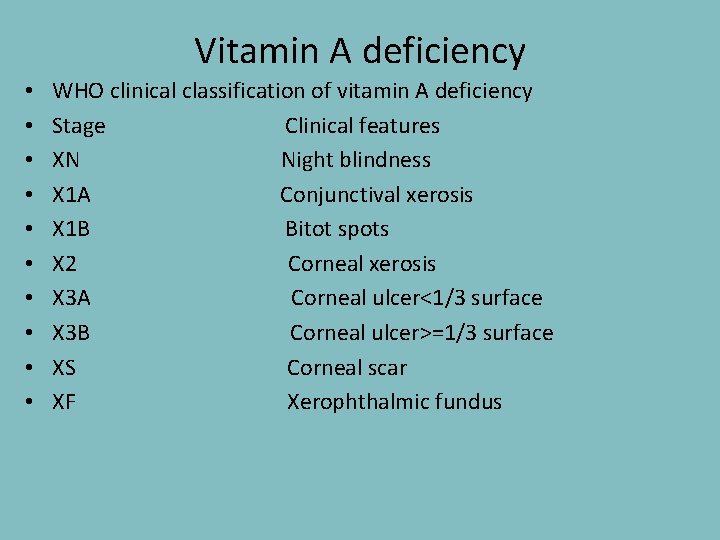
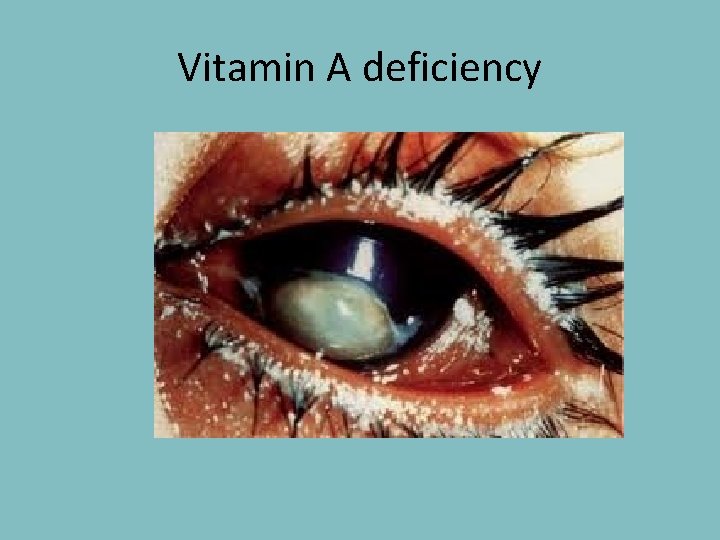
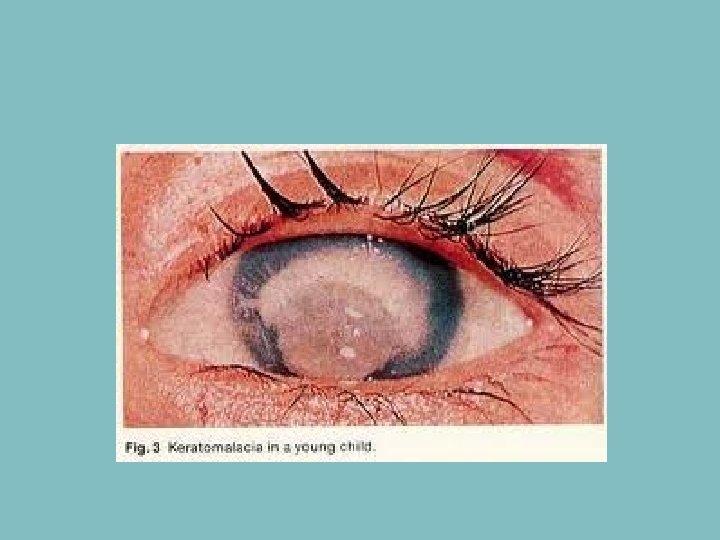
Vitamin A deficiency • • • WHO clinical classification of vitamin A deficiency Stage Clinical features XN Night blindness X 1 A Conjunctival xerosis X 1 B Bitot spots X 2 Corneal xerosis X 3 A Corneal ulcer<1/3 surface X 3 B Corneal ulcer>=1/3 surface XS Corneal scar XF Xerophthalmic fundus
Vitamin A deficiency • CLINICAL FEATURES • Range from mild to severe • Can go through this sequence or if very severe deficiency can lead to corneal ulcer at first presentation. • 1) NIGHT BLINDNESS • Due to insufficient retinol available to the eye to support visual cycle of rod cells in the retina. • Require greater illumination to see at night. • Increase photic stress during the day can exacerbate night blindness. • Reversible at this stage.
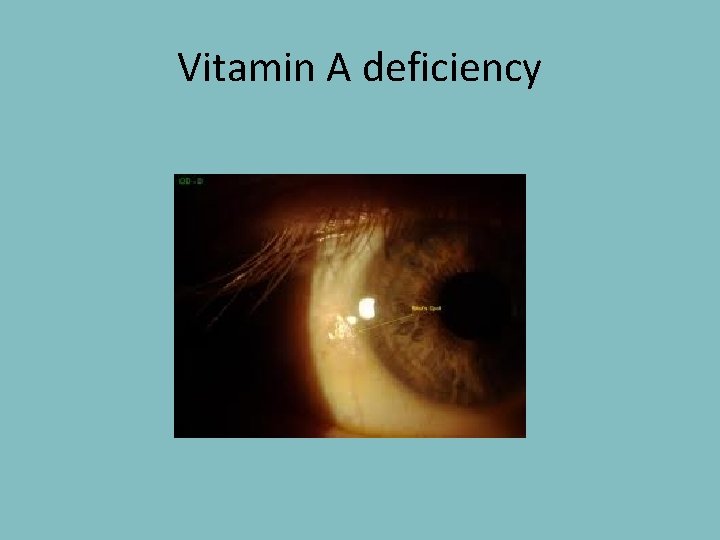
Vitamin A deficiency • 2) CONJUNCTIVAL XEROSIS • Keratinizing metaplasia of the conjunctiva and cornea with loss of goblet cells and mucin. Seen in temporal area. • Conjunctiva appears granular and dry and unwettable. Seen on slit lamp examination. • Nasal conjunctiva is involved later on.
Vitamin A deficiency
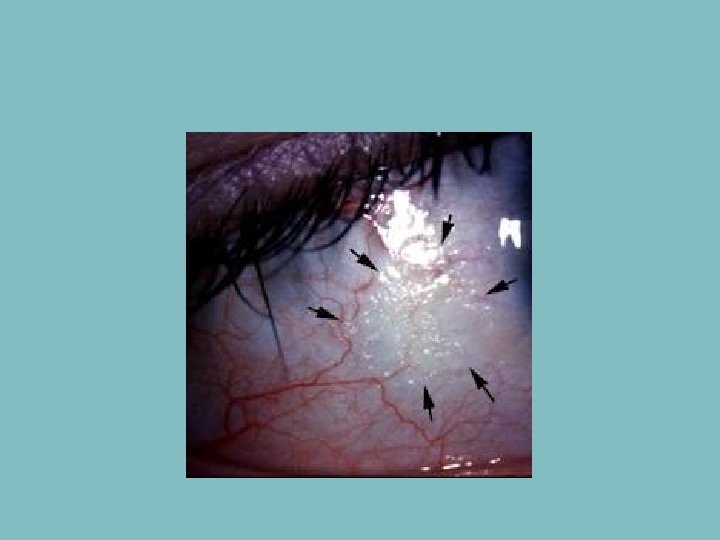
Vitamin A deficiency • 3) conjunctival xerosis-BITOT SPOT • Foamy cheesy looking elevated lesion that is seen on the temporal bulbar conjunctiva. • Usually bilateral. • Long standing vitamin A defeciency. • Histologically- Bitot’s spots show desquamated keratin, loss of goblet cells and saprophytic bacilli. • Reversible after high dose vitamin A.
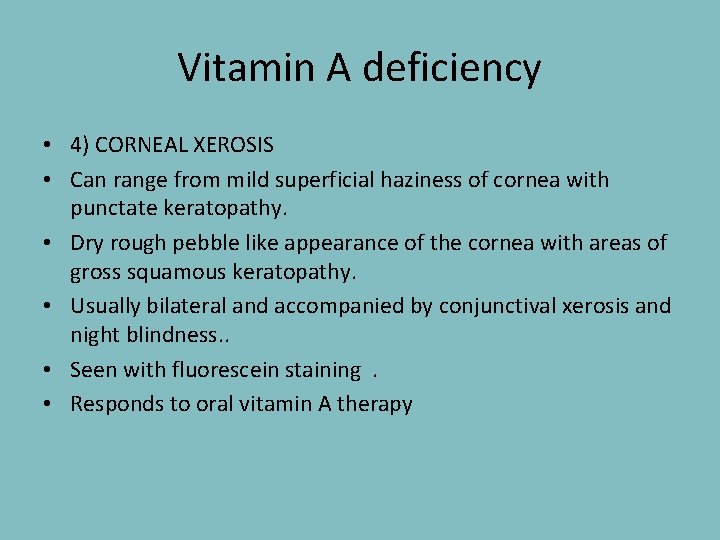
Vitamin A deficiency • 4) CORNEAL XEROSIS • Can range from mild superficial haziness of cornea with punctate keratopathy. • Dry rough pebble like appearance of the cornea with areas of gross squamous keratopathy. • Usually bilateral and accompanied by conjunctival xerosis and night blindness. . • Seen with fluorescein staining. • Responds to oral vitamin A therapy
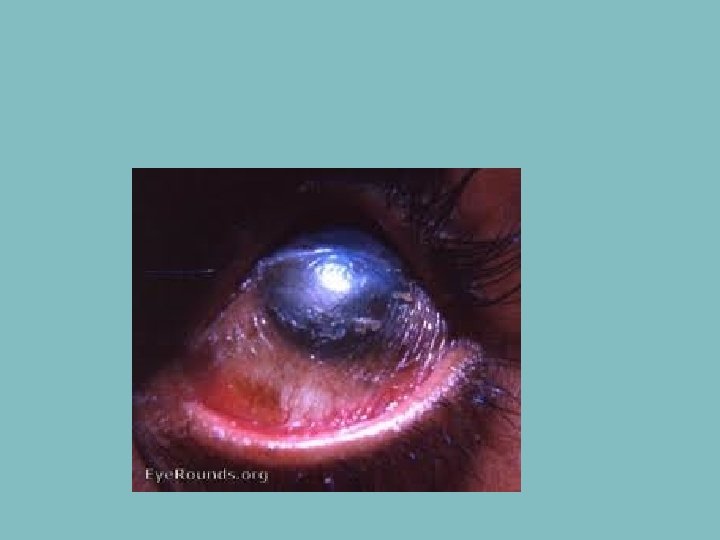
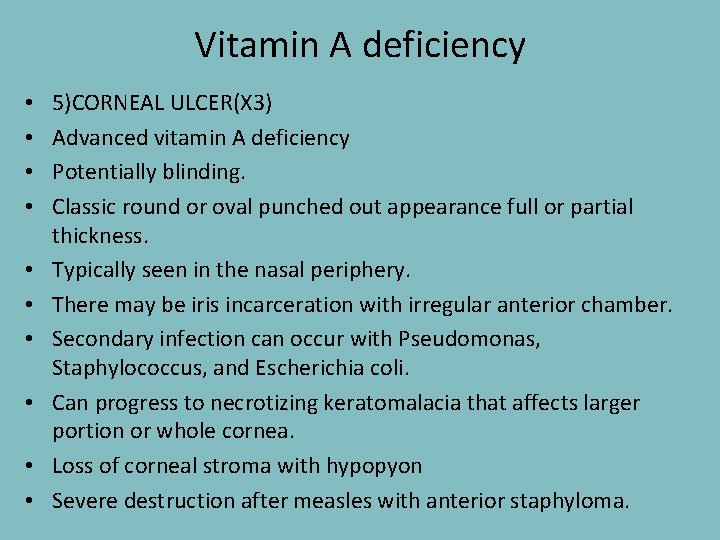
Vitamin A deficiency • • • 5)CORNEAL ULCER(X 3) Advanced vitamin A deficiency Potentially blinding. Classic round or oval punched out appearance full or partial thickness. Typically seen in the nasal periphery. There may be iris incarceration with irregular anterior chamber. Secondary infection can occur with Pseudomonas, Staphylococcus, and Escherichia coli. Can progress to necrotizing keratomalacia that affects larger portion or whole cornea. Loss of corneal stroma with hypopyon Severe destruction after measles with anterior staphyloma.
Vitamin A deficiency
Vitamin A deficiency
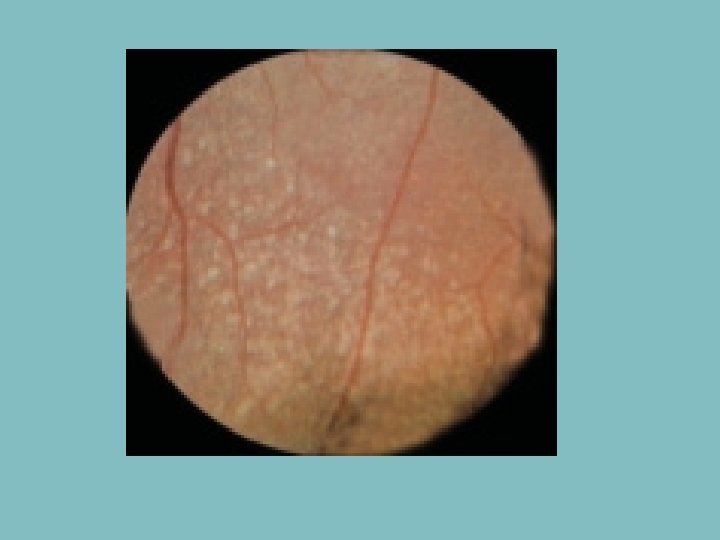
Vitamin A deficiency • XEROPHTHALMIC FUNDUS • Fine white or yellow discreet lesions seen in retinal mid periphery deep to retinal vessels. • Disrupted outer segments of rods with RPE disturbances.
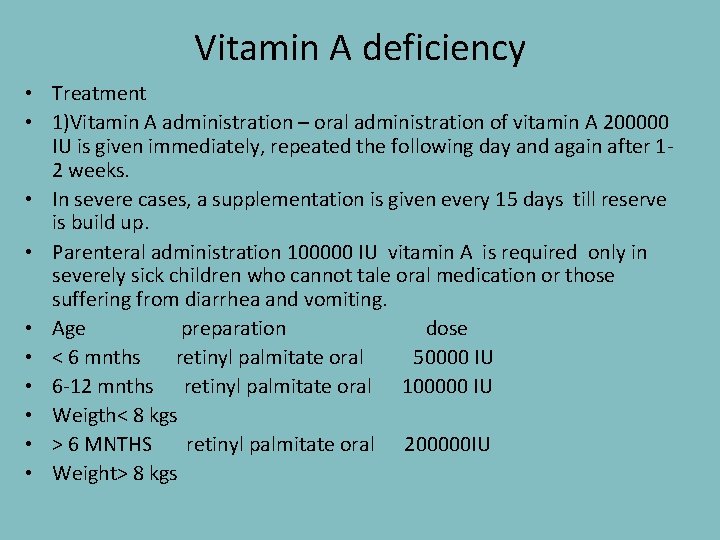
Vitamin A deficiency • Treatment • 1)Vitamin A administration – oral administration of vitamin A 200000 IU is given immediately, repeated the following day and again after 12 weeks. • In severe cases, a supplementation is given every 15 days till reserve is build up. • Parenteral administration 100000 IU vitamin A is required only in severely sick children who cannot tale oral medication or those suffering from diarrhea and vomiting. • Age preparation dose • < 6 mnths retinyl palmitate oral 50000 IU • 6 -12 mnths retinyl palmitate oral 100000 IU • Weigth< 8 kgs • > 6 MNTHS retinyl palmitate oral 200000 IU • Weight> 8 kgs
VITAMIN A Defeciency • 2) Protein calorie malnutrition – can precipitate the disease. • 3)Local eye care • Broad spectrum antibiotic drops and ointments.
Vitamin A deficiency Prevention • Health education • Dietary advice • Immunization • Better hygiene • Sanitation • Prophylaxis • First dose can been given with measles or MMR vaccines.
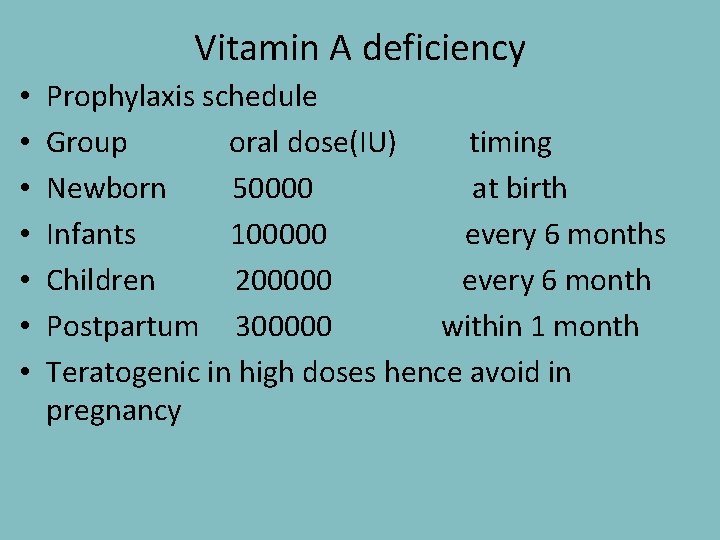
Vitamin A deficiency • • Prophylaxis schedule Group oral dose(IU) timing Newborn 50000 at birth Infants 100000 every 6 months Children 200000 every 6 month Postpartum 300000 within 1 month Teratogenic in high doses hence avoid in pregnancy
Vitamin A deficiency • • • Primary health care level Health education Dietary advice Regular administration of prophylactic dose. Providing food rich in vitamin A. Vitamin A fortification of foods such as cereals, fats and oil.
Eye Banking • Eye bank is an organization which deals with the collection, storage and distribution of cornea for the purpose of corneal grafting, research.
Functions of an eye bank • Promotion of eye donation by increasing awareness about eye donation to the general public. • 2. Registration of the pledger for eye donation. • 3. Collection of the donated eyes from the deceased. • 4. Receiving and processing the donor eyes. • 5. Preservation of the tissue for short, intermediate, long or very long term. • 6. Distribution of the donor tissues to the corneal surgeons. • 7. Research activities for improvement of the preservation methodology, corneal substitute and utilisation of the other components of eye
REHABILITATION OF THE BLIND • Medical rehabilitation. By low vision aids (LVA) many visually handicapped can have a useful vision. • 2. Training and psychosocial rehabilitation. Assurence of the blinds and made to feel that they are equally useful and not inferior to the sighted persons.
• Mobility training with the help of a stick. • Training in daily living skills such as bathing washing, putting on clothes, shaving, cooking and other household work
• Educational rehabilitation. It includes education avenues in ‘Blind Schools’ with the facility of Braille system of education. • Vocational rehabilitation. It will help them to earn their livelihood and live as useful citizens. Blinds can be trained in making handicrafts, canning, book binding, candle and chalk making, cottage industries and as telephone operators.
Summary • Preventable blindness includes diseases like glaucoma, corneal scarring from trauma or infection • Treatable blindness includes conditions like cataract • Avoidable includes both
Burden of avoidable blindness can be reduced by 1. Better standard of living 2. Good nutrition 3. Education 4. Sanitation 5. Hygiene 6. Access to good health care system
- Slides: 96