
Community of Practice Health Service Delivery A model



- Slides: 29
Community of Practice Health Service Delivery A model of knowledge management at the district level PHCPI, Global Stakeholders Workshop, Geneva, 6 -8 April 2016 1
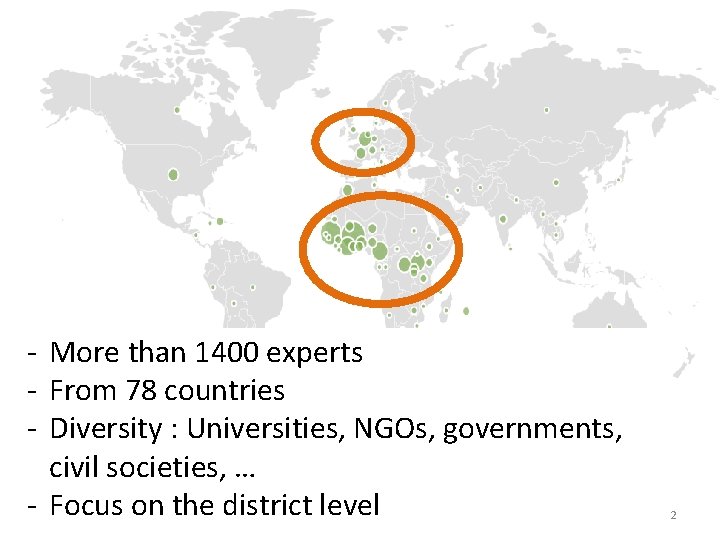
- More than 1400 experts - From 78 countries - Diversity : Universities, NGOs, governments, civil societies, … - Focus on the district level 2
Strategies of the Co. P HSD • Dynamic horizontal (peer-to-peer) exchange • Contribution to address health system issues • Sharing of best practices 3
The Co. P HSD, A knowledge management model Co. P HSD fosters exchange on health service delivery at the district level 1. Brings different knowledge holders/profiles together in one platform 2. Facilitates interaction and builds trust 3. Shares information and best practices 4. Develops a common knowledge agenda 4
1. An online discussion forum https: //hhacops. org/cop-hsd-pss-bilingual/discussions 5
2. Newsletter in French www. santemondiale. org 6
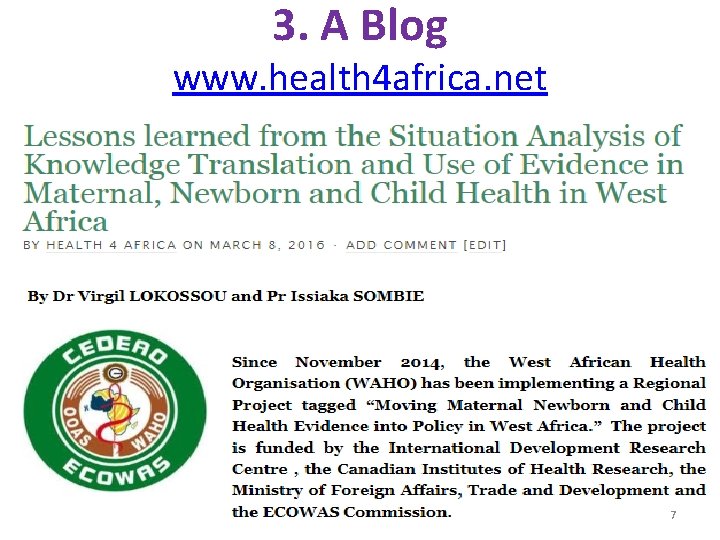
3. A Blog www. health 4 africa. net 7
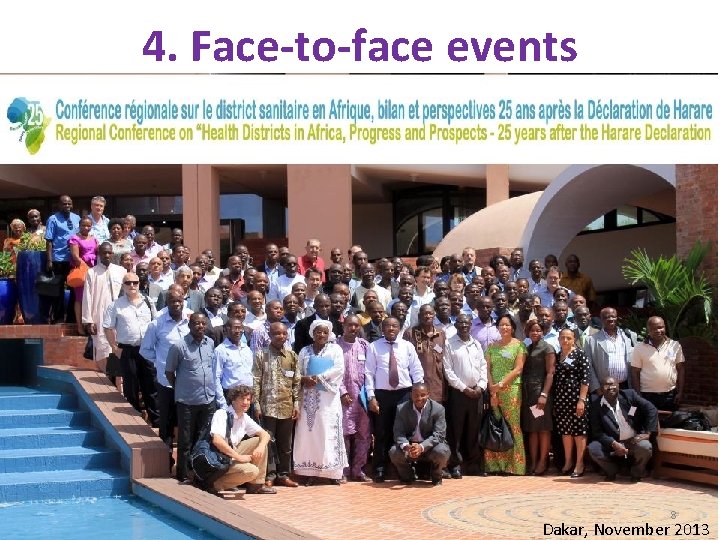
4. Face-to-face events 8 Dakar, November 2013
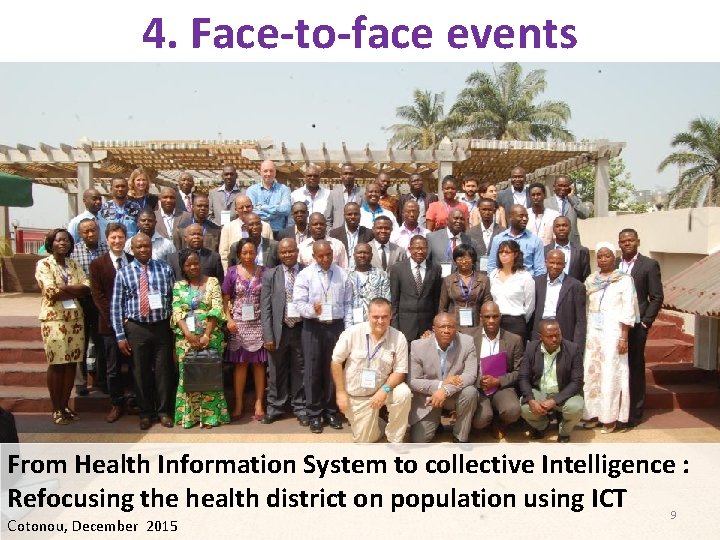
4. Face-to-face events From Health Information System to collective Intelligence : Refocusing the health district on population using ICT 9 Cotonou, December 2015
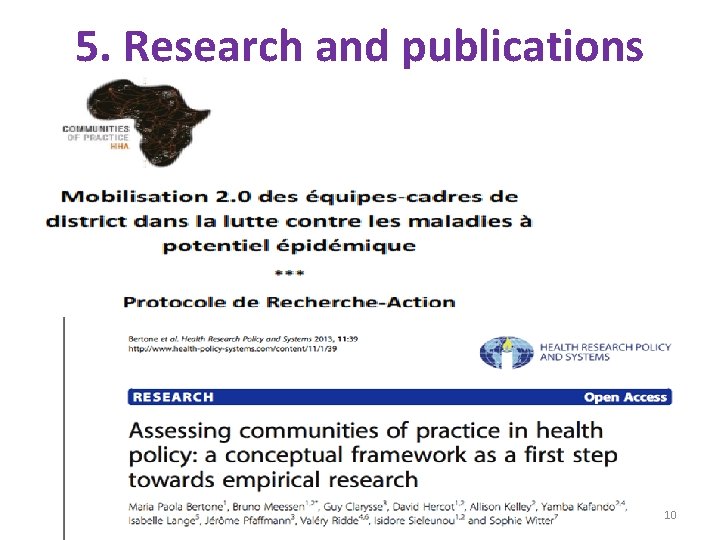
5. Research and publications 10
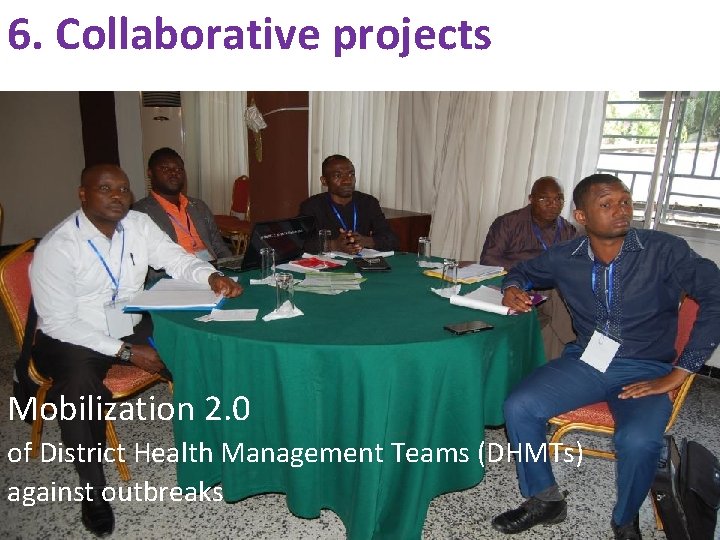
6. Collaborative projects Mobilization 2. 0 of District Health Management Teams (DHMTs) against outbreaks 11
Dakar regional conference on Health district (2013) • Since Harare (1987): many changes in Africa • Local health systems performance: still low • The health district : remains a valid strategy, but needs for a renewed vision to improve primary health care – Health district: to be a learning system – One of the 12 priorities for better performing health districts in Africa was on health information system ICT - The power of ICT to enhance governance and accountability, equity, effectiveness and efficiency of local health systems 12
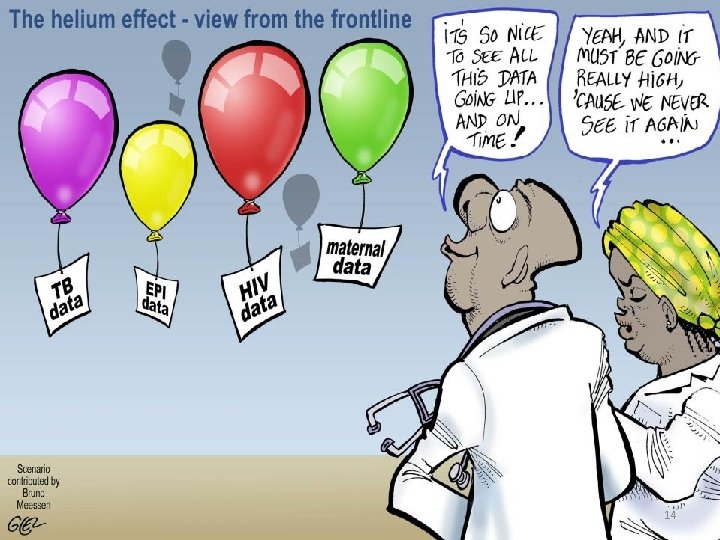
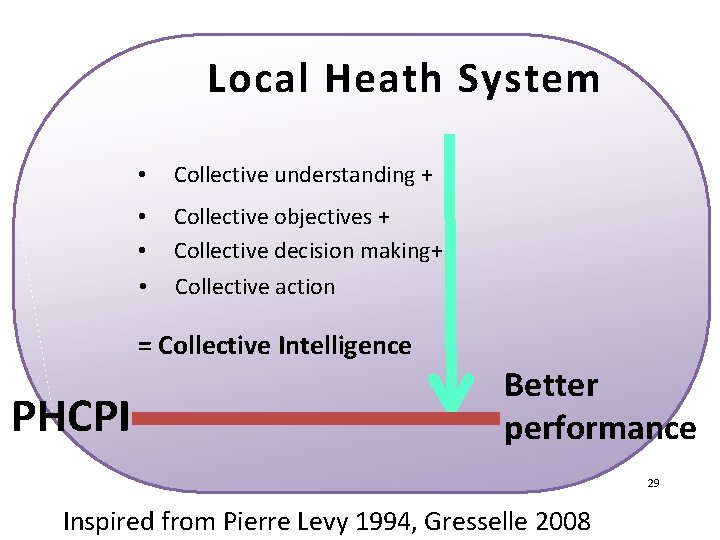
Challenges of health information systems Inputs (Cotonou, 2015) • HIS: designed for the purpose of the central level • Decentralized level rarely involved in the design of HIS: what? Why? • Multiple and fragmented tools Processes • Central level: a data pulling system, Little feedback • Decision-making not valued (focus on promptness and completeness of data) • Non-health actors disconnected (lack of collective intelligence) Outcomes • Poor data quality • Poor performance of the district health systems 13
14
Mobilization 2. 0 Data and decision-making at the district level A Quest for an effective theory of change 15
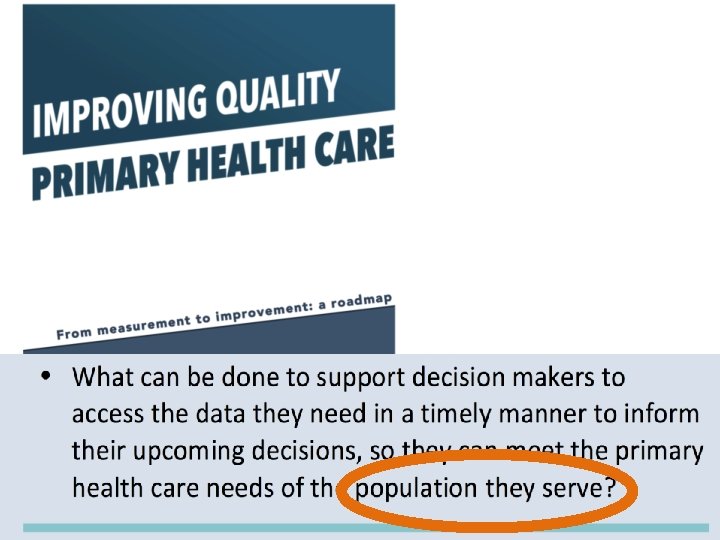
16
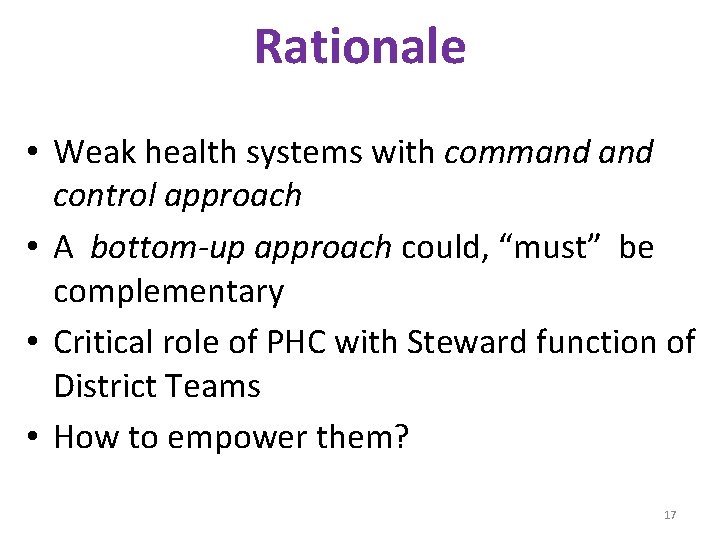
Rationale • Weak health systems with command control approach • A bottom-up approach could, “must” be complementary • Critical role of PHC with Steward function of District Teams • How to empower them? 17
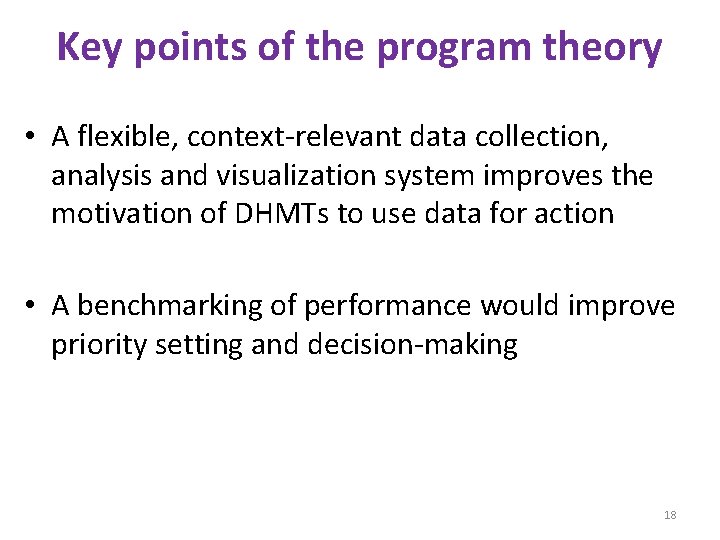
Key points of the program theory • A flexible, context-relevant data collection, analysis and visualization system improves the motivation of DHMTs to use data for action • A benchmarking of performance would improve priority setting and decision-making 18
Key points of the program theory • A national discussion forum empowers local actors in taking action • Mobilizing different categories of actors and competencies leads to the improved health system performance 19
Mobilisation 2. 0: 4 key integrated components 1. 2. 3. 4. District level preparedness against outbreaks Sharing experience in outbreak response Social medias Action research 20
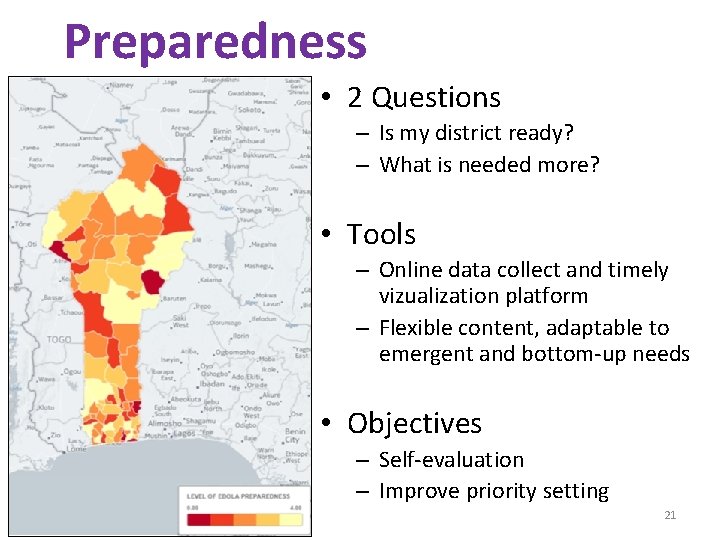
Preparedness • 2 Questions – Is my district ready? – What is needed more? • Tools – Online data collect and timely vizualization platform – Flexible content, adaptable to emergent and bottom-up needs • Objectives – Self-evaluation – Improve priority setting 21
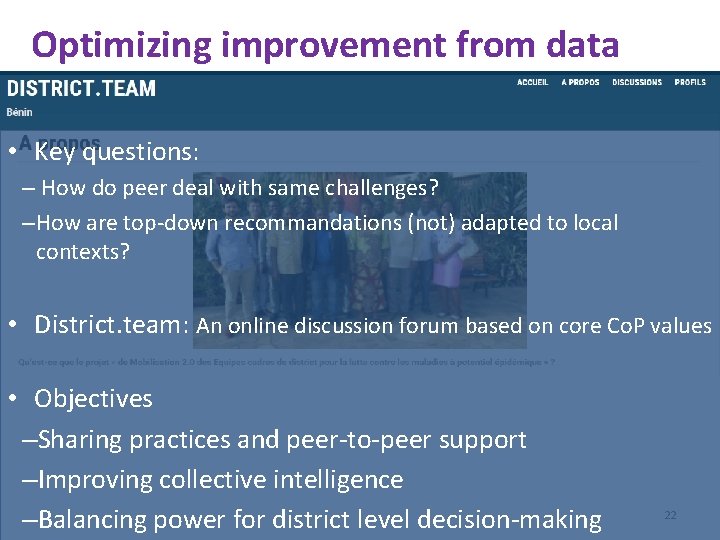
Optimizing improvement from data • Key questions: – How do peer deal with same challenges? –How are top-down recommandations (not) adapted to local contexts? • District. team: An online discussion forum based on core Co. P values • Objectives –Sharing practices and peer-to-peer support –Improving collective intelligence –Balancing power for district level decision-making 22
Populations as collective and individual decision-makers • Do people have quality and up-to-date information about diseases, outbreaks? • Are they empowered to take evidence based decisions and action accross social categories? • Are they empowered to defend their right to health and leverage an effective bottom-up pressure? 23
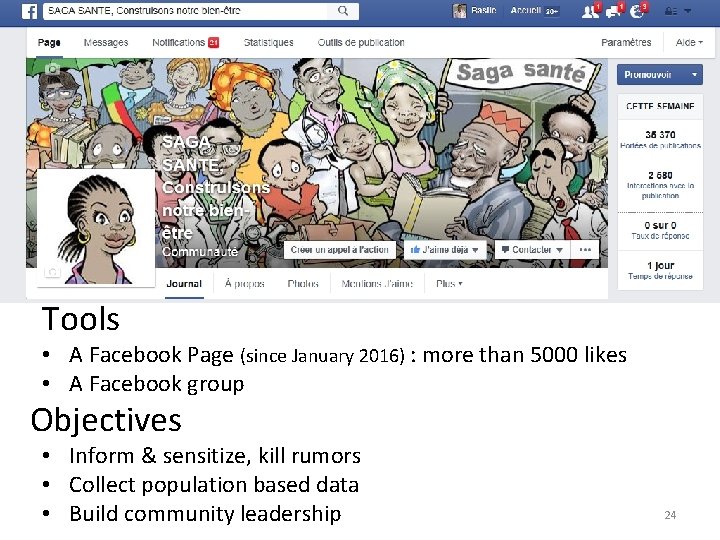
Tools • A Facebook Page (since January 2016) : more than 5000 likes • A Facebook group Objectives • Inform & sensitize, kill rumors • Collect population based data • Build community leadership 24
Action-research • A core Question: How to mobilize DHMTs in evaluating their own performance and improving their response to health challenges? • Tool: Action-research on the 3 other components • Objectives – Adapt strategies – Draw and share the lessons – Refine our program theory 25
Implementation • First phase: 2015 -2016 – 2 countries: Benin and Guinea – 3 research centres in Benin, Belgium and Guinea – Support: UNICEF WCARO • Second phase: 2017 – Inclusion of other countries – Collaboration with other partners – Focus on other health priorities (health district performance indicators, maternal and child health, …) 26
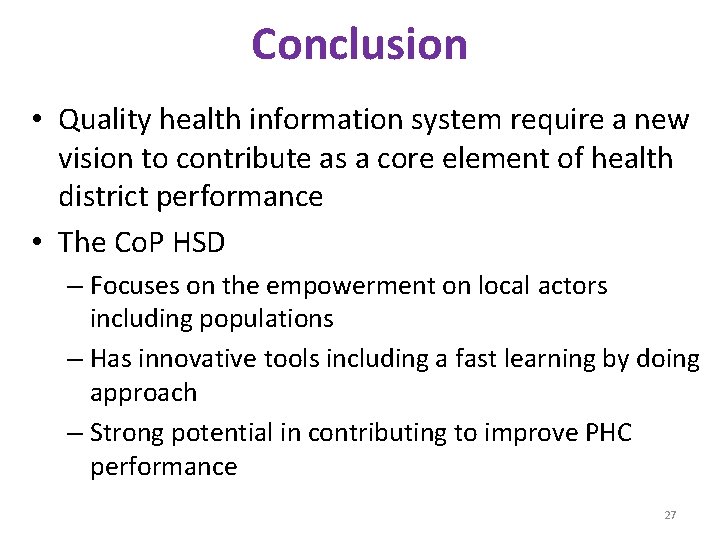
Conclusion • Quality health information system require a new vision to contribute as a core element of health district performance • The Co. P HSD – Focuses on the empowerment on local actors including populations – Has innovative tools including a fast learning by doing approach – Strong potential in contributing to improve PHC performance 27
Thank you 28
Local Heath System • Collective understanding + • • • Collective objectives + Collective decision making+ Collective action = Collective Intelligence PHCPI Better performance 29 Inspired from Pierre Levy 1994, Gresselle 2008