
Community memory as a process reflections and indications



- Slides: 30
Community memory as a process: reflections and indications for design Giorgio De Michelis DISCo – University of Milano – Bicocca Ivrea - November 2003
Table of content • Two stories • The Campiello Project • Communities • The memory of communities • Designing for communities
Two stories
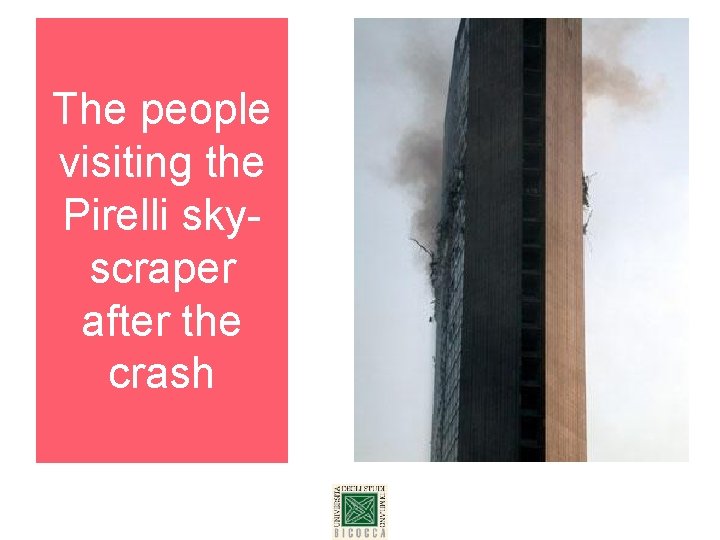
The people visiting the Pirelli skyscraper after the crash
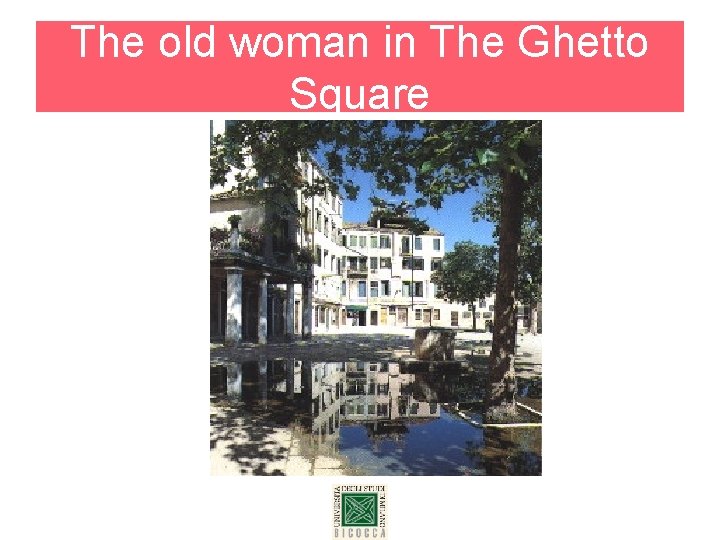
The old woman in The Ghetto Square
Campiello and Milk
Campiello in short • 1997 -2000 • An i 3 (intelligent information interfaces) project - EC, IV Framework Program • Coordinator: University of Milano - Bicocca • Partners: Domus Academy, Forthnet, Municipality of Chania, Technical University of Crete, Xerox Research Centre Europe
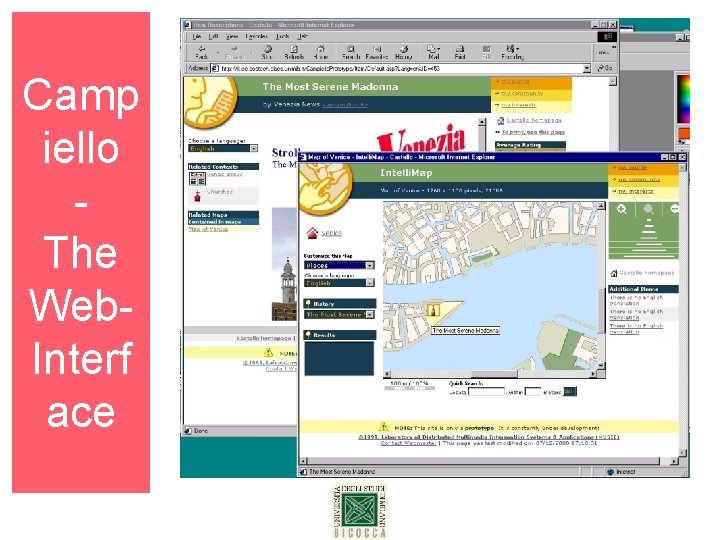
Campiello objectives • Aim: to develop and experiment a system supporting communication and knowledge sharing within communities living in art cities, and between these communities and foreign visitors. • Experiments in Venice and Chania.
Milk • 2002 -2004 • A knowledge management project - EC, V Framework Program • Coordinator: Irso • Partners: Butera e Partners, Domus Academy, Fraunhofer Institute, Picture. Safe, University of Milano Bicocca, Xerox Research Centre Europe
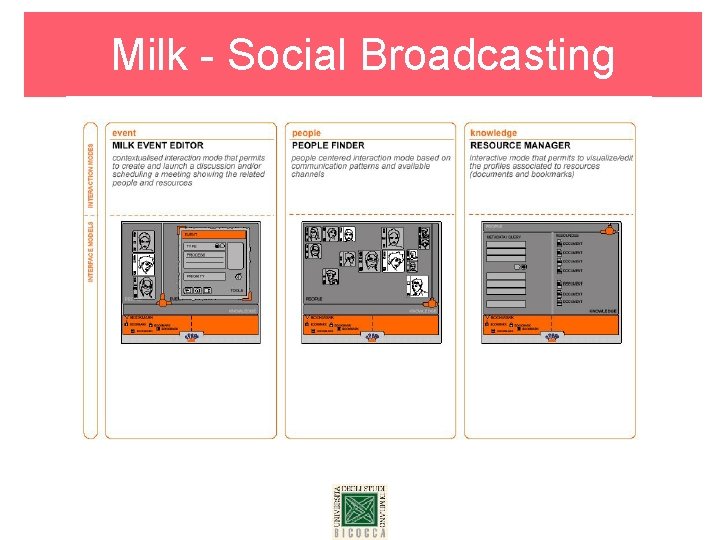
Milk objectives • Aim: to develop and experiment a system supporting learning and knowledge sharing within professional communities working in innovative knowledge-intensive companies. • Experiments in counselling and software design.
Communities
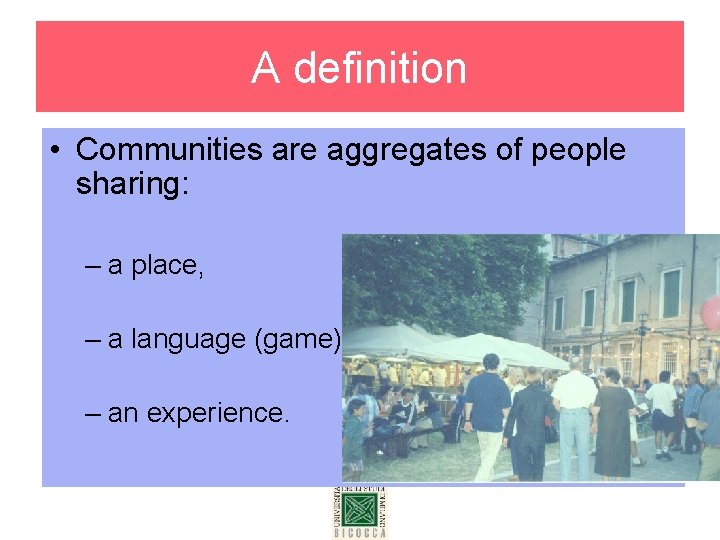
A definition • Communities are aggregates of people sharing: – a place, – a language (game) – an experience.
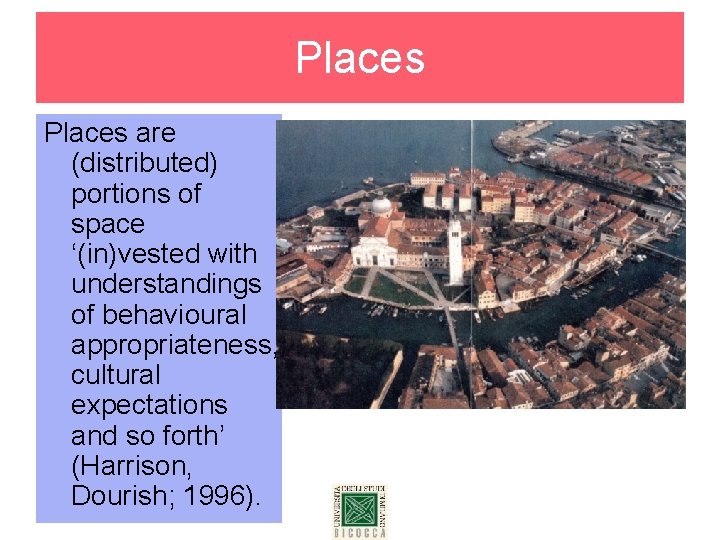
Places are (distributed) portions of space ‘(in)vested with understandings of behavioural appropriateness, cultural expectations and so forth’ (Harrison, Dourish; 1996).
Language games • The language game of a community is more characterized by what people don’t say than by what they say. • Names and elliptycal discourses make reference to the place of the community and its objects • Through language, community members give sense to their actions and interactions.
Experiences • Community members share the experiences they live in their place • Community members share also those experiences in which they didn’t participate
The memory of communities
Community memory • The memory of a community is constituted by the knowledge about past experiences, community members and place its members share • Community memory is continuously enriched and transformed by the interaction of its members
Memory as an experience • Within a community recalling and sharing an experience, is itself an experience. • Community memory links past experiences to the new experiences whithin which the latter are recalled and shared, helping to transform the remembrance of a past experience into a new experience.
Memory and narrations • Community memory is intrinsically narrative. • Narrations allow members who did not participate in an experience to share its memory with those who participated in it.
Designing for communities
Whenever and wherever • Supporting community memory requires bringing it forth to the community members, when and where they need it. • Avoiding the digital divide. • A multichannel system delivering its services in any situation • Beyond a knowledge base with sophisticated search engines.
Campiello - The Community Wall
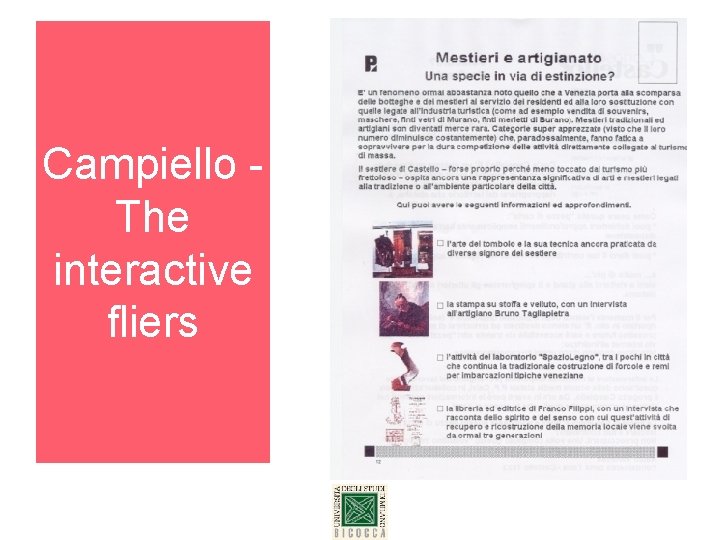
Campiello The interactive fliers
Camp iello The Web. Interf ace
Milk - Social Broadcasting
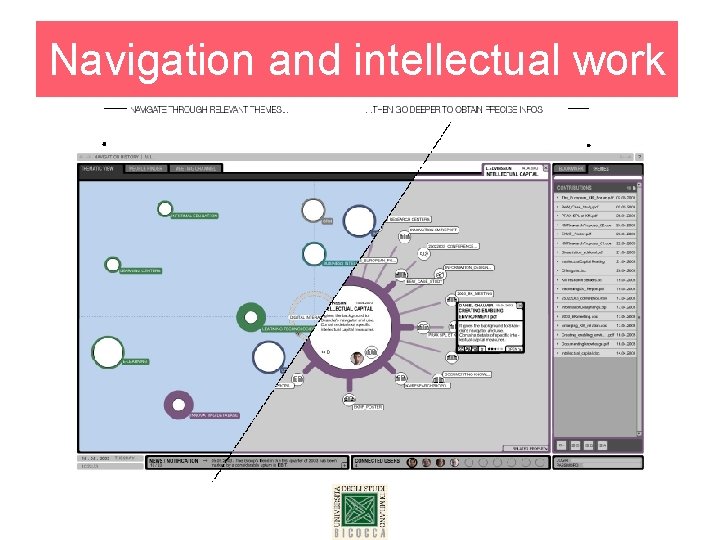
Navigation and intellectual work
Tacit and explicit knowledge • Not only a knowledge base containing records of events, places and people. • But also a directory supporting the interaction with people knowing interesting things about the community.
A community of users • No distinction betwen content creators and consumers • Supporting community memory requires presenting records of past experiences so that the actions and interactions of members become more effective.
Memory and ontology • Any community memory has its own ontology, linking it to the language game of the community. • Supporting community memory implies building a knowledge base reflecting its ontology.
A continuously changing ontology • Community members need to add new concepts and new links to the ontology. • The ontology of a community memory can be grounded on only three categories: space, time and people (3 -ontology: Leiva Lobos, 1998). • Only editorial coordination is needed.