
Community Intervention Team the role it plays in

- Slides: 17
Community Intervention Team – the role it plays in integrated patient centred care Noreen Curtin 6 th October 2015
• The role and purpose of the Community Intervention Team • Case studies
• A Community Intervention Team (CIT) is a nurse led health professional team which provides a rapid and integrated response to a patient with an acute episode of illness who requires enhanced services/acute intervention for a defined short period of time. This may be provided at home, in a residential setting or in the community as deemed appropriate, thereby avoiding acute hospital admission or facilitating early discharge.
The CIT provide a range of services including: • Administration of home IV antibiotics (Out-patient Parenteral Anti-microbial Therapy -OPAT); • Acute anticoagulation care; • Acute wound care and dressings; • Enhanced nurse monitoring following fractures, falls or surgery; • Care of a patient with a central venous catheter;
• Urinary related care; • Care of the patient with a respiratory illness; • Bowel care including ostomy care; • Short term older person support and care • Medication management/ administration
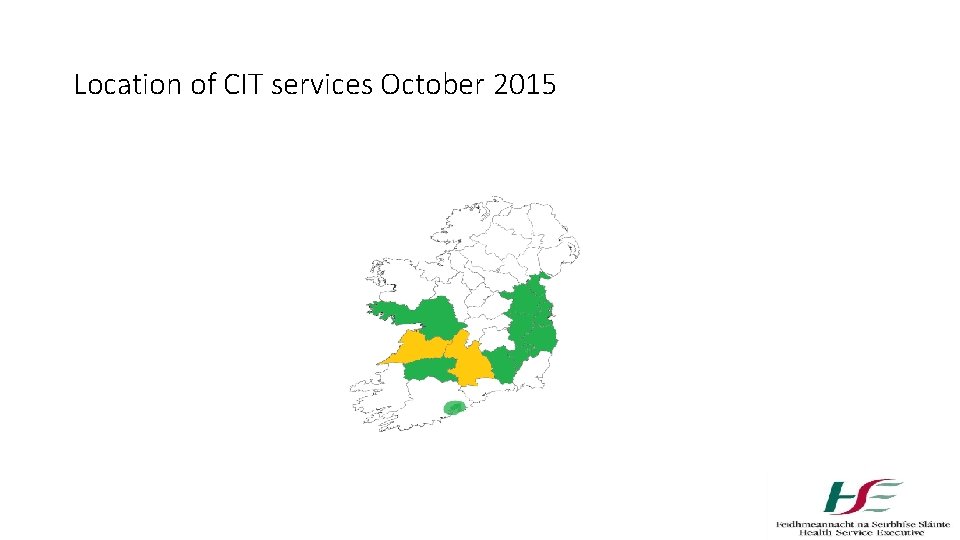
Location of CIT services October 2015
Care co-ordination at patient level – case study Background: • J (man 31) Quadraplegia • Living with his parents , supported with 12 hours of home support from Disabilities. • Developed a pressure ulcer on sacrum which deteriorated resulting in osteomyelitis in saccral area. • In-patient for 6 weeks.
Referral to CIT • J was transferred to a Community Nursing Unit on discharge from UHL • Referral to CIT for OPAT. • His 12 hours of home support was transferred to the CNU and his own carers looked after him.
Service delivery • Daily OPAT by CIT in the CNU • Weekly bloods, PICC line care. • Wound photography (with photographic consent) emailed to Tissue Viability Nurse and Infectious Diseases consultant as he was unable to attend OPAT review clinic. • Negative pressure wound therapy done by nursing staff CNU • Peg feeding by own carers. • Frequent liaison with parents, nursing staff, and Infectious Diseases team.
Patient outcome • OPAT delivered for 9 weeks until wound healed. • J was discharged to home from the CNU. .
Chronic Disease Management Mr X - a 70 year old man with a 10 year hx of COPD. Increasing hospitalisation requiring IV antibiotics with referral to CIT for OPAT. Mar 2011 - he expressed a wish to be cared for as much as possible at home. Care plan agreed with patient, family, respiratory consultant and CIT team. GP/ PHN informed • Attend ED for diagnostics and until acute exacerbation stabilised. • Mr X/ family contacted CIT when he presented to ED. • CIT accepted his care. • •
• 6 referrals from ED in 2011 for home IV antibiotics • 3 referrals from GP/ PHN in 2011 - extra RGN/carer support required out of office hours, during periods of deterioration in his condition • 5 self referrals, majority of which were at weekends. • - nebuliser broken requiring urgent replacement • - Other 4 occasions he felt unwell. • CIT assessment completed; one occasion he required transfer to ED, the other 3 times, the CIT nurse contacted on-call GP to review him, he commenced oral antibiotics, steroids and had daily CIT visit until his condition stabilised.
• Dec 2011 – continued deterioration • CIT liaised with GP who referred him to the Community Palliative Care team • CIT liaised with PHN who facilitated application for Home Care Package and hospital bed. • Care plan agreed as Mr X reaches terminal stage of his disease. • Collaboration with palliative care team , GP, PHN service, CIT and respiratory team.
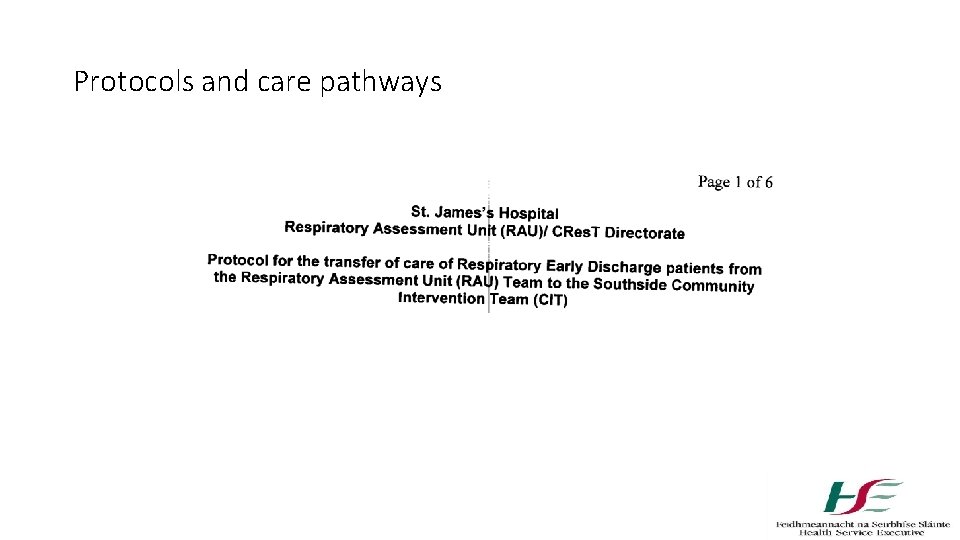
Protocols and care pathways
Protocol details: • Criteria for referral to CIT • RAU discharge planning • Referral and communication process • Home visit • Re-admission to hospital • Training and equipment • Service review procedure • Appendices
Summary • CIT - provides a rapid response and is accessible 8 am – 10 pm 7 days a week • Flexible service designed around the patient’s needs • Facilitated by communication networks and care pathways
Thank you