
Community Interactions and Ecosystem Changes Modeling Energy Flow
- Slides: 31
Community Interactions and Ecosystem Changes
Modeling Energy Flow In Ecosystems Revisited…
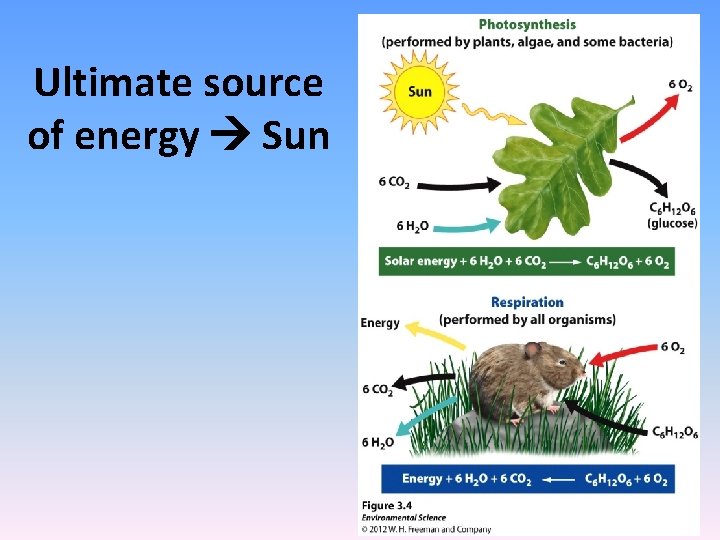
Ultimate source of energy Sun
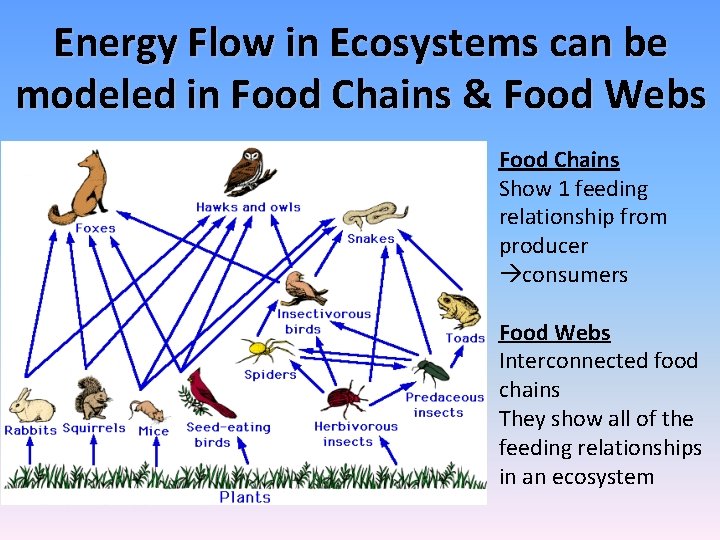
Energy Flow in Ecosystems can be modeled in Food Chains & Food Webs Food Chains Show 1 feeding relationship from producer consumers Food Webs Interconnected food chains They show all of the feeding relationships in an ecosystem
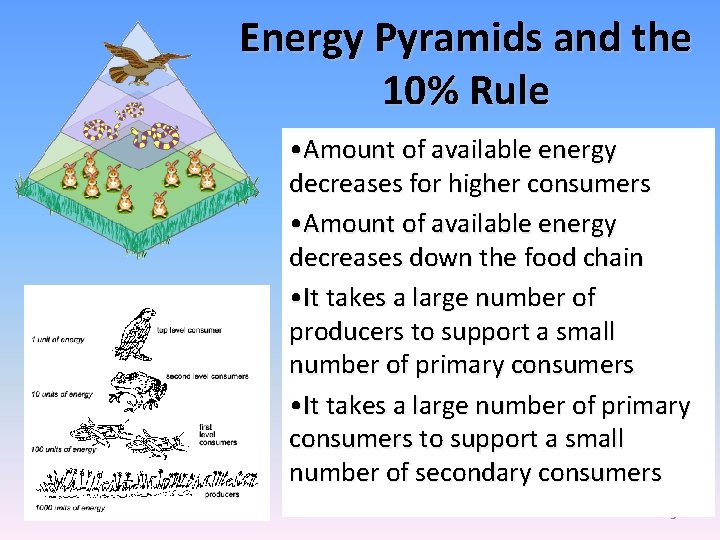
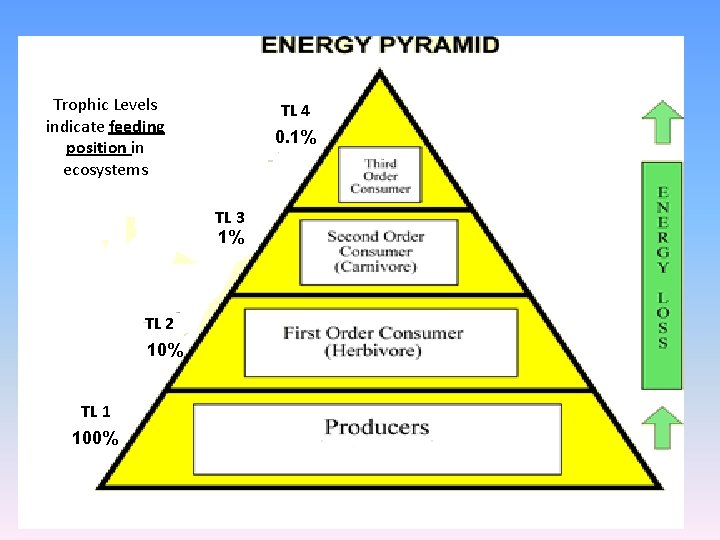
Energy Pyramids and the 10% Rule • Amount of available energy decreases for higher consumers • Amount of available energy decreases down the food chain • It takes a large number of producers to support a small number of primary consumers • It takes a large number of primary consumers to support a small number of secondary consumers 5
Trophic Levels indicate feeding position in ecosystems TL 4 0. 1% TL 3 1% TL 2 10% TL 1 100%
Community Interactions in Ecosystems
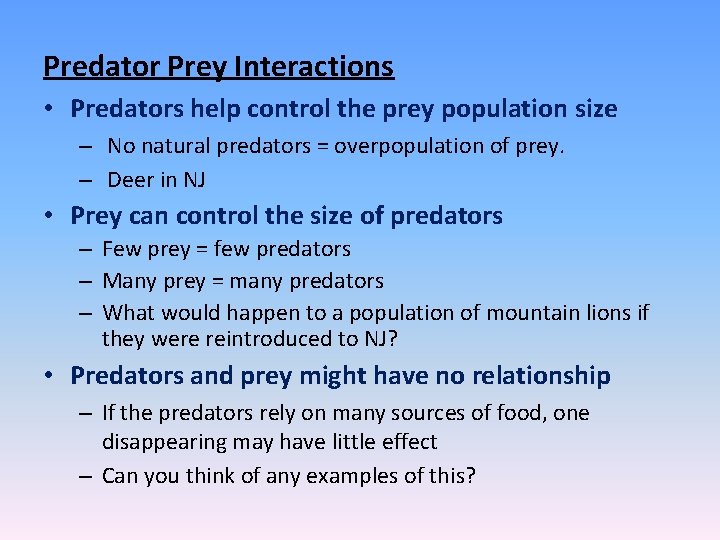
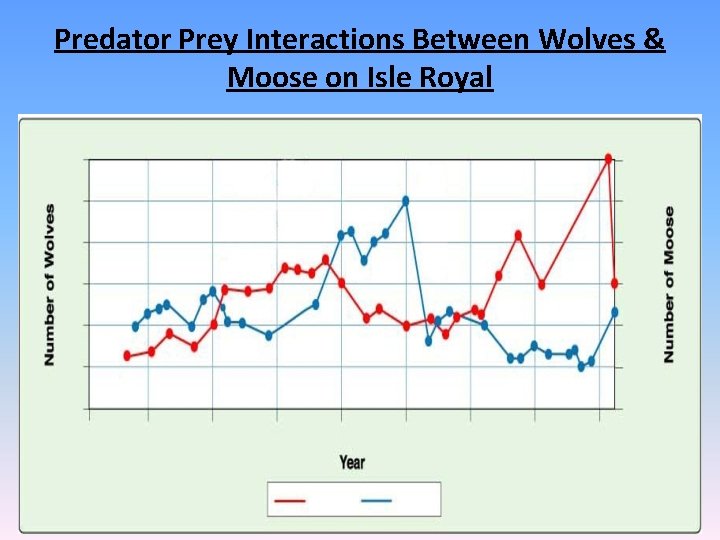
Predator Prey Interactions • Predators help control the prey population size – No natural predators = overpopulation of prey. – Deer in NJ • Prey can control the size of predators – Few prey = few predators – Many prey = many predators – What would happen to a population of mountain lions if they were reintroduced to NJ? • Predators and prey might have no relationship – If the predators rely on many sources of food, one disappearing may have little effect – Can you think of any examples of this?
Predator Prey Interactions Between Wolves & Moose on Isle Royal
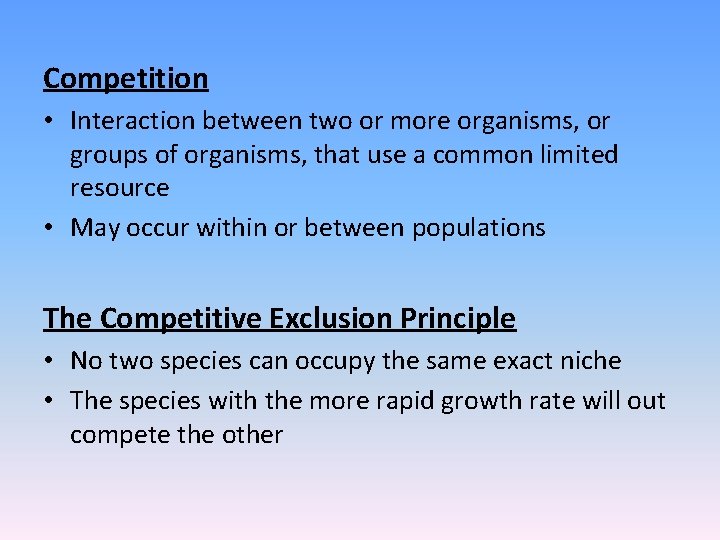
Competition • Interaction between two or more organisms, or groups of organisms, that use a common limited resource • May occur within or between populations The Competitive Exclusion Principle • No two species can occupy the same exact niche • The species with the more rapid growth rate will out compete the other
The Competitive Exclusion Principle
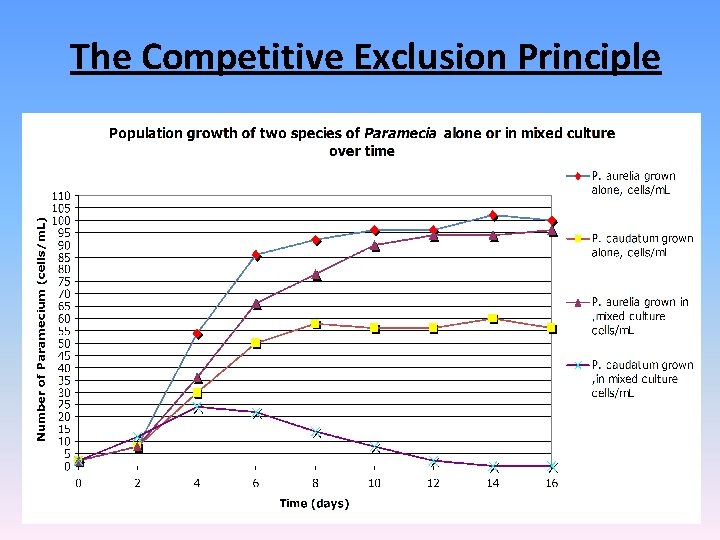
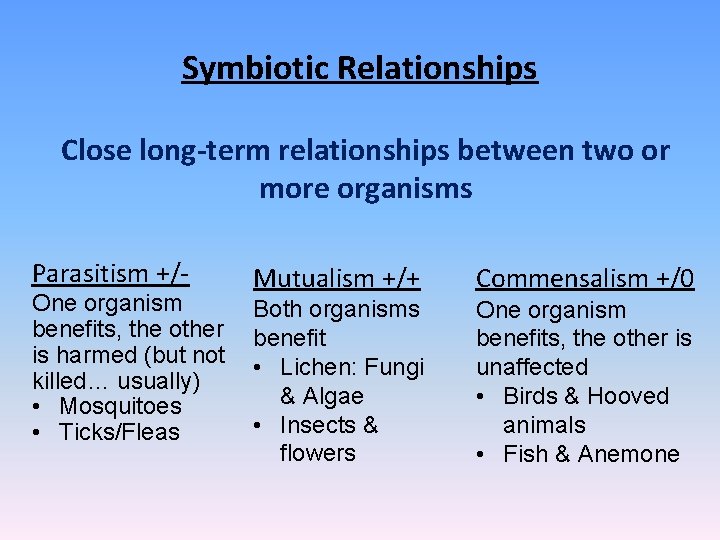
Symbiotic Relationships Close long-term relationships between two or more organisms Parasitism +/- One organism benefits, the other is harmed (but not killed… usually) • Mosquitoes • Ticks/Fleas Mutualism +/+ Commensalism +/0 Both organisms benefit • Lichen: Fungi & Algae • Insects & flowers One organism benefits, the other is unaffected • Birds & Hooved animals • Fish & Anemone
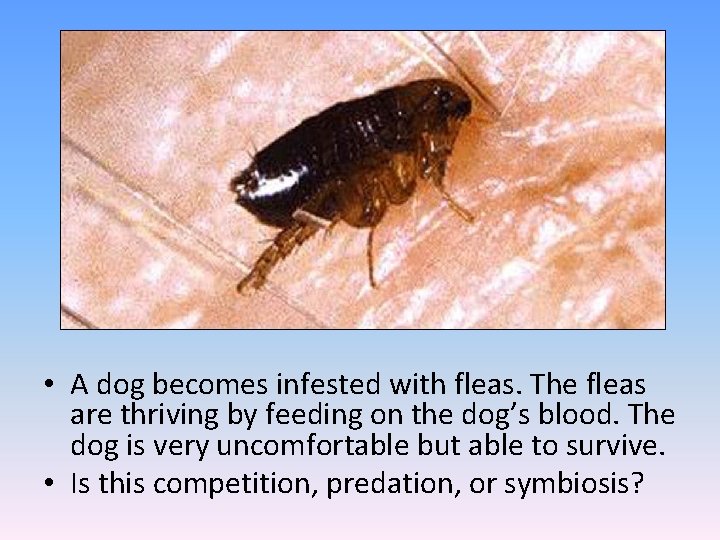
• A dog becomes infested with fleas. The fleas are thriving by feeding on the dog’s blood. The dog is very uncomfortable but able to survive. • Is this competition, predation, or symbiosis?
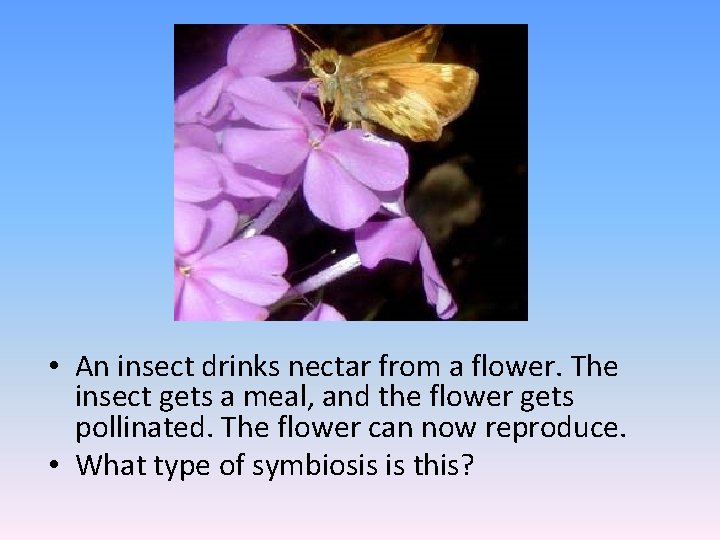
• An insect drinks nectar from a flower. The insect gets a meal, and the flower gets pollinated. The flower can now reproduce. • What type of symbiosis is this?
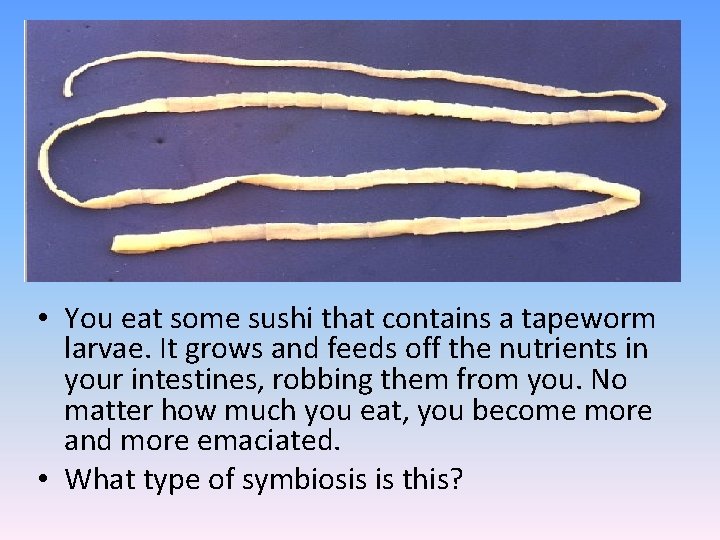
• You eat some sushi that contains a tapeworm larvae. It grows and feeds off the nutrients in your intestines, robbing them from you. No matter how much you eat, you become more and more emaciated. • What type of symbiosis is this?
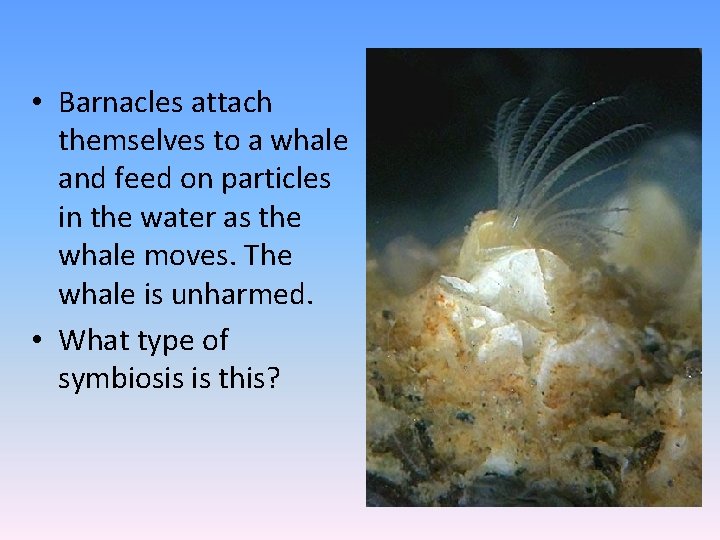
• Barnacles attach themselves to a whale and feed on particles in the water as the whale moves. The whale is unharmed. • What type of symbiosis is this?
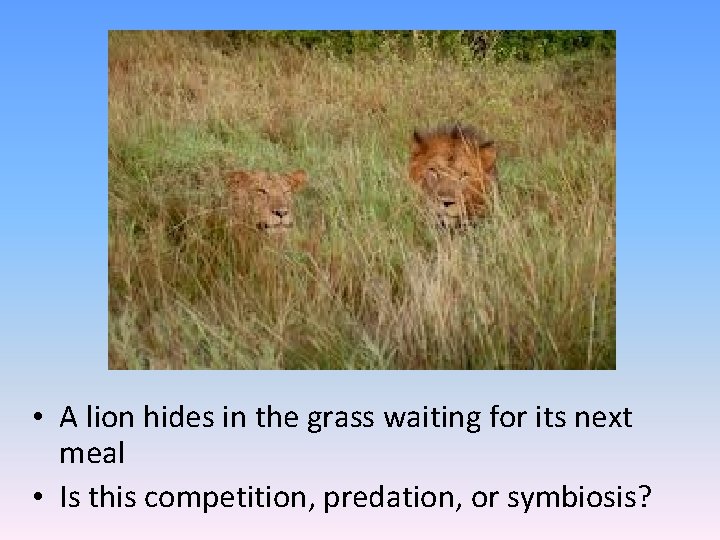
• A lion hides in the grass waiting for its next meal • Is this competition, predation, or symbiosis?
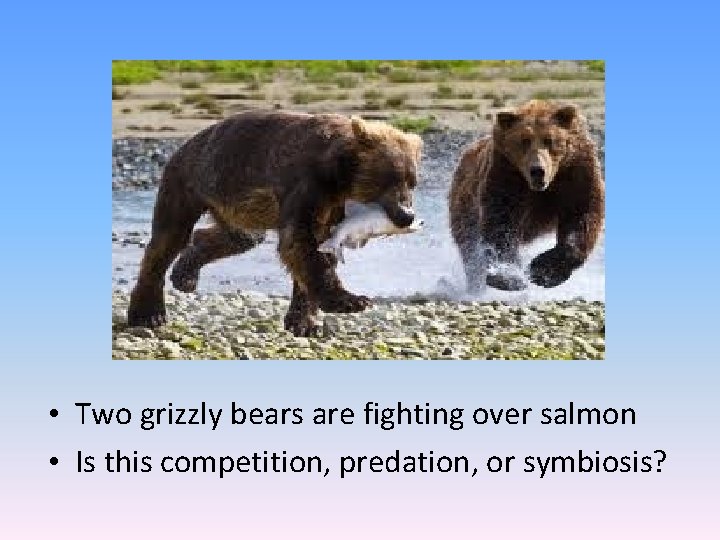
• Two grizzly bears are fighting over salmon • Is this competition, predation, or symbiosis?
Changes in Terrestrial Ecosystems Ecological Succession
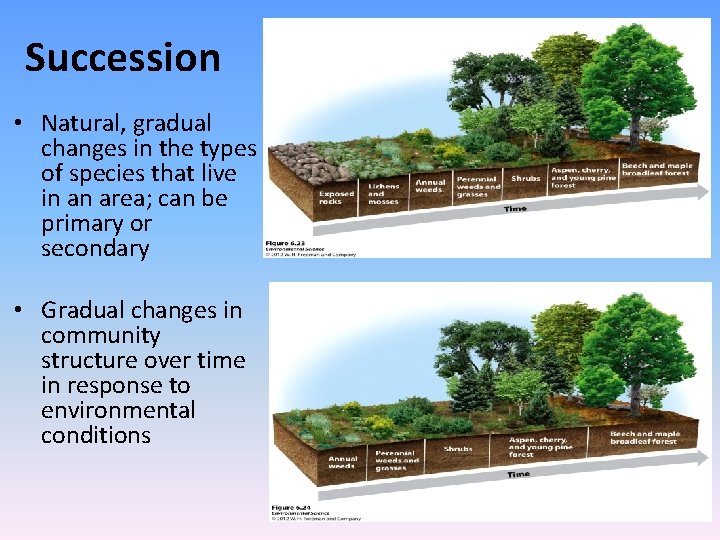
Succession • Natural, gradual changes in the types of species that live in an area; can be primary or secondary • Gradual changes in community structure over time in response to environmental conditions
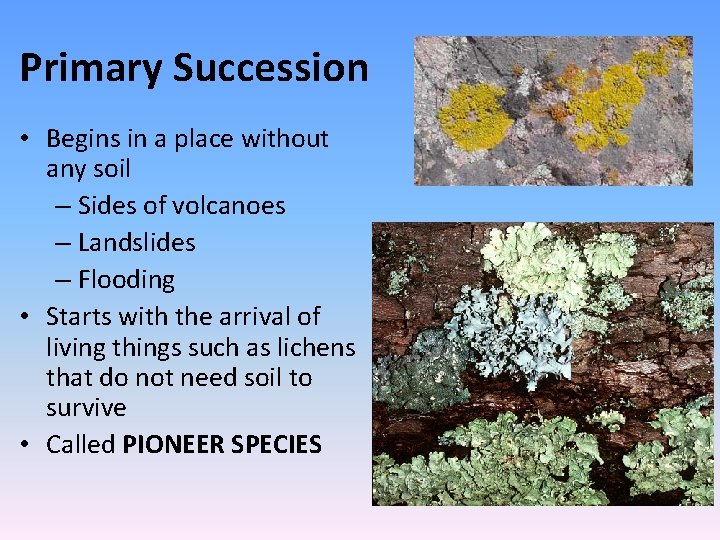
Primary Succession • Begins in a place without any soil – Sides of volcanoes – Landslides – Flooding • Starts with the arrival of living things such as lichens that do not need soil to survive • Called PIONEER SPECIES
Primary Succession • Soil starts to form as lichens and the forces of weather and erosion help break down rocks into smaller pieces • When lichens die, they decompose, adding small amounts of organic matter to the rock to make soil
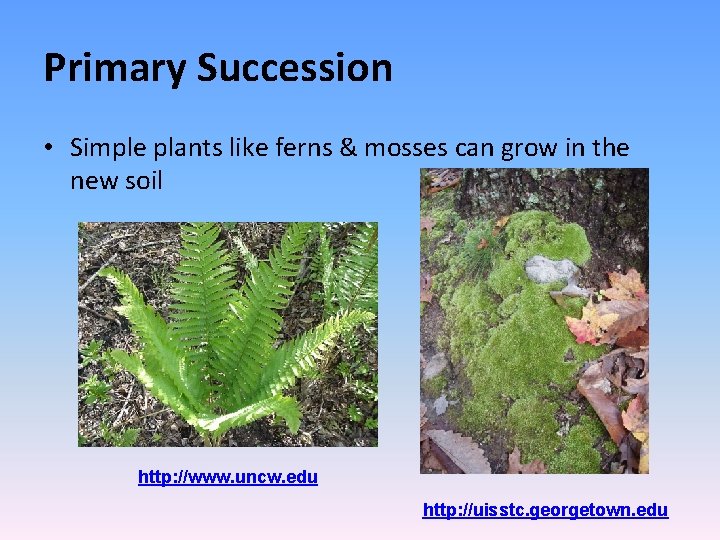
Primary Succession • Simple plants like ferns & mosses can grow in the new soil http: //www. uncw. edu http: //uisstc. georgetown. edu
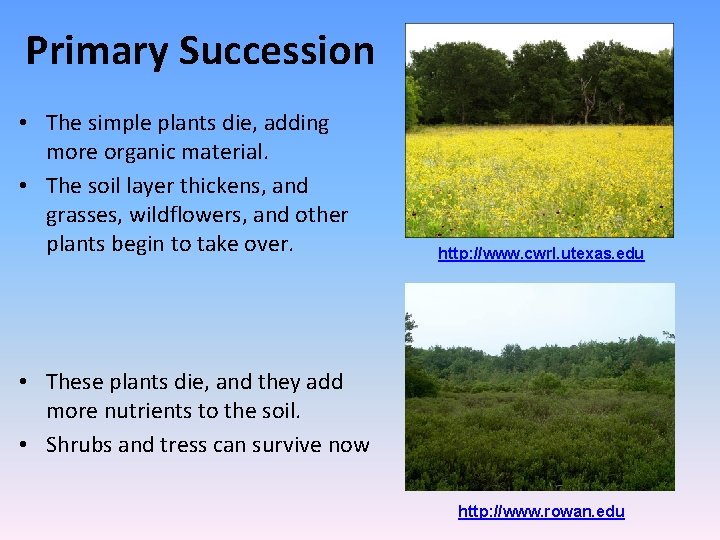
Primary Succession • The simple plants die, adding more organic material. • The soil layer thickens, and grasses, wildflowers, and other plants begin to take over. http: //www. cwrl. utexas. edu • These plants die, and they add more nutrients to the soil. • Shrubs and tress can survive now http: //www. rowan. edu
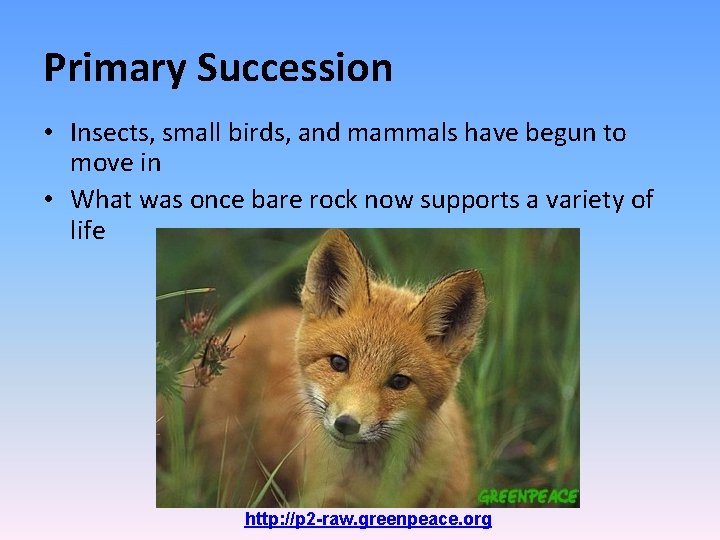
Primary Succession • Insects, small birds, and mammals have begun to move in • What was once bare rock now supports a variety of life http: //p 2 -raw. greenpeace. org
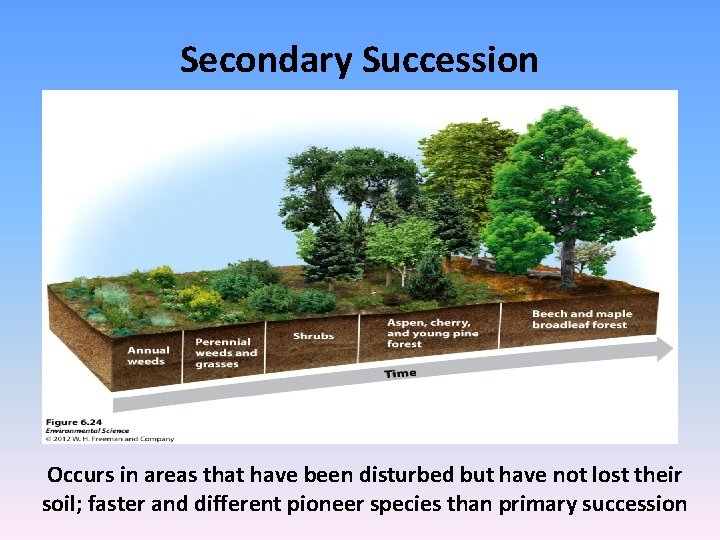
Secondary Succession Occurs in areas that have been disturbed but have not lost their soil; faster and different pioneer species than primary succession
End result of Succession: • A stable group of plants and animals that is the end result of the succession process • Does not always mean big trees – Grasses in prairies – Cacti in deserts
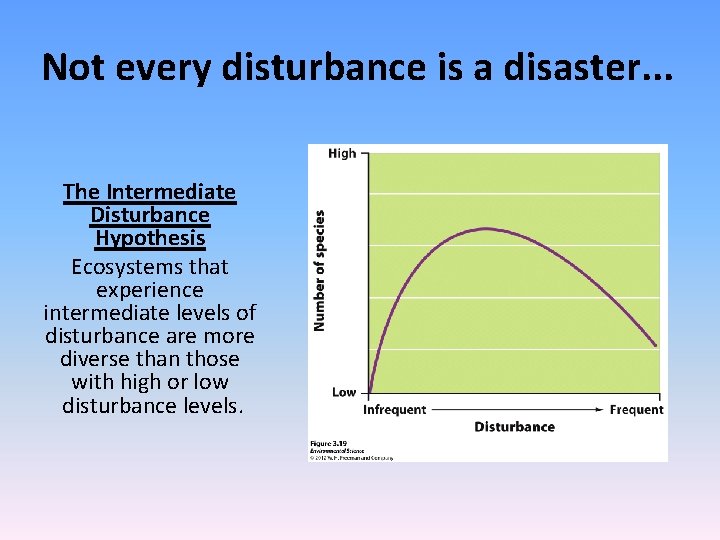
Past and Current Beliefs Up to ~1960’s • If undisturbed, ecosystems achieve permanent structure; a habitat/niche for each organism • If disturbed, returns to the same permanent state “Climax community” over time Now All ecosystems are in continuing state of disturbance/change Not all species at peak Called a “mature community” Moderate, frequent disturbances create communities with high biodiversity • Each disturbance goes through succession • •
Not every disturbance is a disaster. . . The Intermediate Disturbance Hypothesis Ecosystems that experience intermediate levels of disturbance are more diverse than those with high or low disturbance levels.
Not every disturbance is a disaster. . . • Disturbances may kill some species, but allow others to benefit and thrive. Therefore, the NPP of the ecosystem may remain unchangedwe can say it is resistant. • When a disturbance influences populations or communities, but not the overall flow of energy and cycling of matter, we say the ecosystem has high resistance. • When an ecosystem’s flow of energy and matter are affected by a disturbance, the rate at which recovers to original condition occurs can be measured. • That rate is called resilience. • A highly resilient ecosystem would recovery quickly after a disturbance.
Values of Ecosystems • Provision Services- Goods that humans can use directly. • Regulating services- The service provided by natural systems that helps regulate environmental conditions. • Support systems- The support services that natural ecosystems provide such as pollination, natural filters and pest control. • Cultural services- Ecosystems provide cultural or aesthetic benefits to many people.