
Community Infrastructure Levy Viability and Rate Setting July
Community Infrastructure Levy Viability and Rate Setting July 2014
Viability

What have we learnt so far?
Community Infrastructure Levy Rate setting
Context
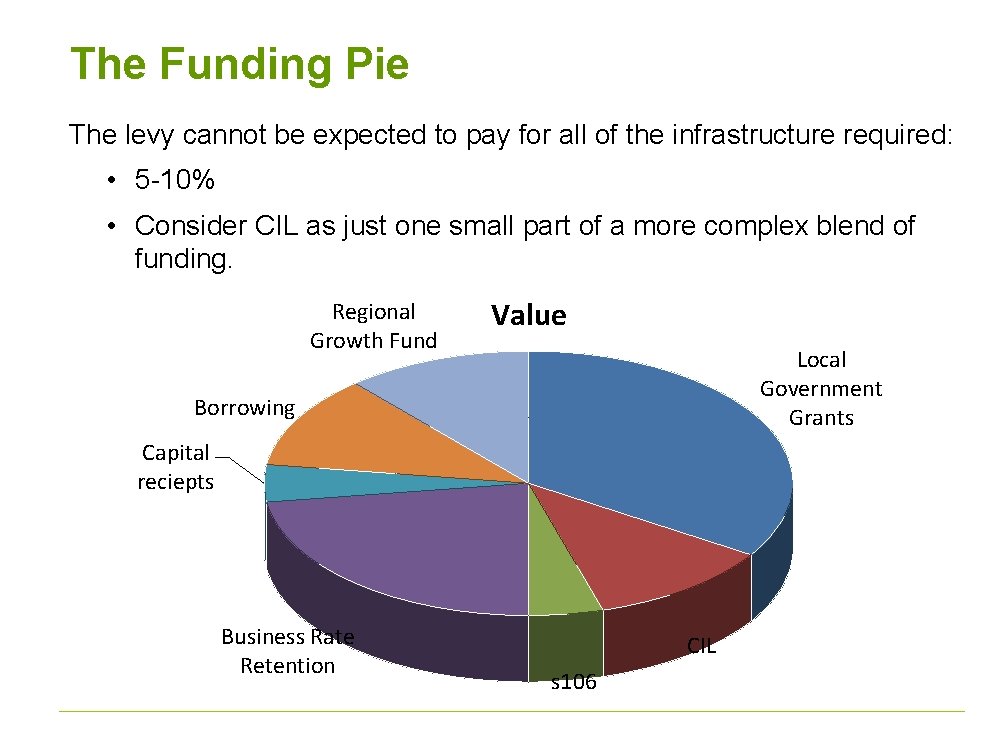
The Funding Pie The levy cannot be expected to pay for all of the infrastructure required: • 5 -10% • Consider CIL as just one small part of a more complex blend of funding. Regional Growth Fund Value Local Government Grants Borrowing Capital reciepts Business Rate Retention CIL s 106
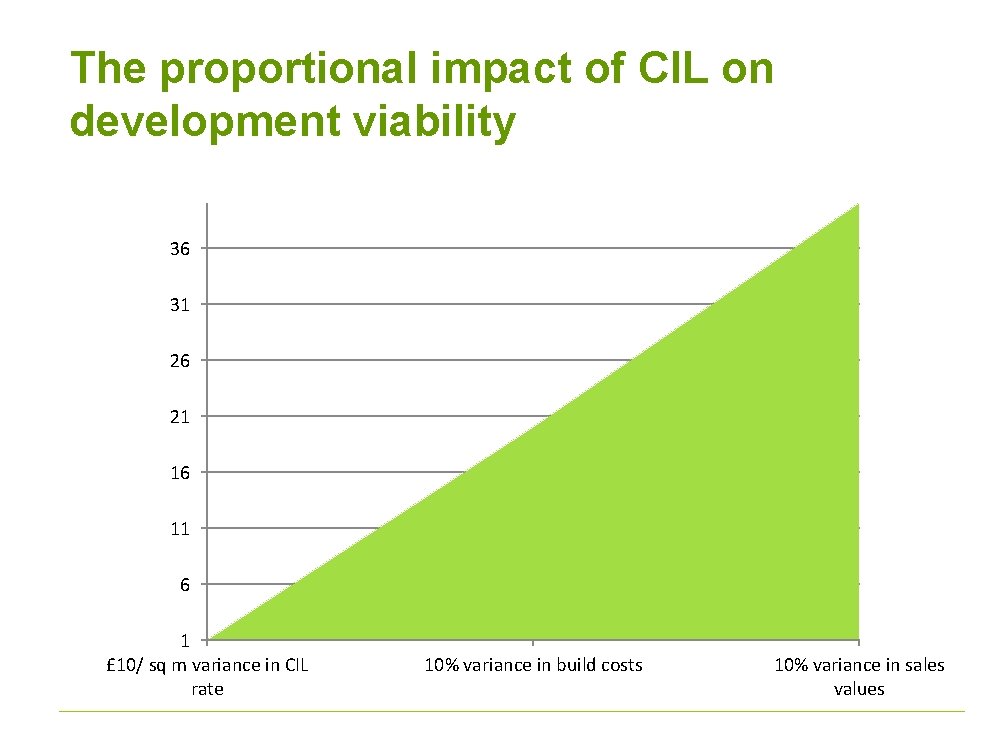
The proportional impact of CIL on development viability 36 31 26 21 16 11 6 1 £ 10/ sq m variance in CIL rate 10% variance in build costs 10% variance in sales values
Community Infrastructure Levy Rate setting process
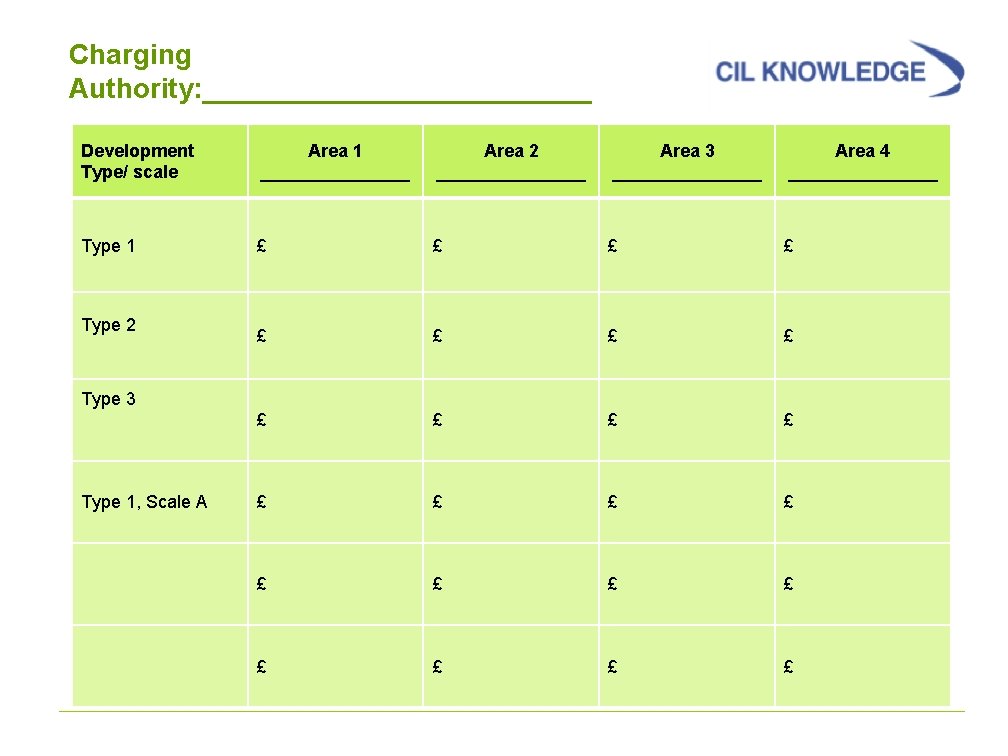
Getting started Developing a Working Hypothesis What might the schedule of rates look like in your area?
Charging Authority: _____________ Development Type/ scale Area 1 ________ Area 2 ________ Area 3 ________ Area 4 ________ Type 1 £ £ £ £ £ £ Type 2 Type 3 Type 1, Scale A
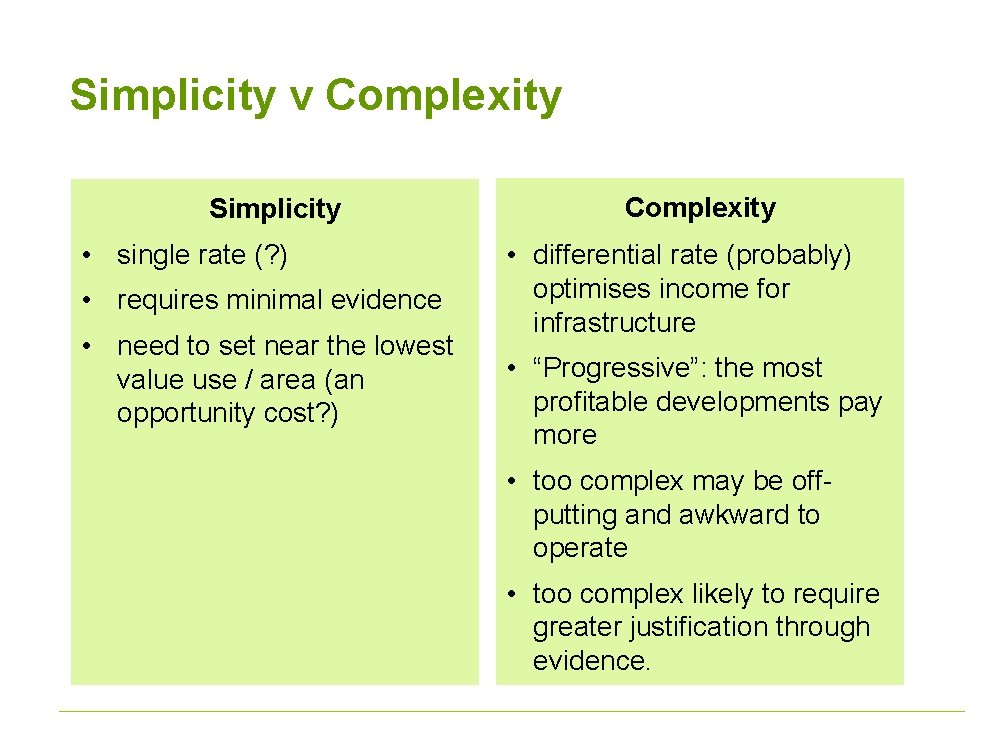
Simplicity v Complexity Simplicity • single rate (? ) • requires minimal evidence • need to set near the lowest value use / area (an opportunity cost? ) Complexity • differential rate (probably) optimises income for infrastructure • “Progressive”: the most profitable developments pay more • too complex may be offputting and awkward to operate • too complex likely to require greater justification through evidence.
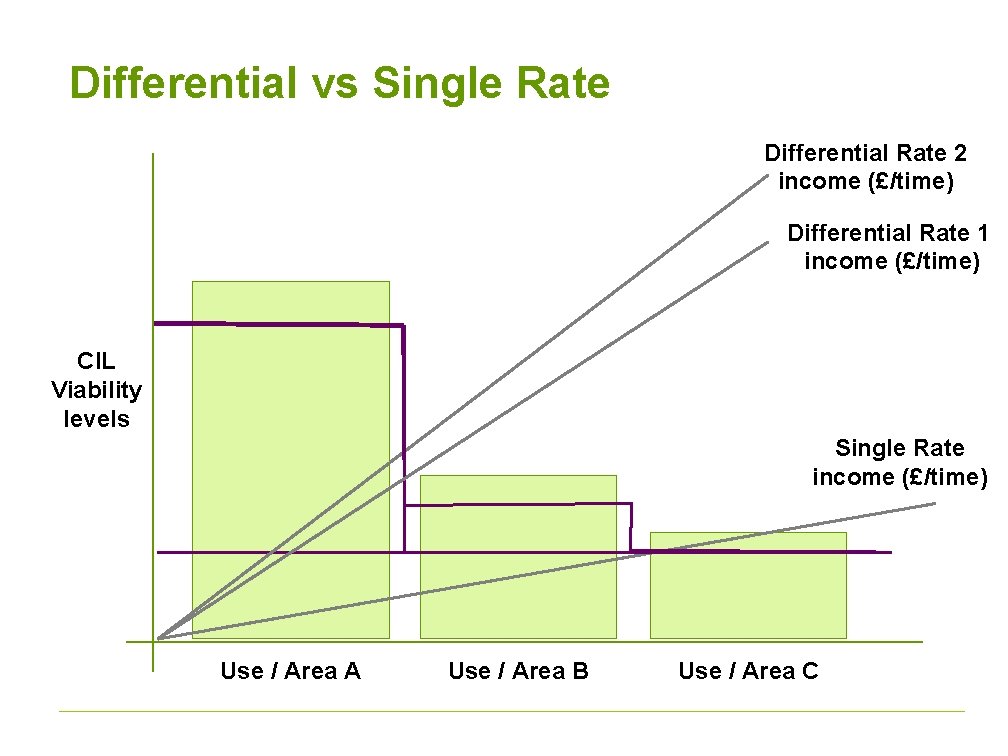
Differential vs Single Rate Differential Rate 2 income (£/time) Differential Rate 1 income (£/time) CIL Viability levels Single Rate income (£/time) Use / Area A Use / Area B Use / Area C
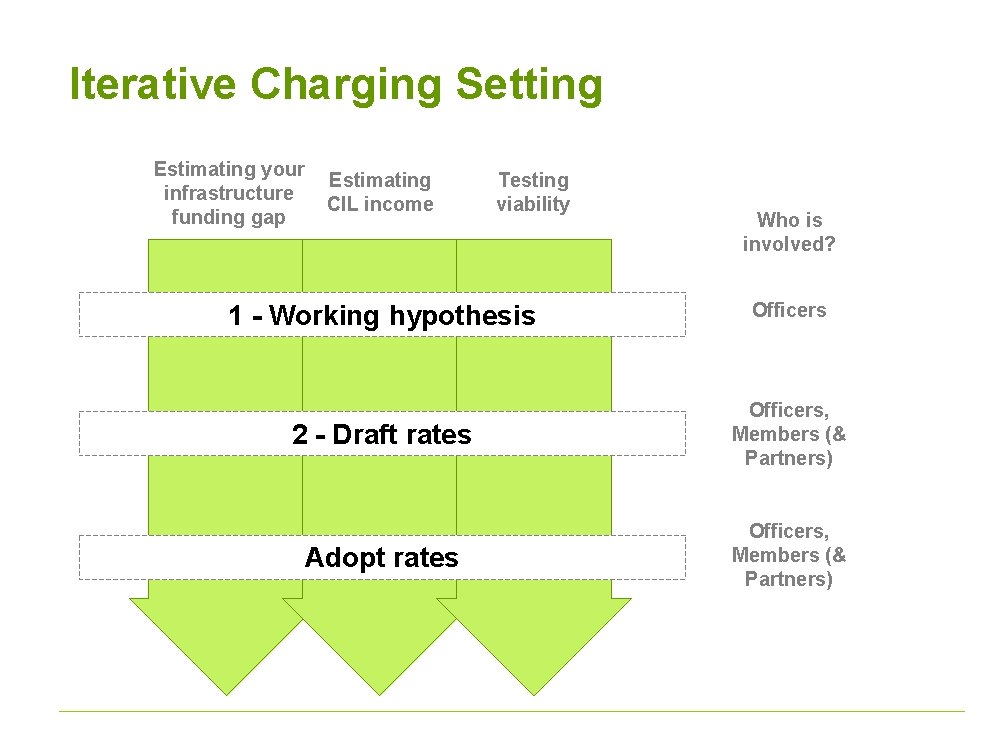
Iterative Charging Setting Estimating your infrastructure funding gap Estimating CIL income Testing viability Who is involved? 1 - Working hypothesis Officers 2 - Draft rates Officers, Members (& Partners) Adopt rates Officers, Members (& Partners)
1. Working Hypothesis • Gather what evidence you have (AHVA, s 106 historic income). • Be clear about your strategic objectives. • Take and informed ‘punt’ (use the grid to map variations by area and development type). • Can you justify your rates? • If yes: publish your PDCS. • If no: use the information to manage technical advisors. Who should be involved? • Project team & Project Sponsor
2. Set Draft Rates for Consultation • developer workshop • viability report recommendations • workshop (including income sensitivity testing) • soft testing (internal consultation & key partners? ) • internal approvals. Who should be involved? • Developers and other key stakeholders • Project team & Project Sponsor • Corporate Management Team • Elected Members
Summary • Direct the viability work using your own local knowledge. • You are required to involve developers prior to the publication of draft rates • Use a rate setting workshop that brings together viability and projected income to reach an optimal solution

Questions www. CILknowledge. com
- Slides: 17