
Community Economic Analysis and the Leaky Bucket Assetbased
Community Economic Analysis and the Leaky Bucket
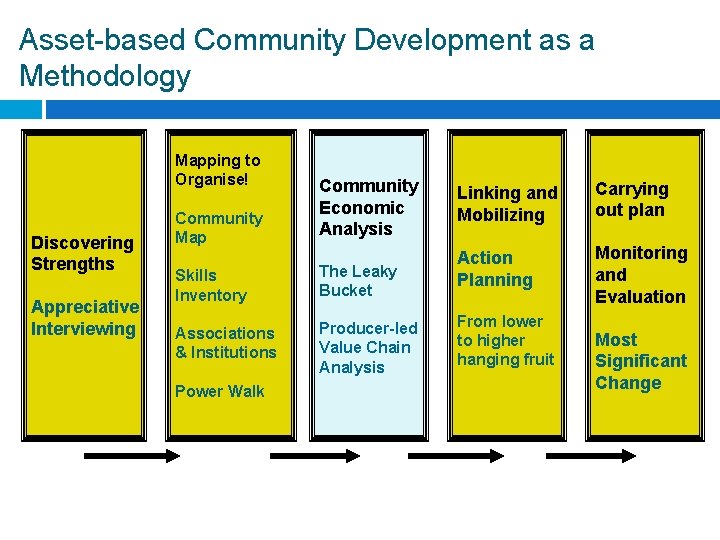
Asset-based Community Development as a Methodology Mapping to Organise! Discovering Strengths Appreciative Interviewing Community Map Community Economic Analysis Skills Inventory The Leaky Bucket Associations & Institutions Producer-led Value Chain Analysis Power Walk Linking and Mobilizing Carrying out plan Action Planning Monitoring and Evaluation From lower to higher hanging fruit Most Significant Change
Definitions Economy “household management” (Greek) Economics “The science of the production and distribution of wealth” (John Stuart Mill)
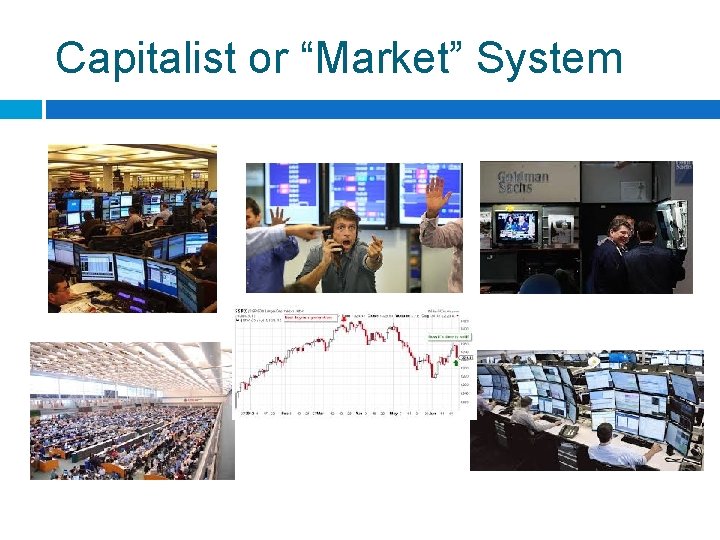
Capitalist or “Market” System

Communist or “Central Command” System
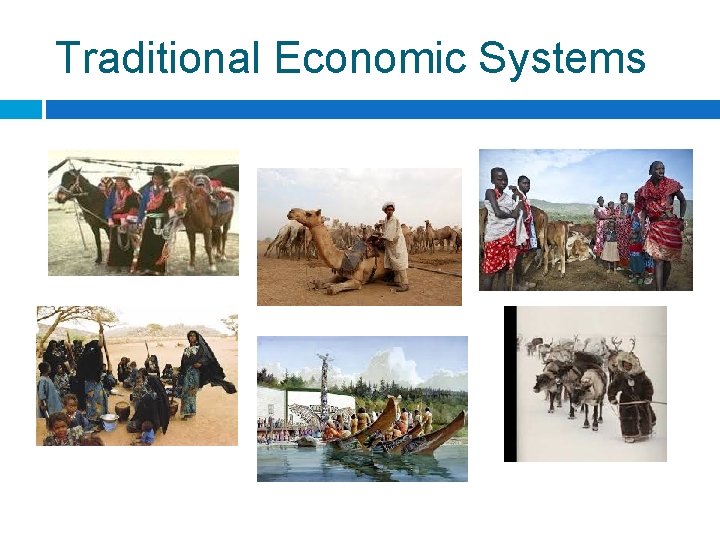
Traditional Economic Systems
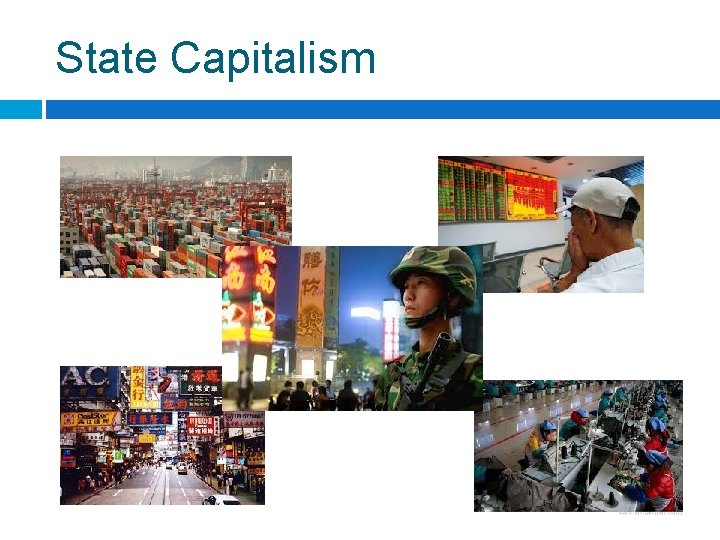
State Capitalism
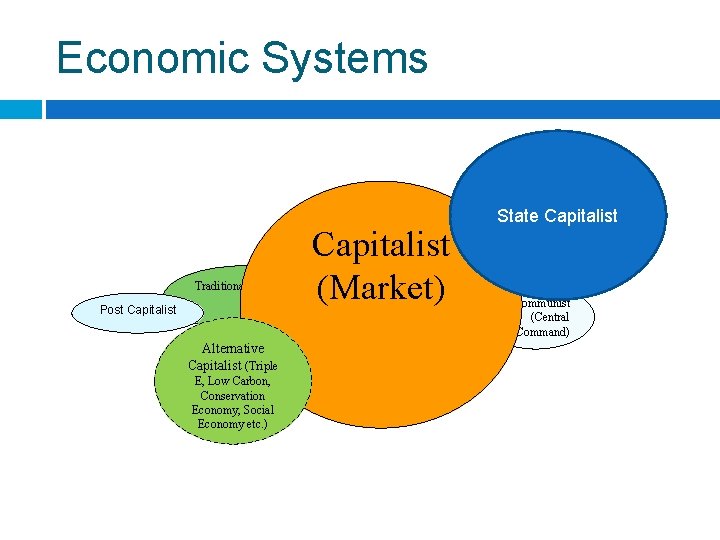
Economic Systems Traditional Post Capitalist Alternative Capitalist (Triple E, Low Carbon, Conservation Economy, Social Economy etc. ) Capitalist (Market) State Capitalist Communist (Central Command)
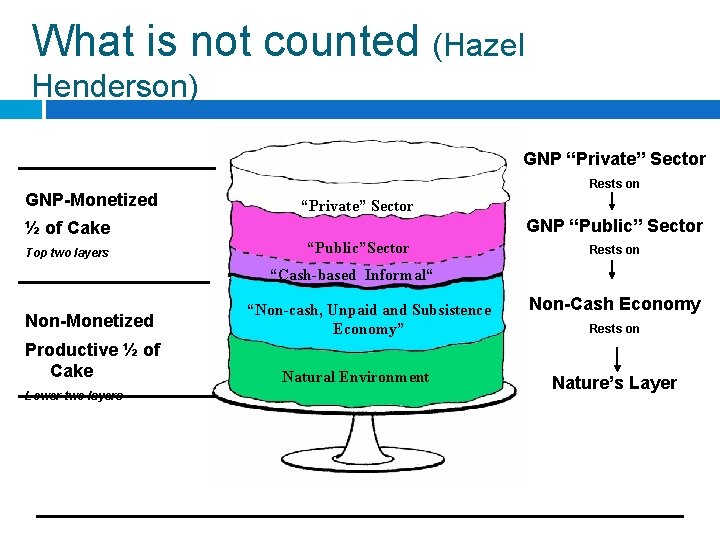
What is not counted (Hazel Henderson) GNP “Private” Sector GNP-Monetized Rests on “Private” Sector GNP “Public” Sector ½ of Cake Top two layers “Public”Sector Rests on “Cash-based Informal“ Non-Monetized Productive ½ of Cake Lower two layers “Non-cash, Unpaid and Subsistence Economy” Natural Environment Non-Cash Economy Rests on Nature’s Layer
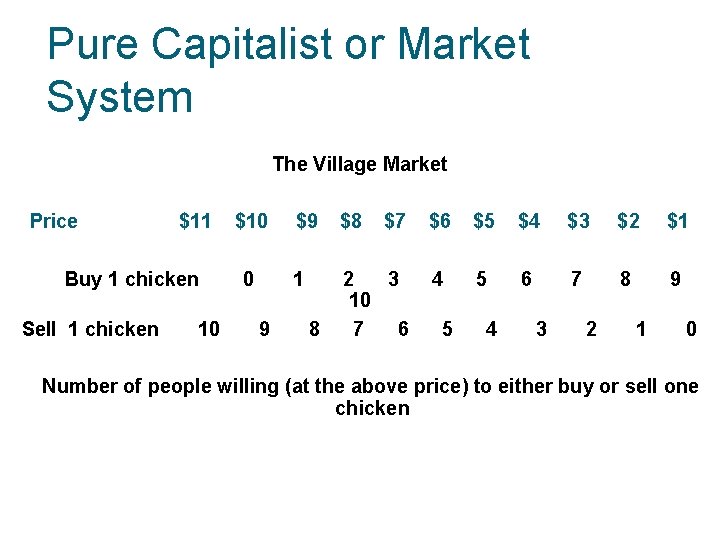
Pure Capitalist or Market System The Village Market Price $11 Buy 1 chicken Sell 1 chicken 10 $10 0 9 $9 $8 1 2 3 10 7 6 8 $7 $6 $5 $4 $3 $2 $1 4 5 6 7 8 9 5 4 3 2 1 0 Number of people willing (at the above price) to either buy or sell one chicken
Exercise: effects of firm ownership Take the example of a food processing firm in a rural area, which will purchase locally produced fruits to transform into jams for sale in the urban market. How will the behavior of the enterprise differ in the following decision-making areas, depending on whom the owns the firm?
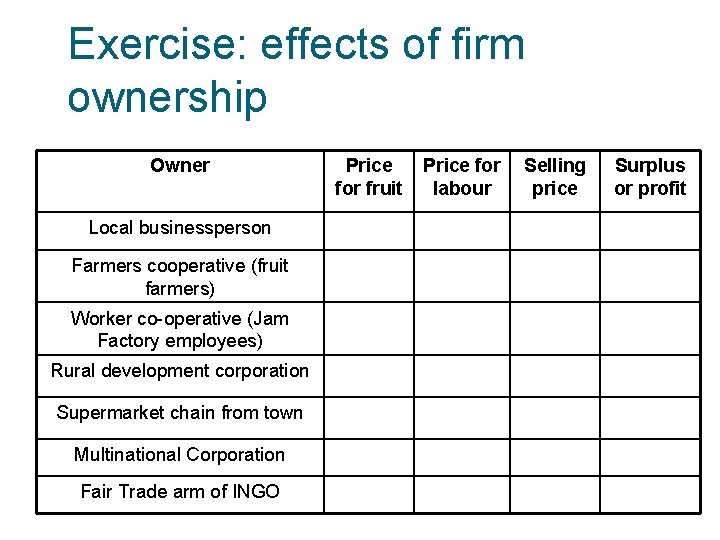
Exercise: effects of firm ownership Owner Local businessperson Farmers cooperative (fruit farmers) Worker co-operative (Jam Factory employees) Rural development corporation Supermarket chain from town Multinational Corporation Fair Trade arm of INGO Price for fruit Price for labour Selling price Surplus or profit
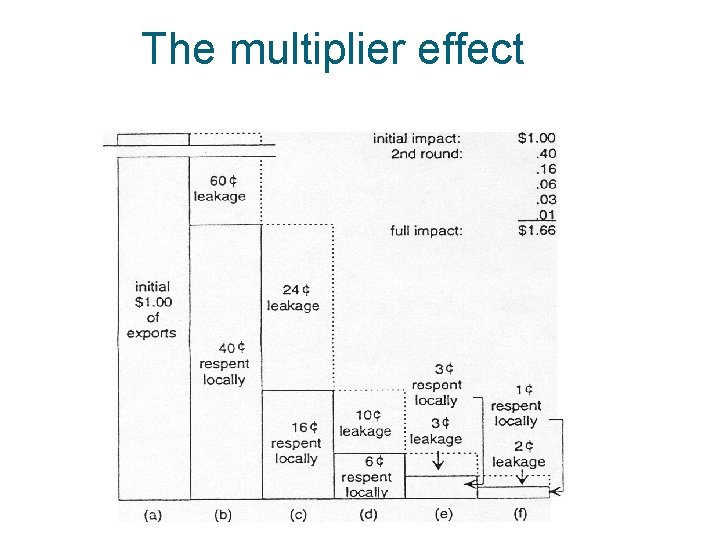
The multiplier effect
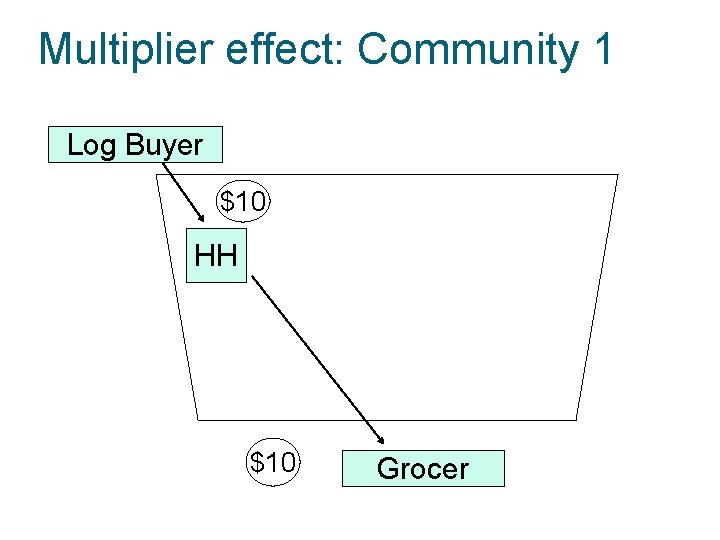
Multiplier effect: Community 1 Log Buyer $10 HH $10 Grocer
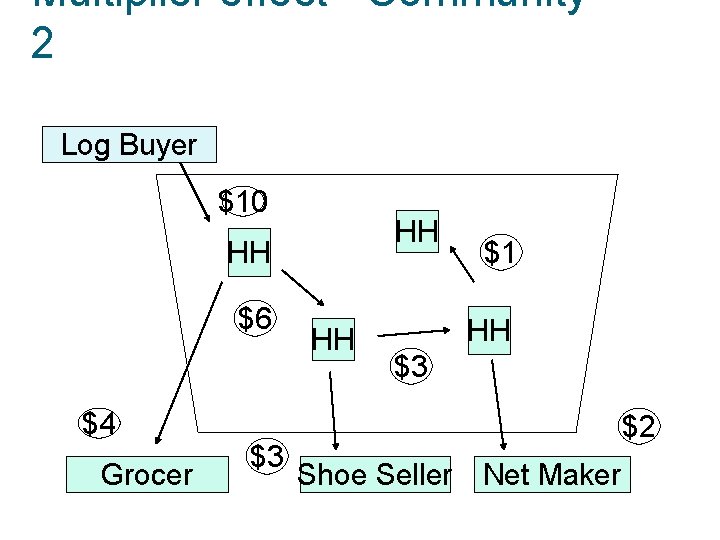
Multiplier effect - Community 2 Log Buyer $10 HH HH $6 $4 Grocer $3 HH $1 HH $3 $2 Shoe Seller Net Maker
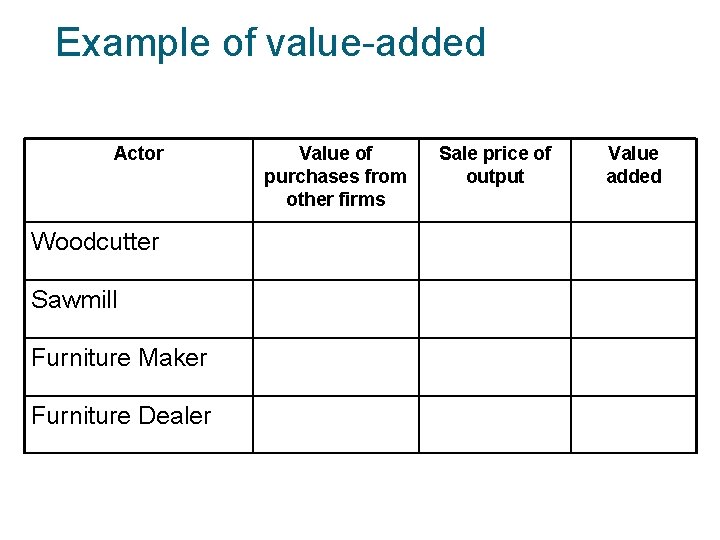
Example of value-added Actor Woodcutter Sawmill Furniture Maker Furniture Dealer Value of purchases from other firms Sale price of output Value added
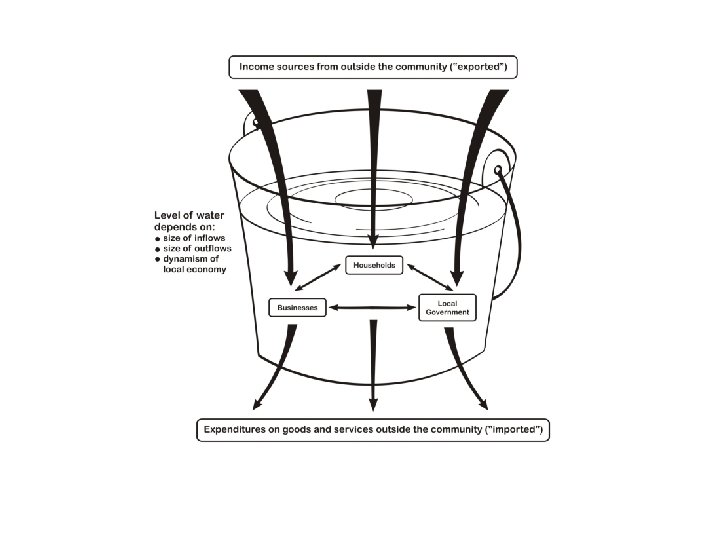
The "Leaky Bucket" Exercise The Anishnabek people of Wikwemikong are citizens of the Three Fires Confederacy: an alliance of Odawa, Ojibway and Pottawatomi nations. The people of Wikwemikong did not sign a treaty with the Government of Canada and therefore their Reserve land is considered “unceded”. Wikwemikong is located on the eastern end of Manitoulin Island, which in turn is situated in Lake Huron, one of the “great lakes” of east/central Canada. The area is largely dependent on logging, mainly for pulp and paper, and tourism, although only in the summer months. The community is home to approximately 2, 500 people. An additional 2, 000 members of the Wikwemikong First Nation live “off-reserve”. Although they have left the community, most residing in nearby towns and cities where opportunities for work are more plentiful, they still have very strong family and community bonds. Many return to the community several times each year for visits and cultural events. Jobs in Wikwemikong are scarce, especially for women. Men hold more than 70% of the formal sector jobs in the community. Most of these are in the public sector (the various sectors of the First Nation government) for which Wikwemikong receives funds transferred from the Canadian government. Approximately 40 people (38 of whom are men) travel out of the community each day to work at a nearby pulp and paper mill. As many as 500 community members of working age, depend on the Canadian Government for some form of social assistance, during at least part of each year. Driving into Wikwemikong one gets a sense of the local economy. Approaching along the main road from the south the first view is of the Municipal Complex and the Amik-ook seniors Building. A glance west finds the Junior School, Nursing Home, Health Centre, Elementary School, and at the top of the hill, the Economic Development Agency. Just off the road to the east, the Municipal Garage and Fire Station are visible. Further along the car will pass the Post Office, the Sports Complex, and off in the distance, the Sewage Treatment Plant. Altogether these departments and agencies provide 170 formal sector jobs in the community. By comparison the only visible private sector consists of a gas station, a small grocery store and a laundromat, which employ roughly 20 people, and are all owned by the same family. Just beyond the border of the Reserve lies the village of Manitowaning, a mainly non-aboriginal community. Numbering less than 1, 000 residents, Manitowaning has: three hardware stores, two grocery stores, two hotels, two variety stores, two restaurants, two insurance businesses, two gas stations, a clothing store, a butcher, a liquor store, two craft shops, a racetrack, and a museum. A recent survey undertaken by the Economic Development Agency uncovered the surprising fact that one in three households on the Reserve reported having some form of “informal” cash generating activity. Women run at least half of these informal sector (mostly home-based) businesses. The survey produced a list these businesses which included: small sawmills, craft makers, backyard mechanics, , , furniture makers, small home-based stores, ,
Exercise Draw a leaky bucket diagram making sure to indicate the main economic flows: into the community out of the community within the community Identify at least one economic opportunity to increase inflow/multiplier effect or valueadded or to decrease outflow
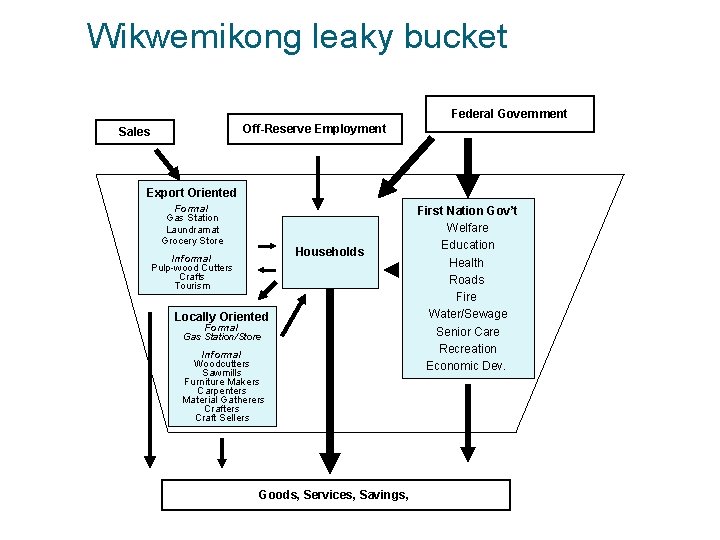
Wikwemikong leaky bucket Federal Government Off-Reserve Employment Sales Export Oriented Formal Gas Station Laundramat Grocery Store Households Informal Pulp-wood Cutters Crafts Tourism Locally Oriented Formal Gas Station/Store Informal Woodcutters Sawmills Furniture Makers Carpenters Material Gatherers Craft Sellers Goods, Services, Savings, First Nation Gov’t Welfare Education Health Roads Fire Water/Sewage Senior Care Recreation Economic Dev.
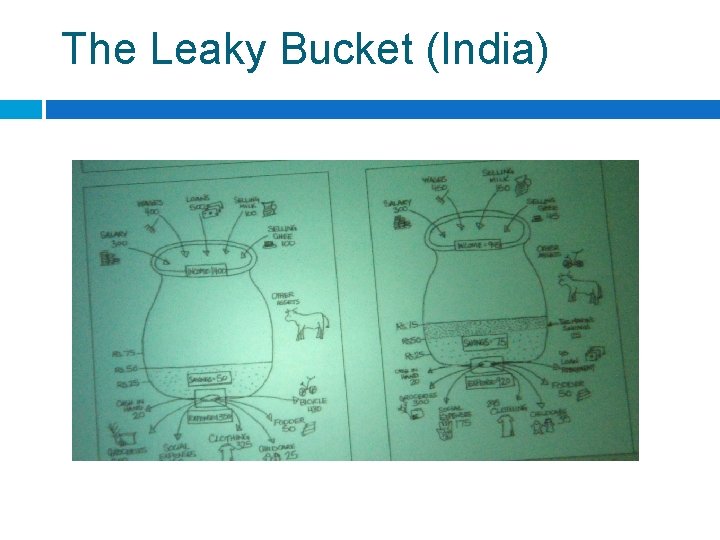
The Leaky Bucket (India)
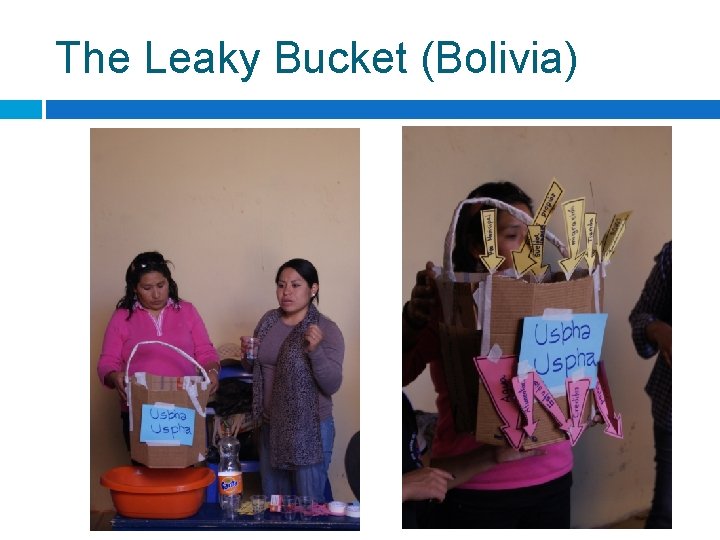
The Leaky Bucket (Bolivia)
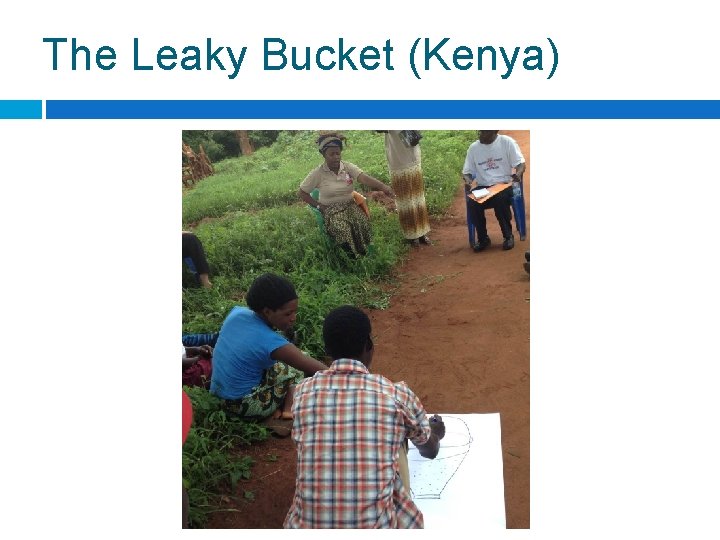
The Leaky Bucket (Kenya)
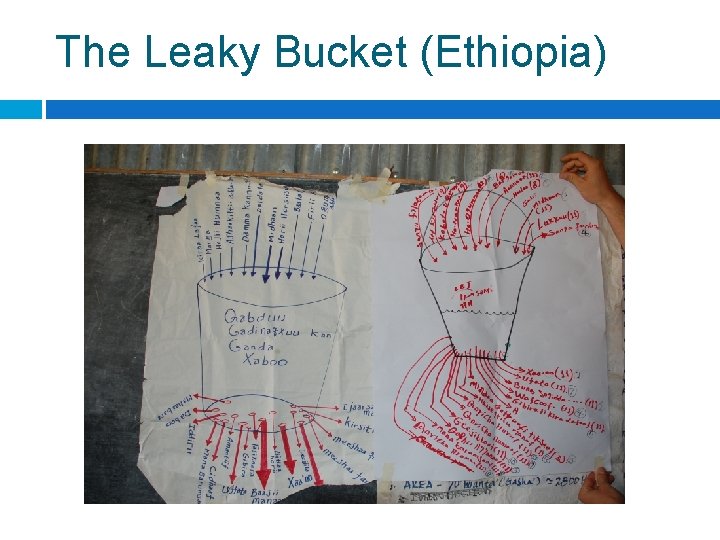
The Leaky Bucket (Ethiopia)
The Digital Leaky Bucket Web http: //www. coady. stfx. ca/knowledge/ digital_tools/dlb/downloads
Its HOCKEY time!
Exercise (Hats On!) In your Community groups, draw a leaky bucket diagram making sure to indicate the main economic flows: into the community out of the community within the community Identify at least one economic opportunity to increase inflow/multiplier effect or valueadded or to decrease outflow
- Slides: 27